Aims / framework
for
(4) Sustainable (1) Mobile (2) Learning (3) Scenarios
Ben Bachmair
Institute of Education
University of London
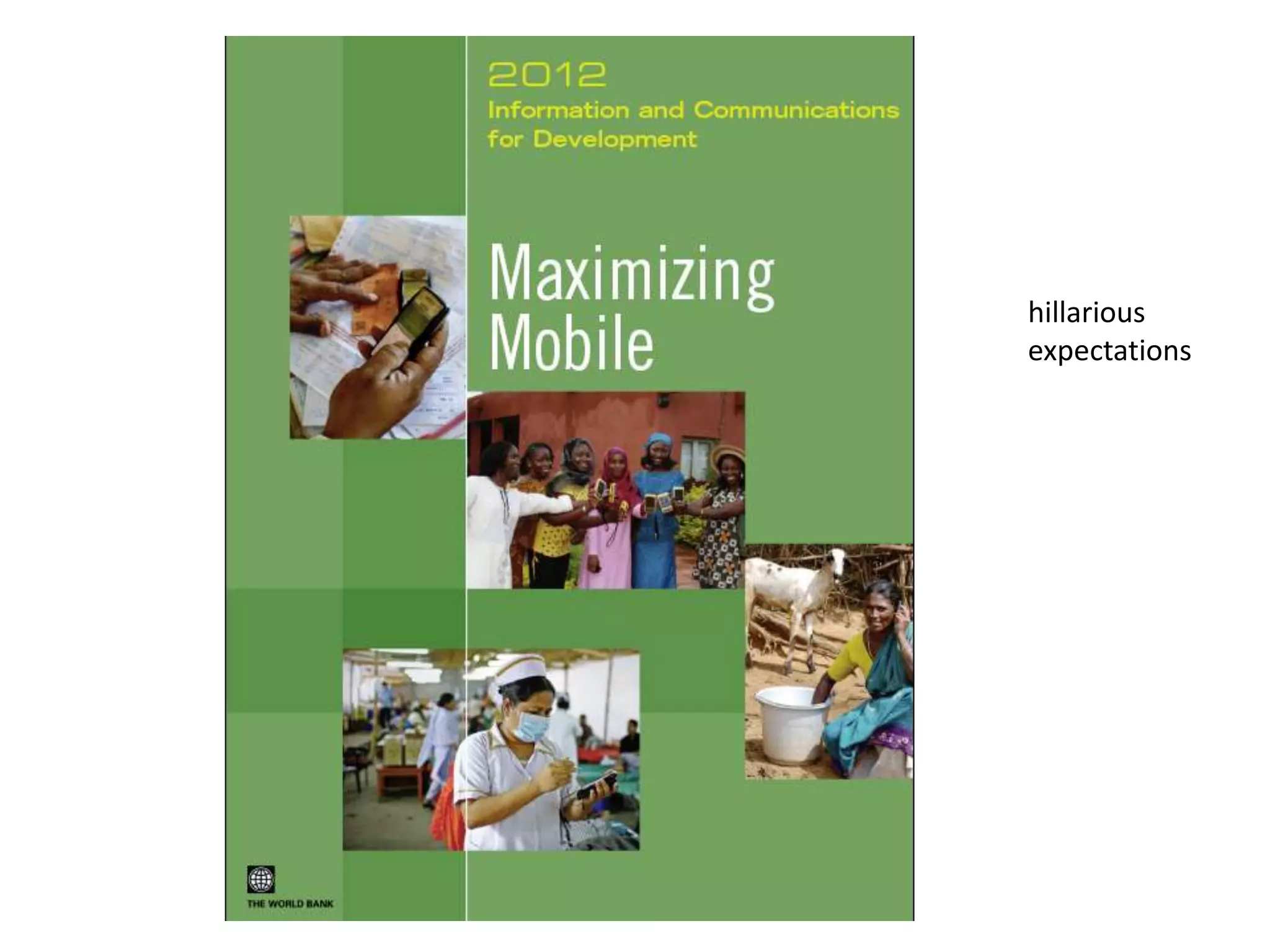
hillarious
expectations
(1) The mobile side of learning
Definition of the recent handbook
Berge, Zane L. and Muilenburg, Lin Y. (eds) (2013).
Handbook of Mobile Learning. New York: Routledge (page XXXi)
“Wireless, easy-to-carry, mobile devices lead to the
learner's mobility, untethering that individual from a particular
place. This also allows learners to converse and explore
information across the many locations and contexts in which
they find themselves throughout the day. As the learner faces
the need for information or problem-solving, the need is for
personal, just-in-time performance support, information, or
learning to meet these individual challenges. To a large extent,
m-learning can be thought of as communication in
context.
„Context“, the unknow ???
A context is a frame under construction
for optional combinations of actions, representational
resources inclusive media and literacy, virtual and local
sites or social sites like socio-cultural milieus
Practical aims:
- Personal Learning Environments
- Context awareness e.g. by means of mobile photo
portfolios
- User generated contexts and narrative learning trails
(2) Transformation of Learning
in the maelstrom of de-traditionalization /
de-limitation (Entgrenzung)
Meanwhile accepted innovative trends on learning:
- Learning as communication in and over contexts:
collaborative knowledge building; situated learning;
Personal Learning Environments; context aware learning
(?); informal learning (?)
- Learning as personal development: scaffolding; learning
as social risk = NEETS; individualized expertise (?)
- The tablet as mini-computer in the tradition of the text
book and the work book
An interesting issue for further consideration about learning
An actual aspect of the German debate driven by the
Bertelsmann Stiftung (“Chancenspiegel”): Social Justice
- Fair options for citizens: the institutional side (John Rawl:
Justice as Fairness, 1958)
- Learning in the personal life course within life styles milieus
and individualized value systems (Amartya Sen: “Justice is
ultimately connected with the way people‟s lives go,”... 2009,
p. X)
- Communicative freedom and the recognition of the different
(Axel Honneth)
(3) Scenarios
Statements in a discussion with John Traxler
John: an outline of entrances, exits, and action describing the plot of a play"
sounds like something I could operationalise.
By 'scenario' did you mean an instance that captures the essence, maybe
fictionalised or hypothetical, of a specific domain in an accessible form?
Wikipedia (http://en.wikipedia.org/wiki/Scenario, 12 Sept. 13) in respect to a
theatre performance: "synoptical collage of an event or series of actions
and events. In the Commedia dell'arte it was an outline of entrances, exits,
and action describing the plot of a play, and was literally pinned to the back
of the scenery. It is also known as canovaccio or "that which is pinned to the
canvas" of which the scenery was constructed.“
Ben: In our curricular context I use the term "scenario of learning" / "learning
scenario" as arrangement of media, facilitator / teachers, students /
learners and situations . A scenario serves as meaningful curricular unit
in the wider context of instruction / teaching / learning / instructional
processes. 'Meaningful' depends of situation, context and the acting
personal.
(4) Sustainability
- The simple meaning:
Don„t destroy e.g. trees for getting fire in the chimney
but keep steady in the perspective of e.g. a forest.
- The critical system approach:
Mobile devices and Jobs, The economy / Space, Place, Time /
Community, Discourse / Knowledge, Learning
John Traxler: Sustaining Mobile Learning and its Institutions. International
Journal of Mobile and Blended Learning, 2(4), 58-65, October-December
2010. IGI Global
Cultural ecology and the issue of cultural resources in the
running de-traditionalization of globalization
London Mobile Learning Group

Aims framework m scenarios bachmair 9oct13

  • 1.
    Aims / framework for (4)Sustainable (1) Mobile (2) Learning (3) Scenarios Ben Bachmair Institute of Education University of London
  • 2.
  • 3.
    (1) The mobileside of learning Definition of the recent handbook Berge, Zane L. and Muilenburg, Lin Y. (eds) (2013). Handbook of Mobile Learning. New York: Routledge (page XXXi) “Wireless, easy-to-carry, mobile devices lead to the learner's mobility, untethering that individual from a particular place. This also allows learners to converse and explore information across the many locations and contexts in which they find themselves throughout the day. As the learner faces the need for information or problem-solving, the need is for personal, just-in-time performance support, information, or learning to meet these individual challenges. To a large extent, m-learning can be thought of as communication in context.
  • 4.
    „Context“, the unknow??? A context is a frame under construction for optional combinations of actions, representational resources inclusive media and literacy, virtual and local sites or social sites like socio-cultural milieus Practical aims: - Personal Learning Environments - Context awareness e.g. by means of mobile photo portfolios - User generated contexts and narrative learning trails
  • 5.
    (2) Transformation ofLearning in the maelstrom of de-traditionalization / de-limitation (Entgrenzung) Meanwhile accepted innovative trends on learning: - Learning as communication in and over contexts: collaborative knowledge building; situated learning; Personal Learning Environments; context aware learning (?); informal learning (?) - Learning as personal development: scaffolding; learning as social risk = NEETS; individualized expertise (?) - The tablet as mini-computer in the tradition of the text book and the work book
  • 6.
    An interesting issuefor further consideration about learning An actual aspect of the German debate driven by the Bertelsmann Stiftung (“Chancenspiegel”): Social Justice - Fair options for citizens: the institutional side (John Rawl: Justice as Fairness, 1958) - Learning in the personal life course within life styles milieus and individualized value systems (Amartya Sen: “Justice is ultimately connected with the way people‟s lives go,”... 2009, p. X) - Communicative freedom and the recognition of the different (Axel Honneth)
  • 7.
    (3) Scenarios Statements ina discussion with John Traxler John: an outline of entrances, exits, and action describing the plot of a play" sounds like something I could operationalise. By 'scenario' did you mean an instance that captures the essence, maybe fictionalised or hypothetical, of a specific domain in an accessible form? Wikipedia (http://en.wikipedia.org/wiki/Scenario, 12 Sept. 13) in respect to a theatre performance: "synoptical collage of an event or series of actions and events. In the Commedia dell'arte it was an outline of entrances, exits, and action describing the plot of a play, and was literally pinned to the back of the scenery. It is also known as canovaccio or "that which is pinned to the canvas" of which the scenery was constructed.“ Ben: In our curricular context I use the term "scenario of learning" / "learning scenario" as arrangement of media, facilitator / teachers, students / learners and situations . A scenario serves as meaningful curricular unit in the wider context of instruction / teaching / learning / instructional processes. 'Meaningful' depends of situation, context and the acting personal.
  • 8.
    (4) Sustainability - Thesimple meaning: Don„t destroy e.g. trees for getting fire in the chimney but keep steady in the perspective of e.g. a forest. - The critical system approach: Mobile devices and Jobs, The economy / Space, Place, Time / Community, Discourse / Knowledge, Learning John Traxler: Sustaining Mobile Learning and its Institutions. International Journal of Mobile and Blended Learning, 2(4), 58-65, October-December 2010. IGI Global Cultural ecology and the issue of cultural resources in the running de-traditionalization of globalization London Mobile Learning Group