TIPS TO LEARN ENGLISHTIPS TO LEARN ENGLISH
EFFECTIVELYEFFECTIVELY
TIP 1:TIP 1: BUY A GOOD DICTIONARYBUY A GOOD DICTIONARY
 Choose the right level for you: beginner,Choose the right level for you: beginner,
intermediate or advancedintermediate or advanced
 Decide whether you prefer American or BritishDecide whether you prefer American or British
EnglishEnglish
 Find an English-to-English dictionary which alsoFind an English-to-English dictionary which also
gives Chinese meaningsgives Chinese meanings
 A good dictionary gives the various meanings ofA good dictionary gives the various meanings of
the word, its part of speech, plurals,the word, its part of speech, plurals,
pronunciation, collocations, usage, whetherpronunciation, collocations, usage, whether
British or American and examples of usageBritish or American and examples of usage
among other thingsamong other things
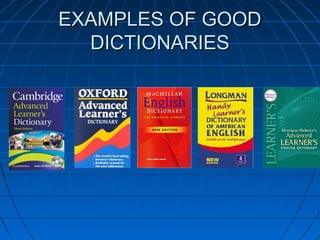
EXAMPLES OF GOODEXAMPLES OF GOOD
DICTIONARIESDICTIONARIES
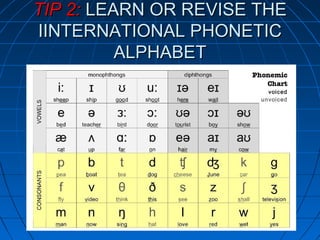
TIP 2:TIP 2: LEARN OR REVISE THELEARN OR REVISE THE
IINTERNATIONAL PHONETICIINTERNATIONAL PHONETIC
ALPHABETALPHABET
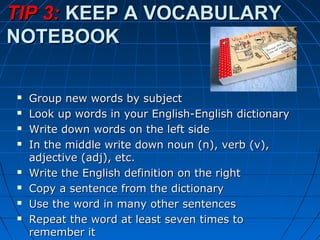
TIP 3:TIP 3: KEEP A VOCABULARYKEEP A VOCABULARY
NOTEBOOKNOTEBOOK
 Group new words by subjectGroup new words by subject
 Look up words in your English-English dictionaryLook up words in your English-English dictionary
 Write down words on the left sideWrite down words on the left side
 In the middle write down noun (n), verb (v),In the middle write down noun (n), verb (v),
adjective (adj), etc.adjective (adj), etc.
 Write the English definition on the rightWrite the English definition on the right
 Copy a sentence from the dictionaryCopy a sentence from the dictionary
 Use the word in many other sentencesUse the word in many other sentences
 Repeat the word at least seven times toRepeat the word at least seven times to
remember itremember it
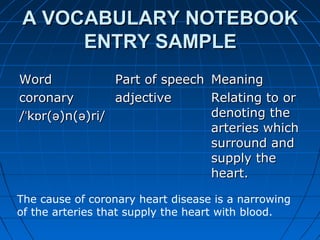
A VOCABULARY NOTEBOOKA VOCABULARY NOTEBOOK
ENTRYENTRY SAMPLESAMPLE
WordWord Part of speechPart of speech MeaningMeaning
coronarycoronary
/ k r( )n( )ri/ˈ ɒ ə ə/ k r( )n( )ri/ˈ ɒ ə ə
adjectiveadjective Relating to orRelating to or
denoting thedenoting the
arteries whicharteries which
surround andsurround and
supply thesupply the
heart.heart.
The cause of coronary heart disease is a narrowing
of the arteries that supply the heart with blood.
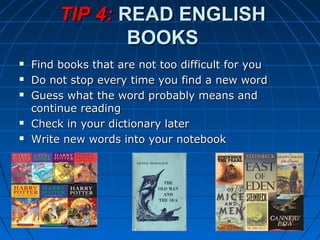
TIP 4:TIP 4: READ ENGLISHREAD ENGLISH
BOOKSBOOKS
 Find books that are not too difficult for youFind books that are not too difficult for you
 Do not stop every time you find a new wordDo not stop every time you find a new word
 Guess what the word probably means andGuess what the word probably means and
continue readingcontinue reading
 Check in your dictionary laterCheck in your dictionary later
 Write new words into your notebookWrite new words into your notebook
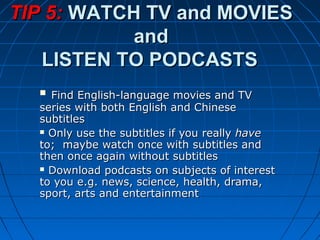
 Find English-language movies and TVFind English-language movies and TV
series with both English and Chineseseries with both English and Chinese
subtitlessubtitles
 Only use the subtitles if you reallyOnly use the subtitles if you really havehave
to; maybe watch once with subtitles andto; maybe watch once with subtitles and
then once again without subtitlesthen once again without subtitles
 Download podcasts on subjects of interestDownload podcasts on subjects of interest
to you e.g. news, science, health, drama,to you e.g. news, science, health, drama,
sport, arts and entertainmentsport, arts and entertainment
TIP 5:TIP 5: WATCH TV and MOVIESWATCH TV and MOVIES
andand
LISTEN TO PODCASTSLISTEN TO PODCASTS
SOME MOVIESSOME MOVIES
SOME TVSOME TV
SERIESSERIES
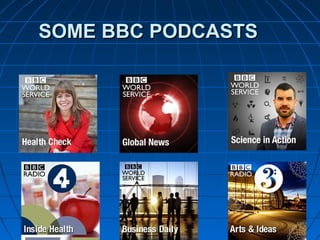
SOME BBC PODCASTSSOME BBC PODCASTS
 At the KTV, sing English songsAt the KTV, sing English songs

OrOr download English-languagedownload English-language
songs with their lyricssongs with their lyrics
 Sing the songs while readingSing the songs while reading
the lyricsthe lyrics
TIP 6:TIP 6: SING ENGLISH SONGSSING ENGLISH SONGS
TIP 7:TIP 7: SPEAK ENGLISHSPEAK ENGLISH
WITH YOUR FRIENDSWITH YOUR FRIENDS
TIP 8:TIP 8: FIND AN ENGLISHFIND AN ENGLISH
TEACHERTEACHER
• Chinese teachers are good at English grammar and explaining rules
• Native English teachers are good at pronunciation and idiomatic
English
TIP 9:TIP 9: Write a journalWrite a journal

Find foreign friends to talk toFind foreign friends to talk to
 Talk to them in person or on Skype or WechatTalk to them in person or on Skype or Wechat
 Find pen friends or chat friendsFind pen friends or chat friends
 Dedicate some time each day to study English.Dedicate some time each day to study English.
 Read English out loud, even when you’re onRead English out loud, even when you’re on
your own. Record yourself.your own. Record yourself.
 For pronunciation, there are many internetFor pronunciation, there are many internet
sites and dictionary apps that read out thesites and dictionary apps that read out the
wordswords
Decorate your room with flashcardsDecorate your room with flashcards
TIP 10:TIP 10: SOME QUICK HINTSSOME QUICK HINTS
 Think positively of English as yourThink positively of English as your
window to the worldwindow to the world
 Build yourself an English environmentBuild yourself an English environment
 Don’t be self-consciousDon’t be self-conscious
 Forget about losing faceForget about losing face
 Don’t be afraid to make mistakesDon’t be afraid to make mistakes
 Learn to think in EnglishLearn to think in English
 Practice makes perfectPractice makes perfect
 Use it or lose itUse it or lose it
TIP 11:TIP 11: SOME MOTTOESSOME MOTTOES
TIP 12:TIP 12: BE POSITIVEBE POSITIVE
ENGLISH IS GREAT!ENGLISH IS GREAT!
ENGLISH IS FUN!ENGLISH IS FUN!
I LOVE ENGLISH!I LOVE ENGLISH!
MY ENGLISH ISMY ENGLISH IS
GETTING BETTER!GETTING BETTER!

Tips to learn english effectively

  • 1.
    TIPS TO LEARNENGLISHTIPS TO LEARN ENGLISH EFFECTIVELYEFFECTIVELY
  • 2.
    TIP 1:TIP 1:BUY A GOOD DICTIONARYBUY A GOOD DICTIONARY  Choose the right level for you: beginner,Choose the right level for you: beginner, intermediate or advancedintermediate or advanced  Decide whether you prefer American or BritishDecide whether you prefer American or British EnglishEnglish  Find an English-to-English dictionary which alsoFind an English-to-English dictionary which also gives Chinese meaningsgives Chinese meanings  A good dictionary gives the various meanings ofA good dictionary gives the various meanings of the word, its part of speech, plurals,the word, its part of speech, plurals, pronunciation, collocations, usage, whetherpronunciation, collocations, usage, whether British or American and examples of usageBritish or American and examples of usage among other thingsamong other things
  • 3.
    EXAMPLES OF GOODEXAMPLESOF GOOD DICTIONARIESDICTIONARIES
  • 4.
    TIP 2:TIP 2:LEARN OR REVISE THELEARN OR REVISE THE IINTERNATIONAL PHONETICIINTERNATIONAL PHONETIC ALPHABETALPHABET
  • 5.
    TIP 3:TIP 3:KEEP A VOCABULARYKEEP A VOCABULARY NOTEBOOKNOTEBOOK  Group new words by subjectGroup new words by subject  Look up words in your English-English dictionaryLook up words in your English-English dictionary  Write down words on the left sideWrite down words on the left side  In the middle write down noun (n), verb (v),In the middle write down noun (n), verb (v), adjective (adj), etc.adjective (adj), etc.  Write the English definition on the rightWrite the English definition on the right  Copy a sentence from the dictionaryCopy a sentence from the dictionary  Use the word in many other sentencesUse the word in many other sentences  Repeat the word at least seven times toRepeat the word at least seven times to remember itremember it
  • 6.
    A VOCABULARY NOTEBOOKAVOCABULARY NOTEBOOK ENTRYENTRY SAMPLESAMPLE WordWord Part of speechPart of speech MeaningMeaning coronarycoronary / k r( )n( )ri/ˈ ɒ ə ə/ k r( )n( )ri/ˈ ɒ ə ə adjectiveadjective Relating to orRelating to or denoting thedenoting the arteries whicharteries which surround andsurround and supply thesupply the heart.heart. The cause of coronary heart disease is a narrowing of the arteries that supply the heart with blood.
  • 7.
    TIP 4:TIP 4:READ ENGLISHREAD ENGLISH BOOKSBOOKS  Find books that are not too difficult for youFind books that are not too difficult for you  Do not stop every time you find a new wordDo not stop every time you find a new word  Guess what the word probably means andGuess what the word probably means and continue readingcontinue reading  Check in your dictionary laterCheck in your dictionary later  Write new words into your notebookWrite new words into your notebook
  • 8.
     Find English-languagemovies and TVFind English-language movies and TV series with both English and Chineseseries with both English and Chinese subtitlessubtitles  Only use the subtitles if you reallyOnly use the subtitles if you really havehave to; maybe watch once with subtitles andto; maybe watch once with subtitles and then once again without subtitlesthen once again without subtitles  Download podcasts on subjects of interestDownload podcasts on subjects of interest to you e.g. news, science, health, drama,to you e.g. news, science, health, drama, sport, arts and entertainmentsport, arts and entertainment TIP 5:TIP 5: WATCH TV and MOVIESWATCH TV and MOVIES andand LISTEN TO PODCASTSLISTEN TO PODCASTS
  • 9.
  • 10.
  • 11.
  • 12.
     At theKTV, sing English songsAt the KTV, sing English songs  OrOr download English-languagedownload English-language songs with their lyricssongs with their lyrics  Sing the songs while readingSing the songs while reading the lyricsthe lyrics TIP 6:TIP 6: SING ENGLISH SONGSSING ENGLISH SONGS
  • 13.
    TIP 7:TIP 7:SPEAK ENGLISHSPEAK ENGLISH WITH YOUR FRIENDSWITH YOUR FRIENDS
  • 14.
    TIP 8:TIP 8:FIND AN ENGLISHFIND AN ENGLISH TEACHERTEACHER • Chinese teachers are good at English grammar and explaining rules • Native English teachers are good at pronunciation and idiomatic English
  • 15.
    TIP 9:TIP 9:Write a journalWrite a journal
  • 16.
     Find foreign friendsto talk toFind foreign friends to talk to  Talk to them in person or on Skype or WechatTalk to them in person or on Skype or Wechat  Find pen friends or chat friendsFind pen friends or chat friends  Dedicate some time each day to study English.Dedicate some time each day to study English.  Read English out loud, even when you’re onRead English out loud, even when you’re on your own. Record yourself.your own. Record yourself.  For pronunciation, there are many internetFor pronunciation, there are many internet sites and dictionary apps that read out thesites and dictionary apps that read out the wordswords Decorate your room with flashcardsDecorate your room with flashcards TIP 10:TIP 10: SOME QUICK HINTSSOME QUICK HINTS
  • 17.
     Think positivelyof English as yourThink positively of English as your window to the worldwindow to the world  Build yourself an English environmentBuild yourself an English environment  Don’t be self-consciousDon’t be self-conscious  Forget about losing faceForget about losing face  Don’t be afraid to make mistakesDon’t be afraid to make mistakes  Learn to think in EnglishLearn to think in English  Practice makes perfectPractice makes perfect  Use it or lose itUse it or lose it TIP 11:TIP 11: SOME MOTTOESSOME MOTTOES
  • 18.
    TIP 12:TIP 12:BE POSITIVEBE POSITIVE
  • 19.
    ENGLISH IS GREAT!ENGLISHIS GREAT! ENGLISH IS FUN!ENGLISH IS FUN! I LOVE ENGLISH!I LOVE ENGLISH! MY ENGLISH ISMY ENGLISH IS GETTING BETTER!GETTING BETTER!

Editor's Notes

  • #2 These tips are aimed at Chinese students but may be of use to other learners of English around the world
  • #5 An internationally recognized set of phonetic symbols developed in the late 19th century. The general principle of the IPA is to provide one letter for each distinctive sound. There are 44 sounds in the English language, each with its own symbol: 24 consonants and 20 vowels (12 monophthongs and 8 diphthongs).
  • #6 Take an active approach to learning new vocabulary. If you learn 5 words a day, 6 days a week, you will learn about 140 new words a month; 10 words a day would bring you over than 280 new words a month. Each time you hear a new word, add it to the list. Look the word up in an English-English dictionary. Write it down on the left side of your vocabulary note book. In the middle of the page, write down if the word is a noun (n), verb (v), adjective (adj), etc. so that you will know how to use the word. Write the English definition on the right side of the page. Copy a sentence from the dictionary. This will help you learn how to use the word correctly. Practice reading this sentence until it becomes natural for you. Try to learn any variations. This way, you could many words and phrases at one time.
  • #9 Even if you don’t understand everything, you will still be learning. It is possible to understand the content even if you know only 30% of the words that you hear. Your listening ability will improve day by day and of course it’s fun!
  • #14 You improve your spoken English by speaking English in different situations with people of all nationalities and all levels of skill. If you want to speak English better in the future, speak it as much as possible now! Set up an English corner with your friends. Find an English Study Buddy. Test each other on your English vocabulary, practise conversational English together, set each other quizzes and encourage each other if motivation runs low.
  • #15 .
  • #16 Write a journal. Ask someone to correct it. Then read the corrected version out loud. It is a good idea to re-copy the corrected journal too, so that you will have the experience of writing your ideas down in proper English.
  • #19 People who say “My English is not very good” are correct. People who say “My English is getting better every day” are also correct. What you think is what you are. Practice saying the second sentence every day, and you will see improvement in your English and in your confidence. Remember: the more fun you have with English, the easier it will be to learn. ENJOY ENGLISH!