By Fern Barlow
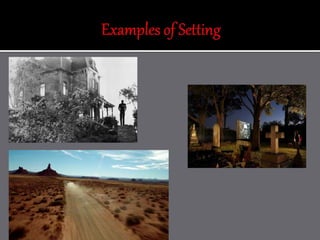
 Small, isolated communities/places. Dark streets and narrow
alleyways. Large cities or run down ghost towns. Anything
that portrays the feeling of isolation or being alone.
 Often places with a ‘dark’ history, abandoned hotels, houses,
prisons or asylums.
 Locations for good horror films could be: lakes, motorways,
roads, woodlands, cabins, gloomy underground tunnels,
creepy hotels, abounded houses, graveyard, asylum, blizzards
and many other dark locations.
 POV shots are very important in horror films because it allows the
audience to see the world from the monster/victims eye. This usually
happens at the end or the middle of a typical horror film.
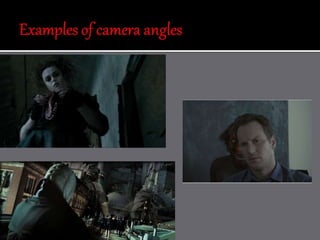
 High and low angles can connote fear and nightmares
 Framework sometimes makes it harder to see the killer creeping up.
 Disturbing sounds are very important in a horror movie, diegetic
sounds like footsteps and non-diegetic sounds like a heartbeat.
 Shots used like ECU (extreme close up) on a certain victims face can
help the audience identify horror and fear.
 Editing can create unsettling tension and suspense. Is the editing
hasn't been paced up you know that something very bad is about to
happen.
 Screen style: dark colours are used like red and black, these
particular colours portray evil, danger and blood
 Low-key lighting helps to create dark shadowing and
unfamiliar shapes in the darkness.
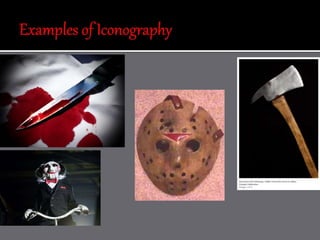
 Props help us further identify the horror genre. Some specific
props can help identify a certain villain or character.
 The iconography of the villain displays fear and terror:
vampires, zombies, werewolves and many others.
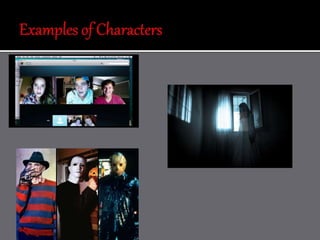
 The main victim/hero of the movie
 The villain often a serial killer, ghost or monster
 The immoral teenagers or citizens that always get killed
 Good or bad police officers
 Creepy children
 Ghosts, Zombies, Psychopaths, stalker, the list goes on.
 Revenge
 Lust
 Envy
 Suicide
 Depression
 Nightmares
 Insanity
 Supernatural
 Good verse evil
 Beyond death
 Science gone bad
 Zombie apocalypse
 Childhood issues
 Mental illness
 madness
 Possession
Conventionsofhorror

Conventionsofhorror

  • 1.
  • 2.
     Small, isolatedcommunities/places. Dark streets and narrow alleyways. Large cities or run down ghost towns. Anything that portrays the feeling of isolation or being alone.  Often places with a ‘dark’ history, abandoned hotels, houses, prisons or asylums.  Locations for good horror films could be: lakes, motorways, roads, woodlands, cabins, gloomy underground tunnels, creepy hotels, abounded houses, graveyard, asylum, blizzards and many other dark locations.
  • 4.
     POV shotsare very important in horror films because it allows the audience to see the world from the monster/victims eye. This usually happens at the end or the middle of a typical horror film.  High and low angles can connote fear and nightmares  Framework sometimes makes it harder to see the killer creeping up.  Disturbing sounds are very important in a horror movie, diegetic sounds like footsteps and non-diegetic sounds like a heartbeat.  Shots used like ECU (extreme close up) on a certain victims face can help the audience identify horror and fear.  Editing can create unsettling tension and suspense. Is the editing hasn't been paced up you know that something very bad is about to happen.
  • 6.
     Screen style:dark colours are used like red and black, these particular colours portray evil, danger and blood  Low-key lighting helps to create dark shadowing and unfamiliar shapes in the darkness.  Props help us further identify the horror genre. Some specific props can help identify a certain villain or character.  The iconography of the villain displays fear and terror: vampires, zombies, werewolves and many others.
  • 8.
     The mainvictim/hero of the movie  The villain often a serial killer, ghost or monster  The immoral teenagers or citizens that always get killed  Good or bad police officers  Creepy children  Ghosts, Zombies, Psychopaths, stalker, the list goes on.
  • 10.
     Revenge  Lust Envy  Suicide  Depression  Nightmares  Insanity  Supernatural  Good verse evil  Beyond death  Science gone bad  Zombie apocalypse  Childhood issues  Mental illness  madness  Possession