Nutrition: Pulses
Chandan N
IX Term
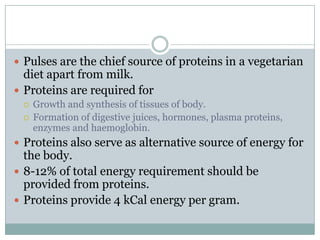
 Pulses are the chief source of proteins in a vegetarian
diet apart from milk.
 Proteins are required for
 Growth and synthesis of tissues of body.
 Formation of digestive juices, hormones, plasma proteins,
enzymes and haemoglobin.
 Proteins also serve as alternative source of energy for
the body.
 8-12% of total energy requirement should be
provided from proteins.
 Proteins provide 4 kCal energy per gram.
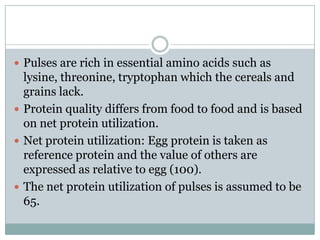
 Pulses are rich in essential amino acids such as
lysine, threonine, tryptophan which the cereals and
grains lack.
 Protein quality differs from food to food and is based
on net protein utilization.
 Net protein utilization: Egg protein is taken as
reference protein and the value of others are
expressed as relative to egg (100).
 The net protein utilization of pulses is assumed to be
65.
Sl.
No.
Pulses
(100g)
Protein
(g)
Fat (g) Carbohdrate
(g)
Energy
(kCal)
Crude fibre
(g)
Calcium
(mg)
Iron (mg)
1 Bengal gram 17.1 5.3 60.9 360 3.9 202 4.6
2 Black gram 24 1.4 59.6 347 0.9 154 3.8
3 Cow pea 24.1 1.0 54.5 323 3.8 77 8.6
4 Field bean 24.9 0.8 60.1 347 1.4 60 2.7
5 Green gram
(Whole)
24 1.3 56.7 334 4.1 124 4.4
6 Green gram
(Split)
24.5 1.2 59.9 348 0.8 75 3.9
7 Horse gram 22 0.5 57.2 321 5.3 287 6.77
8 Kesari dhal 22 0.6 56.6 345 2.3 90 6.3
9 Peas (green) 7.2 0.1 15.9 93 4.0 20 1.5
10 Peas (dry) 19.7 1.1 56.5 315 4.5 75 7.05
11 Rajmah 22.9 1.3 60.6 346 4.8 260 5.1
12 Red gram 22.3 1.7 57.6 335 1.5 73 2.7
13 Soyabean 43.2 19.5 20.9 432 3.7 240 10.4
14 Ground nut 25.3 40.1 26.1 567 3.1 90 2.5
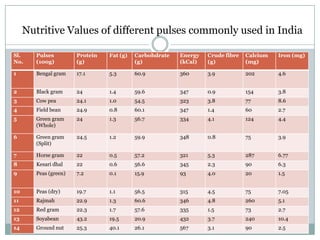
Nutritive Values of different pulses commonly used in India
 Besides the previously mentioned nutrients pulses
are a good source of Vitamin B and folic acid.
References
 Essential Paediatrics by O.P.Ghai.
 Nutritive value of Indian Foods, National Institute
of Nutrition, Indian Council of Medical Research,
Hyderabad. Pg47-48,59-60.

Nutrition

  • 1.
  • 2.
     Pulses arethe chief source of proteins in a vegetarian diet apart from milk.  Proteins are required for  Growth and synthesis of tissues of body.  Formation of digestive juices, hormones, plasma proteins, enzymes and haemoglobin.  Proteins also serve as alternative source of energy for the body.  8-12% of total energy requirement should be provided from proteins.  Proteins provide 4 kCal energy per gram.
  • 3.
     Pulses arerich in essential amino acids such as lysine, threonine, tryptophan which the cereals and grains lack.  Protein quality differs from food to food and is based on net protein utilization.  Net protein utilization: Egg protein is taken as reference protein and the value of others are expressed as relative to egg (100).  The net protein utilization of pulses is assumed to be 65.
  • 4.
    Sl. No. Pulses (100g) Protein (g) Fat (g) Carbohdrate (g) Energy (kCal) Crudefibre (g) Calcium (mg) Iron (mg) 1 Bengal gram 17.1 5.3 60.9 360 3.9 202 4.6 2 Black gram 24 1.4 59.6 347 0.9 154 3.8 3 Cow pea 24.1 1.0 54.5 323 3.8 77 8.6 4 Field bean 24.9 0.8 60.1 347 1.4 60 2.7 5 Green gram (Whole) 24 1.3 56.7 334 4.1 124 4.4 6 Green gram (Split) 24.5 1.2 59.9 348 0.8 75 3.9 7 Horse gram 22 0.5 57.2 321 5.3 287 6.77 8 Kesari dhal 22 0.6 56.6 345 2.3 90 6.3 9 Peas (green) 7.2 0.1 15.9 93 4.0 20 1.5 10 Peas (dry) 19.7 1.1 56.5 315 4.5 75 7.05 11 Rajmah 22.9 1.3 60.6 346 4.8 260 5.1 12 Red gram 22.3 1.7 57.6 335 1.5 73 2.7 13 Soyabean 43.2 19.5 20.9 432 3.7 240 10.4 14 Ground nut 25.3 40.1 26.1 567 3.1 90 2.5 Nutritive Values of different pulses commonly used in India
  • 5.
     Besides thepreviously mentioned nutrients pulses are a good source of Vitamin B and folic acid.
  • 6.
    References  Essential Paediatricsby O.P.Ghai.  Nutritive value of Indian Foods, National Institute of Nutrition, Indian Council of Medical Research, Hyderabad. Pg47-48,59-60.