Contract Law &
Project Managers
MARYAM SANAEI
4-8-2021
Maryam Sanaei
• I have more than 16 years hands-on experience in
project engineering and management and I am
passionate about finding some areas of
improvement in project management so I though
creating small reminders for people who are
working in this domain about Contract
Management might be the best approach to help
my peers and friends.
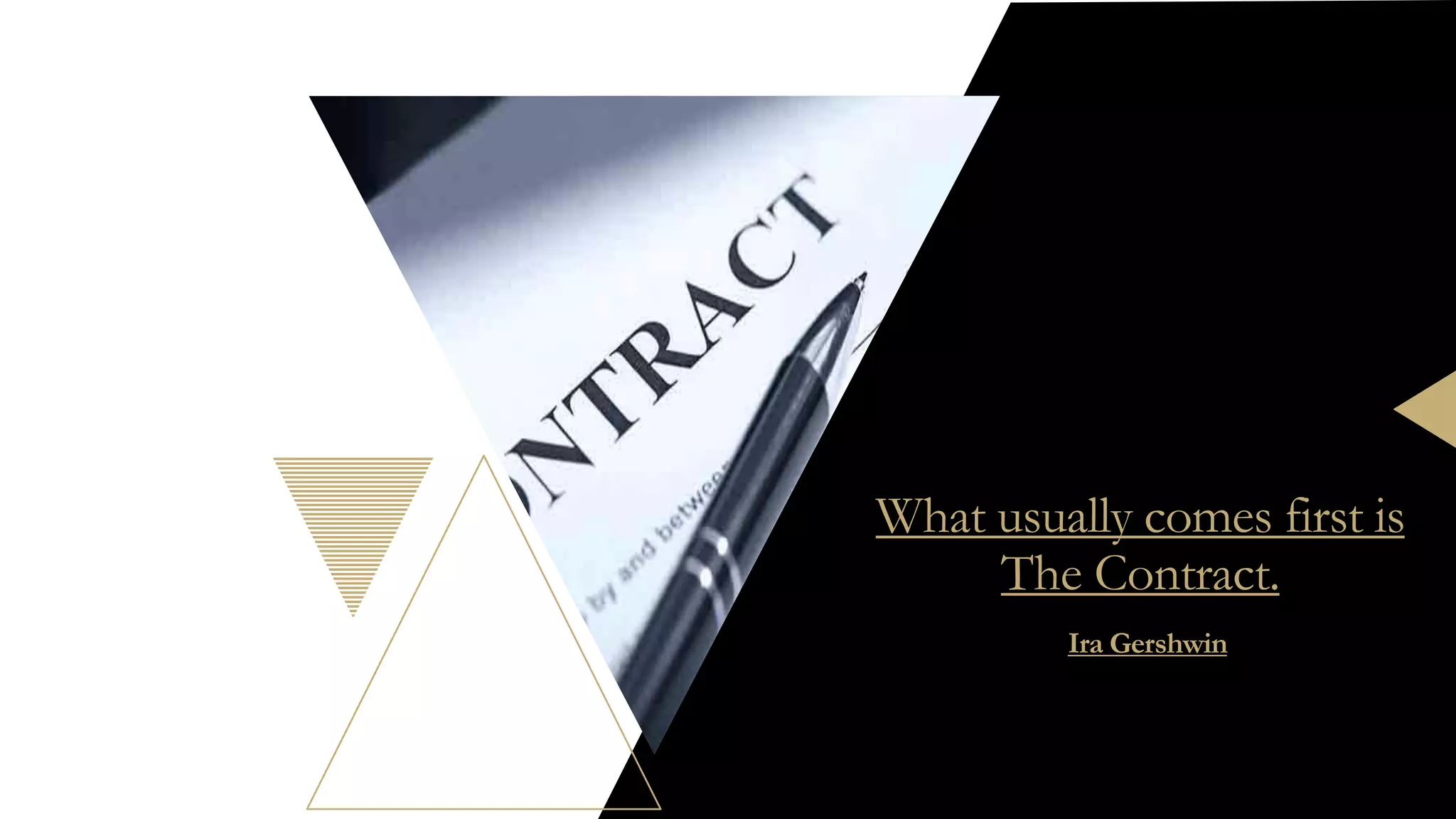
What usually comes first is
The Contract.
Ira Gershwin
Overview
• Meet the Presenter
• The Beginning
• Terms & Condition
• Warranty
• Limitation of Liability
• Indemnity
• Force Majeure
• Liquidated Damages
• Acceptance
• Call to Action
“Get all the help you can”
Review the contract in detail
and if you have legal
departments send them the
contract for review and
comments
• Specified time for Shipment or Delivery
• Exclusive; specific remedy such as repair or replacement in the event the article or service fails to meet the
warranty.
• Express or Implied or both.
• Customer compliance with specified instruction for use.
• Warrant to the Specification and not the intended purposes
• Avoid any ambiguous statements such as “ Best in Quality, Industry Standard…)
Warranty:
A warranty is a legally binding commitment forming part of the contract which assures the product or service
is free from defects.
Limitation of Liability
A limitation of liability clause is a provision in a
contract that limits the amount of exposure a
company faces in the event a lawsuit is filed or
another claim is made. If found to be enforceable,
a limitation of liability clause can "cap" the amount
of potential damages to which a company is
exposed.
https://www.bakerdonelson.com/The-Sky-is-Not-the-Limit-Limitation-of-Liability-Clauses-May-Be-the-Solution-to-Cap-Your-Contractual-Liability-05-10-
2007#:~:text=A%20limitation%20of%20liability%20clause%20is%20a%20provision%20in%20a,which%20a%20company%20is%20exposed.
•The Clause MUST be
Conspicuous
•Must be Clear & Concise.
•MUST be capped at the total
contract price. **
•Review Exceptions.
•Must Cover all type of Damages
** can be capped at greater than Contract Price
by Business decision
To be Avoid Whenever Possible
If can’t be avoided then MUST be Limited
- 3rd Party claims
- Personal Injury & Physical damage to 3rd party
property
-To your Proportionate Fault
- Must Not given for performance
Indemnity
Contracts often contain a provision
called an Indemnity Clause. This clause
states that one of the parties
("Indemnifying Party") promises to
defend and pay costs and expenses for
the other party ("Indemnified Party")
under certain circumstances.
https://www.whhmlaw.com/for-your-information/contract-law-articles/indemnity-clause-a-danerous-contract-clause
Force Majeure
A force majeure clause is a contractual
provision which excuses one or both parties’
performance obligations when circumstances
arise which are beyond the parties’ control
and make performance of the contract
impractical or impossible.
SeeNerTamidCongregationofN.Townv.Krivoruchko,638F.Supp.2d913,931(N.D.Ill.2009), asamended(July9,2009).
•In the absence of a force majeure clause, parties to a contract
are left to the mercy of the narrow common law contract
doctrines of "impracticability" and "frustration of purpose,"
which rarely result in excuse of performance. [1]
•Determining which types of circumstances will be covered by
the force majeure clause is essential. [1]
•Limited protection under Uniform Commercial Code “UCC”
[1] https://www.venable.com/insights/publications/2011/02/understanding-force-majeure-
clauses
DO’S
- Limited to the portion of the contract
which is delayed.
- Cap at the certain amount (e.g. 5~10% of
contract).
- Sole Remedy for late delivery
DON’TS
Don't accept both back charges & LDs on
delayed item / services
Liquidated Damages
A liquidateddamages clausespecifiesa predeterminedamount of money that mustbe paid as damages for failureto perform undera contract.Theamount of theliquidateddamages issupposed to be theparties’ bestestimateatthe
timetheysign thecontractof the damagesthat would be causedbya breach. [1]
[1] https://www.nolo.com/legal-encyclopedia/when-are-liquidated-damage-provisions-enforceable.html#:~:text=A%20liquidated%20damages%20clause%20specifies,be%20caused%20by%20a%20breach.
Acceptance
Define Time for Acceptance
Very important to provide time frame for acceptance if disputed you can argue
that the warranty is the remedy for a breach of warranty.
After Acceptance
Your sole liability and Owner’s exclusive remedy for defective Work shall be
(Warranty)
• “Be sure to understand the terms of any contract, before you sign.”
Lailah Gifty Akita
Call to Action
Thank You
LinkedIn
https://www.linkedin.com/in/maryamsanaei
Email
mm.sanaei@gmail.com

Contract law & Project Mangers

  • 1.
    Contract Law & ProjectManagers MARYAM SANAEI 4-8-2021
  • 2.
    Maryam Sanaei • Ihave more than 16 years hands-on experience in project engineering and management and I am passionate about finding some areas of improvement in project management so I though creating small reminders for people who are working in this domain about Contract Management might be the best approach to help my peers and friends.
  • 3.
    What usually comesfirst is The Contract. Ira Gershwin
  • 4.
    Overview • Meet thePresenter • The Beginning • Terms & Condition • Warranty • Limitation of Liability • Indemnity • Force Majeure • Liquidated Damages • Acceptance • Call to Action
  • 5.
    “Get all thehelp you can” Review the contract in detail and if you have legal departments send them the contract for review and comments
  • 6.
    • Specified timefor Shipment or Delivery • Exclusive; specific remedy such as repair or replacement in the event the article or service fails to meet the warranty. • Express or Implied or both. • Customer compliance with specified instruction for use. • Warrant to the Specification and not the intended purposes • Avoid any ambiguous statements such as “ Best in Quality, Industry Standard…) Warranty: A warranty is a legally binding commitment forming part of the contract which assures the product or service is free from defects.
  • 7.
    Limitation of Liability Alimitation of liability clause is a provision in a contract that limits the amount of exposure a company faces in the event a lawsuit is filed or another claim is made. If found to be enforceable, a limitation of liability clause can "cap" the amount of potential damages to which a company is exposed. https://www.bakerdonelson.com/The-Sky-is-Not-the-Limit-Limitation-of-Liability-Clauses-May-Be-the-Solution-to-Cap-Your-Contractual-Liability-05-10- 2007#:~:text=A%20limitation%20of%20liability%20clause%20is%20a%20provision%20in%20a,which%20a%20company%20is%20exposed. •The Clause MUST be Conspicuous •Must be Clear & Concise. •MUST be capped at the total contract price. ** •Review Exceptions. •Must Cover all type of Damages ** can be capped at greater than Contract Price by Business decision
  • 8.
    To be AvoidWhenever Possible If can’t be avoided then MUST be Limited - 3rd Party claims - Personal Injury & Physical damage to 3rd party property -To your Proportionate Fault - Must Not given for performance Indemnity Contracts often contain a provision called an Indemnity Clause. This clause states that one of the parties ("Indemnifying Party") promises to defend and pay costs and expenses for the other party ("Indemnified Party") under certain circumstances. https://www.whhmlaw.com/for-your-information/contract-law-articles/indemnity-clause-a-danerous-contract-clause
  • 9.
    Force Majeure A forcemajeure clause is a contractual provision which excuses one or both parties’ performance obligations when circumstances arise which are beyond the parties’ control and make performance of the contract impractical or impossible. SeeNerTamidCongregationofN.Townv.Krivoruchko,638F.Supp.2d913,931(N.D.Ill.2009), asamended(July9,2009). •In the absence of a force majeure clause, parties to a contract are left to the mercy of the narrow common law contract doctrines of "impracticability" and "frustration of purpose," which rarely result in excuse of performance. [1] •Determining which types of circumstances will be covered by the force majeure clause is essential. [1] •Limited protection under Uniform Commercial Code “UCC” [1] https://www.venable.com/insights/publications/2011/02/understanding-force-majeure- clauses
  • 10.
    DO’S - Limited tothe portion of the contract which is delayed. - Cap at the certain amount (e.g. 5~10% of contract). - Sole Remedy for late delivery DON’TS Don't accept both back charges & LDs on delayed item / services Liquidated Damages A liquidateddamages clausespecifiesa predeterminedamount of money that mustbe paid as damages for failureto perform undera contract.Theamount of theliquidateddamages issupposed to be theparties’ bestestimateatthe timetheysign thecontractof the damagesthat would be causedbya breach. [1] [1] https://www.nolo.com/legal-encyclopedia/when-are-liquidated-damage-provisions-enforceable.html#:~:text=A%20liquidated%20damages%20clause%20specifies,be%20caused%20by%20a%20breach.
  • 11.
    Acceptance Define Time forAcceptance Very important to provide time frame for acceptance if disputed you can argue that the warranty is the remedy for a breach of warranty. After Acceptance Your sole liability and Owner’s exclusive remedy for defective Work shall be (Warranty)
  • 12.
    • “Be sureto understand the terms of any contract, before you sign.” Lailah Gifty Akita Call to Action
  • 13.