Open Mining of the Bioscience Literature
Peter Murray-Rust,
ContentMine.org and the University of Cambridge
UNAM, MX 2015-10-09
Millions of data points are hidden in the bioscience literature.
ContentMine has Open technology to liberate them automatically.
Using OpenNotebook approaches
The major problem is politico-legal
This is an exploratory talk, looking for ideas and projects
The future depends on young people
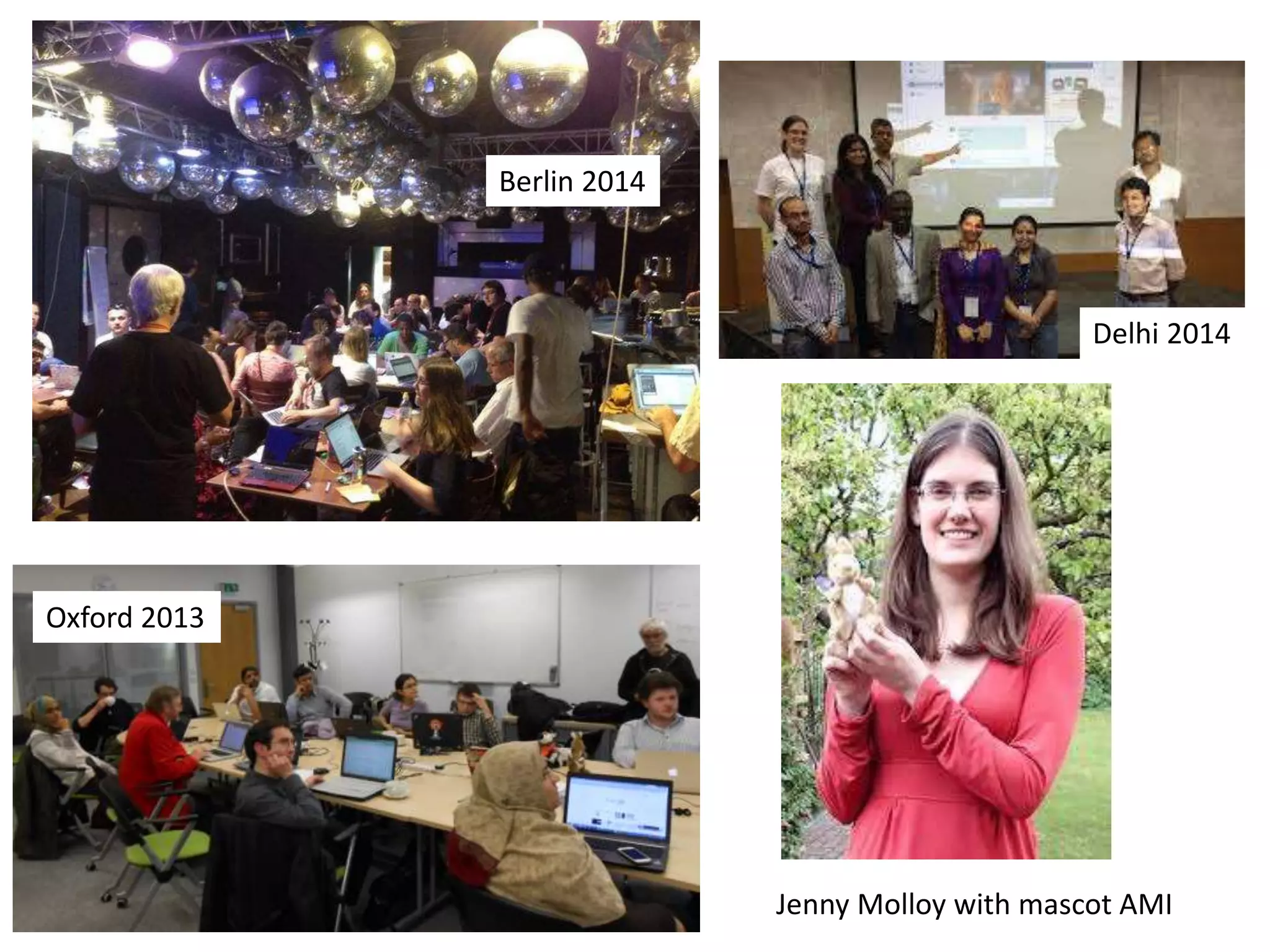
Oxford 2013
Berlin 2014
Delhi 2014
Jenny Molloy with mascot AMI
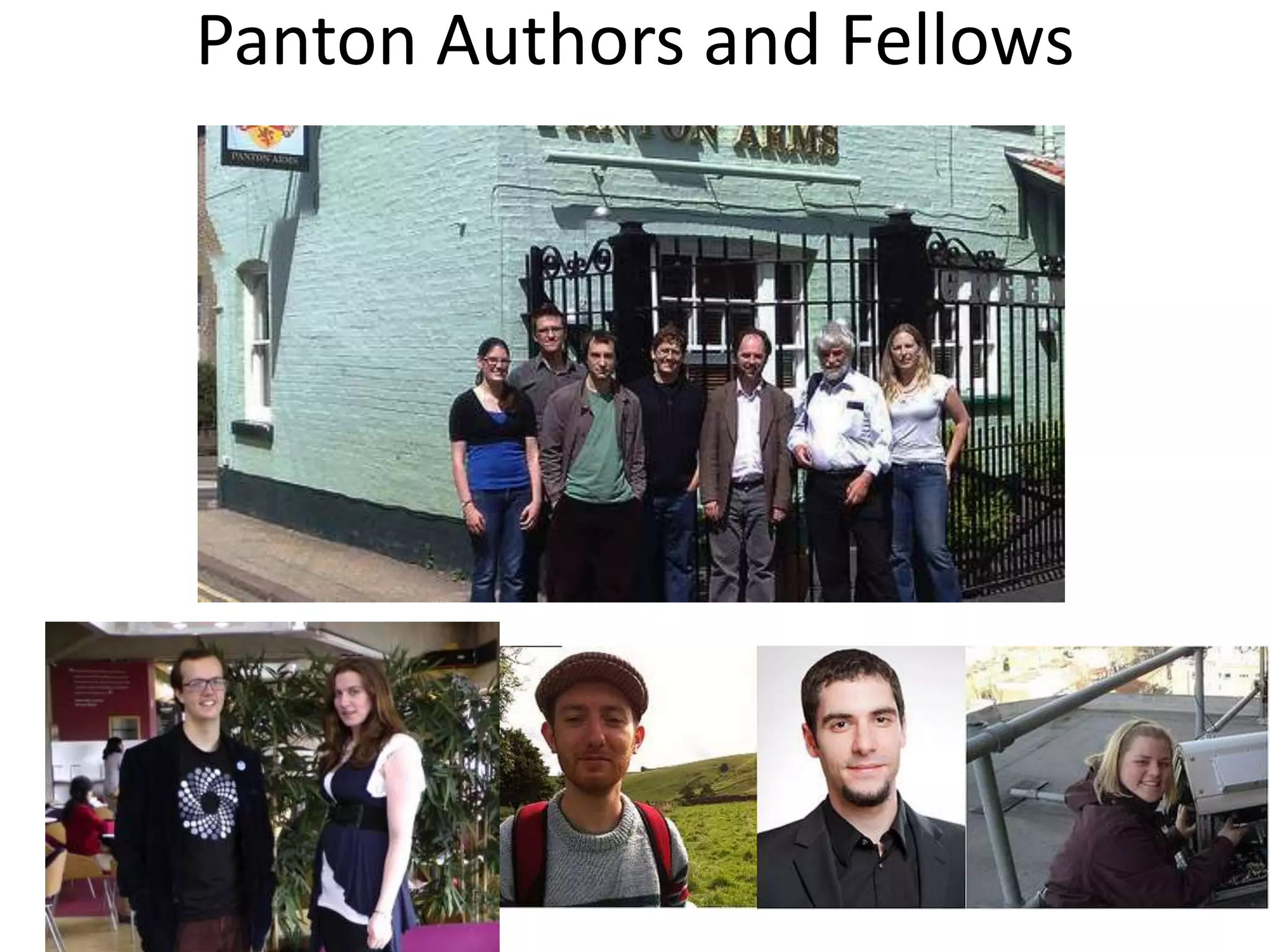
Panton Authors and Fellows
Some particularly relevant Fellows/Alumni and projects:
• Rufus Pollock: Open Knowledge Foundation
• Mark Surman: Mozilla
• Dan Whaley: Hypothes.is
• Daniel Lombrana-Gonzales: PyBossa/Crowdcrafting
Erin McKiernan, 2015 Flash Award
ContentMine and Peter Murray-Rust are funded by:
The Right to Read is the Right to Mine
http://contentmine.org
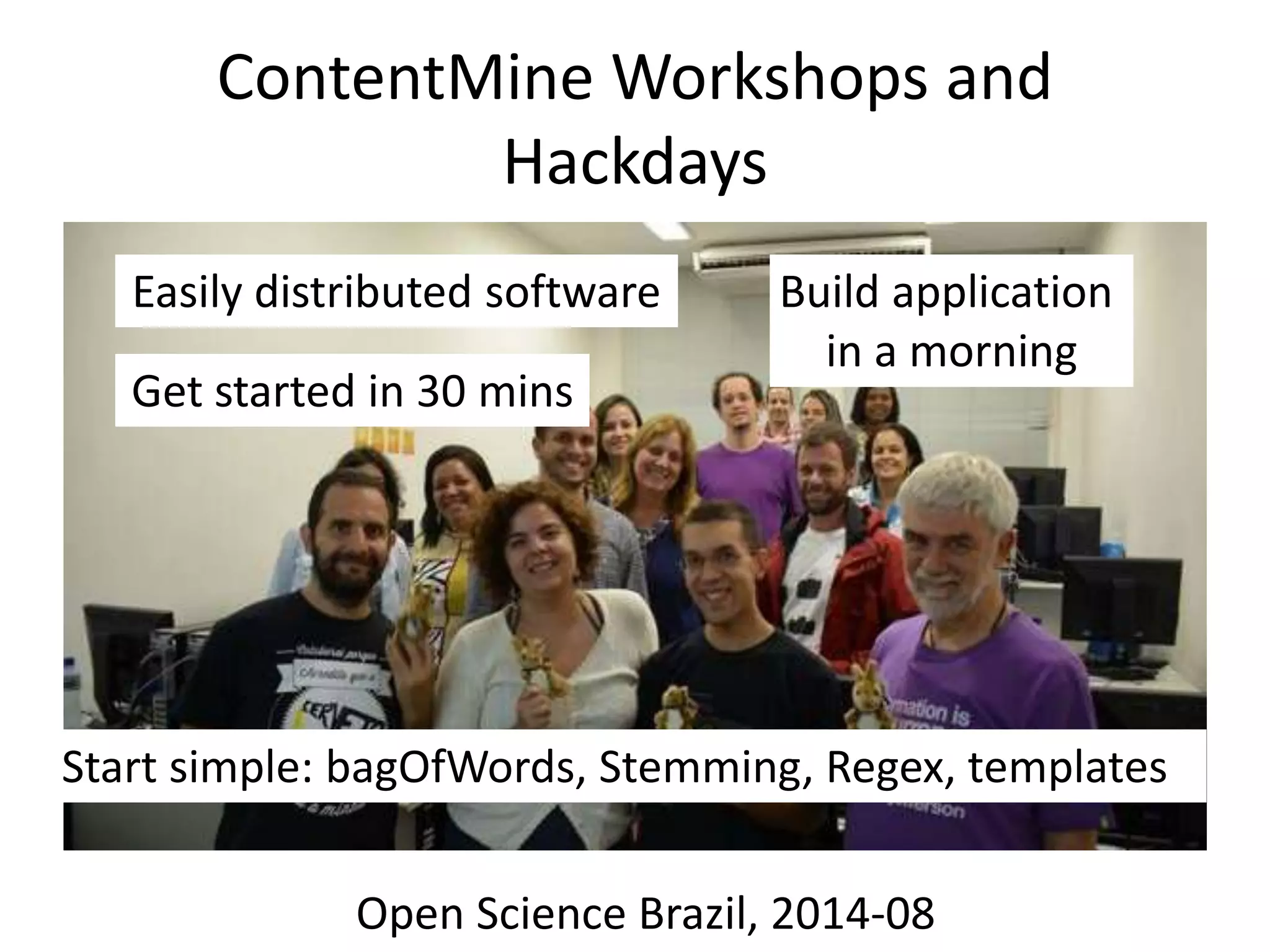
ContentMine Workshops and
Hackdays
Open Science Brazil, 2014-08
Easily distributed software
Get started in 30 mins
Build application
in a morning
Start simple: bagOfWords, Stemming, Regex, templates
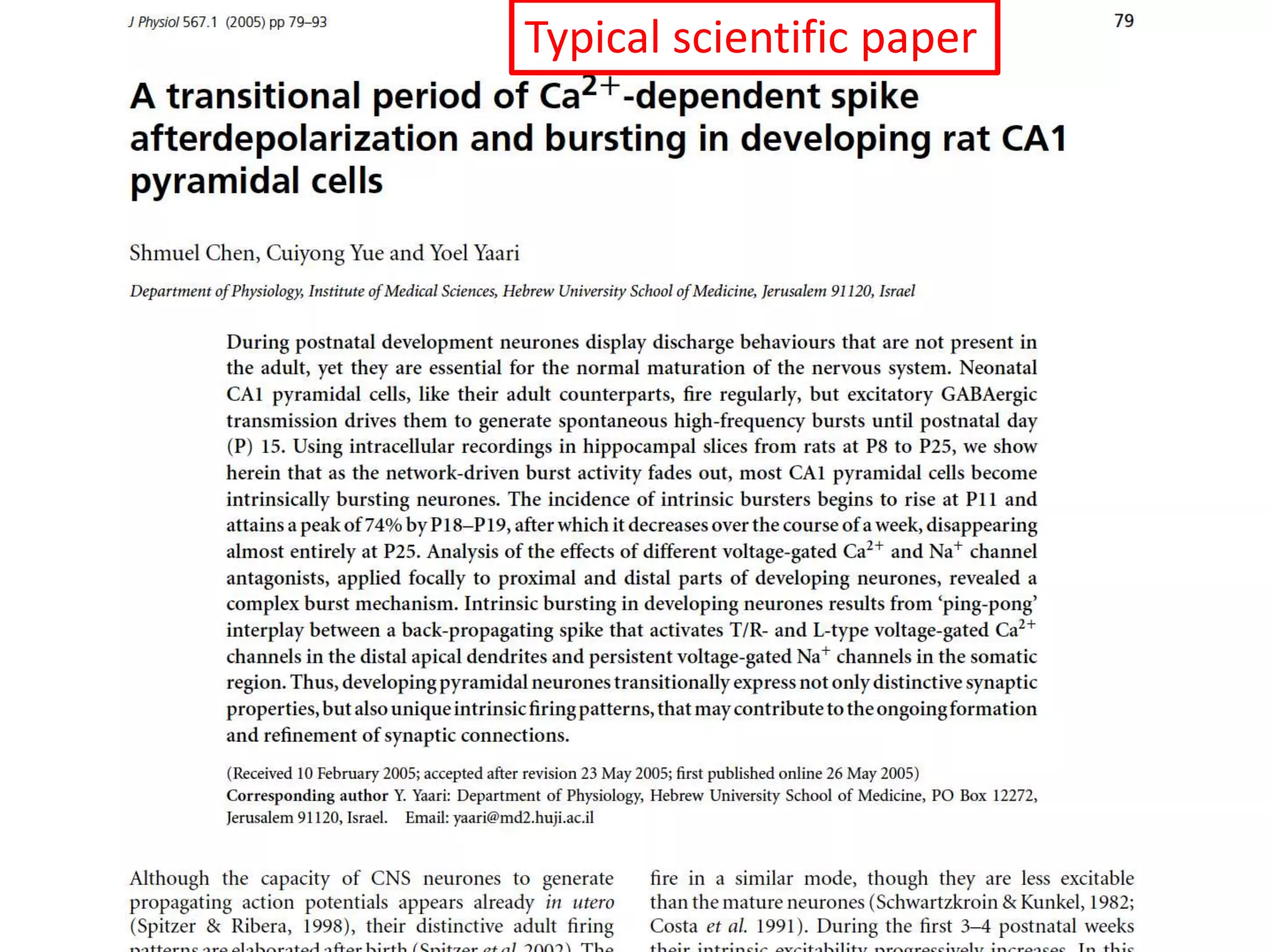
Typical scientific paper
Why do we publish science?
• Communicate our results
• Archival
• Get feedback from peers.
• Provide material that others can re-use.
• Priority and esteem.
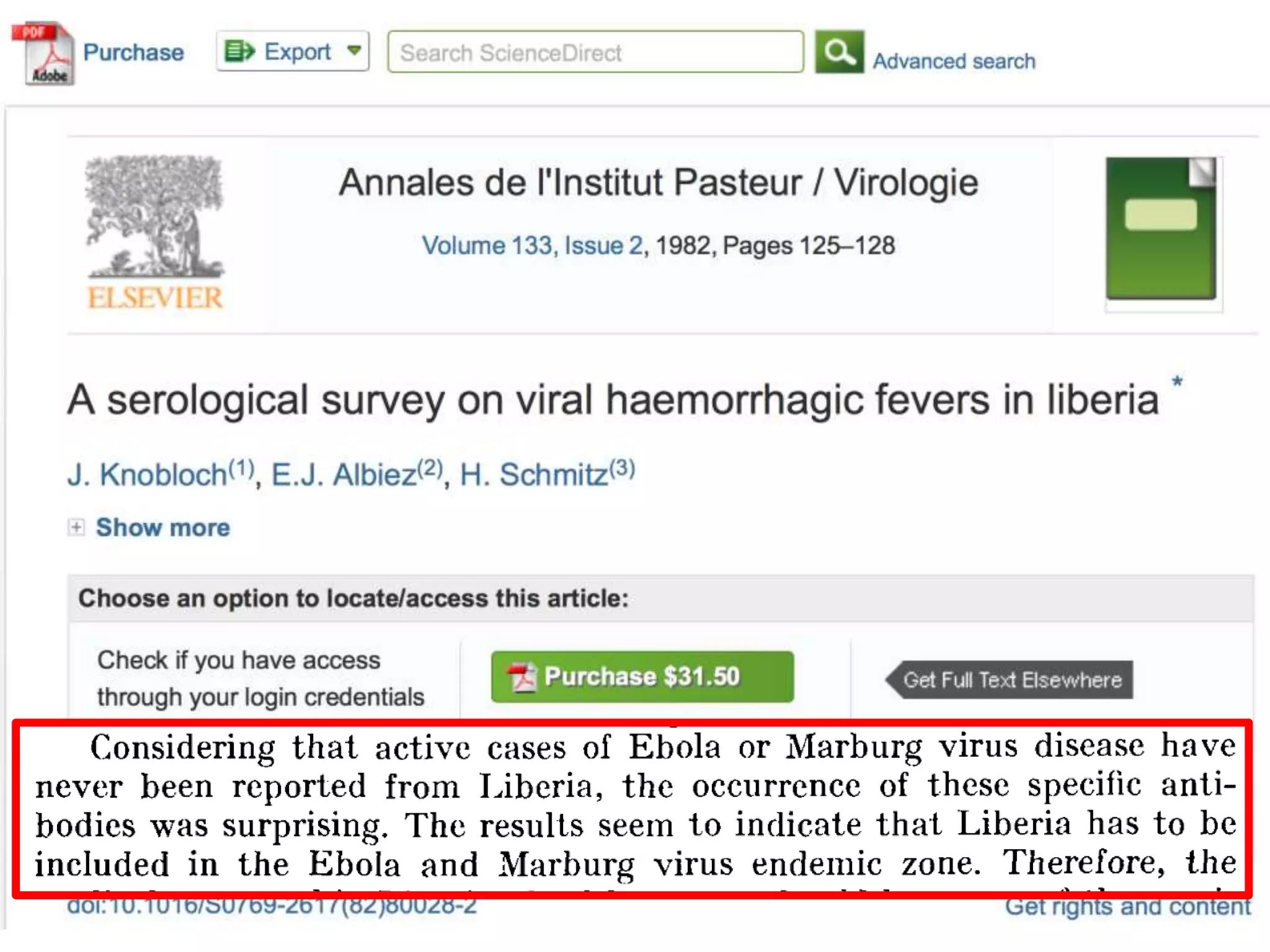
http://www.nytimes.com/2015/04/08/opinion/yes-we-were-warned-about-
ebola.html
[Liberian Ministry of Health] were stunned recently when we stumbled across
an article by European researchers in Annals of Virology [1982]: “The results
seem to indicate that Liberia has to be included in the Ebola virus endemic
zone.” In the future, the authors asserted, “medical personnel in Liberian health
centers should be aware of the possibility that they may come across active
cases and thus be prepared to avoid nosocomial epidemics,” referring to
hospital-acquired infection.
Adage in public health: “The road to inaction is paved with research
papers.”
Bernice Dahn (chief medical officer of Liberia’s Ministry of Health)
Vera Mussah (director of county health services)
Cameron Nutt (Ebola response adviser to Partners in Health)
A System Failure of Scholarly Publishing
Re-use
You cannot assume how others will want to re-use your
work.
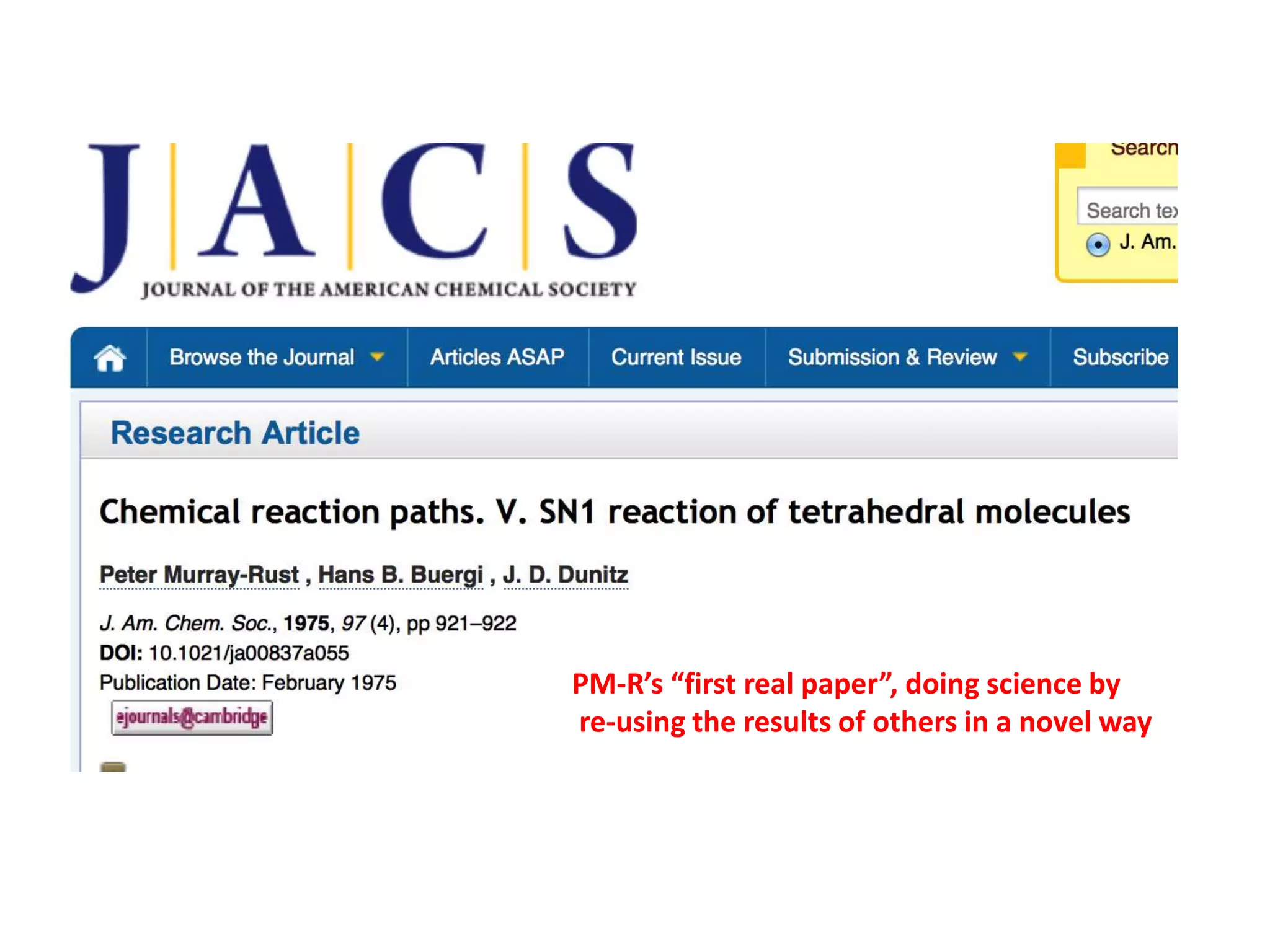
PM-R’s “first real paper”, doing science by
re-using the results of others in a novel way
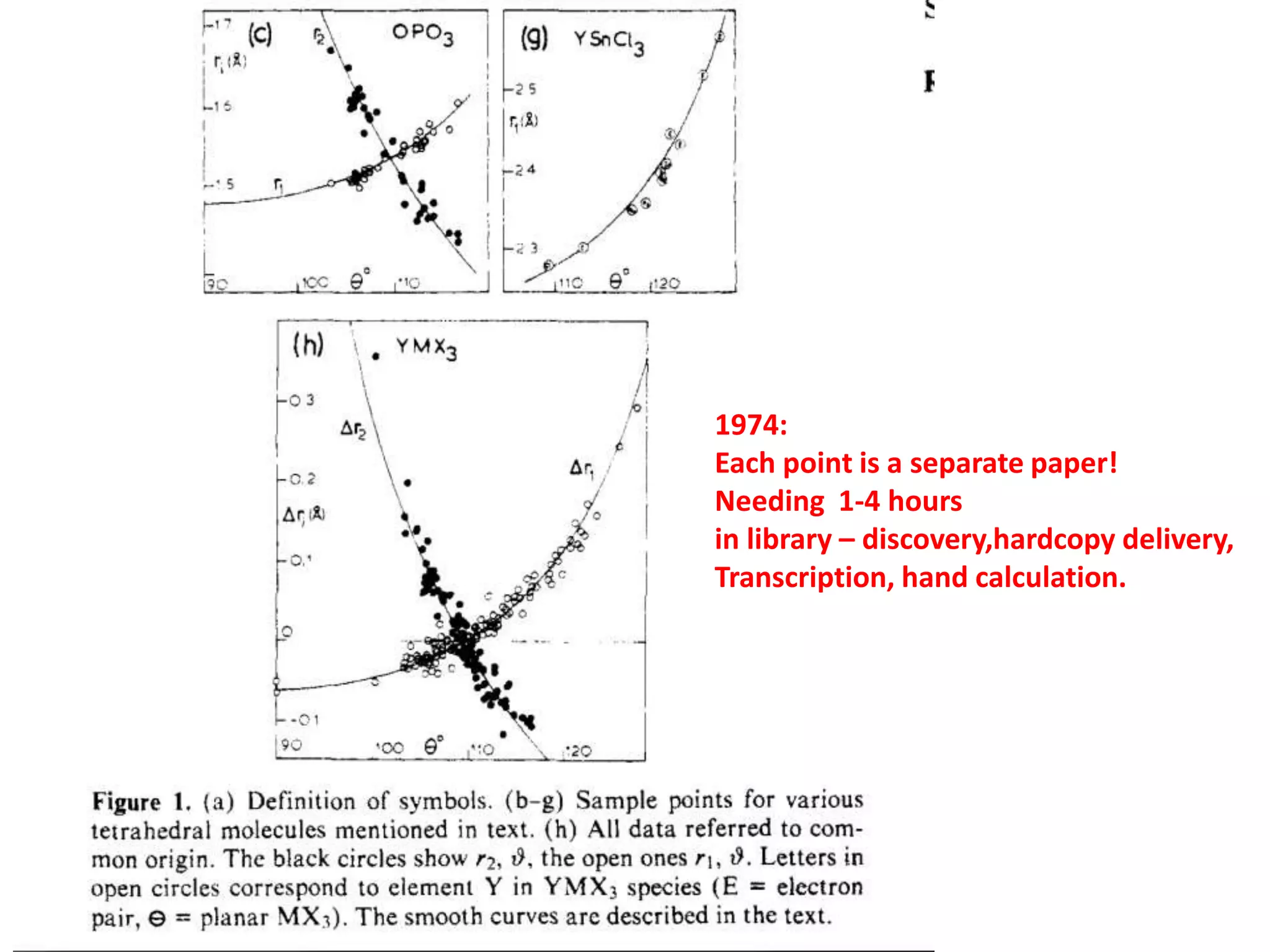
1974:
Each point is a separate paper!
Needing 1-4 hours
in library – discovery,hardcopy delivery,
Transcription, hand calculation.
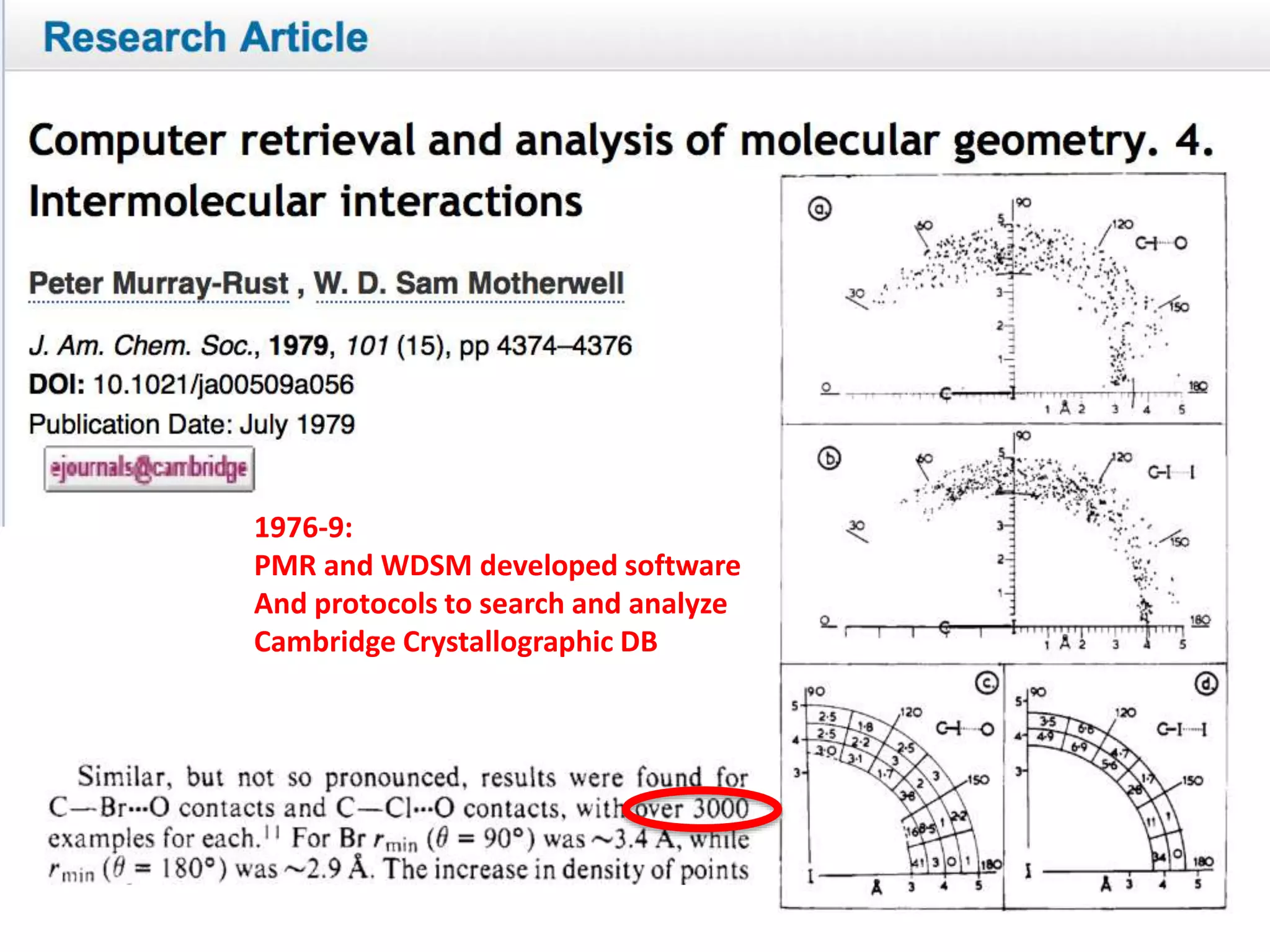
1976-9:
PMR and WDSM developed software
And protocols to search and analyze
Cambridge Crystallographic DB
We need machines to read the
literature
Output of scholarly publishing
[2] https://en.wikipedia.org/wiki/Mont_Blanc#/media/File:Mont_Blanc_depuis_Valmorel.jpg
586,364 Crossref DOIs 201,507 [1] per month
1.5 million (papers + supplemental data) /year [citation needed]*
each 3 mm thick
 4500 m high per year [2]
* Most is not Publicly readable
[1] http://www.crossref.org/01company/crossref_indicators.html
Scientific and Medical publication (STM)[+]
• World Citizens pay $450,000,000,000…
• … for research in 1,500,000 articles …
• … cost $300,000 each to create …
• … $7000 each to “publish” [*]…
• … $10,000,000,000 from academic libraries …
• … to “publishers” who forbid access to 99.9% of citizens of
the world …
• 85% of medical research is wasted (not published, badly
conceived, duplicated, …) [Lancet 2009]
[+] Figures probably +- 50 %
[*] arXiV preprint server costs $7 USD per paper
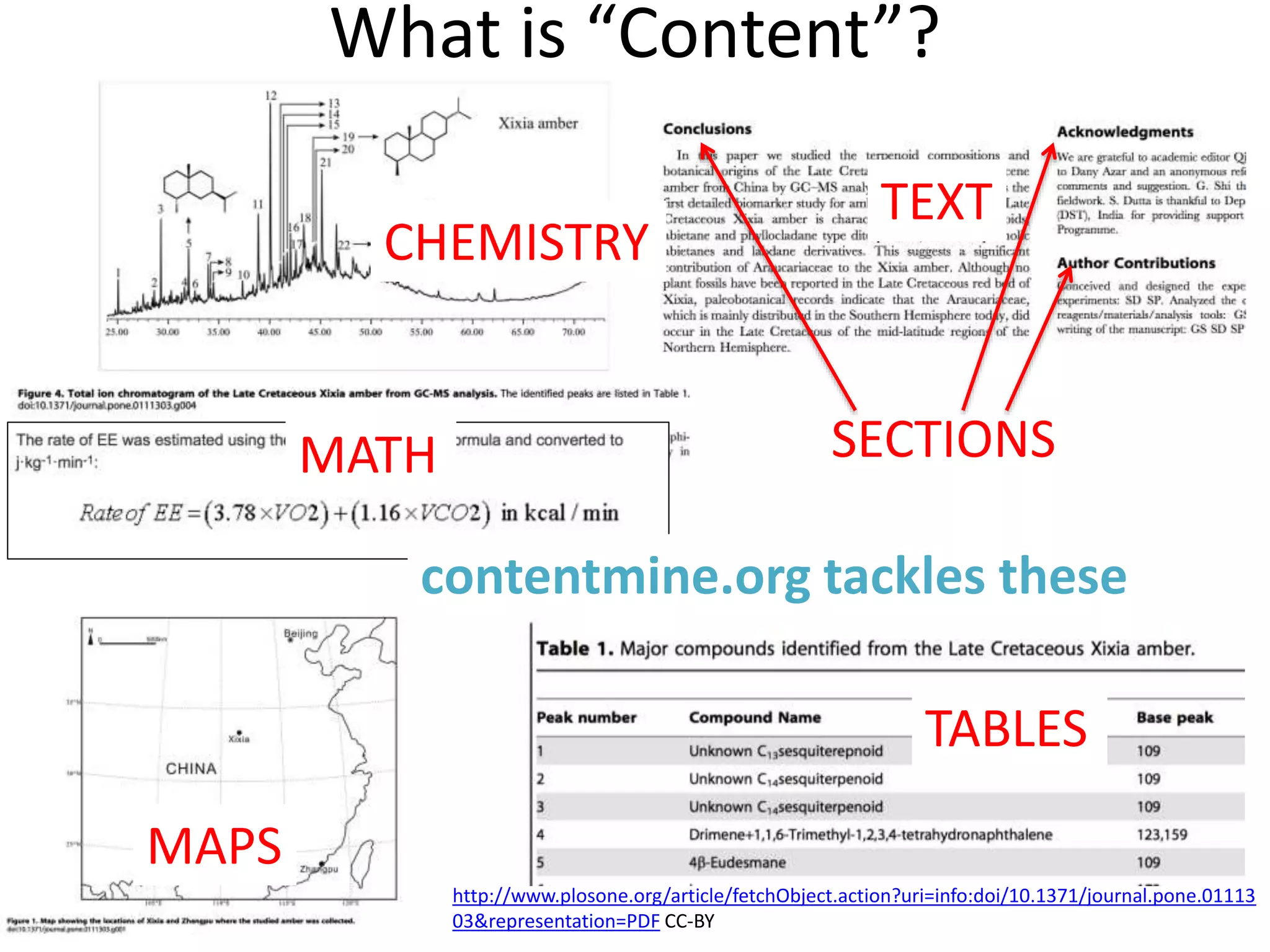
What is “Content”?
http://www.plosone.org/article/fetchObject.action?uri=info:doi/10.1371/journal.pone.01113
03&representation=PDF CC-BY
SECTIONS
MAPS
TABLES
CHEMISTRY
TEXT
MATH
contentmine.org tackles these
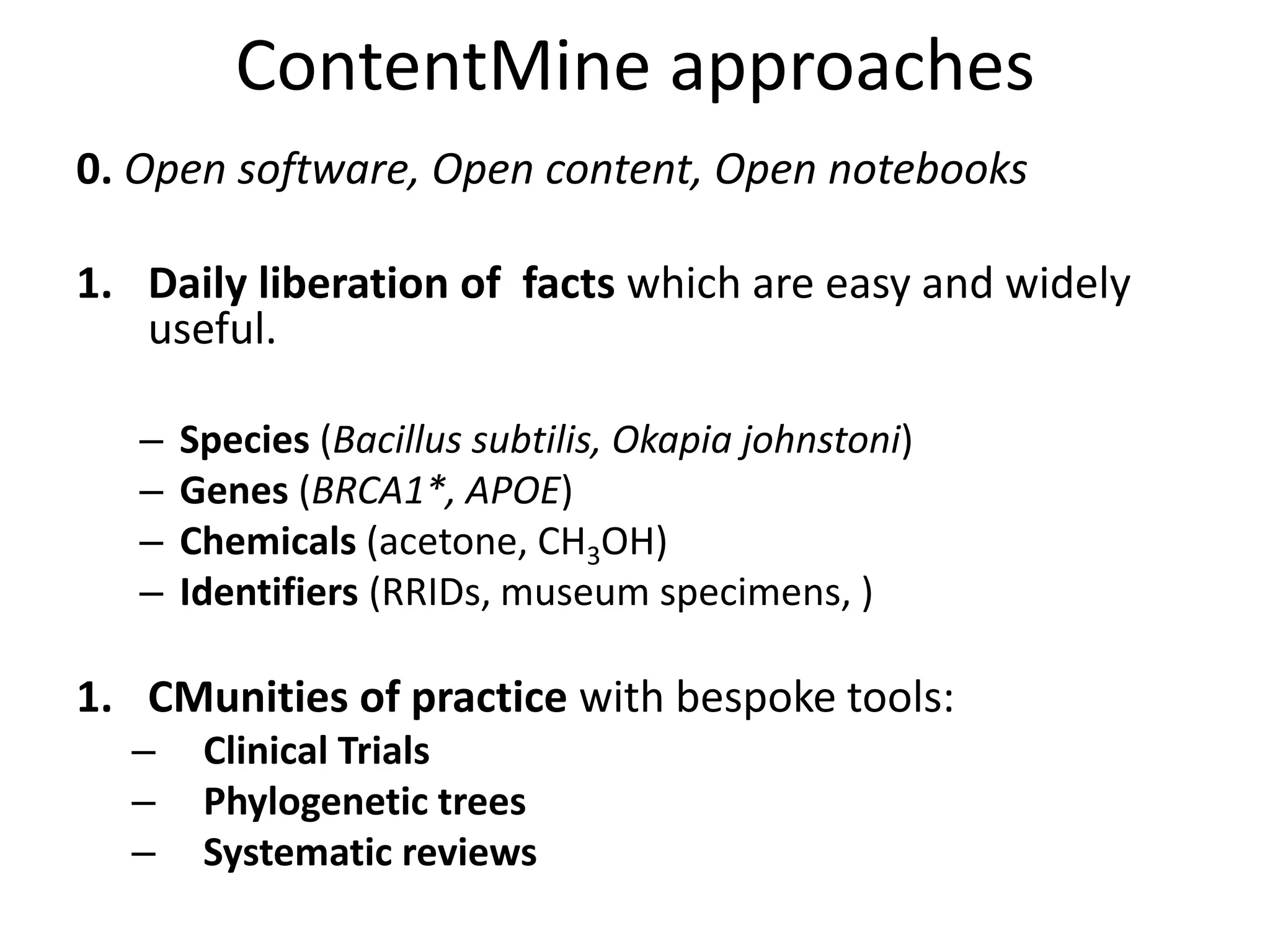
ContentMine approaches
0. Open software, Open content, Open notebooks
1. Daily liberation of facts which are easy and widely
useful.
– Species (Bacillus subtilis, Okapia johnstoni)
– Genes (BRCA1*, APOE)
– Chemicals (acetone, CH3OH)
– Identifiers (RRIDs, museum specimens, )
1. CMunities of practice with bespoke tools:
– Clinical Trials
– Phylogenetic trees
– Systematic reviews
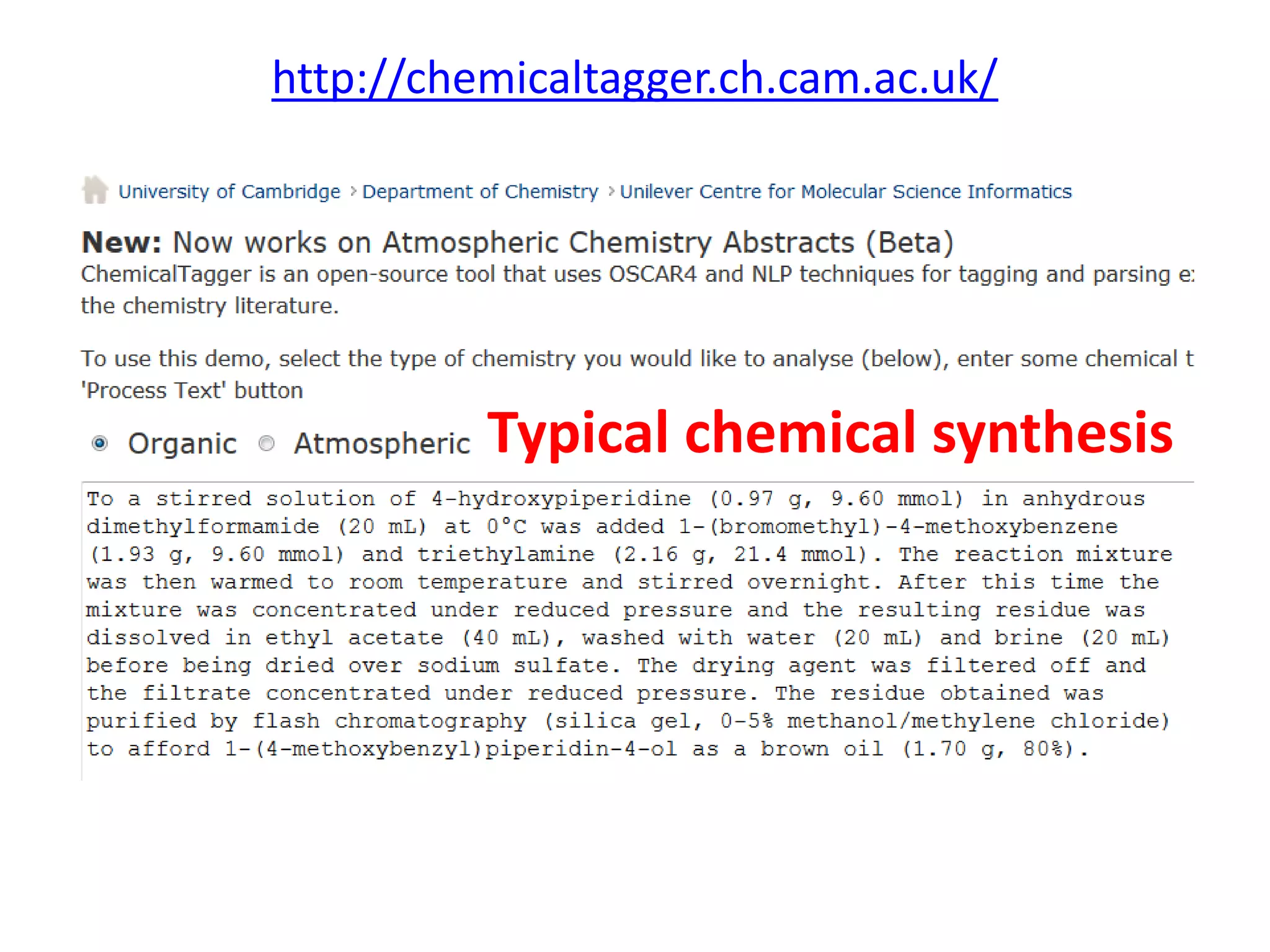
http://chemicaltagger.ch.cam.ac.uk/
• Typical
Typical chemical synthesis
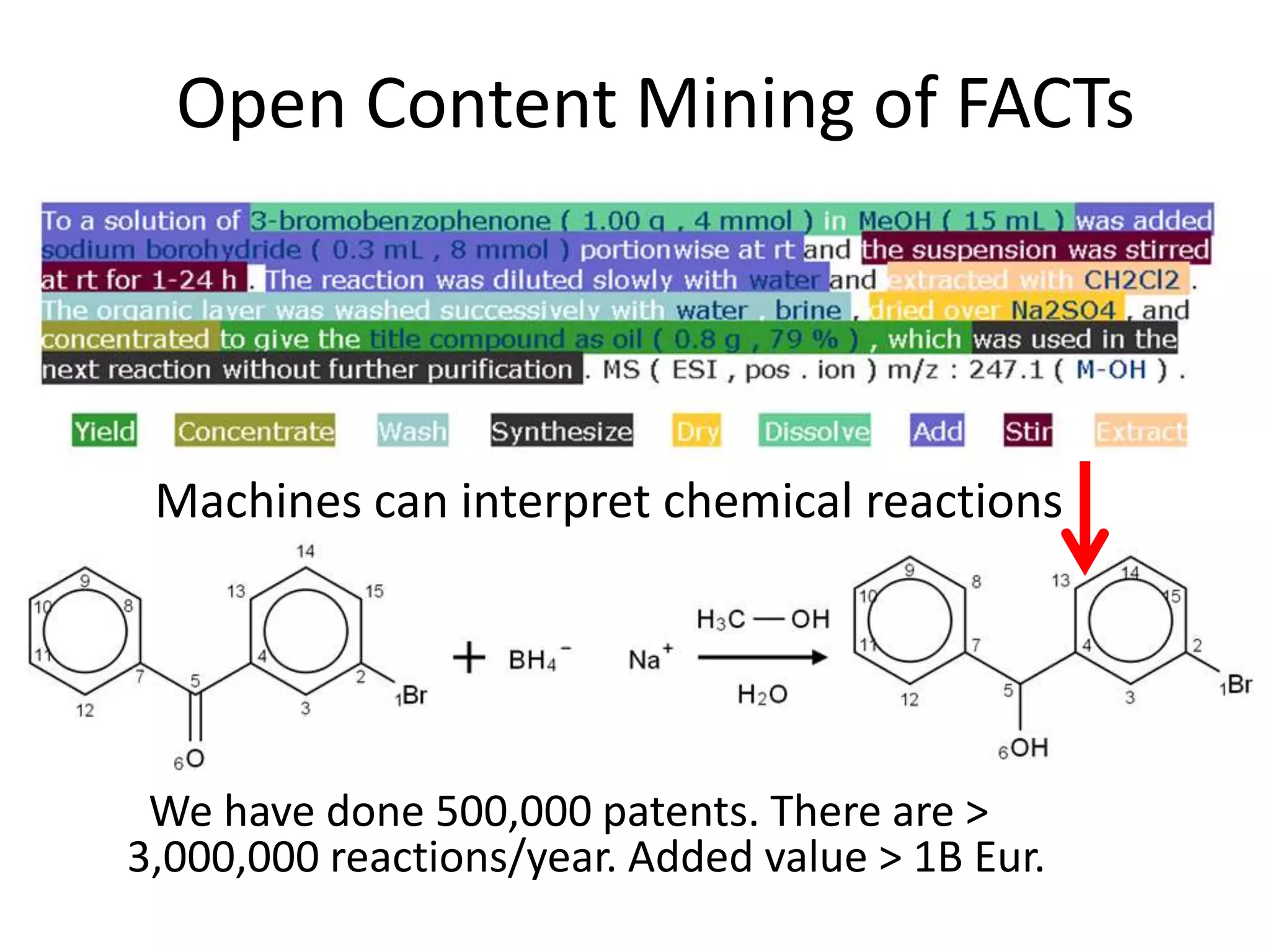
Open Content Mining of FACTs
Machines can interpret chemical reactions
We have done 500,000 patents. There are >
3,000,000 reactions/year. Added value > 1B Eur.
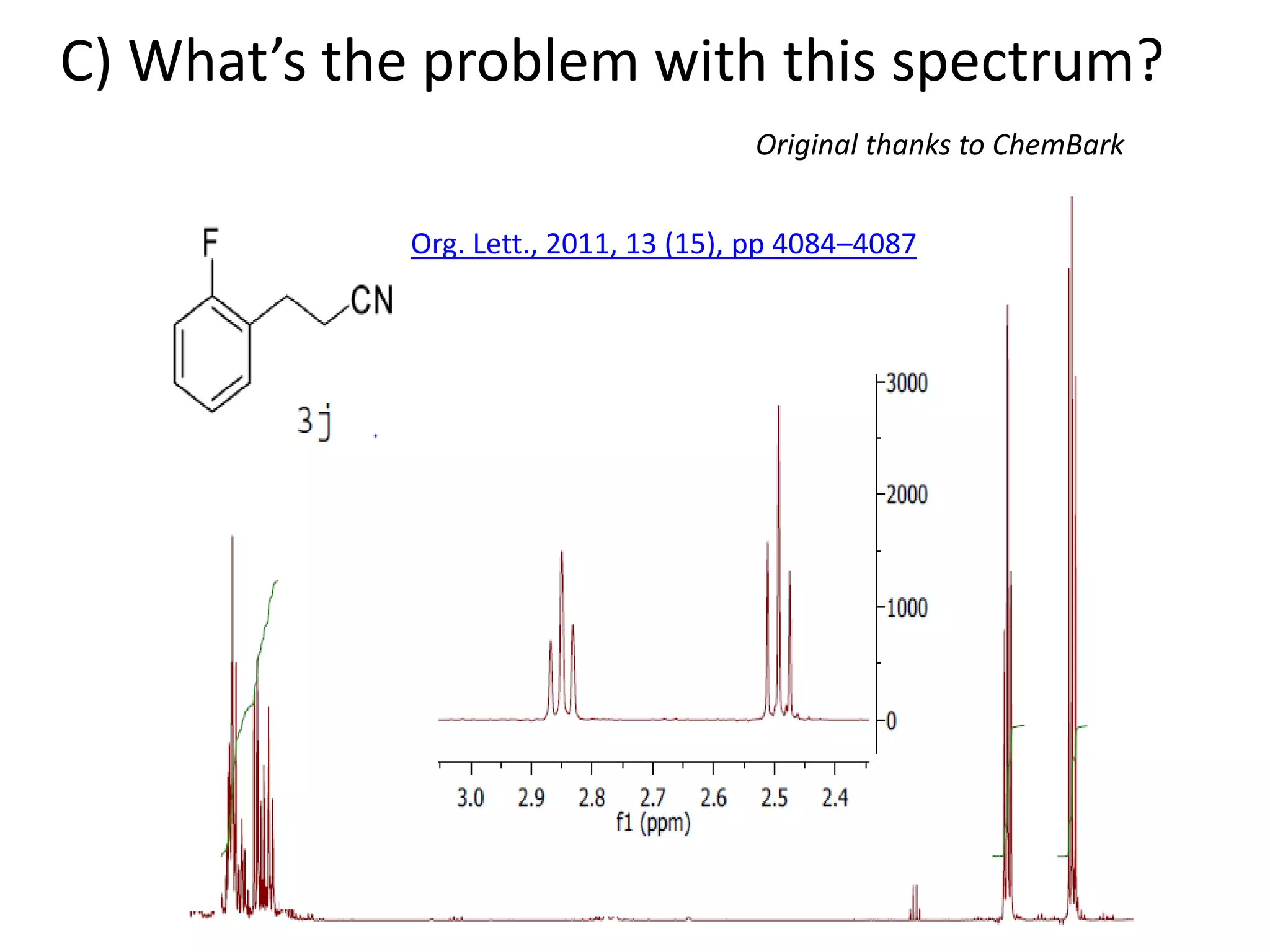
C) What’s the problem with this spectrum?
Org. Lett., 2011, 13 (15), pp 4084–4087
Original thanks to ChemBark
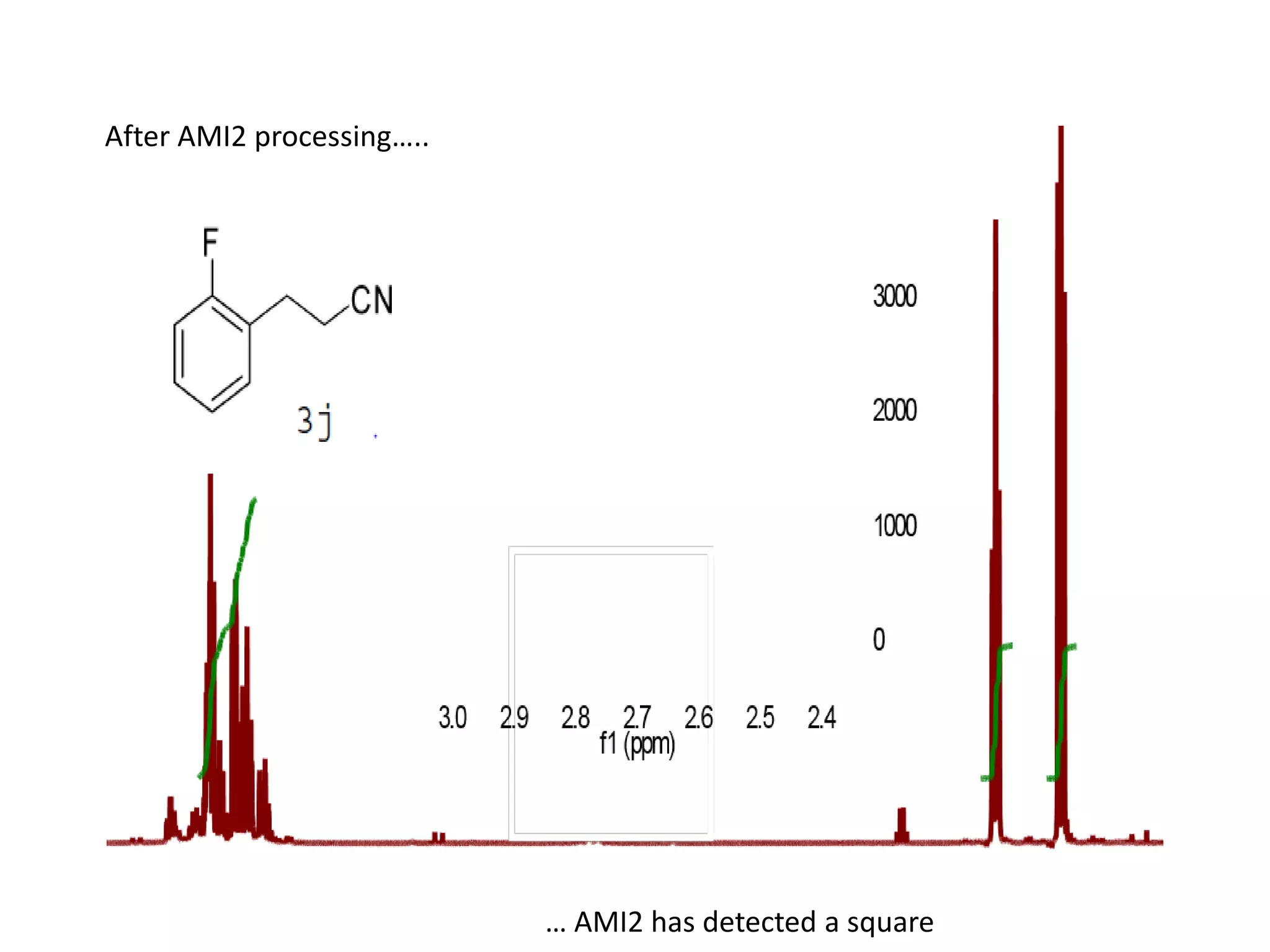
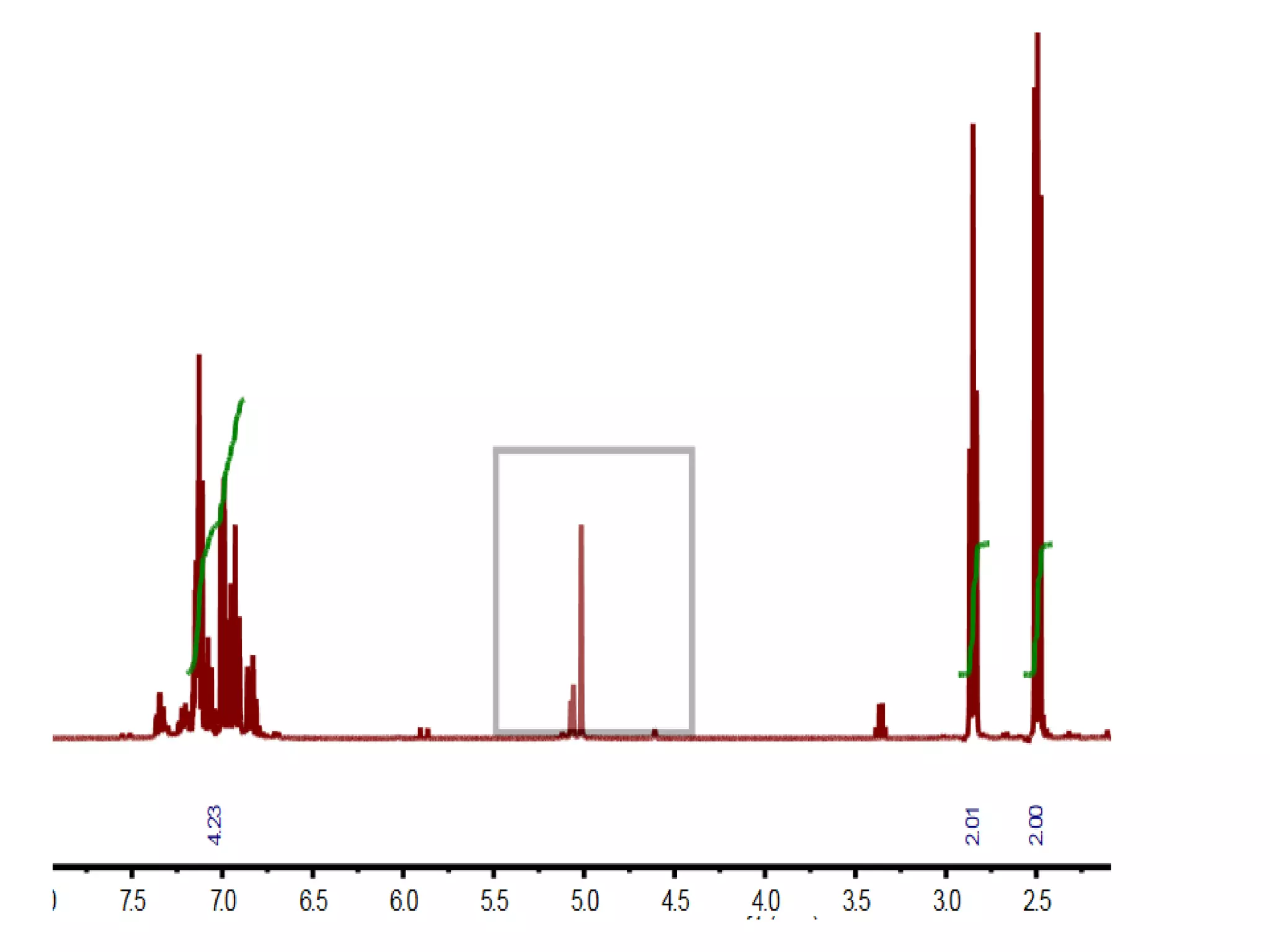
After AMI2 processing…..
… AMI2 has detected a square
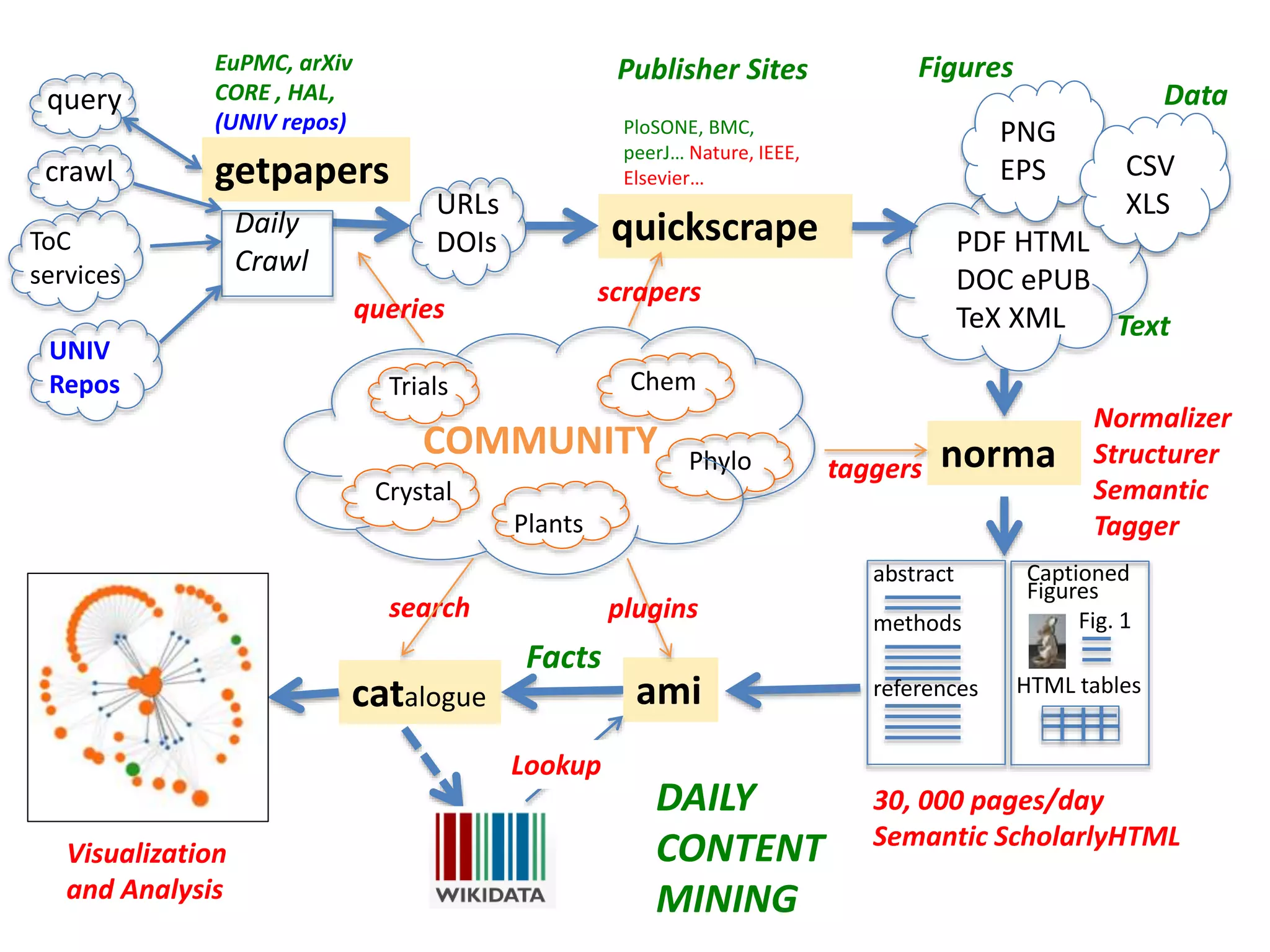
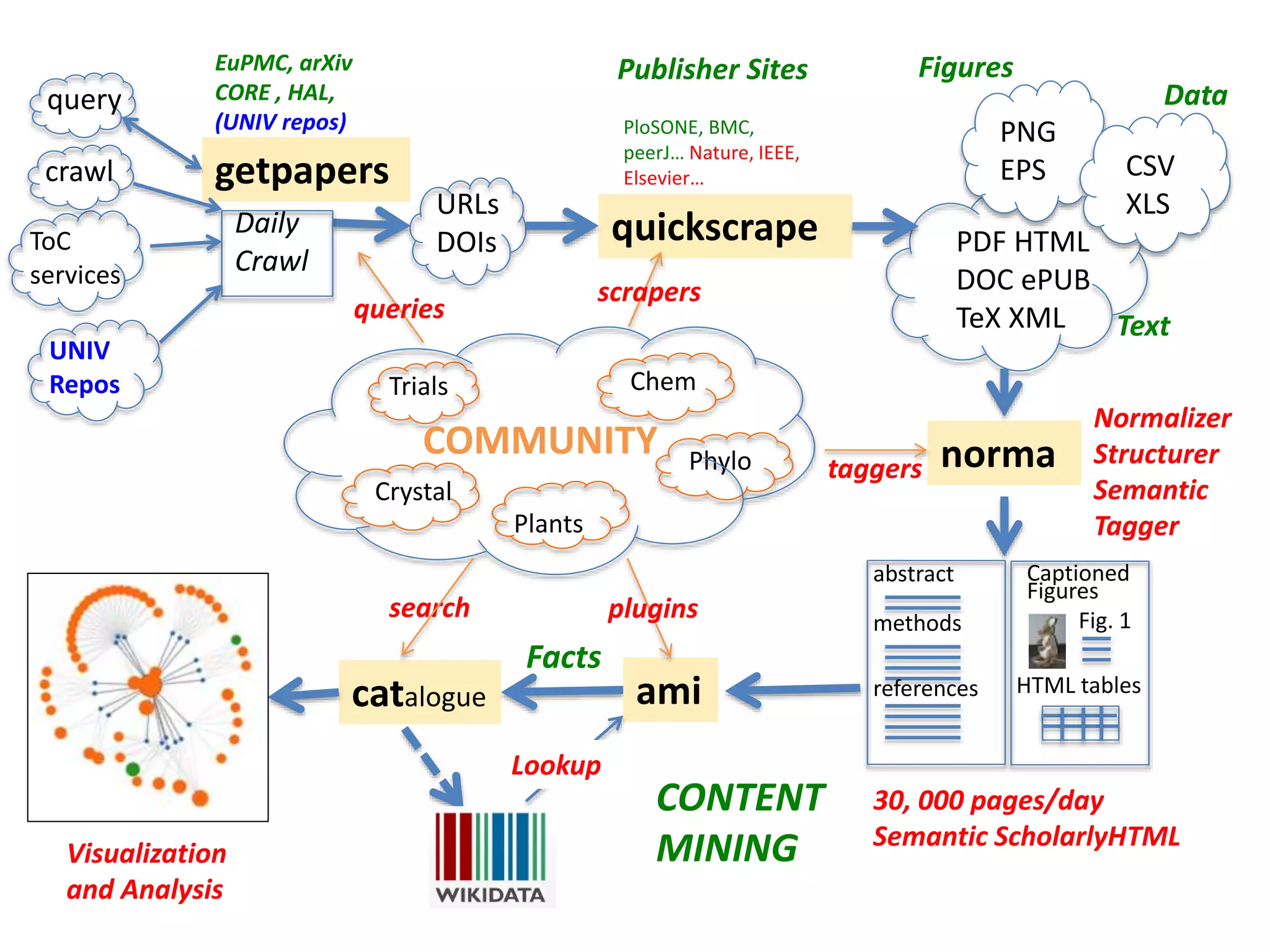
catalogue
getpapers
query
Daily
Crawl
EuPMC, arXiv
CORE , HAL,
(UNIV repos)
ToC
services
PDF HTML
DOC ePUB
TeX XML
PNG
EPS CSV
XLSURLs
DOIs
crawl
quickscrape
norma
Normalizer
Structurer
Semantic
Tagger
Text
Data
Figures
ami
UNIV
Repos
search
Lookup
DAILY
CONTENT
MINING
Chem
Phylo
Trials
Crystal
Plants
COMMUNITY
plugins
Visualization
and Analysis
PloSONE, BMC,
peerJ… Nature, IEEE,
Elsevier…
Publisher Sites
scrapers
queries
taggers
abstract
methods
references
Captioned
Figures
Fig. 1
HTML tables
30, 000 pages/day
Semantic ScholarlyHTML
Facts
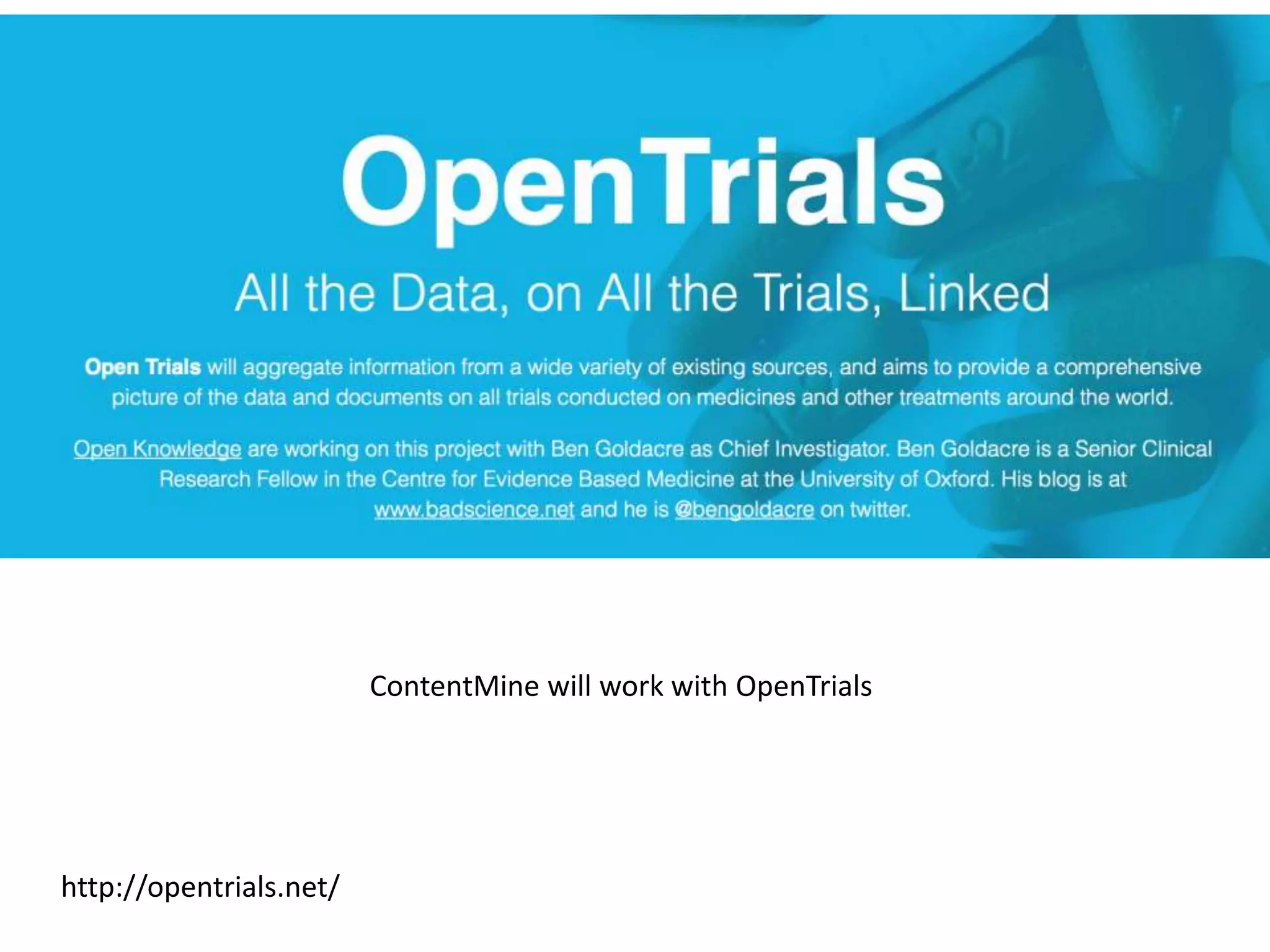
http://opentrials.net/
ContentMine will work with OpenTrials
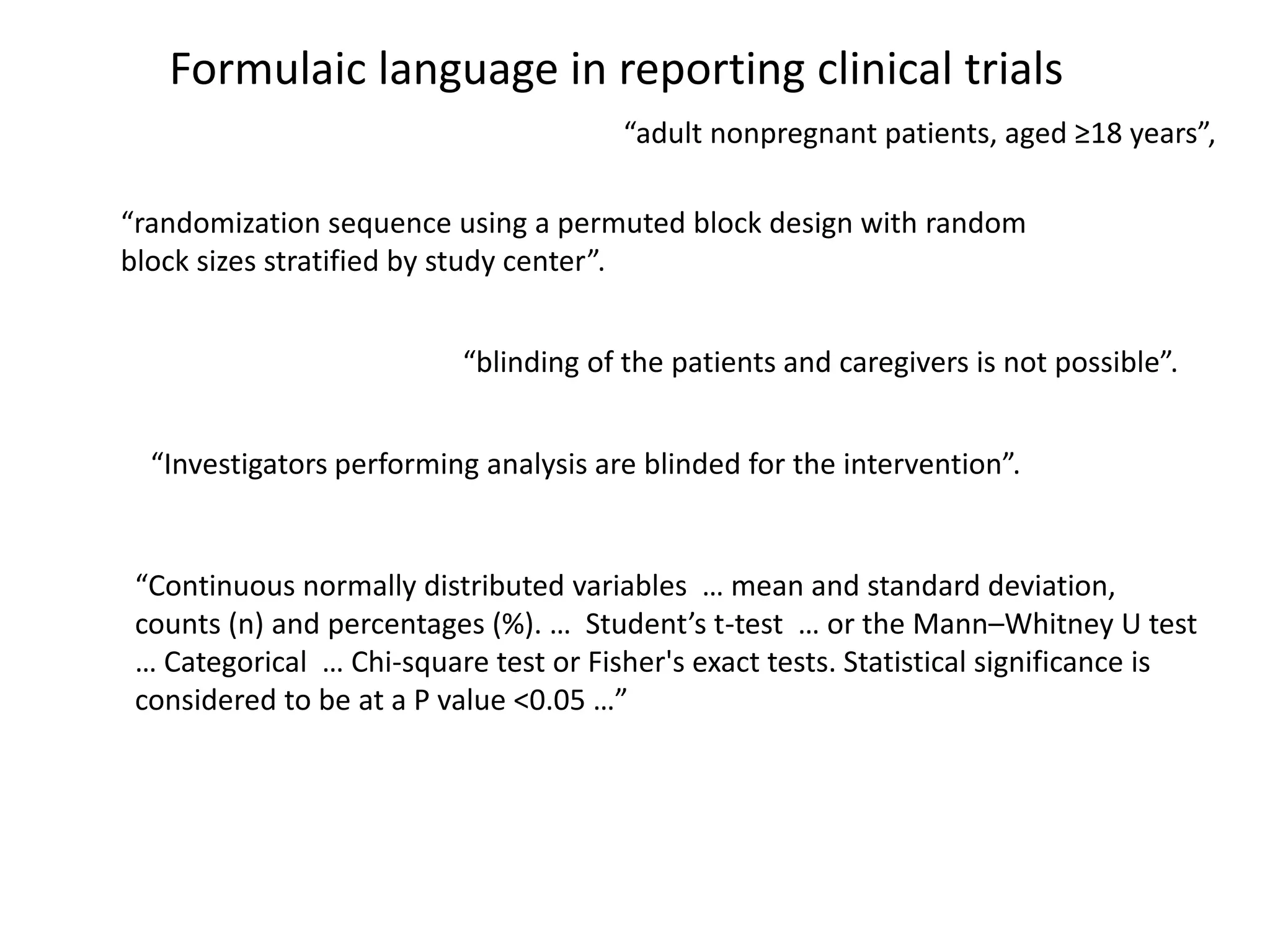
“adult nonpregnant patients, aged ≥18 years”,
“randomization sequence using a permuted block design with random
block sizes stratified by study center”.
“blinding of the patients and caregivers is not possible”.
“Investigators performing analysis are blinded for the intervention”.
“Continuous normally distributed variables … mean and standard deviation,
counts (n) and percentages (%). … Student’s t-test … or the Mann–Whitney U test
… Categorical … Chi-square test or Fisher's exact tests. Statistical significance is
considered to be at a P value <0.05 …”
Formulaic language in reporting clinical trials
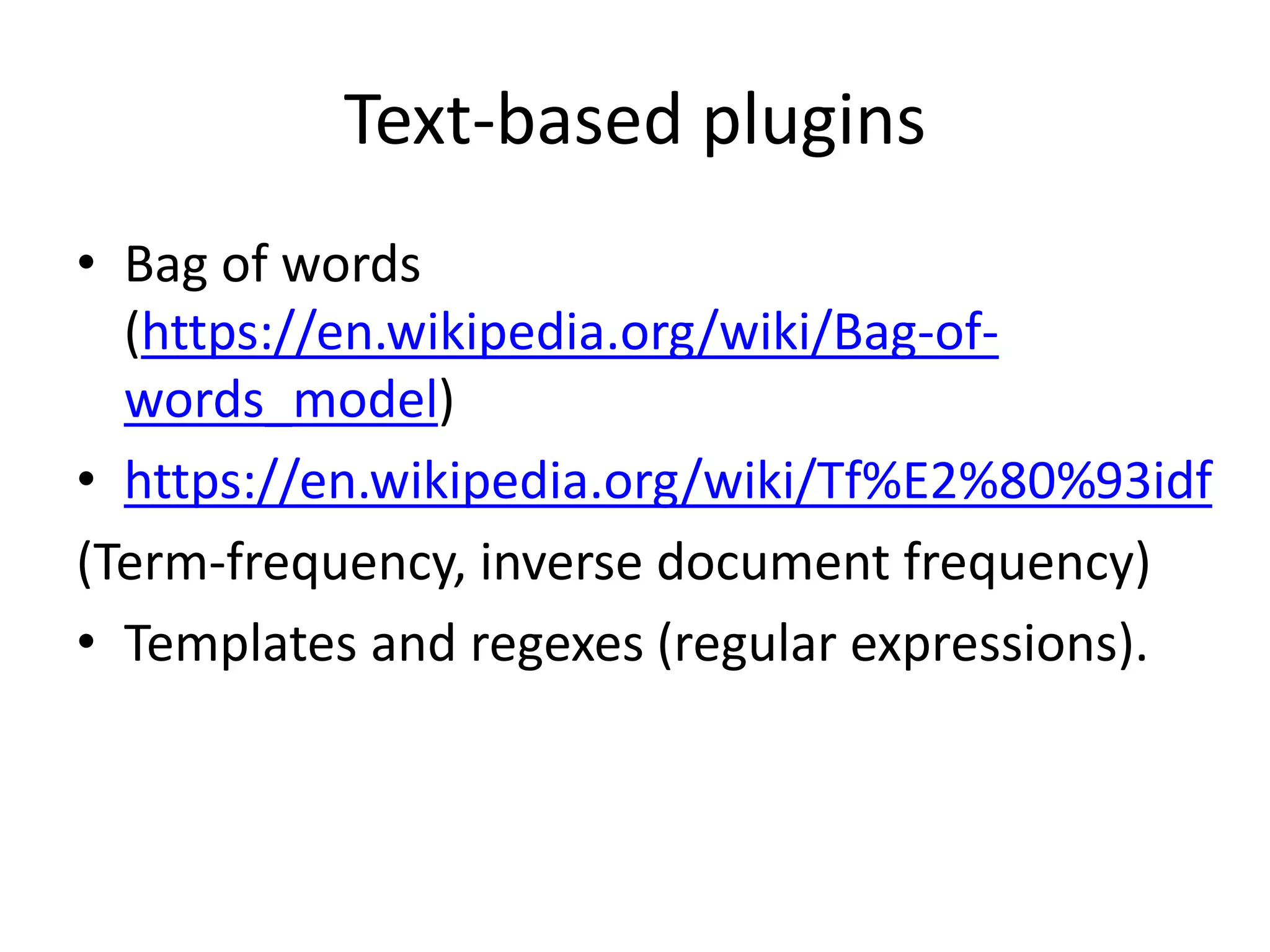
Text-based plugins
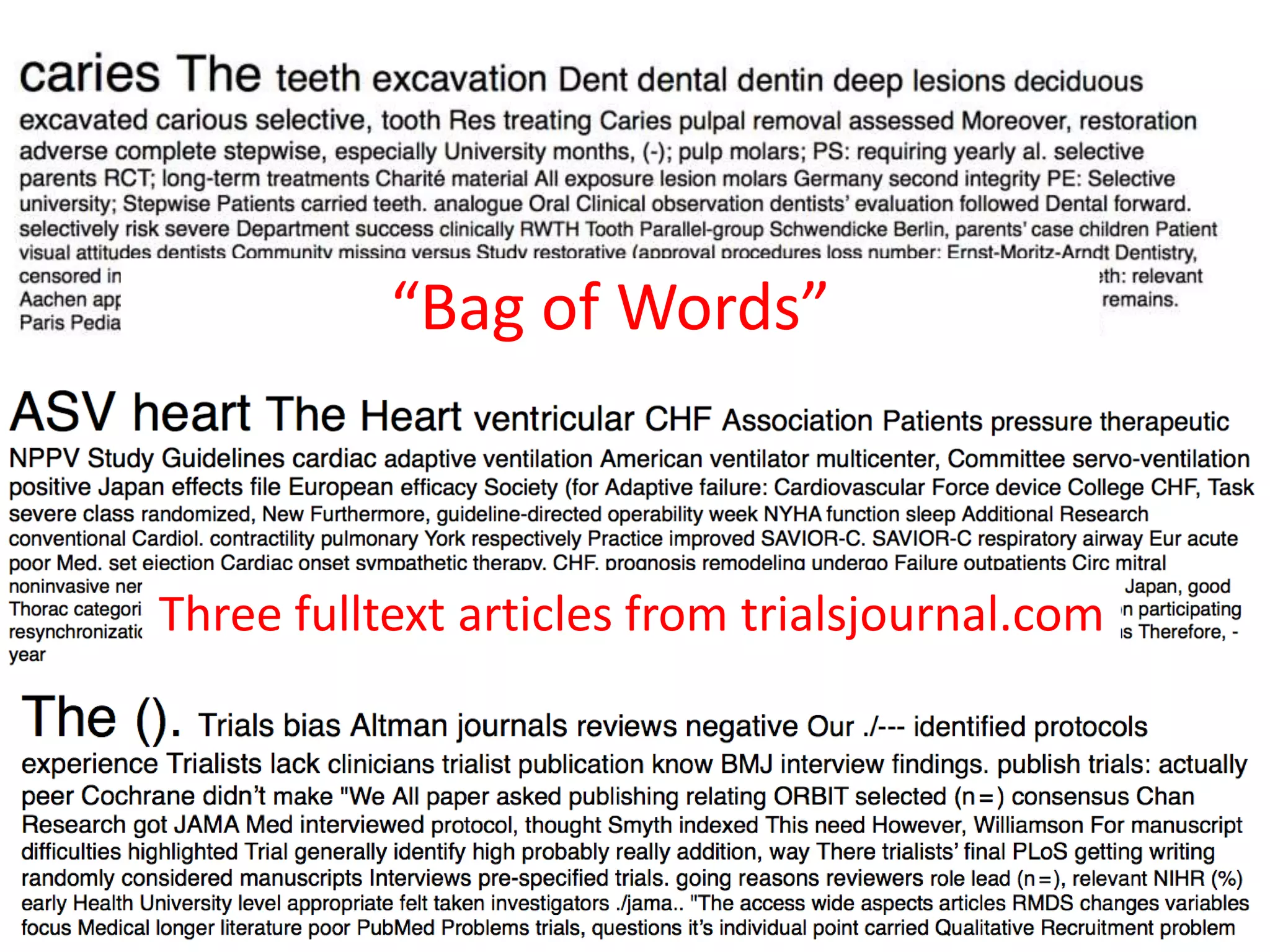
• Bag of words
(https://en.wikipedia.org/wiki/Bag-of-
words_model)
• https://en.wikipedia.org/wiki/Tf%E2%80%93idf
(Term-frequency, inverse document frequency)
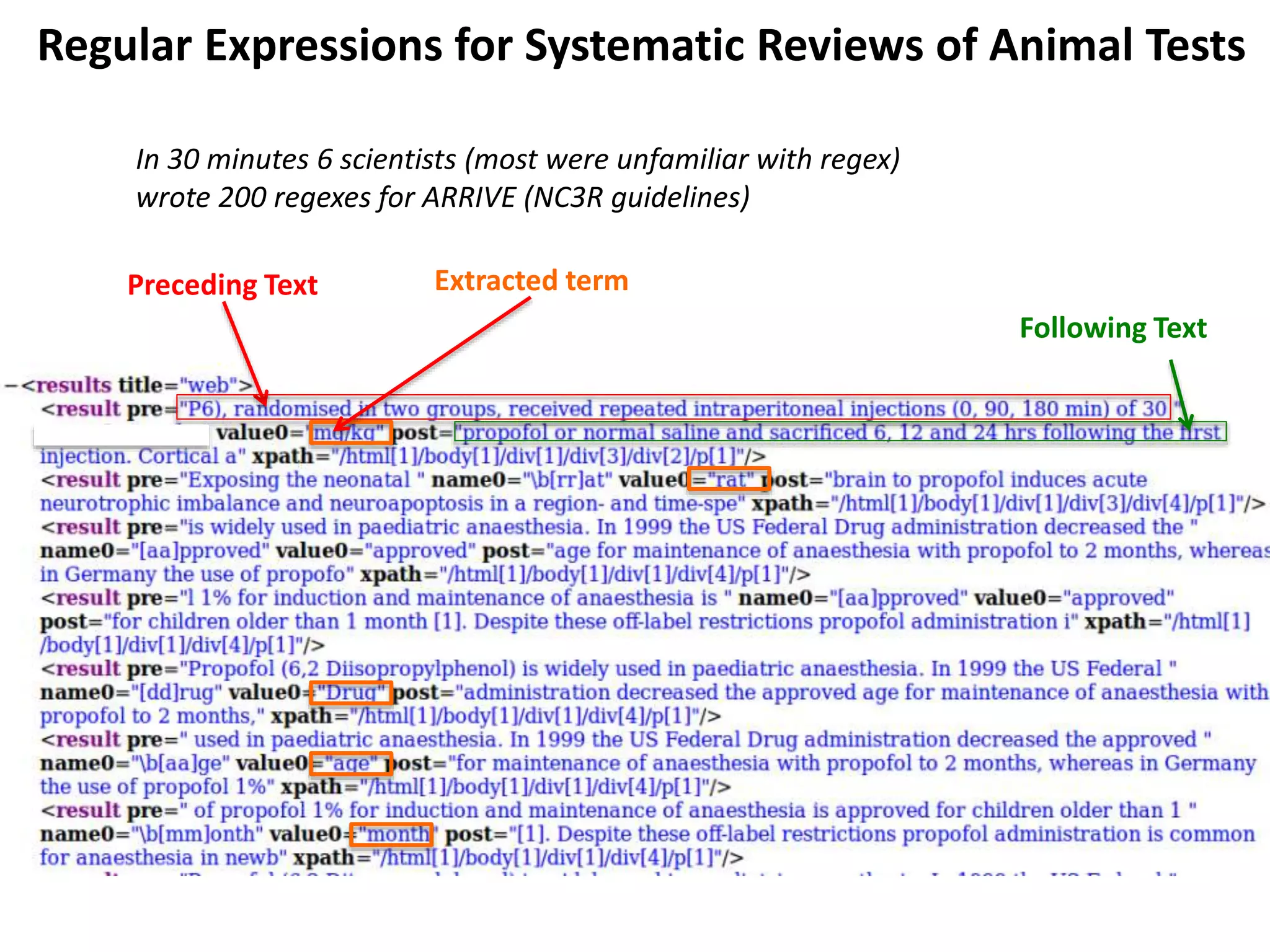
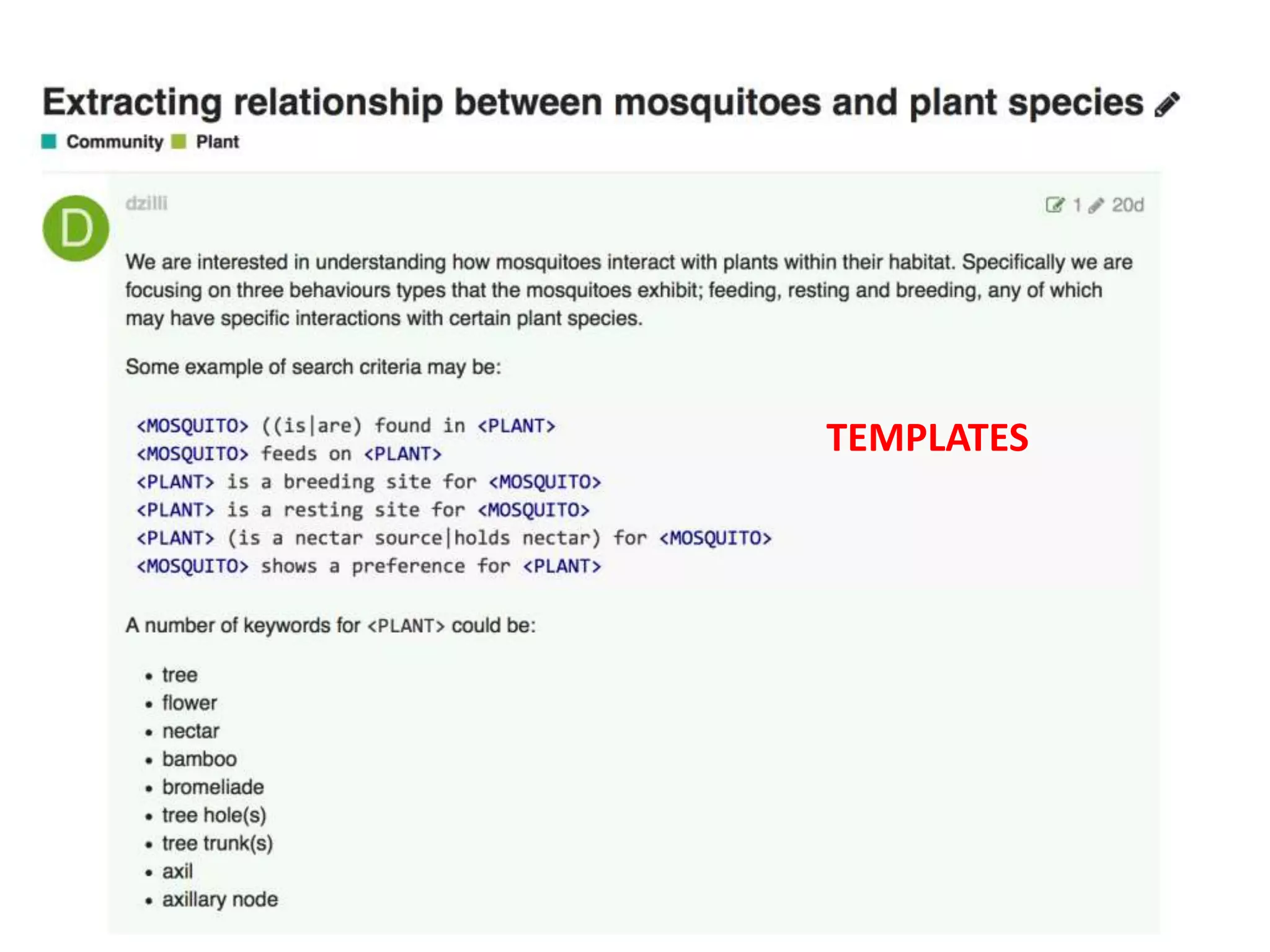
• Templates and regexes (regular expressions).
“Bag of Words”
Three fulltext articles from trialsjournal.com
Regular Expressions for Systematic Reviews of Animal Tests
Preceding Text
Following Text
Extracted term
In 30 minutes 6 scientists (most were unfamiliar with regex)
wrote 200 regexes for ARRIVE (NC3R guidelines)
TEMPLATES
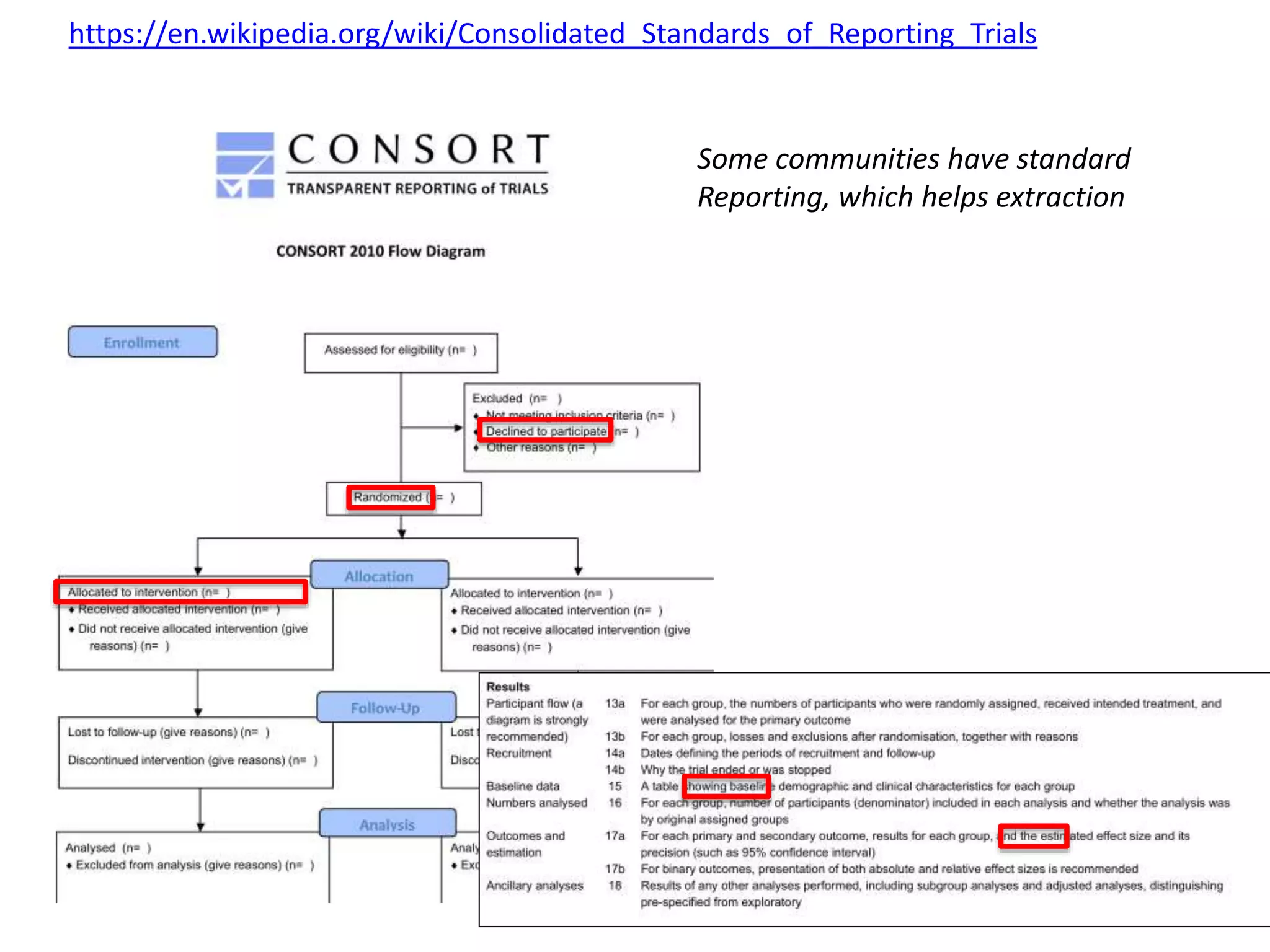
https://en.wikipedia.org/wiki/Consolidated_Standards_of_Reporting_Trials
Some communities have standard
Reporting, which helps extraction
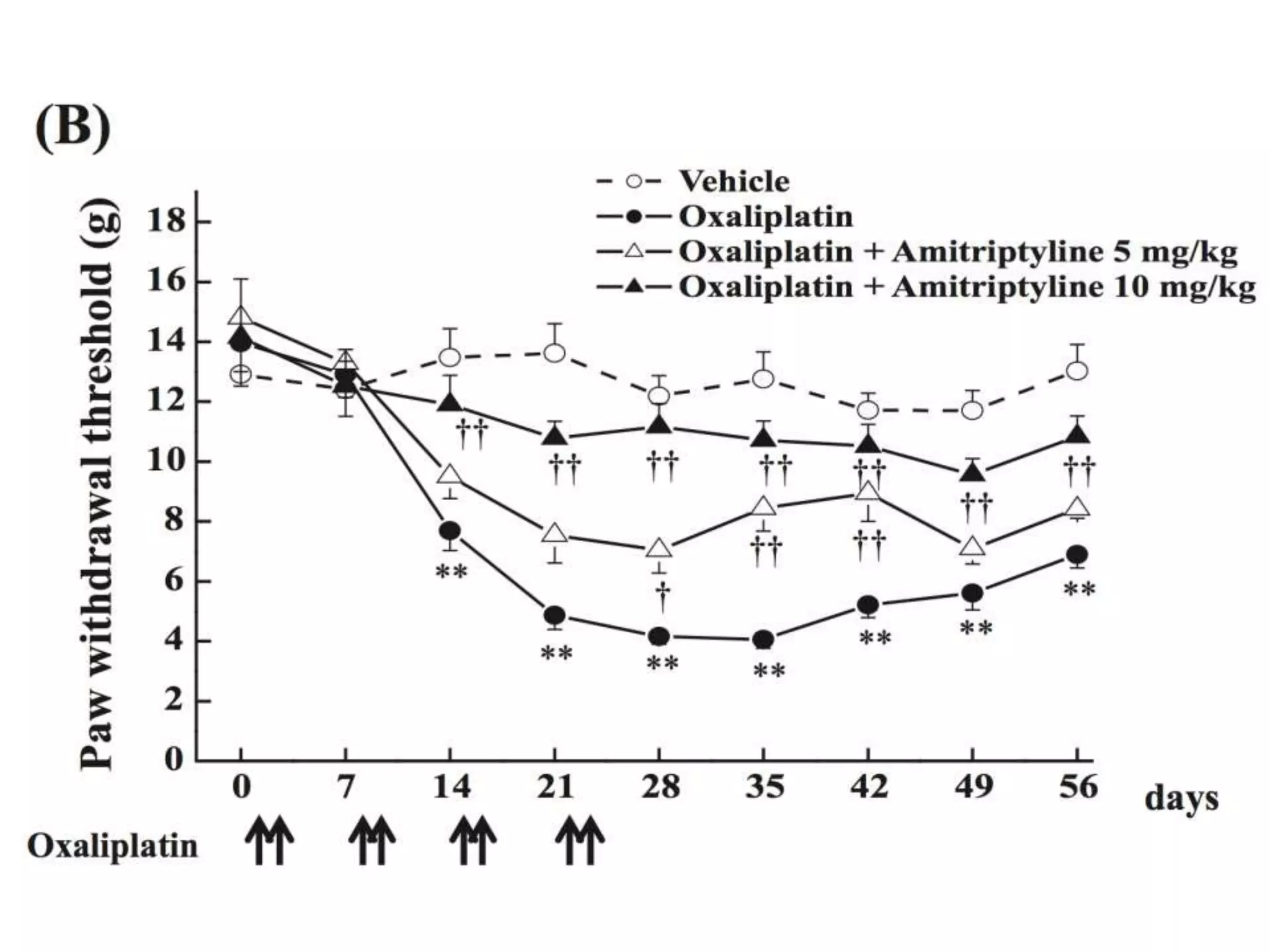
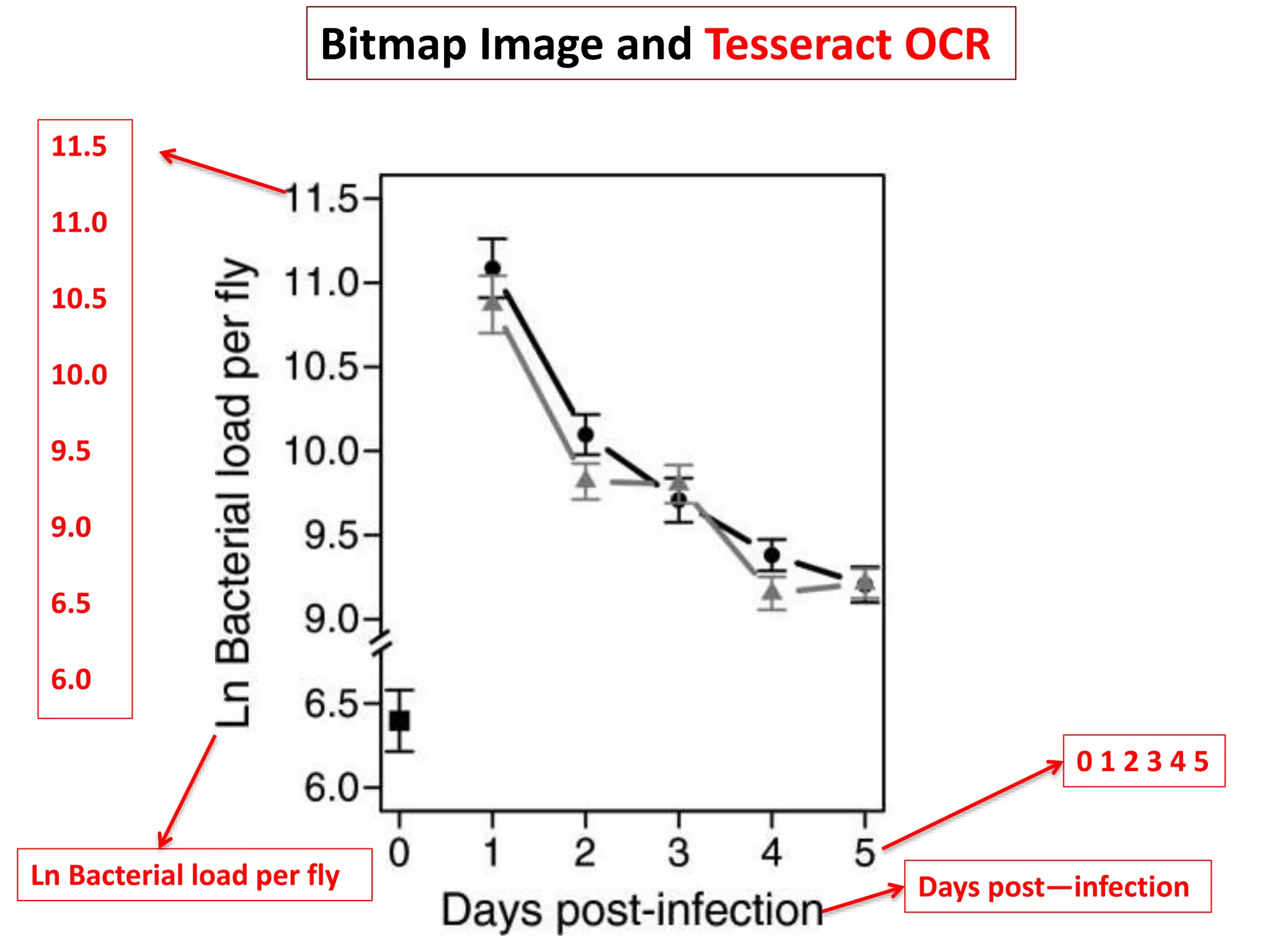
Ln Bacterial load per fly
11.5
11.0
10.5
10.0
9.5
9.0
6.5
6.0
Days post—infection
0 1 2 3 4 5
Bitmap Image and Tesseract OCR
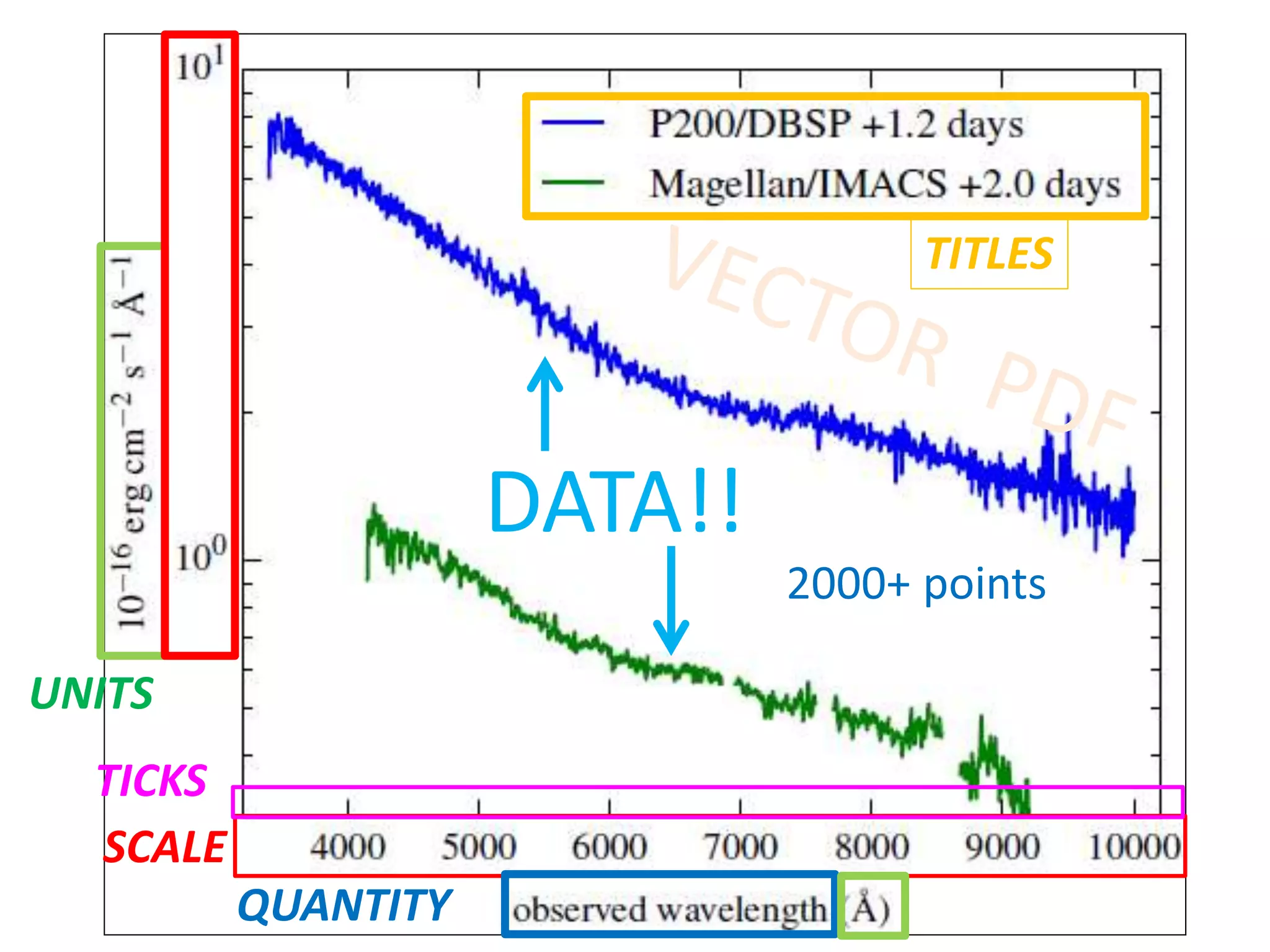
UNITS
TICKS
QUANTITY
SCALE
TITLES
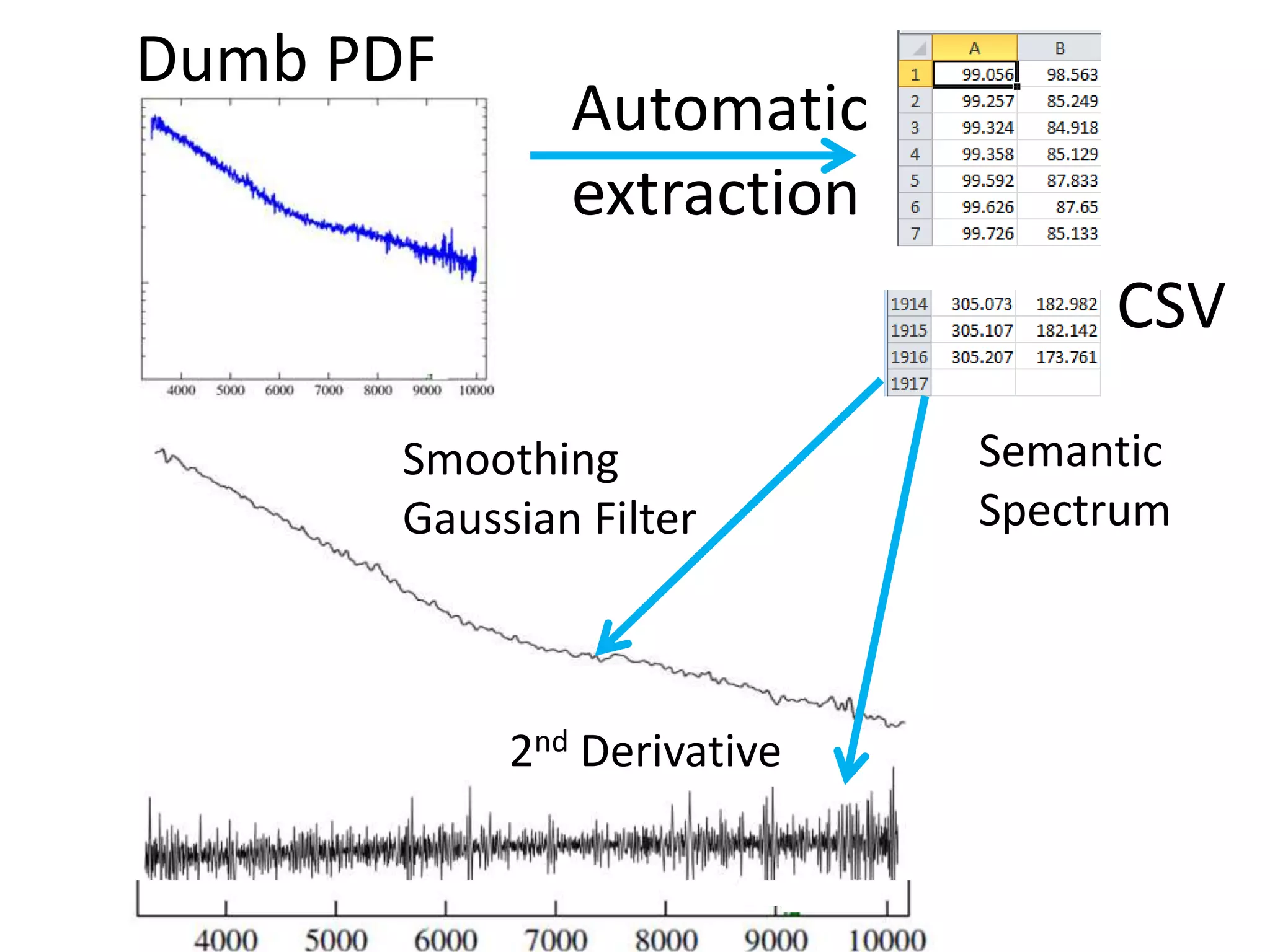
DATA!!
2000+ points
Dumb PDF
CSV
Semantic
Spectrum
2nd Derivative
Smoothing
Gaussian Filter
Automatic
extraction
PLUTo
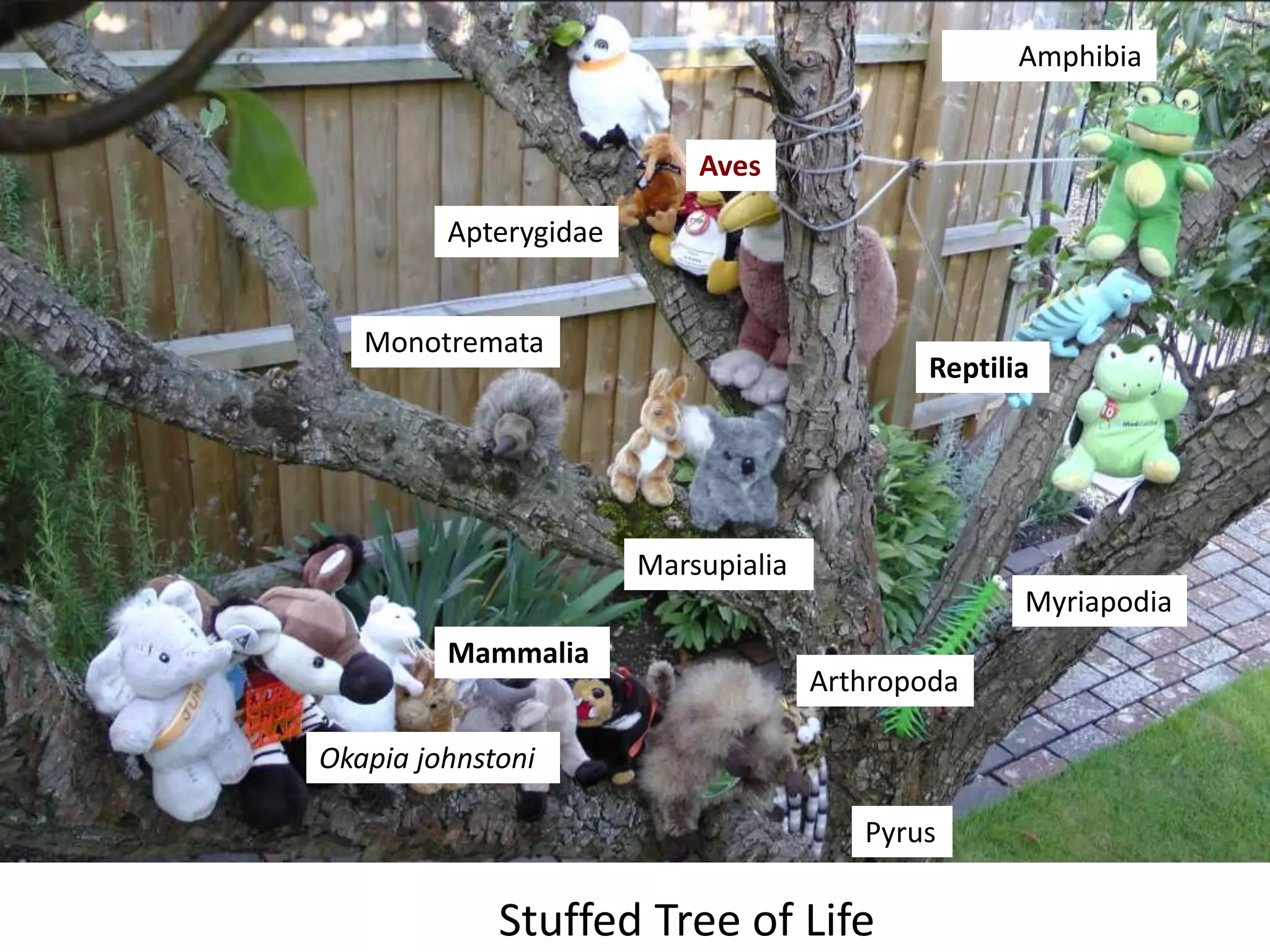
Aves
Apterygidae
Marsupialia
Monotremata
Mammalia
Reptilia
Amphibia
Arthropoda
Myriapodia
Okapia johnstoni
Pyrus
Stuffed Tree of Life
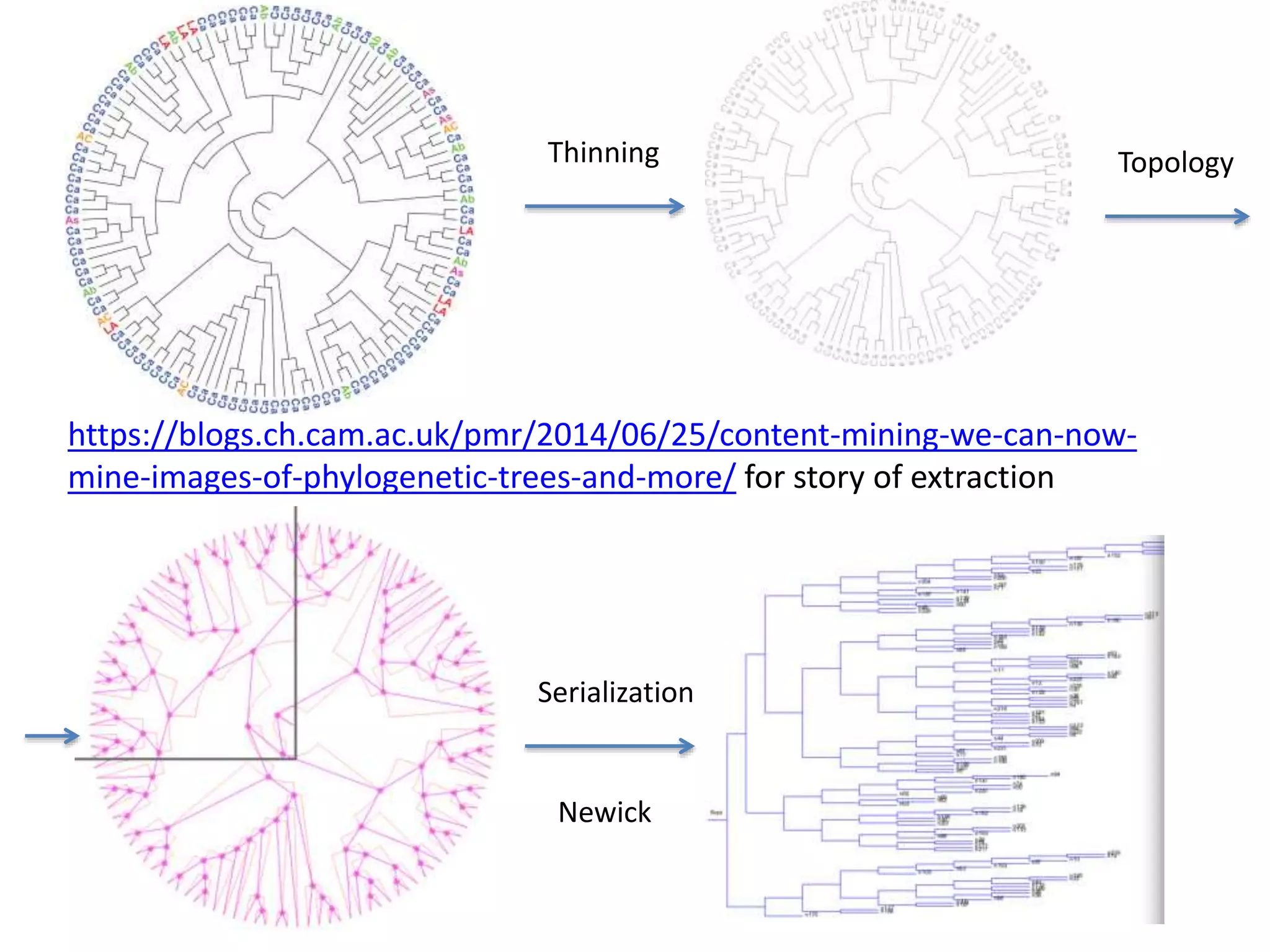
https://blogs.ch.cam.ac.uk/pmr/2014/06/25/content-mining-we-can-now-
mine-images-of-phylogenetic-trees-and-more/ for story of extraction
Thinning Topology
Serialization
Newick
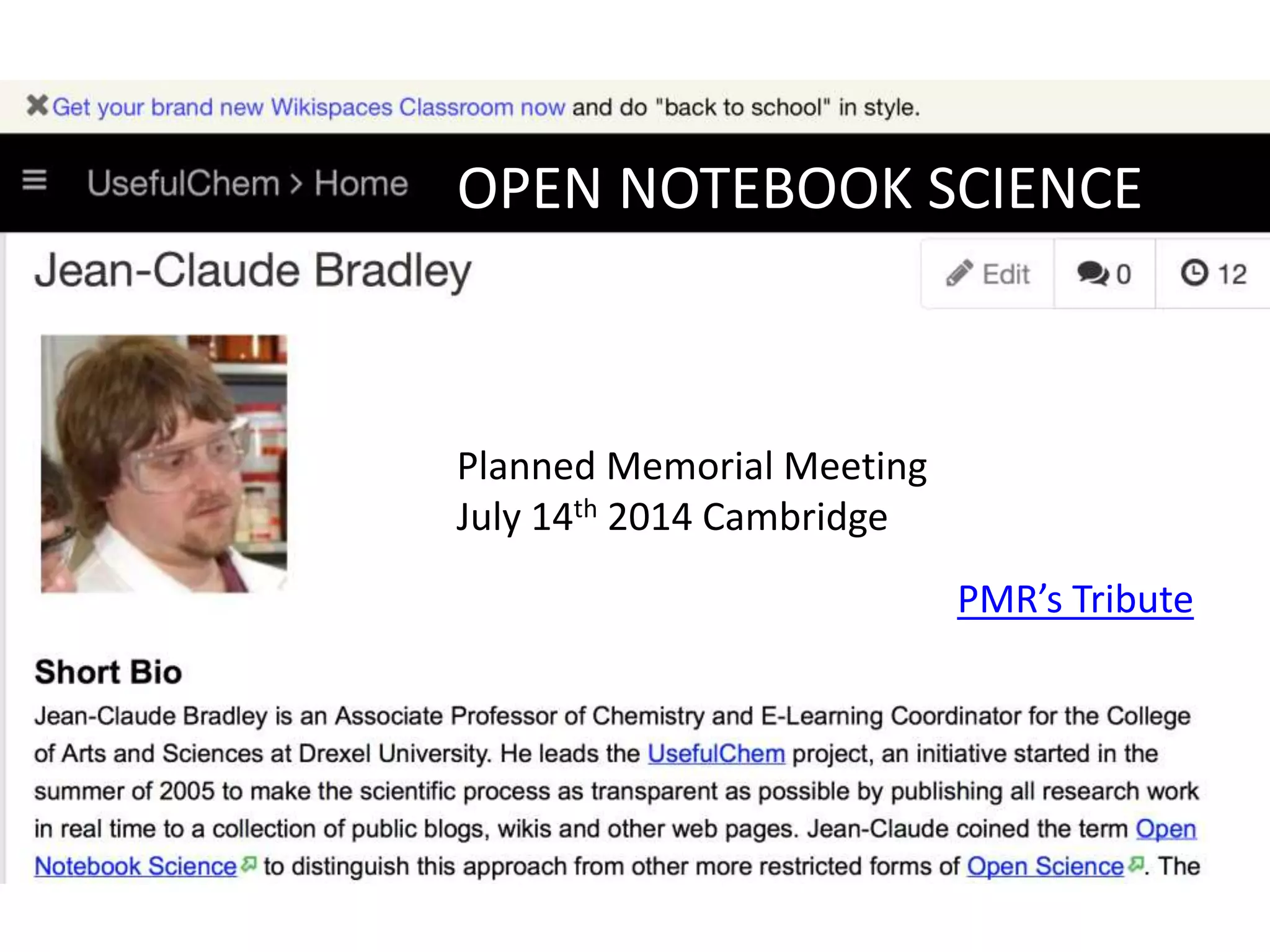
PMR’s Tribute
Planned Memorial Meeting
July 14th 2014 Cambridge
OPEN NOTEBOOK SCIENCE
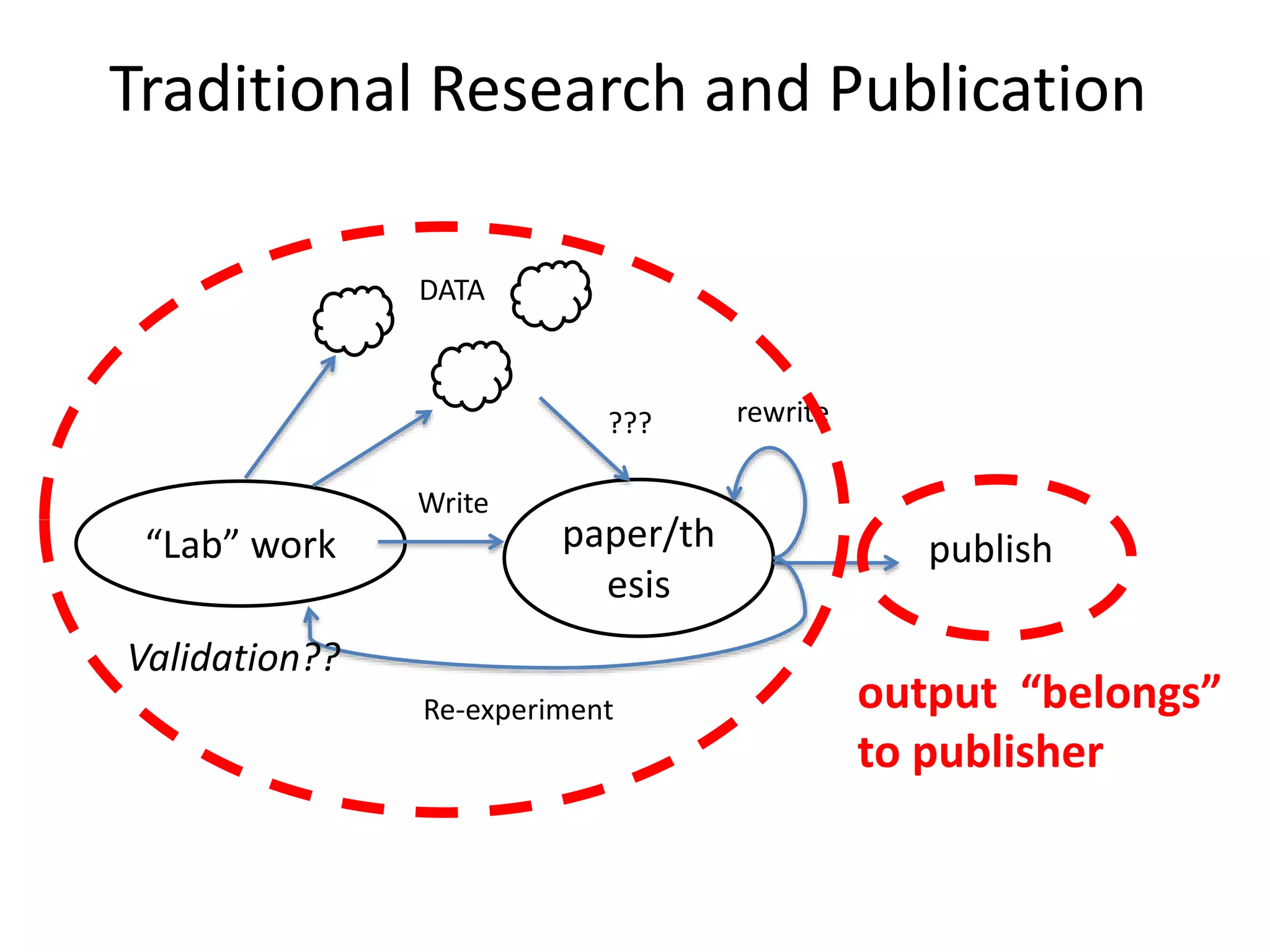
Traditional Research and Publication
“Lab” work paper/th
esis
Write
rewrite
Re-experiment
publish
???
Validation??
DATA
output “belongs”
to publisher
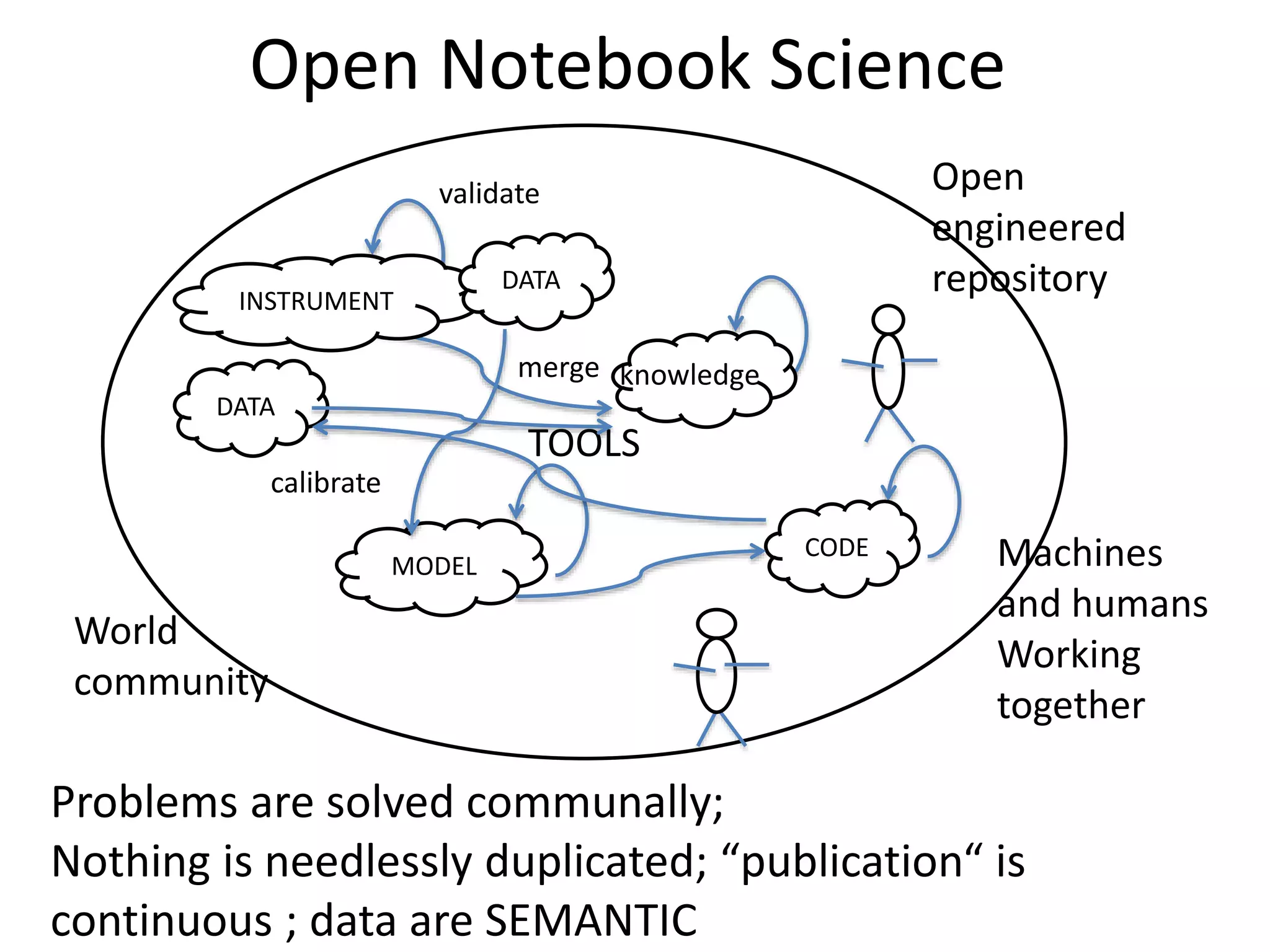
TOOLS
Open Notebook Science
Open
engineered
repository
World
community
INSTRUMENT
validate
merge
MODEL
CODE
DATA
DATA
knowledge
calibrate
Problems are solved communally;
Nothing is needlessly duplicated; “publication“ is
continuous ; data are SEMANTIC
Machines
and humans
Working
together
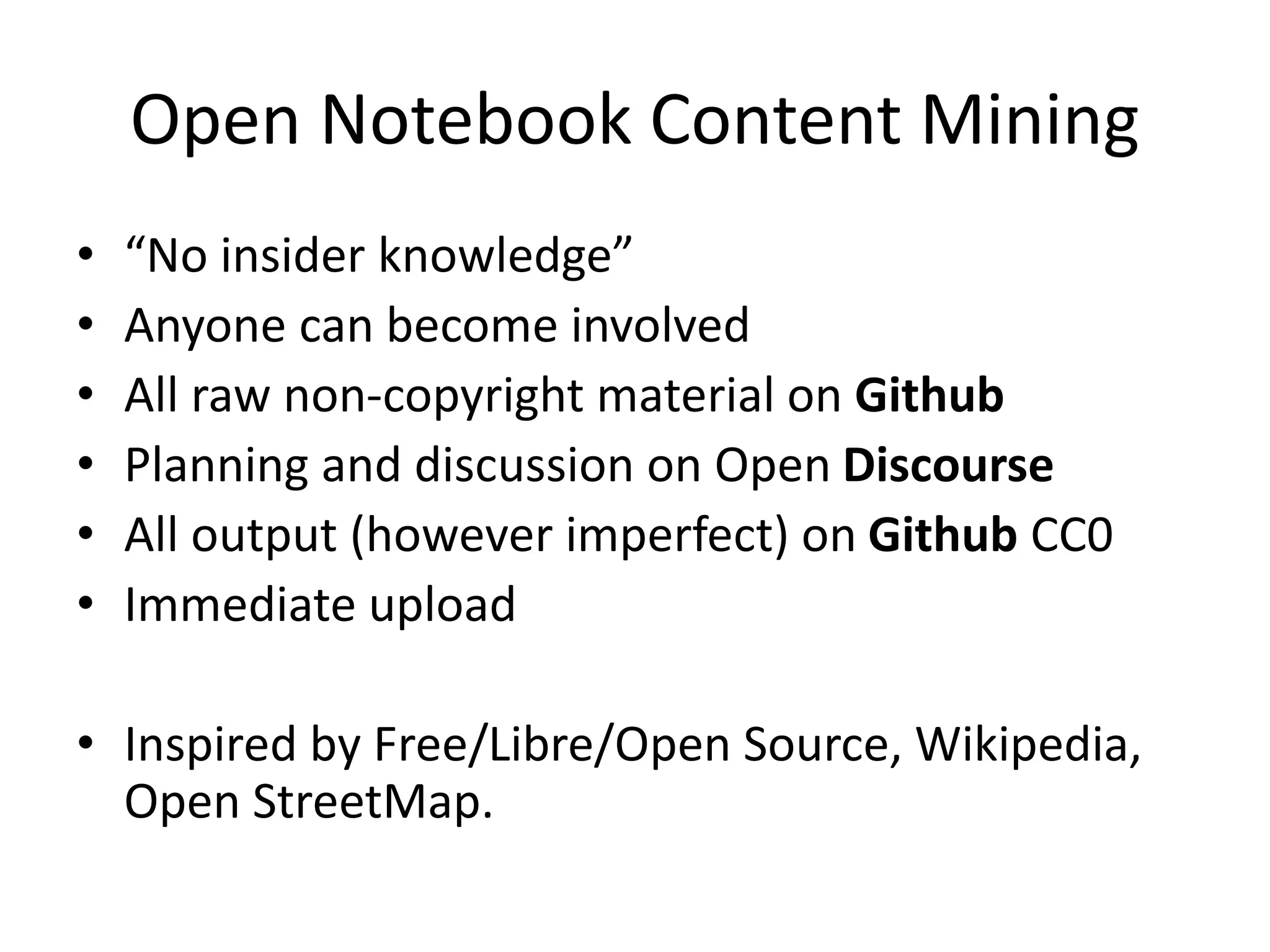
Open Notebook Content Mining
• “No insider knowledge”
• Anyone can become involved
• All raw non-copyright material on Github
• Planning and discussion on Open Discourse
• All output (however imperfect) on Github CC0
• Immediate upload
• Inspired by Free/Libre/Open Source, Wikipedia,
Open StreetMap.
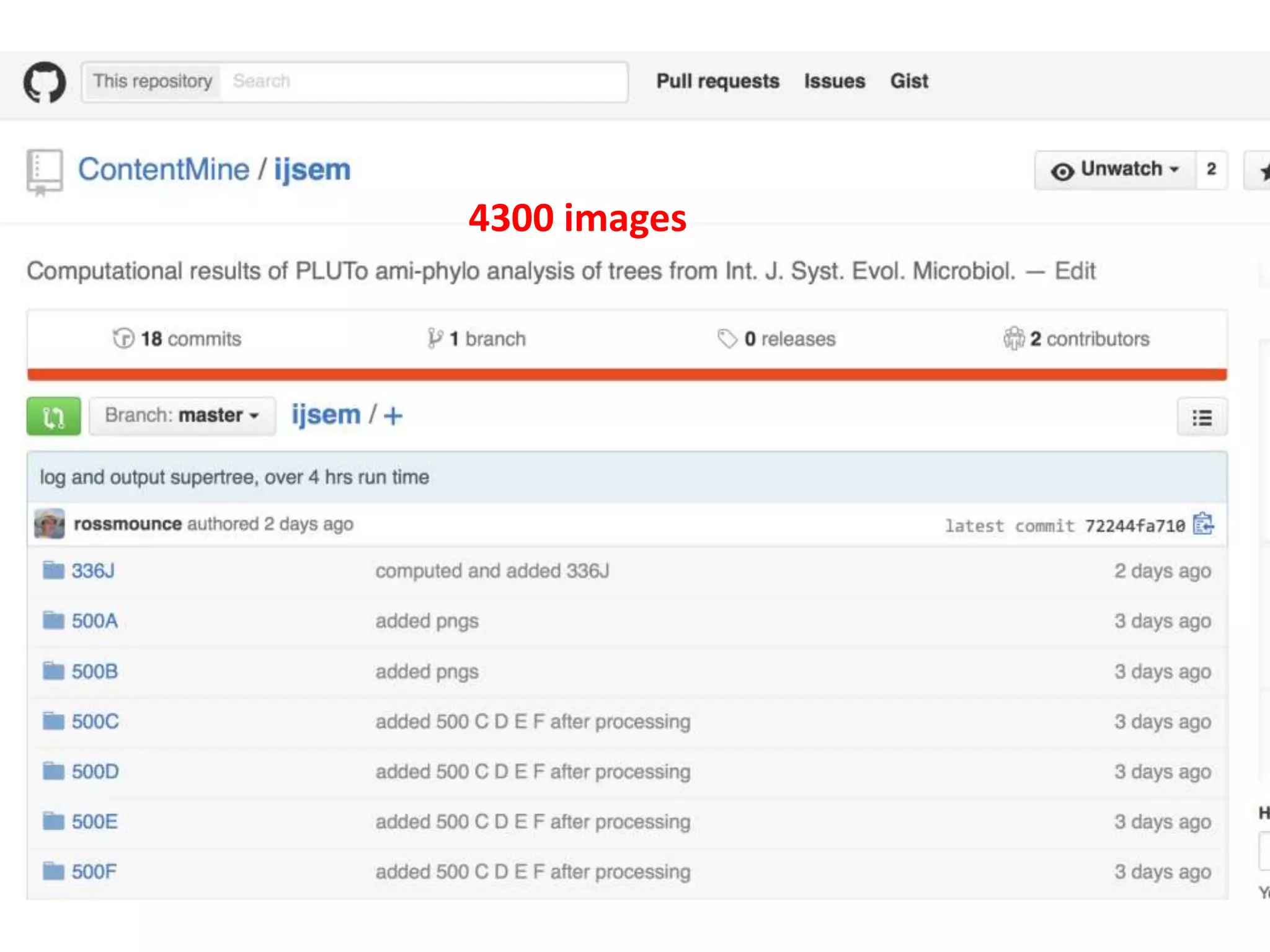
4300 images
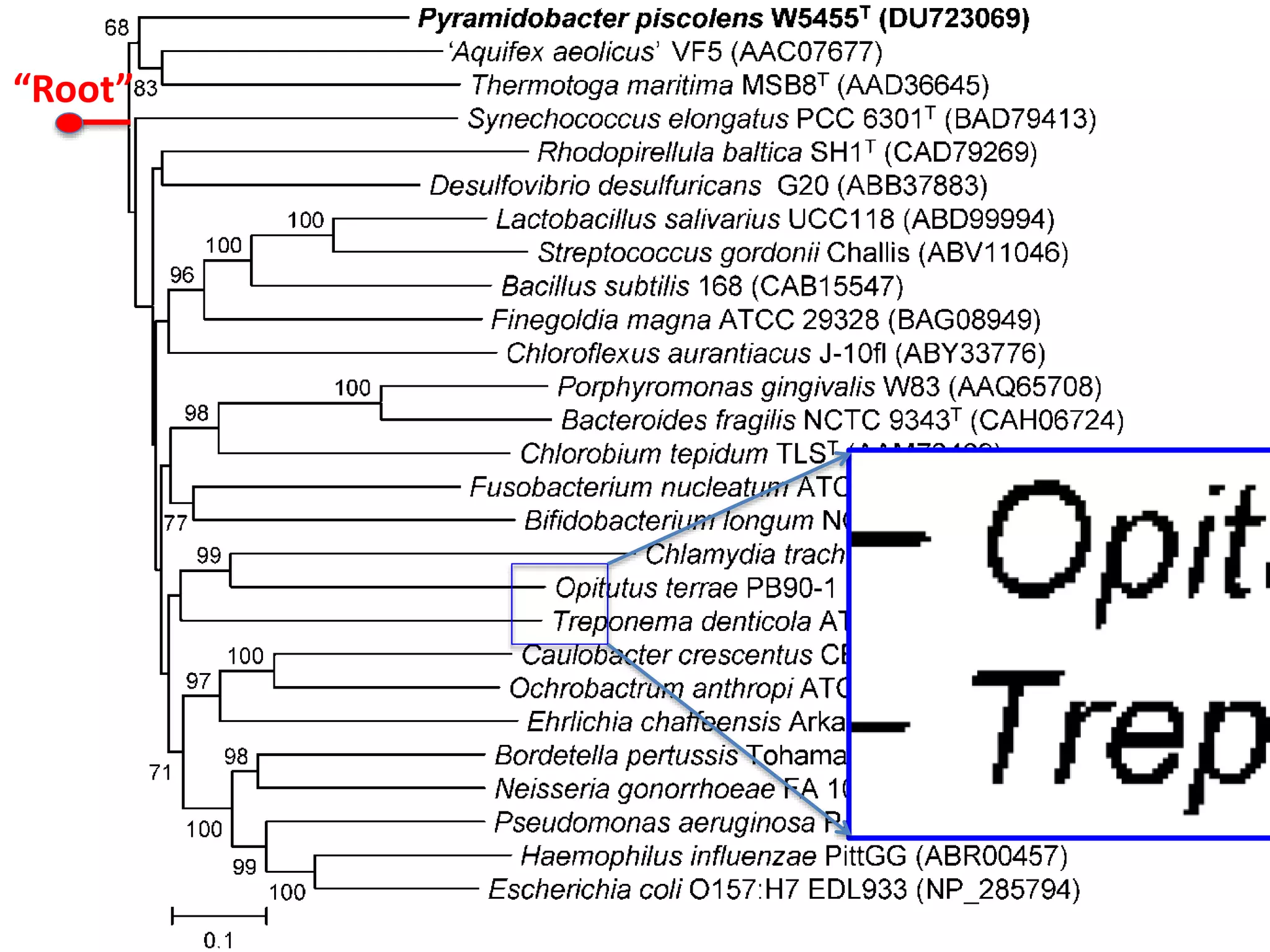
“Root”
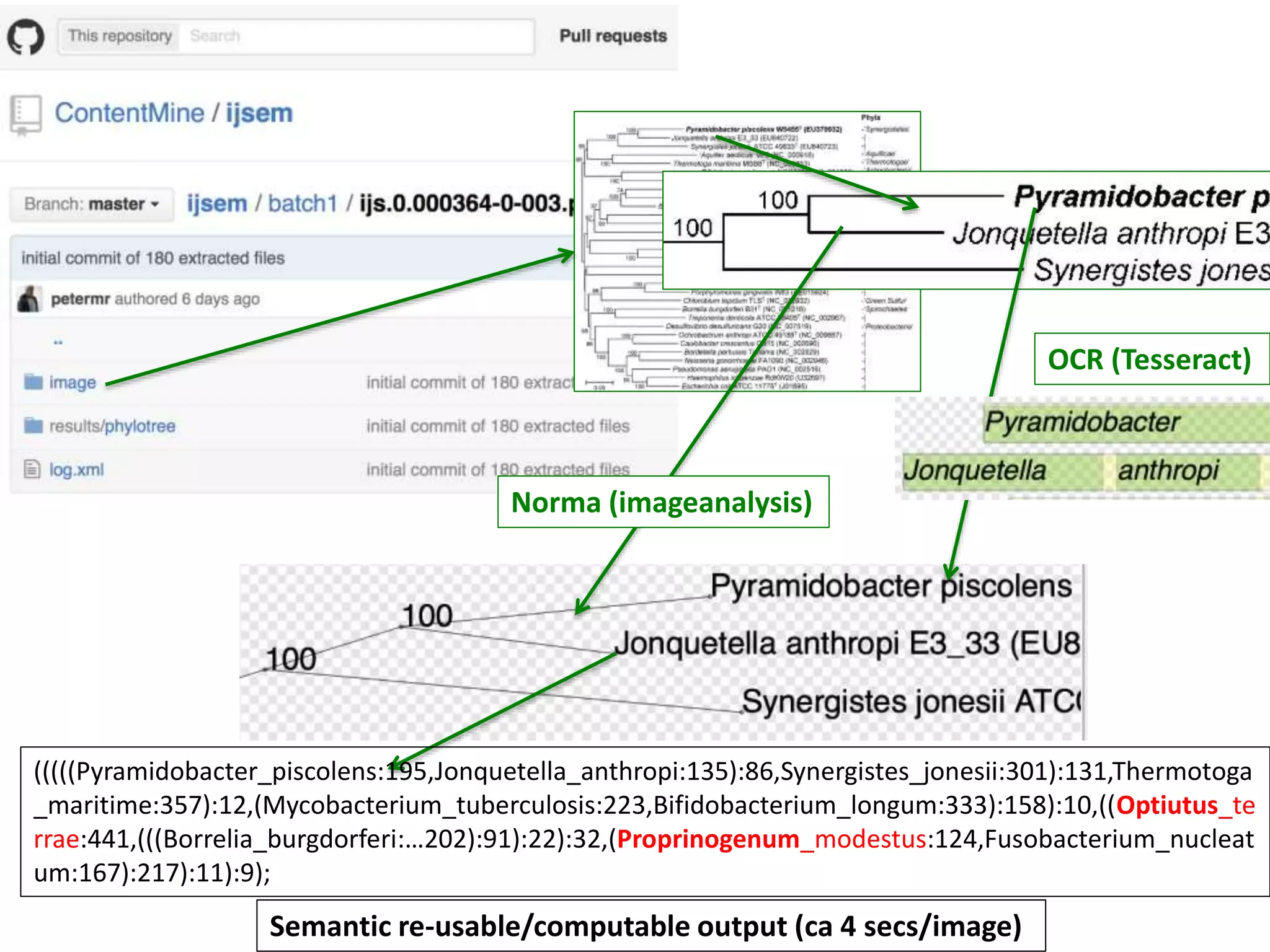
OCR (Tesseract)
Norma (imageanalysis)
(((((Pyramidobacter_piscolens:195,Jonquetella_anthropi:135):86,Synergistes_jonesii:301):131,Thermotoga
_maritime:357):12,(Mycobacterium_tuberculosis:223,Bifidobacterium_longum:333):158):10,((Optiutus_te
rrae:441,(((Borrelia_burgdorferi:…202):91):22):32,(Proprinogenum_modestus:124,Fusobacterium_nucleat
um:167):217):11):9);
Semantic re-usable/computable output (ca 4 secs/image)
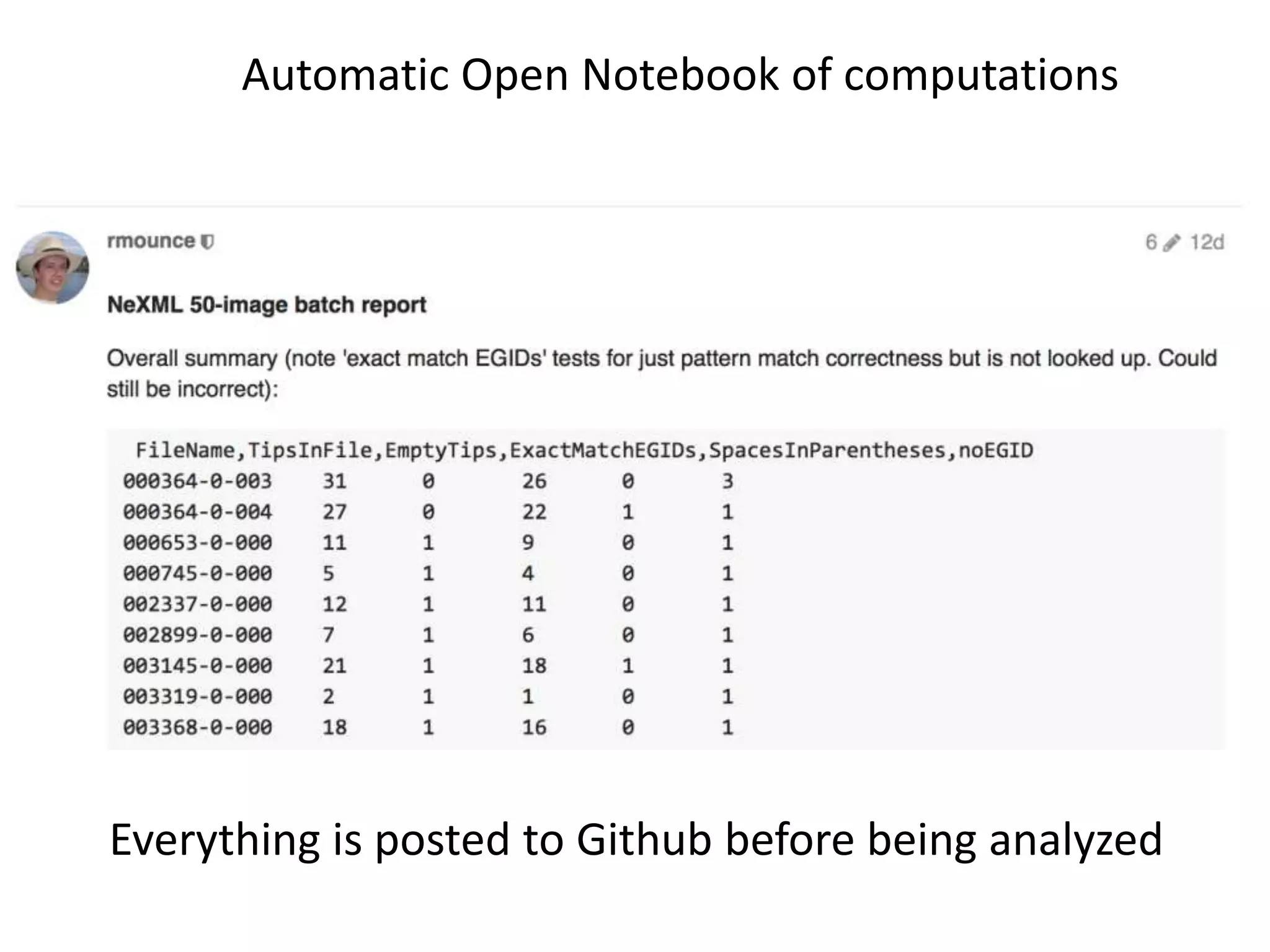
Automatic Open Notebook of computations
Everything is posted to Github before being analyzed
Bacillus subtilis [131238]*
Bacteroides fragilis [221817]
Brevibacillus brevis
Cyclobacterium marinum
Escherichia coli [25419]
Filobacillus milosensis
Flectobacillus major [15809775]
Flexibacter flexilis [15809789]
Formosa algae
Gelidibacter algens [16982233]
Halobacillus halophilus
Lentibacillus salicampi [18345921]
Octadecabacter arcticus
Psychroflexus torquis [16988834]
Pseudomonas aeruginosa [31856]
Sagittula stellata [16992371]
Salegentibacter salegens
Sphingobacterium spiritivorum
Terrabacter tumescens
• [Identifier in Wikidata]
• Missing = not found with Wikidata API
20 commonest organisms (in > 30 papers) in trees from IJSEM*
Half do not appear to be in Wikidata
Can the Wikipedia Scientists comment?
*Int. J. Syst. Evol. Microbiol.
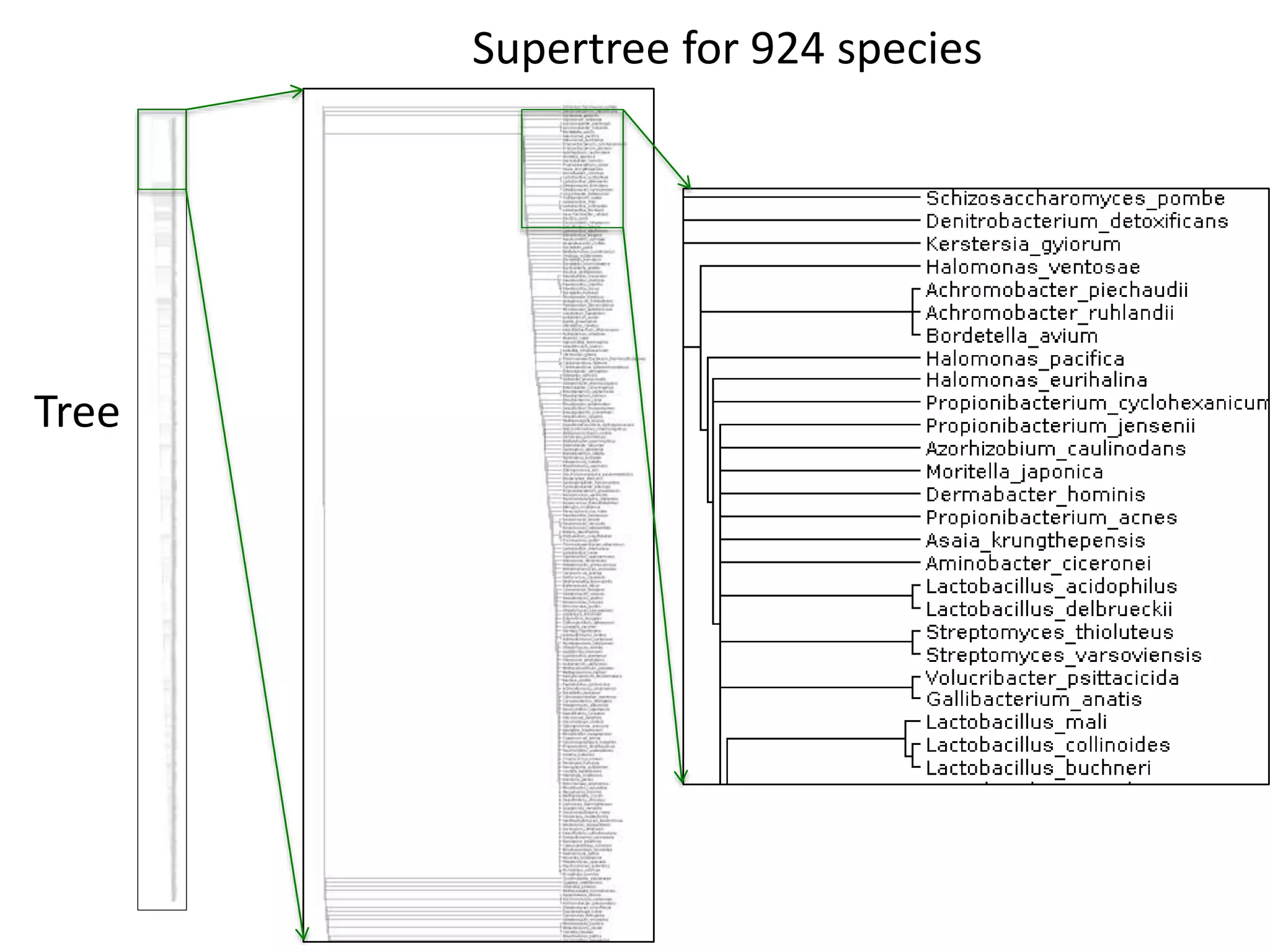
Supertree for 924 species
Tree
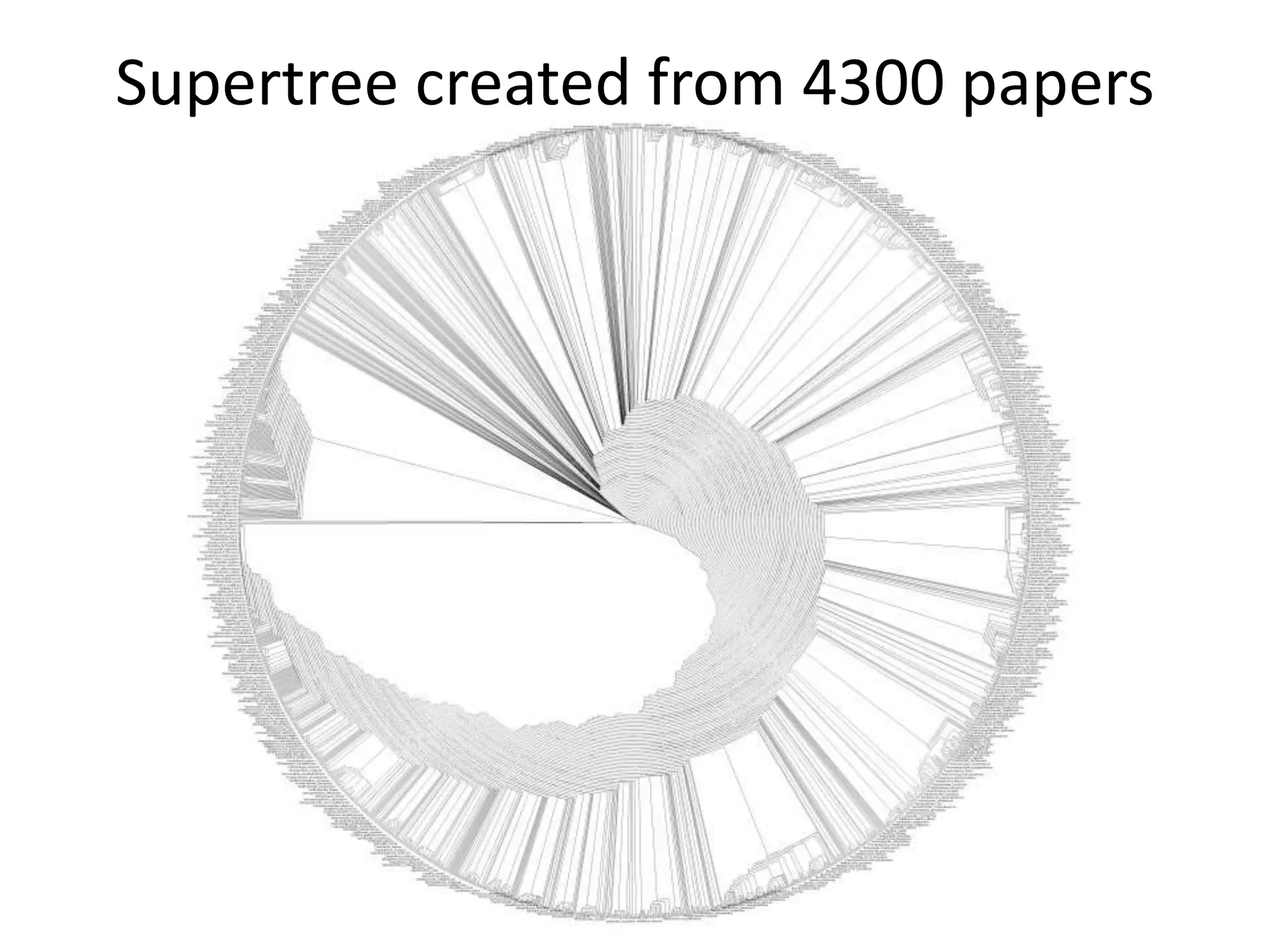
Supertree created from 4300 papers
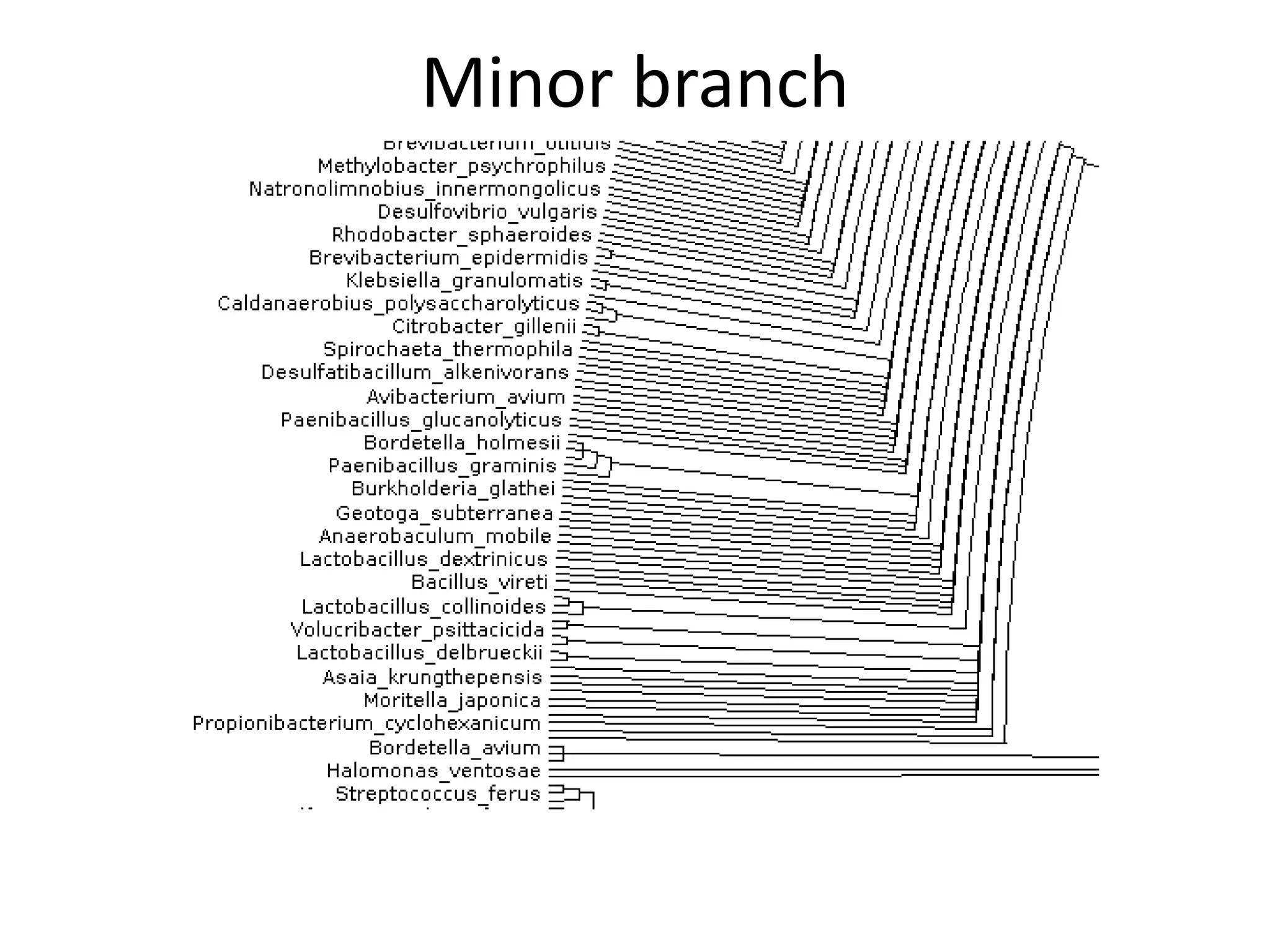
Minor branch
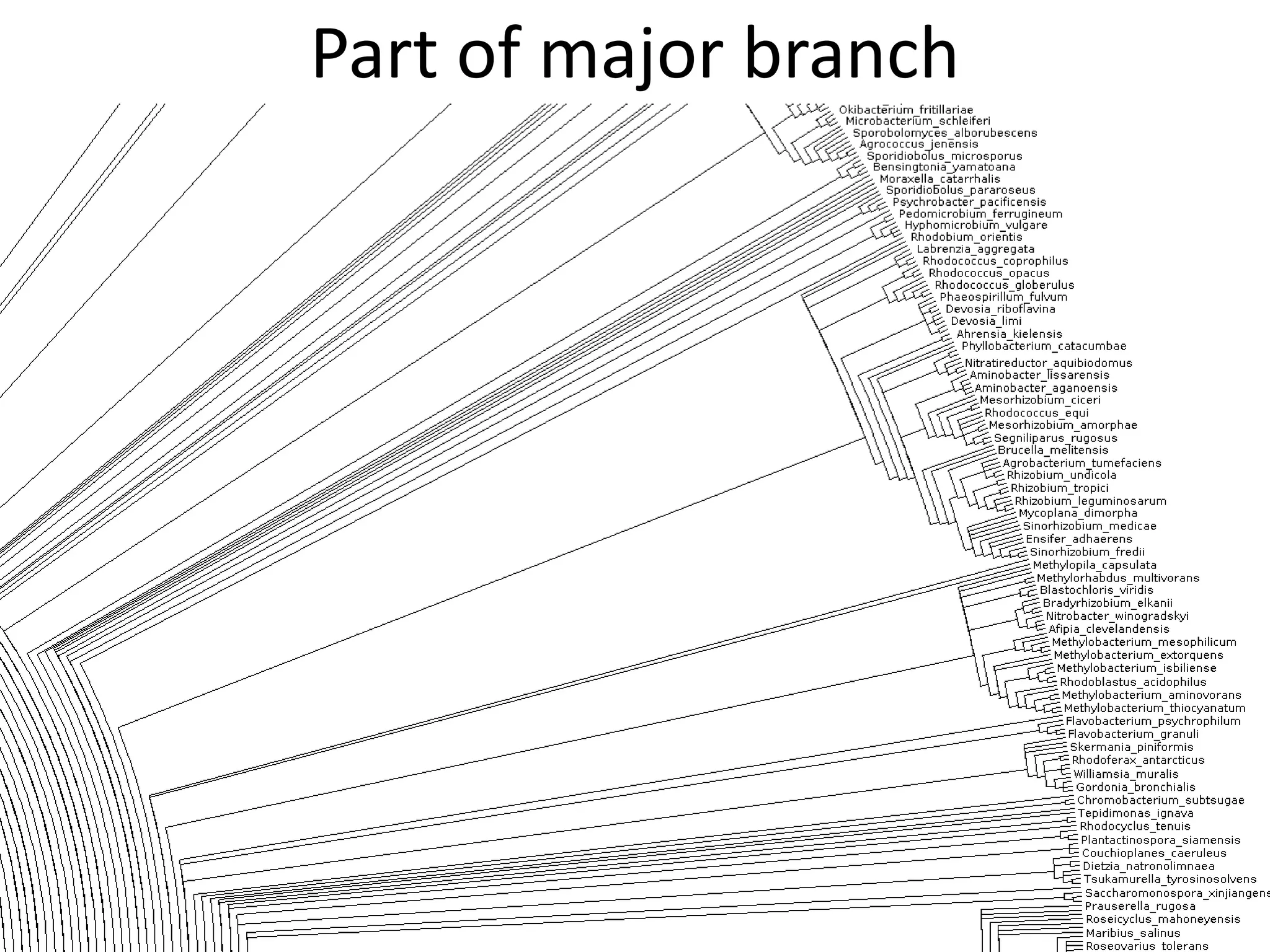
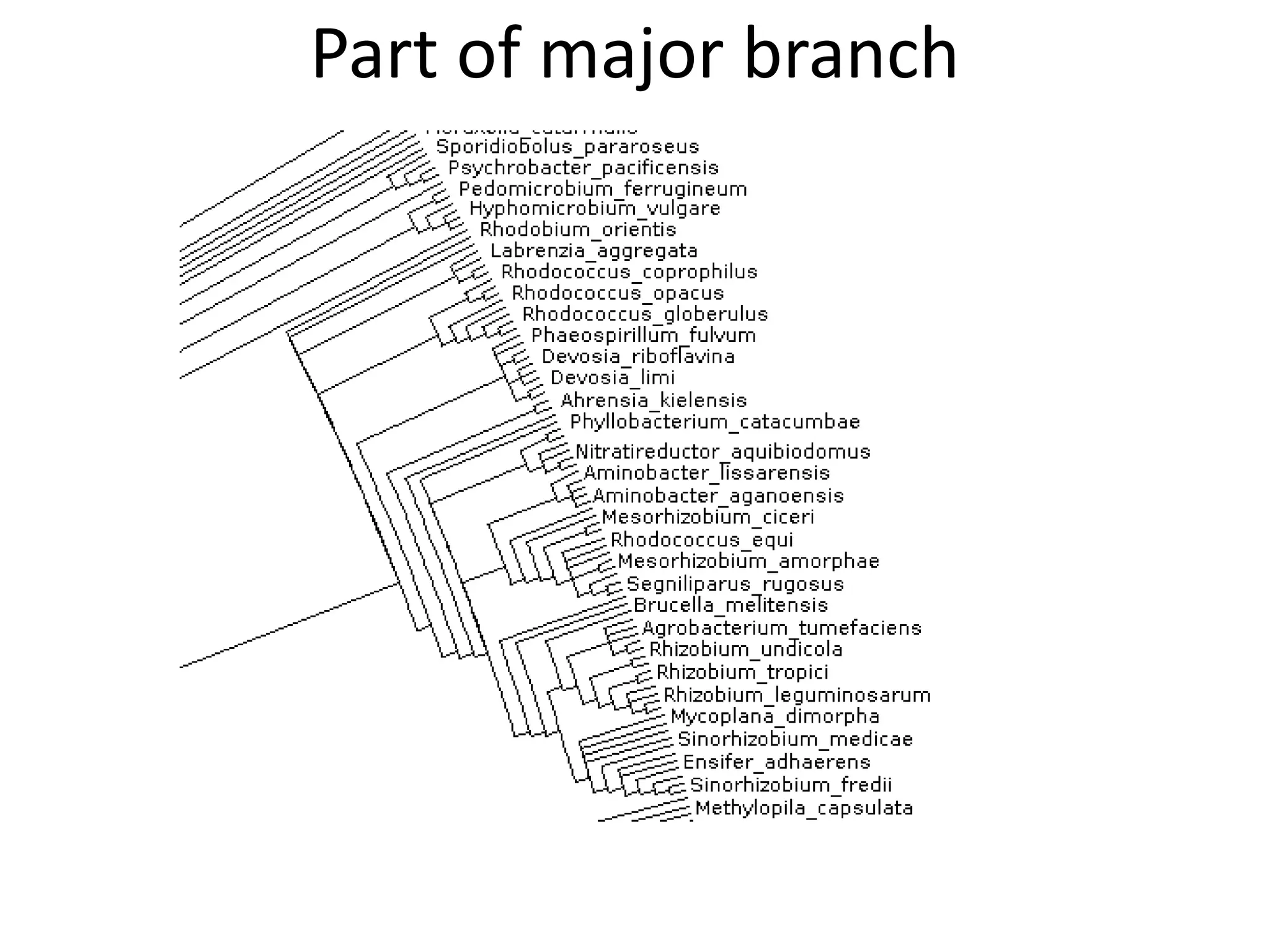
Part of major branch
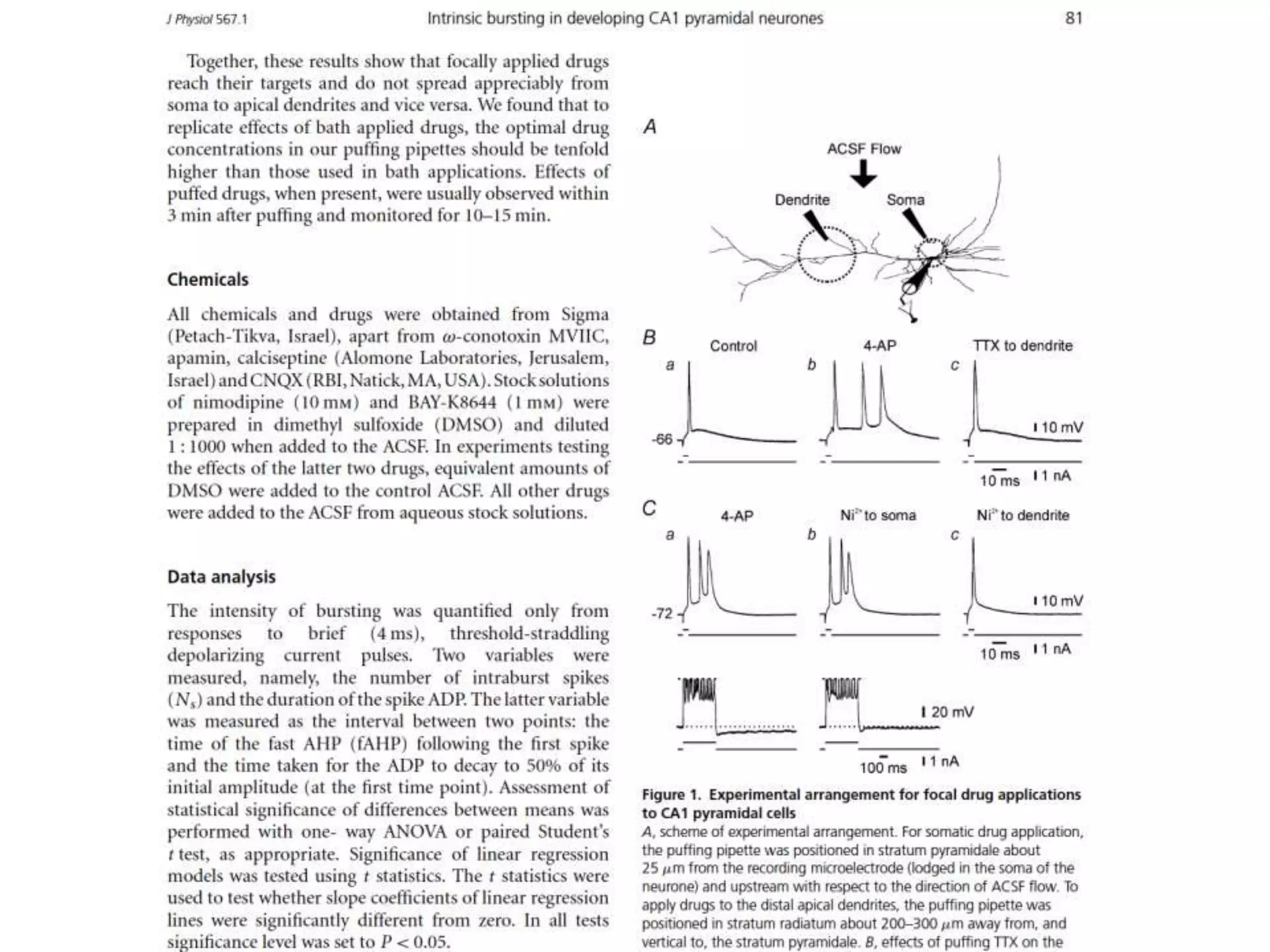
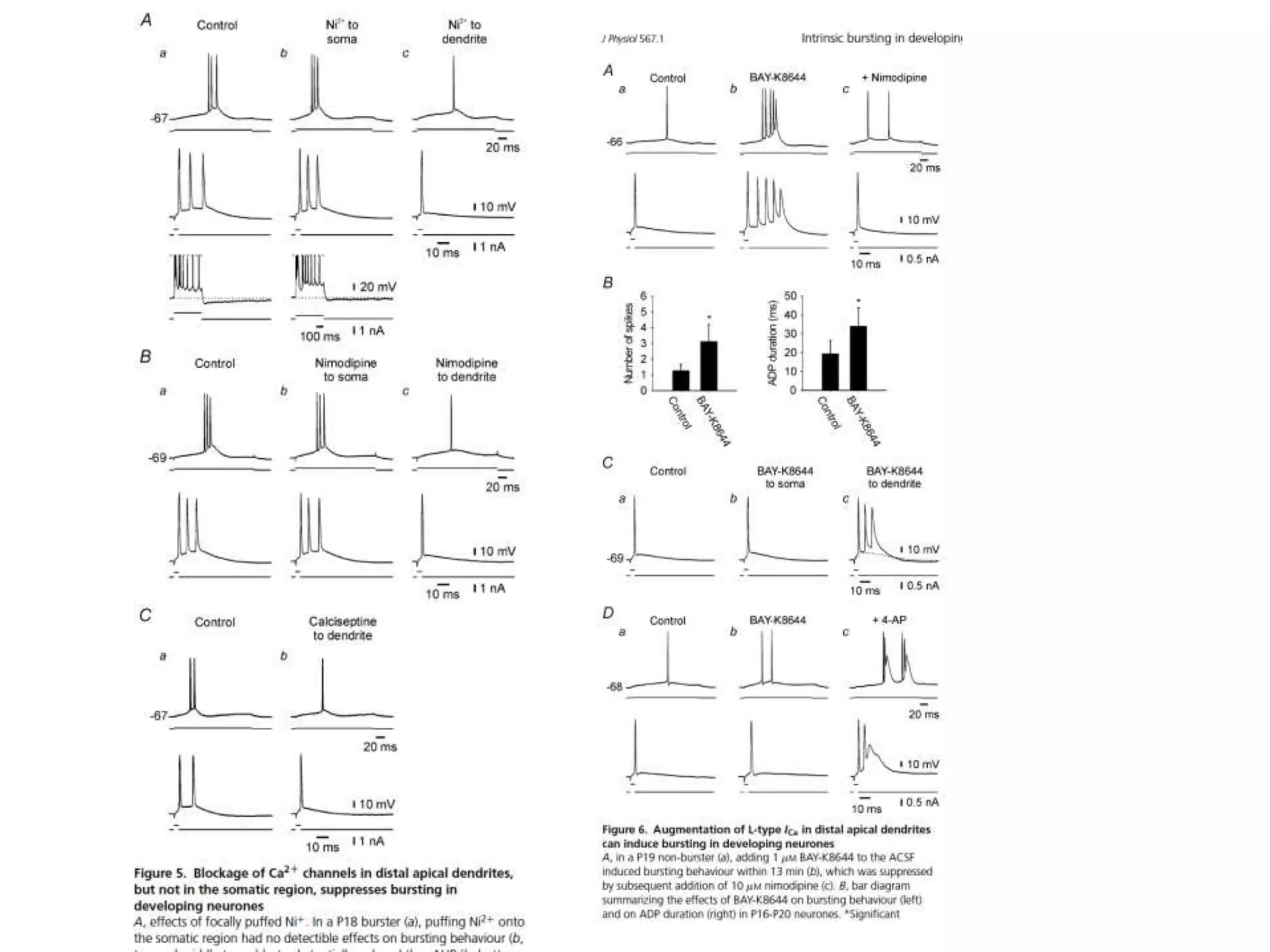
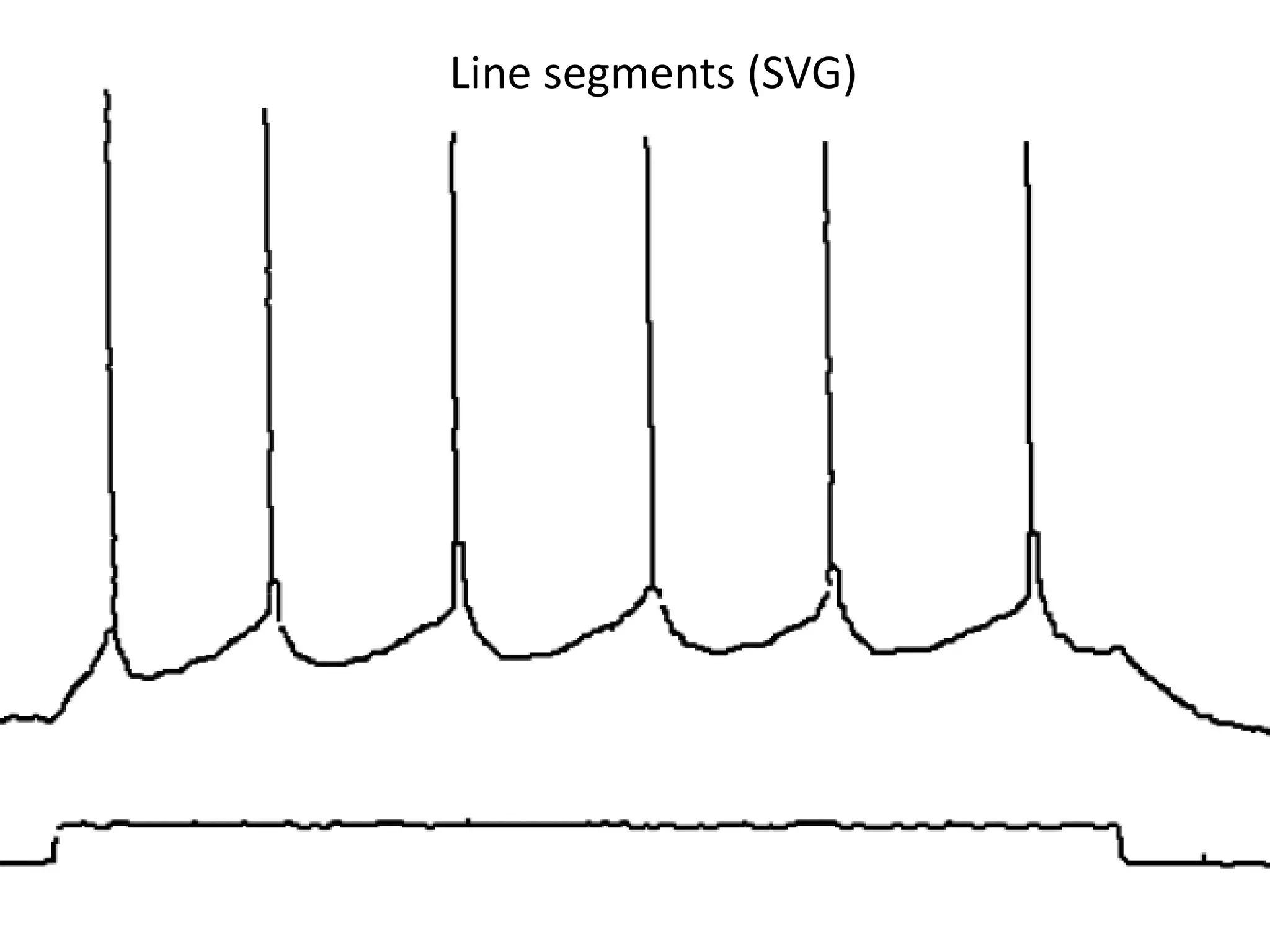
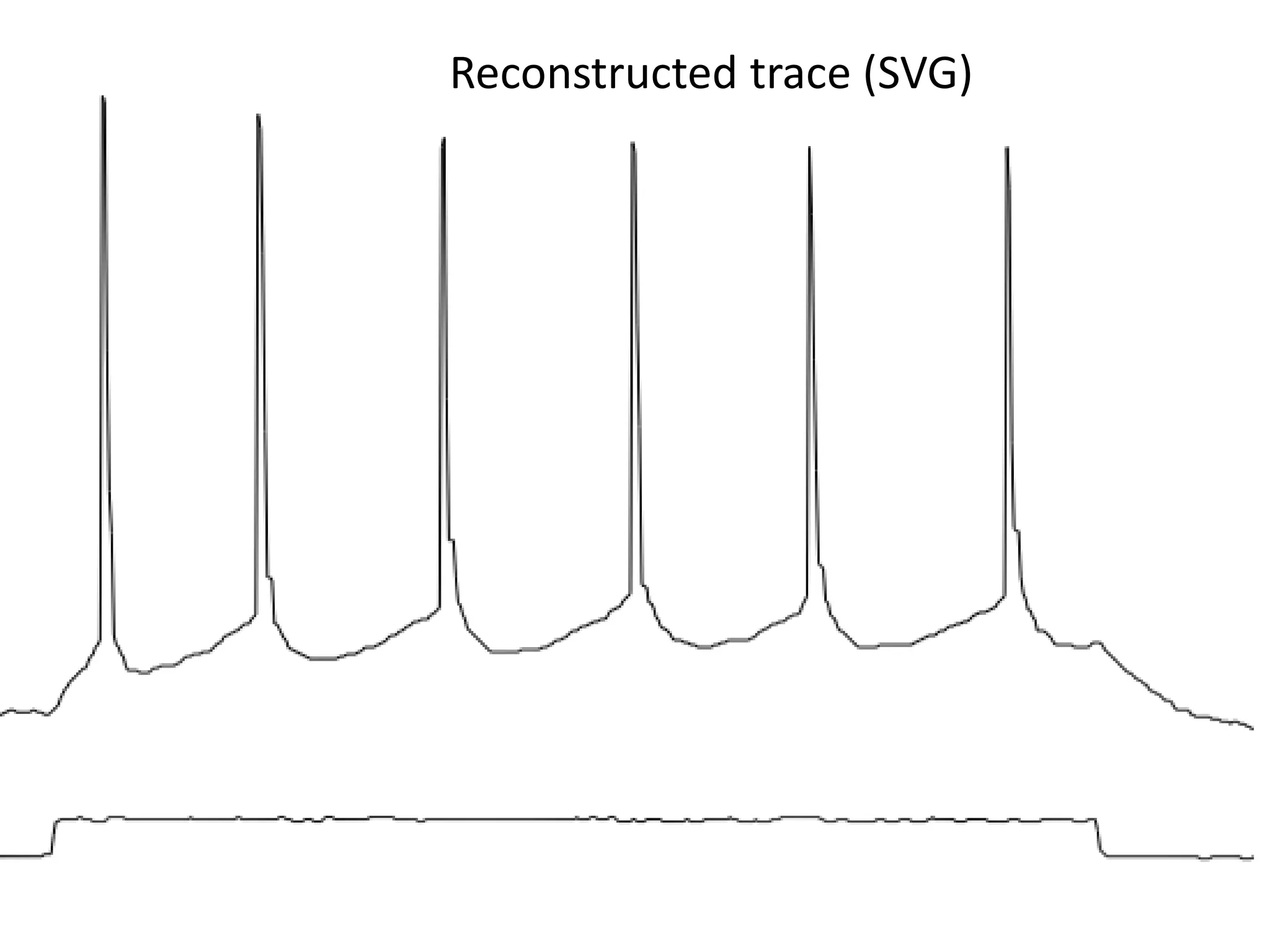
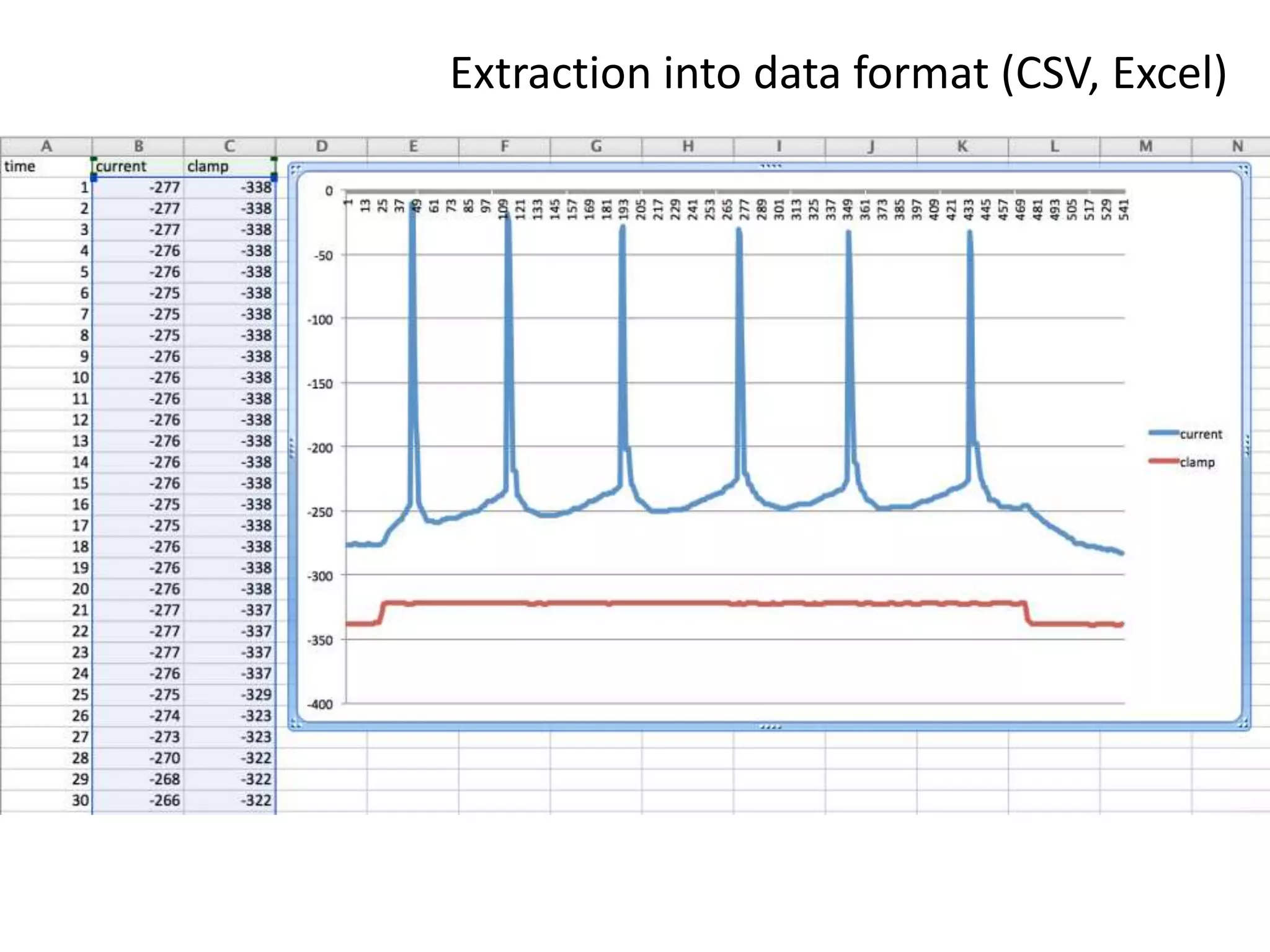
Ideas for Neuroscience
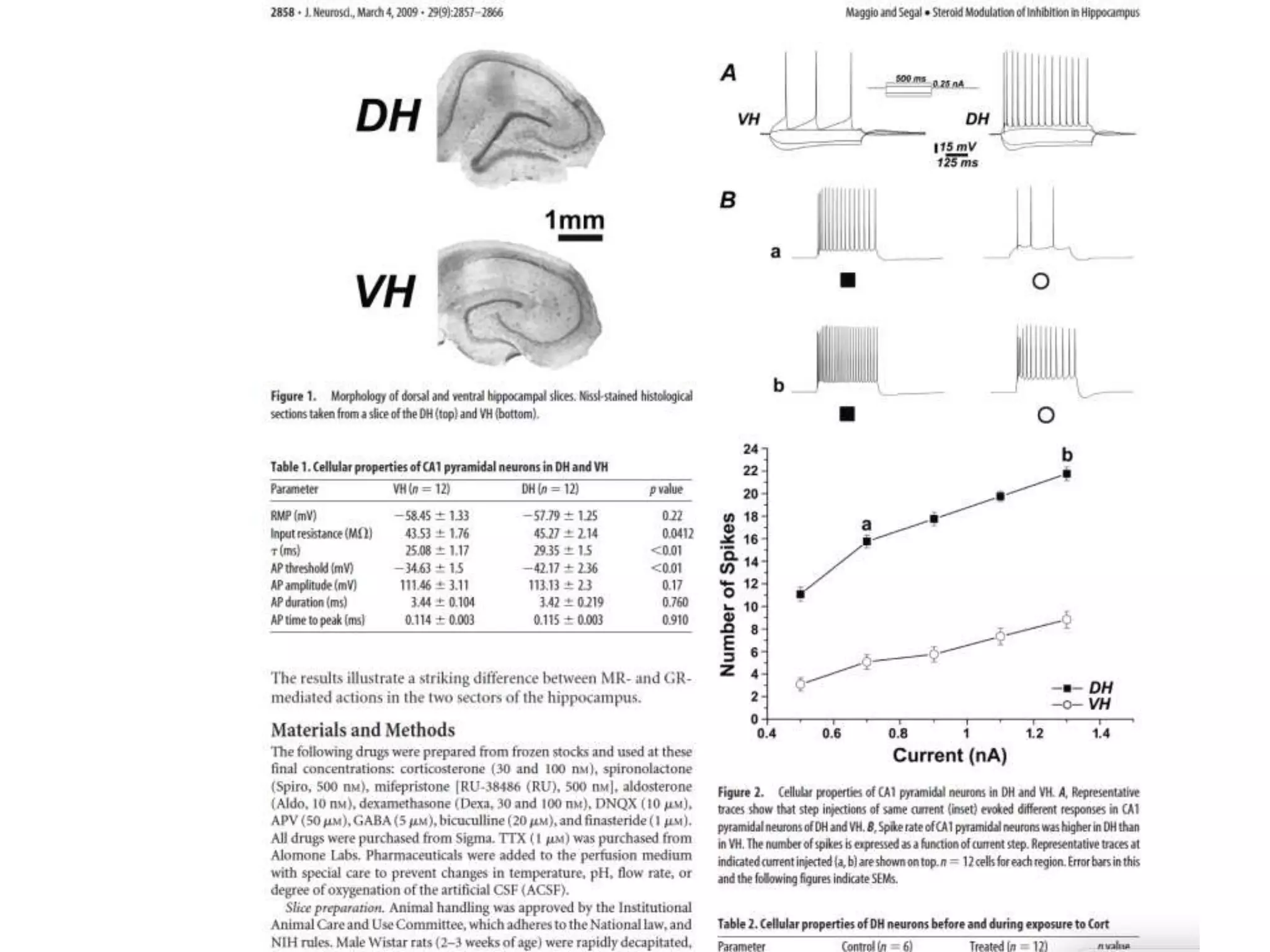
Can we extract digital information from
published electroneurophysiology traces?...
…and build super-information?
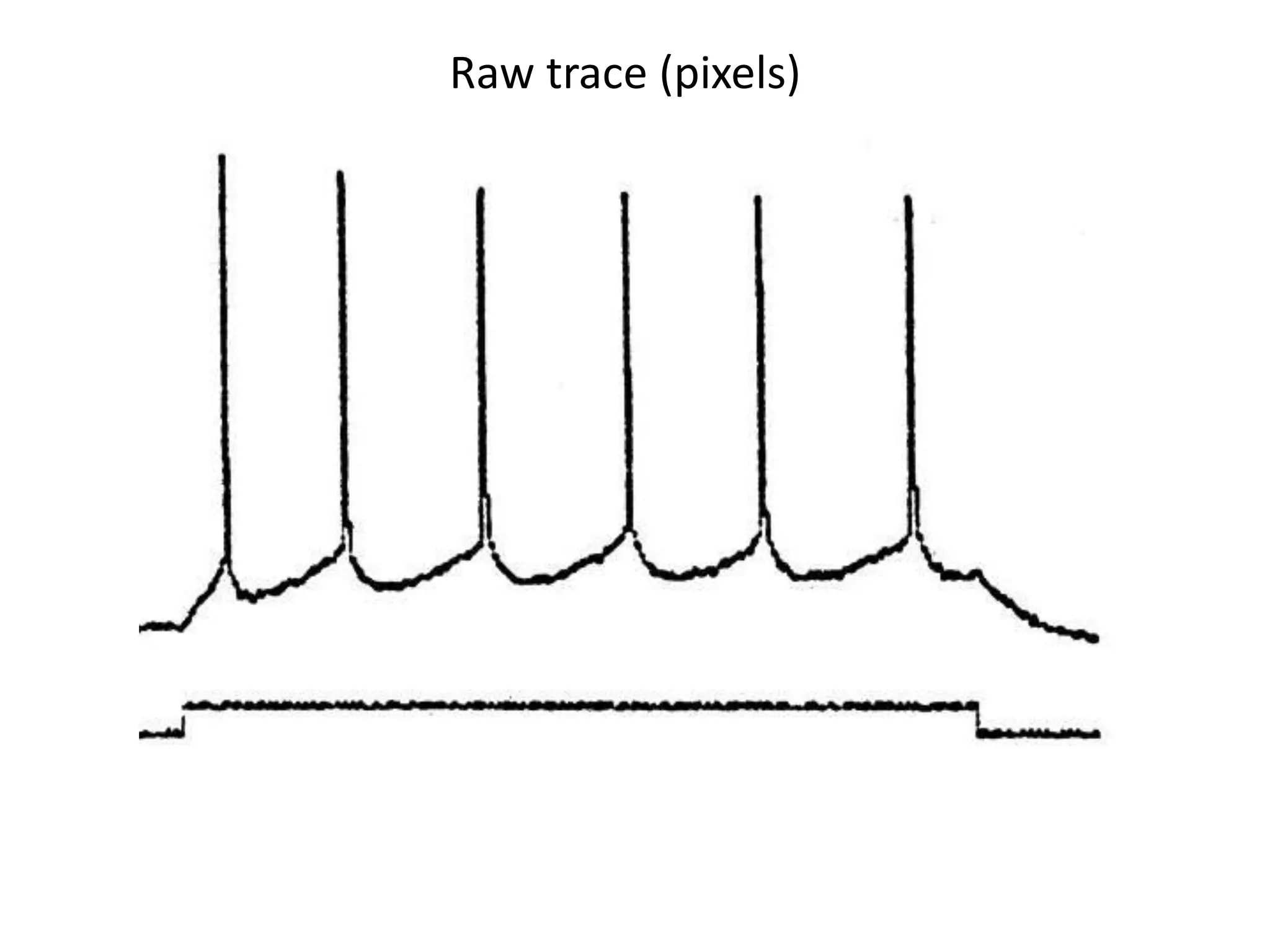
Raw trace (pixels)
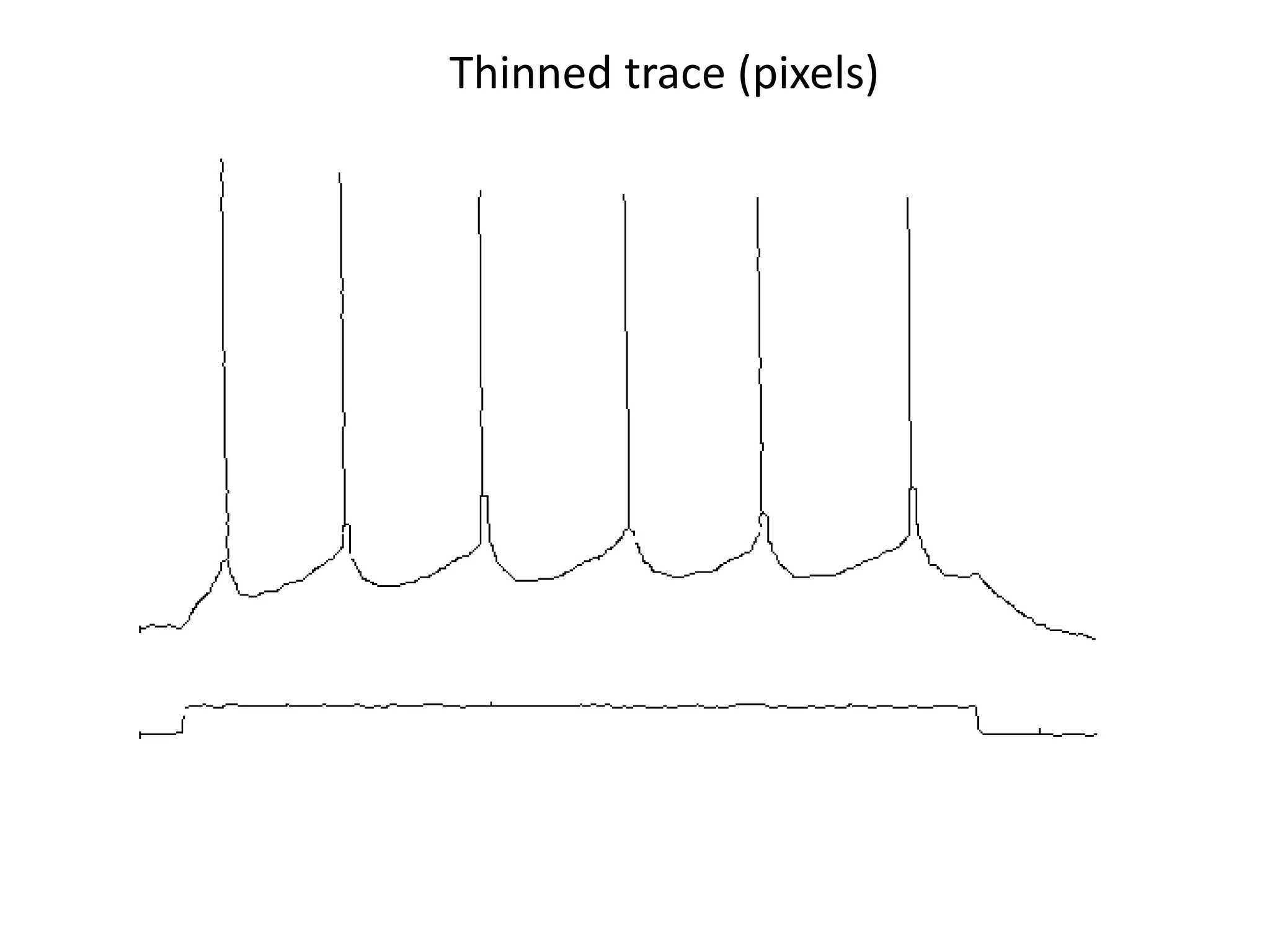
Thinned trace (pixels)
Line segments (SVG)
Reconstructed trace (SVG)
Extraction into data format (CSV, Excel)
catalogue
getpapers
query
Daily
Crawl
EuPMC, arXiv
CORE , HAL,
(UNIV repos)
ToC
services
PDF HTML
DOC ePUB
TeX XML
PNG
EPS CSV
XLSURLs
DOIs
crawl
quickscrape
norma
Normalizer
Structurer
Semantic
Tagger
Text
Data
Figures
ami
UNIV
Repos
search
Lookup
CONTENT
MINING
Chem
Phylo
Trials
Crystal
Plants
COMMUNITY
plugins
Visualization
and Analysis
PloSONE, BMC,
peerJ… Nature, IEEE,
Elsevier…
Publisher Sites
scrapers
queries
taggers
abstract
methods
references
Captioned
Figures
Fig. 1
HTML tables
30, 000 pages/day
Semantic ScholarlyHTML
Facts
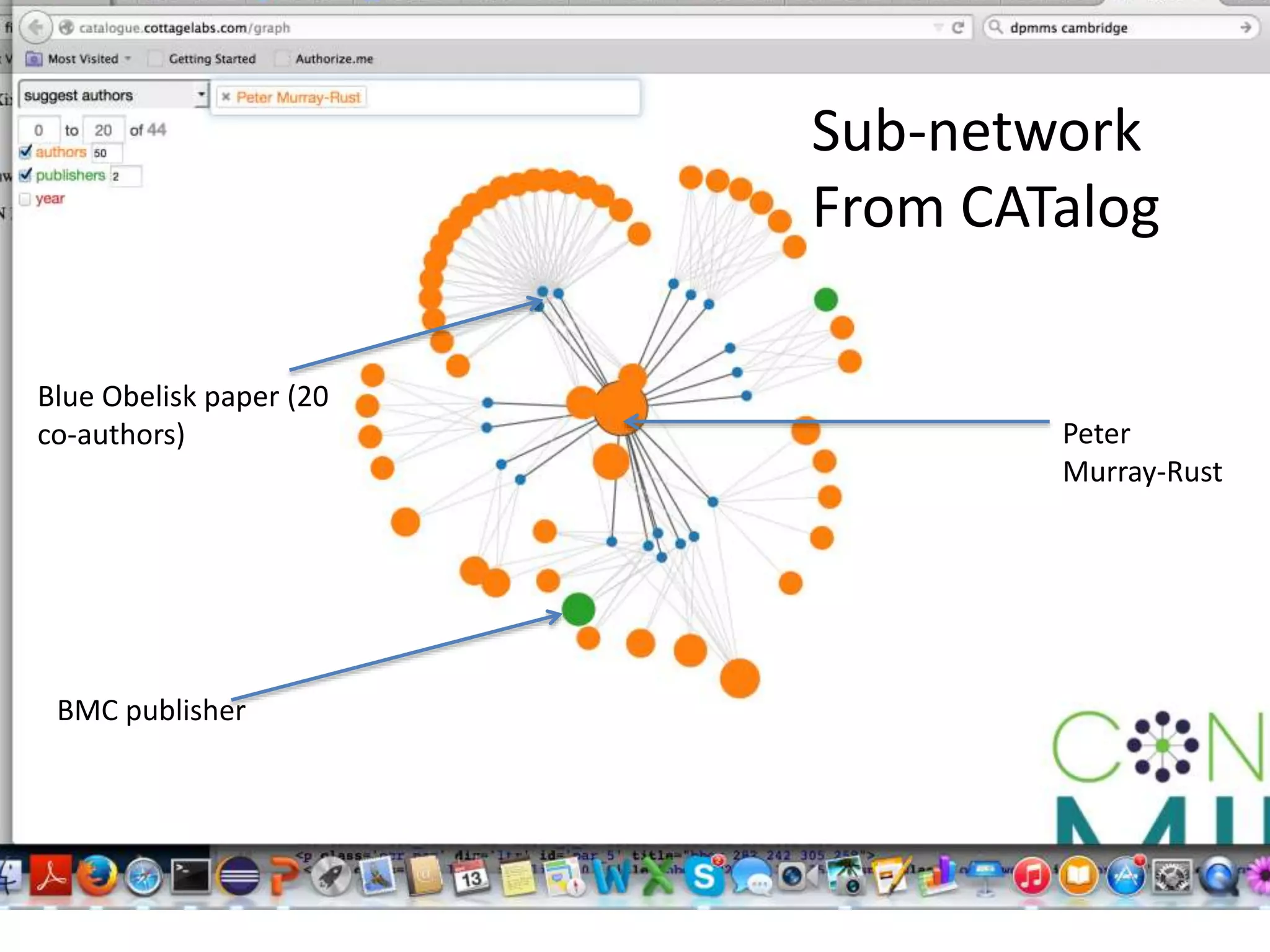
Peter
Murray-Rust
BMC publisher
Blue Obelisk paper (20
co-authors)
Sub-network
From CATalog
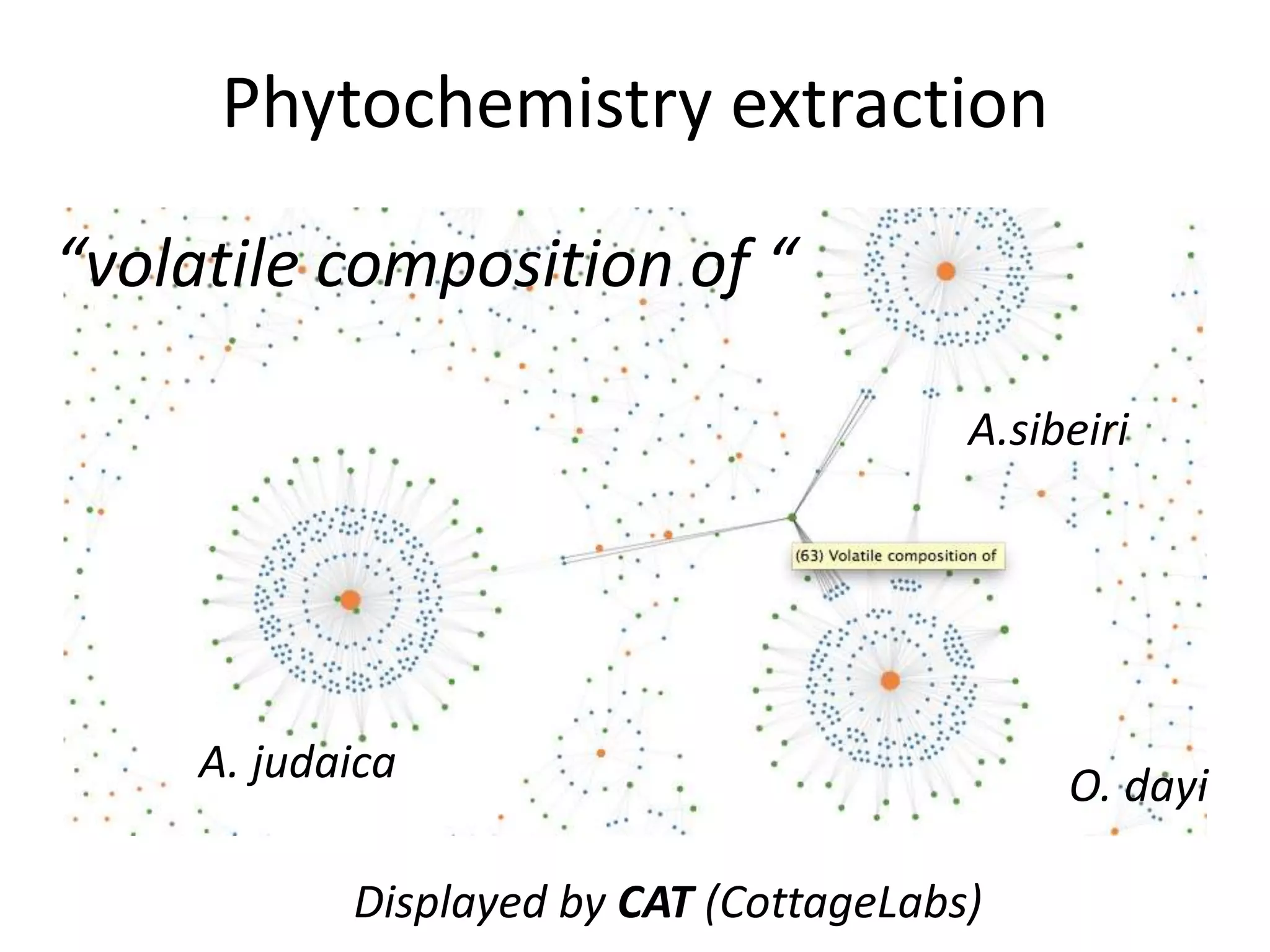
Phytochemistry extraction
O. dayi
“volatile composition of “
A.sibeiri
A. judaica
Displayed by CAT (CottageLabs)
The problem
©
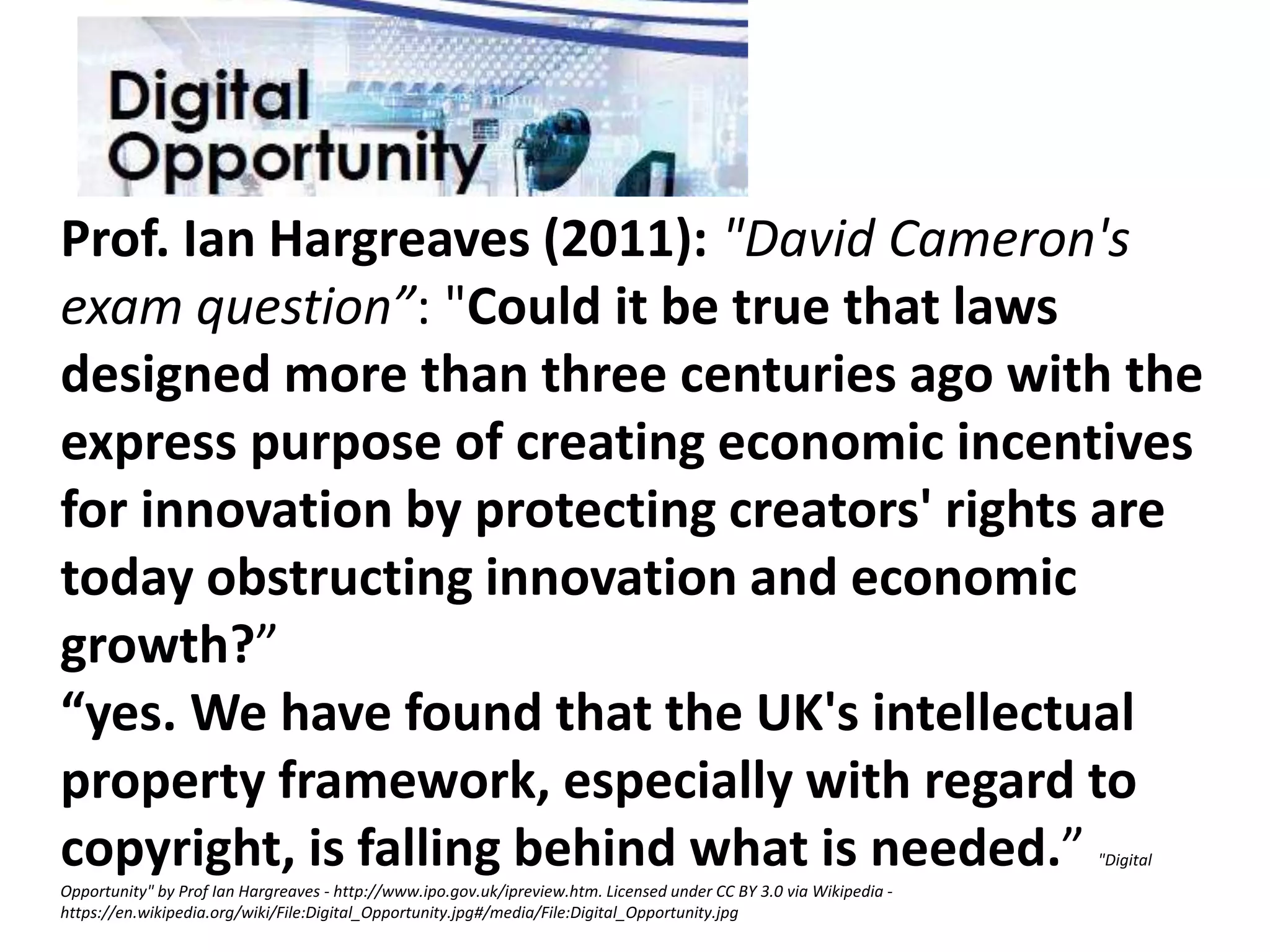
Prof. Ian Hargreaves (2011): "David Cameron's
exam question”: "Could it be true that laws
designed more than three centuries ago with the
express purpose of creating economic incentives
for innovation by protecting creators' rights are
today obstructing innovation and economic
growth?”
“yes. We have found that the UK's intellectual
property framework, especially with regard to
copyright, is falling behind what is needed.” "Digital
Opportunity" by Prof Ian Hargreaves - http://www.ipo.gov.uk/ipreview.htm. Licensed under CC BY 3.0 via Wikipedia -
https://en.wikipedia.org/wiki/File:Digital_Opportunity.jpg#/media/File:Digital_Opportunity.jpg
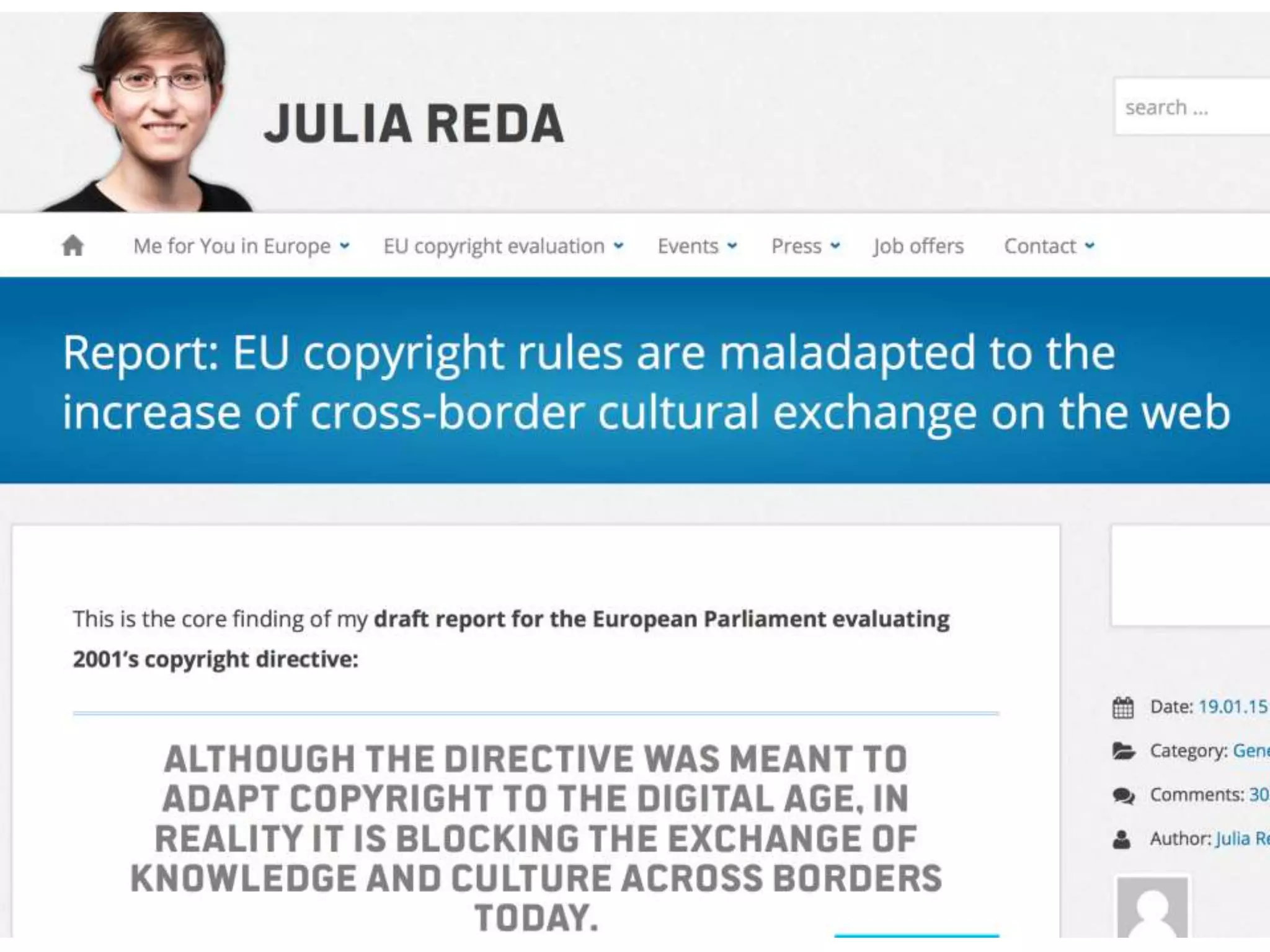
Elsevier wants to control Open Data
[asked by Michelle Brook]
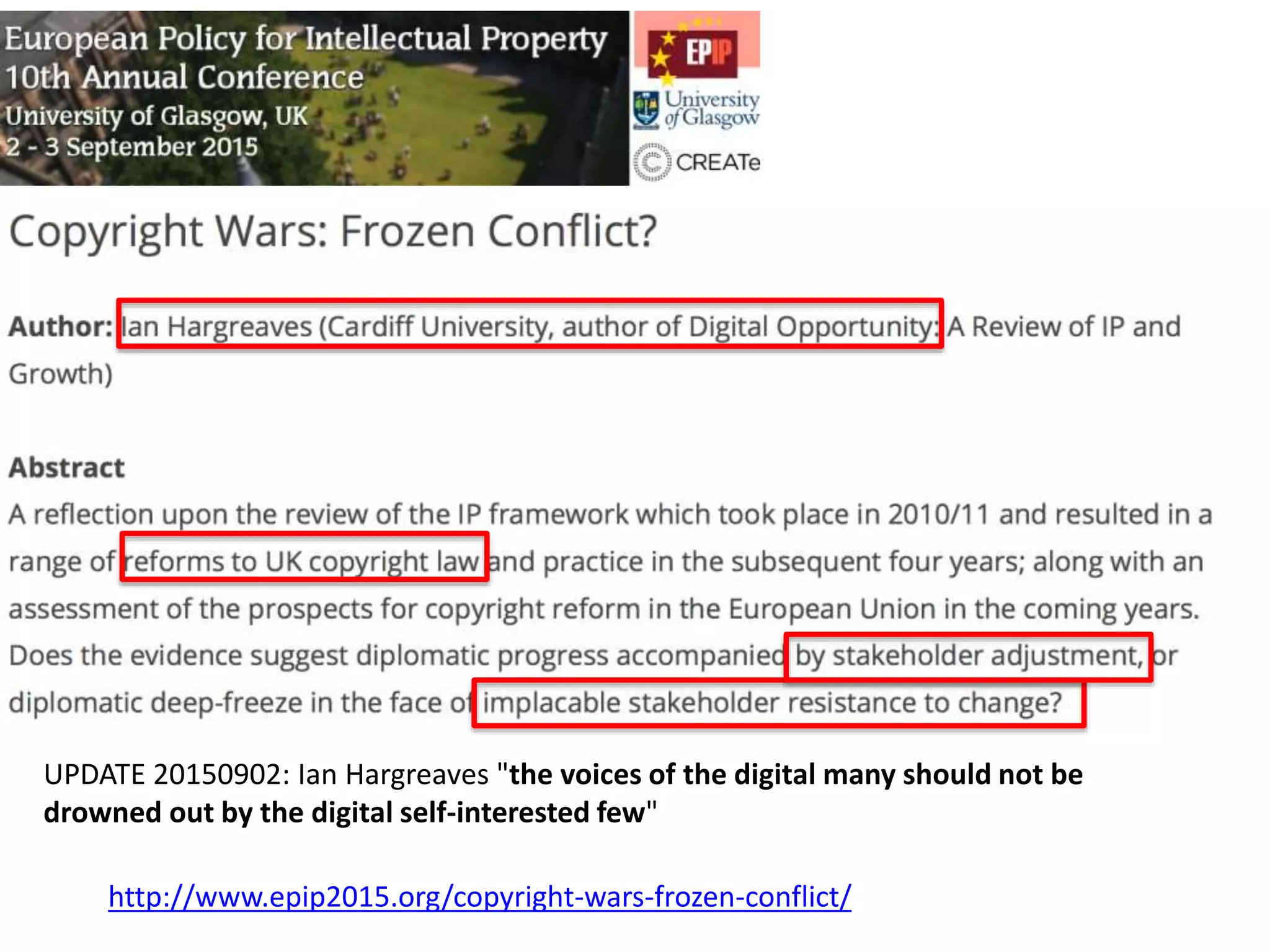
http://www.epip2015.org/copyright-wars-frozen-conflict/
UPDATE 20150902: Ian Hargreaves "the voices of the digital many should not be
drowned out by the digital self-interested few"
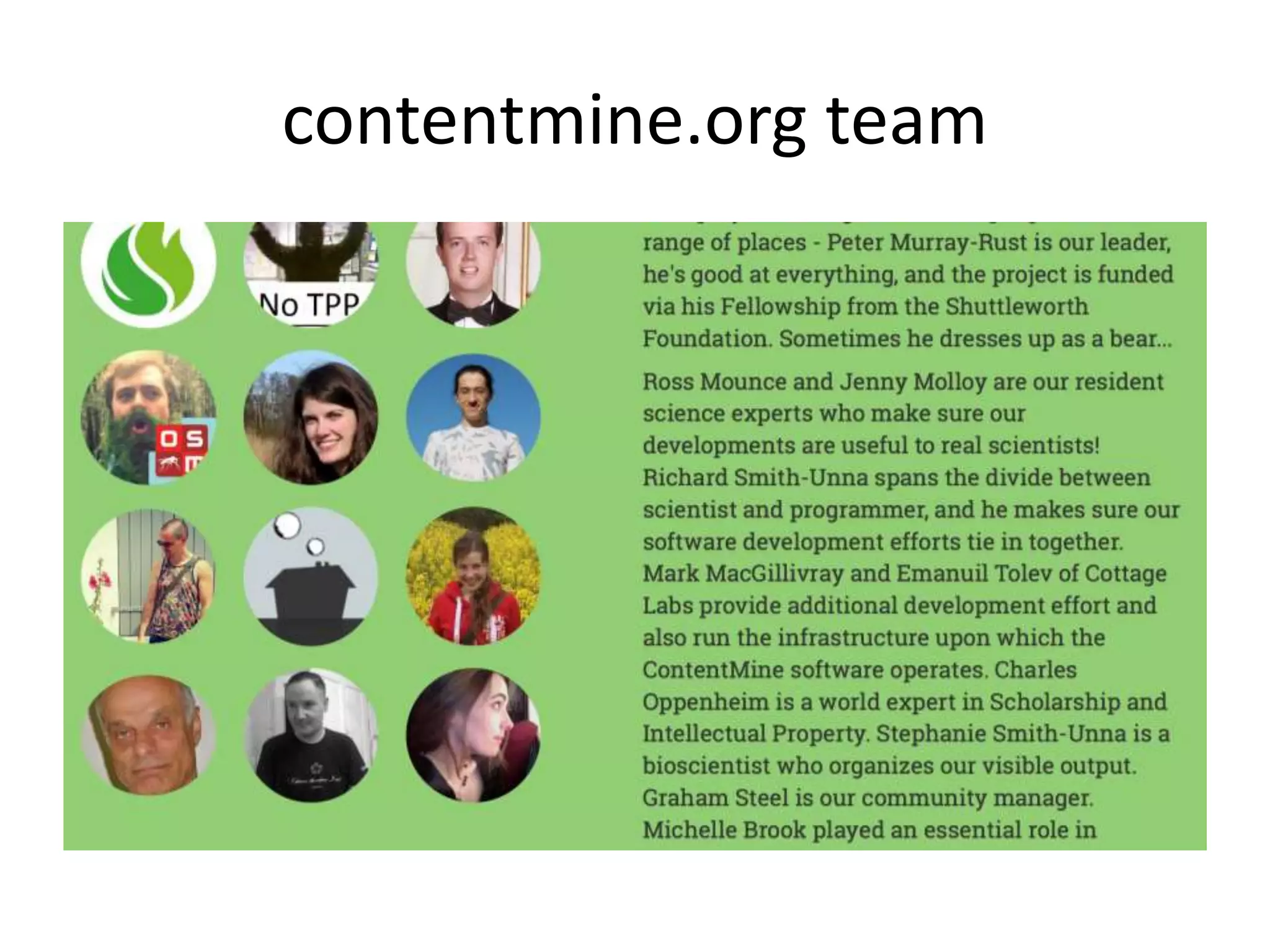
contentmine.org team
ContentMining in Neuroscience

ContentMining in Neuroscience

Editor's Notes

  • #2 Hi, I’m here to talk about AMI; a data extraction framework and tool. First, I just want highlight some of key contributors to the projects; Andy for his work on the ChemistryVisitor and Peter for the overall architecture. In this talk, I’m going to impress the importance of data in a specific format and its utility to automated machine processing. Then I’m going to demonstrate AMI’s architecture and the transformation of data as it flows through the process. I’m going to dwell a little on a core format used, Scalable Vector Graphics (SVG) before introducing the concept of visitors, which are pluggable context specific data extractors. Next, I’m going to introduce Andy’s ChemVisitor, for extracting semantic chemistry data, along with a few other visitors that can process non-chemistry specific data. Finally, I will demonstrate some uses of the ChemVisitor, within the realm of validation and metabolism.
  • #23 ChemBark