CONSTRUCTION SITE
SAFETY
By- Froyd dias
 INTRODUCTION – A FEW FACTS
 CONSTRUCTION ACCIDENTS
 SAFE ACCESS ON-SITE
 WORKING AT HIEGHT
 LADDER SAFETY
 EXCAVATION SAFETY
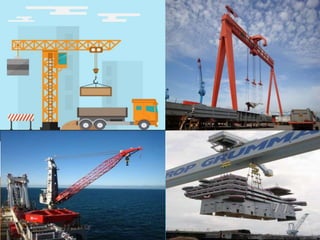
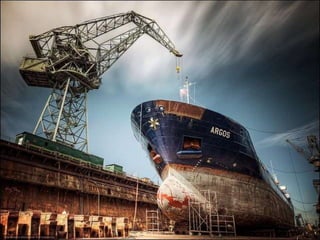
 CRANE SAFETY
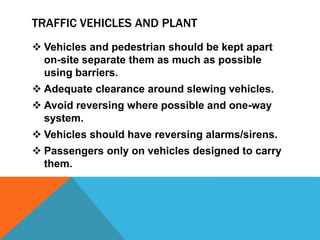
 TRAFFIC VEHICLES & PLANT
 GOODS HOIST
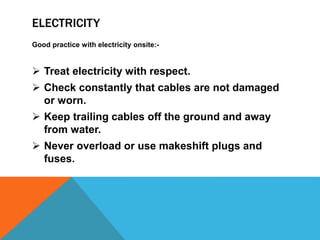
 ELECTRICITY
 WORKING NEAR SEWAGE
 PPE
 SAFETY SUCCESS
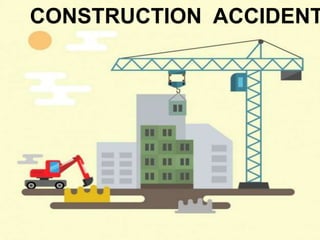
CONSTRUCTION ACCIDENT
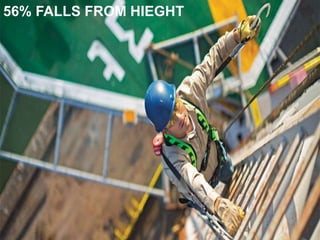
56% FALLS FROM HIEGHT
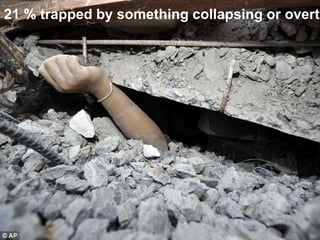
21 % trapped by something collapsing or overtu
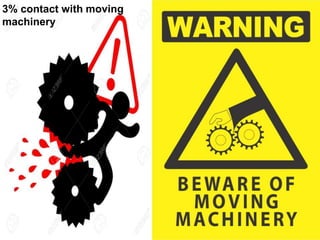
3% contact with moving
machinery
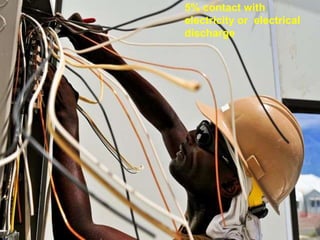
5% contact with
electricity or electrical
discharge
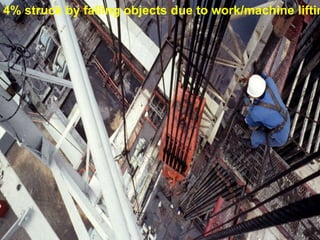
4% struck by falling objects due to work/machine liftin
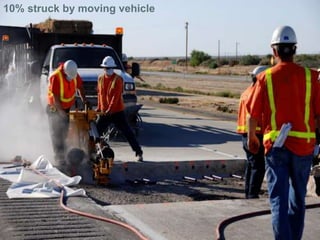
10% struck by moving vehicle
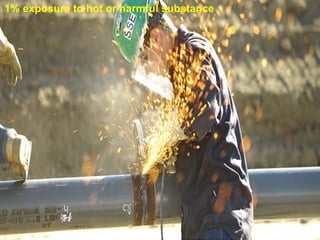
1% exposure to hot or harmful substance
SAFE ACCESS ON SITE
Everyone can get to their place of work safely.
Edges from which people could fall are provided
with double guard rails or other suitable edge
protection.
Holes are protected with clearly marked and
fixed covers to prevent falls.
Site is tidy.
Fenced off from public.
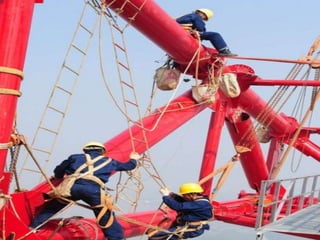
WORK AT HEIGHT
Never use ladders or scaffold without proper
fixing.
Never use incomplete scaffolding.
Make sure there are hand rails and toe boards at
all edges
Things fall on sites, wear your helmet.
Before starting work at heights check for
clearance from any overhead power lines.
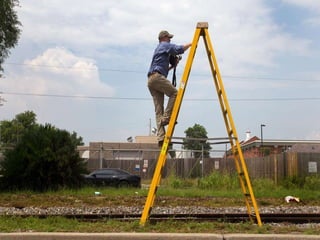
LADDERS
KILL A LOT OF PEOPLE , MAKE SURE THE LADDER IS :-
 Pick right ladder for the right job.
 In good shape.
 Secured near the top.
 On a stable and firm base.
 Rising at least 1 meter / 3 feet beyond the
landing place.
 Always check rungs.
 Check the stepladder platform.
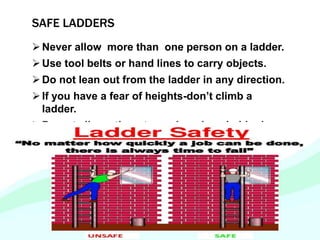
SAFE LADDERS
Never allow more than one person on a ladder.
Use tool belts or hand lines to carry objects.
Do not lean out from the ladder in any direction.
If you have a fear of heights-don’t climb a
ladder.
Do not allow others to work under a ladder in
use.
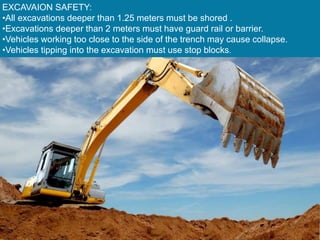
EXCAVAION SAFETY:
•All excavations deeper than 1.25 meters must be shored .
•Excavations deeper than 2 meters must have guard rail or barrier.
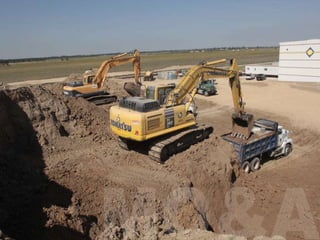
•Vehicles working too close to the side of the trench may cause collapse.
•Vehicles tipping into the excavation must use stop blocks.
EXCAVATION WORK
If you want to avoid being buried alive
apply these safety rules:_
• Make sure you know where any
underground pipes and cables are
before you hit them.
• Make sure excavation is inspected daily.
• Trench slides can collapse without
warning.
CRANE SAFETY
The weight of the load must be carefully
estimated.
The crane must befitted with an automatic safe
load indicator(one that works).
The crane must always work on hard, level base.
The load must be properly fixed and secured.
The banksman must be trained to give clear
signals.
Never, never be carried with a load.
TRAFFIC VEHICLES AND PLANT
 Vehicles and pedestrian should be kept apart
on-site separate them as much as possible
using barriers.
 Adequate clearance around slewing vehicles.
 Avoid reversing where possible and one-way
system.
 Vehicles should have reversing alarms/sirens.
 Passengers only on vehicles designed to carry
them.
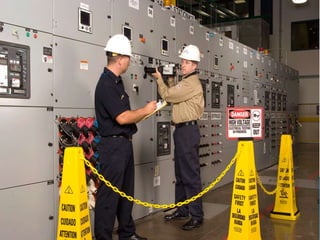
ELECTRICITY
Good practice with electricity onsite:-
 Treat electricity with respect.
 Check constantly that cables are not damaged
or worn.
 Keep trailing cables off the ground and away
from water.
 Never overload or use makeshift plugs and
fuses.
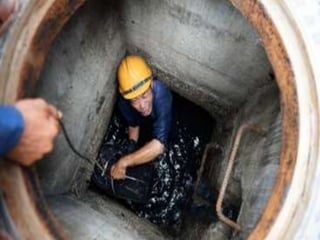
WORKING NEAR SEWAGE
o Health risks:- gastroenteritis /hepatitis/
weil’s disease/(leptospirosis)<rats urine> /asthma/skin &
eye
disease/ inflammation of lungs.
o How to become infected:-
 hand to mouth contact {eating, drinking,}
 Skin contact {cuts , wounds}
 breathing {dust or mist}
HOW TO PROTECT YOURSELF:
 Understand the risks.
 Understand how you may be infected.
 Wear protective clothing.
 Avoid sewage if possible.
 Apply good possible hygiene.
 Cleanse all wounds and cover.
 Change out of contaminated clothing.
 Clean equipment and boots etc on site.
 If in doubt – see your doctor.
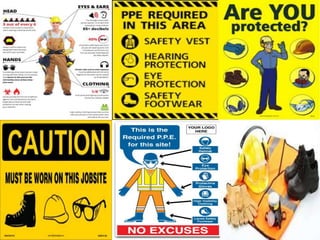
PPE ON SITE
Most construction sites require at least:-
 Hard hat
 Safety boots
 Hi-viz jacket
 Safety glasses
wear them always for your safety
BASIC SAFETY PHILOSOPHY FOR SUCCESS
 All accidents are preventable
 No job is worth getting hurt for.
 Every job will be done safely.
 Incidents can be managed.
 Safety is every ones responsibility.
 Continue improvement.
 Safety as a “way of life” for 24 hours / day.
 All individuals have the responsibility and accountability to
identify eliminate or manage risks associated with their
workplace.
 Legal obligations will be the minimum requirements for our
health and safety standards.
 Individual will be trained and equipped to have the skills and
facilities to ensure an accident free workplace.
Construction site safety

Construction site safety

  • 1.
  • 2.
     INTRODUCTION –A FEW FACTS  CONSTRUCTION ACCIDENTS  SAFE ACCESS ON-SITE  WORKING AT HIEGHT  LADDER SAFETY  EXCAVATION SAFETY  CRANE SAFETY  TRAFFIC VEHICLES & PLANT  GOODS HOIST  ELECTRICITY  WORKING NEAR SEWAGE  PPE  SAFETY SUCCESS
  • 3.
  • 4.
  • 5.
    21 % trappedby something collapsing or overtu
  • 6.
    3% contact withmoving machinery
  • 7.
    5% contact with electricityor electrical discharge
  • 8.
    4% struck byfalling objects due to work/machine liftin
  • 9.
    10% struck bymoving vehicle
  • 10.
    1% exposure tohot or harmful substance
  • 11.
    SAFE ACCESS ONSITE Everyone can get to their place of work safely. Edges from which people could fall are provided with double guard rails or other suitable edge protection. Holes are protected with clearly marked and fixed covers to prevent falls. Site is tidy. Fenced off from public.
  • 12.
    WORK AT HEIGHT Neveruse ladders or scaffold without proper fixing. Never use incomplete scaffolding. Make sure there are hand rails and toe boards at all edges Things fall on sites, wear your helmet. Before starting work at heights check for clearance from any overhead power lines.
  • 14.
    LADDERS KILL A LOTOF PEOPLE , MAKE SURE THE LADDER IS :-  Pick right ladder for the right job.  In good shape.  Secured near the top.  On a stable and firm base.  Rising at least 1 meter / 3 feet beyond the landing place.  Always check rungs.  Check the stepladder platform.
  • 16.
    SAFE LADDERS Never allowmore than one person on a ladder. Use tool belts or hand lines to carry objects. Do not lean out from the ladder in any direction. If you have a fear of heights-don’t climb a ladder. Do not allow others to work under a ladder in use.
  • 17.
    EXCAVAION SAFETY: •All excavationsdeeper than 1.25 meters must be shored . •Excavations deeper than 2 meters must have guard rail or barrier. •Vehicles working too close to the side of the trench may cause collapse. •Vehicles tipping into the excavation must use stop blocks.
  • 18.
    EXCAVATION WORK If youwant to avoid being buried alive apply these safety rules:_ • Make sure you know where any underground pipes and cables are before you hit them. • Make sure excavation is inspected daily. • Trench slides can collapse without warning.
  • 20.
    CRANE SAFETY The weightof the load must be carefully estimated. The crane must befitted with an automatic safe load indicator(one that works). The crane must always work on hard, level base. The load must be properly fixed and secured. The banksman must be trained to give clear signals. Never, never be carried with a load.
  • 23.
    TRAFFIC VEHICLES ANDPLANT  Vehicles and pedestrian should be kept apart on-site separate them as much as possible using barriers.  Adequate clearance around slewing vehicles.  Avoid reversing where possible and one-way system.  Vehicles should have reversing alarms/sirens.  Passengers only on vehicles designed to carry them.
  • 24.
    ELECTRICITY Good practice withelectricity onsite:-  Treat electricity with respect.  Check constantly that cables are not damaged or worn.  Keep trailing cables off the ground and away from water.  Never overload or use makeshift plugs and fuses.
  • 27.
    WORKING NEAR SEWAGE oHealth risks:- gastroenteritis /hepatitis/ weil’s disease/(leptospirosis)<rats urine> /asthma/skin & eye disease/ inflammation of lungs. o How to become infected:-  hand to mouth contact {eating, drinking,}  Skin contact {cuts , wounds}  breathing {dust or mist}
  • 29.
    HOW TO PROTECTYOURSELF:  Understand the risks.  Understand how you may be infected.  Wear protective clothing.  Avoid sewage if possible.  Apply good possible hygiene.  Cleanse all wounds and cover.  Change out of contaminated clothing.  Clean equipment and boots etc on site.  If in doubt – see your doctor.
  • 30.
    PPE ON SITE Mostconstruction sites require at least:-  Hard hat  Safety boots  Hi-viz jacket  Safety glasses wear them always for your safety
  • 32.
    BASIC SAFETY PHILOSOPHYFOR SUCCESS  All accidents are preventable  No job is worth getting hurt for.  Every job will be done safely.  Incidents can be managed.  Safety is every ones responsibility.  Continue improvement.  Safety as a “way of life” for 24 hours / day.  All individuals have the responsibility and accountability to identify eliminate or manage risks associated with their workplace.  Legal obligations will be the minimum requirements for our health and safety standards.  Individual will be trained and equipped to have the skills and facilities to ensure an accident free workplace.