RESEARCH METHODS 
& REPORTING 
CONSORT 2010 Explanation and Elaboration: updated 
guidelines for reporting parallel group randomised trials 
David Moher,1 Sally Hopewell,2 Kenneth F Schulz,3 Victor Montori,4 Peter C Gøtzsche,5 P J Devereaux,6 Diana 
Elbourne,7 Matthias Egger,8 Douglas G Altman2 
ABSTRACT 
Overwhelming evidence shows the quality of reporting of randomised controlled trials (RCTs) is not optimal. Without 
transparent reporting, readers cannot judge the reliability and validity of trial findings nor extract information for systematic 
reviews. Recent methodological analyses indicate that inadequate reporting and design are associated with biased estimates 
of treatment effects. Such systematic error is seriously damaging to RCTs, which are considered the gold standard for 
evaluating interventions because of their ability to minimise or avoid bias. 
A group of scientists and editors developed the CONSORT (Consolidated Standards of Reporting Trials) statement to improve 
the quality of reporting of RCTs. It was first published in 1996 and updated in 2001. The statement consists of a checklist 
and flow diagram that authors can use for reporting an RCT. Many leading medical journals and major international editorial 
groups have endorsed the CONSORT statement. The statement facilitates critical appraisal and interpretation of RCTs. 
During the 2001 CONSORT revision, it became clear that explanation and elaboration of the principles underlying the 
CONSORT statement would help investigators and others to write or appraise trial reports. A CONSORT explanation and 
elaboration article was published in 2001 alongside the 2001 version of the CONSORT statement. 
After an expert meeting in January 2007, the CONSORT statement has been further revised and is published as the CONSORT 
2010 Statement. This update improves the wording and clarity of the previous checklist and incorporates recommendations 
related to topics that have only recently received recognition, such as selective outcome reporting bias. 
This explanatory and elaboration document—intended to enhance the use, understanding, and dissemination of the 
CONSORT statement—has also been extensively revised. It presents the meaning and rationale for each new and updated 
checklist item providing examples of good reporting and, where possible, references to relevant empirical studies. Several 
examples of flow diagrams are included. 
The CONSORT 2010 Statement, this revised explanatory and elaboration document, and the associated website (www. 
consort-statement.org) should be helpful resources to improve reporting of randomised trials. 
“The whole of medicine depends on the transparent report-ing 
of clinical trials.”8 
Well designed and properly executed randomised con-trolled 
trials (RCTs) provide the most reliable evidence on 
the eCcacy of healthcare interventions, but trials with 
inadequate methods are associated with bias, especially 
exaggerated treatment eFects.G-H Biased results from poorly 
designed and reported trials can mislead decision making 
in health care at all levels, from treatment decisions for a 
patient to formulation of national public health policies. 
Critical appraisal of the quality of clinical trials is possible 
only if the design, conduct, and analysis of RCTs are thor-oughly 
and accurately described in the report. Far from being 
transparent, the reporting of RCTs is often incomplete,L-M com-pounding 
problems arising from poor methodology.8N-8H 
Incomplete and inaccurate reporting 
Many reviews have documented deficiencies in reports of 
clinical trials. For example, information on the method 
used in a trial to assign participants to comparison groups 
was reported in only G8% of H8M trial reports indexed in 
PubMed in GNNN,8L and only ST% of L8L reports indexed 
in GNNL.8U Similarly, only TH% of trial reports indexed 
in PubMed in GNNN8L and HS% in GNNL8U defined a pri-mary 
end point, and only GU% in GNNN and TH% in GNNL 
reported a sample size calculation. Reporting is not only 
often incomplete but also sometimes inaccurate. Of 88M 
reports stating that all participants were included in 
the analysis in the groups to which they were originally 
assigned (intention-to-treat analysis), 8H (8S%) excluded 
patients or did not analyse all patients as allocated.8Y Many 
other reviews have found that inadequate reporting is com-mon 
in specialty journals8L 8M and journals published in 
languages other than English.GN G8 
Proper randomisation reduces selection bias at trial 
entry and is the crucial component of high quality RCTs.GG 
Successful randomisation hinges on two steps: generation 
of an unpredictable allocation sequence and concealment 
of this sequence from the investigators enrolling partici-pants 
(see box 8).G GS 
Unfortunately, despite that central role, reporting of 
the methods used for allocation of participants to inter-ventions 
is also generally inadequate. For example, H% 
of GNL reports of supposed RCTs in obstetrics and gynae-cology 
journals described studies that were not truly ran-domised. 
GS This estimate is conservative, as most reports 
do not at present provide adequate information about the 
method of allocation.GN GS SN- SS 
1Ottawa Methods Centre, Clinical 
Epidemiology Program, Ottawa 
Hospital Research Institute, Ottawa 
Hospital, Ottawa, Ontario, Canada, 
K1H 8L6 
2Centre for Statistics in Medicine, 
University of Oxford, Wolfson College, 
Oxford 
3Family Health International, Research 
Triangle Park, NC 27709, USA 
4UK Knowledge and Encounter 
Research Unit, Mayo Clinic, Rochester, 
MN, USA 
5The Nordic Cochrane Centre, 
Rigshospitalet, Blegdamsvej 9, 
Copenhagen, Denmark 
6McMaster University Health 
Sciences Centre, Hamilton, Canada 
7Medical Statistics Unit, London 
School of Hygiene and Tropical 
Medicine, London 
8Institute of Social and Preventive 
Medicine (ISPM), University of Bern, 
Switzerland 
Correspondence to: D Moher 
dmoher@ohri.ca 
Accepted: 8 February 2010 
Cite this as: BMJ 2010;340:c869 
doi: 10.1136/bmj.c869 
BMJ Page 1 of 28 | ONLINE FIRST | bmj.com
RESEARCH METHODS & REPORTING 
1 |  Treatment allocation. What’s so special about randomisation? 
The method used to assign interventions to trial participants is a crucial aspect of clinical trial design. Random assignment is the preferred method; it has been 
successfully used regularly in trials for more than 50 years.24 Randomisation has three major advantages.25 First, when properly implemented, it eliminates 
selection bias, balancing both known and unknown prognostic factors, in the assignment of treatments. Without randomisation, treatment comparisons 
may be prejudiced, whether consciously or not, by selection of participants of a particular kind to receive a particular treatment. Second, random assignment 
permits the use of probability theory to express the likelihood that any difference in outcome between intervention groups merely reflects chance.26 Third, 
random allocation, in some situations, facilitates blinding the identity of treatments to the investigators, participants, and evaluators, possibly by use of a 
placebo, which reduces bias after assignment of treatments.27 Of these three advantages, reducing selection bias at trial entry is usually the most important.28 
Successful randomisation in practice depends on two interrelated aspects—adequate generation of an unpredictable allocation sequence and concealment 
of that sequence until assignment occurs.2 23 A key issue is whether the schedule is known or predictable by the people involved in allocating participants to 
the comparison groups.29 The treatment allocation system should thus be set up so that the person enrolling participants does not know in advance which 
treatment the next person will get, a process termed allocation concealment.2 23 Proper allocation concealment shields knowledge of forthcoming assignments, 
whereas proper random sequences prevent correct anticipation of future assignments based on knowledge of past assignments. 
Improving the reporting of RCTs: the CONSORT statement 
DerSimonian and colleagues suggested that “editors could 
greatly improve the reporting of clinical trials by providing 
authors with a list of items that they expected to be strictly 
reported.”ST Early in the 8MMNs, two groups of journal edi-tors, 
trialists, and methodologists independently published 
recommendations on the reporting of trials.SH SL In a subse-quent 
editorial, Rennie urged the two groups to meet and 
develop a common set of recommendations SU; the outcome 
was the CONSORT statement (Consolidated Standards of 
Reporting Trials).SY 
The CONSORT statement (or simply CONSORT) comprises 
a checklist of essential items that should be included in 
reports of RCTs and a diagram for documenting the flow of 
participants through a trial. It is aimed at primary reports of 
RCTs with two group, parallel designs. Most of CONSORT is 
also relevant to a wider class of trial designs, such as non-inferiority, 
equivalence, factorial, cluster, and crossover tri-als. 
Extensions to the CONSORT checklist for reporting trials 
with some of these designs have been published,SM-T8 as have 
those for reporting certain types of data (harms TG), types of 
interventions (non-pharmacological treatments TS, herbal 
interventionsTT), and abstracts.TH 
The objective of CONSORT is to provide guidance to authors 
about how to improve the reporting of their trials. Trial reports 
need be clear, complete, and transparent. Readers, peer 
reviewers, and editors can also use CONSORT to help them 
critically appraise and interpret reports of RCTs. However, 
CONSORT was not meant to be used as a quality assessment 
instrument. Rather, the content of CONSORT focuses on items 
related to the internal and external validity of trials. Many 
items not explicitly mentioned in CONSORT should also be 
included in a report, such as information about approval by 
an ethics committee, obtaining informed consent from par-ticipants, 
and, where relevant, existence of a data safety and 
monitoring committee. In addition, any other aspects of a 
trial that are mentioned should be properly reported, such 
as information pertinent to cost eFectiveness analysis.TL-TY 
Since its publication in 8MML, CONSORT has been sup-ported 
by more than TNN journals (www.consort-statement. 
org) and several editorial groups, such as the International 
Committee of Medical Journal Editors.TM The introduction 
of CONSORT within journals is associated with improved 
quality of reports of RCTs.8U HN H8 However, CONSORT is an 
ongoing initiative, and the CONSORT statement is revised 
periodically.S CONSORT was last revised nine years ago, in 
GNN8.HG-HT Since then the evidence base to inform CONSORT 
has grown considerably; empirical data have highlighted new 
concerns regarding the reporting of RCTs, such as selective 
outcome reporting.HH-HU A CONSORT Group meeting was there-fore 
convened in January GNNU, in Canada, to revise the GNN8 
CONSORT statement and its accompanying explanation and 
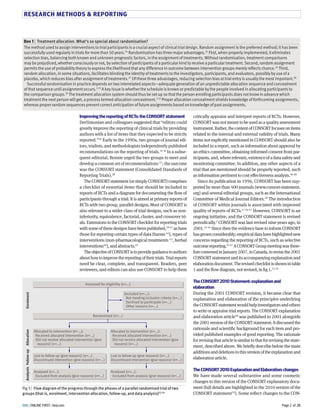
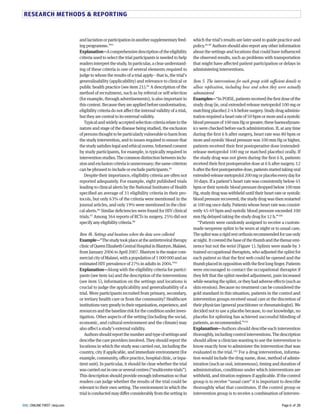
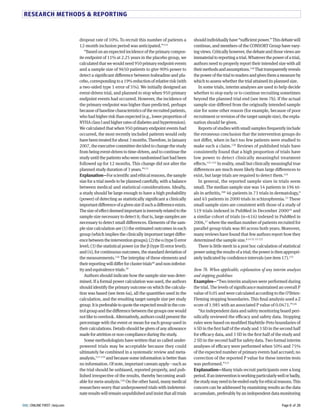
elaboration document. The revised checklist is shown in table 
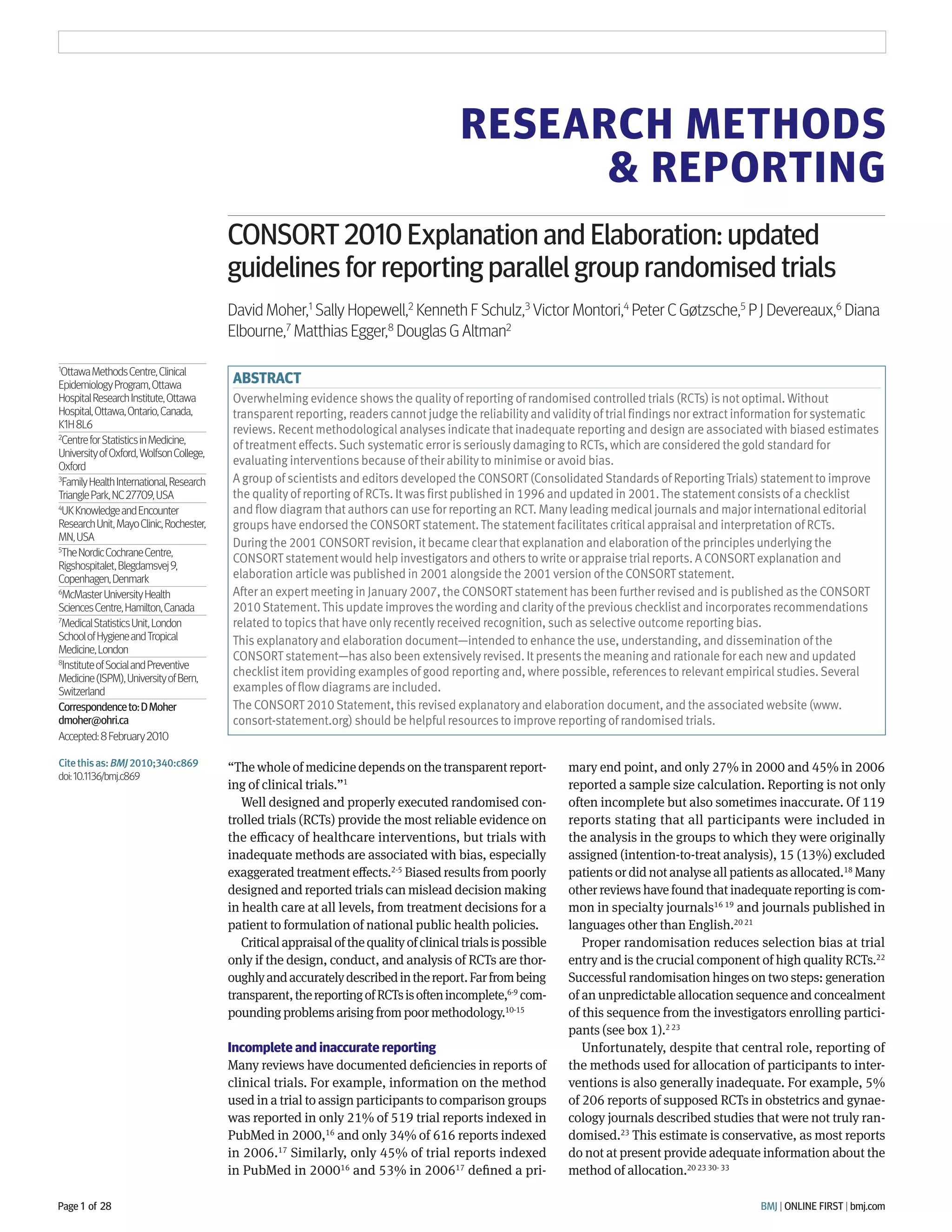
8 and the flow diagram, not revised, in fig 8.HG-HT 
The CONSORT 2010 Statement: explanation and 
elaboration 
During the GNN8 CONSORT revision, it became clear that 
explanation and elaboration of the principles underlying 
the CONSORT statement would help investigators and others 
to write or appraise trial reports. The CONSORT explanation 
and elaboration articleHY was published in GNN8 alongside 
the GNN8 version of the CONSORT statement. It discussed the 
rationale and scientific background for each item and pro-vided 
published examples of good reporting. The rationale 
for revising that article is similar to that for revising the state-ment, 
described above. We briefly describe below the main 
additions and deletions to this version of the explanation and 
elaboration article. 
The CONSORT 2010 Explanation and Elaboration: changes 
We have made several substantive and some cosmetic 
changes to this version of the CONSORT explanatory docu-ment 
(full details are highlighted in the GN8N version of the 
CONSORT statementHM). Some reflect changes to the CON-Box 
Assessed for eligibility (n=...) 
Randomised (n=...) 
Excluded (n=...): 
Not meeting inclusion criteria (n=...) 
Declined to participate (n=...) 
Other reasons (n=...) 
Allocated to intervention (n=...): 
Received allocated intervention (n=...) 
Did not receive allocated intervention (give 
reasons) (n=...) 
Allocated to intervention (n=...): 
Received allocated intervention (n=...) 
Did not receive allocated intervention (give 
reasons) (n=...) 
Analysis Follow-up Allocation Enrolment 
Lost to follow-up (give reasons) (n=...) 
Discontinued intervention (give reasons) (n=...) 
Lost to follow-up (give reasons) (n=...) 
Discontinued intervention (give reasons) (n=...) 
Analysed (n=...): 
Excluded from analysis (give reasons) (n=...) 
Analysed (n=...): 
Excluded from analysis (give reasons) (n=...) 
Fig 1 |  Flow diagram of the progress through the phases of a parallel randomised trial of two  
groups (that is, enrolment, intervention allocation, follow-up, and data analysis)52-54 
BMJ | ONLINE FIRST | bmj.com Page 2 of 28
RESEARCH METHODS & REPORTING 
Table 1 | CONSORT ()*) checklist of information to include when reporting a randomised trial* 
Section/Topic Item No Checklist item Reported on page No 
Title and abstract 
!a Identification as a randomised trial in the title 
!b Structured summary of trial design, methods, results, and conclusions (for specific guidance see CONSORT for 
abstracts?@ A@) 
Introduction 
Background and objectives Ga Scientific background and explanation of rationale 
Gb Specific objectives or hypotheses 
Methods 
Trial design Ia Description of trial design (such as parallel, factorial) including allocation ratio 
Ib Important changes to methods after trial commencement (such as eligibility criteria), with reasons 
Participants ?a Eligibility criteria for participants 
?b Settings and locations where the data were collected 
Interventions @ The interventions for each group with sufficient details to allow replication, including how and when they were actually 
administered 
Outcomes Aa Completely defined pre-specified primary and secondary outcome measures, including how and when they were 
assessed 
Ab Any changes to trial outcomes after the trial commenced, with reasons 
Sample size Qa How sample size was determined 
Qb When applicable, explanation of any interim analyses and stopping guidelines 
Randomisation: 
Sequence generation Va Method used to generate the random allocation sequence 
Vb Type of randomisation; details of any restriction (such as blocking and block size) 
Y Mechanism used to implement the random allocation sequence (such as sequentially numbered containers), 
describing any steps taken to conceal the sequence until interventions were assigned 
Implementation !Z Who generated the random allocation sequence, who enrolled participants, and who assigned participants to 
interventions 
Blinding !!a If done, who was blinded after assignment to interventions (for example, participants, care providers, those assessing 
outcomes) and how 
!!b If relevant, description of the similarity of interventions 
Statistical methods !Ga Statistical methods used to compare groups for primary and secondary outcomes 
!Gb Methods for additional analyses, such as subgroup analyses and adjusted analyses 
!Ia For each group, the numbers of participants who were randomly assigned, received intended treatment, and were 
analysed for the primary outcome 
!Ib For each group, losses and exclusions after randomisation, together with reasons 
Recruitment !?a Dates defining the periods of recruitment and follow-up 
!?b Why the trial ended or was stopped 
Baseline data !@ A table showing baseline demographic and clinical characteristics for each group 
Numbers analysed !A For each group, number of participants (denominator) included in each analysis and whether the analysis was by 
original assigned groups 
Outcomes and estimation !Qa For each primary and secondary outcome, results for each group, and the estimated effect size and its precision (such 
as Y@% confidence interval) 
!Qb For binary outcomes, presentation of both absolute and relative effect sizes is recommended 
Ancillary analyses !V Results of any other analyses performed, including subgroup analyses and adjusted analyses, distinguishing pre-specified 
from exploratory 
Harms !Y All important harms or unintended effects in each group (for specific guidance see CONSORT for harms?G) 
Discussion 
Limitations GZ Trial limitations, addressing sources of potential bias, imprecision, and, if relevant, multiplicity of analyses 
Generalisability G! Generalisability (external validity, applicability) of the trial findings 
Interpretation GG Interpretation consistent with results, balancing benefits and harms, and considering other relevant evidence 
Other information 
Registration GI Registration number and name of trial registry 
Protocol G? Where the full trial protocol can be accessed, if available 
Funding G@ Sources of funding and other support (such as supply of drugs), role of funders 
*We strongly recommend reading this statement in conjunction with the CONSORT GZ!Z Explanation and Elaboration for important clarifications on all the items. If relevant, we also recommend 
reading CONSORT extensions for cluster randomised trials,?Z non-inferiority and equivalence trials,IY non-pharmacological treatments,?I herbal interventions,?? and pragmatic trials.?! Additional 
extensions are forthcoming: for those and for up to date references relevant to this checklist, see www.consort-statement.org. 
SORT checklist; there are three new checklist items in the 
CONSORT GN8N checklist—such as item GT, which asks 
authors to report where their trial protocol can be accessed. 
We have also updated some existing explanations, including 
adding more recent references to methodological evidence, 
and used some better examples. We have removed the glos-sary, 
which is now available on the CONSORT website (www. 
consort-statement.org). Where possible, we describe the 
findings of relevant empirical studies. Many excellent books 
on clinical trials oFer fuller discussion of methodological 
issues.LN-LG Finally, for convenience, we sometimes refer to 
“treatments” and “patients,” although we recognise that not 
all interventions evaluated in RCTs are treatments and not 
all participants are patients. 
Allocation concealment 
mechanism 
Results 
Participant flow (a diagram is 
strongly recommended) 
BMJ Page 3 of 28 | ONLINE FIRST | bmj.com
RESEARCH METHODS & REPORTING 
of the full article.LY-U8 Conversely, omitting important harms 
from the abstract could seriously mislead someone’s inter-pretation 
of the trial findings.TG UG 
A recent extension to the CONSORT statement provides 
a list of essential items that authors should include when 
reporting the main results of a randomised trial in a jour-nal 
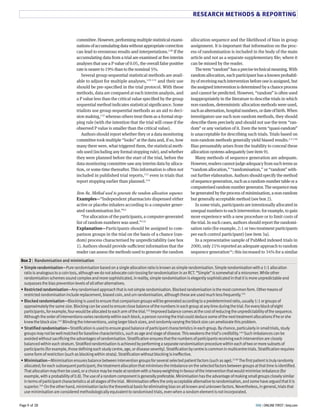
(or conference) abstract (see table G).TH We strongly 
recommend the use of structured abstracts for reporting ran-domised 
trials. They provide readers with information about 
the trial under a series of headings pertaining to the design, 
conduct, analysis, and interpretation.US Some studies have 
found that structured abstracts are of higher quality than the 
more traditional descriptive abstractsUT UH and that they allow 
readers to find information more easily.UL We recognise that 
many journals have developed their own structure and word 
limit for reporting abstracts. It is not our intention to suggest 
changes to these formats, but to recommend what informa-tion 
should be reported. 
Introduction 
Item 2a. Scientific background and explanation of rationale 
Example—“Surgery is the treatment of choice for patients 
with disease stage I and II non-small cell lung cancer (NSCLC) 
… An NSCLC meta-analysis combined the results from eight 
randomised trials of surgery versus surgery plus adjuvant 
cisplatin-based chemotherapy and showed a small, but not 
significant (p=N.NY), absolute survival benefit of around H% 
at H years (from HN% to HH%). At the time the current trial 
was designed (mid-8MMNs), adjuvant chemotherapy had not 
become standard clinical practice … The clinical rationale 
for neo-adjuvant chemotherapy is three-fold: regression of 
the primary cancer could be achieved thereby facilitating 
and simplifying or reducing subsequent surgery; undetected 
micro-metastases could be dealt with at the start of treat-ment; 
and there might be inhibition of the putative stimu-lus 
to residual cancer by growth factors released by surgery 
and by subsequent wound healing … The current trial was 
therefore set up to compare, in patients with resectable 
NSCLC, surgery alone versus three cycles of platinum-based 
chemotherapy followed by surgery in terms of overall sur-vival, 
quality of life, pathological staging, resectability rates, 
extent of surgery, and time to and site of relapse.”UU 
Explanation—Typically, the introduction consists of free 
flowing text, in which authors explain the scientific back-ground 
and rationale for their trial, and its general outline. 
It may also be appropriate to include here the objectives of 
the trial (see item Gb).The rationale may be explanatory 
(for example, to assess the possible influence of a drug on 
renal function) or pragmatic (for example, to guide practice 
by comparing the benefits and harms of two treatments). 
Authors should report any evidence of the benefits and 
harms of active interventions included in a trial and should 
suggest a plausible explanation for how the interventions 
might work, if this is not obvious.UY 
The Declaration of Helsinki states that biomedical 
research involving people should be based on a thorough 
knowledge of the scientific literature.UM That is, it is unethi-cal 
to expose humans unnecessarily to the risks of research. 
Some clinical trials have been shown to have been unneces-sary 
because the question they addressed had been or could 
have been answered by a systematic review of the existing 
Table 2 | Items to include when reporting a randomised trial in a journal abstract 
Item Description 
Authors Contact details for the corresponding author 
Trial design Description of the trial design (such as parallel, cluster, non-inferiority) 
Methods: 
Participants Eligibility criteria for participants and the settings where the data were collected 
Interventions Interventions intended for each group 
Objective Specific objective or hypothesis 
Outcome Clearly defined primary outcome for this report 
Randomisation How participants were allocated to interventions 
Blinding (masking) Whether participants, care givers, and those assessing the outcomes were blinded to 
group assignment 
Number of participants randomised to each group 
Recruitment Trial status 
Numbers analysed Number of participants analysed in each group 
Outcome For the primary outcome, a result for each group and the estimated effect size and its 
Harms Important adverse events or side effects 
Conclusions General interpretation of the results 
Trial registration Registration number and name of trial register 
Funding Source of funding 
Checklist items 
Title and abstract 
Item 1a. Identification as a randomised trial in the title. 
Example—“Smoking reduction with oral nicotine inhal-ers: 
double blind, randomised clinical trial of eCcacy and 
safety.”LS 
Explanation—The ability to identify a report of a randomised 
trial in an electronic database depends to a large extent on 
how it was indexed. Indexers may not classify a report as a 
randomised trial if the authors do not explicitly report this 
information.LT To help ensure that a study is appropriately 
indexed and easily identified, authors should use the word 
“randomised” in the title to indicate that the participants 
were randomly assigned to their comparison groups. 
Item 1b. Structured summary of trial design, methods, results, and 
conclusions 
For specific guidance see CONSORT for abstracts.TH LH 
Explanation—Clear, transparent, and suCciently detailed 
abstracts are important because readers often base their 
assessment of a trial on such information. Some readers 
use an abstract as a screening tool to decide whether to 
read the full article. However, as not all trials are freely 
available and some health professionals do not have access 
to the full trial reports, healthcare decisions are sometimes 
made on the basis of abstracts of randomised trials.LL 
A journal abstract should contain suCcient information 
about a trial to serve as an accurate record of its conduct 
and findings, providing optimal information about the 
trial within the space constraints and format of a journal. A 
properly constructed and written abstract helps individuals 
to assess quickly the relevance of the findings and aids the 
retrieval of relevant reports from electronic databases.LU The 
abstract should accurately reflect what is included in the full 
journal article and should not include information that does 
not appear in the body of the paper. Studies comparing the 
accuracy of information reported in a journal abstract with 
that reported in the text of the full publication have found 
claims that are inconsistent with, or missing from, the body 
Results: 
Numbers 
randomised 
precision 
BMJ | ONLINE FIRST | bmj.com Page 4 of 28
RESEARCH METHODS & REPORTING 
either one of five otamixaban … regimens … or an active 
control of unfractionated heparin … an independent Data 
Monitoring Committee reviewed unblinded data for patient 
safety; no interim analyses for eCcacy or futility were 
done. During the trial, this committee recommended that 
the group receiving the lowest dose of otamixaban (N·NSH 
mg/kg/h) be discontinued because of clinical evidence of 
inadequate anticoagulation. The protocol was immediately 
amended in accordance with that recommendation, and 
participants were subsequently randomly assigned in 
G:G:G:G:8 ratio to the remaining otamixaban and control 
groups, respectively.”YL 
Explanation—A few trials may start without any fixed plan 
(that is, are entirely exploratory), but the most will have a 
protocol that specifies in great detail how the trial will be 
conducted. There may be deviations from the original pro-tocol, 
as it is impossible to predict every possible change 
in circumstances during the course of a trial. Some trials 
will therefore have important changes to the methods after 
trial commencement. 
Changes could be due to external information becoming 
available from other studies, or internal financial diCcul-ties, 
or could be due to a disappointing recruitment rate. 
Such protocol changes should be made without breaking 
the blinding on the accumulating data on participants’ 
outcomes. In some trials, an independent data monitoring 
committee will have as part of its remit the possibility of rec-ommending 
protocol changes based on seeing unblinded 
data. Such changes might aFect the study methods (such 
as changes to treatment regimens, eligibility criteria, ran-domisation 
ratio, or duration of follow-up) or trial conduct 
(such as dropping a centre with poor data quality).YU 
Some trials are set up with a formal “adaptive” design. 
There is no universally accepted definition of these designs, 
but a working definition might be “a multistage study 
design that uses accumulating data to decide how to mod-ify 
aspects of the study without undermining the validity 
and integrity of the trial.”YY The modifications are usually 
to the sample sizes and the number of treatment arms and 
can lead to decisions being made more quickly and with 
more eCcient use of resources. There are, however, impor-tant 
ethical, statistical, and practical issues in considering 
such a design.YM MN 
Whether the modifications are explicitly part of the 
trial design or in response to changing circumstances, it 
is essential that they are fully reported to help the reader 
interpret the results. Changes from protocols are not cur-rently 
well reported. A review of comparisons with proto-cols 
showed that about half of journal articles describing 
RCTs had an unexplained discrepancy in the primary out-comes. 
HU Frequent unexplained discrepancies have also 
been observed for details of randomisation, blinding,M8 
and statistical analyses.MG 
Item 4a. Eligibility criteria for participants 
Example—“Eligible participants were all adults aged 8Y or 
over with HIV who met the eligibility criteria for antiretroviral 
therapy according to the Malawian national HIV treatment 
guidelines (WHO clinical stage III or IV or any WHO stage 
with a CDT count <GHN/mmS) and who were starting treat-ment 
with a BMI <8Y.H. Exclusion criteria were pregnancy 
literature.YN Y8 Thus, the need for a new trial should be justi-fied 
in the introduction. Ideally, it should include a reference 
to a systematic review of previous similar trials or a note of 
the absence of such trials.YG 
Item 2b. Specific objectives or hypotheses 
Example—“In the current study we tested the hypothesis 
that a policy of active management of nulliparous labour 
would: 8. reduce the rate of caesarean section, G. reduce 
the rate of prolonged labour; S. not influence maternal 
satisfaction with the birth experience.”YS 
Explanation—Objectives are the questions that the trial 
was designed to answer. They often relate to the eCcacy of 
a particular therapeutic or preventive intervention. Hypoth-eses 
are pre-specified questions being tested to help meet 
the objectives. Hypotheses are more specific than objectives 
and are amenable to explicit statistical evaluation. In 
practice, objectives and hypotheses are not always easily 
diFerentiated. Most reports of RCTs provide adequate infor-mation 
about trial objectives and hypotheses.YT 
Methods 
Item 3a. Description of trial design (such as parallel, factorial) 
including allocation ratio 
Example—“This was a multicenter, stratified (L to 88 years 
and 8G to 8U years of age, with imbalanced randomisation 
[G:8]), double-blind, placebo-controlled, parallel-group 
study conducted in the United States (T8 sites).”YH 
Explanation—The word “design” is often used to refer to 
all aspects of how a trial is set up, but it also has a narrower 
interpretation. Many specific aspects of the broader trial 
design, including details of randomisation and blinding, 
are addressed elsewhere in the CONSORT checklist. Here 
we seek information on the type of trial, such as parallel 
group or factorial, and the conceptual framework, such as 
superiority or non-inferiority, and other related issues not 
addressed elsewhere in the checklist. 
The CONSORT statement focuses mainly on trials with par-ticipants 
individually randomised to one of two “parallel” 
groups. In fact, little more than half of published trials have 
such a design.8L The main alternative designs are multi-arm 
parallel, crossover, cluster,TN and factorial designs. Also, most 
trials are set to identify the superiority of a new intervention, 
if it exists, but others are designed to assess non-inferiority or 
equivalence.SM It is important that researchers clearly describe 
these aspects of their trial, including the unit of randomisa-tion 
(such as patient, GP practice, lesion). It is desirable also 
to include these details in the abstract (see item 8b). 
If a less common design is employed, authors are encour-aged 
to explain their choice, especially as such designs may 
imply the need for a larger sample size or more complex 
analysis and interpretation. 
Although most trials use equal randomisation (such as 
8:8 for two groups), it is helpful to provide the allocation 
ratio explicitly. For drug trials, specifying the phase of the 
trial (I-IV) may also be relevant. 
Item 3b. Important changes to methods after trial commencement 
(such as eligibility criteria), with reasons 
Example—“Patients were randomly assigned to one of 
six parallel groups, initially in 8:8:8:8:8:8 ratio, to receive 
BMJ Page 5 of 28 | ONLINE FIRST | bmj.com
RESEARCH METHODS & REPORTING 
and lactation or participation in another supplementary feed-ing 
programme.”MS 
Explanation—A comprehensive description of the eligibility 
criteria used to select the trial participants is needed to help 
readers interpret the study. In particular, a clear understand-ing 
of these criteria is one of several elements required to 
judge to whom the results of a trial apply—that is, the trial’s 
generalisability (applicability) and relevance to clinical or 
public health practice (see item G8).MT A description of the 
method of recruitment, such as by referral or self selection 
(for example, through advertisements), is also important in 
this context. Because they are applied before randomisation, 
eligibility criteria do not aFect the internal validity of a trial, 
but they are central to its external validity. 
Typical and widely accepted selection criteria relate to the 
nature and stage of the disease being studied, the exclusion 
of persons thought to be particularly vulnerable to harm from 
the study intervention, and to issues required to ensure that 
the study satisfies legal and ethical norms. Informed consent 
by study participants, for example, is typically required in 
intervention studies. The common distinction between inclu-sion 
and exclusion criteria is unnecessary; the same criterion 
can be phrased to include or exclude participants.MH 
Despite their importance, eligibility criteria are often not 
reported adequately. For example, eight published trials 
leading to clinical alerts by the National Institutes of Health 
specified an average of S8 eligibility criteria in their pro-tocols, 
but only LS% of the criteria were mentioned in the 
journal articles, and only 8M% were mentioned in the clini-cal 
alerts.ML Similar deficiencies were found for HIV clinical 
trials.MU Among SLT reports of RCTs in surgery, GH% did not 
specify any eligibility criteria.MY 
Item 4b. Settings and locations where the data were collected 
Example—“The study took place at the antiretroviral therapy 
clinic of Queen Elizabeth Central Hospital in Blantyre, Malawi, 
from January GNNL to April GNNU. Blantyre is the major com-mercial 
city of Malawi, with a population of 8 NNN NNN and an 
estimated HIV prevalence of GU% in adults in GNNT.”MS 
Explanation—Along with the eligibility criteria for partici-pants 
(see item Ta) and the description of the interventions 
(see item H), information on the settings and locations is 
crucial to judge the applicability and generalisability of a 
trial. Were participants recruited from primary, secondary, 
or tertiary health care or from the community? Healthcare 
institutions vary greatly in their organisation, experience, and 
resources and the baseline risk for the condition under inves-tigation. 
Other aspects of the setting (including the social, 
economic, and cultural environment and the climate) may 
also aFect a study’s external validity. 
Authors should report the number and type of settings and 
describe the care providers involved. They should report the 
locations in which the study was carried out, including the 
country, city if applicable, and immediate environment (for 
example, community, oCce practice, hospital clinic, or inpa-tient 
unit). In particular, it should be clear whether the trial 
was carried out in one or several centres (“multicentre trials”). 
This description should provide enough information so that 
readers can judge whether the results of the trial could be 
relevant to their own setting. The environment in which the 
trial is conducted may diFer considerably from the setting in 
which the trial’s results are later used to guide practice and 
policy.MT MM Authors should also report any other information 
about the settings and locations that could have influenced 
the observed results, such as problems with transportation 
that might have aFected patient participation or delays in 
administering interventions. 
Item 5. The interventions for each group with sufficient details to 
allow replication, including how and when they were actually 
administered 
Examples—“In POISE, patients received the first dose of the 
study drug (ie, oral extended-release metoprolol 8NN mg or 
matching placebo) G-T h before surgery. Study drug adminis-tration 
required a heart rate of HN bpm or more and a systolic 
blood pressure of 8NN mm Hg or greater; these haemodynam-ics 
were checked before each administration. If, at any time 
during the first L h after surgery, heart rate was YN bpm or 
more and systolic blood pressure was 8NN mm Hg or higher, 
patients received their first postoperative dose (extended-release 
metoprolol 8NN mg or matched placebo) orally. If 
the study drug was not given during the first L h, patients 
received their first postoperative dose at L h after surgery. 8G 
h after the first postoperative dose, patients started taking oral 
extended-release metoprolol GNN mg or placebo every day for 
SN days. If a patient’s heart rate was consistently below TH 
bpm or their systolic blood pressure dropped below 8NN mm 
Hg, study drug was withheld until their heart rate or systolic 
blood pressure recovered; the study drug was then restarted 
at 8NN mg once daily. Patients whose heart rate was consist-ently 
TH-TM bpm and systolic blood pressure exceeded 8NN 
mm Hg delayed taking the study drug for 8G h.”8NN 
“Patients were randomly assigned to receive a custom-made 
neoprene splint to be worn at night or to usual care. 
The splint was a rigid rest orthosis recommended for use only 
at night. It covered the base of the thumb and the thenar emi-nence 
but not the wrist (Figure 8). Splints were made by S 
trained occupational therapists, who adjusted the splint for 
each patient so that the first web could be opened and the 
thumb placed in opposition with the first long finger. Patients 
were encouraged to contact the occupational therapist if 
they felt that the splint needed adjustment, pain increased 
while wearing the splint, or they had adverse eFects (such as 
skin erosion). Because no treatment can be considered the 
gold standard in this situation, patients in the control and 
intervention groups received usual care at the discretion of 
their physician (general practitioner or rheumatologist). We 
decided not to use a placebo because, to our knowledge, no 
placebo for splinting has achieved successful blinding of 
patients, as recommended.”8N8 
Explanation—Authors should describe each intervention 
thoroughly, including control interventions. The description 
should allow a clinician wanting to use the intervention to 
know exactly how to administer the intervention that was 
evaluated in the trial.8NG For a drug intervention, informa-tion 
would include the drug name, dose, method of admin-istration 
(such as oral, intravenous), timing and duration of 
administration, conditions under which interventions are 
withheld, and titration regimen if applicable. If the control 
group is to receive “usual care” it is important to describe 
thoroughly what that constitutes. If the control group or 
intervention group is to receive a combination of interven- 
BMJ | ONLINE FIRST | bmj.com Page 6 of 28
RESEARCH METHODS & REPORTING 
macological trials, a third of the claims of treatment supe-riority 
based on unpublished scales would not have been 
made if a published scale had been used.8NM Similar data 
have been reported elsewhere.88N 888 Only TH% of a cohort 
of H8M RCTs published in GNNN specified the primary out-come 
8L; this compares with HS% for a similar cohort of L8T 
RCTs published in GNNL.8U 
Item 6b. Any changes to trial outcomes after the trial commenced, 
with reasons 
Example—“The original primary endpoint was all-cause 
mortality, but, during a masked analysis, the data and 
safety monitoring board noted that overall mortality was 
lower than had been predicted and that the study could 
not be completed with the sample size and power origi-nally 
planned. The steering committee therefore decided 
to adopt co-primary endpoints of all-cause mortality (the 
original primary endpoint), together with all-cause mor-tality 
or cardiovascular hospital admissions (the first pre-specified 
secondary endpoint).”88G 
Explanation—There are many reasons for departures 
from the initial study protocol (see item GT). Authors 
should report all major changes to the protocol, including 
unplanned changes to eligibility criteria, interventions, 
examinations, data collection, methods of analysis, and 
outcomes. Such information is not always reported. 
As indicated earlier (see item La), most trials record mul-tiple 
outcomes, with the risk that results will be reported for 
only a selected subset (see item 8U). Pre-specification and 
reporting of primary and secondary outcomes (see item 
La) should remove such a risk. In some trials, however, 
circumstances require a change in the way an outcome is 
assessed or even, as in the example above, a switch to a 
diFerent outcome. For example, there may be external evi-dence 
from other trials or systematic reviews suggesting the 
end point might not be appropriate, or recruitment or the 
overall event rate in the trial may be lower than expected.88G 
Changing an end point based on unblinded data is much 
more problematic, although it may be specified in the con-text 
of an adaptive trial design.YY Authors should identify 
and explain any such changes. Likewise, any changes after 
the trial began of the designation of outcomes as primary 
or secondary should be reported and explained. 
A comparison of protocols and publications of 8NG 
randomised trials found that LG% of trials reports had at 
least one primary outcome that was changed, introduced, 
or omitted compared with the protocol.HH Primary outcomes 
also diFered between protocols and publications for TN% 
of a cohort of TY trials funded by the Canadian Institutes 
of Health Research.88S Not one of the subsequent 8HN trial 
reports mentioned, let alone explained, changes from 
the protocol. Similar results from other studies have been 
reported recently in a systematic review of empirical stud-ies 
examining outcome reporting bias.HU 
Item 7a. How sample size was determined 
Examples—“To detect a reduction in PHS (postoperative 
hospital stay) of S days (SD H days), which is in agree-ment 
with the study of Lobo et al8U with a two-sided H% 
significance level and a power of YN%, a sample size of 
HN patients per group was necessary, given an anticipated 
tions the authors should provide a thorough description of 
each intervention, an explanation of the order in which the 
combination of interventions are introduced or withdrawn, 
and the triggers for their introduction if applicable. 
Specific extensions of the CONSORT statement address the 
reporting of non-pharmacologic and herbal interventions and 
their particular reporting requirements (such as expertise, 
details of how the interventions were standardised).TS TT We 
recommend readers consult the statements for non-pharma-cologic 
and herbal interventions as appropriate. 
Item 6a. Completely defined pre-specified primary and secondary 
outcome measures, including how and when they were assessed 
Example—“The primary endpoint with respect to eCcacy 
in psoriasis was the proportion of patients achieving a UH% 
improvement in psoriasis activity from baseline to 8G weeks 
as measured by the PASI [psoriasis area and severity index] 
Additional analyses were done on the percentage change in 
PASI scores and improvement in target psoriasis lesions.”8NS 
Explanation—All RCTs assess response variables, or out-comes 
(end points), for which the groups are compared. 
Most trials have several outcomes, some of which are of 
more interest than others. The primary outcome measure 
is the pre-specified outcome considered to be of greatest 
importance to relevant stakeholders (such a patients, pol-icy 
makers, clinicians, funders) and is usually the one used 
in the sample size calculation (see item U). Some trials may 
have more than one primary outcome. Having several pri-mary 
outcomes, however, incurs the problems of interpre-tation 
associated with multiplicity of analyses (see items 
8Y and GN) and is not recommended. Primary outcomes 
should be explicitly indicated as such in the report of an 
RCT. Other outcomes of interest are secondary outcomes 
(additional outcomes). There may be several secondary 
outcomes, which often include unanticipated or unin-tended 
eFects of the intervention (see item 8M), although 
harms should always be viewed as important whether they 
are labelled primary or secondary. 
All outcome measures, whether primary or secondary, 
should be identified and completely defined. The principle 
here is that the information provided should be suCcient to 
allow others to use the same outcomes.8NG When outcomes 
are assessed at several time points after randomisation, 
authors should also indicate the pre-specified time point 
of primary interest. For many non-pharmacological inter-ventions 
it is helpful to specify who assessed outcomes (for 
example, if special skills are required to do so) and how 
many assessors there were.TS 
Where available and appropriate, the use of previously 
developed and validated scales or consensus guidelines 
should be reported,8NT 8NH both to enhance quality of meas-urement 
and to assist in comparison with similar stud-ies. 
8NL For example, assessment of quality of life is likely to 
be improved by using a validated instrument.8NU Authors 
should indicate the provenance and properties of scales. 
More than UN outcomes were used in 8ML RCTs of non-steroidal 
anti-inflammatory drugs for rheumatoid arthri-tis, 
8NY and LTN diFerent instruments had been used in GNNN 
trials in schizophrenia, of which SLM had been used only 
once.SS Investigation of 8TM of those GNNN trials showed 
that unpublished scales were a source of bias. In non-phar- 
BMJ Page 7 of 28 | ONLINE FIRST | bmj.com
RESEARCH METHODS & REPORTING 
should individually have “suCcient power.” This debate will 
continue, and members of the CONSORT Group have vary-ing 
views. Critically however, the debate and those views are 
immaterial to reporting a trial. Whatever the power of a trial, 
authors need to properly report their intended size with all 
their methods and assumptions.88Y That transparently reveals 
the power of the trial to readers and gives them a measure by 
which to assess whether the trial attained its planned size. 
In some trials, interim analyses are used to help decide 
whether to stop early or to continue recruiting sometimes 
beyond the planned trial end (see item Ub). If the actual 
sample size diFered from the originally intended sample 
size for some other reason (for example, because of poor 
recruitment or revision of the target sample size), the expla-nation 
should be given. 
Reports of studies with small samples frequently include 
the erroneous conclusion that the intervention groups do 
not diFer, when in fact too few patients were studied to 
make such a claim.8GN Reviews of published trials have 
consistently found that a high proportion of trials have 
low power to detect clinically meaningful treatment 
eFects.8G8-8GS In reality, small but clinically meaningful true 
diFerences are much more likely than large diFerences to 
exist, but large trials are required to detect them.8GT 
In general, the reported sample sizes in trials seem 
small. The median sample size was HT patients in 8ML tri-als 
in arthritis,8NY TL patients in US trials in dermatology,Y 
and LH patients in GNNN trials in schizophrenia.SS These 
small sample sizes are consistent with those of a study of 
H8M trials indexed in PubMed in December GNNN8L and 
a similar cohort of trials (n=L8L) indexed in PubMed in 
GNNL,8U where the median number of patients recruited for 
parallel group trials was YN across both years. Moreover, 
many reviews have found that few authors report how they 
determined the sample size.Y 8T SG SS 8GS 
There is little merit in a post hoc calculation of statistical 
power using the results of a trial; the power is then appropri-ately 
indicated by confidence intervals (see item 8U).8GH 
Item 7b. When applicable, explanation of any interim analyses 
and stopping guidelines 
Examples—“Two interim analyses were performed during 
the trial. The levels of significance maintained an overall P 
value of N.NH and were calculated according to the O’Brien- 
Fleming stopping boundaries. This final analysis used a Z 
score of 8.MYH with an associated P value of N.NTU8.”8GL 
“An independent data and safety monitoring board peri-odically 
reviewed the eCcacy and safety data. Stopping 
rules were based on modified Haybittle-Peto boundaries of 
T SD in the first half of the study and S SD in the second half 
for eCcacy data, and S SD in the first half of the study and 
G SD in the second half for safety data. Two formal interim 
analyses of eCcacy were performed when HN% and UH% 
of the expected number of primary events had accrued; no 
correction of the reported P value for these interim tests 
was performed.”8GU 
Explanation—Many trials recruit participants over a long 
period. If an intervention is working particularly well or badly, 
the study may need to be ended early for ethical reasons. This 
concern can be addressed by examining results as the data 
accumulate, preferably by an independent data monitoring 
dropout rate of 8N%. To recruit this number of patients a 
8G-month inclusion period was anticipated.”88T 
“Based on an expected incidence of the primary compos-ite 
endpoint of 88% at G.GH years in the placebo group, we 
calculated that we would need MHN primary endpoint events 
and a sample size of MLHN patients to give MN% power to 
detect a significant diFerence between ivabradine and pla-cebo, 
corresponding to a 8M% reduction of relative risk (with 
a two-sided type 8 error of H%). We initially designed an 
event-driven trial, and planned to stop when MHN primary 
endpoint events had occurred. However, the incidence of 
the primary endpoint was higher than predicted, perhaps 
because of baseline characteristics of the recruited patients, 
who had higher risk than expected (e.g., lower proportion of 
NYHA class I and higher rates of diabetes and hypertension). 
We calculated that when MHN primary endpoint events had 
occurred, the most recently included patients would only 
have been treated for about S months. Therefore, in January 
GNNU, the executive committee decided to change the study 
from being event-driven to time-driven, and to continue the 
study until the patients who were randomised last had been 
followed up for 8G months. This change did not alter the 
planned study duration of S years.”88H 
Explanation—For scientific and ethical reasons, the sample 
size for a trial needs to be planned carefully, with a balance 
between medical and statistical considerations. Ideally, 
a study should be large enough to have a high probability 
(power) of detecting as statistically significant a clinically 
important diFerence of a given size if such a diFerence exists. 
The size of eFect deemed important is inversely related to the 
sample size necessary to detect it; that is, large samples are 
necessary to detect small diFerences. Elements of the sam-ple 
size calculation are (8) the estimated outcomes in each 
group (which implies the clinically important target diFer-ence 
between the intervention groups); (G) the B (type I) error 
level; (S) the statistical power (or the C (type II) error level); 
and (T), for continuous outcomes, the standard deviation of 
the measurements.88L The interplay of these elements and 
their reporting will diFer for cluster trialsTN and non-inferior-ity 
and equivalence trials.SM 
Authors should indicate how the sample size was deter-mined. 
If a formal power calculation was used, the authors 
should identify the primary outcome on which the calcula-tion 
was based (see item La), all the quantities used in the 
calculation, and the resulting target sample size per study 
group. It is preferable to quote the expected result in the con-trol 
group and the diFerence between the groups one would 
not like to overlook. Alternatively, authors could present the 
percentage with the event or mean for each group used in 
their calculations. Details should be given of any allowance 
made for attrition or non-compliance during the study. 
Some methodologists have written that so called under-powered 
trials may be acceptable because they could 
ultimately be combined in a systematic review and meta-analysis, 
88U-88M and because some information is better than 
no information. Of note, important caveats apply—such as 
the trial should be unbiased, reported properly, and pub-lished 
irrespective of the results, thereby becoming avail-able 
for meta-analysis.88Y On the other hand, many medical 
researchers worry that underpowered trials with indetermi-nate 
results will remain unpublished and insist that all trials 
BMJ | ONLINE FIRST | bmj.com Page 8 of 28
RESEARCH METHODS & REPORTING 
committee. However, performing multiple statistical exami-nations 
of accumulating data without appropriate correction 
can lead to erroneous results and interpretations.8GY If the 
accumulating data from a trial are examined at five interim 
analyses that use a P value of N.NH, the overall false positive 
rate is nearer to 8M% than to the nominal H%. 
Several group sequential statistical methods are avail-able 
to adjust for multiple analyses,8GM-8S8 and their use 
should be pre-specified in the trial protocol. With these 
methods, data are compared at each interim analysis, and 
a P value less than the critical value specified by the group 
sequential method indicates statistical significance. Some 
trialists use group sequential methods as an aid to deci-sion 
making,8SG whereas others treat them as a formal stop-ping 
rule (with the intention that the trial will cease if the 
observed P value is smaller than the critical value). 
Authors should report whether they or a data monitoring 
committee took multiple “looks” at the data and, if so, how 
many there were, what triggered them, the statistical meth-ods 
used (including any formal stopping rule), and whether 
they were planned before the start of the trial, before the 
data monitoring committee saw any interim data by alloca-tion, 
or some time thereafter. This information is often not 
included in published trial reports,8SS even in trials that 
report stopping earlier than planned.8ST 
Item 8a. Method used to generate the random allocation sequence 
Examples—“Independent pharmacists dispensed either 
active or placebo inhalers according to a computer gener-ated 
randomisation list.”LS 
“For allocation of the participants, a computer-generated 
list of random numbers was used.”8SH 
Explanation—Participants should be assigned to com-parison 
groups in the trial on the basis of a chance (ran-dom) 
process characterised by unpredictability (see box 
8). Authors should provide suCcient information that the 
reader can assess the methods used to generate the random 
allocation sequence and the likelihood of bias in group 
assignment. It is important that information on the proc-ess 
of randomisation is included in the body of the main 
article and not as a separate supplementary file; where it 
can be missed by the reader. 
The term “random” has a precise technical meaning. With 
random allocation, each participant has a known probabil-ity 
of receiving each intervention before one is assigned, but 
the assigned intervention is determined by a chance process 
and cannot be predicted. However, “random” is often used 
inappropriately in the literature to describe trials in which 
non-random, deterministic allocation methods were used, 
such as alternation, hospital numbers, or date of birth. When 
investigators use such non-random methods, they should 
describe them precisely and should not use the term “ran-dom” 
or any variation of it. Even the term “quasi-random” 
is unacceptable for describing such trials. Trials based on 
non-random methods generally yield biased results.G-T 8SL 
Bias presumably arises from the inability to conceal these 
allocation systems adequately (see item M). 
Many methods of sequence generation are adequate. 
However, readers cannot judge adequacy from such terms as 
“random allocation,” “randomisation,” or “random” with-out 
further elaboration. Authors should specify the method 
of sequence generation, such as a random-number table or a 
computerised random number generator. The sequence may 
be generated by the process of minimisation, a non-random 
but generally acceptable method (see box G). 
In some trials, participants are intentionally allocated in 
unequal numbers to each intervention: for example, to gain 
more experience with a new procedure or to limit costs of 
the trial. In such cases, authors should report the randomi-sation 
ratio (for example, G:8 or two treatment participants 
per each control participant) (see item Sa). 
In a representative sample of PubMed indexed trials in 
GNNN, only G8% reported an adequate approach to random 
sequence generation8L; this increased to ST% for a similar 
Box 2 |  Randomisation and minimisation 
tSimple randomisation—Pure randomisation based on a single allocation ratio is known as simple randomisation. Simple randomisation with a 1:1 allocation 
ratio is analogous to a coin toss, although we do not advocate coin tossing for randomisation in an RCT. “Simple” is somewhat of a misnomer. While other 
randomisation schemes sound complex and more sophisticated, in reality, simple randomisation is elegantly sophisticated in that it is more unpredictable and 
surpasses the bias prevention levels of all other alternatives. 
tRestricted randomisation—Any randomised approach that is not simple randomisation. Blocked randomisation is the most common form. Other means of 
restricted randomisation include replacement, biased coin, and urn randomisation, although these are used much less frequently.141 
tBlocked randomisation—Blocking is used to ensure that comparison groups will be generated according to a predetermined ratio, usually 1:1 or groups of 
approximately the same size. Blocking can be used to ensure close balance of the numbers in each group at any time during the trial. For every block of eight 
participants, for example, four would be allocated to each arm of the trial.142 Improved balance comes at the cost of reducing the unpredictability of the sequence. 
Although the order of interventions varies randomly within each block, a person running the trial could deduce some of the next treatment allocations if he or she 
knew the block size.143 Blinding the interventions, using larger block sizes, and randomly varying the block size can ameliorate this problem. 
tStratified randomisation—Stratification is used to ensure good balance of participant characteristics in each group. By chance, particularly in small trials, study 
groups may not be well matched for baseline characteristics, such as age and stage of disease. This weakens the trial’s credibility.144 Such imbalances can be 
avoided without sacrificing the advantages of randomisation. Stratification ensures that the numbers of participants receiving each intervention are closely 
balanced within each stratum. Stratified randomisation is achieved by performing a separate randomisation procedure within each of two or more subsets of 
participants (for example, those defining each study centre, age, or disease severity). Stratification by centre is common in multicentre trials. Stratification requires 
some form of restriction (such as blocking within strata). Stratification without blocking is ineffective. 
tMinimisation—Minimisation ensures balance between intervention groups for several selected patient factors (such as age).22 60 The first patient is truly randomly 
allocated; for each subsequent participant, the treatment allocation that minimises the imbalance on the selected factors between groups at that time is identified. 
That allocation may then be used, or a choice may be made at random with a heavy weighting in favour of the intervention that would minimise imbalance (for 
example, with a probability of 0.8). The use of a random component is generally preferable. Minimisation has the advantage of making small groups closely similar 
in terms of participant characteristics at all stages of the trial. Minimisation offers the only acceptable alternative to randomisation, and some have argued that it is 
superior.145 On the other hand, minimisation lacks the theoretical basis for eliminating bias on all known and unknown factors. Nevertheless, in general, trials that 
use minimisation are considered methodologically equivalent to randomised trials, even when a random element is not incorporated. 
BMJ Page 9 of 28 | ONLINE FIRST | bmj.com
RESEARCH METHODS  REPORTING 
in bottles and consecutively numbered for each woman 
according to the randomisation schedule. Each woman 
was assigned an order number and received the capsules 
in the corresponding prepacked bottle.”8TL 
“The allocation sequence was concealed from the 
researcher (JR) enrolling and assessing participants in 
sequentially numbered, opaque, sealed and stapled 
envelopes. Aluminium foil inside the envelope was used 
to render the envelope impermeable to intense light. To 
prevent subversion of the allocation sequence, the name 
and date of birth of the participant was written on the 
envelope and a video tape made of the sealed envelope 
with participant details visible. Carbon paper inside the 
envelope transferred the information onto the allocation 
card inside the envelope and a second researcher (CC) later 
viewed video tapes to ensure envelopes were still sealed 
when participants’ names were written on them. Corre-sponding 
envelopes were opened only after the enrolled 
participants completed all baseline assessments and it was 
time to allocate the intervention.”8TU 
Explanation—Item Ya discussed generation of an unpredict-able 
sequence of assignments. Of considerable importance is 
how this sequence is applied when participants are enrolled 
into the trial (see box 8). A generated allocation schedule 
should be implemented by using allocation concealment,GS a 
critical mechanism that prevents foreknowledge of treatment 
assignment and thus shields those who enroll participants 
from being influenced by this knowledge. The decision to 
accept or reject a participant should be made, and informed 
consent should be obtained from the participant, in igno-rance 
of the next assignment in the sequence.8TY 
The allocation concealment should not be confused with 
blinding (see item 88). Allocation concealment seeks to pre-vent 
selection bias, protects the assignment sequence until 
allocation, and can always be successfully implemented.G 
In contrast, blinding seeks to prevent performance and 
ascertainment bias, protects the sequence after allocation, 
and cannot always be implemented.GS Without adequate 
allocation concealment, however, even random, unpredict-able 
assignment sequences can be subverted.G 8TM 
Centralised or “third-party” assignment is especially 
desirable. Many good allocation concealment mechanisms 
incorporate external involvement. Use of a pharmacy or 
central telephone randomisation system are two common 
techniques. Automated assignment systems are likely to 
become more common.8HN When external involvement is 
not feasible, an excellent method of allocation conceal-ment 
is the use of numbered containers. The interventions 
(often drugs) are sealed in sequentially numbered iden-tical 
containers according to the allocation sequence.8H8 
Enclosing assignments in sequentially numbered, opaque, 
sealed envelopes can be a good allocation concealment 
mechanism if it is developed and monitored diligently. 
This method can be corrupted, however, particularly if it 
is poorly executed. Investigators should ensure that the 
envelopes are opaque when held to the light, and opened 
sequentially and only after the participant’s name and 
other details are written on the appropriate envelope.8TS 
A number of methodological studies provide empirical 
evidence to support these precautions.8HG 8HS Trials in which 
the allocation sequence had been inadequately or unclearly 
cohort of PubMed indexed trials in GNNL.8U In more than 
MN% of these cases, researchers used a random number 
generator on a computer or a random number table. 
Item 8b. Type of randomisation; details of any restriction (such as 
blocking and block size) 
Examples—“Randomization sequence was created using 
Stata M.N (StataCorp, College Station, TX) statistical soft-ware 
and was stratified by center with a 8:8 allocation 
using random block sizes of G, T, and L.”8SU 
“Participants were randomly assigned following simple 
randomization procedures (computerized random num-bers) 
to 8 of G treatment groups.”8SY 
Explanation—In trials of several hundred participants or 
more simple randomisation can usually be trusted to gener-ate 
similar numbers in the two trial groups8SM and to gener-ate 
groups that are roughly comparable in terms of known 
and unknown prognostic variables.8TN For smaller trials 
(see item Ua)—and even for trials that are not intended to be 
small, as they may stop before reaching their target size— 
some restricted randomisation (procedures to help achieve 
balance between groups in size or characteristics) may be 
useful (see box G). 
It is important to indicate whether no restriction was used, 
by stating such or by stating that “simple randomisation” 
was done. Otherwise, the methods used to restrict the ran-domisation, 
along with the method used for random selec-tion, 
should be specified. For block randomisation, authors 
should provide details on how the blocks were generated (for 
example, by using a permuted block design with a compu-ter 
random number generator), the block size or sizes, and 
whether the block size was fixed or randomly varied. If the 
trialists became aware of the block size(s), that information 
should also be reported as such knowledge could lead to code 
breaking. Authors should specify whether stratification was 
used, and if so, which factors were involved (such as recruit-ment 
site, sex, disease stage), the categorisation cut-oF values 
within strata, and the method used for restriction. Although 
stratification is a useful technique, especially for smaller tri-als, 
it is complicated to implement and may be impossible if 
many stratifying factors are used. If minimisation (see box 
G) was used, it should be explicitly identified, as should the 
variables incorporated into the scheme. If used, a random 
element should be indicated. 
Only M% of GNL reports of trials in specialty journalsGS and 
SM% of YN trials in general medical journals reported use of 
stratification.SG In each case, only about half of the reports 
mentioned the use of restricted randomisation. However, 
these studies and that of Adetugbo and WilliamsY found 
that the sizes of the treatment groups in many trials were the 
same or quite similar, yet blocking or stratification had not 
been mentioned. One possible explanation for the close bal-ance 
in numbers is underreporting of the use of restricted 
randomisation. 
Item 9. Mechanism used to implement the random allocation 
sequence (such as sequentially numbered containers), describing 
any steps taken to conceal the sequence until interventions were 
assigned 
Examples—“The doxycycline and placebo were in capsule 
form and identical in appearance. They were prepacked 
BMJ | ONLINE FIRST | bmj.com Page 10 of 28
RESEARCH METHODS  REPORTING 
Explanation—As noted in item M, concealment of the allo-cated 
intervention at the time of enrolment is especially 
important. Thus, in addition to knowing the methods used, 
it is also important to understand how the random sequence 
was implemented—specifically, who generated the alloca-tion 
sequence, who enrolled participants, and who assigned 
participants to trial groups. 
The process of randomising participants into a trial has 
three diFerent steps: sequence generation, allocation con-cealment, 
and implementation (see box S). Although the 
same people may carry out more than one process under 
each heading, investigators should strive for complete sepa-ration 
of the people involved with generation and allocation 
concealment from the people involved in the implementation 
of assignments. Thus, if someone is involved in the sequence 
generation or allocation concealment steps, ideally they 
should not be involved in the implementation step. 
Even with flawless sequence generation and allocation 
concealment, failure to separate creation and concealment 
of the allocation sequence from assignment to study group 
may introduce bias. For example, the person who generated 
an allocation sequence could retain a copy and consult it 
when interviewing potential participants for a trial. Thus, 
that person could bias the enrolment or assignment proc-ess, 
regardless of the unpredictability of the assignment 
sequence. Investigators must then ensure that the assign-ment 
schedule is unpredictable and locked away (such as 
in a safe deposit box in a building rather inaccessible to the 
enrolment location) from even the person who generated it. 
The report of the trial should specify where the investigators 
stored the allocation list. 
Item 11a. If done, who was blinded after assignment to interventions 
(for example, participants, care providers, those assessing outcomes) 
and how 
Examples—“Whereas patients and physicians allocated 
to the intervention group were aware of the allocated arm, 
outcome assessors and data analysts were kept blinded to 
the allocation.”8HL 
“Blinding and equipoise were strictly maintained by 
emphasising to intervention staF and participants that each 
diet adheres to healthy principles, and each is advocated 
by certain experts to be superior for long-term weight-loss. 
Except for the interventionists (dieticians and behavioural 
psychologists), investigators and staF were kept blind to diet 
assignment of the participants. The trial adhered to estab-lished 
procedures to maintain separation between staff 
that take outcome measurements and staF that deliver the 
intervention. StaF members who obtained outcome meas-urements 
were not informed of the diet group assignment. 
Intervention staF, dieticians and behavioural psychologists 
who delivered the intervention did not take outcome meas-urements. 
All investigators, staF, and participants were kept 
masked to outcome measurements and trial results.”8HU 
Explanation—The term “blinding” or “masking” refers 
to withholding information about the assigned interven-tions 
from people involved in the trial who may potentially 
be influenced by this knowledge. Blinding is an important 
safeguard against bias, particularly when assessing subjec-tive 
outcomes.8HS 
Benjamin Franklin has been credited as being the first to 
Box 3 |  Steps in a typical randomisation process  
Sequence generation 
tGenerate allocation sequence by some random procedure 
Allocation concealment 
tDevelop allocation concealment mechanism (such as numbered, identical bottles or 
sequentially numbered, sealed, opaque envelopes) 
tPrepare the allocation concealment mechanism using the allocation sequence from the 
sequence generation step 
Implementation 
tEnrol participants: 
tAscertain intervention assignment (such as opening next envelope) 
tAdminister intervention 
concealed yielded larger estimates of treatment eFects than 
did trials in which authors reported adequate allocation 
concealment. These findings provide strong empirical evi-dence 
that inadequate allocation concealment contributes 
to bias in estimating treatment eFects. 
Despite the importance of the mechanism of allocation 
concealment, published reports often omit such details. 
The mechanism used to allocate interventions was omitted 
in reports of YM% of trials in rheumatoid arthritis,8NY TY% of 
trials in obstetrics and gynaecology journals,GS and TT% of 
trials in general medical journals.SG In a more broadly repre-sentative 
sample of all randomised trials indexed on PubMed, 
only 8Y% reported any allocation concealment mechanism, 
but some of those reported mechanisms were inadequate.8L 
Item 10. Who generated the allocation sequence, who enrolled 
participants, and who assigned participants to interventions 
Examples—“Determination of whether a patient would be 
treated by streptomycin and bed-rest (S case) or by bed-rest 
alone (C case) was made by reference to a statistical series 
based on random sampling numbers drawn up for each 
sex at each centre by Professor Bradford Hill; the details 
of the series were unknown to any of the investigators or 
to the co-ordinator … After acceptance of a patient by the 
panel, and before admission to the streptomycin centre, the 
appropriate numbered envelope was opened at the central 
oCce; the card inside told if the patient was to be an S or a 
C case, and this information was then given to the medical 
oCcer of the centre.”GT 
“Details of the allocated group were given on coloured 
cards contained in sequentially numbered, opaque, sealed 
envelopes. These were prepared at the NPEU and kept in an 
agreed location on each ward. Randomisation took place at 
the end of the Gnd stage of labour when the midwife con-sidered 
a vaginal birth was imminent. To enter a women 
into the study, the midwife opened the next consecutively 
numbered envelope.”8HT 
“Block randomisation was by a computer generated ran-dom 
number list prepared by an investigator with no clini-cal 
involvement in the trial. We stratified by admission for 
an oncology related procedure. After the research nurse had 
obtained the patient’s consent, she telephoned a contact who 
was independent of the recruitment process for allocation 
consignment.”8HH 
Assess eligibility 
Discuss the trial 
Obtain informed consent 
Enrol participant in trial 
BMJ Page 11 of 28 | ONLINE FIRST | bmj.com
RESEARCH METHODS  REPORTING 
attrition.8LT In certain trials, especially surgical trials, 
blinding of participants and surgeons is often diCcult or 
impossible, but blinding of data collectors and outcome 
adjudicators is often achievable. For example, lesions can 
be photographed before and after treatment and assessed 
by an external observer.8LH Regardless of whether blinding 
is possible, authors can and should always state who was 
blinded (that is, participants, healthcare providers, data 
collectors, and outcome adjudicators). 
Unfortunately, authors often do not report whether 
blinding was used.8LL For example, reports of H8% of HNL 
trials in cystic fibrosis,8LU SS% of 8ML trials in rheumatoid 
arthritis,8NY and SY% of LY trials in dermatologyY did not 
state whether blinding was used. Until authors of trials 
improve their reporting of blinding, readers will have dif-ficulty 
in judging the validity of the trials that they may 
wish to use to guide their clinical practice. 
The term masking is sometimes used in preference to 
blinding to avoid confusion with the medical condition 
of being without sight. However, “blinding” in its meth-odological 
sense seems to be understood worldwide and 
is acceptable for reporting clinical trials.8LH 8LY 
Item 11b. If relevant, description of the similarity of interventions 
Example—“Jamieson Laboratories Inc provided HNN-mg 
immediate release niacin in a white, oblong, bisect caplet. 
We independently confirmed caplet content using high 
performance liquid chromatography… The placebo was 
matched to the study drug for taste, color, and size, and con-tained 
microcrystalline cellulose, silicon dioxide, dicalcium 
phosphate, magnesium stearate, and stearic acid.”8UG 
Explanation—Just as we seek evidence of concealment to 
assure us that assignment was truly random, we seek evidence 
of the method of blinding. In trials with blinding of participants 
or healthcare providers, authors should state the similarity of 
the characteristics of the interventions (such as appearance, 
taste, smell, and method of administration).SH 8US 
Some people have advocated testing for blinding by 
use blinding in a scientific experiment.8HY He blindfolded 
participants so they would not know when he was applying 
mesmerism (a popular “healing fluid” of the 8Yth century) 
and in so doing showed that mesmerism was a sham. Based 
on this experiment, the scientific community recognised the 
power of blinding to reduce bias, and it has remained a com-monly 
used strategy in scientific experiments. 
Box T, on blinding terminology, defines the groups of 
individuals (that is, participants, healthcare providers, data 
collectors, outcome adjudicators, and data analysts) who can 
potentially introduce bias into a trial through knowledge of 
the treatment assignments. Participants may respond diFer-ently 
if they are aware of their treatment assignment (such 
as responding more favourably when they receive the new 
treatment).8HS Lack of blinding may also influence compli-ance 
with the intervention, use of co-interventions, and risk 
of dropping out of the trial. 
Unblinded healthcare providers may introduce similar 
biases, and unblinded data collectors may diFerentially 
assess outcomes (such as frequency or timing), repeat 
measurements of abnormal findings, or provide encour-agement 
during performance testing. Unblinded outcome 
adjudicators may diFerentially assess subjective outcomes, 
and unblinded data analysts may introduce bias through 
the choice of analytical strategies, such as the selection of 
favourable time points or outcomes, and by decisions to 
remove patients from the analyses. These biases have been 
well documented.U8 8HS 8HM- 8LG 
Blinding, unlike allocation concealment (see item 8N), 
may not always be appropriate or possible. An example is 
a trial comparing levels of pain associated with sampling 
blood from the ear or thumb.8LS Blinding is particularly 
important when outcome measures involve some subjec-tivity, 
such as assessment of pain. Blinding of data col-lectors 
and outcome adjudicators is unlikely to matter for 
objective outcomes, such as death from any cause. Even 
then, however, lack of participant or healthcare provider 
blinding can lead to other problems, such as diFerential 
Box 4 |  Blinding terminology 
In order for a technical term to have utility it must have consistency in its use and 
interpretation. Authors of trials commonly use the term “double blind” and, less 
commonly, the terms “single blind”or “triple blind.” A problem with this lexicon is 
that there is great variability in clinician interpretations and epidemiological textbook 
definitions of these terms.169 Moreover, a study of 200 RCTs reported as double blind 
found 18 different combinations of groups actually blinded when the authors of these 
trials were surveyed, and about one in every five of these trials—reported as double 
blind—did not blind participants, healthcare providers, or data collectors.170 
This research shows that terms are ambiguous and, as such, authors and editors should 
abandon their use. Authors should instead explicitly report the blinding status of the 
people involved for whom blinding may influence the validity of a trial. 
Healthcare providers include all personnel (for example, physicians, chiropractors, 
physiotherapists, nurses) who care for the participants during the trial. Data collectors 
are the individuals who collect data on the trial outcomes. Outcome adjudicators are 
the individuals who determine whether a participant did experience the outcomes of 
interest. 
Some researchers have also advocated blinding and reporting the blinding status of 
the data monitoring committee and the manuscript writers.160 Blinding of these groups is 
uncommon, and the value of blinding them is debated.171 
Sometimes one group of individuals (such as the healthcare providers) are the same 
individuals fulfilling another role in a trial (such as data collectors). Even if this is the 
case, the authors should explicitly state the blinding status of these groups to allow 
readers to judge the validity of the trial. 
1905 Patients were assessed for eligibility 
909 Were not eligible 
157 Had left main artery stenosis 
217 Had extreme vessel tortuosity or calcification 
105 Did not provide consent 
86 Had contraindication for drug-eluting stent 
94 Were participating in another study 
210 Had logistic reasons 
31 Had other reasons 
1005 Underwent randomization 
509 Were assigned to fractional 
flow reserve guided PCI 
495 Were assigned to 
angiography-guided PCI 
8 Were 11 Were lost to follow-up lost to follow-up 
509 Were included in 
intention-to-treat analysis 
496 Were included in 
intention-to-treat analysis 
Fig 2 |  Flow diagram of a multicentre trial of fractional flow  
reserve versus angiography for guiding percutaneous coronary  
intervention (PCI) (adapted from Tonino et al313). The diagram  
includes detailed information on the excluded participants. 
BMJ | ONLINE FIRST | bmj.com Page 12 of 28
RESEARCH METHODS  REPORTING 
access to the original data to verify the reported results” 
(www.icmje.org). It is also important to describe details of 
the statistical analysis such as intention-to-treat analysis 
(see box L). 
Almost all methods of analysis yield an estimate of the 
treatment eFect, which is a contrast between the outcomes in 
the comparison groups. Authors should accompany this by a 
confidence interval for the estimated eFect, which indicates 
a central range of uncertainty for the true treatment eFect. 
The confidence interval may be interpreted as the range of 
values for the treatment eFect that is compatible with the 
observed data. It is customary to present a MH% confidence 
interval, which gives the range expected to include the true 
value in MH of 8NN similar studies. 
Study findings can also be assessed in terms of their sta-tistical 
significance. The P value represents the probability 
that the observed data (or a more extreme result) could have 
arisen by chance when the interventions did not truly diFer. 
Actual P values (for example, P=N.NNS) are strongly prefer-able 
to imprecise threshold reports such as PN.NH.TY 8UU 
Standard methods of analysis assume that the data are 
“independent.” For controlled trials, this usually means that 
there is one observation per participant. Treating multiple 
observations from one participant as independent data is a 
serious error; such data are produced when outcomes can 
be measured on diFerent parts of the body, as in dentistry 
or rheumatology. Data analysis should be based on count-ing 
each participant once8UY 8UM or should be done by using 
more complex statistical procedures.8YN Incorrect analysis of 
multiple observations per individual was seen in 8GS (LS%) 
of 8ML trials in rheumatoid arthritis.8NY 
Item 12b. Methods for additional analyses, such as subgroup analyses 
and adjusted analyses 
Examples—“Proportions of patients responding were 
compared between treatment groups with the Mantel- 
Haenszel DG test, adjusted for the stratification variable, 
methotrexate use.”8NS 
asking participants or healthcare providers at the end of a 
trial whether they think the participant received the experi-mental 
or control intervention.8UT Because participants and 
healthcare providers will usually know whether the par-ticipant 
has experienced the primary outcome, this makes 
it diCcult to determine if their responses reflect failure of 
blinding or accurate assumptions about the eCcacy of the 
intervention.8UH Given the uncertainty this type of informa-tion 
provides, we have removed advocating reporting this 
type of testing for blinding from the CONSORT GN8N State-ment. 
We do, however, advocate that the authors report 
any known compromises in blinding. For example, authors 
should report if it was necessary to unblind any partici-pants 
at any point during the conduct of a trial. 
Item 12a. Statistical methods used to compare groups for primary 
and secondary outcomes 
Example—“The primary endpoint was change in body-weight 
during the GN weeks of the study in the intention-to-treat 
population … Secondary eCcacy endpoints included 
change in waist circumference, systolic and diastolic blood 
pressure, prevalence of metabolic syndrome … We used an 
analysis of covariance (ANCOVA) for the primary endpoint 
and for secondary endpoints waist circumference, blood 
pressure, and patient-reported outcome scores; this was sup-plemented 
by a repeated measures analysis. The ANCOVA 
model included treatment, country, and sex as fixed eFects, 
and bodyweight at randomisation as covariate. We aimed to 
assess whether data provided evidence of superiority of each 
liraglutide dose to placebo (primary objective) and to orlistat 
(secondary objective).”8UL 
Explanation—Data can be analysed in many ways, some 
of which may not be strictly appropriate in a particular 
situation. It is essential to specify which statistical pro-cedure 
was used for each analysis, and further clarifica-tion 
may be necessary in the results section of the report. 
The principle to follow is to, “Describe statistical methods 
with enough detail to enable a knowledgeable reader with 
Assessed for eligibility (n=1078) 
Ineligible (n=200) 
Eligible but not recruited (n=68) 
Patients randomised (n=357) Patients in preference study (n=453) 
Preference medicine (n=192) 
Received surgery (n=3) 
Preference surgery (n=261) 
Withdrawn before surgery (n=16) 
Received surgery (n=218) 
Declined surgery (n=25) 
Surgery referred (n=2) 
Allocated to medicine (n=179) 
Received surgery (n=10) 
Allocated to surgery (n=178) 
Withdrawn before surgery (n=20) 
Received surgery (n=111) 
Declined surgery (n=47) 
Baseline questionnaire returned (n=175) Baseline questionnaire returned (n=174) Baseline questionnaire returned (n=256) Baseline questionnaire returned (n=189) 
Follow-up time equivalent to 1 year after 
surgery (n=177) 
Withdrawn/lost to follow-up (n=8) 
Response (n=177) 
Non-response (n=7) 
Analysed with Reflux QoL Score (n=163) 
Follow-up time equivalent to 1 year after 
surgery (n=230) 
Withdrawn/lost to follow-up (n=12) 
Death (n=2) 
Response (n=230) 
Non-response (n=17) 
Analysed with Reflux QoL Score (n=212) 
Follow-up time equivalent to 1 year after 
surgery (n=164) 
Withdrawn/lost to follow-up (n=5) 
Death (n=1) 
Response (n=164) 
Non-response (n=9) 
Analysed with Reflux QoL Score (n=154) 
Follow-up time equivalent to 1 year after 
surgery (n=154) 
Withdrawn/lost to follow-up (n=14) 
Response (n=154) 
Non-response (n=10) 
Analysed with Reflux QoL Score (n=145) 
Fig 3 |  Flow diagram of minimal surgery compared with medical management for chronic gastro-oesophageal reflux disease (adapted from Grant et al196). The diagram  
shows a multicentre trial with a parallel non-randomised preference group.  
BMJ Page 13 of 28 | ONLINE FIRST | bmj.com
RESEARCH METHODS  REPORTING 
Table 3 | Information required to document the flow of participants through each stage of a randomised trial 
Number of people not included or 
excluded Rationale 
People who did not meet the inclusion 
criteria or met the inclusion criteria but 
declined to be enrolled 
These counts indicate whether trial participants were 
likely to be representative of all patients seen; they are 
relevant to assessment of external validity only, and 
they are often not available. 
Randomisation Participants randomly assigned Crucial count for defining trial size and assessing 
whether a trial has been analysed by intention to treat 
Participants who did not complete 
treatment as allocated, by study group 
Important counts for assessment of internal validity 
and interpretation of results; reasons for not receiving 
treatment as allocated should be given. 
Participants who did not complete 
treatment as allocated, by study group 
Important counts for assessment of internal validity 
and interpretation of results; reasons for not 
completing treatment or follow-Participants who completed follow-up up should be given. 
as planned, by study group 
Participants who did not complete 
follow-up as planned, by study group 
Participants excluded from main 
analysis, by study group 
Crucial count for assessing whether a trial has been 
analysed by intention to treat; reasons for excluding 
participants should be given. 
Results 
Item 13. Participant flow (a diagram is strongly recommended) 
Item 13a. For each group, the numbers of participants who were 
randomly assigned, received intended treatment, and were analysed 
for the primary outcome 
Examples—See figs G and S. 
Explanation—The design and conduct of some RCTs is 
straightforward, and the flow of participants, particularly 
were there are no losses to follow-up or exclusions, through 
each phase of the study can be described adequately in a few 
sentences. In more complex studies, it may be diCcult for 
readers to discern whether and why some participants did 
not receive the treatment as allocated, were lost to follow-up, 
or were excluded from the analysis.H8 This information is cru-cial 
for several reasons. Participants who were excluded after 
allocation are unlikely to be representative of all participants 
in the study. For example, patients may not be available for 
follow-up evaluation because they experienced an acute exac-erbation 
of their illness or harms of treatment.GG 8MG 
Attrition as a result of loss to follow up, which is often una-voidable, 
needs to be distinguished from investigator-deter-mined 
exclusion for such reasons as ineligibility, withdrawal 
from treatment, and poor adherence to the trial protocol. Erro-neous 
conclusions can be reached if participants are excluded 
from analysis, and imbalances in such omissions between 
groups may be especially indicative of bias.8MG-8MT Informa-tion 
about whether the investigators included in the analysis 
all participants who underwent randomisation, in the groups 
to which they were originally allocated (intention-to-treat 
analysis (see item 8L and box L)), is therefore of particular 
importance. Knowing the number of participants who did not 
receive the intervention as allocated or did not complete treat-ment 
permits the reader to assess to what extent the estimated 
eCcacy of therapy might be underestimated in comparison 
with ideal circumstances. 
If available, the number of people assessed for eligibility 
should also be reported. Although this number is relevant to 
external validity only and is arguably less important than the 
other counts,8MH it is a useful indicator of whether trial par-ticipants 
were likely to be representative of all eligible par-ticipants. 
A review of RCTs published in five leading general and 
internal medicine journals in 8MMY found that reporting of the 
Stage Number of people included 
Enrolment People evaluated for potential 
enrolment 
Treatment allocation Participants who completed treatment 
as allocated, by study group 
Follow-up Participants who completed treatment 
as allocated, by study group 
Analysis Participants included in main 
analysis, by study group 
“Pre-specified subgroup analyses according to antioxi-dant 
treatment assignment(s), presence or absence of prior 
CVD, dietary folic acid intake, smoking, diabetes, aspirin, 
hormone therapy, and multivitamin use were performed 
using stratified Cox proportional hazards models. These 
analyses used baseline exposure assessments and were 
restricted to participants with nonmissing subgroup data 
at baseline.”8Y8 
Explanation—As is the case for primary analyses, the 
method of subgroup analysis should be clearly specified. 
The strongest analyses are those that look for evidence of a 
diFerence in treatment eFect in complementary subgroups 
(for example, older and younger participants), a compari-son 
known as a test of interaction.8YG 8YS A common but 
misleading approach is to compare P values for separate 
analyses of the treatment eFect in each group. It is incorrect 
to infer a subgroup eFect (interaction) from one significant 
and one non-significant P value.8YT Such inferences have a 
high false positive rate. 
Because of the high risk for spurious findings, subgroup 
analyses are often discouraged.8T 8YH Post hoc subgroup 
comparisons (analyses done after looking at the data) are 
especially likely not to be confirmed by further studies. Such 
analyses do not have great credibility. 
In some studies, imbalances in participant characteristics 
are adjusted for by using some form of multiple regression 
analysis. Although the need for adjustment is much less in 
RCTs than in epidemiological studies, an adjusted analy-sis 
may be sensible, especially if one or more variables is 
thought to be prognostic.8YL Ideally, adjusted analyses should 
be specified in the study protocol (see item GT). For example, 
adjustment is often recommended for any stratification vari-ables 
(see item Yb) on the principle that the analysis strat-egy 
should follow the design. In RCTs, the decision to adjust 
should not be determined by whether baseline diFerences 
are statistically significant (see item 8L).8YS 8YU The rationale 
for any adjusted analyses and the statistical methods used 
should be specified. 
Authors should clarify the choice of variables that were 
adjusted for, indicate how continuous variables were han-dled, 
and specify whether the analysis was planned or sug-gested 
by the data.8YY Reviews of published studies show 
that reporting of adjusted analyses is inadequate with regard 
to all of these aspects.8YY-8M8 
BMJ | ONLINE FIRST | bmj.com Page 14 of 28
RESEARCH METHODS  REPORTING 
of the flow of participants through a trial, as recommended 
by CONSORT. This study informed the design of the revised 
flow diagram in the revised CONSORT statement.HG-HT The sug-gested 
template is shown in fig 8, and the counts required are 
described in detail in table S. 
Some information, such as the number of individuals 
assessed for eligibility, may not always be known,8T and, 
depending on the nature of a trial, some counts may be more 
relevant than others. It will sometimes be useful or neces-sary 
to adapt the structure of the flow diagram to a particular 
trial. In some situations, other information may usefully be 
added. For example, the flow diagram of a parallel group trial 
of minimal surgery compared with medical management for 
chronic gastro-oesophageal reflux also included a parallel 
non-randomised preference group (see fig S).8ML 
The exact form and content of the flow diagram may be var-ied 
according to specific features of a trial. For example, many 
trials of surgery or vaccination do not include the possibility 
of discontinuation. Although CONSORT strongly recommends 
using this graphical device to communicate participant flow 
throughout the study, there is no specific, prescribed format. 
Item 13b. For each group, losses and exclusions after randomisation, 
together with reasons 
Examples—“There was only one protocol deviation, in a 
woman in the study group. She had an abnormal pelvic 
measurement and was scheduled for elective caesarean sec-tion. 
However, the attending obstetrician judged a trial of 
labour acceptable; caesarean section was done when there 
was no progress in the first stage of labour.”8MU 
“The monitoring led to withdrawal of nine centres, in 
which existence of some patients could not be proved, 
or other serious violations of good clinical practice had 
occurred.”8MY 
Explanation—Some protocol deviations may be reported in 
Box 5 | Early stopping 
RCTs can end when they reach their sample size goal, their event count goal, their length of 
follow-up goal, or when they reach their scheduled date of closure. In these situations the 
trial will stop in a manner independent of its results, and stopping is unlikely to introduce 
bias in the results. Alternatively, RCTs can stop earlier than planned because of the result 
of an interim analysis showing larger than expected benefit or harm on the experimental 
intervention. Also RCTs can stop earlier than planned when investigators find evidence of 
no important difference between experimental and control interventions (that is, stopping 
for futility). In addition, trials may stop early because the trial becomes unviable: funding 
vanishes, researchers cannot access eligible patients or study interventions, or the results of 
other studies make the research question irrelevant. 
Full reporting of why a trial ended is important for evidence based decision making (see item 
14b). Researchers examining why 143 trials stopped early for benefit found that many failed 
to report key methodological information regarding how the decision to stop was reached— 
the planned sample size (n=28), interim analysis after which the trial was stopped (n=45), or 
whether a stopping rule informed the decision (n=48).134 Item 7b of the checklist requires the 
reporting of timing of interim analyses, what triggered them, how many took place, whether 
these were planned or ad hoc, and whether there were statistical guidelines and stopping 
rules in place a priori. Furthermore, it is helpful to know whether an independent data 
monitoring committee participated in the analyses (and who composed it, with particular 
attention to the role of the funding source) and who made the decision to stop. Often the data 
safety and monitoring committee makes recommendations and the funders (sponsors) or the 
investigators make the decision to stop. 
Trials that stop early for reasons apparently independent of trial findings, and trials that 
reach their planned termination, are unlikely to introduce bias by stopping.207 In these cases, 
the authors should report whether interim analyses took place and whether these results 
were available to the funder. 
The push for trials that change the intervention in response to interim results, thus enabling 
a faster evaluation of promising interventions for rapidly evolving and fatal conditions, will 
require even more careful reporting of the process and decision to stop trials early.208 
flow of participants was often incomplete, particularly with 
regard to the number of participants receiving the allocated 
intervention and the number lost to follow-up.H8 Even infor-mation 
as basic as the number of participants who underwent 
randomisation and the number excluded from analyses was 
not available in up to GN% of articles.H8 Reporting was con-siderably 
more thorough in articles that included a diagram 
Table 4 | Example of reporting baseline demographic and clinical characteristics.* (Adapted from table * of Yusuf et al()N) 
Telmisartan (N=(NQR) Placebo (N=(NT() 
Age (years) AA.Y (Q.I) AA.Y (Q.?) 
Sex (female) !GVZ (?I.I%) !GAQ (?G.A%) 
Smoking status: 
Current GYI (Y.Y%) GVY (Y.Q%) 
Past !GQI (?I.!%) !GVI (?I.G%) 
Ethnic origin: 
Asian AIQ (G!.A%) AG? (G!.Z%) 
Arab IQ (!.I%) ?Z (!.I%) 
African @! (!.Q%) @@ (!.Y%) 
European !VZ! (A!.Z%) !VGZ (A!.G%) 
Native or Aboriginal IYZ (!I.G%) IYI (!I.G%) 
Other IV (!.I%) ?Z (!.I%) 
Blood pressure (mm Hg) !?Z.Q (!A.V/V!.V) (!Z.!) !?!.I (!A.?/VG.Z) (!Z.G) 
Heart rate (beats per min) AV.V (!!.@) AV.V (!G.!) 
Cholesterol (mmol/l): 
Total @.ZY (!.!V) @.ZV (!.!@) 
LDL I.ZG (!.Z!) I.ZI (!.ZG) 
HDL !.GQ (Z.IQ) !.GV (Z.?!) 
Coronary artery disease GG!! (Q?.V%) GGZQ (Q?.I%) 
Myocardial infarction !IV! (?A.V%) !IAZ (?@.V%) 
Angina pectoris !?!G (?Q.V%) !?!G (?Q.@%) 
Peripheral artery disease I?Y (!!.V%) IGI (!Z.Y%) 
Hypertension GG@Y (QA.@%) GGAY (QA.I%) 
Diabetes !Z@Y (I@.V%) !Z@Y (I@.A%) 
*Data are means (SD) or numbers (%). 
BMJ Page 15 of 28 | ONLINE FIRST | bmj.com
RESEARCH METHODS  REPORTING 
unplanned interim analyses after very few events accrue 
using no statistical guidelines run a high risk of “catching” 
the data at a random extreme, which likely represents a 
large overestimate of treatment benefit.GNT 
Readers will likely draw weaker inferences from a trial 
that was truncated in a data-driven manner versus one that 
reports its findings after reaching a goal independent of 
results. Thus, RCTs should indicate why the trial came to 
an end (see box H). The report should also disclose factors 
extrinsic to the trial that aFected the decision to stop the 
trial, and who made the decision to stop the trial, including 
reporting the role the funding agency played in the delib-erations 
and in the decision to stop the trial.8ST 
A systematic review of 8TS RCTs stopped earlier than 
planned for benefit found that these trials reported stop-ping 
after accruing a median of LL events, estimated a 
median relative risk of N.TU and a strong relation between 
the number of events accrued and the size of the eFect, 
with smaller trials with fewer events yielding the largest 
treatment eFects (odds ratio S8, MH% confidence interval 
8G to YG).8ST While an increasing number of trials published 
in high impact medical journals report stopping early, only 
N.8% of trials reported stopping early for benefit, which 
contrasts with estimates arising from simulation studiesGNH 
and surveys of data safety and monitoring committees.GNL 
Thus, many trials accruing few participants and reporting 
large treatment eFects may have been stopped earlier than 
planned but failed to report this action. 
Item 15. A table showing baseline demographic and clinical 
characteristics for each group 
Example—See table T 
Explanation—Although the eligibility criteria (see item Ta) 
indicate who was eligible for the trial, it is also important to 
know the characteristics of the participants who were actu-ally 
included. This information allows readers, especially 
clinicians, to judge how relevant the results of a trial might 
be to an individual patient. 
Randomised trials aim to compare groups of participants 
that diFer only with respect to the intervention (treatment). 
Although proper random assignment prevents selection 
bias, it does not guarantee that the groups are equivalent 
at baseline. Any diFerences in baseline characteristics 
are, however, the result of chance rather than bias.SG The 
study groups should be compared at baseline for important 
demographic and clinical characteristics so that readers 
can assess how similar they were. Baseline data are espe-cially 
valuable for outcomes that can also be measured at 
the start of the trial (such as blood pressure). 
Baseline information is most eCciently presented in 
a table (see table T). For continuous variables, such as 
weight or blood pressure, the variability of the data should 
be reported, along with average values. Continuous vari-ables 
can be summarised for each group by the mean 
and standard deviation. When continuous data have an 
asymmetrical distribution, a preferable approach may be 
to quote the median and a centile range (such as the GHth 
and UHth centiles).8UU Standard errors and confidence inter-vals 
are not appropriate for describing variability—they are 
inferential rather than descriptive statistics. Variables with 
a small number of ordered categories (such as stages of dis-the 
flow diagram (see item 8Sa)—for example, participants 
who did not receive the intended intervention. If participants 
were excluded after randomisation (contrary to the inten-tion- 
to-treat principle) because they were found not to meet 
eligibility criteria (see item 8L), they should be included in 
the flow diagram. Use of the term “protocol deviation” in 
published articles is not suCcient to justify exclusion of 
participants after randomisation. The nature of the protocol 
deviation and the exact reason for excluding participants 
after randomisation should always be reported. 
Item 14a. Dates defining the periods of recruitment and 
follow-up 
Example—“Age-eligible participants were recruited … 
from February 8MMS to September 8MMT … Participants 
attended clinic visits at the time of randomisation (base-line) 
and at L-month intervals for S years.”8MM 
Explanation—Knowing when a study took place and 
over what period participants were recruited places the 
study in historical context. Medical and surgical thera-pies, 
including concurrent therapies, evolve continuously 
and may aFect the routine care given to participants dur-ing 
a trial. Knowing the rate at which participants were 
recruited may also be useful, especially to other investi-gators. 
The length of follow-up is not always a fixed period 
after randomisation. In many RCTs in which the outcome 
is time to an event, follow-up of all participants is ended 
on a specific date. This date should be given, and it is also 
useful to report the minimum, maximum, and median 
duration of follow-up.GNN GN8 
A review of reports in oncology journals that used sur-vival 
analysis, most of which were not RCTs, GN8 found 
that nearly YN% (8NT of 8SG reports) included the start-ing 
and ending dates for accrual of patients, but only 
GT% (SG of 8SG reports) also reported the date on which 
follow-up ended. 
Item 14b. Why the trial ended or was stopped 
Examples—“At the time of the interim analysis, the total 
follow-up included an estimated LS% of the total number 
of patient-years that would have been collected at the end of 
the study, leading to a threshold value of N.NNMH, as deter-mined 
by the Lan-DeMets alpha-spending function method 
… At the interim analysis, the RR was N.SU in the intervention 
group, as compared with the control group, with a p value 
of N.NNNUS, below the threshold value. The Data and Safety 
Monitoring Board advised the investigators to interrupt the 
trial and oFer circumcision to the control group, who were 
then asked to come to the investigation centre, where MC 
(medical circumcision) was advised and proposed … Because 
the study was interrupted, some participants did not have a 
full follow-up on that date, and their visits that were not yet 
completed are described as “planned” in this article.”GNG 
“In January GNNN, problems with vaccine supply neces-sitated 
the temporary nationwide replacement of the 
whole cell component of the combined DPT/Hib vaccine 
with acellular pertussis vaccine. As this vaccine has a dif-ferent 
local reactogenicity profile, we decided to stop the 
trial early.”GNS 
Explanation—Arguably, trialists who arbitrarily conduct 
BMJ | ONLINE FIRST | bmj.com Page 16 of 28
RESEARCH METHODS  REPORTING 
Box 6 | Intention-to-treat analysis 
The special strength of the RCT is the avoidance of bias when allocating interventions to trial participants (see box 1). That strength allows strong inferences 
about cause and effect that are not justified with other study designs. In order to preserve fully the huge benefit of randomisation we should include all 
randomised participants in the analysis, all retained in the group to which they were allocated. Those two conditions define an “intention-to-treat” analysis, 
which is widely recommended as the preferred analysis strategy.18 223 Intention-to-treat analysis corresponds to analysing the groups exactly as randomised. 
Strict intention-to-treat analysis is often hard to achieve for two main reasons—missing outcomes for some participants and non-adherence to the trial protocol. 
Missing outcomes 
Many trialists exclude patients without an observed outcome. Often this is reasonable, but once any randomised participants are excluded the analysis is not 
strictly an intention-to-treat analysis. Indeed, most randomised trials have some missing observations. Trialists effectively must choose between omitting 
the participants without final outcome data or imputing their missing outcome data.225 A “complete case” (or “available case”) analysis includes only those 
whose outcome is known. While a few missing outcomes will not cause a problem, in half of trials more than 10% of randomised patients may have missing 
outcomes.226 This common approach will lose power by reducing the sample size, and bias may well be introduced if being lost to follow-up is related to a 
patient’s response to treatment. There should be concern when the frequency or the causes of dropping out differ between the intervention groups. 
Participants with missing outcomes can be included in the analysis only if their outcomes are imputed (that is, their outcomes are estimated from other 
information that was collected). Imputation of the missing data allows the analysis to conform to intention-to-treat analysis but requires strong assumptions, 
which may be hard to justify.227 Simple imputation methods are appealing, but their use may be inadvisable. In particular, a widely used method is “last 
observation carried forward” in which missing final values of the outcome variable are replaced by the last known value before the participant was lost to follow 
up. This is appealing through its simplicity, but the method may introduce bias,228 and no allowance is made for the uncertainty of imputation.229 Many authors 
have severely criticised last observation carried forward.229-231 
Non-adherence to the protocol 
A separate issue is that the trial protocol may not have been followed fully for some trial participants. Common examples are participants who did not meet the 
inclusion criteria (such as wrong diagnosis, too young), received a proscribed co-intervention, did not take all the intended treatment, or received a different 
treatment or no intervention. The simple way to deal with any protocol deviations is to ignore them: all participants can be included in the analysis regardless of 
adherence to the protocol, and this is the intention-to-treat approach. Thus, exclusion of any participants for such reasons is incompatible with intention-to-treat 
analysis. 
The term “modified intention-to-treat” is quite widely used to describe an analysis that excludes participants who did not adequately adhere to the protocol, 
in particular those who did not receive a defined minimum amount of the intervention.232 An alternative term is “per protocol.” Though a per protocol analysis 
may be appropriate in some settings, it should be properly labelled as a non-randomised, observational comparison. Any exclusion of patients from the analysis 
compromises the randomisation and may lead to bias in the results. 
Like “intention-to-treat,” none of these other labels reliably clarifies exactly which patients were included. Thus, in the CONSORT checklist we have dropped the 
specific request for intention-to-treat analysis in favour of a clear description of exactly who was included in each analysis. 
significance tests assess the probability that observed base-line 
diFerences could have occurred by chance; however, 
we already know that any diFerences are caused by chance. 
Tests of baseline diFerences are not necessarily wrong, just 
illogical.G88 Such hypothesis testing is superfluous and can 
mislead investigators and their readers. Rather, comparisons 
at baseline should be based on consideration of the prog-nostic 
strength of the variables measured and the size of any 
chance imbalances that have occurred.G88 
Item 16. For each group, number of participants (denominator) 
included in each analysis and whether the analysis was by original 
assigned groups 
Examples—“The primary analysis was intention-to-treat and 
involved all patients who were randomly assigned.”G8G 
“One patient in the alendronate group was lost to follow 
up; thus data from S8 patients were available for the inten-tion- 
to-treat analysis. Five patients were considered protocol 
violators … consequently GL patients remained for the per-protocol 
analyses.”G8S 
Explanation—The number of participants in each group is 
an essential element of the analyses. Although the flow dia-gram 
(see item 8Sa) may indicate the numbers of participants 
analysed, these numbers often vary for diFerent outcome 
measures. The number of participants per group should be 
given for all analyses. For binary outcomes, (such as risk ratio 
and risk diFerence) the denominators or event rates should 
also be reported. Expressing results as fractions also aids the 
reader in assessing whether some of the randomly assigned 
participants were excluded from the analysis. It follows that 
results should not be presented solely as summary measures, 
such as relative risks. 
ease I to IV) should not be treated as continuous variables; 
instead, numbers and proportions should be reported for 
each category.TY 8UU 
Unfortunately significance tests of baseline diFerences are 
still commonGS SG G8N; they were reported in half of HN RCTs 
trials published in leading general journals in 8MMU.8YS Such 
Table 5 | Example of reporting of summary results for each study group (binary outcomes).* 
(Adapted from table ( of Mease et al*)V) 
Endpoint 
Number (%) 
Etanercept (n=V)) Placebo (n=V)) Risk difference (NQ% CI) 
Primary endpoint 
Achieved PsARC at !G 
weeks 
GA (VQ) Q (GI) AI% (?? to VI) 
Secondary endpoint 
Proportion of patients 
meeting ACR criteria: 
ACRGZ GG (QI) ? (!I) AZ% (?Z to VZ) 
ACR@Z !@ (@Z) ! (I) ?Q% (GV to AA) 
ACRQZ ? (!I) Z (Z) !I% (! to GA) 
*See also example for item Aa. 
PsARC=psoriatic arthritis response criteria. ACR=American College of Rheumatology. 
Table 6 | Example of reporting of summary results for each study group (continuous outcomes). 
(Adapted from table V of van Linschoten(VR) 
Exercise therapy (n=ZQ) Control (n=ZZ) Adjusted 
difference* (NQ% 
CI) at *( months 
Baseline 
(mean (SD)) 
*( months (mean 
(SD)) 
Baseline (mean 
(SD)) 
*( months 
(mean (SD)) 
Function score 
(Z-!ZZ) 
A?.? (!I.Y) VI.G (!?.V) A@.Y (!@.G) QY.V (!Q.@) ?.@G (−Z.QI to 
Y.QA) 
Pain at rest 
(Z-!ZZ) 
?.!? (G.I) !.?I (G.G) ?.ZI (G.I) G.A! (G.Y) −!.GY (−G.!A to 
−Z.?G) 
Pain on activity 
(Z-!ZZ) 
A.IG (G.G) G.@Q (G.Y) @.YQ (G.I) I.@? (I.IV) −!.!Y (−G.GG to 
−Z.!A) 
*Function score adjusted for baseline, age, and duration of symptoms. 
BMJ Page 17 of 28 | ONLINE FIRST | bmj.com
RESEARCH METHODS  REPORTING 
with other aspects of good study design and reporting, such 
as describing a sample size calculation.GGT 
Item 17a. For each primary and secondary outcome, results for each 
group, and the estimated effect size and its precision (such as 95% 
confidence interval) 
Examples—See tables H and L. 
Explanation—For each outcome, study results should be 
reported as a summary of the outcome in each group (for 
example, the number of participants with or without the 
event and the denominators, or the mean and standard 
deviation of measurements), together with the contrast 
between the groups, known as the eFect size. For binary 
outcomes, the eFect size could be the risk ratio (relative 
risk), odds ratio, or risk diFerence; for survival time data, it 
could be the hazard ratio or diFerence in median survival 
time; and for continuous data, it is usually the diFerence in 
means. Confidence intervals should be presented for the con-trast 
between groups. A common error is the presentation of 
separate confidence intervals for the outcome in each group 
rather than for the treatment eFect.GSS Trial results are often 
more clearly displayed in a table rather than in the text, as 
shown in tables H and L. 
For all outcomes, authors should provide a confidence 
interval to indicate the precision (uncertainty) of the esti-mate. 
TY GSH A MH% confidence interval is conventional, but 
occasionally other levels are used. Many journals require or 
strongly encourage the use of confidence intervals.GSL They 
are especially valuable in relation to diFerences that do not 
meet conventional statistical significance, for which they 
often indicate that the result does not rule out an impor-tant 
clinical difference. The use of confidence intervals 
has increased markedly in recent years, although not in all 
medical specialties.GSS Although P values may be provided 
in addition to confidence intervals, results should not be 
reported solely as P values.GSU GSY Results should be reported 
for all planned primary and secondary end points, not just 
for analyses that were statistically significant or “interest-ing.” 
Selective reporting within a study is a widespread and 
serious problem.HH HU In trials in which interim analyses were 
performed, interpretation should focus on the final results at 
the close of the trial, not the interim results.GSM 
For both binary and survival time data, expressing the 
results also as the number needed to treat for benefit or 
harm can be helpful (see item G8).GTN GT8 
Item 17b. For binary outcomes, presentation of both absolute and 
relative effect sizes is recommended 
Example—“The risk of oxygen dependence or death was 
reduced by 8L% (MH% CI GH% to U%). The absolute diFer-ence 
was −L.S% (MH% CI −M.M% to −G.U%); early adminis-tration 
to an estimated 8L babies would therefore prevent 8 
baby dying or being long-term dependent on oxygen” (also 
see table U).GTG 
Explanation—When the primary outcome is binary, both 
the relative eFect (risk ratio (relative risk) or odds ratio) and 
the absolute eFect (risk diFerence) should be reported (with 
confidence intervals), as neither the relative measure nor the 
absolute measure alone gives a complete picture of the eFect 
and its implications. DiFerent audiences may prefer either 
relative or absolute risk, but both doctors and lay people 
Table 7 | Example of reporting both absolute and relative effect sizes. (Adapted from table V of 
The OSIRIS Collaborative Group(R() 
Percentage (No) 
Risk ratio (NQ% CI) 
Risk difference 
(NQ% CI) 
administration 
Delayed selective 
administration 
(n=*VRZ) 
I!.Y (?GY) IV.G (@!?) Z.V? (Z.Q@ to Z.YI) −A.I (−Y.Y to −G.Q) 
Participants may sometimes not receive the full interven-tion, 
or some ineligible patients may have been randomly 
(n=*VRR) 
allocated in error. One widely recommended way to handle 
such issues is to analyse all participants according to their 
original group assignment, regardless of what subsequently 
occurred (see box L). This “intention-to-treat” strategy is not 
always straightforward to implement. It is common for some 
patients not to complete a study—they may drop out or be 
withdrawn from active treatment—and thus are not assessed 
at the end. If the outcome is mortality, such patients may 
be included in the analysis based on register information, 
whereas imputation techniques may need to be used if other 
outcome data are missing. The term “intention-to-treat analy-sis” 
is often inappropriately used—for example, when those 
who did not receive the first dose of a trial drug are excluded 
from the analyses.8Y 
Conversely, analysis can be restricted to only participants 
who fulfil the protocol in terms of eligibility, interventions, and 
outcome assessment. This analysis is known as an “on-treat-ment” 
or “per protocol” analysis. Excluding participants from 
the analysis can lead to erroneous conclusions. For example, 
in a trial that compared medical with surgical therapy for 
carotid stenosis, analysis limited to participants who were 
available for follow-up showed that surgery reduced the risk 
for transient ischaemic attack, stroke, and death. However, 
intention-to-treat analysis based on all participants as origi-nally 
assigned did not show a superior eFect of surgery.G8T 
Intention-to-treat analysis is generally favoured because 
it avoids bias associated with non-random loss of par-ticipants. 
G8H-G8U Regardless of whether authors use the term 
“intention-to-treat,” they should make clear which and how 
many participants are included in each analysis (see item 
8S). Non-compliance with assigned therapy may mean that 
the intention-to-treat analysis underestimates the potential 
benefit of the treatment, and additional analyses, such as a 
per protocol analysis, may therefore be considered.G8Y G8M It 
should be noted, however, that such analyses are often con-siderably 
flawed.GGN 
In a review of TNS RCTs published in 8N leading medical 
journals in GNNG, GTM (LG%) reported the use of intention-to- 
treat analysis for their primary analysis. This proportion 
was higher for journals adhering to the CONSORT state-ment 
(UN% v TY%). Among articles that reported the use 
of intention-to-treat analysis, only SM% actually analysed 
all participants as randomised, with more than LN% of arti-cles 
having missing data in their primary analysis.GG8 Other 
studies show similar findings.8Y GGG GGS Trials with no reported 
exclusions are methodologically weaker in other respects 
than those that report on some excluded participants,8US 
strongly indicating that at least some researchers who have 
excluded participants do not report it. Another study found 
that reporting an intention-to-treat analysis was associated 
Primary outcome 
Early 
Death or oxygen 
dependence at “expected 
date of delivery” 
BMJ | ONLINE FIRST | bmj.com Page 18 of 28
RESEARCH METHODS  REPORTING 
made for nominated baseline variables by using analysis 
of covariance.8YU Adjustment for variables because they dif-fer 
significantly at baseline is likely to bias the estimated 
treatment eFect.8YU A survey found that unacknowledged 
discrepancies between protocols and publications were 
found for all GH trials reporting subgroup analyses and for 
GS of GY trials reporting adjusted analyses.MG 
Item 19. All important harms or unintended effects in each group 
For specific guidance see CONSORT for harms.TG 
Example—“The proportion of patients experiencing any 
adverse event was similar between the rBPIG8 [recombinant 
bactericidal/permeability-increasing protein] and placebo 
groups: 8LY (YY.T%) of 8MN and 8YN (YY.U%) of GNS, respec-tively, 
and it was lower in patients treated with rBPIG8 than 
in those treated with placebo for 88 of 8G body systems … the 
proportion of patients experiencing a severe adverse event, 
as judged by the investigators, was numerically lower in the 
rBPIG8 group than the placebo group: HS (GU.M%) of 8MN 
versus UT (SL.H%) of GNS patients, respectively. There were 
only three serious adverse events reported as drug-related 
and they all occurred in the placebo group.”GHN 
Explanation—Readers need information about the harms as 
well as the benefits of interventions to make rational and bal-anced 
decisions. The existence and nature of adverse eFects 
can have a major impact on whether a particular interven-tion 
will be deemed acceptable and useful. Not all reported 
adverse events observed during a trial are necessarily a con-sequence 
of the intervention; some may be a consequence 
of the condition being treated. Randomised trials oFer the 
best approach for providing safety data as well as eCcacy 
data, although they cannot detect rare harms. 
Many reports of RCTs provide inadequate information 
on adverse events. A survey of 8MG drug trials published 
from 8MLU to 8MMM showed that only SM% had adequate 
reporting of clinical adverse events and GM% had adequate 
reporting of laboratory defined toxicity.UG More recently, a 
comparison between the adverse event data submitted 
to the trials database of the National Cancer Institute, 
which sponsored the trials, and the information reported 
in journal articles found that low grade adverse events 
were underreported in journal articles. High grade events 
(Common Toxicity Criteria grades S to H) were reported 
inconsistently in the articles, and the information regard-ing 
attribution to investigational drugs was incomplete.GH8 
Moreover, a review of trials published in six general medi-cal 
journals in GNNL to GNNU found that, although YM% of 
8SS reports mentioned adverse events, no information on 
severe adverse events and withdrawal of patients due to 
an adverse event was given on GU% and TY% of articles, 
respectively.GHG 
An extension of the CONSORT statement has been devel-oped 
to provide detailed recommendations on the report-ing 
of harms in randomised trials.TG Recommendations 
and examples of appropriate reporting are freely available 
from the CONSORT website (www.consort-statement.org). 
They complement the CONSORT GN8N Statement and 
should be consulted, particularly if the study of harms was 
a key objective. Briefly, if data on adverse events were col-lected, 
events should be listed and defined, with reference 
to standardised criteria where appropriate. The methods 
tend to overestimate the eFect when it is presented in terms 
of relative risk.GTS-GTH The size of the risk diFerence is less gen-eralisable 
to other populations than the relative risk since it 
depends on the baseline risk in the unexposed group, which 
tends to vary across populations. For diseases where the out-come 
is common, a relative risk near unity might indicate 
clinically important diFerences in public health terms. In 
contrast, a large relative risk when the outcome is rare may 
not be so important for public health (although it may be 
important to an individual in a high risk category). 
Item 18. Results of any other analyses performed, including 
subgroup analyses and adjusted analyses, distinguishing pre-specified 
from exploratory 
Example—“On the basis of a study that suggested periop-erative 
C-blocker eCcacy might vary across baseline risk, 
we prespecified our primary subgroup analysis on the 
basis of the revised cardiac risk index scoring system. We 
also did prespecified secondary subgroup analyses based 
on sex, type of surgery, and use of an epidural or spinal 
anaesthetic. For all subgroup analyses, we used Cox pro-portional 
hazard models that incorporated tests for inter-actions, 
designated to be significant at pN.NH … Figure S 
shows the results of our prespecified subgroup analyses 
and indicates consistency of eFects … Our subgroup analy-ses 
were underpowered to detect the modest diFerences 
in subgroup eFects that one might expect to detect if there 
was a true subgroup eFect.”8NN 
Explanation—Multiple analyses of the same data create a 
risk for false positive findings.GTL Authors should resist the 
temptation to perform many subgroup analyses.8YS 8YH GTU 
Analyses that were prespecified in the trial protocol (see item 
GT) are much more reliable than those suggested by the data, 
and therefore authors should report which analyses were 
prespecified. If subgroup analyses were undertaken, authors 
should report which subgroups were examined, why, if they 
were prespecified, and how many were prespecified. Selec-tive 
reporting of subgroup analyses could lead to bias.GTY 
When evaluating a subgroup the question is not whether the 
subgroup shows a statistically significant result but whether 
the subgroup treatment eFects are significantly diFerent 
from each other. To determine this, a test of interaction is 
helpful, although the power for such tests is typically low. If 
formal evaluations of interaction are undertaken (see item 
8Gb) they should be reported as the estimated diFerence in 
the intervention eFect in each subgroup (with a confidence 
interval), not just as P values. 
In one survey, SH of HN trial reports included subgroup 
analyses, of which only TG% used tests of interaction.8YS It 
was often diCcult to determine whether subgroup analyses 
had been specified in the protocol. In another survey of sur-gical 
trials published in high impact journals, GU of UG trials 
reported HT subgroup analyses, of which M8% were post hoc 
and only L% of subgroup analyses used a test of interaction 
to assess whether a subgroup eFect existed.GTM 
Similar recommendations apply to analyses in which 
adjustment was made for baseline variables. If done, both 
unadjusted and adjusted analyses should be reported. 
Authors should indicate whether adjusted analyses, includ-ing 
the choice of variables to adjust for, were planned. Ide-ally, 
the trial protocol should state whether adjustment is 
BMJ Page 19 of 28 | ONLINE FIRST | bmj.com
RESEARCH METHODS  REPORTING 
able insight into whether the trial result is compatible with a 
clinically important eFect, regardless of the P value.8GN 
Authors should exercise special care when evaluating 
the results of trials with multiple comparisons. Such mul-tiplicity 
arises from several interventions, outcome meas-ures, 
time points, subgroup analyses, and other factors. In 
such circumstances, some statistically significant findings 
are likely to result from chance alone. 
Item 21. Generalisability (external validity, applicability) of the 
trial findings 
Examples—“As the intervention was implemented for both 
sexes, all ages, all types of sports, and at diFerent levels of 
sports, the results indicate that the entire range of athletes, 
from young elite to intermediate and recreational senior 
athletes, would benefit from using the presented training 
programme for the prevention of recurrences of ankle sprain. 
By including non-medically treated and medically treated 
athletes, we covered a broad spectrum of injury severity. 
This suggests that the present training programme can be 
implemented in the treatment of all athletes. Furthermore, 
as it is reasonable to assume that ankle sprains not related to 
sports are comparable with those in sports, the programme 
could benefit the general population.”GLN 
“This replicates and extends the work of Clarke and col-leagues 
and demonstrates that this CB (cognitive behav-ioural) 
prevention program can be reliably and eFectively 
delivered in diFerent settings by clinicians outside of the 
group who originally developed the intervention. The eFect 
size was consistent with those of previously reported, single-site, 
indicated depression prevention studies and was robust 
across sites with respect to both depressive disorders and 
symptoms … In this generalisability trial, we chose a com-parison 
condition that is relevant to public health—usual 
care … The sample also was predominantly working class to 
middle class with access to health insurance. Given evidence 
that CB therapy can be more eCcacious for adolescents from 
homes with higher incomes, it will be important to test the 
eFects of this prevention program with more economically 
and ethnically diverse samples.”GL8 
Explanation—External validity, also called generalisability 
or applicability, is the extent to which the results of a study 
can be generalised to other circumstances.GLG Internal valid-ity, 
the extent to which the design and conduct of the trial 
eliminate the possibility of bias, is a prerequisite for external 
validity: the results of a flawed trial are invalid and the ques-tion 
of its external validity becomes irrelevant. There is no 
absolute external validity; the term is meaningful only with 
regard to clearly specified conditions that were not directly 
examined in the trial. Can results be generalised to an indi-vidual 
participant or groups that diFer from those enrolled 
in the trial with regard to age, sex, severity of disease, and 
comorbid conditions? Are the results applicable to other 
drugs within a class of similar drugs, to a diFerent dose, 
timing, and route of administration, and to diFerent con-comitant 
therapies? Can similar results be expected at the 
primary, secondary, and tertiary levels of care? What about 
the eFect on related outcomes that were not assessed in the 
trial, and the importance of length of follow-up and duration 
of treatment, especially with respect to harms?GLS 
External validity is a matter of judgment and depends on 
used for data collection and attribution of events should 
be described. For each study arm the absolute risk of each 
adverse event, using appropriate metrics for recurrent 
events, and the number of participants withdrawn due to 
harms should be presented. Finally, authors should pro-vide 
a balanced discussion of benefits and harms.TG 
Discussion 
Item 20. Trial limitations, addressing sources of potential bias, 
imprecision, and, if relevant, multiplicity of analyses 
Example—“The preponderance of male patients (YH%) 
is a limitation of our study … We used bare-metal stents, 
since drug-eluting stents were not available until late dur-ing 
accrual. Although the latter factor may be perceived as a 
limitation, published data indicate no benefit (either short-term 
or long-term) with respect to death and myocardial 
infarction in patients with stable coronary artery disease 
who receive drug-eluting stents, as compared with those 
who receive bare-metal stents.”GHS 
Explanation—The discussion sections of scientific reports 
are often filled with rhetoric supporting the authors’ find-ings 
GHT and provide little measured argument of the pros 
and cons of the study and its results. Some journals have 
attempted to remedy this problem by encouraging more 
structure to authors’ discussion of their results.GHH GHL For 
example, Annals of Internal Medicine recommends that 
authors structure the discussion section by presenting (8) a 
brief synopsis of the key findings, (G) consideration of pos-sible 
mechanisms and explanations, (S) comparison with 
relevant findings from other published studies (whenever 
possible including a systematic review combining the results 
of the current study with the results of all previous relevant 
studies), (T) limitations of the present study (and methods 
used to minimise and compensate for those limitations), and 
(H) a brief section that summarises the clinical and research 
implications of the work, as appropriate.GHH We recommend 
that authors follow these sensible suggestions, perhaps also 
using suitable subheadings in the discussion section. 
Although discussion of limitations is frequently omitted 
from research reports,GHU identification and discussion of 
the weaknesses of a study have particular importance.GHY 
For example, a surgical group reported that laparoscopic 
cholecystectomy, a technically diCcult procedure, had signif-icantly 
lower rates of complications than the more traditional 
open cholecystectomy for management of acute cholecysti-tis. 
GHM However, the authors failed to discuss an obvious bias 
in their results. The study investigators had completed all the 
laparoscopic cholecystectomies, whereas YN% of the open 
cholecystectomies had been completed by trainees. 
Authors should also discuss any imprecision of the 
results. Imprecision may arise in connection with several 
aspects of a study, including measurement of a primary 
outcome (see item La) or diagnosis (see item Ta). Perhaps 
the scale used was validated on an adult population but 
used in a paediatric one, or the assessor was not trained in 
how to administer the instrument. 
The diFerence between statistical significance and clini-cal 
importance should always be borne in mind. Authors 
should particularly avoid the common error of interpreting a 
non-significant result as indicating equivalence of interven-tions. 
The confidence interval (see item 8Ua) provides valu- 
BMJ | ONLINE FIRST | bmj.com Page 20 of 28
RESEARCH METHODS  REPORTING 
these points.GUU Bayesian methods can be used to statistically 
combine the trial data with previous evidence.GUY 
We recommend that, at a minimum, the discussion should 
be as systematic as possible and be based on a comprehen-sive 
search, rather than being limited to studies that support 
the results of the current trial.GUM 
Other information 
Item 23. Registration number and name of trial registry 
Example—“The trial is registered at ClinicalTrials.gov, 
number NCTNNGTTYTG.”GYN 
Explanation—The consequences of non-publication of 
entire trials,GY8 GYG selective reporting of outcomes within tri-als, 
and of per protocol rather than intention-to-treat analysis 
have been well documented.HH HL GYS Covert redundant publi-cation 
of clinical trials can also cause problems, particularly 
for authors of systematic reviews when results from the same 
trial are inadvertently included more than once.GYT 
To minimise or avoid these problems there have been 
repeated calls over the past GH years to register clinical 
trials at their inception, to assign unique trial identifica-tion 
numbers, and to record other basic information about 
the trial so that essential details are made publicly avail-able. 
GYH-GYY Provoked by recent serious problems of with-holding 
data,GYM there has been a renewed eFort to register 
randomised trials. Indeed, the World Health Organisation 
states that “the registration of all interventional trials is 
a scientific, ethical and moral responsibility” (www.who. 
int/ictrp/en). By registering a randomised trial, authors 
typically report a minimal set of information and obtain a 
unique trial registration number. 
In September GNNT the International Committee of 
Medical Journal Editors (ICMJE) changed their policy, saying 
that they would consider trials for publication only if they 
had been registered before the enrolment of the first partici-pant. 
GMN This resulted in a dramatic increase in the number 
of trials being registered.GM8 The ICMJE gives guidance on 
acceptable registries (www.icmje.org/faq.pdf). 
In a recent survey of 8LH high impact factor medical 
journals’ instructions to authors, TT journals specifically 
stated that all recent clinical trials must be registered as a 
requirement of submission to that journal.GMG 
Authors should provide the name of the register and 
the trial’s unique registration number. If authors had not 
registered their trial they should explicitly state this and 
give the reason. 
Item 24. Where the full trial protocol can be accessed, if available 
Example—“Full details of the trial protocol can be found 
in the Supplementary Appendix, available with the full text 
of this article at www.nejm.org.”GMS 
Explanation—A protocol for the complete trial (rather than 
a protocol of a specific procedure within a trial) is important 
because it pre-specifies the methods of the randomised trial, 
such as the primary outcome (see item La). Having a pro-tocol 
can help to restrict the likelihood of undeclared post 
hoc changes to the trial methods and selective outcome 
reporting (see item Lb). Elements that may be important for 
inclusion in the protocol for a randomised trial are described 
elsewhere.GMT 
There are several options for authors to consider ensur-the 
characteristics of the participants included in the trial, 
the trial setting, the treatment regimens tested, and the out-comes 
assessed.H 8SL It is therefore crucial that adequate infor-mation 
be described about eligibility criteria and the setting 
and location (see item Tb), the interventions and how they 
were administered (see item H), the definition of outcomes 
(see item L), and the period of recruitment and follow-up 
(see item 8T). The proportion of control group participants 
in whom the outcome develops (control group risk) is also 
important. The proportion of eligible participants who refuse 
to enter the trial as indicated on the flowchart (see item 8S) is 
relevant for the generalisability of the trial, as it may indicate 
preferences for or acceptability of an intervention. Similar 
considerations may apply to clinician preferences.GLT GLH 
Several issues are important when results of a trial are 
applied to an individual patient.GLL-GLY Although some vari-ation 
in treatment response between an individual patient 
and the patients in a trial or systematic review is to be 
expected, the diFerences tend to be in magnitude rather 
than direction. 
Although there are important exceptions,GLY therapies 
(especially drugs GLM) found to be beneficial in a narrow range 
of patients generally have broader application in actual 
practice. Frameworks for the evaluation of external validity 
have been proposed, including qualitative studies, such as in 
integral “process evaluations”GUN and checklists.GU8 Measures 
that incorporate baseline risk when calculating therapeutic 
eFects, such as the number needed to treat to obtain one 
additional favourable outcome and the number needed to 
treat to produce one adverse eFect, are helpful in assessing 
the benefit-to-risk balance in an individual patient or group 
with characteristics that diFer from the typical trial partici-pant. 
GLY GUG GUS Finally, after deriving patient centred estimates 
for the potential benefit and harm from an intervention, the 
clinician must integrate them with the patient’s values and 
preferences for therapy. Similar considerations apply when 
assessing the generalisability of results to diFerent settings 
and interventions. 
Item 22. Interpretation consistent with results, balancing benefits and 
harms, and considering other relevant evidence 
Example—“Studies published before 8MMN suggested that 
prophylactic immunotherapy also reduced nosocomial 
infections in very-low-birth-weight infants. However, these 
studies enrolled small numbers of patients; employed var-ied 
designs, preparations, and doses; and included diverse 
study populations. In this large multicenter, randomised 
controlled trial, the repeated prophylactic administration of 
intravenous immune globulin failed to reduce the incidence 
of nosocomial infections significantly in premature infants 
weighing HN8 to 8HNN g at birth.”GUT 
Explanation—Readers will want to know how the present 
trial’s results relate to those of other RCTs. This can best be 
achieved by including a formal systematic review in the 
results or discussion section of the report.YS GUH- GUU Such 
synthesis may be impractical for trial authors, but it is often 
possible to quote a systematic review of similar trials. A sys-tematic 
review may help readers assess whether the results 
of the RCT are similar to those of other trials in the same 
topic area and whether participants are similar across stud-ies. 
Reports of RCTs have often not dealt adequately with 
BMJ Page 21 of 28 | ONLINE FIRST | bmj.com
RESEARCH METHODS  REPORTING 
Reporting RCTs that did not have a two group parallel 
design 
The primary focus of the CONSORT recommendations is 
RCTs with a parallel design and two treatment groups. Most 
RCTs have that design, but a substantial minority do not: 
TH% (GSS/H8M) of RCTs published in December GNNN,8L 
and SM% (GTG/L8L) in December GNNL.8U 
Most of the CONSORT statement applies equally to 
all trial designs, but there are a few additional issues to 
address for each design. Before the publication of the 
revised CONSORT statement in GNN8, the CONSORT Group 
decided to develop extensions to the main CONSORT state-ment 
relevant to specific trial designs. Extensions have 
been published relating to reporting of cluster randomised 
trialsTN and non-inferiority and equivalence trials.SM Lack 
of resources has meant that other planned extensions 
have not been completed; they will cover trials with the 
following designs: multiarm parallel, factorial, crossover, 
within-person. 
Authors reporting trials with a cluster design or using a 
non-inferiority or equivalence framework should consult 
the CONSORT recommendations in addition to those in this 
document. Here we make a few interim comments about the 
other designs. In each case, the trial design should be made 
clear in both the main text and the article’s abstract. 
Multiarm (G group) parallel group trials need the least 
modification of the standard CONSORT guidance. The flow 
diagram can be extended easily. The main diFerences from 
trials with two groups relate to clarification of how the study 
hypotheses relate to the multiple groups, and the consequent 
methods of data analysis and interpretation. For factorial tri-als, 
the possibility of interaction between the interventions 
generally needs to be considered. In addition to overall 
comparisons of participants who did or did not receive each 
intervention under study, investigators should consider also 
reporting results for each treatment combination.SNS 
In crossover trials, each participant receives two (or 
more) treatments in a random order. The main additional 
issues to address relate to the paired nature of the data, 
which aFect design and analysis.SNT Similar issues aFect 
within-person comparisons, in which participants receive 
two treatments simultaneously (often to paired organs). 
Also, because of the risk of temporal or systemic carryo-ver 
eFects, respectively, in both cases the choice of design 
needs justification. 
The CONSORT Group intends to publish extensions 
to CONSORT to cover all these designs. In addition, we 
will publish updates to existing guidance for cluster ran-domised 
trials and non-inferiority and equivalence trials to 
take account of this major update of the generic CONSORT 
guidance. 
Discussion 
Assessment of healthcare interventions can be misleading 
unless investigators ensure unbiased comparisons. Ran-dom 
allocation to study groups remains the only method 
that eliminates selection and confounding biases. Non-ran-domised 
trials tend to result in larger estimated treatment 
eFects than randomised trials.SNH SNL 
Bias jeopardises even RCTs, however, if investigators 
carry out such trials improperly.SNU A recent systematic 
ing their trial protocol is accessible to interested readers. As 
described in the example above, journals reporting a trial’s 
primary results can make the trial protocol available on 
their web site. Accessibility to the trial results and protocol 
is enhanced when the journal is open access. Some journals 
(such as Trials) publish trial protocols, and such a publication 
can be referenced when reporting the trial’s principal results. 
Trial registration (see item GS) will also ensure that many trial 
protocol details are available, as the minimum trial charac-teristics 
included in an approved trial registration database 
includes several protocol items and results (www.who.int/ 
ictrp/en). Trial investigators may also be able to post their 
trial protocol on a website through their employer. Whatever 
mechanism is used, we encourage all trial investigators to 
make their protocol easily accessible to interested readers. 
Item 25. Sources of funding and other support (such as supply of 
drugs), role of funders 
Examples—“Grant support was received for the interven-tion 
from Plan International and for the research from 
the Wellcome Trust and Joint United Nations Programme 
on HIV/AIDS (UNAIDS). The funders had no role in study 
design, data collection and analysis, decision to publish, 
or preparation of the manuscript.”GMH 
“This study was funded by GlaxoSmithKline Pharmaceu-ticals. 
GlaxoSmithKline was involved in the design and con-duct 
of the study and provided logistical support during the 
trial. Employees of the sponsor worked with the investigators 
to prepare the statistical analysis plan, but the analyses were 
performed by the University of Utah. The manuscript was 
prepared by Dr Shaddy and the steering committee mem-bers. 
GlaxoSmithKline was permitted to review the manu-script 
and suggest changes, but the final decision on content 
was exclusively retained by the authors.”GML 
Explanation—Authors should report the sources of 
funding for the trial, as this is important information for 
readers assessing a trial. Studies have showed that research 
sponsored by the pharmaceutical industry are more likely 
to produce results favouring the product made by the com-pany 
sponsoring the research than studies funded by other 
sources.GMU-SNN A systematic review of SN studies on funding 
found that research funded by the pharmaceutical indus-try 
had four times the odds of having outcomes favouring 
the sponsor than research funded by other sources (odds 
ratio T.NH, MH% confidence interval G.MY to H.H8).GMU A 
large proportion of trial publications do not currently 
report sources of funding. The degree of underreporting 
is diCcult to quantify. A survey of SUN drug trials found 
that GM% failed to report sources of funding.SN8 In another 
survey, of PubMed indexed randomised trials published in 
December GNNN, source of funding was reported for LL% 
of the H8M trials.8L 
The level of involvement by a funder and their influence 
on the design, conduct, analysis, and reporting of a trial 
varies. It is therefore important that authors describe in 
detail the role of the funders. If the funder had no such 
involvement, the authors should state so. Similarly, authors 
should report any other sources of support, such as supply 
and preparation of drugs or equipment, or in the analysis 
of data and writing of the manuscript.SNG 
BMJ | ONLINE FIRST | bmj.com Page 22 of 28
RESEARCH METHODS  REPORTING 
us know of their support. The ultimate benefactors of these 
collective eForts should be people who, for whatever rea-son, 
require intervention from the healthcare community. 
We are grateful to Frank Davidoff and Tom Lang for their involvement in the 
2001 version of CONSORT explanation and elaboration document. A special 
thanks to Mary Ocampo, the Ottawa CONSORT coordinator, who helped 
deliver this explanation and elaboration paper and the CONSORT statement. 
The CONSORT Group contributors to CONSORT 2010: Douglas G Altman, 
Centre for Statistics in Medicine, University of Oxford, UK; Virginia Barbour, 
PLoS Medicine, UK; Jesse A Berlin, Johnson  Johnson Pharmaceutical 
Research and Development, USA; Isabelle Boutron, University Paris 7 
Denis Diderot, Assistance Publique des Hôpitaux de Paris, INSERM, 
France; PJ Devereaux, McMaster University, Canada; Kay Dickersin, Johns 
Hopkins Bloomberg School of Public Health, USA; Diana Elbourne, London 
School of Hygiene  Tropical Medicine, UK; Susan Ellenberg, University of 
Pennsylvania School of Medicine, USA; Val Gebski, University of Sydney, 
Australia; Steven Goodman, Journal of the Society for Clinical Trials, USA; 
Peter C Gøtzsche, Nordic Cochrane Centre, Denmark; Trish Groves, BMJ, UK; 
Steven Grunberg, American Society of Clinical Oncology, USA; Brian Haynes, 
McMaster University, Canada; Sally Hopewell, Centre for Statistics in 
Medicine, University of Oxford, UK; Astrid James, Lancet; Peter Juhn, Johnson 
 Johnson, USA; Philippa Middleton, University of Adelaide, Australia; Don 
Minckler, University of California Irvine, USA; David Moher, Ottawa Methods 
Centre, Clinical Epidemiology Program, Ottawa Hospital Research Institute, 
Canada; Victor M Montori, Knowledge and Encounter Research Unit, Mayo 
Clinic College of Medicine, USA; Cynthia Mulrow, Annals of Internal Medicine, 
USA; Stuart Pocock, London School of Hygiene  Tropical Medicine, UK; 
Drummond Rennie, JAMA, USA; David L Schriger, Annals of Emergency 
Medicine, USA; Kenneth F Schulz, Family Health International, USA; Iveta 
Simera, EQUATOR Network, UK; Elizabeth Wager, Sideview, UK. 
Funding: We gratefully acknowledge financial support from United Kingdom 
National Institute for Health Research; Canadian Institutes of Health 
Research; Presidents Fund, Canadian Institutes of Health Research; Johnson 
 Johnson; BMJ; and the American Society for Clinical Oncology. 
In order to encourage dissemination of the CONSORT 2010 Statement, 
this article is freely accessible on bmj.com and will also be published in the 
Journal of Clinical Epidemiology. The authors jointly hold the copyright of this 
article. For details on further use, see the CONSORT website (www.consort-statement. 
org). 
! Rennie D. CONSORT revised—improving the reporting of randomized 
trials. JAMA GZZ!;GV@:GZZA-Q. 
2 Schulz KF, Chalmers I, Hayes RJ, Altman DG. Empirical evidence of bias. 
Dimensions of methodological quality associated with estimates of 
treatment effects in controlled trials. JAMA !YY@;GQI:?ZV-!G. 
3 Moher D. CONSORT: an evolving tool to help improve the quality of 
reports of randomized controlled trials. Consolidated Standards of 
Reporting Trials. JAMA !YYV;GQY:!?VY-Y!. 
4 Kjaergard LL, Villumsen J, Gluud C. Quality of randomised clinical trials 
affects estimates of intervention efficacy. Qth Cochrane Colloquium, 
Rome, Italy !YYY. 
5 Jüni P, Altman DG, Egger M. Systematic reviews in health care: Assessing 
the quality of controlled clinical trials. BMJ GZZ!;IGI:?G-A. 
6 Veldhuyzen van Zanten SJ, Cleary C, Talley NJ, Peterson TC, Nyren O, 
Bradley LA, et al. Drug treatment of functional dyspepsia: a systematic 
analysis of trial methodology with recommendations for design of future 
trials. Am J Gastroenterol !YYA;Y!:AAZ-QI. 
7 Talley NJ, Owen BK, Boyce P, Paterson K. Psychological treatments for 
irritable bowel syndrome: a critique of controlled treatment trials. Am J 
Gastroenterol !YYA;Y!:GQQ-VI. 
8 Adetugbo K, Williams H. How well are randomized controlled trials 
reported in the dermatology literature? Arch Dermatol GZZZ;!IA:IV!-@. 
9 Kjaergard LL, Nikolova D, Gluud C. Randomized clinical trials in 
HEPATOLOGY: predictors of quality. Hepatology !YYY;IZ:!!I?-V. 
10 Schor S, Karten I. Statistical evaluation of medical journal manuscripts. 
JAMA !YAA;!Y@:!!GI-V. 
11 Gore SM, Jones IG, Rytter EC. Misuse of statistical methods: critical 
assessment of articles in BMJ from January to March !YQA. BMJ 
!YQQ;!:V@-Q. 
12 Hall JC, Hill D, Watts JM. Misuse of statistical methods in the Australasian 
surgical literature. Aust N Z J Surg !YVG;@G:@?!-I. 
13 Altman DG. Statistics in medical journals. Stat Med !YVG;!:@Y-Q!. 
14 Pocock SJ, Hughes MD, Lee RJ. Statistical problems in the reporting 
of clinical trials. A survey of three medical journals. N Engl J Med 
!YVQ;I!Q:?GA-IG. 
15 Altman DG. The scandal of poor medical research. BMJ !YY?;IZV:GVI-?. 
16 Chan AW, Altman DG. Epidemiology and reporting of randomised trials 
published in PubMed journals. Lancet GZZ@;IA@:!!@Y-AG. 
17 Hopewell S, Dutton S, Yu LM, Chan AW, Altman DG. The quality of reports 
review, aggregating the results of several methodological 
investigations, found that, for subjective outcomes, trials 
that used inadequate or unclear allocation concealment 
yielded S8% larger estimates of eFect than those that used 
adequate concealment, and trials that were not blinded 
yielded GH% larger estimates.8HS As might be expected, 
there was a strong association between the two. 
The design and implementation of an RCT require 
methodological as well as clinical expertise, meticulous 
eFort,8TS SNY and a high level of alertness for unanticipated 
diCculties. Reports of RCTs should be written with simi-larly 
close attention to reducing bias. Readers should not 
have to speculate; the methods used should be complete 
and transparent so that readers can readily diFerentiate 
trials with unbiased results from those with questionable 
results. Sound science encompasses adequate reporting, 
and the conduct of ethical trials rests on the footing of 
sound science.SNM 
We hope this update of the CONSORT explanatory article 
will assist authors in using the GN8N version of CONSORT 
and explain in general terms the importance of adequately 
reporting of trials. The CONSORT statement can help 
researchers designing trials in futureS8N and can guide 
peer reviewers and editors in their evaluation of manu-scripts. 
Indeed, we encourage peer reviewers and editors 
to use the CONSORT checklist to assess whether authors 
have reported on these items. Such assessments will likely 
improve the clarity and transparency of published trials. 
Because CONSORT is an evolving document, it requires a 
dynamic process of continual assessment, refinement, and, 
if necessary, change, which is why we have this update of 
the checklist and explanatory article. As new evidence and 
critical comments accumulate, we will evaluate the need 
for future updates. 
The first version of the CONSORT statement, from 8MML, 
seems to have led to improvement in the quality of report-ing 
of RCTs in the journals that have adopted it.HN-HT. Other 
groups are using the CONSORT template to improve the 
reporting of other research designs, such as diagnostic 
testsS88 and observational studies.S8G 
The CONSORT website (www.consort-statement.org) 
has been established to provide educational material and 
a repository database of materials relevant to the reporting 
of RCTs. The site includes many examples from real trials, 
including all of the examples included in this article. We 
will continue to add good and bad examples of reporting 
to the database, and we invite readers to submit further 
suggestions by contacting us through the website. The 
CONSORT Group will continue to survey the literature to 
find relevant articles that address issues relevant to the 
reporting of RCTs, and we invite authors of any such arti-cles 
to notify us about them. All of this information will be 
made accessible through the CONSORT website, which is 
updated regularly. 
More than TNN leading general and specialty journals 
and biomedical editorial groups, including the ICMJE, 
World Association of Medical Journal Editors, and the 
Council of Science Editors, have given their oCcial support 
to CONSORT. We invite other journals concerned about the 
quality of reporting of clinical trials to endorse the CON-SORT 
statement and contact us through our website to let 
BMJ Page 23 of 28 | ONLINE FIRST | bmj.com
RESEARCH METHODS  REPORTING 
controlled trials? A systematic review. Med J Aust GZZA;!V@:GAI-Q. 
Egger M, Jüni P, Bartlett C. Value of flow diagrams 51 in reports of 
randomized controlled trials. JAMA GZZ!;GV@:!YYA-Y. 
52 Moher D, Schulz KF, Altman DG. The CONSORT statement: revised 
recommendations for improving the quality of reports of parallel-group 
randomized trials. Ann Intern Med GZZ!;!I?:A@Q-AG. 
53 Moher D, Schulz KF, Altman D. The CONSORT statement: revised 
recommendations for improving the quality of reports of parallel-group 
randomized trials. JAMA GZZ!;GV@:!YVQ-Y!. 
54 Moher D, Schulz KF, Altman DG. The CONSORT statement: revised 
recommendations for improving the quality of reports of parallel-group 
randomised trials. Lancet GZZ!;I@Q:!!Y!-?. 
55 Chan AW, Hróbjartsson A, Haahr MT, Gøtzsche PC, Altman DG. Empirical 
evidence for selective reporting of outcomes in randomized trials: 
comparison of protocols to published articles. JAMA GZZ?;GY!:G?@Q- 
A@. 
56 Al-Marzouki S, Roberts I, Evans S, Marshall T. Selective reporting in 
clinical trials: analysis of trial protocols accepted by the Lancet. Lancet 
GZZV;IQG:GZ!. 
57 Dwan K, Altman DG, Arnaiz JA, Bloom J, Chan AW, Cronin E, et al. 
Systematic review of the empirical evidence of study publication bias 
and outcome reporting bias. PLoS ONE GZZV;I:eIZV!. 
58 Altman DG, Schulz KF, Moher D, Egger M, Davidoff F, Elbourne D, et 
al. The revised CONSORT statement for reporting randomized trials: 
explanation and elaboration. Ann Intern Med GZZ!;!I?:AAI-Y?. 
59 Schulz KF, Altman DG, Moher D, for the CONSORT Group. CONSORT GZ!Z 
Statement: updated guidelines for reporting parallel group randomised 
trials. BMJ GZ!Z;I?Z:cIIG. 
60 Pocock SJ. Clinical trials: a practical approach. John Wiley, !YVI. 
61 Meinert CL. Clinical trials: design, conduct and analysis. Oxford 
University Press, !YVA. 
62 Friedman LM, Furberg CD, DeMets DL. Fundamentals of clinical trials. Ird 
ed. Springer, !YYV. 
63 Bolliger CT, Zellweger JP, Danielsson T, van Biljon X, Robidou A, Westin 
A, et al. Smoking reduction with oral nicotine inhalers: double blind, 
randomised clinical trial of efficacy and safety. BMJ GZZZ;IG!:IGY-II. 
64 Dickersin K, Manheimer E, Wieland S, Robinson KA, Lefebvre C, 
McDonald S. Development of the Cochrane Collaboration’s CENTRAL 
Register of controlled clinical trials. Eval Health Prof GZZG;G@:IV-A?. 
65 Hopewell S, Clarke M, Moher D, Wager E, Middleton P, Altman DG, et 
al. CONSORT for reporting randomised trials in journal and conference 
abstracts. Lancet GZZV;IQ!:GV!-I. 
66 The impact of open access upon public health. PLoS Med GZZA;I:eG@G. 
67 Harbourt AM, Knecht LS, Humphreys BL. Structured abstracts in 
MEDLINE, !YVY-!YY!. Bull Med Libr Assoc !YY@;VI:!YZ-@. 
68 Harris AH, Standard S, Brunning JL, Casey SL, Goldberg JH, Oliver 
L, et al. The accuracy of abstracts in psychology journals. J Psychol 
GZZG;!IA:!?!-V. 
69 Pitkin RM, Branagan MA, Burmeister LF. Accuracy of data in abstracts of 
published research articles. JAMA !YYY;GV!:!!!Z-!. 
70 Ward LG, Kendrach MG, Price SO. Accuracy of abstracts for original 
research articles in pharmacy journals. Ann Pharmacother 
GZZ?;IV:!!QI-Q. 
71 Gøtzsche PC. Believability of relative risks and odds ratios in abstracts: 
cross sectional study. BMJ GZZA;III:GI!-?. 
72 Ioannidis JP, Lau J. Completeness of safety reporting in randomized 
trials: an evaluation of Q medical areas. JAMA GZZ!;GV@:?IQ-?I. 
73 Haynes RB, Mulrow CD, Huth EJ, Altman DG, Gardner MJ. More 
informative abstracts revisited. Ann Intern Med !YYZ;!!I:AY-QA. 
74 Taddio A, Pain T, Fassos FF, Boon H, Ilersich AL, Einarson TR. Quality 
of nonstructured and structured abstracts of original research articles 
in the British Medical Journal, the Canadian Medical Association 
Journal and the Journal of the American Medical Association. CMAJ 
!YY?;!@Z:!A!!-@. 
75 Wager E, Middleton P. Technical editing of research reports in 
biomedical journals. Cochrane Database Syst Rev GZZV;MRZZZZZG. 
76 Hartley J, Sydes M, Blurton A. Obtaining information accurately 
and quickly: Are structured abstracts more efficient? J Inform Sci 
!YYA;GG:I?Y-@A. 
77 Gilligan D, Nicolson M, Smith I, Groen H, Dalesio O, Goldstraw P, et 
al. Preoperative chemotherapy in patients with resectable non-small 
cell lung cancer: results of the MRC LUGG/NVALT G/EORTC ZVZ!G 
multicentre randomised trial and update of systematic review. Lancet 
GZZQ;IAY:!YGY-IQ. 
78 Sandler AD, Sutton KA, DeWeese J, Girardi MA, Sheppard V, Bodfish 
JW. Lack of benefit of a single dose of synthetic human secretin in the 
treatment of autism and pervasive developmental disorder. N Engl J Med 
!YYY;I?!:!VZ!-A. 
79 World Medical Association. Declaration of Helsinki: ethical principle 
for medical research involving human subjects. @Yth WMA General 
Assembly, Seoul GZZV; www.wma.net/e/policy/bI.htm (accessed G 
June GZZY). 
80 Lau J, Antman EM, Jimenez-Silva J, Kupelnick B, Mosteller F, Chalmers TC. 
Cumulative meta-analysis of therapeutic trials for myocardial infarction. 
N Engl J Med !YYG;IGQ:G?V-@?. 
81 Fergusson D, Glass KC, Hutton B, Shapiro S. Randomized controlled 
trials of aprotinin in cardiac surgery: could clinical equipoise have 
stopped the bleeding? Clin Trials GZZ@;G:G!V-GY. 
82 Savulescu J, Chalmers I, Blunt J. Are research ethics committees 
of randomised trials in GZZZ and GZZA: comparative study of articles 
indexed in PubMed. BMJ GZ!Z;I?Z:cQGI 
18 Hollis S, Campbell F. What is meant by intention to treat analysis? Survey 
of published randomised controlled trials. BMJ !YYY;I!Y:AQZ-?. 
19 Lai TY, Wong VW, Lam RF, Cheng AC, Lam DS, Leung GM. Quality of 
reporting of key methodological items of randomized controlled trials in 
clinical ophthalmic journals. Ophthalmic Epidemiol GZZQ;!?:IYZ-V. 
20 Moher D, Fortin P, Jadad AR, Jüni P, Klassen T, Le LJ, et al. Completeness 
of reporting of trials published in languages other than English: 
implications for conduct and reporting of systematic reviews. Lancet 
!YYA;I?Q:IAI-A. 
21 Junker CA. Adherence to published standards of reporting: a comparison 
of placebo-controlled trials published in English or German. JAMA 
!YYV;GVZ:G?Q-Y. 
22 Altman DG. Randomisation. BMJ !YY!;IZG:!?V!-G. 
23 Schulz KF, Chalmers I, Grimes DA, Altman DG. Assessing the quality of 
randomization from reports of controlled trials published in obstetrics 
and gynecology journals. JAMA !YY?;GQG:!G@-V. 
24 Streptomycin treatment of pulmonary tuberculosis: a Medical Research 
Council investigation. BMJ !Y?V;G:QAY-VG. 
25 Schulz KF. Randomized controlled trials. Clin Obstet Gynecol 
!YYV;?!:G?@-@A. 
26 Greenland S. Randomization, statistics, and causal inference. 
Epidemiology !YYZ;!:?G!-Y. 
27 Armitage P. The role of randomization in clinical trials. Stat Med 
!YVG;!:I?@-@G. 
28 Kleijnen J, Gøtzsche PC, Kunz R, Oxman AD, Chalmers I. So what’s so 
special about randomisation. In: Maynard A, Chalmers I, eds. Non-random 
reflections on health services research. BMJ Books, !YYQ:YI- 
!ZA. 
29 Chalmers I. Assembling comparison groups to assess the effects of 
health care. J R Soc Med !YYQ;YZ:IQY-VA. 
30 Nicolucci A, Grilli R, Alexanian AA, Apolone G, Torri V, Liberati A. Quality, 
evolution, and clinical implications of randomized, controlled trials on 
the treatment of lung cancer. A lost opportunity for meta-analysis. JAMA 
!YVY;GAG:G!Z!-Q. 
31 Ah-See KW, Molony NC. A qualitative assessment of randomized 
controlled trials in otolaryngology. J Laryngol Otol !YYV;!!G:?AZ-I. 
32 Altman DG, Doré CJ. Randomisation and baseline comparisons in 
clinical trials. Lancet !YYZ;II@:!?Y-@I. 
33 Thornley B, Adams C. Content and quality of GZZZ controlled trials in 
schizophrenia over @Z years. BMJ !YYV;I!Q:!!V!-?. 
34 DerSimonian R, Charette LJ, McPeek B, Mosteller F. Reporting on 
methods in clinical trials. N Engl J Med !YVG;IZA:!IIG-Q. 
35 A proposal for structured reporting of randomized controlled trials. The 
Standards of Reporting Trials Group. JAMA !YY?;GQG:!YGA-I!. 
36 Call for comments on a proposal to improve reporting of clinical trials 
in the biomedical literature. Working Group on Recommendations for 
Reporting of Clinical Trials in the Biomedical Literature. Ann Intern Med 
!YY?;!G!:VY?-@. 
37 Rennie D. Reporting randomized controlled trials. An experiment and a 
call for responses from readers. JAMA !YY@;GQI:!Z@?-@. 
38 Begg C, Cho M, Eastwood S, Horton R, Moher D, Olkin I, et al. Improving 
the quality of reporting of randomized controlled trials: the CONSORT 
statement. JAMA !YYA;GQA:AIQ-Y. 
39 Piaggio G, Elbourne DR, Altman DG, Pocock SJ, Evans SJ. Reporting of 
noninferiority and equivalence randomized trials: an extension of the 
CONSORT statement. JAMA GZZA;GY@:!!@G-AZ. 
40 Campbell MK, Elbourne DR, Altman DG. CONSORT statement: extension 
to cluster randomised trials. BMJ GZZ?;IGV:QZG-V. 
41 Zwarenstein M, Treweek S, Gagnier JJ, Altman DG, Tunis S, Haynes B, 
et al. Improving the reporting of pragmatic trials: an extension of the 
CONSORT statement. BMJ GZZV;IIQ:aGIYZ. 
42 Ioannidis JP, Evans SJ, Gøtzsche PC, O’Neill RT, Altman DG, Schulz K, et 
al. Better reporting of harms in randomized trials: an extension of the 
CONSORT statement. Ann Intern Med GZZ?;!?!:QV!-V. 
43 Boutron I, Moher D, Altman DG, Schulz KF, Ravaud P. Extending the 
CONSORT statement to randomized trials of nonpharmacologic 
treatment: explanation and elaboration. Ann Intern Med GZZV;!?V:GY@- 
IZY. 
44 Gagnier JJ, Boon H, Rochon P, Moher D, Barnes J, Bombardier C. 
Reporting randomized, controlled trials of herbal interventions: an 
elaborated CONSORT statement. Ann Intern Med GZZA;!??:IA?-Q. 
45 Hopewell S, Clarke M, Moher D, Wager E, Middleton P, Altman DG, 
et al. CONSORT for reporting randomized controlled trials in journal 
and conference abstracts: explanation and elaboration. PLoS Med 
GZZV;@:eGZ. 
46 Siegel JE, Weinstein MC, Russell LB, Gold MR. Recommendations for 
reporting cost-effectiveness analyses. Panel on Cost-Effectiveness in 
Health and Medicine. JAMA !YYA;GQA:!IIY-?!. 
47 Drummond MF, Jefferson TO. Guidelines for authors and peer reviewers 
of economic submissions to the BMJ. The BMJ Economic Evaluation 
Working Party. BMJ !YYA;I!I:GQ@-VI. 
48 Lang TA, Secic M. How to report statistics in medicine. Annotated 
guidelines for authors, editors, and reviewers. ACP, !YYQ. 
49 Davidoff F. News from the International Committee of Medical Journal 
Editors. Ann Intern Med GZZZ;!II:GGY-I!. 
50 Plint AC, Moher D, Morrison A, Schulz K, Altman DG, Hill C, et al. Does 
the CONSORT checklist improve the quality of reports of randomised 
BMJ | ONLINE FIRST | bmj.com Page 24 of 28
RESEARCH METHODS  REPORTING 
111 Schachter HM, Pham B, King J, Langford S, Moher D. The efficacy and 
safety of methylphenidate in attention deficit disorder: A systematic 
review and meta-analyis. Prepared for the Therapeutics Initiative, 
Vancouver, B.C., and the British Columbia Ministry for Children and 
Families, GZZZ. 
112 Dargie HJ. Effect of carvedilol on outcome after myocardial infarction in 
patients with left-ventricular dysfunction: the CAPRICORN randomised 
trial. Lancet GZZ!;I@Q:!IV@-YZ. 
113 Chan AW, Krleza-Jeric K, Schmid I, Altman DG. Outcome reporting bias in 
randomized trials funded by the Canadian Institutes of Health Research. 
CMAJ GZZ?;!Q!:QI@-?Z. 
114 Vermeulen H, Hofland J, Legemate DA, Ubbink DT. Intravenous fluid 
restriction after major abdominal surgery: a randomized blinded clinical 
trial. Trials GZZY;!Z:@Z. 
115 Fox K, Ford I, Steg PG, Tendera M, Ferrari R. Ivabradine for patients with 
stable coronary artery disease and left-ventricular systolic dysfunction 
(BEAUTIFUL): a randomised, double-blind, placebo-controlled trial. 
Lancet GZZV;IQG:VZQ-!A. 
116 Campbell MJ, Julious SA, Altman DG. Estimating sample sizes for 
binary, ordered categorical, and continuous outcomes in two group 
comparisons. BMJ !YY@;I!!:!!?@-V. 
117 Guyatt GH, Mills EJ, Elbourne D. In the era of systematic reviews, does 
the size of an individual trial still matter. PLoS Med GZZV;@:e?. 
118 Schulz KF, Grimes DA. Sample size calculations in randomised trials: 
mandatory and mystical. Lancet GZZ@;IA@:!I?V-@I. 
119 Halpern SD, Karlawish JH, Berlin JA. The continuing unethical conduct of 
underpowered clinical trials. JAMA GZZG;GVV:I@V-AG. 
120 Altman DG, Bland JM. Absence of evidence is not evidence of absence. 
BMJ !YY@;I!!:?V@. 
121 Moher D, Dulberg CS, Wells GA. Statistical power, sample size, and their 
reporting in randomized controlled trials. JAMA !YY?;GQG:!GG-?. 
122 Freiman JA, Chalmers TC, Smith H Jr, Kuebler RR. The importance of beta, 
the type II error and sample size in the design and interpretation of the 
randomized control trial. Survey of Q! “negative” trials. N Engl J Med 
!YQV;GYY:AYZ-?. 
123 Charles P, Giraudeau B, Dechartres A, Baron G, Ravaud P. Reporting of 
sample size calculation in randomised controlled trials: review. BMJ 
GZZY;IIV:b!QIG. 
124 Yusuf S, Collins R, Peto R. Why do we need some large, simple 
randomized trials? Stat Med !YV?;I:?ZY-GG. 
125 Goodman SN, Berlin JA. The use of predicted confidence intervals when 
planning experiments and the misuse of power when interpreting 
results. Ann Intern Med !YY?;!G!:GZZ-A. 
126 Galgiani JN, Catanzaro A, Cloud GA, Johnson RH, Williams PL, Mirels LF, 
et al. Comparison of oral fluconazole and itraconazole for progressive, 
nonmeningeal coccidioidomycosis. A randomized, double-blind trial. 
Mycoses Study Group. Ann Intern Med GZZZ;!II:AQA-VA. 
127 Connolly SJ, Pogue J, Hart RG, Hohnloser SH, Pfeffer M, Chrolavicius 
S, et al. Effect of clopidogrel added to aspirin in patients with atrial 
fibrillation. N Engl J Med GZZY;IAZ:GZAA-QV. 
128 Geller NL, Pocock SJ. Interim analyses in randomized clinical trials: 
ramifications and guidelines for practitioners. Biometrics !YVQ;?I:G!I- 
GI. 
129 Berry DA. Interim analyses in clinical trials: classical vs. Bayesian 
approaches. Stat Med !YV@;?:@G!-A. 
130 Pocock SJ. When to stop a clinical trial. BMJ !YYG;IZ@:GI@-?Z. 
131 DeMets DL, Pocock SJ, Julian DG. The agonising negative trend in 
monitoring of clinical trials. Lancet !YYY;I@?:!YVI-V. 
132 Buyse M. Interim analyses, stopping rules and data monitoring in 
clinical trials in Europe. Stat Med !YYI;!G:@ZY-GZ. 
133 Sydes MR, Altman DG, Babiker AB, Parmar MK, Spiegelhalter DJ. 
Reported use of data monitoring committees in the main published 
reports of randomized controlled trials: a cross-sectional study. Clin 
Trials GZZ?;!:?V-@Y. 
134 Montori VM, Devereaux PJ, Adhikari NK, Burns KE, Eggert CH, Briel M, 
et al. Randomized trials stopped early for benefit: a systematic review. 
JAMA GZZ@;GY?:GGZI-Y. 
135 Coutinho IC, Ramos de Amorim MM, Katz L, Bandeira de Ferraz AA. 
Uterine exteriorization compared with in situ repair at cesarean delivery: 
a randomized controlled trial. Obstet Gynecol GZZV;!!!:AIY-?Q. 
136 Jüni P, Altman DG, Egger M. Assessing the quality of controlled clinical 
trials. In: Egger M, Davey Smith G, Altman DG, eds. Systematic reviews in 
health care: meta-analysis in context. BMJ Books, GZZ!. 
137 Creinin MD, Meyn LA, Borgatta L, Barnhart K, Jensen J, Burke AE, et 
al. Multicenter comparison of the contraceptive ring and patch: a 
randomized controlled trial. Obstet Gynecol GZZV;!!!:GAQ-QQ. 
138 Tate DF, Jackvony EH, Wing RR. Effects of internet behavioral counseling 
on weight loss in adults at risk for type G diabetes: a randomized trial. 
JAMA GZZI;GVY:!VII-A. 
139 Lachin JM. Properties of simple randomization in clinical trials. Control 
Clin Trials !YVV;Y:I!G-GA. 
140 Peto R, Pike MC, Armitage P, Breslow NE, Cox DR, Howard SV, et al. 
Design and analysis of randomized clinical trials requiring prolonged 
observation of each patient. I. Introduction and design. Br J Cancer 
!YQA;I?:@V@-A!G. 
141 Schulz KF, Grimes DA. The Lancet handbook of essential concepts in 
clinical research. Elsevier, GZZA. 
142 Altman DG, Bland JM. How to randomise. BMJ !YYY;I!Y:QZI-?. 
143 Schulz KF. Subverting randomization in controlled trials. JAMA 
behaving unethically? Some suggestions for improving performance 
and accountability. BMJ !YYA;I!I:!IYZ-I. 
83 Sadler LC, Davison T, McCowan LM. A randomised controlled trial and 
meta-analysis of active management of labour. BJOG GZZZ;!ZQ:YZY-!@. 
84 Bath FJ, Owen VE, Bath PM. Quality of full and final publications 
reporting acute stroke trials: a systematic review. Stroke !YYV;GY:GGZI- 
!Z. 
85 Blumer JL, Findling RL, Shih WJ, Soubrane C, Reed MD. Controlled clinical 
trial of zolpidem for the treatment of insomnia associated with attention-deficit/ 
hyperactivity disorder in children A to !Q years of age. Pediatrics 
GZZY;!GI:eQQZ-eQQA. 
86 Sabatine MS, Antman EM, Widimsky P, Ebrahim IO, Kiss RG, Saaiman 
A, et al. Otamixaban for the treatment of patients with non-ST-elevation 
acute coronary syndromes (SEPIA-ACS! TIMI ?G): a randomised, double-blind, 
active-controlled, phase G trial. Lancet GZZY;IQ?:QVQ-Y@. 
87 Grant AM, Altman DG, Babiker AB, Campbell MK, Clemens FJ, Darbyshire 
JH, et al. Issues in data monitoring and interim analysis of trials. Health 
Technol Assess GZZ@;Y:!-iv. 
88 Gallo P, Krams M. PhRMA Working Group on adaptive designs, “White 
Paper.” Drug Information Journal GZZA;?Z:?G!-VG. 
89 Brown CH, Ten Have TR, Jo B, Dagne G, Wyman PA, Muthen B, et al. 
Adaptive designs for randomized trials in public health. Annu Rev Public 
Health GZZY;IZ:!-G@. 
90 Kelly PJ, Sooriyarachchi MR, Stallard N, Todd S. A practical comparison of 
group-sequential and adaptive designs. J Biopharm Stat GZZ@;!@:Q!Y- 
IV. 
91 Pildal J, Chan AW, Hróbjartsson A, Forfang E, Altman DG, Gøtzsche PC. 
Comparison of descriptions of allocation concealment in trial protocols 
and the published reports: cohort study. BMJ GZZ@;IIZ:!Z?Y. 
92 Chan AW, Hróbjartsson A, Jørgensen KJ, Gøtzsche PC, Altman DG. 
Discrepancies in sample size calculations and data analyses reported 
in randomised trials: comparison of publications with protocols. BMJ 
GZZV;IIQ:aGGYY. 
93 Ndekha MJ, van Oosterhout JJ, Zijlstra EE, Manary M, Saloojee H, Manary 
MJ. Supplementary feeding with either ready-to-use fortified spread or 
corn-soy blend in wasted adults starting antiretroviral therapy in Malawi: 
randomised, investigator blinded, controlled trial. BMJ GZZY;IIV:!VAQ- 
Q@. 
94 Rothwell PM. External validity of randomised controlled trials: “to whom 
do the results of this trial apply?” Lancet GZZ@;IA@:VG-YI. 
95 Fuks A, Weijer C, Freedman B, Shapiro S, Skrutkowska M, Riaz A. A 
study in contrasts: eligibility criteria in a twenty-year sample of NSABP 
and POG clinical trials. National Surgical Adjuvant Breast and Bowel 
Program. Pediatric Oncology Group. J Clin Epidemiol !YYV;@!:AY-QY. 
96 Shapiro SH, Weijer C, Freedman B. Reporting the study populations of 
clinical trials. Clear transmission or static on the line? J Clin Epidemiol 
GZZZ;@I:YQI-Y. 
97 Gandhi M, Ameli N, Bacchetti P, Sharp GB, French AL, Young M, et 
al. Eligibility criteria for HIV clinical trials and generalizability of 
results: the gap between published reports and study protocols. AIDS 
GZZ@;!Y:!VV@-YA. 
98 Hall JC, Mills B, Nguyen H, Hall JL. Methodologic standards in surgical 
trials. Surgery !YYA;!!Y:?AA-QG. 
99 Weiss NS, Koepsell TD, Psaty BM. Generalizability of the results of 
randomized trials. Arch Intern Med GZZV;!AV:!II-@. 
100 Devereaux PJ, Yang H, Yusuf S, Guyatt G, Leslie K, Villar JC, et al. Effects 
of extended-release metoprolol succinate in patients undergoing 
non-cardiac surgery (POISE trial): a randomised controlled trial. Lancet 
GZZV;IQ!:!VIY-?Q. 
101 Rannou F, Dimet J, Boutron I, Baron G, Fayad F, Macé Y, et al. Splint 
for base-of-thumb osteoarthritis: a randomized trial. Ann Intern Med 
GZZY;!@Z:AA!-Y. 
102 Glasziou P, Meats E, Heneghan C, Shepperd S. What is missing from 
descriptions of treatment in trials and reviews? BMJ GZZV;IIA:!?QG-?. 
103 Mease PJ, Goffe BS, Metz J, VanderStoep A, Finck B, Burge DJ. Etanercept 
in the treatment of psoriatic arthritis and psoriasis: a randomised trial. 
Lancet GZZZ;I@A:IV@-YZ. 
104 McDowell I, Newell C. Measuring health: a guide to rating scales and 
questionnaires. Ird ed. New York: Oxford University Press, GZZA. 
105 Streiner D, Norman C. Health measurement scales: a practical guide 
to their development and use. Ird ed. Oxford: Oxford University Press; 
GZZI. 
106 Clarke M. Standardising outcomes for clinical trials and systematic 
reviews. Trials GZZQ;V:IY. 
107 Sanders C, Egger M, Donovan J, Tallon D, Frankel S. Reporting on 
quality of life in randomised controlled trials: bibliographic study. BMJ 
!YYV;I!Q:!!Y!-?. 
108 Gøtzsche PC. Methodology and overt and hidden bias in reports of 
!YA double-blind trials of nonsteroidal antiinflammatory drugs in 
rheumatoid arthritis. Control Clin Trials !YVY;!Z:I!-@A. 
109 Marshall M, Lockwood A, Bradley C, Adams C, Joy C, Fenton M. 
Unpublished rating scales: a major source of bias in randomised 
controlled trials of treatments for schizophrenia. Br J Psychiatry 
GZZZ;!QA:G?Y-@G. 
110 Jadad AR, Boyle M, Cunnigham C, Kim M, Schachar R. Treatment of 
Attention-Deficit/Hyperactivity Disorder. Evidence Report/Technology 
Assessment No. !!. Rockville, MD: U.S. Department of Health and 
Human Services, Public Health Service, Agency for Healthcare Research 
and Quality. AHQR publication no. ZZ-EZZ@; !YYY. 
BMJ Page 25 of 28 | ONLINE FIRST | bmj.com
RESEARCH METHODS  REPORTING 
success of blinding reported in a random sample of randomised, 
placebo controlled trials. BMJ GZZ?;IGV:?IG. 
Sackett DL. Turning a blind eye: why we don’t test for 175 blindness at the 
end of our trials. BMJ GZZ?;IGV:!!IA. 
176 Astrup A, Rössner S, Van Gaal L, Rissanen A, Niskanen L, Al HM, et al. 
Effects of liraglutide in the treatment of obesity: a randomised, double-blind, 
placebo-controlled study. Lancet GZZY;IQ?:!AZA-!A. 
177 Altman DG, Gore SM, Gardner MJ, Pocock SJ. Statistical guidelines for 
contributors to medical journals. In: Altman DG, Machin D, Bryant TN, 
Gardner MJ, eds. Statistics with confidence: confidence intervals and 
statistical guidelines. Gnd ed. BMJ Books, GZZZ:!Q!-YZ. 
178 Altman DG, Bland JM. Statistics notes. Units of analysis. BMJ 
!YYQ;I!?:!VQ?. 
179 Bolton S. Independence and statistical inference in clinical trial designs: 
a tutorial review. J Clin Pharmacol !YYV;IV:?ZV-!G. 
180 Greenland S. Principles of multilevel modelling. Int J Epidemiol 
GZZZ;GY:!@V-AQ. 
181 Albert CM, Cook NR, Gaziano JM, Zaharris E, MacFadyen J, Danielson E, et 
al. Effect of folic acid and B vitamins on risk of cardiovascular events and 
total mortality among women at high risk for cardiovascular disease: a 
randomized trial. JAMA GZZV;GYY:GZGQ-IA. 
182 Matthews JN, Altman DG. Interaction I: How to examine heterogeneity. 
BMJ !YYA;I!I:VAG. 
183 Assmann SF, Pocock SJ, Enos LE, Kasten LE. Subgroup analysis and other 
(mis)uses of baseline data in clinical trials. Lancet GZZZ;I@@:!ZA?-Y. 
184 Matthews JN, Altman DG. Statistics notes. Interaction G: Compare effect 
sizes not P values. BMJ !YYA;I!I:VZV. 
185 Oxman AD, Guyatt GH. A consumer’s guide to subgroup analyses. Ann 
Intern Med !YYG;!!A:QV-V?. 
186 Steyerberg EW, Bossuyt PM, Lee KL. Clinical trials in acute myocardial 
infarction: should we adjust for baseline characteristics? Am Heart J 
GZZZ;!IY:Q?@-@!. 
187 Altman DG. Adjustment for covariate imbalance. In: Armitage P, Colton T, 
eds. Encyclopedia of biostatistics. John Wiley, !YYV:!ZZZ-@. 
188 Mullner M, Matthews H, Altman DG. Reporting on statistical methods 
to adjust for confounding: a cross-sectional survey. Ann Intern Med 
GZZG;!IA:!GG-A. 
189 Concato J, Feinstein AR, Holford TR. The risk of determining risk with 
multivariable models. Ann Intern Med !YYI;!!V:GZ!-!Z. 
190 Bender R, Grouven U. Logistic regression models used in medical 
research are poorly presented. BMJ !YYA;I!I:AGV. 
191 Khan KS, Chien PF, Dwarakanath LS. Logistic regression models in 
obstetrics and gynecology literature. Obstet Gynecol !YYY;YI:!Z!?-GZ. 
192 Sackett DL, Gent M. Controversy in counting and attributing events in 
clinical trials. N Engl J Med !YQY;IZ!:!?!Z-G. 
193 May GS, DeMets DL, Friedman LM, Furberg C, Passamani E. The 
randomized clinical trial: bias in analysis. Circulation !YV!;A?:AAY-QI. 
194 Altman DG, Cuzick J, Peto J. More on zidovudine in asymptomatic HIV 
infection. N Engl J Med !YY?;IIZ:!Q@V-Y. 
195 Meinert CL. Beyond CONSORT: need for improved reporting standards 
for clinical trials. Consolidated Standards of Reporting Trials. JAMA 
!YYV;GQY:!?VQ-Y. 
196 Grant AM, Wileman SM, Ramsay CR, Mowat NA, Krukowski ZH, Heading 
RC, et al. Minimal access surgery compared with medical management 
for chronic gastro-oesophageal reflux disease: UK collaborative 
randomised trial. BMJ GZZV;IIQ:aGAA?. 
197 van Loon AJ, Mantingh A, Serlier EK, Kroon G, Mooyaart EL, Huisjes HJ. 
Randomised controlled trial of magnetic-resonance pelvimetry in breech 
presentation at term. Lancet !YYQ;I@Z:!QYY-VZ?. 
198 Brown MJ, Palmer CR, Castaigne A, de Leeuw PW, Mancia G, Rosenthal 
T, et al. Morbidity and mortality in patients randomised to double-blind 
treatment with a long-acting calcium-channel blocker or diuretic 
in the International Nifedipine GITS study: Intervention as a Goal in 
Hypertension Treatment (INSIGHT). Lancet GZZZ;I@A:IAA-QG. 
199 LaCroix AZ, Ott SM, Ichikawa L, Scholes D, Barlow WE. Low-dose 
hydrochlorothiazide and preservation of bone mineral density in older 
adults. A randomized, double-blind, placebo-controlled trial. Ann Intern 
Med GZZZ;!II:@!A-GA. 
200 Shuster JJ. Median follow-up in clinical trials. J Clin Oncol !YY!;Y:!Y!-G. 
201 Altman DG, de Stavola BL, Love SB, Stepniewska KA. Review of survival 
analyses published in cancer journals. Br J Cancer !YY@;QG:@!!-V. 
202 Auvert B, Taljaard D, Lagarde E, Sobngwi-Tambekou J, Sitta R, Puren 
A. Randomized, controlled intervention trial of male circumcision 
for reduction of HIV infection risk: the ANRS !GA@ Trial. PLoS Med 
GZZ@;G:eGYV. 
203 Diggle L, Deeks J. Effect of needle length on incidence of local reactions 
to routine immunisation in infants aged ? months: randomised 
controlled trial. BMJ GZZZ;IG!:YI!-I. 
204 Pocock S, White I. Trials stopped early: too good to be true? Lancet 
!YYY;I@I:Y?I-?. 
205 Hughes MD, Pocock SJ. Stopping rules and estimation problems in 
clinical trials. Stat Med !YVV;Q:!GI!-?G. 
206 Kiri A, Tonascia S, Meinert CL. Treatment effects monitoring committees 
and early stopping in large clinical trials. Clin Trials GZZ?;!:?Z-Q. 
207 Psaty BM, Rennie D. Stopping medical research to save money: a broken 
pact with researchers and patients. JAMA GZZI;GVY:G!GV-I!. 
208 Temple R. FDA perspective on trials with interim efficacy evaluations. 
Stat Med GZZA;G@:IG?@-Y. 
209 Yusuf S, Teo K, Anderson C, Pogue J, Dyal L, Copland I, et al. Effects of 
!YY@;GQ?:!?@A-V. 
144 Enas GG, Enas NH, Spradlin CT, Wilson MG, Wiltse CG. Baseline 
comparability in clinical trials: prevention of poststudy anxiety. Drug 
Information Journal !YYZ;G?:@?!-V. 
145 Treasure T, MacRae KD. Minimisation: the platinum standard for trials? 
Randomisation doesn’t guarantee similarity of groups; minimisation 
does. BMJ !YYV;I!Q:IAG-I. 
146 Sinei SK, Schulz KF, Lamptey PR, Grimes DA, Mati JK, Rosenthal SM, et 
al. Preventing IUCD-related pelvic infection: the efficacy of prophylactic 
doxycycline at insertion. Br J Obstet Gynaecol !YYZ;YQ:?!G-Y. 
147 Radford JA, Landorf KB, Buchbinder R, Cook C. Effectiveness of low-Dye 
taping for the short-term treatment of plantar heel pain: a randomised 
trial. BMC Musculoskelet Disord GZZA;Q:A?. 
148 Chalmers TC, Levin H, Sacks HS, Reitman D, Berrier J, Nagalingam R. 
Meta-analysis of clinical trials as a scientific discipline. I: Control of bias 
and comparison with large co-operative trials. Stat Med !YVQ;A:I!@-GV. 
149 Pocock SJ. Statistical aspects of clinical trial design. Statistician 
!YVG;I!:!-!V. 
150 Haag U. Technologies for automating randomized treatment assignment 
in clinical trials. Drug Information Journal !YYV;IG:!!. 
151 Piaggio G, Elbourne D, Schulz KF, Villar J, Pinol AP, Gülmezoglu AM. The 
reporting of methods for reducing and detecting bias: an example from 
the WHO Misoprostol Third Stage of Labour equivalence randomised 
controlled trial. BMC Med Res Methodol GZZI;I:!Y. 
152 Pildal J, Hróbjartsson A, Jórgensen KJ, Hilden J, Altman DG, Gøtzsche 
PC. Impact of allocation concealment on conclusions drawn from meta-analyses 
of randomized trials. Int J Epidemiol GZZQ;IA:V?Q-@Q. 
153 Wood L, Egger M, Gluud LL, Schulz KF, Jüni P, Altman DG, et al. Empirical 
evidence of bias in treatment effect estimates in controlled trials with 
different interventions and outcomes: meta-epidemiological study. BMJ 
GZZV;IIA:AZ!-@. 
154 McCandlish R, Bowler U, van Asten H, Berridge G, Winter C, Sames L, et 
al. A randomised controlled trial of care of the perineum during second 
stage of normal labour. Br J Obstet Gynaecol !YYV;!Z@:!GAG-QG. 
155 Webster J, Clarke S, Paterson D, Hutton A, van Dyk S, Gale C, 
et al. Routine care of peripheral intravenous catheters versus 
clinically indicated replacement: randomised controlled trial. BMJ 
GZZV;IIQ:aIIY. 
156 Smith SA, Shah ND, Bryant SC, Christianson TJ, Bjornsen SS, Giesler PD, 
et al. Chronic care model and shared care in diabetes: randomized trial 
of an electronic decision support system. Mayo Clin Proc GZZV;VI:Q?Q- 
@Q. 
157 Sacks FM, Bray GA, Carey VJ, Smith SR, Ryan DH, Anton SD, et al. 
Comparison of weight-loss diets with different compositions of fat, 
protein, and carbohydrates. N Engl J Med GZZY;IAZ:V@Y-QI. 
158 Kaptchuk TJ. Intentional ignorance: a history of blind assessment and 
placebo controls in medicine. Bull Hist Med !YYV;QG:IVY-?II. 
159 Guyatt GH, Pugsley SO, Sullivan MJ, Thompson PJ, Berman L, Jones NL, 
et al. Effect of encouragement on walking test performance. Thorax 
!YV?;IY:V!V-GG. 
160 Gøtzsche PC. Blinding during data analysis and writing of manuscripts. 
Control Clin Trials !YYA;!Q:GV@-YZ. 
161 Karlowski TR, Chalmers TC, Frenkel LD, Kapikian AZ, Lewis TL, Lynch JM. 
Ascorbic acid for the common cold. A prophylactic and therapeutic trial. 
JAMA !YQ@;GI!:!ZIV-?G. 
162 Noseworthy JH, Ebers GC, Vandervoort MK, Farquhar RE, Yetisir E, 
Roberts R. The impact of blinding on the results of a randomized, 
placebo-controlled multiple sclerosis clinical trial. Neurology 
!YY?;??:!A-GZ. 
163 Carley SD, Libetta C, Flavin B, Butler J, Tong N, Sammy I. An open 
prospective randomised trial to reduce the pain of blood glucose 
testing: ear versus thumb. BMJ GZZZ;IG!:GZ. 
164 Schulz KF, Chalmers I, Altman DG. The landscape and lexicon of blinding 
in randomized trials. Ann Intern Med GZZG;!IA:G@?-Y. 
165 Day SJ, Altman DG. Statistics notes: blinding in clinical trials and other 
studies. BMJ GZZZ;IG!:@Z?. 
166 Montori VM, Bhandari M, Devereaux PJ, Manns BJ, Ghali WA, Guyatt GH. 
In the dark: the reporting of blinding status in randomized controlled 
trials. J Clin Epidemiol GZZG;@@:QVQ-YZ. 
167 Cheng K, Smyth RL, Motley J, O’Hea U, Ashby D. Randomized controlled 
trials in cystic fibrosis (!YAA-!YYQ) categorized by time, design, and 
intervention. Pediatr Pulmonol GZZZ;GY:!-Q. 
168 Lang T. Masking or blinding? An unscientific survey of mostly medical 
journal editors on the great debate. Med Gen Med GZZZ;G:EG@. 
169 Devereaux PJ, Manns BJ, Ghali WA, Quan H, Lacchetti C, Montori VM, 
et al. Physician interpretations and textbook definitions of blinding 
terminology in randomized controlled trials. JAMA GZZ!;GV@:GZZZ-I. 
170 Haahr MT, Hróbjartsson A. Who is blinded in randomized clinical trials? 
A study of GZZ trials and a survey of authors. Clin Trials GZZA;I:IAZ-@. 
171 Meinert CL. Masked monitoring in clinical trials—blind stupidity? N Engl 
J Med !YYV;IIV:!IV!-G. 
172 Mills E, Prousky J, Raskin G, Gagnier J, Rachlis B, Montori VM, et al. The 
safety of over-the-counter niacin. A randomized placebo-controlled trial 
[ISRCTN!VZ@?YZI]. BMC Clin Pharmacol GZZI;I:?. 
173 Schulz KF, Grimes DA, Altman DG, Hayes RJ. Blinding and exclusions 
after allocation in randomised controlled trials: survey of published 
parallel group trials in obstetrics and gynaecology. BMJ !YYA;I!G:Q?G- 
?. 
174 Fergusson D, Glass KC, Waring D, Shapiro S. Turning a blind eye: the 
BMJ | ONLINE FIRST | bmj.com Page 26 of 28
RESEARCH METHODS  REPORTING 
trials where the outcome is time to an event. BMJ !YYY;I!Y:!?YG-@. 
242 The OSIRIS Collaborative Group. Early versus delayed neonatal 
administration of a synthetic surfactant—the judgment of OSIRIS (open 
study of infants at high risk of or with respiratory insufficiency—the role 
of surfactant). Lancet !YYG;I?Z:!IAI-Y. 
243 Sorensen L, Gyrd-Hansen D, Kristiansen IS, Nexøe J, Nielsen JB. 
Laypersons’ understanding of relative risk reductions: randomised 
cross-sectional study. BMC Med Inform Decis Mak GZZV;V:I!. 
244 Bobbio M, Demichelis B, Giustetto G. Completeness of reporting 
trial results: effect on physicians’ willingness to prescribe. Lancet 
!YY?;I?I:!GZY-!!. 
245 Naylor CD, Chen E, Strauss B. Measured enthusiasm: does the method 
of reporting trial results alter perceptions of therapeutic effectiveness? 
Ann Intern Med !YYG;!!Q:Y!A-G!. 
246 Tukey JW. Some thoughts on clinical trials, especially problems of 
multiplicity. Science !YQQ;!YV:AQY-V?. 
247 Yusuf S, Wittes J, Probstfield J, Tyroler HA. Analysis and interpretation of 
treatment effects in subgroups of patients in randomized clinical trials. 
JAMA !YY!;GAA:YI-V. 
248 Hahn S, Williamson PR, Hutton JL, Garner P, Flynn EV. Assessing 
the potential for bias in meta-analysis due to selective reporting of 
subgroup analyses within studies. Stat Med GZZZ;!Y:IIG@-IA. 
249 Bhandari M, Devereaux PJ, Li P, Mah D, Lim K, Schünemann HJ, et al. 
Misuse of baseline comparison tests and subgroup analyses in surgical 
trials. Clin Orthop Relat Res GZZA;??Q:G?Q-@!. 
250 Levin M, Quint PA, Goldstein B, Barton P, Bradley JS, Shemie SD, et al. 
Recombinant bactericidal/permeability-increasing protein (rBPIG!) as 
adjunctive treatment for children with severe meningococcal sepsis: 
a randomised trial. rBPIG! Meningococcal Sepsis Study Group. Lancet 
GZZZ;I@A:YA!-Q. 
251 Scharf O, Colevas AD. Adverse event reporting in publications 
compared with sponsor database for cancer clinical trials. J Clin Oncol 
GZZA;G?:IYII-V. 
252 Pitrou I, Boutron I, Ahmad N, Ravaud P. Reporting of safety results in 
published reports of randomized controlled trials. Arch Intern Med 
GZZY;!AY:!Q@A-A!. 
253 Boden WE, O’Rourke RA, Teo KK, Hartigan PM, Maron DJ, Kostuk WJ, et al. 
Optimal medical therapy with or without PCI for stable coronary disease. 
N Engl J Med GZZQ;I@A:!@ZI-!A. 
254 Horton R. The rhetoric of research. BMJ !YY@;I!Z:YV@-Q. 
255 Annals of Internal Medicine. Information for authors. Available at www. 
annals.org (accessed !@ Jan GZZV). 
256 Docherty M, Smith R. The case for structuring the discussion of scientific 
papers. BMJ !YYY;I!V:!GG?-@. 
257 Purcell GP, Donovan SL, Davidoff F. Changes to manuscripts during the 
editorial process: characterizing the evolution of a clinical paper. JAMA 
!YYV;GVZ:GGQ-V. 
258 Ioannidis JP. Limitations are not properly acknowledged in the scientific 
literature. J Clin Epidemiol GZZQ;AZ:IG?-Y. 
259 Kiviluoto T, Sirén J, Luukkonen P, Kivilaakso E. Randomised trial of 
laparoscopic versus open cholecystectomy for acute and gangrenous 
cholecystitis. Lancet !YYV;I@!:IG!-@. 
260 Hupperets MD, Verhagen EA, van Mechelen W. Effect of unsupervised 
home based proprioceptive training on recurrences of ankle sprain: 
randomised controlled trial. BMJ GZZY;IIY:bGAV?. 
261 Garber J, Clarke GN, Weersing VR, Beardslee WR, Brent DA, Gladstone 
TR, et al. Prevention of depression in at-risk adolescents: a randomized 
controlled trial. JAMA GZZY;IZ!:GG!@-G?. 
262 Campbell D. Factors relevant to the validity of experiments in social 
settings. Psychol Bull !Y@Q;@?:GYQ-I!G. 
263 Rothwell PM. Factors that can affect the external validity of randomised 
controlled trials. PLoS Clin Trials GZZA;!:eY. 
264 King M, Nazareth I, Lampe F, Bower P, Chandler M, Morou M, et 
al. Conceptual framework and systematic review of the effects of 
participants’ and professionals’ preferences in randomised controlled 
trials. Health Technol Assess GZZ@;Y:!-iv. 
265 Djulbegovic B, Lacevic M, Cantor A, Fields KK, Bennett CL, Adams JR, et 
al. The uncertainty principle and industry-sponsored research. Lancet 
GZZZ;I@A:AI@-V. 
266 Dans AL, Dans LF, Guyatt GH, Richardson S. Users’ guides to the medical 
literature: XIV. How to decide on the applicability of clinical trial results 
to your patient. Evidence-Based Medicine Working Group. JAMA 
!YYV;GQY:@?@-Y. 
267 Smith GD, Egger M. Who benefits from medical interventions? BMJ 
!YY?;IZV:QG-?. 
268 McAlister FA. Applying the results of systematic reviews at the bedside. 
In: Egger M, Davey Smith G, Altman DG, eds. Systematic reviews in 
health care: meta-analysis in context. BMJ Books, GZZ!. 
269 Bartlett C, Doyal L, Ebrahim S, Davey P, Bachmann M, Egger M, et al. The 
causes and effects of socio-demographic exclusions from clinical trials. 
Health Technol Assess GZZ@;Y:iii-x, !. 
270 Bonell C, Oakley A, Hargreaves J, Strange V, Rees R. Assessment of 
generalisability in trials of health interventions: suggested framework 
and systematic review. BMJ GZZA;III:I?A-Y. 
271 Bornhöft G, Maxion-Bergemann S, Wolf U, Kienle GS, Michalsen A, 
Vollmar HC, et al. Checklist for the qualitative evaluation of clinical 
studies with particular focus on external validity and model validity. 
BMC Med Res Methodol GZZA;A:@A. 
272 Laupacis A, Sackett DL, Roberts RS. An assessment of clinically 
the angiotensin-receptor blocker telmisartan on cardiovascular events 
in high-risk patients intolerant to angiotensin-converting enzyme 
inhibitors: a randomised controlled trial. Lancet GZZV;IQG:!!Q?-VI. 
210 Senn S. Base logic: tests of baseline balance in randomized clinical 
trials. Clin Res Regulatory Affairs !YY@;!G:!Q!-VG. 
211 Altman DG. Comparability of randomised groups. Statistician 
!YV@;I?:!G@-IA. 
212 Heit JA, Elliott CG, Trowbridge AA, Morrey BF, Gent M, Hirsh J. Ardeparin 
sodium for extended out-of-hospital prophylaxis against venous 
thromboembolism after total hip or knee replacement. A randomized, 
double-blind, placebo-controlled trial. Ann Intern Med GZZZ;!IG:V@I- 
A!. 
213 Haderslev KV, Tjellesen L, Sorensen HA, Staun M. Alendronate increases 
lumbar spine bone mineral density in patients with Crohn’s disease. 
Gastroenterology GZZZ;!!Y:AIY-?A. 
214 Fields WS, Maslenikov V, Meyer JS, Hass WK, Remington RD, Macdonald 
M. Joint study of extracranial arterial occlusion. V. Progress report of 
prognosis following surgery or nonsurgical treatment for transient 
cerebral ischemic attacks and cervical carotid artery lesions. JAMA 
!YQZ;G!!:!YYI-GZZI. 
215 Lee YJ, Ellenberg JH, Hirtz DG, Nelson KB. Analysis of clinical trials 
by treatment actually received: is it really an option? Stat Med 
!YY!;!Z:!@Y@-AZ@. 
216 Lewis JA, Machin D. Intention to treat—who should use ITT? Br J Cancer 
!YYI;AV:A?Q-@Z. 
217 Lachin JL. Statistical considerations in the intent-to-treat principle. 
Control Clin Trials GZZZ;G!:@GA. 
218 Sheiner LB, Rubin DB. Intention-to-treat analysis and the goals of clinical 
trials. Clin Pharmacol Ther !YY@;@Q:A-!@. 
219 Nagelkerke N, Fidler V, Bernsen R, Borgdorff M. Estimating treatment 
effects in randomized clinical trials in the presence of non-compliance. 
Stat Med GZZZ;!Y:!V?Y-A?. 
220 Melander H, Ahlqvist-Rastad J, Meijer G, Beermann B. Evidence 
b(i)ased medicine--selective reporting from studies sponsored by 
pharmaceutical industry: review of studies in new drug applications. 
BMJ GZZI;IGA:!!Q!-I. 
221 Gravel J, Opatrny L, Shapiro S. The intention-to-treat approach in 
randomized controlled trials: are authors saying what they do and doing 
what they say? Clin Trials GZZQ;?:I@Z-A. 
222 Kruse RL, Alper BS, Reust C, Stevermer JJ, Shannon S, Williams 
RH. Intention-to-treat analysis: who is in? Who is out? J Fam Pract 
GZZG;@!:YAY-Q!. 
223 Herman A, Botser IB, Tenenbaum S, Chechick A. Intention-to-treat 
analysis and accounting for missing data in orthopaedic randomized 
clinical trials. J Bone Joint Surg Am GZZY;Y!:G!IQ-?I. 
224 Ruiz-Canela M, Martinez-González MA, de Irala-Estévez J. Intention to treat 
analysis is related to methodological quality. BMJ GZZZ;IGZ:!ZZQ-V. 
225 Altman DG. Missing outcomes in randomised trials: addressing the 
dilemma. Open Med GZZY;I:eG!-I. 
226 Wood AM, White IR, Thompson SG. Are missing outcome data 
adequately handled? A review of published randomized controlled trials 
in major medical journals. Clin Trials GZZ?;!:IAV-QA. 
227 Streiner DL. Missing data and the trouble with LOCF. Evid Based Ment 
Health GZZV;!!:I-@. 
228 Molnar FJ, Hutton B, Fergusson D. Does analysis using “last observation 
carried forward” introduce bias in dementia research? CMAJ 
GZZV;!QY:Q@!-I. 
229 Ware JH. Interpreting incomplete data in studies of diet and weight loss. 
N Engl J Med GZZI;I?V:G!IA-Q. 
230 Streiner DL. The case of the missing data: methods of dealing with 
dropouts and other research vagaries. Can J Psychiatry GZZG;?Q:AV-Q@. 
231 Lane P. Handling drop-out in longitudinal clinical trials: a comparison of 
the LOCF and MMRM approaches. Pharm Stat GZZV;Q:YI-!ZA. 
232 Abraha I, Montedori A, Romagnoli C. Modified intention to treat: 
frequency, definition and implication for clinical trials [abstract]. Sao 
Paulo, Brazil: XV Cochrane Colloquium, GZZQ: VA-Q. 
233 Altman DG. Confidence intervals in practice. In: Altman DG, Machin 
D, Bryant TN, Gardner MJ, eds. Statistics with confidence. Gnd ed. BMJ 
Books, GZZZ:A-!?. 
234 van Linschoten R, van Middelkoop M, Berger MY, Heintjes EM, Verhaar 
JA, Willemsen SP, et al. Supervised exercise therapy versus usual care 
for patellofemoral pain syndrome: an open label randomised controlled 
trial. BMJ GZZY;IIY:b?ZQ?. 
235 Altman DG. Clinical trials and meta-analyses. In: Altman DG, Machin 
D, Bryant TN, Gardner MJ, eds. Statistics with confidence. Gnd ed. BMJ 
Books, GZZZ:!GZ-IV. 
236 Uniform requirements for manuscripts submitted to biomedical 
journals. International Committee of Medical Journal Editors. Ann Intern 
Med !YYQ;!GA:IA-?Q. 
237 Gardner MJ, Altman DG. Confidence intervals rather than P values: 
estimation rather than hypothesis testing. BMJ !YVA;GYG:Q?A-@Z. 
238 Bailar JC, III, Mosteller F. Guidelines for statistical reporting in articles 
for medical journals. Amplifications and explanations. Ann Intern Med 
!YVV;!ZV:GAA-QI. 
239 Bland JM. Quoting intermediate analyses can only mislead. BMJ 
!YYQ;I!?:!YZQ-V. 
240 Cook RJ, Sackett DL. The number needed to treat: a clinically useful 
measure of treatment effect. BMJ !YY@;I!Z:?@G-?. 
241 Altman DG, Andersen PK. Calculating the number needed to treat for 
BMJ Page 27 of 28 | ONLINE FIRST | bmj.com
RESEARCH METHODS  REPORTING 
Chan AW, Tetzlaff J, Altman D, Gøtzsche PC, Hróbjartsson 294 A, Krleza- 
Jeric K, et al. The SPIRIT initiative: defining standard protocol items for 
randomised trials. Oral presentation at the !Ath Cochrane Colloquium: 
Evidence in the era of globalisation; GZZV Oct I-Q; Freiburg, Germany 
[abstract]. Zeitschrift fur Evidenz, Fortbildung und Qualitat im 
Gesundheitswesen GZZV;!ZG:GQ. 
295 Gregson S, Adamson S, Papaya S, Mundondo J, Nyamukapa CA, Mason 
PR, et al. Impact and process evaluation of integrated community 
and clinic-based HIV-! control: a cluster-randomised trial in eastern 
Zimbabwe. PLoS Med GZZQ;?:e!ZG. 
296 Shaddy RE, Boucek MM, Hsu DT, Boucek RJ, Canter CE, Mahony L, et al. 
Carvedilol for children and adolescents with heart failure: a randomized 
controlled trial. JAMA GZZQ;GYV:!!Q!-Y. 
297 Lexchin J, Bero LA, Djulbegovic B, Clark O. Pharmaceutical industry 
sponsorship and research outcome and quality: systematic review. BMJ 
GZZI;IGA:!!AQ-QZ. 
298 Kjaergard LL, Als-Nielsen B. Association between competing interests 
and authors’ conclusions: epidemiological study of randomised clinical 
trials published in the BMJ. BMJ GZZG;IG@:G?Y. 
299 Bero L, Oostvogel F, Bacchetti P, Lee K. Factors associated with findings 
of published trials of drug-drug comparisons: why some statins appear 
more efficacious than others. PLoS Med GZZQ;?:e!V?. 
300 Sismondo S. Pharmaceutical company funding and its consequences: a 
qualitative systematic review. Contemp Clin Trials GZZV;GY:!ZY-!I. 
301 Als-Nielsen B, Chen W, Gluud C, Kjaergard LL. Association of funding and 
conclusions in randomized drug trials: a reflection of treatment effect or 
adverse events? JAMA GZZI;GYZ:YG!-V. 
302 Ross JS, Hill KP, Egilman DS, Krumholz HM. Guest authorship and 
ghostwriting in publications related to rofecoxib: a case study of 
industry documents from rofecoxib litigation. JAMA GZZV;GYY:!VZZ-!G. 
303 McAlister FA, Straus SE, Sackett DL, Altman DG. Analysis and reporting of 
factorial trials: a systematic review. JAMA GZZI;GVY:G@?@-@I. 
304 Senn S. Crossover trials in clinical research. Gnd ed. Wiley, GZZG. 
305 Deeks JJ, Dinnes J, D’Amico R, Sowden AJ, Sakarovitch C, Song F, et al. 
Evaluating non-randomised intervention studies. Health Technol Assess 
GZZI;Q:iii-!QI. 
306 Kunz R, Vist G, Oxman AD. Randomisation to protect against selection 
bias in healthcare trials. Cochrane Database Syst Rev GZZQ;MRZZZZ!G. 
307 Collins R, MacMahon S. Reliable assessment of the effects of treatment on 
mortality and major morbidity, I: clinical trials. Lancet GZZ!;I@Q:IQI-VZ. 
308 Schulz KF. Randomised trials, human nature, and reporting guidelines. 
Lancet !YYA;I?V:@YA-V. 
309 Murray GD. Promoting good research practice. Stat Methods Med Res 
GZZZ;Y:!Q-G?. 
310 Narahari SR, Ryan TJ, Aggithaya MG, Bose KS, Prasanna KS. Evidence-based 
approaches for the Ayurvedic traditional herbal formulations: 
toward an Ayurvedic CONSORT model. J Altern Complement Med 
GZZV;!?:QAY-QA. 
311 Bossuyt PM, Reitsma JB, Bruns DE, Gatsonis CA, Glasziou PP, Irwig LM, 
et al. Towards complete and accurate reporting of studies of diagnostic 
accuracy: The STARD Initiative. Ann Intern Med GZZI;!IV:?Z-?. 
312 von Elm E, Altman DG, Egger M, Pocock SJ, Gøtzsche PC, Vandenbroucke 
JP. The Strengthening the Reporting of Observational Studies 
in Epidemiology (STROBE) statement: guidelines for reporting 
observational studies. Ann Intern Med GZZQ;!?Q:@QI-Q. 
313 Tonino PA, De Bruyne B, Pijls NH, Siebert U, Ikeno F, van’t Veer M, et al. 
Fractional flow reserve versus angiography for guiding percutaneous 
coronary intervention. N Engl J Med GZZY;IAZ:G!I-G?. 
useful measures of the consequences of treatment. N Engl J Med 
!YVV;I!V:!QGV-II. 
273 Altman DG. Confidence intervals for the number needed to treat. BMJ 
!YYV;I!Q:!IZY-!G. 
274 Fanaroff AA, Korones SB, Wright LL, Wright EC, Poland RL, Bauer CB, et al. 
A controlled trial of intravenous immune globulin to reduce nosocomial 
infections in very-low-birth-weight infants. National Institute of Child 
Health and Human Development Neonatal Research Network. N Engl J 
Med !YY?;IIZ:!!ZQ-!I. 
275 Randomised trial of intravenous atenolol among !A ZGQ cases of 
suspected acute myocardial infarction: ISIS-!. First International Study 
of Infarct Survival Collaborative Group. Lancet !YVA;G:@Q-AA. 
276 Gøtzsche PC, Gjørup I, Bonnén H, Brahe NE, Becker U, Burcharth F. 
Somatostatin v placebo in bleeding oesophageal varices: randomised 
trial and meta-analysis. BMJ !YY@;I!Z:!?Y@-V. 
277 Clarke M, Hopewell S, Chalmers I. Reports of clinical trials should begin 
and end with up-to-date systematic reviews of other relevant evidence: a 
status report. J R Soc Med GZZQ;!ZZ:!VQ-YZ. 
278 Goodman SN. Toward evidence-based medical statistics. !: The P value 
fallacy. Ann Intern Med !YYY;!IZ:YY@-!ZZ?. 
279 Gøtzsche PC. Reference bias in reports of drug trials. BMJ 
!YVQ;GY@:A@?-A. 
280 Papp K, Bissonnette R, Rosoph L, Wasel N, Lynde CW, Searles 
G, et al. Efficacy of ISAG?Q in plaque psoriasis: a randomised, 
multicentre, double-blind, placebo-controlled phase III study. Lancet 
GZZV;IQ!:!IIQ-?G. 
281 Dickersin K. How important is publication bias? A synthesis of available 
data. AIDS Educ Prev !YYQ;Y:!@-G!. 
282 Song F, Eastwood AJ, Gilbody S, Duley L, Sutton AJ. Publication and 
related biases. Health Technol Assess GZZZ;?:!-!!@. 
283 Williamson PR, Gamble C. Identification and impact of outcome 
selection bias in meta-analysis. Stat Med GZZ@;G?:!@?Q-A!. 
284 Tramèr MR, Reynolds DJ, Moore RA, McQuay HJ. Impact of covert 
duplicate publication on meta-analysis: a case study. BMJ 
!YYQ;I!@:AI@-?Z. 
285 Simes RJ. Publication bias: the case for an international registry of 
clinical trials. J Clin Oncol !YVA;?:!@GY-?!. 
286 Chalmers I. From optimism to disillusion about commitment 
to transparency in the medico-industrial complex. J R Soc Med 
GZZA;YY:IIQ-?!. 
287 Tonks A. A clinical trials register for Europe. BMJ GZZG;IG@:!I!?-@. 
288 Dickersin K, Rennie D. Registering clinical trials. JAMA GZZI;GYZ:@!A- 
GI. 
289 Whittington CJ, Kendall T, Fonagy P, Cottrell D, Cotgrove A, Boddington 
E. Selective serotonin reuptake inhibitors in childhood depression: 
systematic review of published versus unpublished data. Lancet 
GZZ?;IAI:!I?!-@. 
290 De Angelis CD, Drazen JM, Frizelle FA, Haug C, Hoey J, Horton R, et al. 
Is this clinical trial fully registered? A statement from the International 
Committee of Medical Journal Editors. Lancet GZZ@;IA@:!VGQ-Y. 
291 Zarin DA, Ide NC, Tse T, Harlan WR, West JC, Lindberg DA. Issues in the 
registration of clinical trials. JAMA GZZQ;GYQ:G!!G-GZ. 
292 Hopewell S, Altman DG, Moher D, Schulz KF. Endorsement of the 
CONSORT Statement by high impact factor medical journals: a survey of 
journal editors and journal ‘instructions to authors’. Trials GZZV;Y:GZ. 
293 Russell JA, Walley KR, Singer J, Gordon AC, Hébert PC, Cooper DJ, et al. 
Vasopressin versus norepinephrine infusion in patients with septic 
shock. N Engl J Med GZZV;I@V:VQQ-VQ. 
BMJ | ONLINE FIRST | bmj.com Page 28 of 28

Consort 2010 explanation and elaboration (bmj)

  • 1.
    RESEARCH METHODS &REPORTING CONSORT 2010 Explanation and Elaboration: updated guidelines for reporting parallel group randomised trials David Moher,1 Sally Hopewell,2 Kenneth F Schulz,3 Victor Montori,4 Peter C Gøtzsche,5 P J Devereaux,6 Diana Elbourne,7 Matthias Egger,8 Douglas G Altman2 ABSTRACT Overwhelming evidence shows the quality of reporting of randomised controlled trials (RCTs) is not optimal. Without transparent reporting, readers cannot judge the reliability and validity of trial findings nor extract information for systematic reviews. Recent methodological analyses indicate that inadequate reporting and design are associated with biased estimates of treatment effects. Such systematic error is seriously damaging to RCTs, which are considered the gold standard for evaluating interventions because of their ability to minimise or avoid bias. A group of scientists and editors developed the CONSORT (Consolidated Standards of Reporting Trials) statement to improve the quality of reporting of RCTs. It was first published in 1996 and updated in 2001. The statement consists of a checklist and flow diagram that authors can use for reporting an RCT. Many leading medical journals and major international editorial groups have endorsed the CONSORT statement. The statement facilitates critical appraisal and interpretation of RCTs. During the 2001 CONSORT revision, it became clear that explanation and elaboration of the principles underlying the CONSORT statement would help investigators and others to write or appraise trial reports. A CONSORT explanation and elaboration article was published in 2001 alongside the 2001 version of the CONSORT statement. After an expert meeting in January 2007, the CONSORT statement has been further revised and is published as the CONSORT 2010 Statement. This update improves the wording and clarity of the previous checklist and incorporates recommendations related to topics that have only recently received recognition, such as selective outcome reporting bias. This explanatory and elaboration document—intended to enhance the use, understanding, and dissemination of the CONSORT statement—has also been extensively revised. It presents the meaning and rationale for each new and updated checklist item providing examples of good reporting and, where possible, references to relevant empirical studies. Several examples of flow diagrams are included. The CONSORT 2010 Statement, this revised explanatory and elaboration document, and the associated website (www. consort-statement.org) should be helpful resources to improve reporting of randomised trials. “The whole of medicine depends on the transparent report-ing of clinical trials.”8 Well designed and properly executed randomised con-trolled trials (RCTs) provide the most reliable evidence on the eCcacy of healthcare interventions, but trials with inadequate methods are associated with bias, especially exaggerated treatment eFects.G-H Biased results from poorly designed and reported trials can mislead decision making in health care at all levels, from treatment decisions for a patient to formulation of national public health policies. Critical appraisal of the quality of clinical trials is possible only if the design, conduct, and analysis of RCTs are thor-oughly and accurately described in the report. Far from being transparent, the reporting of RCTs is often incomplete,L-M com-pounding problems arising from poor methodology.8N-8H Incomplete and inaccurate reporting Many reviews have documented deficiencies in reports of clinical trials. For example, information on the method used in a trial to assign participants to comparison groups was reported in only G8% of H8M trial reports indexed in PubMed in GNNN,8L and only ST% of L8L reports indexed in GNNL.8U Similarly, only TH% of trial reports indexed in PubMed in GNNN8L and HS% in GNNL8U defined a pri-mary end point, and only GU% in GNNN and TH% in GNNL reported a sample size calculation. Reporting is not only often incomplete but also sometimes inaccurate. Of 88M reports stating that all participants were included in the analysis in the groups to which they were originally assigned (intention-to-treat analysis), 8H (8S%) excluded patients or did not analyse all patients as allocated.8Y Many other reviews have found that inadequate reporting is com-mon in specialty journals8L 8M and journals published in languages other than English.GN G8 Proper randomisation reduces selection bias at trial entry and is the crucial component of high quality RCTs.GG Successful randomisation hinges on two steps: generation of an unpredictable allocation sequence and concealment of this sequence from the investigators enrolling partici-pants (see box 8).G GS Unfortunately, despite that central role, reporting of the methods used for allocation of participants to inter-ventions is also generally inadequate. For example, H% of GNL reports of supposed RCTs in obstetrics and gynae-cology journals described studies that were not truly ran-domised. GS This estimate is conservative, as most reports do not at present provide adequate information about the method of allocation.GN GS SN- SS 1Ottawa Methods Centre, Clinical Epidemiology Program, Ottawa Hospital Research Institute, Ottawa Hospital, Ottawa, Ontario, Canada, K1H 8L6 2Centre for Statistics in Medicine, University of Oxford, Wolfson College, Oxford 3Family Health International, Research Triangle Park, NC 27709, USA 4UK Knowledge and Encounter Research Unit, Mayo Clinic, Rochester, MN, USA 5The Nordic Cochrane Centre, Rigshospitalet, Blegdamsvej 9, Copenhagen, Denmark 6McMaster University Health Sciences Centre, Hamilton, Canada 7Medical Statistics Unit, London School of Hygiene and Tropical Medicine, London 8Institute of Social and Preventive Medicine (ISPM), University of Bern, Switzerland Correspondence to: D Moher dmoher@ohri.ca Accepted: 8 February 2010 Cite this as: BMJ 2010;340:c869 doi: 10.1136/bmj.c869 BMJ Page 1 of 28 | ONLINE FIRST | bmj.com
  • 2.
    RESEARCH METHODS &REPORTING 1 | Treatment allocation. What’s so special about randomisation? The method used to assign interventions to trial participants is a crucial aspect of clinical trial design. Random assignment is the preferred method; it has been successfully used regularly in trials for more than 50 years.24 Randomisation has three major advantages.25 First, when properly implemented, it eliminates selection bias, balancing both known and unknown prognostic factors, in the assignment of treatments. Without randomisation, treatment comparisons may be prejudiced, whether consciously or not, by selection of participants of a particular kind to receive a particular treatment. Second, random assignment permits the use of probability theory to express the likelihood that any difference in outcome between intervention groups merely reflects chance.26 Third, random allocation, in some situations, facilitates blinding the identity of treatments to the investigators, participants, and evaluators, possibly by use of a placebo, which reduces bias after assignment of treatments.27 Of these three advantages, reducing selection bias at trial entry is usually the most important.28 Successful randomisation in practice depends on two interrelated aspects—adequate generation of an unpredictable allocation sequence and concealment of that sequence until assignment occurs.2 23 A key issue is whether the schedule is known or predictable by the people involved in allocating participants to the comparison groups.29 The treatment allocation system should thus be set up so that the person enrolling participants does not know in advance which treatment the next person will get, a process termed allocation concealment.2 23 Proper allocation concealment shields knowledge of forthcoming assignments, whereas proper random sequences prevent correct anticipation of future assignments based on knowledge of past assignments. Improving the reporting of RCTs: the CONSORT statement DerSimonian and colleagues suggested that “editors could greatly improve the reporting of clinical trials by providing authors with a list of items that they expected to be strictly reported.”ST Early in the 8MMNs, two groups of journal edi-tors, trialists, and methodologists independently published recommendations on the reporting of trials.SH SL In a subse-quent editorial, Rennie urged the two groups to meet and develop a common set of recommendations SU; the outcome was the CONSORT statement (Consolidated Standards of Reporting Trials).SY The CONSORT statement (or simply CONSORT) comprises a checklist of essential items that should be included in reports of RCTs and a diagram for documenting the flow of participants through a trial. It is aimed at primary reports of RCTs with two group, parallel designs. Most of CONSORT is also relevant to a wider class of trial designs, such as non-inferiority, equivalence, factorial, cluster, and crossover tri-als. Extensions to the CONSORT checklist for reporting trials with some of these designs have been published,SM-T8 as have those for reporting certain types of data (harms TG), types of interventions (non-pharmacological treatments TS, herbal interventionsTT), and abstracts.TH The objective of CONSORT is to provide guidance to authors about how to improve the reporting of their trials. Trial reports need be clear, complete, and transparent. Readers, peer reviewers, and editors can also use CONSORT to help them critically appraise and interpret reports of RCTs. However, CONSORT was not meant to be used as a quality assessment instrument. Rather, the content of CONSORT focuses on items related to the internal and external validity of trials. Many items not explicitly mentioned in CONSORT should also be included in a report, such as information about approval by an ethics committee, obtaining informed consent from par-ticipants, and, where relevant, existence of a data safety and monitoring committee. In addition, any other aspects of a trial that are mentioned should be properly reported, such as information pertinent to cost eFectiveness analysis.TL-TY Since its publication in 8MML, CONSORT has been sup-ported by more than TNN journals (www.consort-statement. org) and several editorial groups, such as the International Committee of Medical Journal Editors.TM The introduction of CONSORT within journals is associated with improved quality of reports of RCTs.8U HN H8 However, CONSORT is an ongoing initiative, and the CONSORT statement is revised periodically.S CONSORT was last revised nine years ago, in GNN8.HG-HT Since then the evidence base to inform CONSORT has grown considerably; empirical data have highlighted new concerns regarding the reporting of RCTs, such as selective outcome reporting.HH-HU A CONSORT Group meeting was there-fore convened in January GNNU, in Canada, to revise the GNN8 CONSORT statement and its accompanying explanation and elaboration document. The revised checklist is shown in table 8 and the flow diagram, not revised, in fig 8.HG-HT The CONSORT 2010 Statement: explanation and elaboration During the GNN8 CONSORT revision, it became clear that explanation and elaboration of the principles underlying the CONSORT statement would help investigators and others to write or appraise trial reports. The CONSORT explanation and elaboration articleHY was published in GNN8 alongside the GNN8 version of the CONSORT statement. It discussed the rationale and scientific background for each item and pro-vided published examples of good reporting. The rationale for revising that article is similar to that for revising the state-ment, described above. We briefly describe below the main additions and deletions to this version of the explanation and elaboration article. The CONSORT 2010 Explanation and Elaboration: changes We have made several substantive and some cosmetic changes to this version of the CONSORT explanatory docu-ment (full details are highlighted in the GN8N version of the CONSORT statementHM). Some reflect changes to the CON-Box Assessed for eligibility (n=...) Randomised (n=...) Excluded (n=...): Not meeting inclusion criteria (n=...) Declined to participate (n=...) Other reasons (n=...) Allocated to intervention (n=...): Received allocated intervention (n=...) Did not receive allocated intervention (give reasons) (n=...) Allocated to intervention (n=...): Received allocated intervention (n=...) Did not receive allocated intervention (give reasons) (n=...) Analysis Follow-up Allocation Enrolment Lost to follow-up (give reasons) (n=...) Discontinued intervention (give reasons) (n=...) Lost to follow-up (give reasons) (n=...) Discontinued intervention (give reasons) (n=...) Analysed (n=...): Excluded from analysis (give reasons) (n=...) Analysed (n=...): Excluded from analysis (give reasons) (n=...) Fig 1 | Flow diagram of the progress through the phases of a parallel randomised trial of two groups (that is, enrolment, intervention allocation, follow-up, and data analysis)52-54 BMJ | ONLINE FIRST | bmj.com Page 2 of 28
  • 3.
    RESEARCH METHODS &REPORTING Table 1 | CONSORT ()*) checklist of information to include when reporting a randomised trial* Section/Topic Item No Checklist item Reported on page No Title and abstract !a Identification as a randomised trial in the title !b Structured summary of trial design, methods, results, and conclusions (for specific guidance see CONSORT for abstracts?@ A@) Introduction Background and objectives Ga Scientific background and explanation of rationale Gb Specific objectives or hypotheses Methods Trial design Ia Description of trial design (such as parallel, factorial) including allocation ratio Ib Important changes to methods after trial commencement (such as eligibility criteria), with reasons Participants ?a Eligibility criteria for participants ?b Settings and locations where the data were collected Interventions @ The interventions for each group with sufficient details to allow replication, including how and when they were actually administered Outcomes Aa Completely defined pre-specified primary and secondary outcome measures, including how and when they were assessed Ab Any changes to trial outcomes after the trial commenced, with reasons Sample size Qa How sample size was determined Qb When applicable, explanation of any interim analyses and stopping guidelines Randomisation: Sequence generation Va Method used to generate the random allocation sequence Vb Type of randomisation; details of any restriction (such as blocking and block size) Y Mechanism used to implement the random allocation sequence (such as sequentially numbered containers), describing any steps taken to conceal the sequence until interventions were assigned Implementation !Z Who generated the random allocation sequence, who enrolled participants, and who assigned participants to interventions Blinding !!a If done, who was blinded after assignment to interventions (for example, participants, care providers, those assessing outcomes) and how !!b If relevant, description of the similarity of interventions Statistical methods !Ga Statistical methods used to compare groups for primary and secondary outcomes !Gb Methods for additional analyses, such as subgroup analyses and adjusted analyses !Ia For each group, the numbers of participants who were randomly assigned, received intended treatment, and were analysed for the primary outcome !Ib For each group, losses and exclusions after randomisation, together with reasons Recruitment !?a Dates defining the periods of recruitment and follow-up !?b Why the trial ended or was stopped Baseline data !@ A table showing baseline demographic and clinical characteristics for each group Numbers analysed !A For each group, number of participants (denominator) included in each analysis and whether the analysis was by original assigned groups Outcomes and estimation !Qa For each primary and secondary outcome, results for each group, and the estimated effect size and its precision (such as Y@% confidence interval) !Qb For binary outcomes, presentation of both absolute and relative effect sizes is recommended Ancillary analyses !V Results of any other analyses performed, including subgroup analyses and adjusted analyses, distinguishing pre-specified from exploratory Harms !Y All important harms or unintended effects in each group (for specific guidance see CONSORT for harms?G) Discussion Limitations GZ Trial limitations, addressing sources of potential bias, imprecision, and, if relevant, multiplicity of analyses Generalisability G! Generalisability (external validity, applicability) of the trial findings Interpretation GG Interpretation consistent with results, balancing benefits and harms, and considering other relevant evidence Other information Registration GI Registration number and name of trial registry Protocol G? Where the full trial protocol can be accessed, if available Funding G@ Sources of funding and other support (such as supply of drugs), role of funders *We strongly recommend reading this statement in conjunction with the CONSORT GZ!Z Explanation and Elaboration for important clarifications on all the items. If relevant, we also recommend reading CONSORT extensions for cluster randomised trials,?Z non-inferiority and equivalence trials,IY non-pharmacological treatments,?I herbal interventions,?? and pragmatic trials.?! Additional extensions are forthcoming: for those and for up to date references relevant to this checklist, see www.consort-statement.org. SORT checklist; there are three new checklist items in the CONSORT GN8N checklist—such as item GT, which asks authors to report where their trial protocol can be accessed. We have also updated some existing explanations, including adding more recent references to methodological evidence, and used some better examples. We have removed the glos-sary, which is now available on the CONSORT website (www. consort-statement.org). Where possible, we describe the findings of relevant empirical studies. Many excellent books on clinical trials oFer fuller discussion of methodological issues.LN-LG Finally, for convenience, we sometimes refer to “treatments” and “patients,” although we recognise that not all interventions evaluated in RCTs are treatments and not all participants are patients. Allocation concealment mechanism Results Participant flow (a diagram is strongly recommended) BMJ Page 3 of 28 | ONLINE FIRST | bmj.com
  • 4.
    RESEARCH METHODS &REPORTING of the full article.LY-U8 Conversely, omitting important harms from the abstract could seriously mislead someone’s inter-pretation of the trial findings.TG UG A recent extension to the CONSORT statement provides a list of essential items that authors should include when reporting the main results of a randomised trial in a jour-nal (or conference) abstract (see table G).TH We strongly recommend the use of structured abstracts for reporting ran-domised trials. They provide readers with information about the trial under a series of headings pertaining to the design, conduct, analysis, and interpretation.US Some studies have found that structured abstracts are of higher quality than the more traditional descriptive abstractsUT UH and that they allow readers to find information more easily.UL We recognise that many journals have developed their own structure and word limit for reporting abstracts. It is not our intention to suggest changes to these formats, but to recommend what informa-tion should be reported. Introduction Item 2a. Scientific background and explanation of rationale Example—“Surgery is the treatment of choice for patients with disease stage I and II non-small cell lung cancer (NSCLC) … An NSCLC meta-analysis combined the results from eight randomised trials of surgery versus surgery plus adjuvant cisplatin-based chemotherapy and showed a small, but not significant (p=N.NY), absolute survival benefit of around H% at H years (from HN% to HH%). At the time the current trial was designed (mid-8MMNs), adjuvant chemotherapy had not become standard clinical practice … The clinical rationale for neo-adjuvant chemotherapy is three-fold: regression of the primary cancer could be achieved thereby facilitating and simplifying or reducing subsequent surgery; undetected micro-metastases could be dealt with at the start of treat-ment; and there might be inhibition of the putative stimu-lus to residual cancer by growth factors released by surgery and by subsequent wound healing … The current trial was therefore set up to compare, in patients with resectable NSCLC, surgery alone versus three cycles of platinum-based chemotherapy followed by surgery in terms of overall sur-vival, quality of life, pathological staging, resectability rates, extent of surgery, and time to and site of relapse.”UU Explanation—Typically, the introduction consists of free flowing text, in which authors explain the scientific back-ground and rationale for their trial, and its general outline. It may also be appropriate to include here the objectives of the trial (see item Gb).The rationale may be explanatory (for example, to assess the possible influence of a drug on renal function) or pragmatic (for example, to guide practice by comparing the benefits and harms of two treatments). Authors should report any evidence of the benefits and harms of active interventions included in a trial and should suggest a plausible explanation for how the interventions might work, if this is not obvious.UY The Declaration of Helsinki states that biomedical research involving people should be based on a thorough knowledge of the scientific literature.UM That is, it is unethi-cal to expose humans unnecessarily to the risks of research. Some clinical trials have been shown to have been unneces-sary because the question they addressed had been or could have been answered by a systematic review of the existing Table 2 | Items to include when reporting a randomised trial in a journal abstract Item Description Authors Contact details for the corresponding author Trial design Description of the trial design (such as parallel, cluster, non-inferiority) Methods: Participants Eligibility criteria for participants and the settings where the data were collected Interventions Interventions intended for each group Objective Specific objective or hypothesis Outcome Clearly defined primary outcome for this report Randomisation How participants were allocated to interventions Blinding (masking) Whether participants, care givers, and those assessing the outcomes were blinded to group assignment Number of participants randomised to each group Recruitment Trial status Numbers analysed Number of participants analysed in each group Outcome For the primary outcome, a result for each group and the estimated effect size and its Harms Important adverse events or side effects Conclusions General interpretation of the results Trial registration Registration number and name of trial register Funding Source of funding Checklist items Title and abstract Item 1a. Identification as a randomised trial in the title. Example—“Smoking reduction with oral nicotine inhal-ers: double blind, randomised clinical trial of eCcacy and safety.”LS Explanation—The ability to identify a report of a randomised trial in an electronic database depends to a large extent on how it was indexed. Indexers may not classify a report as a randomised trial if the authors do not explicitly report this information.LT To help ensure that a study is appropriately indexed and easily identified, authors should use the word “randomised” in the title to indicate that the participants were randomly assigned to their comparison groups. Item 1b. Structured summary of trial design, methods, results, and conclusions For specific guidance see CONSORT for abstracts.TH LH Explanation—Clear, transparent, and suCciently detailed abstracts are important because readers often base their assessment of a trial on such information. Some readers use an abstract as a screening tool to decide whether to read the full article. However, as not all trials are freely available and some health professionals do not have access to the full trial reports, healthcare decisions are sometimes made on the basis of abstracts of randomised trials.LL A journal abstract should contain suCcient information about a trial to serve as an accurate record of its conduct and findings, providing optimal information about the trial within the space constraints and format of a journal. A properly constructed and written abstract helps individuals to assess quickly the relevance of the findings and aids the retrieval of relevant reports from electronic databases.LU The abstract should accurately reflect what is included in the full journal article and should not include information that does not appear in the body of the paper. Studies comparing the accuracy of information reported in a journal abstract with that reported in the text of the full publication have found claims that are inconsistent with, or missing from, the body Results: Numbers randomised precision BMJ | ONLINE FIRST | bmj.com Page 4 of 28
  • 5.
    RESEARCH METHODS &REPORTING either one of five otamixaban … regimens … or an active control of unfractionated heparin … an independent Data Monitoring Committee reviewed unblinded data for patient safety; no interim analyses for eCcacy or futility were done. During the trial, this committee recommended that the group receiving the lowest dose of otamixaban (N·NSH mg/kg/h) be discontinued because of clinical evidence of inadequate anticoagulation. The protocol was immediately amended in accordance with that recommendation, and participants were subsequently randomly assigned in G:G:G:G:8 ratio to the remaining otamixaban and control groups, respectively.”YL Explanation—A few trials may start without any fixed plan (that is, are entirely exploratory), but the most will have a protocol that specifies in great detail how the trial will be conducted. There may be deviations from the original pro-tocol, as it is impossible to predict every possible change in circumstances during the course of a trial. Some trials will therefore have important changes to the methods after trial commencement. Changes could be due to external information becoming available from other studies, or internal financial diCcul-ties, or could be due to a disappointing recruitment rate. Such protocol changes should be made without breaking the blinding on the accumulating data on participants’ outcomes. In some trials, an independent data monitoring committee will have as part of its remit the possibility of rec-ommending protocol changes based on seeing unblinded data. Such changes might aFect the study methods (such as changes to treatment regimens, eligibility criteria, ran-domisation ratio, or duration of follow-up) or trial conduct (such as dropping a centre with poor data quality).YU Some trials are set up with a formal “adaptive” design. There is no universally accepted definition of these designs, but a working definition might be “a multistage study design that uses accumulating data to decide how to mod-ify aspects of the study without undermining the validity and integrity of the trial.”YY The modifications are usually to the sample sizes and the number of treatment arms and can lead to decisions being made more quickly and with more eCcient use of resources. There are, however, impor-tant ethical, statistical, and practical issues in considering such a design.YM MN Whether the modifications are explicitly part of the trial design or in response to changing circumstances, it is essential that they are fully reported to help the reader interpret the results. Changes from protocols are not cur-rently well reported. A review of comparisons with proto-cols showed that about half of journal articles describing RCTs had an unexplained discrepancy in the primary out-comes. HU Frequent unexplained discrepancies have also been observed for details of randomisation, blinding,M8 and statistical analyses.MG Item 4a. Eligibility criteria for participants Example—“Eligible participants were all adults aged 8Y or over with HIV who met the eligibility criteria for antiretroviral therapy according to the Malawian national HIV treatment guidelines (WHO clinical stage III or IV or any WHO stage with a CDT count <GHN/mmS) and who were starting treat-ment with a BMI <8Y.H. Exclusion criteria were pregnancy literature.YN Y8 Thus, the need for a new trial should be justi-fied in the introduction. Ideally, it should include a reference to a systematic review of previous similar trials or a note of the absence of such trials.YG Item 2b. Specific objectives or hypotheses Example—“In the current study we tested the hypothesis that a policy of active management of nulliparous labour would: 8. reduce the rate of caesarean section, G. reduce the rate of prolonged labour; S. not influence maternal satisfaction with the birth experience.”YS Explanation—Objectives are the questions that the trial was designed to answer. They often relate to the eCcacy of a particular therapeutic or preventive intervention. Hypoth-eses are pre-specified questions being tested to help meet the objectives. Hypotheses are more specific than objectives and are amenable to explicit statistical evaluation. In practice, objectives and hypotheses are not always easily diFerentiated. Most reports of RCTs provide adequate infor-mation about trial objectives and hypotheses.YT Methods Item 3a. Description of trial design (such as parallel, factorial) including allocation ratio Example—“This was a multicenter, stratified (L to 88 years and 8G to 8U years of age, with imbalanced randomisation [G:8]), double-blind, placebo-controlled, parallel-group study conducted in the United States (T8 sites).”YH Explanation—The word “design” is often used to refer to all aspects of how a trial is set up, but it also has a narrower interpretation. Many specific aspects of the broader trial design, including details of randomisation and blinding, are addressed elsewhere in the CONSORT checklist. Here we seek information on the type of trial, such as parallel group or factorial, and the conceptual framework, such as superiority or non-inferiority, and other related issues not addressed elsewhere in the checklist. The CONSORT statement focuses mainly on trials with par-ticipants individually randomised to one of two “parallel” groups. In fact, little more than half of published trials have such a design.8L The main alternative designs are multi-arm parallel, crossover, cluster,TN and factorial designs. Also, most trials are set to identify the superiority of a new intervention, if it exists, but others are designed to assess non-inferiority or equivalence.SM It is important that researchers clearly describe these aspects of their trial, including the unit of randomisa-tion (such as patient, GP practice, lesion). It is desirable also to include these details in the abstract (see item 8b). If a less common design is employed, authors are encour-aged to explain their choice, especially as such designs may imply the need for a larger sample size or more complex analysis and interpretation. Although most trials use equal randomisation (such as 8:8 for two groups), it is helpful to provide the allocation ratio explicitly. For drug trials, specifying the phase of the trial (I-IV) may also be relevant. Item 3b. Important changes to methods after trial commencement (such as eligibility criteria), with reasons Example—“Patients were randomly assigned to one of six parallel groups, initially in 8:8:8:8:8:8 ratio, to receive BMJ Page 5 of 28 | ONLINE FIRST | bmj.com
  • 6.
    RESEARCH METHODS &REPORTING and lactation or participation in another supplementary feed-ing programme.”MS Explanation—A comprehensive description of the eligibility criteria used to select the trial participants is needed to help readers interpret the study. In particular, a clear understand-ing of these criteria is one of several elements required to judge to whom the results of a trial apply—that is, the trial’s generalisability (applicability) and relevance to clinical or public health practice (see item G8).MT A description of the method of recruitment, such as by referral or self selection (for example, through advertisements), is also important in this context. Because they are applied before randomisation, eligibility criteria do not aFect the internal validity of a trial, but they are central to its external validity. Typical and widely accepted selection criteria relate to the nature and stage of the disease being studied, the exclusion of persons thought to be particularly vulnerable to harm from the study intervention, and to issues required to ensure that the study satisfies legal and ethical norms. Informed consent by study participants, for example, is typically required in intervention studies. The common distinction between inclu-sion and exclusion criteria is unnecessary; the same criterion can be phrased to include or exclude participants.MH Despite their importance, eligibility criteria are often not reported adequately. For example, eight published trials leading to clinical alerts by the National Institutes of Health specified an average of S8 eligibility criteria in their pro-tocols, but only LS% of the criteria were mentioned in the journal articles, and only 8M% were mentioned in the clini-cal alerts.ML Similar deficiencies were found for HIV clinical trials.MU Among SLT reports of RCTs in surgery, GH% did not specify any eligibility criteria.MY Item 4b. Settings and locations where the data were collected Example—“The study took place at the antiretroviral therapy clinic of Queen Elizabeth Central Hospital in Blantyre, Malawi, from January GNNL to April GNNU. Blantyre is the major com-mercial city of Malawi, with a population of 8 NNN NNN and an estimated HIV prevalence of GU% in adults in GNNT.”MS Explanation—Along with the eligibility criteria for partici-pants (see item Ta) and the description of the interventions (see item H), information on the settings and locations is crucial to judge the applicability and generalisability of a trial. Were participants recruited from primary, secondary, or tertiary health care or from the community? Healthcare institutions vary greatly in their organisation, experience, and resources and the baseline risk for the condition under inves-tigation. Other aspects of the setting (including the social, economic, and cultural environment and the climate) may also aFect a study’s external validity. Authors should report the number and type of settings and describe the care providers involved. They should report the locations in which the study was carried out, including the country, city if applicable, and immediate environment (for example, community, oCce practice, hospital clinic, or inpa-tient unit). In particular, it should be clear whether the trial was carried out in one or several centres (“multicentre trials”). This description should provide enough information so that readers can judge whether the results of the trial could be relevant to their own setting. The environment in which the trial is conducted may diFer considerably from the setting in which the trial’s results are later used to guide practice and policy.MT MM Authors should also report any other information about the settings and locations that could have influenced the observed results, such as problems with transportation that might have aFected patient participation or delays in administering interventions. Item 5. The interventions for each group with sufficient details to allow replication, including how and when they were actually administered Examples—“In POISE, patients received the first dose of the study drug (ie, oral extended-release metoprolol 8NN mg or matching placebo) G-T h before surgery. Study drug adminis-tration required a heart rate of HN bpm or more and a systolic blood pressure of 8NN mm Hg or greater; these haemodynam-ics were checked before each administration. If, at any time during the first L h after surgery, heart rate was YN bpm or more and systolic blood pressure was 8NN mm Hg or higher, patients received their first postoperative dose (extended-release metoprolol 8NN mg or matched placebo) orally. If the study drug was not given during the first L h, patients received their first postoperative dose at L h after surgery. 8G h after the first postoperative dose, patients started taking oral extended-release metoprolol GNN mg or placebo every day for SN days. If a patient’s heart rate was consistently below TH bpm or their systolic blood pressure dropped below 8NN mm Hg, study drug was withheld until their heart rate or systolic blood pressure recovered; the study drug was then restarted at 8NN mg once daily. Patients whose heart rate was consist-ently TH-TM bpm and systolic blood pressure exceeded 8NN mm Hg delayed taking the study drug for 8G h.”8NN “Patients were randomly assigned to receive a custom-made neoprene splint to be worn at night or to usual care. The splint was a rigid rest orthosis recommended for use only at night. It covered the base of the thumb and the thenar emi-nence but not the wrist (Figure 8). Splints were made by S trained occupational therapists, who adjusted the splint for each patient so that the first web could be opened and the thumb placed in opposition with the first long finger. Patients were encouraged to contact the occupational therapist if they felt that the splint needed adjustment, pain increased while wearing the splint, or they had adverse eFects (such as skin erosion). Because no treatment can be considered the gold standard in this situation, patients in the control and intervention groups received usual care at the discretion of their physician (general practitioner or rheumatologist). We decided not to use a placebo because, to our knowledge, no placebo for splinting has achieved successful blinding of patients, as recommended.”8N8 Explanation—Authors should describe each intervention thoroughly, including control interventions. The description should allow a clinician wanting to use the intervention to know exactly how to administer the intervention that was evaluated in the trial.8NG For a drug intervention, informa-tion would include the drug name, dose, method of admin-istration (such as oral, intravenous), timing and duration of administration, conditions under which interventions are withheld, and titration regimen if applicable. If the control group is to receive “usual care” it is important to describe thoroughly what that constitutes. If the control group or intervention group is to receive a combination of interven- BMJ | ONLINE FIRST | bmj.com Page 6 of 28
  • 7.
    RESEARCH METHODS &REPORTING macological trials, a third of the claims of treatment supe-riority based on unpublished scales would not have been made if a published scale had been used.8NM Similar data have been reported elsewhere.88N 888 Only TH% of a cohort of H8M RCTs published in GNNN specified the primary out-come 8L; this compares with HS% for a similar cohort of L8T RCTs published in GNNL.8U Item 6b. Any changes to trial outcomes after the trial commenced, with reasons Example—“The original primary endpoint was all-cause mortality, but, during a masked analysis, the data and safety monitoring board noted that overall mortality was lower than had been predicted and that the study could not be completed with the sample size and power origi-nally planned. The steering committee therefore decided to adopt co-primary endpoints of all-cause mortality (the original primary endpoint), together with all-cause mor-tality or cardiovascular hospital admissions (the first pre-specified secondary endpoint).”88G Explanation—There are many reasons for departures from the initial study protocol (see item GT). Authors should report all major changes to the protocol, including unplanned changes to eligibility criteria, interventions, examinations, data collection, methods of analysis, and outcomes. Such information is not always reported. As indicated earlier (see item La), most trials record mul-tiple outcomes, with the risk that results will be reported for only a selected subset (see item 8U). Pre-specification and reporting of primary and secondary outcomes (see item La) should remove such a risk. In some trials, however, circumstances require a change in the way an outcome is assessed or even, as in the example above, a switch to a diFerent outcome. For example, there may be external evi-dence from other trials or systematic reviews suggesting the end point might not be appropriate, or recruitment or the overall event rate in the trial may be lower than expected.88G Changing an end point based on unblinded data is much more problematic, although it may be specified in the con-text of an adaptive trial design.YY Authors should identify and explain any such changes. Likewise, any changes after the trial began of the designation of outcomes as primary or secondary should be reported and explained. A comparison of protocols and publications of 8NG randomised trials found that LG% of trials reports had at least one primary outcome that was changed, introduced, or omitted compared with the protocol.HH Primary outcomes also diFered between protocols and publications for TN% of a cohort of TY trials funded by the Canadian Institutes of Health Research.88S Not one of the subsequent 8HN trial reports mentioned, let alone explained, changes from the protocol. Similar results from other studies have been reported recently in a systematic review of empirical stud-ies examining outcome reporting bias.HU Item 7a. How sample size was determined Examples—“To detect a reduction in PHS (postoperative hospital stay) of S days (SD H days), which is in agree-ment with the study of Lobo et al8U with a two-sided H% significance level and a power of YN%, a sample size of HN patients per group was necessary, given an anticipated tions the authors should provide a thorough description of each intervention, an explanation of the order in which the combination of interventions are introduced or withdrawn, and the triggers for their introduction if applicable. Specific extensions of the CONSORT statement address the reporting of non-pharmacologic and herbal interventions and their particular reporting requirements (such as expertise, details of how the interventions were standardised).TS TT We recommend readers consult the statements for non-pharma-cologic and herbal interventions as appropriate. Item 6a. Completely defined pre-specified primary and secondary outcome measures, including how and when they were assessed Example—“The primary endpoint with respect to eCcacy in psoriasis was the proportion of patients achieving a UH% improvement in psoriasis activity from baseline to 8G weeks as measured by the PASI [psoriasis area and severity index] Additional analyses were done on the percentage change in PASI scores and improvement in target psoriasis lesions.”8NS Explanation—All RCTs assess response variables, or out-comes (end points), for which the groups are compared. Most trials have several outcomes, some of which are of more interest than others. The primary outcome measure is the pre-specified outcome considered to be of greatest importance to relevant stakeholders (such a patients, pol-icy makers, clinicians, funders) and is usually the one used in the sample size calculation (see item U). Some trials may have more than one primary outcome. Having several pri-mary outcomes, however, incurs the problems of interpre-tation associated with multiplicity of analyses (see items 8Y and GN) and is not recommended. Primary outcomes should be explicitly indicated as such in the report of an RCT. Other outcomes of interest are secondary outcomes (additional outcomes). There may be several secondary outcomes, which often include unanticipated or unin-tended eFects of the intervention (see item 8M), although harms should always be viewed as important whether they are labelled primary or secondary. All outcome measures, whether primary or secondary, should be identified and completely defined. The principle here is that the information provided should be suCcient to allow others to use the same outcomes.8NG When outcomes are assessed at several time points after randomisation, authors should also indicate the pre-specified time point of primary interest. For many non-pharmacological inter-ventions it is helpful to specify who assessed outcomes (for example, if special skills are required to do so) and how many assessors there were.TS Where available and appropriate, the use of previously developed and validated scales or consensus guidelines should be reported,8NT 8NH both to enhance quality of meas-urement and to assist in comparison with similar stud-ies. 8NL For example, assessment of quality of life is likely to be improved by using a validated instrument.8NU Authors should indicate the provenance and properties of scales. More than UN outcomes were used in 8ML RCTs of non-steroidal anti-inflammatory drugs for rheumatoid arthri-tis, 8NY and LTN diFerent instruments had been used in GNNN trials in schizophrenia, of which SLM had been used only once.SS Investigation of 8TM of those GNNN trials showed that unpublished scales were a source of bias. In non-phar- BMJ Page 7 of 28 | ONLINE FIRST | bmj.com
  • 8.
    RESEARCH METHODS &REPORTING should individually have “suCcient power.” This debate will continue, and members of the CONSORT Group have vary-ing views. Critically however, the debate and those views are immaterial to reporting a trial. Whatever the power of a trial, authors need to properly report their intended size with all their methods and assumptions.88Y That transparently reveals the power of the trial to readers and gives them a measure by which to assess whether the trial attained its planned size. In some trials, interim analyses are used to help decide whether to stop early or to continue recruiting sometimes beyond the planned trial end (see item Ub). If the actual sample size diFered from the originally intended sample size for some other reason (for example, because of poor recruitment or revision of the target sample size), the expla-nation should be given. Reports of studies with small samples frequently include the erroneous conclusion that the intervention groups do not diFer, when in fact too few patients were studied to make such a claim.8GN Reviews of published trials have consistently found that a high proportion of trials have low power to detect clinically meaningful treatment eFects.8G8-8GS In reality, small but clinically meaningful true diFerences are much more likely than large diFerences to exist, but large trials are required to detect them.8GT In general, the reported sample sizes in trials seem small. The median sample size was HT patients in 8ML tri-als in arthritis,8NY TL patients in US trials in dermatology,Y and LH patients in GNNN trials in schizophrenia.SS These small sample sizes are consistent with those of a study of H8M trials indexed in PubMed in December GNNN8L and a similar cohort of trials (n=L8L) indexed in PubMed in GNNL,8U where the median number of patients recruited for parallel group trials was YN across both years. Moreover, many reviews have found that few authors report how they determined the sample size.Y 8T SG SS 8GS There is little merit in a post hoc calculation of statistical power using the results of a trial; the power is then appropri-ately indicated by confidence intervals (see item 8U).8GH Item 7b. When applicable, explanation of any interim analyses and stopping guidelines Examples—“Two interim analyses were performed during the trial. The levels of significance maintained an overall P value of N.NH and were calculated according to the O’Brien- Fleming stopping boundaries. This final analysis used a Z score of 8.MYH with an associated P value of N.NTU8.”8GL “An independent data and safety monitoring board peri-odically reviewed the eCcacy and safety data. Stopping rules were based on modified Haybittle-Peto boundaries of T SD in the first half of the study and S SD in the second half for eCcacy data, and S SD in the first half of the study and G SD in the second half for safety data. Two formal interim analyses of eCcacy were performed when HN% and UH% of the expected number of primary events had accrued; no correction of the reported P value for these interim tests was performed.”8GU Explanation—Many trials recruit participants over a long period. If an intervention is working particularly well or badly, the study may need to be ended early for ethical reasons. This concern can be addressed by examining results as the data accumulate, preferably by an independent data monitoring dropout rate of 8N%. To recruit this number of patients a 8G-month inclusion period was anticipated.”88T “Based on an expected incidence of the primary compos-ite endpoint of 88% at G.GH years in the placebo group, we calculated that we would need MHN primary endpoint events and a sample size of MLHN patients to give MN% power to detect a significant diFerence between ivabradine and pla-cebo, corresponding to a 8M% reduction of relative risk (with a two-sided type 8 error of H%). We initially designed an event-driven trial, and planned to stop when MHN primary endpoint events had occurred. However, the incidence of the primary endpoint was higher than predicted, perhaps because of baseline characteristics of the recruited patients, who had higher risk than expected (e.g., lower proportion of NYHA class I and higher rates of diabetes and hypertension). We calculated that when MHN primary endpoint events had occurred, the most recently included patients would only have been treated for about S months. Therefore, in January GNNU, the executive committee decided to change the study from being event-driven to time-driven, and to continue the study until the patients who were randomised last had been followed up for 8G months. This change did not alter the planned study duration of S years.”88H Explanation—For scientific and ethical reasons, the sample size for a trial needs to be planned carefully, with a balance between medical and statistical considerations. Ideally, a study should be large enough to have a high probability (power) of detecting as statistically significant a clinically important diFerence of a given size if such a diFerence exists. The size of eFect deemed important is inversely related to the sample size necessary to detect it; that is, large samples are necessary to detect small diFerences. Elements of the sam-ple size calculation are (8) the estimated outcomes in each group (which implies the clinically important target diFer-ence between the intervention groups); (G) the B (type I) error level; (S) the statistical power (or the C (type II) error level); and (T), for continuous outcomes, the standard deviation of the measurements.88L The interplay of these elements and their reporting will diFer for cluster trialsTN and non-inferior-ity and equivalence trials.SM Authors should indicate how the sample size was deter-mined. If a formal power calculation was used, the authors should identify the primary outcome on which the calcula-tion was based (see item La), all the quantities used in the calculation, and the resulting target sample size per study group. It is preferable to quote the expected result in the con-trol group and the diFerence between the groups one would not like to overlook. Alternatively, authors could present the percentage with the event or mean for each group used in their calculations. Details should be given of any allowance made for attrition or non-compliance during the study. Some methodologists have written that so called under-powered trials may be acceptable because they could ultimately be combined in a systematic review and meta-analysis, 88U-88M and because some information is better than no information. Of note, important caveats apply—such as the trial should be unbiased, reported properly, and pub-lished irrespective of the results, thereby becoming avail-able for meta-analysis.88Y On the other hand, many medical researchers worry that underpowered trials with indetermi-nate results will remain unpublished and insist that all trials BMJ | ONLINE FIRST | bmj.com Page 8 of 28
  • 9.
    RESEARCH METHODS &REPORTING committee. However, performing multiple statistical exami-nations of accumulating data without appropriate correction can lead to erroneous results and interpretations.8GY If the accumulating data from a trial are examined at five interim analyses that use a P value of N.NH, the overall false positive rate is nearer to 8M% than to the nominal H%. Several group sequential statistical methods are avail-able to adjust for multiple analyses,8GM-8S8 and their use should be pre-specified in the trial protocol. With these methods, data are compared at each interim analysis, and a P value less than the critical value specified by the group sequential method indicates statistical significance. Some trialists use group sequential methods as an aid to deci-sion making,8SG whereas others treat them as a formal stop-ping rule (with the intention that the trial will cease if the observed P value is smaller than the critical value). Authors should report whether they or a data monitoring committee took multiple “looks” at the data and, if so, how many there were, what triggered them, the statistical meth-ods used (including any formal stopping rule), and whether they were planned before the start of the trial, before the data monitoring committee saw any interim data by alloca-tion, or some time thereafter. This information is often not included in published trial reports,8SS even in trials that report stopping earlier than planned.8ST Item 8a. Method used to generate the random allocation sequence Examples—“Independent pharmacists dispensed either active or placebo inhalers according to a computer gener-ated randomisation list.”LS “For allocation of the participants, a computer-generated list of random numbers was used.”8SH Explanation—Participants should be assigned to com-parison groups in the trial on the basis of a chance (ran-dom) process characterised by unpredictability (see box 8). Authors should provide suCcient information that the reader can assess the methods used to generate the random allocation sequence and the likelihood of bias in group assignment. It is important that information on the proc-ess of randomisation is included in the body of the main article and not as a separate supplementary file; where it can be missed by the reader. The term “random” has a precise technical meaning. With random allocation, each participant has a known probabil-ity of receiving each intervention before one is assigned, but the assigned intervention is determined by a chance process and cannot be predicted. However, “random” is often used inappropriately in the literature to describe trials in which non-random, deterministic allocation methods were used, such as alternation, hospital numbers, or date of birth. When investigators use such non-random methods, they should describe them precisely and should not use the term “ran-dom” or any variation of it. Even the term “quasi-random” is unacceptable for describing such trials. Trials based on non-random methods generally yield biased results.G-T 8SL Bias presumably arises from the inability to conceal these allocation systems adequately (see item M). Many methods of sequence generation are adequate. However, readers cannot judge adequacy from such terms as “random allocation,” “randomisation,” or “random” with-out further elaboration. Authors should specify the method of sequence generation, such as a random-number table or a computerised random number generator. The sequence may be generated by the process of minimisation, a non-random but generally acceptable method (see box G). In some trials, participants are intentionally allocated in unequal numbers to each intervention: for example, to gain more experience with a new procedure or to limit costs of the trial. In such cases, authors should report the randomi-sation ratio (for example, G:8 or two treatment participants per each control participant) (see item Sa). In a representative sample of PubMed indexed trials in GNNN, only G8% reported an adequate approach to random sequence generation8L; this increased to ST% for a similar Box 2 | Randomisation and minimisation tSimple randomisation—Pure randomisation based on a single allocation ratio is known as simple randomisation. Simple randomisation with a 1:1 allocation ratio is analogous to a coin toss, although we do not advocate coin tossing for randomisation in an RCT. “Simple” is somewhat of a misnomer. While other randomisation schemes sound complex and more sophisticated, in reality, simple randomisation is elegantly sophisticated in that it is more unpredictable and surpasses the bias prevention levels of all other alternatives. tRestricted randomisation—Any randomised approach that is not simple randomisation. Blocked randomisation is the most common form. Other means of restricted randomisation include replacement, biased coin, and urn randomisation, although these are used much less frequently.141 tBlocked randomisation—Blocking is used to ensure that comparison groups will be generated according to a predetermined ratio, usually 1:1 or groups of approximately the same size. Blocking can be used to ensure close balance of the numbers in each group at any time during the trial. For every block of eight participants, for example, four would be allocated to each arm of the trial.142 Improved balance comes at the cost of reducing the unpredictability of the sequence. Although the order of interventions varies randomly within each block, a person running the trial could deduce some of the next treatment allocations if he or she knew the block size.143 Blinding the interventions, using larger block sizes, and randomly varying the block size can ameliorate this problem. tStratified randomisation—Stratification is used to ensure good balance of participant characteristics in each group. By chance, particularly in small trials, study groups may not be well matched for baseline characteristics, such as age and stage of disease. This weakens the trial’s credibility.144 Such imbalances can be avoided without sacrificing the advantages of randomisation. Stratification ensures that the numbers of participants receiving each intervention are closely balanced within each stratum. Stratified randomisation is achieved by performing a separate randomisation procedure within each of two or more subsets of participants (for example, those defining each study centre, age, or disease severity). Stratification by centre is common in multicentre trials. Stratification requires some form of restriction (such as blocking within strata). Stratification without blocking is ineffective. tMinimisation—Minimisation ensures balance between intervention groups for several selected patient factors (such as age).22 60 The first patient is truly randomly allocated; for each subsequent participant, the treatment allocation that minimises the imbalance on the selected factors between groups at that time is identified. That allocation may then be used, or a choice may be made at random with a heavy weighting in favour of the intervention that would minimise imbalance (for example, with a probability of 0.8). The use of a random component is generally preferable. Minimisation has the advantage of making small groups closely similar in terms of participant characteristics at all stages of the trial. Minimisation offers the only acceptable alternative to randomisation, and some have argued that it is superior.145 On the other hand, minimisation lacks the theoretical basis for eliminating bias on all known and unknown factors. Nevertheless, in general, trials that use minimisation are considered methodologically equivalent to randomised trials, even when a random element is not incorporated. BMJ Page 9 of 28 | ONLINE FIRST | bmj.com
  • 10.
    RESEARCH METHODS REPORTING in bottles and consecutively numbered for each woman according to the randomisation schedule. Each woman was assigned an order number and received the capsules in the corresponding prepacked bottle.”8TL “The allocation sequence was concealed from the researcher (JR) enrolling and assessing participants in sequentially numbered, opaque, sealed and stapled envelopes. Aluminium foil inside the envelope was used to render the envelope impermeable to intense light. To prevent subversion of the allocation sequence, the name and date of birth of the participant was written on the envelope and a video tape made of the sealed envelope with participant details visible. Carbon paper inside the envelope transferred the information onto the allocation card inside the envelope and a second researcher (CC) later viewed video tapes to ensure envelopes were still sealed when participants’ names were written on them. Corre-sponding envelopes were opened only after the enrolled participants completed all baseline assessments and it was time to allocate the intervention.”8TU Explanation—Item Ya discussed generation of an unpredict-able sequence of assignments. Of considerable importance is how this sequence is applied when participants are enrolled into the trial (see box 8). A generated allocation schedule should be implemented by using allocation concealment,GS a critical mechanism that prevents foreknowledge of treatment assignment and thus shields those who enroll participants from being influenced by this knowledge. The decision to accept or reject a participant should be made, and informed consent should be obtained from the participant, in igno-rance of the next assignment in the sequence.8TY The allocation concealment should not be confused with blinding (see item 88). Allocation concealment seeks to pre-vent selection bias, protects the assignment sequence until allocation, and can always be successfully implemented.G In contrast, blinding seeks to prevent performance and ascertainment bias, protects the sequence after allocation, and cannot always be implemented.GS Without adequate allocation concealment, however, even random, unpredict-able assignment sequences can be subverted.G 8TM Centralised or “third-party” assignment is especially desirable. Many good allocation concealment mechanisms incorporate external involvement. Use of a pharmacy or central telephone randomisation system are two common techniques. Automated assignment systems are likely to become more common.8HN When external involvement is not feasible, an excellent method of allocation conceal-ment is the use of numbered containers. The interventions (often drugs) are sealed in sequentially numbered iden-tical containers according to the allocation sequence.8H8 Enclosing assignments in sequentially numbered, opaque, sealed envelopes can be a good allocation concealment mechanism if it is developed and monitored diligently. This method can be corrupted, however, particularly if it is poorly executed. Investigators should ensure that the envelopes are opaque when held to the light, and opened sequentially and only after the participant’s name and other details are written on the appropriate envelope.8TS A number of methodological studies provide empirical evidence to support these precautions.8HG 8HS Trials in which the allocation sequence had been inadequately or unclearly cohort of PubMed indexed trials in GNNL.8U In more than MN% of these cases, researchers used a random number generator on a computer or a random number table. Item 8b. Type of randomisation; details of any restriction (such as blocking and block size) Examples—“Randomization sequence was created using Stata M.N (StataCorp, College Station, TX) statistical soft-ware and was stratified by center with a 8:8 allocation using random block sizes of G, T, and L.”8SU “Participants were randomly assigned following simple randomization procedures (computerized random num-bers) to 8 of G treatment groups.”8SY Explanation—In trials of several hundred participants or more simple randomisation can usually be trusted to gener-ate similar numbers in the two trial groups8SM and to gener-ate groups that are roughly comparable in terms of known and unknown prognostic variables.8TN For smaller trials (see item Ua)—and even for trials that are not intended to be small, as they may stop before reaching their target size— some restricted randomisation (procedures to help achieve balance between groups in size or characteristics) may be useful (see box G). It is important to indicate whether no restriction was used, by stating such or by stating that “simple randomisation” was done. Otherwise, the methods used to restrict the ran-domisation, along with the method used for random selec-tion, should be specified. For block randomisation, authors should provide details on how the blocks were generated (for example, by using a permuted block design with a compu-ter random number generator), the block size or sizes, and whether the block size was fixed or randomly varied. If the trialists became aware of the block size(s), that information should also be reported as such knowledge could lead to code breaking. Authors should specify whether stratification was used, and if so, which factors were involved (such as recruit-ment site, sex, disease stage), the categorisation cut-oF values within strata, and the method used for restriction. Although stratification is a useful technique, especially for smaller tri-als, it is complicated to implement and may be impossible if many stratifying factors are used. If minimisation (see box G) was used, it should be explicitly identified, as should the variables incorporated into the scheme. If used, a random element should be indicated. Only M% of GNL reports of trials in specialty journalsGS and SM% of YN trials in general medical journals reported use of stratification.SG In each case, only about half of the reports mentioned the use of restricted randomisation. However, these studies and that of Adetugbo and WilliamsY found that the sizes of the treatment groups in many trials were the same or quite similar, yet blocking or stratification had not been mentioned. One possible explanation for the close bal-ance in numbers is underreporting of the use of restricted randomisation. Item 9. Mechanism used to implement the random allocation sequence (such as sequentially numbered containers), describing any steps taken to conceal the sequence until interventions were assigned Examples—“The doxycycline and placebo were in capsule form and identical in appearance. They were prepacked BMJ | ONLINE FIRST | bmj.com Page 10 of 28
  • 11.
    RESEARCH METHODS REPORTING Explanation—As noted in item M, concealment of the allo-cated intervention at the time of enrolment is especially important. Thus, in addition to knowing the methods used, it is also important to understand how the random sequence was implemented—specifically, who generated the alloca-tion sequence, who enrolled participants, and who assigned participants to trial groups. The process of randomising participants into a trial has three diFerent steps: sequence generation, allocation con-cealment, and implementation (see box S). Although the same people may carry out more than one process under each heading, investigators should strive for complete sepa-ration of the people involved with generation and allocation concealment from the people involved in the implementation of assignments. Thus, if someone is involved in the sequence generation or allocation concealment steps, ideally they should not be involved in the implementation step. Even with flawless sequence generation and allocation concealment, failure to separate creation and concealment of the allocation sequence from assignment to study group may introduce bias. For example, the person who generated an allocation sequence could retain a copy and consult it when interviewing potential participants for a trial. Thus, that person could bias the enrolment or assignment proc-ess, regardless of the unpredictability of the assignment sequence. Investigators must then ensure that the assign-ment schedule is unpredictable and locked away (such as in a safe deposit box in a building rather inaccessible to the enrolment location) from even the person who generated it. The report of the trial should specify where the investigators stored the allocation list. Item 11a. If done, who was blinded after assignment to interventions (for example, participants, care providers, those assessing outcomes) and how Examples—“Whereas patients and physicians allocated to the intervention group were aware of the allocated arm, outcome assessors and data analysts were kept blinded to the allocation.”8HL “Blinding and equipoise were strictly maintained by emphasising to intervention staF and participants that each diet adheres to healthy principles, and each is advocated by certain experts to be superior for long-term weight-loss. Except for the interventionists (dieticians and behavioural psychologists), investigators and staF were kept blind to diet assignment of the participants. The trial adhered to estab-lished procedures to maintain separation between staff that take outcome measurements and staF that deliver the intervention. StaF members who obtained outcome meas-urements were not informed of the diet group assignment. Intervention staF, dieticians and behavioural psychologists who delivered the intervention did not take outcome meas-urements. All investigators, staF, and participants were kept masked to outcome measurements and trial results.”8HU Explanation—The term “blinding” or “masking” refers to withholding information about the assigned interven-tions from people involved in the trial who may potentially be influenced by this knowledge. Blinding is an important safeguard against bias, particularly when assessing subjec-tive outcomes.8HS Benjamin Franklin has been credited as being the first to Box 3 | Steps in a typical randomisation process Sequence generation tGenerate allocation sequence by some random procedure Allocation concealment tDevelop allocation concealment mechanism (such as numbered, identical bottles or sequentially numbered, sealed, opaque envelopes) tPrepare the allocation concealment mechanism using the allocation sequence from the sequence generation step Implementation tEnrol participants: tAscertain intervention assignment (such as opening next envelope) tAdminister intervention concealed yielded larger estimates of treatment eFects than did trials in which authors reported adequate allocation concealment. These findings provide strong empirical evi-dence that inadequate allocation concealment contributes to bias in estimating treatment eFects. Despite the importance of the mechanism of allocation concealment, published reports often omit such details. The mechanism used to allocate interventions was omitted in reports of YM% of trials in rheumatoid arthritis,8NY TY% of trials in obstetrics and gynaecology journals,GS and TT% of trials in general medical journals.SG In a more broadly repre-sentative sample of all randomised trials indexed on PubMed, only 8Y% reported any allocation concealment mechanism, but some of those reported mechanisms were inadequate.8L Item 10. Who generated the allocation sequence, who enrolled participants, and who assigned participants to interventions Examples—“Determination of whether a patient would be treated by streptomycin and bed-rest (S case) or by bed-rest alone (C case) was made by reference to a statistical series based on random sampling numbers drawn up for each sex at each centre by Professor Bradford Hill; the details of the series were unknown to any of the investigators or to the co-ordinator … After acceptance of a patient by the panel, and before admission to the streptomycin centre, the appropriate numbered envelope was opened at the central oCce; the card inside told if the patient was to be an S or a C case, and this information was then given to the medical oCcer of the centre.”GT “Details of the allocated group were given on coloured cards contained in sequentially numbered, opaque, sealed envelopes. These were prepared at the NPEU and kept in an agreed location on each ward. Randomisation took place at the end of the Gnd stage of labour when the midwife con-sidered a vaginal birth was imminent. To enter a women into the study, the midwife opened the next consecutively numbered envelope.”8HT “Block randomisation was by a computer generated ran-dom number list prepared by an investigator with no clini-cal involvement in the trial. We stratified by admission for an oncology related procedure. After the research nurse had obtained the patient’s consent, she telephoned a contact who was independent of the recruitment process for allocation consignment.”8HH Assess eligibility Discuss the trial Obtain informed consent Enrol participant in trial BMJ Page 11 of 28 | ONLINE FIRST | bmj.com
  • 12.
    RESEARCH METHODS REPORTING attrition.8LT In certain trials, especially surgical trials, blinding of participants and surgeons is often diCcult or impossible, but blinding of data collectors and outcome adjudicators is often achievable. For example, lesions can be photographed before and after treatment and assessed by an external observer.8LH Regardless of whether blinding is possible, authors can and should always state who was blinded (that is, participants, healthcare providers, data collectors, and outcome adjudicators). Unfortunately, authors often do not report whether blinding was used.8LL For example, reports of H8% of HNL trials in cystic fibrosis,8LU SS% of 8ML trials in rheumatoid arthritis,8NY and SY% of LY trials in dermatologyY did not state whether blinding was used. Until authors of trials improve their reporting of blinding, readers will have dif-ficulty in judging the validity of the trials that they may wish to use to guide their clinical practice. The term masking is sometimes used in preference to blinding to avoid confusion with the medical condition of being without sight. However, “blinding” in its meth-odological sense seems to be understood worldwide and is acceptable for reporting clinical trials.8LH 8LY Item 11b. If relevant, description of the similarity of interventions Example—“Jamieson Laboratories Inc provided HNN-mg immediate release niacin in a white, oblong, bisect caplet. We independently confirmed caplet content using high performance liquid chromatography… The placebo was matched to the study drug for taste, color, and size, and con-tained microcrystalline cellulose, silicon dioxide, dicalcium phosphate, magnesium stearate, and stearic acid.”8UG Explanation—Just as we seek evidence of concealment to assure us that assignment was truly random, we seek evidence of the method of blinding. In trials with blinding of participants or healthcare providers, authors should state the similarity of the characteristics of the interventions (such as appearance, taste, smell, and method of administration).SH 8US Some people have advocated testing for blinding by use blinding in a scientific experiment.8HY He blindfolded participants so they would not know when he was applying mesmerism (a popular “healing fluid” of the 8Yth century) and in so doing showed that mesmerism was a sham. Based on this experiment, the scientific community recognised the power of blinding to reduce bias, and it has remained a com-monly used strategy in scientific experiments. Box T, on blinding terminology, defines the groups of individuals (that is, participants, healthcare providers, data collectors, outcome adjudicators, and data analysts) who can potentially introduce bias into a trial through knowledge of the treatment assignments. Participants may respond diFer-ently if they are aware of their treatment assignment (such as responding more favourably when they receive the new treatment).8HS Lack of blinding may also influence compli-ance with the intervention, use of co-interventions, and risk of dropping out of the trial. Unblinded healthcare providers may introduce similar biases, and unblinded data collectors may diFerentially assess outcomes (such as frequency or timing), repeat measurements of abnormal findings, or provide encour-agement during performance testing. Unblinded outcome adjudicators may diFerentially assess subjective outcomes, and unblinded data analysts may introduce bias through the choice of analytical strategies, such as the selection of favourable time points or outcomes, and by decisions to remove patients from the analyses. These biases have been well documented.U8 8HS 8HM- 8LG Blinding, unlike allocation concealment (see item 8N), may not always be appropriate or possible. An example is a trial comparing levels of pain associated with sampling blood from the ear or thumb.8LS Blinding is particularly important when outcome measures involve some subjec-tivity, such as assessment of pain. Blinding of data col-lectors and outcome adjudicators is unlikely to matter for objective outcomes, such as death from any cause. Even then, however, lack of participant or healthcare provider blinding can lead to other problems, such as diFerential Box 4 | Blinding terminology In order for a technical term to have utility it must have consistency in its use and interpretation. Authors of trials commonly use the term “double blind” and, less commonly, the terms “single blind”or “triple blind.” A problem with this lexicon is that there is great variability in clinician interpretations and epidemiological textbook definitions of these terms.169 Moreover, a study of 200 RCTs reported as double blind found 18 different combinations of groups actually blinded when the authors of these trials were surveyed, and about one in every five of these trials—reported as double blind—did not blind participants, healthcare providers, or data collectors.170 This research shows that terms are ambiguous and, as such, authors and editors should abandon their use. Authors should instead explicitly report the blinding status of the people involved for whom blinding may influence the validity of a trial. Healthcare providers include all personnel (for example, physicians, chiropractors, physiotherapists, nurses) who care for the participants during the trial. Data collectors are the individuals who collect data on the trial outcomes. Outcome adjudicators are the individuals who determine whether a participant did experience the outcomes of interest. Some researchers have also advocated blinding and reporting the blinding status of the data monitoring committee and the manuscript writers.160 Blinding of these groups is uncommon, and the value of blinding them is debated.171 Sometimes one group of individuals (such as the healthcare providers) are the same individuals fulfilling another role in a trial (such as data collectors). Even if this is the case, the authors should explicitly state the blinding status of these groups to allow readers to judge the validity of the trial. 1905 Patients were assessed for eligibility 909 Were not eligible 157 Had left main artery stenosis 217 Had extreme vessel tortuosity or calcification 105 Did not provide consent 86 Had contraindication for drug-eluting stent 94 Were participating in another study 210 Had logistic reasons 31 Had other reasons 1005 Underwent randomization 509 Were assigned to fractional flow reserve guided PCI 495 Were assigned to angiography-guided PCI 8 Were 11 Were lost to follow-up lost to follow-up 509 Were included in intention-to-treat analysis 496 Were included in intention-to-treat analysis Fig 2 | Flow diagram of a multicentre trial of fractional flow reserve versus angiography for guiding percutaneous coronary intervention (PCI) (adapted from Tonino et al313). The diagram includes detailed information on the excluded participants. BMJ | ONLINE FIRST | bmj.com Page 12 of 28
  • 13.
    RESEARCH METHODS REPORTING access to the original data to verify the reported results” (www.icmje.org). It is also important to describe details of the statistical analysis such as intention-to-treat analysis (see box L). Almost all methods of analysis yield an estimate of the treatment eFect, which is a contrast between the outcomes in the comparison groups. Authors should accompany this by a confidence interval for the estimated eFect, which indicates a central range of uncertainty for the true treatment eFect. The confidence interval may be interpreted as the range of values for the treatment eFect that is compatible with the observed data. It is customary to present a MH% confidence interval, which gives the range expected to include the true value in MH of 8NN similar studies. Study findings can also be assessed in terms of their sta-tistical significance. The P value represents the probability that the observed data (or a more extreme result) could have arisen by chance when the interventions did not truly diFer. Actual P values (for example, P=N.NNS) are strongly prefer-able to imprecise threshold reports such as PN.NH.TY 8UU Standard methods of analysis assume that the data are “independent.” For controlled trials, this usually means that there is one observation per participant. Treating multiple observations from one participant as independent data is a serious error; such data are produced when outcomes can be measured on diFerent parts of the body, as in dentistry or rheumatology. Data analysis should be based on count-ing each participant once8UY 8UM or should be done by using more complex statistical procedures.8YN Incorrect analysis of multiple observations per individual was seen in 8GS (LS%) of 8ML trials in rheumatoid arthritis.8NY Item 12b. Methods for additional analyses, such as subgroup analyses and adjusted analyses Examples—“Proportions of patients responding were compared between treatment groups with the Mantel- Haenszel DG test, adjusted for the stratification variable, methotrexate use.”8NS asking participants or healthcare providers at the end of a trial whether they think the participant received the experi-mental or control intervention.8UT Because participants and healthcare providers will usually know whether the par-ticipant has experienced the primary outcome, this makes it diCcult to determine if their responses reflect failure of blinding or accurate assumptions about the eCcacy of the intervention.8UH Given the uncertainty this type of informa-tion provides, we have removed advocating reporting this type of testing for blinding from the CONSORT GN8N State-ment. We do, however, advocate that the authors report any known compromises in blinding. For example, authors should report if it was necessary to unblind any partici-pants at any point during the conduct of a trial. Item 12a. Statistical methods used to compare groups for primary and secondary outcomes Example—“The primary endpoint was change in body-weight during the GN weeks of the study in the intention-to-treat population … Secondary eCcacy endpoints included change in waist circumference, systolic and diastolic blood pressure, prevalence of metabolic syndrome … We used an analysis of covariance (ANCOVA) for the primary endpoint and for secondary endpoints waist circumference, blood pressure, and patient-reported outcome scores; this was sup-plemented by a repeated measures analysis. The ANCOVA model included treatment, country, and sex as fixed eFects, and bodyweight at randomisation as covariate. We aimed to assess whether data provided evidence of superiority of each liraglutide dose to placebo (primary objective) and to orlistat (secondary objective).”8UL Explanation—Data can be analysed in many ways, some of which may not be strictly appropriate in a particular situation. It is essential to specify which statistical pro-cedure was used for each analysis, and further clarifica-tion may be necessary in the results section of the report. The principle to follow is to, “Describe statistical methods with enough detail to enable a knowledgeable reader with Assessed for eligibility (n=1078) Ineligible (n=200) Eligible but not recruited (n=68) Patients randomised (n=357) Patients in preference study (n=453) Preference medicine (n=192) Received surgery (n=3) Preference surgery (n=261) Withdrawn before surgery (n=16) Received surgery (n=218) Declined surgery (n=25) Surgery referred (n=2) Allocated to medicine (n=179) Received surgery (n=10) Allocated to surgery (n=178) Withdrawn before surgery (n=20) Received surgery (n=111) Declined surgery (n=47) Baseline questionnaire returned (n=175) Baseline questionnaire returned (n=174) Baseline questionnaire returned (n=256) Baseline questionnaire returned (n=189) Follow-up time equivalent to 1 year after surgery (n=177) Withdrawn/lost to follow-up (n=8) Response (n=177) Non-response (n=7) Analysed with Reflux QoL Score (n=163) Follow-up time equivalent to 1 year after surgery (n=230) Withdrawn/lost to follow-up (n=12) Death (n=2) Response (n=230) Non-response (n=17) Analysed with Reflux QoL Score (n=212) Follow-up time equivalent to 1 year after surgery (n=164) Withdrawn/lost to follow-up (n=5) Death (n=1) Response (n=164) Non-response (n=9) Analysed with Reflux QoL Score (n=154) Follow-up time equivalent to 1 year after surgery (n=154) Withdrawn/lost to follow-up (n=14) Response (n=154) Non-response (n=10) Analysed with Reflux QoL Score (n=145) Fig 3 | Flow diagram of minimal surgery compared with medical management for chronic gastro-oesophageal reflux disease (adapted from Grant et al196). The diagram shows a multicentre trial with a parallel non-randomised preference group. BMJ Page 13 of 28 | ONLINE FIRST | bmj.com
  • 14.
    RESEARCH METHODS REPORTING Table 3 | Information required to document the flow of participants through each stage of a randomised trial Number of people not included or excluded Rationale People who did not meet the inclusion criteria or met the inclusion criteria but declined to be enrolled These counts indicate whether trial participants were likely to be representative of all patients seen; they are relevant to assessment of external validity only, and they are often not available. Randomisation Participants randomly assigned Crucial count for defining trial size and assessing whether a trial has been analysed by intention to treat Participants who did not complete treatment as allocated, by study group Important counts for assessment of internal validity and interpretation of results; reasons for not receiving treatment as allocated should be given. Participants who did not complete treatment as allocated, by study group Important counts for assessment of internal validity and interpretation of results; reasons for not completing treatment or follow-Participants who completed follow-up up should be given. as planned, by study group Participants who did not complete follow-up as planned, by study group Participants excluded from main analysis, by study group Crucial count for assessing whether a trial has been analysed by intention to treat; reasons for excluding participants should be given. Results Item 13. Participant flow (a diagram is strongly recommended) Item 13a. For each group, the numbers of participants who were randomly assigned, received intended treatment, and were analysed for the primary outcome Examples—See figs G and S. Explanation—The design and conduct of some RCTs is straightforward, and the flow of participants, particularly were there are no losses to follow-up or exclusions, through each phase of the study can be described adequately in a few sentences. In more complex studies, it may be diCcult for readers to discern whether and why some participants did not receive the treatment as allocated, were lost to follow-up, or were excluded from the analysis.H8 This information is cru-cial for several reasons. Participants who were excluded after allocation are unlikely to be representative of all participants in the study. For example, patients may not be available for follow-up evaluation because they experienced an acute exac-erbation of their illness or harms of treatment.GG 8MG Attrition as a result of loss to follow up, which is often una-voidable, needs to be distinguished from investigator-deter-mined exclusion for such reasons as ineligibility, withdrawal from treatment, and poor adherence to the trial protocol. Erro-neous conclusions can be reached if participants are excluded from analysis, and imbalances in such omissions between groups may be especially indicative of bias.8MG-8MT Informa-tion about whether the investigators included in the analysis all participants who underwent randomisation, in the groups to which they were originally allocated (intention-to-treat analysis (see item 8L and box L)), is therefore of particular importance. Knowing the number of participants who did not receive the intervention as allocated or did not complete treat-ment permits the reader to assess to what extent the estimated eCcacy of therapy might be underestimated in comparison with ideal circumstances. If available, the number of people assessed for eligibility should also be reported. Although this number is relevant to external validity only and is arguably less important than the other counts,8MH it is a useful indicator of whether trial par-ticipants were likely to be representative of all eligible par-ticipants. A review of RCTs published in five leading general and internal medicine journals in 8MMY found that reporting of the Stage Number of people included Enrolment People evaluated for potential enrolment Treatment allocation Participants who completed treatment as allocated, by study group Follow-up Participants who completed treatment as allocated, by study group Analysis Participants included in main analysis, by study group “Pre-specified subgroup analyses according to antioxi-dant treatment assignment(s), presence or absence of prior CVD, dietary folic acid intake, smoking, diabetes, aspirin, hormone therapy, and multivitamin use were performed using stratified Cox proportional hazards models. These analyses used baseline exposure assessments and were restricted to participants with nonmissing subgroup data at baseline.”8Y8 Explanation—As is the case for primary analyses, the method of subgroup analysis should be clearly specified. The strongest analyses are those that look for evidence of a diFerence in treatment eFect in complementary subgroups (for example, older and younger participants), a compari-son known as a test of interaction.8YG 8YS A common but misleading approach is to compare P values for separate analyses of the treatment eFect in each group. It is incorrect to infer a subgroup eFect (interaction) from one significant and one non-significant P value.8YT Such inferences have a high false positive rate. Because of the high risk for spurious findings, subgroup analyses are often discouraged.8T 8YH Post hoc subgroup comparisons (analyses done after looking at the data) are especially likely not to be confirmed by further studies. Such analyses do not have great credibility. In some studies, imbalances in participant characteristics are adjusted for by using some form of multiple regression analysis. Although the need for adjustment is much less in RCTs than in epidemiological studies, an adjusted analy-sis may be sensible, especially if one or more variables is thought to be prognostic.8YL Ideally, adjusted analyses should be specified in the study protocol (see item GT). For example, adjustment is often recommended for any stratification vari-ables (see item Yb) on the principle that the analysis strat-egy should follow the design. In RCTs, the decision to adjust should not be determined by whether baseline diFerences are statistically significant (see item 8L).8YS 8YU The rationale for any adjusted analyses and the statistical methods used should be specified. Authors should clarify the choice of variables that were adjusted for, indicate how continuous variables were han-dled, and specify whether the analysis was planned or sug-gested by the data.8YY Reviews of published studies show that reporting of adjusted analyses is inadequate with regard to all of these aspects.8YY-8M8 BMJ | ONLINE FIRST | bmj.com Page 14 of 28
  • 15.
    RESEARCH METHODS REPORTING of the flow of participants through a trial, as recommended by CONSORT. This study informed the design of the revised flow diagram in the revised CONSORT statement.HG-HT The sug-gested template is shown in fig 8, and the counts required are described in detail in table S. Some information, such as the number of individuals assessed for eligibility, may not always be known,8T and, depending on the nature of a trial, some counts may be more relevant than others. It will sometimes be useful or neces-sary to adapt the structure of the flow diagram to a particular trial. In some situations, other information may usefully be added. For example, the flow diagram of a parallel group trial of minimal surgery compared with medical management for chronic gastro-oesophageal reflux also included a parallel non-randomised preference group (see fig S).8ML The exact form and content of the flow diagram may be var-ied according to specific features of a trial. For example, many trials of surgery or vaccination do not include the possibility of discontinuation. Although CONSORT strongly recommends using this graphical device to communicate participant flow throughout the study, there is no specific, prescribed format. Item 13b. For each group, losses and exclusions after randomisation, together with reasons Examples—“There was only one protocol deviation, in a woman in the study group. She had an abnormal pelvic measurement and was scheduled for elective caesarean sec-tion. However, the attending obstetrician judged a trial of labour acceptable; caesarean section was done when there was no progress in the first stage of labour.”8MU “The monitoring led to withdrawal of nine centres, in which existence of some patients could not be proved, or other serious violations of good clinical practice had occurred.”8MY Explanation—Some protocol deviations may be reported in Box 5 | Early stopping RCTs can end when they reach their sample size goal, their event count goal, their length of follow-up goal, or when they reach their scheduled date of closure. In these situations the trial will stop in a manner independent of its results, and stopping is unlikely to introduce bias in the results. Alternatively, RCTs can stop earlier than planned because of the result of an interim analysis showing larger than expected benefit or harm on the experimental intervention. Also RCTs can stop earlier than planned when investigators find evidence of no important difference between experimental and control interventions (that is, stopping for futility). In addition, trials may stop early because the trial becomes unviable: funding vanishes, researchers cannot access eligible patients or study interventions, or the results of other studies make the research question irrelevant. Full reporting of why a trial ended is important for evidence based decision making (see item 14b). Researchers examining why 143 trials stopped early for benefit found that many failed to report key methodological information regarding how the decision to stop was reached— the planned sample size (n=28), interim analysis after which the trial was stopped (n=45), or whether a stopping rule informed the decision (n=48).134 Item 7b of the checklist requires the reporting of timing of interim analyses, what triggered them, how many took place, whether these were planned or ad hoc, and whether there were statistical guidelines and stopping rules in place a priori. Furthermore, it is helpful to know whether an independent data monitoring committee participated in the analyses (and who composed it, with particular attention to the role of the funding source) and who made the decision to stop. Often the data safety and monitoring committee makes recommendations and the funders (sponsors) or the investigators make the decision to stop. Trials that stop early for reasons apparently independent of trial findings, and trials that reach their planned termination, are unlikely to introduce bias by stopping.207 In these cases, the authors should report whether interim analyses took place and whether these results were available to the funder. The push for trials that change the intervention in response to interim results, thus enabling a faster evaluation of promising interventions for rapidly evolving and fatal conditions, will require even more careful reporting of the process and decision to stop trials early.208 flow of participants was often incomplete, particularly with regard to the number of participants receiving the allocated intervention and the number lost to follow-up.H8 Even infor-mation as basic as the number of participants who underwent randomisation and the number excluded from analyses was not available in up to GN% of articles.H8 Reporting was con-siderably more thorough in articles that included a diagram Table 4 | Example of reporting baseline demographic and clinical characteristics.* (Adapted from table * of Yusuf et al()N) Telmisartan (N=(NQR) Placebo (N=(NT() Age (years) AA.Y (Q.I) AA.Y (Q.?) Sex (female) !GVZ (?I.I%) !GAQ (?G.A%) Smoking status: Current GYI (Y.Y%) GVY (Y.Q%) Past !GQI (?I.!%) !GVI (?I.G%) Ethnic origin: Asian AIQ (G!.A%) AG? (G!.Z%) Arab IQ (!.I%) ?Z (!.I%) African @! (!.Q%) @@ (!.Y%) European !VZ! (A!.Z%) !VGZ (A!.G%) Native or Aboriginal IYZ (!I.G%) IYI (!I.G%) Other IV (!.I%) ?Z (!.I%) Blood pressure (mm Hg) !?Z.Q (!A.V/V!.V) (!Z.!) !?!.I (!A.?/VG.Z) (!Z.G) Heart rate (beats per min) AV.V (!!.@) AV.V (!G.!) Cholesterol (mmol/l): Total @.ZY (!.!V) @.ZV (!.!@) LDL I.ZG (!.Z!) I.ZI (!.ZG) HDL !.GQ (Z.IQ) !.GV (Z.?!) Coronary artery disease GG!! (Q?.V%) GGZQ (Q?.I%) Myocardial infarction !IV! (?A.V%) !IAZ (?@.V%) Angina pectoris !?!G (?Q.V%) !?!G (?Q.@%) Peripheral artery disease I?Y (!!.V%) IGI (!Z.Y%) Hypertension GG@Y (QA.@%) GGAY (QA.I%) Diabetes !Z@Y (I@.V%) !Z@Y (I@.A%) *Data are means (SD) or numbers (%). BMJ Page 15 of 28 | ONLINE FIRST | bmj.com
  • 16.
    RESEARCH METHODS REPORTING unplanned interim analyses after very few events accrue using no statistical guidelines run a high risk of “catching” the data at a random extreme, which likely represents a large overestimate of treatment benefit.GNT Readers will likely draw weaker inferences from a trial that was truncated in a data-driven manner versus one that reports its findings after reaching a goal independent of results. Thus, RCTs should indicate why the trial came to an end (see box H). The report should also disclose factors extrinsic to the trial that aFected the decision to stop the trial, and who made the decision to stop the trial, including reporting the role the funding agency played in the delib-erations and in the decision to stop the trial.8ST A systematic review of 8TS RCTs stopped earlier than planned for benefit found that these trials reported stop-ping after accruing a median of LL events, estimated a median relative risk of N.TU and a strong relation between the number of events accrued and the size of the eFect, with smaller trials with fewer events yielding the largest treatment eFects (odds ratio S8, MH% confidence interval 8G to YG).8ST While an increasing number of trials published in high impact medical journals report stopping early, only N.8% of trials reported stopping early for benefit, which contrasts with estimates arising from simulation studiesGNH and surveys of data safety and monitoring committees.GNL Thus, many trials accruing few participants and reporting large treatment eFects may have been stopped earlier than planned but failed to report this action. Item 15. A table showing baseline demographic and clinical characteristics for each group Example—See table T Explanation—Although the eligibility criteria (see item Ta) indicate who was eligible for the trial, it is also important to know the characteristics of the participants who were actu-ally included. This information allows readers, especially clinicians, to judge how relevant the results of a trial might be to an individual patient. Randomised trials aim to compare groups of participants that diFer only with respect to the intervention (treatment). Although proper random assignment prevents selection bias, it does not guarantee that the groups are equivalent at baseline. Any diFerences in baseline characteristics are, however, the result of chance rather than bias.SG The study groups should be compared at baseline for important demographic and clinical characteristics so that readers can assess how similar they were. Baseline data are espe-cially valuable for outcomes that can also be measured at the start of the trial (such as blood pressure). Baseline information is most eCciently presented in a table (see table T). For continuous variables, such as weight or blood pressure, the variability of the data should be reported, along with average values. Continuous vari-ables can be summarised for each group by the mean and standard deviation. When continuous data have an asymmetrical distribution, a preferable approach may be to quote the median and a centile range (such as the GHth and UHth centiles).8UU Standard errors and confidence inter-vals are not appropriate for describing variability—they are inferential rather than descriptive statistics. Variables with a small number of ordered categories (such as stages of dis-the flow diagram (see item 8Sa)—for example, participants who did not receive the intended intervention. If participants were excluded after randomisation (contrary to the inten-tion- to-treat principle) because they were found not to meet eligibility criteria (see item 8L), they should be included in the flow diagram. Use of the term “protocol deviation” in published articles is not suCcient to justify exclusion of participants after randomisation. The nature of the protocol deviation and the exact reason for excluding participants after randomisation should always be reported. Item 14a. Dates defining the periods of recruitment and follow-up Example—“Age-eligible participants were recruited … from February 8MMS to September 8MMT … Participants attended clinic visits at the time of randomisation (base-line) and at L-month intervals for S years.”8MM Explanation—Knowing when a study took place and over what period participants were recruited places the study in historical context. Medical and surgical thera-pies, including concurrent therapies, evolve continuously and may aFect the routine care given to participants dur-ing a trial. Knowing the rate at which participants were recruited may also be useful, especially to other investi-gators. The length of follow-up is not always a fixed period after randomisation. In many RCTs in which the outcome is time to an event, follow-up of all participants is ended on a specific date. This date should be given, and it is also useful to report the minimum, maximum, and median duration of follow-up.GNN GN8 A review of reports in oncology journals that used sur-vival analysis, most of which were not RCTs, GN8 found that nearly YN% (8NT of 8SG reports) included the start-ing and ending dates for accrual of patients, but only GT% (SG of 8SG reports) also reported the date on which follow-up ended. Item 14b. Why the trial ended or was stopped Examples—“At the time of the interim analysis, the total follow-up included an estimated LS% of the total number of patient-years that would have been collected at the end of the study, leading to a threshold value of N.NNMH, as deter-mined by the Lan-DeMets alpha-spending function method … At the interim analysis, the RR was N.SU in the intervention group, as compared with the control group, with a p value of N.NNNUS, below the threshold value. The Data and Safety Monitoring Board advised the investigators to interrupt the trial and oFer circumcision to the control group, who were then asked to come to the investigation centre, where MC (medical circumcision) was advised and proposed … Because the study was interrupted, some participants did not have a full follow-up on that date, and their visits that were not yet completed are described as “planned” in this article.”GNG “In January GNNN, problems with vaccine supply neces-sitated the temporary nationwide replacement of the whole cell component of the combined DPT/Hib vaccine with acellular pertussis vaccine. As this vaccine has a dif-ferent local reactogenicity profile, we decided to stop the trial early.”GNS Explanation—Arguably, trialists who arbitrarily conduct BMJ | ONLINE FIRST | bmj.com Page 16 of 28
  • 17.
    RESEARCH METHODS REPORTING Box 6 | Intention-to-treat analysis The special strength of the RCT is the avoidance of bias when allocating interventions to trial participants (see box 1). That strength allows strong inferences about cause and effect that are not justified with other study designs. In order to preserve fully the huge benefit of randomisation we should include all randomised participants in the analysis, all retained in the group to which they were allocated. Those two conditions define an “intention-to-treat” analysis, which is widely recommended as the preferred analysis strategy.18 223 Intention-to-treat analysis corresponds to analysing the groups exactly as randomised. Strict intention-to-treat analysis is often hard to achieve for two main reasons—missing outcomes for some participants and non-adherence to the trial protocol. Missing outcomes Many trialists exclude patients without an observed outcome. Often this is reasonable, but once any randomised participants are excluded the analysis is not strictly an intention-to-treat analysis. Indeed, most randomised trials have some missing observations. Trialists effectively must choose between omitting the participants without final outcome data or imputing their missing outcome data.225 A “complete case” (or “available case”) analysis includes only those whose outcome is known. While a few missing outcomes will not cause a problem, in half of trials more than 10% of randomised patients may have missing outcomes.226 This common approach will lose power by reducing the sample size, and bias may well be introduced if being lost to follow-up is related to a patient’s response to treatment. There should be concern when the frequency or the causes of dropping out differ between the intervention groups. Participants with missing outcomes can be included in the analysis only if their outcomes are imputed (that is, their outcomes are estimated from other information that was collected). Imputation of the missing data allows the analysis to conform to intention-to-treat analysis but requires strong assumptions, which may be hard to justify.227 Simple imputation methods are appealing, but their use may be inadvisable. In particular, a widely used method is “last observation carried forward” in which missing final values of the outcome variable are replaced by the last known value before the participant was lost to follow up. This is appealing through its simplicity, but the method may introduce bias,228 and no allowance is made for the uncertainty of imputation.229 Many authors have severely criticised last observation carried forward.229-231 Non-adherence to the protocol A separate issue is that the trial protocol may not have been followed fully for some trial participants. Common examples are participants who did not meet the inclusion criteria (such as wrong diagnosis, too young), received a proscribed co-intervention, did not take all the intended treatment, or received a different treatment or no intervention. The simple way to deal with any protocol deviations is to ignore them: all participants can be included in the analysis regardless of adherence to the protocol, and this is the intention-to-treat approach. Thus, exclusion of any participants for such reasons is incompatible with intention-to-treat analysis. The term “modified intention-to-treat” is quite widely used to describe an analysis that excludes participants who did not adequately adhere to the protocol, in particular those who did not receive a defined minimum amount of the intervention.232 An alternative term is “per protocol.” Though a per protocol analysis may be appropriate in some settings, it should be properly labelled as a non-randomised, observational comparison. Any exclusion of patients from the analysis compromises the randomisation and may lead to bias in the results. Like “intention-to-treat,” none of these other labels reliably clarifies exactly which patients were included. Thus, in the CONSORT checklist we have dropped the specific request for intention-to-treat analysis in favour of a clear description of exactly who was included in each analysis. significance tests assess the probability that observed base-line diFerences could have occurred by chance; however, we already know that any diFerences are caused by chance. Tests of baseline diFerences are not necessarily wrong, just illogical.G88 Such hypothesis testing is superfluous and can mislead investigators and their readers. Rather, comparisons at baseline should be based on consideration of the prog-nostic strength of the variables measured and the size of any chance imbalances that have occurred.G88 Item 16. For each group, number of participants (denominator) included in each analysis and whether the analysis was by original assigned groups Examples—“The primary analysis was intention-to-treat and involved all patients who were randomly assigned.”G8G “One patient in the alendronate group was lost to follow up; thus data from S8 patients were available for the inten-tion- to-treat analysis. Five patients were considered protocol violators … consequently GL patients remained for the per-protocol analyses.”G8S Explanation—The number of participants in each group is an essential element of the analyses. Although the flow dia-gram (see item 8Sa) may indicate the numbers of participants analysed, these numbers often vary for diFerent outcome measures. The number of participants per group should be given for all analyses. For binary outcomes, (such as risk ratio and risk diFerence) the denominators or event rates should also be reported. Expressing results as fractions also aids the reader in assessing whether some of the randomly assigned participants were excluded from the analysis. It follows that results should not be presented solely as summary measures, such as relative risks. ease I to IV) should not be treated as continuous variables; instead, numbers and proportions should be reported for each category.TY 8UU Unfortunately significance tests of baseline diFerences are still commonGS SG G8N; they were reported in half of HN RCTs trials published in leading general journals in 8MMU.8YS Such Table 5 | Example of reporting of summary results for each study group (binary outcomes).* (Adapted from table ( of Mease et al*)V) Endpoint Number (%) Etanercept (n=V)) Placebo (n=V)) Risk difference (NQ% CI) Primary endpoint Achieved PsARC at !G weeks GA (VQ) Q (GI) AI% (?? to VI) Secondary endpoint Proportion of patients meeting ACR criteria: ACRGZ GG (QI) ? (!I) AZ% (?Z to VZ) ACR@Z !@ (@Z) ! (I) ?Q% (GV to AA) ACRQZ ? (!I) Z (Z) !I% (! to GA) *See also example for item Aa. PsARC=psoriatic arthritis response criteria. ACR=American College of Rheumatology. Table 6 | Example of reporting of summary results for each study group (continuous outcomes). (Adapted from table V of van Linschoten(VR) Exercise therapy (n=ZQ) Control (n=ZZ) Adjusted difference* (NQ% CI) at *( months Baseline (mean (SD)) *( months (mean (SD)) Baseline (mean (SD)) *( months (mean (SD)) Function score (Z-!ZZ) A?.? (!I.Y) VI.G (!?.V) A@.Y (!@.G) QY.V (!Q.@) ?.@G (−Z.QI to Y.QA) Pain at rest (Z-!ZZ) ?.!? (G.I) !.?I (G.G) ?.ZI (G.I) G.A! (G.Y) −!.GY (−G.!A to −Z.?G) Pain on activity (Z-!ZZ) A.IG (G.G) G.@Q (G.Y) @.YQ (G.I) I.@? (I.IV) −!.!Y (−G.GG to −Z.!A) *Function score adjusted for baseline, age, and duration of symptoms. BMJ Page 17 of 28 | ONLINE FIRST | bmj.com
  • 18.
    RESEARCH METHODS REPORTING with other aspects of good study design and reporting, such as describing a sample size calculation.GGT Item 17a. For each primary and secondary outcome, results for each group, and the estimated effect size and its precision (such as 95% confidence interval) Examples—See tables H and L. Explanation—For each outcome, study results should be reported as a summary of the outcome in each group (for example, the number of participants with or without the event and the denominators, or the mean and standard deviation of measurements), together with the contrast between the groups, known as the eFect size. For binary outcomes, the eFect size could be the risk ratio (relative risk), odds ratio, or risk diFerence; for survival time data, it could be the hazard ratio or diFerence in median survival time; and for continuous data, it is usually the diFerence in means. Confidence intervals should be presented for the con-trast between groups. A common error is the presentation of separate confidence intervals for the outcome in each group rather than for the treatment eFect.GSS Trial results are often more clearly displayed in a table rather than in the text, as shown in tables H and L. For all outcomes, authors should provide a confidence interval to indicate the precision (uncertainty) of the esti-mate. TY GSH A MH% confidence interval is conventional, but occasionally other levels are used. Many journals require or strongly encourage the use of confidence intervals.GSL They are especially valuable in relation to diFerences that do not meet conventional statistical significance, for which they often indicate that the result does not rule out an impor-tant clinical difference. The use of confidence intervals has increased markedly in recent years, although not in all medical specialties.GSS Although P values may be provided in addition to confidence intervals, results should not be reported solely as P values.GSU GSY Results should be reported for all planned primary and secondary end points, not just for analyses that were statistically significant or “interest-ing.” Selective reporting within a study is a widespread and serious problem.HH HU In trials in which interim analyses were performed, interpretation should focus on the final results at the close of the trial, not the interim results.GSM For both binary and survival time data, expressing the results also as the number needed to treat for benefit or harm can be helpful (see item G8).GTN GT8 Item 17b. For binary outcomes, presentation of both absolute and relative effect sizes is recommended Example—“The risk of oxygen dependence or death was reduced by 8L% (MH% CI GH% to U%). The absolute diFer-ence was −L.S% (MH% CI −M.M% to −G.U%); early adminis-tration to an estimated 8L babies would therefore prevent 8 baby dying or being long-term dependent on oxygen” (also see table U).GTG Explanation—When the primary outcome is binary, both the relative eFect (risk ratio (relative risk) or odds ratio) and the absolute eFect (risk diFerence) should be reported (with confidence intervals), as neither the relative measure nor the absolute measure alone gives a complete picture of the eFect and its implications. DiFerent audiences may prefer either relative or absolute risk, but both doctors and lay people Table 7 | Example of reporting both absolute and relative effect sizes. (Adapted from table V of The OSIRIS Collaborative Group(R() Percentage (No) Risk ratio (NQ% CI) Risk difference (NQ% CI) administration Delayed selective administration (n=*VRZ) I!.Y (?GY) IV.G (@!?) Z.V? (Z.Q@ to Z.YI) −A.I (−Y.Y to −G.Q) Participants may sometimes not receive the full interven-tion, or some ineligible patients may have been randomly (n=*VRR) allocated in error. One widely recommended way to handle such issues is to analyse all participants according to their original group assignment, regardless of what subsequently occurred (see box L). This “intention-to-treat” strategy is not always straightforward to implement. It is common for some patients not to complete a study—they may drop out or be withdrawn from active treatment—and thus are not assessed at the end. If the outcome is mortality, such patients may be included in the analysis based on register information, whereas imputation techniques may need to be used if other outcome data are missing. The term “intention-to-treat analy-sis” is often inappropriately used—for example, when those who did not receive the first dose of a trial drug are excluded from the analyses.8Y Conversely, analysis can be restricted to only participants who fulfil the protocol in terms of eligibility, interventions, and outcome assessment. This analysis is known as an “on-treat-ment” or “per protocol” analysis. Excluding participants from the analysis can lead to erroneous conclusions. For example, in a trial that compared medical with surgical therapy for carotid stenosis, analysis limited to participants who were available for follow-up showed that surgery reduced the risk for transient ischaemic attack, stroke, and death. However, intention-to-treat analysis based on all participants as origi-nally assigned did not show a superior eFect of surgery.G8T Intention-to-treat analysis is generally favoured because it avoids bias associated with non-random loss of par-ticipants. G8H-G8U Regardless of whether authors use the term “intention-to-treat,” they should make clear which and how many participants are included in each analysis (see item 8S). Non-compliance with assigned therapy may mean that the intention-to-treat analysis underestimates the potential benefit of the treatment, and additional analyses, such as a per protocol analysis, may therefore be considered.G8Y G8M It should be noted, however, that such analyses are often con-siderably flawed.GGN In a review of TNS RCTs published in 8N leading medical journals in GNNG, GTM (LG%) reported the use of intention-to- treat analysis for their primary analysis. This proportion was higher for journals adhering to the CONSORT state-ment (UN% v TY%). Among articles that reported the use of intention-to-treat analysis, only SM% actually analysed all participants as randomised, with more than LN% of arti-cles having missing data in their primary analysis.GG8 Other studies show similar findings.8Y GGG GGS Trials with no reported exclusions are methodologically weaker in other respects than those that report on some excluded participants,8US strongly indicating that at least some researchers who have excluded participants do not report it. Another study found that reporting an intention-to-treat analysis was associated Primary outcome Early Death or oxygen dependence at “expected date of delivery” BMJ | ONLINE FIRST | bmj.com Page 18 of 28
  • 19.
    RESEARCH METHODS REPORTING made for nominated baseline variables by using analysis of covariance.8YU Adjustment for variables because they dif-fer significantly at baseline is likely to bias the estimated treatment eFect.8YU A survey found that unacknowledged discrepancies between protocols and publications were found for all GH trials reporting subgroup analyses and for GS of GY trials reporting adjusted analyses.MG Item 19. All important harms or unintended effects in each group For specific guidance see CONSORT for harms.TG Example—“The proportion of patients experiencing any adverse event was similar between the rBPIG8 [recombinant bactericidal/permeability-increasing protein] and placebo groups: 8LY (YY.T%) of 8MN and 8YN (YY.U%) of GNS, respec-tively, and it was lower in patients treated with rBPIG8 than in those treated with placebo for 88 of 8G body systems … the proportion of patients experiencing a severe adverse event, as judged by the investigators, was numerically lower in the rBPIG8 group than the placebo group: HS (GU.M%) of 8MN versus UT (SL.H%) of GNS patients, respectively. There were only three serious adverse events reported as drug-related and they all occurred in the placebo group.”GHN Explanation—Readers need information about the harms as well as the benefits of interventions to make rational and bal-anced decisions. The existence and nature of adverse eFects can have a major impact on whether a particular interven-tion will be deemed acceptable and useful. Not all reported adverse events observed during a trial are necessarily a con-sequence of the intervention; some may be a consequence of the condition being treated. Randomised trials oFer the best approach for providing safety data as well as eCcacy data, although they cannot detect rare harms. Many reports of RCTs provide inadequate information on adverse events. A survey of 8MG drug trials published from 8MLU to 8MMM showed that only SM% had adequate reporting of clinical adverse events and GM% had adequate reporting of laboratory defined toxicity.UG More recently, a comparison between the adverse event data submitted to the trials database of the National Cancer Institute, which sponsored the trials, and the information reported in journal articles found that low grade adverse events were underreported in journal articles. High grade events (Common Toxicity Criteria grades S to H) were reported inconsistently in the articles, and the information regard-ing attribution to investigational drugs was incomplete.GH8 Moreover, a review of trials published in six general medi-cal journals in GNNL to GNNU found that, although YM% of 8SS reports mentioned adverse events, no information on severe adverse events and withdrawal of patients due to an adverse event was given on GU% and TY% of articles, respectively.GHG An extension of the CONSORT statement has been devel-oped to provide detailed recommendations on the report-ing of harms in randomised trials.TG Recommendations and examples of appropriate reporting are freely available from the CONSORT website (www.consort-statement.org). They complement the CONSORT GN8N Statement and should be consulted, particularly if the study of harms was a key objective. Briefly, if data on adverse events were col-lected, events should be listed and defined, with reference to standardised criteria where appropriate. The methods tend to overestimate the eFect when it is presented in terms of relative risk.GTS-GTH The size of the risk diFerence is less gen-eralisable to other populations than the relative risk since it depends on the baseline risk in the unexposed group, which tends to vary across populations. For diseases where the out-come is common, a relative risk near unity might indicate clinically important diFerences in public health terms. In contrast, a large relative risk when the outcome is rare may not be so important for public health (although it may be important to an individual in a high risk category). Item 18. Results of any other analyses performed, including subgroup analyses and adjusted analyses, distinguishing pre-specified from exploratory Example—“On the basis of a study that suggested periop-erative C-blocker eCcacy might vary across baseline risk, we prespecified our primary subgroup analysis on the basis of the revised cardiac risk index scoring system. We also did prespecified secondary subgroup analyses based on sex, type of surgery, and use of an epidural or spinal anaesthetic. For all subgroup analyses, we used Cox pro-portional hazard models that incorporated tests for inter-actions, designated to be significant at pN.NH … Figure S shows the results of our prespecified subgroup analyses and indicates consistency of eFects … Our subgroup analy-ses were underpowered to detect the modest diFerences in subgroup eFects that one might expect to detect if there was a true subgroup eFect.”8NN Explanation—Multiple analyses of the same data create a risk for false positive findings.GTL Authors should resist the temptation to perform many subgroup analyses.8YS 8YH GTU Analyses that were prespecified in the trial protocol (see item GT) are much more reliable than those suggested by the data, and therefore authors should report which analyses were prespecified. If subgroup analyses were undertaken, authors should report which subgroups were examined, why, if they were prespecified, and how many were prespecified. Selec-tive reporting of subgroup analyses could lead to bias.GTY When evaluating a subgroup the question is not whether the subgroup shows a statistically significant result but whether the subgroup treatment eFects are significantly diFerent from each other. To determine this, a test of interaction is helpful, although the power for such tests is typically low. If formal evaluations of interaction are undertaken (see item 8Gb) they should be reported as the estimated diFerence in the intervention eFect in each subgroup (with a confidence interval), not just as P values. In one survey, SH of HN trial reports included subgroup analyses, of which only TG% used tests of interaction.8YS It was often diCcult to determine whether subgroup analyses had been specified in the protocol. In another survey of sur-gical trials published in high impact journals, GU of UG trials reported HT subgroup analyses, of which M8% were post hoc and only L% of subgroup analyses used a test of interaction to assess whether a subgroup eFect existed.GTM Similar recommendations apply to analyses in which adjustment was made for baseline variables. If done, both unadjusted and adjusted analyses should be reported. Authors should indicate whether adjusted analyses, includ-ing the choice of variables to adjust for, were planned. Ide-ally, the trial protocol should state whether adjustment is BMJ Page 19 of 28 | ONLINE FIRST | bmj.com
  • 20.
    RESEARCH METHODS REPORTING able insight into whether the trial result is compatible with a clinically important eFect, regardless of the P value.8GN Authors should exercise special care when evaluating the results of trials with multiple comparisons. Such mul-tiplicity arises from several interventions, outcome meas-ures, time points, subgroup analyses, and other factors. In such circumstances, some statistically significant findings are likely to result from chance alone. Item 21. Generalisability (external validity, applicability) of the trial findings Examples—“As the intervention was implemented for both sexes, all ages, all types of sports, and at diFerent levels of sports, the results indicate that the entire range of athletes, from young elite to intermediate and recreational senior athletes, would benefit from using the presented training programme for the prevention of recurrences of ankle sprain. By including non-medically treated and medically treated athletes, we covered a broad spectrum of injury severity. This suggests that the present training programme can be implemented in the treatment of all athletes. Furthermore, as it is reasonable to assume that ankle sprains not related to sports are comparable with those in sports, the programme could benefit the general population.”GLN “This replicates and extends the work of Clarke and col-leagues and demonstrates that this CB (cognitive behav-ioural) prevention program can be reliably and eFectively delivered in diFerent settings by clinicians outside of the group who originally developed the intervention. The eFect size was consistent with those of previously reported, single-site, indicated depression prevention studies and was robust across sites with respect to both depressive disorders and symptoms … In this generalisability trial, we chose a com-parison condition that is relevant to public health—usual care … The sample also was predominantly working class to middle class with access to health insurance. Given evidence that CB therapy can be more eCcacious for adolescents from homes with higher incomes, it will be important to test the eFects of this prevention program with more economically and ethnically diverse samples.”GL8 Explanation—External validity, also called generalisability or applicability, is the extent to which the results of a study can be generalised to other circumstances.GLG Internal valid-ity, the extent to which the design and conduct of the trial eliminate the possibility of bias, is a prerequisite for external validity: the results of a flawed trial are invalid and the ques-tion of its external validity becomes irrelevant. There is no absolute external validity; the term is meaningful only with regard to clearly specified conditions that were not directly examined in the trial. Can results be generalised to an indi-vidual participant or groups that diFer from those enrolled in the trial with regard to age, sex, severity of disease, and comorbid conditions? Are the results applicable to other drugs within a class of similar drugs, to a diFerent dose, timing, and route of administration, and to diFerent con-comitant therapies? Can similar results be expected at the primary, secondary, and tertiary levels of care? What about the eFect on related outcomes that were not assessed in the trial, and the importance of length of follow-up and duration of treatment, especially with respect to harms?GLS External validity is a matter of judgment and depends on used for data collection and attribution of events should be described. For each study arm the absolute risk of each adverse event, using appropriate metrics for recurrent events, and the number of participants withdrawn due to harms should be presented. Finally, authors should pro-vide a balanced discussion of benefits and harms.TG Discussion Item 20. Trial limitations, addressing sources of potential bias, imprecision, and, if relevant, multiplicity of analyses Example—“The preponderance of male patients (YH%) is a limitation of our study … We used bare-metal stents, since drug-eluting stents were not available until late dur-ing accrual. Although the latter factor may be perceived as a limitation, published data indicate no benefit (either short-term or long-term) with respect to death and myocardial infarction in patients with stable coronary artery disease who receive drug-eluting stents, as compared with those who receive bare-metal stents.”GHS Explanation—The discussion sections of scientific reports are often filled with rhetoric supporting the authors’ find-ings GHT and provide little measured argument of the pros and cons of the study and its results. Some journals have attempted to remedy this problem by encouraging more structure to authors’ discussion of their results.GHH GHL For example, Annals of Internal Medicine recommends that authors structure the discussion section by presenting (8) a brief synopsis of the key findings, (G) consideration of pos-sible mechanisms and explanations, (S) comparison with relevant findings from other published studies (whenever possible including a systematic review combining the results of the current study with the results of all previous relevant studies), (T) limitations of the present study (and methods used to minimise and compensate for those limitations), and (H) a brief section that summarises the clinical and research implications of the work, as appropriate.GHH We recommend that authors follow these sensible suggestions, perhaps also using suitable subheadings in the discussion section. Although discussion of limitations is frequently omitted from research reports,GHU identification and discussion of the weaknesses of a study have particular importance.GHY For example, a surgical group reported that laparoscopic cholecystectomy, a technically diCcult procedure, had signif-icantly lower rates of complications than the more traditional open cholecystectomy for management of acute cholecysti-tis. GHM However, the authors failed to discuss an obvious bias in their results. The study investigators had completed all the laparoscopic cholecystectomies, whereas YN% of the open cholecystectomies had been completed by trainees. Authors should also discuss any imprecision of the results. Imprecision may arise in connection with several aspects of a study, including measurement of a primary outcome (see item La) or diagnosis (see item Ta). Perhaps the scale used was validated on an adult population but used in a paediatric one, or the assessor was not trained in how to administer the instrument. The diFerence between statistical significance and clini-cal importance should always be borne in mind. Authors should particularly avoid the common error of interpreting a non-significant result as indicating equivalence of interven-tions. The confidence interval (see item 8Ua) provides valu- BMJ | ONLINE FIRST | bmj.com Page 20 of 28
  • 21.
    RESEARCH METHODS REPORTING these points.GUU Bayesian methods can be used to statistically combine the trial data with previous evidence.GUY We recommend that, at a minimum, the discussion should be as systematic as possible and be based on a comprehen-sive search, rather than being limited to studies that support the results of the current trial.GUM Other information Item 23. Registration number and name of trial registry Example—“The trial is registered at ClinicalTrials.gov, number NCTNNGTTYTG.”GYN Explanation—The consequences of non-publication of entire trials,GY8 GYG selective reporting of outcomes within tri-als, and of per protocol rather than intention-to-treat analysis have been well documented.HH HL GYS Covert redundant publi-cation of clinical trials can also cause problems, particularly for authors of systematic reviews when results from the same trial are inadvertently included more than once.GYT To minimise or avoid these problems there have been repeated calls over the past GH years to register clinical trials at their inception, to assign unique trial identifica-tion numbers, and to record other basic information about the trial so that essential details are made publicly avail-able. GYH-GYY Provoked by recent serious problems of with-holding data,GYM there has been a renewed eFort to register randomised trials. Indeed, the World Health Organisation states that “the registration of all interventional trials is a scientific, ethical and moral responsibility” (www.who. int/ictrp/en). By registering a randomised trial, authors typically report a minimal set of information and obtain a unique trial registration number. In September GNNT the International Committee of Medical Journal Editors (ICMJE) changed their policy, saying that they would consider trials for publication only if they had been registered before the enrolment of the first partici-pant. GMN This resulted in a dramatic increase in the number of trials being registered.GM8 The ICMJE gives guidance on acceptable registries (www.icmje.org/faq.pdf). In a recent survey of 8LH high impact factor medical journals’ instructions to authors, TT journals specifically stated that all recent clinical trials must be registered as a requirement of submission to that journal.GMG Authors should provide the name of the register and the trial’s unique registration number. If authors had not registered their trial they should explicitly state this and give the reason. Item 24. Where the full trial protocol can be accessed, if available Example—“Full details of the trial protocol can be found in the Supplementary Appendix, available with the full text of this article at www.nejm.org.”GMS Explanation—A protocol for the complete trial (rather than a protocol of a specific procedure within a trial) is important because it pre-specifies the methods of the randomised trial, such as the primary outcome (see item La). Having a pro-tocol can help to restrict the likelihood of undeclared post hoc changes to the trial methods and selective outcome reporting (see item Lb). Elements that may be important for inclusion in the protocol for a randomised trial are described elsewhere.GMT There are several options for authors to consider ensur-the characteristics of the participants included in the trial, the trial setting, the treatment regimens tested, and the out-comes assessed.H 8SL It is therefore crucial that adequate infor-mation be described about eligibility criteria and the setting and location (see item Tb), the interventions and how they were administered (see item H), the definition of outcomes (see item L), and the period of recruitment and follow-up (see item 8T). The proportion of control group participants in whom the outcome develops (control group risk) is also important. The proportion of eligible participants who refuse to enter the trial as indicated on the flowchart (see item 8S) is relevant for the generalisability of the trial, as it may indicate preferences for or acceptability of an intervention. Similar considerations may apply to clinician preferences.GLT GLH Several issues are important when results of a trial are applied to an individual patient.GLL-GLY Although some vari-ation in treatment response between an individual patient and the patients in a trial or systematic review is to be expected, the diFerences tend to be in magnitude rather than direction. Although there are important exceptions,GLY therapies (especially drugs GLM) found to be beneficial in a narrow range of patients generally have broader application in actual practice. Frameworks for the evaluation of external validity have been proposed, including qualitative studies, such as in integral “process evaluations”GUN and checklists.GU8 Measures that incorporate baseline risk when calculating therapeutic eFects, such as the number needed to treat to obtain one additional favourable outcome and the number needed to treat to produce one adverse eFect, are helpful in assessing the benefit-to-risk balance in an individual patient or group with characteristics that diFer from the typical trial partici-pant. GLY GUG GUS Finally, after deriving patient centred estimates for the potential benefit and harm from an intervention, the clinician must integrate them with the patient’s values and preferences for therapy. Similar considerations apply when assessing the generalisability of results to diFerent settings and interventions. Item 22. Interpretation consistent with results, balancing benefits and harms, and considering other relevant evidence Example—“Studies published before 8MMN suggested that prophylactic immunotherapy also reduced nosocomial infections in very-low-birth-weight infants. However, these studies enrolled small numbers of patients; employed var-ied designs, preparations, and doses; and included diverse study populations. In this large multicenter, randomised controlled trial, the repeated prophylactic administration of intravenous immune globulin failed to reduce the incidence of nosocomial infections significantly in premature infants weighing HN8 to 8HNN g at birth.”GUT Explanation—Readers will want to know how the present trial’s results relate to those of other RCTs. This can best be achieved by including a formal systematic review in the results or discussion section of the report.YS GUH- GUU Such synthesis may be impractical for trial authors, but it is often possible to quote a systematic review of similar trials. A sys-tematic review may help readers assess whether the results of the RCT are similar to those of other trials in the same topic area and whether participants are similar across stud-ies. Reports of RCTs have often not dealt adequately with BMJ Page 21 of 28 | ONLINE FIRST | bmj.com
  • 22.
    RESEARCH METHODS REPORTING Reporting RCTs that did not have a two group parallel design The primary focus of the CONSORT recommendations is RCTs with a parallel design and two treatment groups. Most RCTs have that design, but a substantial minority do not: TH% (GSS/H8M) of RCTs published in December GNNN,8L and SM% (GTG/L8L) in December GNNL.8U Most of the CONSORT statement applies equally to all trial designs, but there are a few additional issues to address for each design. Before the publication of the revised CONSORT statement in GNN8, the CONSORT Group decided to develop extensions to the main CONSORT state-ment relevant to specific trial designs. Extensions have been published relating to reporting of cluster randomised trialsTN and non-inferiority and equivalence trials.SM Lack of resources has meant that other planned extensions have not been completed; they will cover trials with the following designs: multiarm parallel, factorial, crossover, within-person. Authors reporting trials with a cluster design or using a non-inferiority or equivalence framework should consult the CONSORT recommendations in addition to those in this document. Here we make a few interim comments about the other designs. In each case, the trial design should be made clear in both the main text and the article’s abstract. Multiarm (G group) parallel group trials need the least modification of the standard CONSORT guidance. The flow diagram can be extended easily. The main diFerences from trials with two groups relate to clarification of how the study hypotheses relate to the multiple groups, and the consequent methods of data analysis and interpretation. For factorial tri-als, the possibility of interaction between the interventions generally needs to be considered. In addition to overall comparisons of participants who did or did not receive each intervention under study, investigators should consider also reporting results for each treatment combination.SNS In crossover trials, each participant receives two (or more) treatments in a random order. The main additional issues to address relate to the paired nature of the data, which aFect design and analysis.SNT Similar issues aFect within-person comparisons, in which participants receive two treatments simultaneously (often to paired organs). Also, because of the risk of temporal or systemic carryo-ver eFects, respectively, in both cases the choice of design needs justification. The CONSORT Group intends to publish extensions to CONSORT to cover all these designs. In addition, we will publish updates to existing guidance for cluster ran-domised trials and non-inferiority and equivalence trials to take account of this major update of the generic CONSORT guidance. Discussion Assessment of healthcare interventions can be misleading unless investigators ensure unbiased comparisons. Ran-dom allocation to study groups remains the only method that eliminates selection and confounding biases. Non-ran-domised trials tend to result in larger estimated treatment eFects than randomised trials.SNH SNL Bias jeopardises even RCTs, however, if investigators carry out such trials improperly.SNU A recent systematic ing their trial protocol is accessible to interested readers. As described in the example above, journals reporting a trial’s primary results can make the trial protocol available on their web site. Accessibility to the trial results and protocol is enhanced when the journal is open access. Some journals (such as Trials) publish trial protocols, and such a publication can be referenced when reporting the trial’s principal results. Trial registration (see item GS) will also ensure that many trial protocol details are available, as the minimum trial charac-teristics included in an approved trial registration database includes several protocol items and results (www.who.int/ ictrp/en). Trial investigators may also be able to post their trial protocol on a website through their employer. Whatever mechanism is used, we encourage all trial investigators to make their protocol easily accessible to interested readers. Item 25. Sources of funding and other support (such as supply of drugs), role of funders Examples—“Grant support was received for the interven-tion from Plan International and for the research from the Wellcome Trust and Joint United Nations Programme on HIV/AIDS (UNAIDS). The funders had no role in study design, data collection and analysis, decision to publish, or preparation of the manuscript.”GMH “This study was funded by GlaxoSmithKline Pharmaceu-ticals. GlaxoSmithKline was involved in the design and con-duct of the study and provided logistical support during the trial. Employees of the sponsor worked with the investigators to prepare the statistical analysis plan, but the analyses were performed by the University of Utah. The manuscript was prepared by Dr Shaddy and the steering committee mem-bers. GlaxoSmithKline was permitted to review the manu-script and suggest changes, but the final decision on content was exclusively retained by the authors.”GML Explanation—Authors should report the sources of funding for the trial, as this is important information for readers assessing a trial. Studies have showed that research sponsored by the pharmaceutical industry are more likely to produce results favouring the product made by the com-pany sponsoring the research than studies funded by other sources.GMU-SNN A systematic review of SN studies on funding found that research funded by the pharmaceutical indus-try had four times the odds of having outcomes favouring the sponsor than research funded by other sources (odds ratio T.NH, MH% confidence interval G.MY to H.H8).GMU A large proportion of trial publications do not currently report sources of funding. The degree of underreporting is diCcult to quantify. A survey of SUN drug trials found that GM% failed to report sources of funding.SN8 In another survey, of PubMed indexed randomised trials published in December GNNN, source of funding was reported for LL% of the H8M trials.8L The level of involvement by a funder and their influence on the design, conduct, analysis, and reporting of a trial varies. It is therefore important that authors describe in detail the role of the funders. If the funder had no such involvement, the authors should state so. Similarly, authors should report any other sources of support, such as supply and preparation of drugs or equipment, or in the analysis of data and writing of the manuscript.SNG BMJ | ONLINE FIRST | bmj.com Page 22 of 28
  • 23.
    RESEARCH METHODS REPORTING us know of their support. The ultimate benefactors of these collective eForts should be people who, for whatever rea-son, require intervention from the healthcare community. We are grateful to Frank Davidoff and Tom Lang for their involvement in the 2001 version of CONSORT explanation and elaboration document. A special thanks to Mary Ocampo, the Ottawa CONSORT coordinator, who helped deliver this explanation and elaboration paper and the CONSORT statement. The CONSORT Group contributors to CONSORT 2010: Douglas G Altman, Centre for Statistics in Medicine, University of Oxford, UK; Virginia Barbour, PLoS Medicine, UK; Jesse A Berlin, Johnson Johnson Pharmaceutical Research and Development, USA; Isabelle Boutron, University Paris 7 Denis Diderot, Assistance Publique des Hôpitaux de Paris, INSERM, France; PJ Devereaux, McMaster University, Canada; Kay Dickersin, Johns Hopkins Bloomberg School of Public Health, USA; Diana Elbourne, London School of Hygiene Tropical Medicine, UK; Susan Ellenberg, University of Pennsylvania School of Medicine, USA; Val Gebski, University of Sydney, Australia; Steven Goodman, Journal of the Society for Clinical Trials, USA; Peter C Gøtzsche, Nordic Cochrane Centre, Denmark; Trish Groves, BMJ, UK; Steven Grunberg, American Society of Clinical Oncology, USA; Brian Haynes, McMaster University, Canada; Sally Hopewell, Centre for Statistics in Medicine, University of Oxford, UK; Astrid James, Lancet; Peter Juhn, Johnson Johnson, USA; Philippa Middleton, University of Adelaide, Australia; Don Minckler, University of California Irvine, USA; David Moher, Ottawa Methods Centre, Clinical Epidemiology Program, Ottawa Hospital Research Institute, Canada; Victor M Montori, Knowledge and Encounter Research Unit, Mayo Clinic College of Medicine, USA; Cynthia Mulrow, Annals of Internal Medicine, USA; Stuart Pocock, London School of Hygiene Tropical Medicine, UK; Drummond Rennie, JAMA, USA; David L Schriger, Annals of Emergency Medicine, USA; Kenneth F Schulz, Family Health International, USA; Iveta Simera, EQUATOR Network, UK; Elizabeth Wager, Sideview, UK. Funding: We gratefully acknowledge financial support from United Kingdom National Institute for Health Research; Canadian Institutes of Health Research; Presidents Fund, Canadian Institutes of Health Research; Johnson Johnson; BMJ; and the American Society for Clinical Oncology. In order to encourage dissemination of the CONSORT 2010 Statement, this article is freely accessible on bmj.com and will also be published in the Journal of Clinical Epidemiology. The authors jointly hold the copyright of this article. For details on further use, see the CONSORT website (www.consort-statement. org). ! Rennie D. CONSORT revised—improving the reporting of randomized trials. JAMA GZZ!;GV@:GZZA-Q. 2 Schulz KF, Chalmers I, Hayes RJ, Altman DG. Empirical evidence of bias. Dimensions of methodological quality associated with estimates of treatment effects in controlled trials. JAMA !YY@;GQI:?ZV-!G. 3 Moher D. CONSORT: an evolving tool to help improve the quality of reports of randomized controlled trials. Consolidated Standards of Reporting Trials. JAMA !YYV;GQY:!?VY-Y!. 4 Kjaergard LL, Villumsen J, Gluud C. Quality of randomised clinical trials affects estimates of intervention efficacy. Qth Cochrane Colloquium, Rome, Italy !YYY. 5 Jüni P, Altman DG, Egger M. Systematic reviews in health care: Assessing the quality of controlled clinical trials. BMJ GZZ!;IGI:?G-A. 6 Veldhuyzen van Zanten SJ, Cleary C, Talley NJ, Peterson TC, Nyren O, Bradley LA, et al. Drug treatment of functional dyspepsia: a systematic analysis of trial methodology with recommendations for design of future trials. Am J Gastroenterol !YYA;Y!:AAZ-QI. 7 Talley NJ, Owen BK, Boyce P, Paterson K. Psychological treatments for irritable bowel syndrome: a critique of controlled treatment trials. Am J Gastroenterol !YYA;Y!:GQQ-VI. 8 Adetugbo K, Williams H. How well are randomized controlled trials reported in the dermatology literature? Arch Dermatol GZZZ;!IA:IV!-@. 9 Kjaergard LL, Nikolova D, Gluud C. Randomized clinical trials in HEPATOLOGY: predictors of quality. Hepatology !YYY;IZ:!!I?-V. 10 Schor S, Karten I. Statistical evaluation of medical journal manuscripts. JAMA !YAA;!Y@:!!GI-V. 11 Gore SM, Jones IG, Rytter EC. Misuse of statistical methods: critical assessment of articles in BMJ from January to March !YQA. BMJ !YQQ;!:V@-Q. 12 Hall JC, Hill D, Watts JM. Misuse of statistical methods in the Australasian surgical literature. Aust N Z J Surg !YVG;@G:@?!-I. 13 Altman DG. Statistics in medical journals. Stat Med !YVG;!:@Y-Q!. 14 Pocock SJ, Hughes MD, Lee RJ. Statistical problems in the reporting of clinical trials. A survey of three medical journals. N Engl J Med !YVQ;I!Q:?GA-IG. 15 Altman DG. The scandal of poor medical research. BMJ !YY?;IZV:GVI-?. 16 Chan AW, Altman DG. Epidemiology and reporting of randomised trials published in PubMed journals. Lancet GZZ@;IA@:!!@Y-AG. 17 Hopewell S, Dutton S, Yu LM, Chan AW, Altman DG. The quality of reports review, aggregating the results of several methodological investigations, found that, for subjective outcomes, trials that used inadequate or unclear allocation concealment yielded S8% larger estimates of eFect than those that used adequate concealment, and trials that were not blinded yielded GH% larger estimates.8HS As might be expected, there was a strong association between the two. The design and implementation of an RCT require methodological as well as clinical expertise, meticulous eFort,8TS SNY and a high level of alertness for unanticipated diCculties. Reports of RCTs should be written with simi-larly close attention to reducing bias. Readers should not have to speculate; the methods used should be complete and transparent so that readers can readily diFerentiate trials with unbiased results from those with questionable results. Sound science encompasses adequate reporting, and the conduct of ethical trials rests on the footing of sound science.SNM We hope this update of the CONSORT explanatory article will assist authors in using the GN8N version of CONSORT and explain in general terms the importance of adequately reporting of trials. The CONSORT statement can help researchers designing trials in futureS8N and can guide peer reviewers and editors in their evaluation of manu-scripts. Indeed, we encourage peer reviewers and editors to use the CONSORT checklist to assess whether authors have reported on these items. Such assessments will likely improve the clarity and transparency of published trials. Because CONSORT is an evolving document, it requires a dynamic process of continual assessment, refinement, and, if necessary, change, which is why we have this update of the checklist and explanatory article. As new evidence and critical comments accumulate, we will evaluate the need for future updates. The first version of the CONSORT statement, from 8MML, seems to have led to improvement in the quality of report-ing of RCTs in the journals that have adopted it.HN-HT. Other groups are using the CONSORT template to improve the reporting of other research designs, such as diagnostic testsS88 and observational studies.S8G The CONSORT website (www.consort-statement.org) has been established to provide educational material and a repository database of materials relevant to the reporting of RCTs. The site includes many examples from real trials, including all of the examples included in this article. We will continue to add good and bad examples of reporting to the database, and we invite readers to submit further suggestions by contacting us through the website. The CONSORT Group will continue to survey the literature to find relevant articles that address issues relevant to the reporting of RCTs, and we invite authors of any such arti-cles to notify us about them. All of this information will be made accessible through the CONSORT website, which is updated regularly. More than TNN leading general and specialty journals and biomedical editorial groups, including the ICMJE, World Association of Medical Journal Editors, and the Council of Science Editors, have given their oCcial support to CONSORT. We invite other journals concerned about the quality of reporting of clinical trials to endorse the CON-SORT statement and contact us through our website to let BMJ Page 23 of 28 | ONLINE FIRST | bmj.com
  • 24.
    RESEARCH METHODS REPORTING controlled trials? A systematic review. Med J Aust GZZA;!V@:GAI-Q. Egger M, Jüni P, Bartlett C. Value of flow diagrams 51 in reports of randomized controlled trials. JAMA GZZ!;GV@:!YYA-Y. 52 Moher D, Schulz KF, Altman DG. The CONSORT statement: revised recommendations for improving the quality of reports of parallel-group randomized trials. Ann Intern Med GZZ!;!I?:A@Q-AG. 53 Moher D, Schulz KF, Altman D. The CONSORT statement: revised recommendations for improving the quality of reports of parallel-group randomized trials. JAMA GZZ!;GV@:!YVQ-Y!. 54 Moher D, Schulz KF, Altman DG. The CONSORT statement: revised recommendations for improving the quality of reports of parallel-group randomised trials. Lancet GZZ!;I@Q:!!Y!-?. 55 Chan AW, Hróbjartsson A, Haahr MT, Gøtzsche PC, Altman DG. Empirical evidence for selective reporting of outcomes in randomized trials: comparison of protocols to published articles. JAMA GZZ?;GY!:G?@Q- A@. 56 Al-Marzouki S, Roberts I, Evans S, Marshall T. Selective reporting in clinical trials: analysis of trial protocols accepted by the Lancet. Lancet GZZV;IQG:GZ!. 57 Dwan K, Altman DG, Arnaiz JA, Bloom J, Chan AW, Cronin E, et al. Systematic review of the empirical evidence of study publication bias and outcome reporting bias. PLoS ONE GZZV;I:eIZV!. 58 Altman DG, Schulz KF, Moher D, Egger M, Davidoff F, Elbourne D, et al. The revised CONSORT statement for reporting randomized trials: explanation and elaboration. Ann Intern Med GZZ!;!I?:AAI-Y?. 59 Schulz KF, Altman DG, Moher D, for the CONSORT Group. CONSORT GZ!Z Statement: updated guidelines for reporting parallel group randomised trials. BMJ GZ!Z;I?Z:cIIG. 60 Pocock SJ. Clinical trials: a practical approach. John Wiley, !YVI. 61 Meinert CL. Clinical trials: design, conduct and analysis. Oxford University Press, !YVA. 62 Friedman LM, Furberg CD, DeMets DL. Fundamentals of clinical trials. Ird ed. Springer, !YYV. 63 Bolliger CT, Zellweger JP, Danielsson T, van Biljon X, Robidou A, Westin A, et al. Smoking reduction with oral nicotine inhalers: double blind, randomised clinical trial of efficacy and safety. BMJ GZZZ;IG!:IGY-II. 64 Dickersin K, Manheimer E, Wieland S, Robinson KA, Lefebvre C, McDonald S. Development of the Cochrane Collaboration’s CENTRAL Register of controlled clinical trials. Eval Health Prof GZZG;G@:IV-A?. 65 Hopewell S, Clarke M, Moher D, Wager E, Middleton P, Altman DG, et al. CONSORT for reporting randomised trials in journal and conference abstracts. Lancet GZZV;IQ!:GV!-I. 66 The impact of open access upon public health. PLoS Med GZZA;I:eG@G. 67 Harbourt AM, Knecht LS, Humphreys BL. Structured abstracts in MEDLINE, !YVY-!YY!. Bull Med Libr Assoc !YY@;VI:!YZ-@. 68 Harris AH, Standard S, Brunning JL, Casey SL, Goldberg JH, Oliver L, et al. The accuracy of abstracts in psychology journals. J Psychol GZZG;!IA:!?!-V. 69 Pitkin RM, Branagan MA, Burmeister LF. Accuracy of data in abstracts of published research articles. JAMA !YYY;GV!:!!!Z-!. 70 Ward LG, Kendrach MG, Price SO. Accuracy of abstracts for original research articles in pharmacy journals. Ann Pharmacother GZZ?;IV:!!QI-Q. 71 Gøtzsche PC. Believability of relative risks and odds ratios in abstracts: cross sectional study. BMJ GZZA;III:GI!-?. 72 Ioannidis JP, Lau J. Completeness of safety reporting in randomized trials: an evaluation of Q medical areas. JAMA GZZ!;GV@:?IQ-?I. 73 Haynes RB, Mulrow CD, Huth EJ, Altman DG, Gardner MJ. More informative abstracts revisited. Ann Intern Med !YYZ;!!I:AY-QA. 74 Taddio A, Pain T, Fassos FF, Boon H, Ilersich AL, Einarson TR. Quality of nonstructured and structured abstracts of original research articles in the British Medical Journal, the Canadian Medical Association Journal and the Journal of the American Medical Association. CMAJ !YY?;!@Z:!A!!-@. 75 Wager E, Middleton P. Technical editing of research reports in biomedical journals. Cochrane Database Syst Rev GZZV;MRZZZZZG. 76 Hartley J, Sydes M, Blurton A. Obtaining information accurately and quickly: Are structured abstracts more efficient? J Inform Sci !YYA;GG:I?Y-@A. 77 Gilligan D, Nicolson M, Smith I, Groen H, Dalesio O, Goldstraw P, et al. Preoperative chemotherapy in patients with resectable non-small cell lung cancer: results of the MRC LUGG/NVALT G/EORTC ZVZ!G multicentre randomised trial and update of systematic review. Lancet GZZQ;IAY:!YGY-IQ. 78 Sandler AD, Sutton KA, DeWeese J, Girardi MA, Sheppard V, Bodfish JW. Lack of benefit of a single dose of synthetic human secretin in the treatment of autism and pervasive developmental disorder. N Engl J Med !YYY;I?!:!VZ!-A. 79 World Medical Association. Declaration of Helsinki: ethical principle for medical research involving human subjects. @Yth WMA General Assembly, Seoul GZZV; www.wma.net/e/policy/bI.htm (accessed G June GZZY). 80 Lau J, Antman EM, Jimenez-Silva J, Kupelnick B, Mosteller F, Chalmers TC. Cumulative meta-analysis of therapeutic trials for myocardial infarction. N Engl J Med !YYG;IGQ:G?V-@?. 81 Fergusson D, Glass KC, Hutton B, Shapiro S. Randomized controlled trials of aprotinin in cardiac surgery: could clinical equipoise have stopped the bleeding? Clin Trials GZZ@;G:G!V-GY. 82 Savulescu J, Chalmers I, Blunt J. Are research ethics committees of randomised trials in GZZZ and GZZA: comparative study of articles indexed in PubMed. BMJ GZ!Z;I?Z:cQGI 18 Hollis S, Campbell F. What is meant by intention to treat analysis? Survey of published randomised controlled trials. BMJ !YYY;I!Y:AQZ-?. 19 Lai TY, Wong VW, Lam RF, Cheng AC, Lam DS, Leung GM. Quality of reporting of key methodological items of randomized controlled trials in clinical ophthalmic journals. Ophthalmic Epidemiol GZZQ;!?:IYZ-V. 20 Moher D, Fortin P, Jadad AR, Jüni P, Klassen T, Le LJ, et al. Completeness of reporting of trials published in languages other than English: implications for conduct and reporting of systematic reviews. Lancet !YYA;I?Q:IAI-A. 21 Junker CA. Adherence to published standards of reporting: a comparison of placebo-controlled trials published in English or German. JAMA !YYV;GVZ:G?Q-Y. 22 Altman DG. Randomisation. BMJ !YY!;IZG:!?V!-G. 23 Schulz KF, Chalmers I, Grimes DA, Altman DG. Assessing the quality of randomization from reports of controlled trials published in obstetrics and gynecology journals. JAMA !YY?;GQG:!G@-V. 24 Streptomycin treatment of pulmonary tuberculosis: a Medical Research Council investigation. BMJ !Y?V;G:QAY-VG. 25 Schulz KF. Randomized controlled trials. Clin Obstet Gynecol !YYV;?!:G?@-@A. 26 Greenland S. Randomization, statistics, and causal inference. Epidemiology !YYZ;!:?G!-Y. 27 Armitage P. The role of randomization in clinical trials. Stat Med !YVG;!:I?@-@G. 28 Kleijnen J, Gøtzsche PC, Kunz R, Oxman AD, Chalmers I. So what’s so special about randomisation. In: Maynard A, Chalmers I, eds. Non-random reflections on health services research. BMJ Books, !YYQ:YI- !ZA. 29 Chalmers I. Assembling comparison groups to assess the effects of health care. J R Soc Med !YYQ;YZ:IQY-VA. 30 Nicolucci A, Grilli R, Alexanian AA, Apolone G, Torri V, Liberati A. Quality, evolution, and clinical implications of randomized, controlled trials on the treatment of lung cancer. A lost opportunity for meta-analysis. JAMA !YVY;GAG:G!Z!-Q. 31 Ah-See KW, Molony NC. A qualitative assessment of randomized controlled trials in otolaryngology. J Laryngol Otol !YYV;!!G:?AZ-I. 32 Altman DG, Doré CJ. Randomisation and baseline comparisons in clinical trials. Lancet !YYZ;II@:!?Y-@I. 33 Thornley B, Adams C. Content and quality of GZZZ controlled trials in schizophrenia over @Z years. BMJ !YYV;I!Q:!!V!-?. 34 DerSimonian R, Charette LJ, McPeek B, Mosteller F. Reporting on methods in clinical trials. N Engl J Med !YVG;IZA:!IIG-Q. 35 A proposal for structured reporting of randomized controlled trials. The Standards of Reporting Trials Group. JAMA !YY?;GQG:!YGA-I!. 36 Call for comments on a proposal to improve reporting of clinical trials in the biomedical literature. Working Group on Recommendations for Reporting of Clinical Trials in the Biomedical Literature. Ann Intern Med !YY?;!G!:VY?-@. 37 Rennie D. Reporting randomized controlled trials. An experiment and a call for responses from readers. JAMA !YY@;GQI:!Z@?-@. 38 Begg C, Cho M, Eastwood S, Horton R, Moher D, Olkin I, et al. Improving the quality of reporting of randomized controlled trials: the CONSORT statement. JAMA !YYA;GQA:AIQ-Y. 39 Piaggio G, Elbourne DR, Altman DG, Pocock SJ, Evans SJ. Reporting of noninferiority and equivalence randomized trials: an extension of the CONSORT statement. JAMA GZZA;GY@:!!@G-AZ. 40 Campbell MK, Elbourne DR, Altman DG. CONSORT statement: extension to cluster randomised trials. BMJ GZZ?;IGV:QZG-V. 41 Zwarenstein M, Treweek S, Gagnier JJ, Altman DG, Tunis S, Haynes B, et al. Improving the reporting of pragmatic trials: an extension of the CONSORT statement. BMJ GZZV;IIQ:aGIYZ. 42 Ioannidis JP, Evans SJ, Gøtzsche PC, O’Neill RT, Altman DG, Schulz K, et al. Better reporting of harms in randomized trials: an extension of the CONSORT statement. Ann Intern Med GZZ?;!?!:QV!-V. 43 Boutron I, Moher D, Altman DG, Schulz KF, Ravaud P. Extending the CONSORT statement to randomized trials of nonpharmacologic treatment: explanation and elaboration. Ann Intern Med GZZV;!?V:GY@- IZY. 44 Gagnier JJ, Boon H, Rochon P, Moher D, Barnes J, Bombardier C. Reporting randomized, controlled trials of herbal interventions: an elaborated CONSORT statement. Ann Intern Med GZZA;!??:IA?-Q. 45 Hopewell S, Clarke M, Moher D, Wager E, Middleton P, Altman DG, et al. CONSORT for reporting randomized controlled trials in journal and conference abstracts: explanation and elaboration. PLoS Med GZZV;@:eGZ. 46 Siegel JE, Weinstein MC, Russell LB, Gold MR. Recommendations for reporting cost-effectiveness analyses. Panel on Cost-Effectiveness in Health and Medicine. JAMA !YYA;GQA:!IIY-?!. 47 Drummond MF, Jefferson TO. Guidelines for authors and peer reviewers of economic submissions to the BMJ. The BMJ Economic Evaluation Working Party. BMJ !YYA;I!I:GQ@-VI. 48 Lang TA, Secic M. How to report statistics in medicine. Annotated guidelines for authors, editors, and reviewers. ACP, !YYQ. 49 Davidoff F. News from the International Committee of Medical Journal Editors. Ann Intern Med GZZZ;!II:GGY-I!. 50 Plint AC, Moher D, Morrison A, Schulz K, Altman DG, Hill C, et al. Does the CONSORT checklist improve the quality of reports of randomised BMJ | ONLINE FIRST | bmj.com Page 24 of 28
  • 25.
    RESEARCH METHODS REPORTING 111 Schachter HM, Pham B, King J, Langford S, Moher D. The efficacy and safety of methylphenidate in attention deficit disorder: A systematic review and meta-analyis. Prepared for the Therapeutics Initiative, Vancouver, B.C., and the British Columbia Ministry for Children and Families, GZZZ. 112 Dargie HJ. Effect of carvedilol on outcome after myocardial infarction in patients with left-ventricular dysfunction: the CAPRICORN randomised trial. Lancet GZZ!;I@Q:!IV@-YZ. 113 Chan AW, Krleza-Jeric K, Schmid I, Altman DG. Outcome reporting bias in randomized trials funded by the Canadian Institutes of Health Research. CMAJ GZZ?;!Q!:QI@-?Z. 114 Vermeulen H, Hofland J, Legemate DA, Ubbink DT. Intravenous fluid restriction after major abdominal surgery: a randomized blinded clinical trial. Trials GZZY;!Z:@Z. 115 Fox K, Ford I, Steg PG, Tendera M, Ferrari R. Ivabradine for patients with stable coronary artery disease and left-ventricular systolic dysfunction (BEAUTIFUL): a randomised, double-blind, placebo-controlled trial. Lancet GZZV;IQG:VZQ-!A. 116 Campbell MJ, Julious SA, Altman DG. Estimating sample sizes for binary, ordered categorical, and continuous outcomes in two group comparisons. BMJ !YY@;I!!:!!?@-V. 117 Guyatt GH, Mills EJ, Elbourne D. In the era of systematic reviews, does the size of an individual trial still matter. PLoS Med GZZV;@:e?. 118 Schulz KF, Grimes DA. Sample size calculations in randomised trials: mandatory and mystical. Lancet GZZ@;IA@:!I?V-@I. 119 Halpern SD, Karlawish JH, Berlin JA. The continuing unethical conduct of underpowered clinical trials. JAMA GZZG;GVV:I@V-AG. 120 Altman DG, Bland JM. Absence of evidence is not evidence of absence. BMJ !YY@;I!!:?V@. 121 Moher D, Dulberg CS, Wells GA. Statistical power, sample size, and their reporting in randomized controlled trials. JAMA !YY?;GQG:!GG-?. 122 Freiman JA, Chalmers TC, Smith H Jr, Kuebler RR. The importance of beta, the type II error and sample size in the design and interpretation of the randomized control trial. Survey of Q! “negative” trials. N Engl J Med !YQV;GYY:AYZ-?. 123 Charles P, Giraudeau B, Dechartres A, Baron G, Ravaud P. Reporting of sample size calculation in randomised controlled trials: review. BMJ GZZY;IIV:b!QIG. 124 Yusuf S, Collins R, Peto R. Why do we need some large, simple randomized trials? Stat Med !YV?;I:?ZY-GG. 125 Goodman SN, Berlin JA. The use of predicted confidence intervals when planning experiments and the misuse of power when interpreting results. Ann Intern Med !YY?;!G!:GZZ-A. 126 Galgiani JN, Catanzaro A, Cloud GA, Johnson RH, Williams PL, Mirels LF, et al. Comparison of oral fluconazole and itraconazole for progressive, nonmeningeal coccidioidomycosis. A randomized, double-blind trial. Mycoses Study Group. Ann Intern Med GZZZ;!II:AQA-VA. 127 Connolly SJ, Pogue J, Hart RG, Hohnloser SH, Pfeffer M, Chrolavicius S, et al. Effect of clopidogrel added to aspirin in patients with atrial fibrillation. N Engl J Med GZZY;IAZ:GZAA-QV. 128 Geller NL, Pocock SJ. Interim analyses in randomized clinical trials: ramifications and guidelines for practitioners. Biometrics !YVQ;?I:G!I- GI. 129 Berry DA. Interim analyses in clinical trials: classical vs. Bayesian approaches. Stat Med !YV@;?:@G!-A. 130 Pocock SJ. When to stop a clinical trial. BMJ !YYG;IZ@:GI@-?Z. 131 DeMets DL, Pocock SJ, Julian DG. The agonising negative trend in monitoring of clinical trials. Lancet !YYY;I@?:!YVI-V. 132 Buyse M. Interim analyses, stopping rules and data monitoring in clinical trials in Europe. Stat Med !YYI;!G:@ZY-GZ. 133 Sydes MR, Altman DG, Babiker AB, Parmar MK, Spiegelhalter DJ. Reported use of data monitoring committees in the main published reports of randomized controlled trials: a cross-sectional study. Clin Trials GZZ?;!:?V-@Y. 134 Montori VM, Devereaux PJ, Adhikari NK, Burns KE, Eggert CH, Briel M, et al. Randomized trials stopped early for benefit: a systematic review. JAMA GZZ@;GY?:GGZI-Y. 135 Coutinho IC, Ramos de Amorim MM, Katz L, Bandeira de Ferraz AA. Uterine exteriorization compared with in situ repair at cesarean delivery: a randomized controlled trial. Obstet Gynecol GZZV;!!!:AIY-?Q. 136 Jüni P, Altman DG, Egger M. Assessing the quality of controlled clinical trials. In: Egger M, Davey Smith G, Altman DG, eds. Systematic reviews in health care: meta-analysis in context. BMJ Books, GZZ!. 137 Creinin MD, Meyn LA, Borgatta L, Barnhart K, Jensen J, Burke AE, et al. Multicenter comparison of the contraceptive ring and patch: a randomized controlled trial. Obstet Gynecol GZZV;!!!:GAQ-QQ. 138 Tate DF, Jackvony EH, Wing RR. Effects of internet behavioral counseling on weight loss in adults at risk for type G diabetes: a randomized trial. JAMA GZZI;GVY:!VII-A. 139 Lachin JM. Properties of simple randomization in clinical trials. Control Clin Trials !YVV;Y:I!G-GA. 140 Peto R, Pike MC, Armitage P, Breslow NE, Cox DR, Howard SV, et al. Design and analysis of randomized clinical trials requiring prolonged observation of each patient. I. Introduction and design. Br J Cancer !YQA;I?:@V@-A!G. 141 Schulz KF, Grimes DA. The Lancet handbook of essential concepts in clinical research. Elsevier, GZZA. 142 Altman DG, Bland JM. How to randomise. BMJ !YYY;I!Y:QZI-?. 143 Schulz KF. Subverting randomization in controlled trials. JAMA behaving unethically? Some suggestions for improving performance and accountability. BMJ !YYA;I!I:!IYZ-I. 83 Sadler LC, Davison T, McCowan LM. A randomised controlled trial and meta-analysis of active management of labour. BJOG GZZZ;!ZQ:YZY-!@. 84 Bath FJ, Owen VE, Bath PM. Quality of full and final publications reporting acute stroke trials: a systematic review. Stroke !YYV;GY:GGZI- !Z. 85 Blumer JL, Findling RL, Shih WJ, Soubrane C, Reed MD. Controlled clinical trial of zolpidem for the treatment of insomnia associated with attention-deficit/ hyperactivity disorder in children A to !Q years of age. Pediatrics GZZY;!GI:eQQZ-eQQA. 86 Sabatine MS, Antman EM, Widimsky P, Ebrahim IO, Kiss RG, Saaiman A, et al. Otamixaban for the treatment of patients with non-ST-elevation acute coronary syndromes (SEPIA-ACS! TIMI ?G): a randomised, double-blind, active-controlled, phase G trial. Lancet GZZY;IQ?:QVQ-Y@. 87 Grant AM, Altman DG, Babiker AB, Campbell MK, Clemens FJ, Darbyshire JH, et al. Issues in data monitoring and interim analysis of trials. Health Technol Assess GZZ@;Y:!-iv. 88 Gallo P, Krams M. PhRMA Working Group on adaptive designs, “White Paper.” Drug Information Journal GZZA;?Z:?G!-VG. 89 Brown CH, Ten Have TR, Jo B, Dagne G, Wyman PA, Muthen B, et al. Adaptive designs for randomized trials in public health. Annu Rev Public Health GZZY;IZ:!-G@. 90 Kelly PJ, Sooriyarachchi MR, Stallard N, Todd S. A practical comparison of group-sequential and adaptive designs. J Biopharm Stat GZZ@;!@:Q!Y- IV. 91 Pildal J, Chan AW, Hróbjartsson A, Forfang E, Altman DG, Gøtzsche PC. Comparison of descriptions of allocation concealment in trial protocols and the published reports: cohort study. BMJ GZZ@;IIZ:!Z?Y. 92 Chan AW, Hróbjartsson A, Jørgensen KJ, Gøtzsche PC, Altman DG. Discrepancies in sample size calculations and data analyses reported in randomised trials: comparison of publications with protocols. BMJ GZZV;IIQ:aGGYY. 93 Ndekha MJ, van Oosterhout JJ, Zijlstra EE, Manary M, Saloojee H, Manary MJ. Supplementary feeding with either ready-to-use fortified spread or corn-soy blend in wasted adults starting antiretroviral therapy in Malawi: randomised, investigator blinded, controlled trial. BMJ GZZY;IIV:!VAQ- Q@. 94 Rothwell PM. External validity of randomised controlled trials: “to whom do the results of this trial apply?” Lancet GZZ@;IA@:VG-YI. 95 Fuks A, Weijer C, Freedman B, Shapiro S, Skrutkowska M, Riaz A. A study in contrasts: eligibility criteria in a twenty-year sample of NSABP and POG clinical trials. National Surgical Adjuvant Breast and Bowel Program. Pediatric Oncology Group. J Clin Epidemiol !YYV;@!:AY-QY. 96 Shapiro SH, Weijer C, Freedman B. Reporting the study populations of clinical trials. Clear transmission or static on the line? J Clin Epidemiol GZZZ;@I:YQI-Y. 97 Gandhi M, Ameli N, Bacchetti P, Sharp GB, French AL, Young M, et al. Eligibility criteria for HIV clinical trials and generalizability of results: the gap between published reports and study protocols. AIDS GZZ@;!Y:!VV@-YA. 98 Hall JC, Mills B, Nguyen H, Hall JL. Methodologic standards in surgical trials. Surgery !YYA;!!Y:?AA-QG. 99 Weiss NS, Koepsell TD, Psaty BM. Generalizability of the results of randomized trials. Arch Intern Med GZZV;!AV:!II-@. 100 Devereaux PJ, Yang H, Yusuf S, Guyatt G, Leslie K, Villar JC, et al. Effects of extended-release metoprolol succinate in patients undergoing non-cardiac surgery (POISE trial): a randomised controlled trial. Lancet GZZV;IQ!:!VIY-?Q. 101 Rannou F, Dimet J, Boutron I, Baron G, Fayad F, Macé Y, et al. Splint for base-of-thumb osteoarthritis: a randomized trial. Ann Intern Med GZZY;!@Z:AA!-Y. 102 Glasziou P, Meats E, Heneghan C, Shepperd S. What is missing from descriptions of treatment in trials and reviews? BMJ GZZV;IIA:!?QG-?. 103 Mease PJ, Goffe BS, Metz J, VanderStoep A, Finck B, Burge DJ. Etanercept in the treatment of psoriatic arthritis and psoriasis: a randomised trial. Lancet GZZZ;I@A:IV@-YZ. 104 McDowell I, Newell C. Measuring health: a guide to rating scales and questionnaires. Ird ed. New York: Oxford University Press, GZZA. 105 Streiner D, Norman C. Health measurement scales: a practical guide to their development and use. Ird ed. Oxford: Oxford University Press; GZZI. 106 Clarke M. Standardising outcomes for clinical trials and systematic reviews. Trials GZZQ;V:IY. 107 Sanders C, Egger M, Donovan J, Tallon D, Frankel S. Reporting on quality of life in randomised controlled trials: bibliographic study. BMJ !YYV;I!Q:!!Y!-?. 108 Gøtzsche PC. Methodology and overt and hidden bias in reports of !YA double-blind trials of nonsteroidal antiinflammatory drugs in rheumatoid arthritis. Control Clin Trials !YVY;!Z:I!-@A. 109 Marshall M, Lockwood A, Bradley C, Adams C, Joy C, Fenton M. Unpublished rating scales: a major source of bias in randomised controlled trials of treatments for schizophrenia. Br J Psychiatry GZZZ;!QA:G?Y-@G. 110 Jadad AR, Boyle M, Cunnigham C, Kim M, Schachar R. Treatment of Attention-Deficit/Hyperactivity Disorder. Evidence Report/Technology Assessment No. !!. Rockville, MD: U.S. Department of Health and Human Services, Public Health Service, Agency for Healthcare Research and Quality. AHQR publication no. ZZ-EZZ@; !YYY. BMJ Page 25 of 28 | ONLINE FIRST | bmj.com
  • 26.
    RESEARCH METHODS REPORTING success of blinding reported in a random sample of randomised, placebo controlled trials. BMJ GZZ?;IGV:?IG. Sackett DL. Turning a blind eye: why we don’t test for 175 blindness at the end of our trials. BMJ GZZ?;IGV:!!IA. 176 Astrup A, Rössner S, Van Gaal L, Rissanen A, Niskanen L, Al HM, et al. Effects of liraglutide in the treatment of obesity: a randomised, double-blind, placebo-controlled study. Lancet GZZY;IQ?:!AZA-!A. 177 Altman DG, Gore SM, Gardner MJ, Pocock SJ. Statistical guidelines for contributors to medical journals. In: Altman DG, Machin D, Bryant TN, Gardner MJ, eds. Statistics with confidence: confidence intervals and statistical guidelines. Gnd ed. BMJ Books, GZZZ:!Q!-YZ. 178 Altman DG, Bland JM. Statistics notes. Units of analysis. BMJ !YYQ;I!?:!VQ?. 179 Bolton S. Independence and statistical inference in clinical trial designs: a tutorial review. J Clin Pharmacol !YYV;IV:?ZV-!G. 180 Greenland S. Principles of multilevel modelling. Int J Epidemiol GZZZ;GY:!@V-AQ. 181 Albert CM, Cook NR, Gaziano JM, Zaharris E, MacFadyen J, Danielson E, et al. Effect of folic acid and B vitamins on risk of cardiovascular events and total mortality among women at high risk for cardiovascular disease: a randomized trial. JAMA GZZV;GYY:GZGQ-IA. 182 Matthews JN, Altman DG. Interaction I: How to examine heterogeneity. BMJ !YYA;I!I:VAG. 183 Assmann SF, Pocock SJ, Enos LE, Kasten LE. Subgroup analysis and other (mis)uses of baseline data in clinical trials. Lancet GZZZ;I@@:!ZA?-Y. 184 Matthews JN, Altman DG. Statistics notes. Interaction G: Compare effect sizes not P values. BMJ !YYA;I!I:VZV. 185 Oxman AD, Guyatt GH. A consumer’s guide to subgroup analyses. Ann Intern Med !YYG;!!A:QV-V?. 186 Steyerberg EW, Bossuyt PM, Lee KL. Clinical trials in acute myocardial infarction: should we adjust for baseline characteristics? Am Heart J GZZZ;!IY:Q?@-@!. 187 Altman DG. Adjustment for covariate imbalance. In: Armitage P, Colton T, eds. Encyclopedia of biostatistics. John Wiley, !YYV:!ZZZ-@. 188 Mullner M, Matthews H, Altman DG. Reporting on statistical methods to adjust for confounding: a cross-sectional survey. Ann Intern Med GZZG;!IA:!GG-A. 189 Concato J, Feinstein AR, Holford TR. The risk of determining risk with multivariable models. Ann Intern Med !YYI;!!V:GZ!-!Z. 190 Bender R, Grouven U. Logistic regression models used in medical research are poorly presented. BMJ !YYA;I!I:AGV. 191 Khan KS, Chien PF, Dwarakanath LS. Logistic regression models in obstetrics and gynecology literature. Obstet Gynecol !YYY;YI:!Z!?-GZ. 192 Sackett DL, Gent M. Controversy in counting and attributing events in clinical trials. N Engl J Med !YQY;IZ!:!?!Z-G. 193 May GS, DeMets DL, Friedman LM, Furberg C, Passamani E. The randomized clinical trial: bias in analysis. Circulation !YV!;A?:AAY-QI. 194 Altman DG, Cuzick J, Peto J. More on zidovudine in asymptomatic HIV infection. N Engl J Med !YY?;IIZ:!Q@V-Y. 195 Meinert CL. Beyond CONSORT: need for improved reporting standards for clinical trials. Consolidated Standards of Reporting Trials. JAMA !YYV;GQY:!?VQ-Y. 196 Grant AM, Wileman SM, Ramsay CR, Mowat NA, Krukowski ZH, Heading RC, et al. Minimal access surgery compared with medical management for chronic gastro-oesophageal reflux disease: UK collaborative randomised trial. BMJ GZZV;IIQ:aGAA?. 197 van Loon AJ, Mantingh A, Serlier EK, Kroon G, Mooyaart EL, Huisjes HJ. Randomised controlled trial of magnetic-resonance pelvimetry in breech presentation at term. Lancet !YYQ;I@Z:!QYY-VZ?. 198 Brown MJ, Palmer CR, Castaigne A, de Leeuw PW, Mancia G, Rosenthal T, et al. Morbidity and mortality in patients randomised to double-blind treatment with a long-acting calcium-channel blocker or diuretic in the International Nifedipine GITS study: Intervention as a Goal in Hypertension Treatment (INSIGHT). Lancet GZZZ;I@A:IAA-QG. 199 LaCroix AZ, Ott SM, Ichikawa L, Scholes D, Barlow WE. Low-dose hydrochlorothiazide and preservation of bone mineral density in older adults. A randomized, double-blind, placebo-controlled trial. Ann Intern Med GZZZ;!II:@!A-GA. 200 Shuster JJ. Median follow-up in clinical trials. J Clin Oncol !YY!;Y:!Y!-G. 201 Altman DG, de Stavola BL, Love SB, Stepniewska KA. Review of survival analyses published in cancer journals. Br J Cancer !YY@;QG:@!!-V. 202 Auvert B, Taljaard D, Lagarde E, Sobngwi-Tambekou J, Sitta R, Puren A. Randomized, controlled intervention trial of male circumcision for reduction of HIV infection risk: the ANRS !GA@ Trial. PLoS Med GZZ@;G:eGYV. 203 Diggle L, Deeks J. Effect of needle length on incidence of local reactions to routine immunisation in infants aged ? months: randomised controlled trial. BMJ GZZZ;IG!:YI!-I. 204 Pocock S, White I. Trials stopped early: too good to be true? Lancet !YYY;I@I:Y?I-?. 205 Hughes MD, Pocock SJ. Stopping rules and estimation problems in clinical trials. Stat Med !YVV;Q:!GI!-?G. 206 Kiri A, Tonascia S, Meinert CL. Treatment effects monitoring committees and early stopping in large clinical trials. Clin Trials GZZ?;!:?Z-Q. 207 Psaty BM, Rennie D. Stopping medical research to save money: a broken pact with researchers and patients. JAMA GZZI;GVY:G!GV-I!. 208 Temple R. FDA perspective on trials with interim efficacy evaluations. Stat Med GZZA;G@:IG?@-Y. 209 Yusuf S, Teo K, Anderson C, Pogue J, Dyal L, Copland I, et al. Effects of !YY@;GQ?:!?@A-V. 144 Enas GG, Enas NH, Spradlin CT, Wilson MG, Wiltse CG. Baseline comparability in clinical trials: prevention of poststudy anxiety. Drug Information Journal !YYZ;G?:@?!-V. 145 Treasure T, MacRae KD. Minimisation: the platinum standard for trials? Randomisation doesn’t guarantee similarity of groups; minimisation does. BMJ !YYV;I!Q:IAG-I. 146 Sinei SK, Schulz KF, Lamptey PR, Grimes DA, Mati JK, Rosenthal SM, et al. Preventing IUCD-related pelvic infection: the efficacy of prophylactic doxycycline at insertion. Br J Obstet Gynaecol !YYZ;YQ:?!G-Y. 147 Radford JA, Landorf KB, Buchbinder R, Cook C. Effectiveness of low-Dye taping for the short-term treatment of plantar heel pain: a randomised trial. BMC Musculoskelet Disord GZZA;Q:A?. 148 Chalmers TC, Levin H, Sacks HS, Reitman D, Berrier J, Nagalingam R. Meta-analysis of clinical trials as a scientific discipline. I: Control of bias and comparison with large co-operative trials. Stat Med !YVQ;A:I!@-GV. 149 Pocock SJ. Statistical aspects of clinical trial design. Statistician !YVG;I!:!-!V. 150 Haag U. Technologies for automating randomized treatment assignment in clinical trials. Drug Information Journal !YYV;IG:!!. 151 Piaggio G, Elbourne D, Schulz KF, Villar J, Pinol AP, Gülmezoglu AM. The reporting of methods for reducing and detecting bias: an example from the WHO Misoprostol Third Stage of Labour equivalence randomised controlled trial. BMC Med Res Methodol GZZI;I:!Y. 152 Pildal J, Hróbjartsson A, Jórgensen KJ, Hilden J, Altman DG, Gøtzsche PC. Impact of allocation concealment on conclusions drawn from meta-analyses of randomized trials. Int J Epidemiol GZZQ;IA:V?Q-@Q. 153 Wood L, Egger M, Gluud LL, Schulz KF, Jüni P, Altman DG, et al. Empirical evidence of bias in treatment effect estimates in controlled trials with different interventions and outcomes: meta-epidemiological study. BMJ GZZV;IIA:AZ!-@. 154 McCandlish R, Bowler U, van Asten H, Berridge G, Winter C, Sames L, et al. A randomised controlled trial of care of the perineum during second stage of normal labour. Br J Obstet Gynaecol !YYV;!Z@:!GAG-QG. 155 Webster J, Clarke S, Paterson D, Hutton A, van Dyk S, Gale C, et al. Routine care of peripheral intravenous catheters versus clinically indicated replacement: randomised controlled trial. BMJ GZZV;IIQ:aIIY. 156 Smith SA, Shah ND, Bryant SC, Christianson TJ, Bjornsen SS, Giesler PD, et al. Chronic care model and shared care in diabetes: randomized trial of an electronic decision support system. Mayo Clin Proc GZZV;VI:Q?Q- @Q. 157 Sacks FM, Bray GA, Carey VJ, Smith SR, Ryan DH, Anton SD, et al. Comparison of weight-loss diets with different compositions of fat, protein, and carbohydrates. N Engl J Med GZZY;IAZ:V@Y-QI. 158 Kaptchuk TJ. Intentional ignorance: a history of blind assessment and placebo controls in medicine. Bull Hist Med !YYV;QG:IVY-?II. 159 Guyatt GH, Pugsley SO, Sullivan MJ, Thompson PJ, Berman L, Jones NL, et al. Effect of encouragement on walking test performance. Thorax !YV?;IY:V!V-GG. 160 Gøtzsche PC. Blinding during data analysis and writing of manuscripts. Control Clin Trials !YYA;!Q:GV@-YZ. 161 Karlowski TR, Chalmers TC, Frenkel LD, Kapikian AZ, Lewis TL, Lynch JM. Ascorbic acid for the common cold. A prophylactic and therapeutic trial. JAMA !YQ@;GI!:!ZIV-?G. 162 Noseworthy JH, Ebers GC, Vandervoort MK, Farquhar RE, Yetisir E, Roberts R. The impact of blinding on the results of a randomized, placebo-controlled multiple sclerosis clinical trial. Neurology !YY?;??:!A-GZ. 163 Carley SD, Libetta C, Flavin B, Butler J, Tong N, Sammy I. An open prospective randomised trial to reduce the pain of blood glucose testing: ear versus thumb. BMJ GZZZ;IG!:GZ. 164 Schulz KF, Chalmers I, Altman DG. The landscape and lexicon of blinding in randomized trials. Ann Intern Med GZZG;!IA:G@?-Y. 165 Day SJ, Altman DG. Statistics notes: blinding in clinical trials and other studies. BMJ GZZZ;IG!:@Z?. 166 Montori VM, Bhandari M, Devereaux PJ, Manns BJ, Ghali WA, Guyatt GH. In the dark: the reporting of blinding status in randomized controlled trials. J Clin Epidemiol GZZG;@@:QVQ-YZ. 167 Cheng K, Smyth RL, Motley J, O’Hea U, Ashby D. Randomized controlled trials in cystic fibrosis (!YAA-!YYQ) categorized by time, design, and intervention. Pediatr Pulmonol GZZZ;GY:!-Q. 168 Lang T. Masking or blinding? An unscientific survey of mostly medical journal editors on the great debate. Med Gen Med GZZZ;G:EG@. 169 Devereaux PJ, Manns BJ, Ghali WA, Quan H, Lacchetti C, Montori VM, et al. Physician interpretations and textbook definitions of blinding terminology in randomized controlled trials. JAMA GZZ!;GV@:GZZZ-I. 170 Haahr MT, Hróbjartsson A. Who is blinded in randomized clinical trials? A study of GZZ trials and a survey of authors. Clin Trials GZZA;I:IAZ-@. 171 Meinert CL. Masked monitoring in clinical trials—blind stupidity? N Engl J Med !YYV;IIV:!IV!-G. 172 Mills E, Prousky J, Raskin G, Gagnier J, Rachlis B, Montori VM, et al. The safety of over-the-counter niacin. A randomized placebo-controlled trial [ISRCTN!VZ@?YZI]. BMC Clin Pharmacol GZZI;I:?. 173 Schulz KF, Grimes DA, Altman DG, Hayes RJ. Blinding and exclusions after allocation in randomised controlled trials: survey of published parallel group trials in obstetrics and gynaecology. BMJ !YYA;I!G:Q?G- ?. 174 Fergusson D, Glass KC, Waring D, Shapiro S. Turning a blind eye: the BMJ | ONLINE FIRST | bmj.com Page 26 of 28
  • 27.
    RESEARCH METHODS REPORTING trials where the outcome is time to an event. BMJ !YYY;I!Y:!?YG-@. 242 The OSIRIS Collaborative Group. Early versus delayed neonatal administration of a synthetic surfactant—the judgment of OSIRIS (open study of infants at high risk of or with respiratory insufficiency—the role of surfactant). Lancet !YYG;I?Z:!IAI-Y. 243 Sorensen L, Gyrd-Hansen D, Kristiansen IS, Nexøe J, Nielsen JB. Laypersons’ understanding of relative risk reductions: randomised cross-sectional study. BMC Med Inform Decis Mak GZZV;V:I!. 244 Bobbio M, Demichelis B, Giustetto G. Completeness of reporting trial results: effect on physicians’ willingness to prescribe. Lancet !YY?;I?I:!GZY-!!. 245 Naylor CD, Chen E, Strauss B. Measured enthusiasm: does the method of reporting trial results alter perceptions of therapeutic effectiveness? Ann Intern Med !YYG;!!Q:Y!A-G!. 246 Tukey JW. Some thoughts on clinical trials, especially problems of multiplicity. Science !YQQ;!YV:AQY-V?. 247 Yusuf S, Wittes J, Probstfield J, Tyroler HA. Analysis and interpretation of treatment effects in subgroups of patients in randomized clinical trials. JAMA !YY!;GAA:YI-V. 248 Hahn S, Williamson PR, Hutton JL, Garner P, Flynn EV. Assessing the potential for bias in meta-analysis due to selective reporting of subgroup analyses within studies. Stat Med GZZZ;!Y:IIG@-IA. 249 Bhandari M, Devereaux PJ, Li P, Mah D, Lim K, Schünemann HJ, et al. Misuse of baseline comparison tests and subgroup analyses in surgical trials. Clin Orthop Relat Res GZZA;??Q:G?Q-@!. 250 Levin M, Quint PA, Goldstein B, Barton P, Bradley JS, Shemie SD, et al. Recombinant bactericidal/permeability-increasing protein (rBPIG!) as adjunctive treatment for children with severe meningococcal sepsis: a randomised trial. rBPIG! Meningococcal Sepsis Study Group. Lancet GZZZ;I@A:YA!-Q. 251 Scharf O, Colevas AD. Adverse event reporting in publications compared with sponsor database for cancer clinical trials. J Clin Oncol GZZA;G?:IYII-V. 252 Pitrou I, Boutron I, Ahmad N, Ravaud P. Reporting of safety results in published reports of randomized controlled trials. Arch Intern Med GZZY;!AY:!Q@A-A!. 253 Boden WE, O’Rourke RA, Teo KK, Hartigan PM, Maron DJ, Kostuk WJ, et al. Optimal medical therapy with or without PCI for stable coronary disease. N Engl J Med GZZQ;I@A:!@ZI-!A. 254 Horton R. The rhetoric of research. BMJ !YY@;I!Z:YV@-Q. 255 Annals of Internal Medicine. Information for authors. Available at www. annals.org (accessed !@ Jan GZZV). 256 Docherty M, Smith R. The case for structuring the discussion of scientific papers. BMJ !YYY;I!V:!GG?-@. 257 Purcell GP, Donovan SL, Davidoff F. Changes to manuscripts during the editorial process: characterizing the evolution of a clinical paper. JAMA !YYV;GVZ:GGQ-V. 258 Ioannidis JP. Limitations are not properly acknowledged in the scientific literature. J Clin Epidemiol GZZQ;AZ:IG?-Y. 259 Kiviluoto T, Sirén J, Luukkonen P, Kivilaakso E. Randomised trial of laparoscopic versus open cholecystectomy for acute and gangrenous cholecystitis. Lancet !YYV;I@!:IG!-@. 260 Hupperets MD, Verhagen EA, van Mechelen W. Effect of unsupervised home based proprioceptive training on recurrences of ankle sprain: randomised controlled trial. BMJ GZZY;IIY:bGAV?. 261 Garber J, Clarke GN, Weersing VR, Beardslee WR, Brent DA, Gladstone TR, et al. Prevention of depression in at-risk adolescents: a randomized controlled trial. JAMA GZZY;IZ!:GG!@-G?. 262 Campbell D. Factors relevant to the validity of experiments in social settings. Psychol Bull !Y@Q;@?:GYQ-I!G. 263 Rothwell PM. Factors that can affect the external validity of randomised controlled trials. PLoS Clin Trials GZZA;!:eY. 264 King M, Nazareth I, Lampe F, Bower P, Chandler M, Morou M, et al. Conceptual framework and systematic review of the effects of participants’ and professionals’ preferences in randomised controlled trials. Health Technol Assess GZZ@;Y:!-iv. 265 Djulbegovic B, Lacevic M, Cantor A, Fields KK, Bennett CL, Adams JR, et al. The uncertainty principle and industry-sponsored research. Lancet GZZZ;I@A:AI@-V. 266 Dans AL, Dans LF, Guyatt GH, Richardson S. Users’ guides to the medical literature: XIV. How to decide on the applicability of clinical trial results to your patient. Evidence-Based Medicine Working Group. JAMA !YYV;GQY:@?@-Y. 267 Smith GD, Egger M. Who benefits from medical interventions? BMJ !YY?;IZV:QG-?. 268 McAlister FA. Applying the results of systematic reviews at the bedside. In: Egger M, Davey Smith G, Altman DG, eds. Systematic reviews in health care: meta-analysis in context. BMJ Books, GZZ!. 269 Bartlett C, Doyal L, Ebrahim S, Davey P, Bachmann M, Egger M, et al. The causes and effects of socio-demographic exclusions from clinical trials. Health Technol Assess GZZ@;Y:iii-x, !. 270 Bonell C, Oakley A, Hargreaves J, Strange V, Rees R. Assessment of generalisability in trials of health interventions: suggested framework and systematic review. BMJ GZZA;III:I?A-Y. 271 Bornhöft G, Maxion-Bergemann S, Wolf U, Kienle GS, Michalsen A, Vollmar HC, et al. Checklist for the qualitative evaluation of clinical studies with particular focus on external validity and model validity. BMC Med Res Methodol GZZA;A:@A. 272 Laupacis A, Sackett DL, Roberts RS. An assessment of clinically the angiotensin-receptor blocker telmisartan on cardiovascular events in high-risk patients intolerant to angiotensin-converting enzyme inhibitors: a randomised controlled trial. Lancet GZZV;IQG:!!Q?-VI. 210 Senn S. Base logic: tests of baseline balance in randomized clinical trials. Clin Res Regulatory Affairs !YY@;!G:!Q!-VG. 211 Altman DG. Comparability of randomised groups. Statistician !YV@;I?:!G@-IA. 212 Heit JA, Elliott CG, Trowbridge AA, Morrey BF, Gent M, Hirsh J. Ardeparin sodium for extended out-of-hospital prophylaxis against venous thromboembolism after total hip or knee replacement. A randomized, double-blind, placebo-controlled trial. Ann Intern Med GZZZ;!IG:V@I- A!. 213 Haderslev KV, Tjellesen L, Sorensen HA, Staun M. Alendronate increases lumbar spine bone mineral density in patients with Crohn’s disease. Gastroenterology GZZZ;!!Y:AIY-?A. 214 Fields WS, Maslenikov V, Meyer JS, Hass WK, Remington RD, Macdonald M. Joint study of extracranial arterial occlusion. V. Progress report of prognosis following surgery or nonsurgical treatment for transient cerebral ischemic attacks and cervical carotid artery lesions. JAMA !YQZ;G!!:!YYI-GZZI. 215 Lee YJ, Ellenberg JH, Hirtz DG, Nelson KB. Analysis of clinical trials by treatment actually received: is it really an option? Stat Med !YY!;!Z:!@Y@-AZ@. 216 Lewis JA, Machin D. Intention to treat—who should use ITT? Br J Cancer !YYI;AV:A?Q-@Z. 217 Lachin JL. Statistical considerations in the intent-to-treat principle. Control Clin Trials GZZZ;G!:@GA. 218 Sheiner LB, Rubin DB. Intention-to-treat analysis and the goals of clinical trials. Clin Pharmacol Ther !YY@;@Q:A-!@. 219 Nagelkerke N, Fidler V, Bernsen R, Borgdorff M. Estimating treatment effects in randomized clinical trials in the presence of non-compliance. Stat Med GZZZ;!Y:!V?Y-A?. 220 Melander H, Ahlqvist-Rastad J, Meijer G, Beermann B. Evidence b(i)ased medicine--selective reporting from studies sponsored by pharmaceutical industry: review of studies in new drug applications. BMJ GZZI;IGA:!!Q!-I. 221 Gravel J, Opatrny L, Shapiro S. The intention-to-treat approach in randomized controlled trials: are authors saying what they do and doing what they say? Clin Trials GZZQ;?:I@Z-A. 222 Kruse RL, Alper BS, Reust C, Stevermer JJ, Shannon S, Williams RH. Intention-to-treat analysis: who is in? Who is out? J Fam Pract GZZG;@!:YAY-Q!. 223 Herman A, Botser IB, Tenenbaum S, Chechick A. Intention-to-treat analysis and accounting for missing data in orthopaedic randomized clinical trials. J Bone Joint Surg Am GZZY;Y!:G!IQ-?I. 224 Ruiz-Canela M, Martinez-González MA, de Irala-Estévez J. Intention to treat analysis is related to methodological quality. BMJ GZZZ;IGZ:!ZZQ-V. 225 Altman DG. Missing outcomes in randomised trials: addressing the dilemma. Open Med GZZY;I:eG!-I. 226 Wood AM, White IR, Thompson SG. Are missing outcome data adequately handled? A review of published randomized controlled trials in major medical journals. Clin Trials GZZ?;!:IAV-QA. 227 Streiner DL. Missing data and the trouble with LOCF. Evid Based Ment Health GZZV;!!:I-@. 228 Molnar FJ, Hutton B, Fergusson D. Does analysis using “last observation carried forward” introduce bias in dementia research? CMAJ GZZV;!QY:Q@!-I. 229 Ware JH. Interpreting incomplete data in studies of diet and weight loss. N Engl J Med GZZI;I?V:G!IA-Q. 230 Streiner DL. The case of the missing data: methods of dealing with dropouts and other research vagaries. Can J Psychiatry GZZG;?Q:AV-Q@. 231 Lane P. Handling drop-out in longitudinal clinical trials: a comparison of the LOCF and MMRM approaches. Pharm Stat GZZV;Q:YI-!ZA. 232 Abraha I, Montedori A, Romagnoli C. Modified intention to treat: frequency, definition and implication for clinical trials [abstract]. Sao Paulo, Brazil: XV Cochrane Colloquium, GZZQ: VA-Q. 233 Altman DG. Confidence intervals in practice. In: Altman DG, Machin D, Bryant TN, Gardner MJ, eds. Statistics with confidence. Gnd ed. BMJ Books, GZZZ:A-!?. 234 van Linschoten R, van Middelkoop M, Berger MY, Heintjes EM, Verhaar JA, Willemsen SP, et al. Supervised exercise therapy versus usual care for patellofemoral pain syndrome: an open label randomised controlled trial. BMJ GZZY;IIY:b?ZQ?. 235 Altman DG. Clinical trials and meta-analyses. In: Altman DG, Machin D, Bryant TN, Gardner MJ, eds. Statistics with confidence. Gnd ed. BMJ Books, GZZZ:!GZ-IV. 236 Uniform requirements for manuscripts submitted to biomedical journals. International Committee of Medical Journal Editors. Ann Intern Med !YYQ;!GA:IA-?Q. 237 Gardner MJ, Altman DG. Confidence intervals rather than P values: estimation rather than hypothesis testing. BMJ !YVA;GYG:Q?A-@Z. 238 Bailar JC, III, Mosteller F. Guidelines for statistical reporting in articles for medical journals. Amplifications and explanations. Ann Intern Med !YVV;!ZV:GAA-QI. 239 Bland JM. Quoting intermediate analyses can only mislead. BMJ !YYQ;I!?:!YZQ-V. 240 Cook RJ, Sackett DL. The number needed to treat: a clinically useful measure of treatment effect. BMJ !YY@;I!Z:?@G-?. 241 Altman DG, Andersen PK. Calculating the number needed to treat for BMJ Page 27 of 28 | ONLINE FIRST | bmj.com
  • 28.
    RESEARCH METHODS REPORTING Chan AW, Tetzlaff J, Altman D, Gøtzsche PC, Hróbjartsson 294 A, Krleza- Jeric K, et al. The SPIRIT initiative: defining standard protocol items for randomised trials. Oral presentation at the !Ath Cochrane Colloquium: Evidence in the era of globalisation; GZZV Oct I-Q; Freiburg, Germany [abstract]. Zeitschrift fur Evidenz, Fortbildung und Qualitat im Gesundheitswesen GZZV;!ZG:GQ. 295 Gregson S, Adamson S, Papaya S, Mundondo J, Nyamukapa CA, Mason PR, et al. Impact and process evaluation of integrated community and clinic-based HIV-! control: a cluster-randomised trial in eastern Zimbabwe. PLoS Med GZZQ;?:e!ZG. 296 Shaddy RE, Boucek MM, Hsu DT, Boucek RJ, Canter CE, Mahony L, et al. Carvedilol for children and adolescents with heart failure: a randomized controlled trial. JAMA GZZQ;GYV:!!Q!-Y. 297 Lexchin J, Bero LA, Djulbegovic B, Clark O. Pharmaceutical industry sponsorship and research outcome and quality: systematic review. BMJ GZZI;IGA:!!AQ-QZ. 298 Kjaergard LL, Als-Nielsen B. Association between competing interests and authors’ conclusions: epidemiological study of randomised clinical trials published in the BMJ. BMJ GZZG;IG@:G?Y. 299 Bero L, Oostvogel F, Bacchetti P, Lee K. Factors associated with findings of published trials of drug-drug comparisons: why some statins appear more efficacious than others. PLoS Med GZZQ;?:e!V?. 300 Sismondo S. Pharmaceutical company funding and its consequences: a qualitative systematic review. Contemp Clin Trials GZZV;GY:!ZY-!I. 301 Als-Nielsen B, Chen W, Gluud C, Kjaergard LL. Association of funding and conclusions in randomized drug trials: a reflection of treatment effect or adverse events? JAMA GZZI;GYZ:YG!-V. 302 Ross JS, Hill KP, Egilman DS, Krumholz HM. Guest authorship and ghostwriting in publications related to rofecoxib: a case study of industry documents from rofecoxib litigation. JAMA GZZV;GYY:!VZZ-!G. 303 McAlister FA, Straus SE, Sackett DL, Altman DG. Analysis and reporting of factorial trials: a systematic review. JAMA GZZI;GVY:G@?@-@I. 304 Senn S. Crossover trials in clinical research. Gnd ed. Wiley, GZZG. 305 Deeks JJ, Dinnes J, D’Amico R, Sowden AJ, Sakarovitch C, Song F, et al. Evaluating non-randomised intervention studies. Health Technol Assess GZZI;Q:iii-!QI. 306 Kunz R, Vist G, Oxman AD. Randomisation to protect against selection bias in healthcare trials. Cochrane Database Syst Rev GZZQ;MRZZZZ!G. 307 Collins R, MacMahon S. Reliable assessment of the effects of treatment on mortality and major morbidity, I: clinical trials. Lancet GZZ!;I@Q:IQI-VZ. 308 Schulz KF. Randomised trials, human nature, and reporting guidelines. Lancet !YYA;I?V:@YA-V. 309 Murray GD. Promoting good research practice. Stat Methods Med Res GZZZ;Y:!Q-G?. 310 Narahari SR, Ryan TJ, Aggithaya MG, Bose KS, Prasanna KS. Evidence-based approaches for the Ayurvedic traditional herbal formulations: toward an Ayurvedic CONSORT model. J Altern Complement Med GZZV;!?:QAY-QA. 311 Bossuyt PM, Reitsma JB, Bruns DE, Gatsonis CA, Glasziou PP, Irwig LM, et al. Towards complete and accurate reporting of studies of diagnostic accuracy: The STARD Initiative. Ann Intern Med GZZI;!IV:?Z-?. 312 von Elm E, Altman DG, Egger M, Pocock SJ, Gøtzsche PC, Vandenbroucke JP. The Strengthening the Reporting of Observational Studies in Epidemiology (STROBE) statement: guidelines for reporting observational studies. Ann Intern Med GZZQ;!?Q:@QI-Q. 313 Tonino PA, De Bruyne B, Pijls NH, Siebert U, Ikeno F, van’t Veer M, et al. Fractional flow reserve versus angiography for guiding percutaneous coronary intervention. N Engl J Med GZZY;IAZ:G!I-G?. useful measures of the consequences of treatment. N Engl J Med !YVV;I!V:!QGV-II. 273 Altman DG. Confidence intervals for the number needed to treat. BMJ !YYV;I!Q:!IZY-!G. 274 Fanaroff AA, Korones SB, Wright LL, Wright EC, Poland RL, Bauer CB, et al. A controlled trial of intravenous immune globulin to reduce nosocomial infections in very-low-birth-weight infants. National Institute of Child Health and Human Development Neonatal Research Network. N Engl J Med !YY?;IIZ:!!ZQ-!I. 275 Randomised trial of intravenous atenolol among !A ZGQ cases of suspected acute myocardial infarction: ISIS-!. First International Study of Infarct Survival Collaborative Group. Lancet !YVA;G:@Q-AA. 276 Gøtzsche PC, Gjørup I, Bonnén H, Brahe NE, Becker U, Burcharth F. Somatostatin v placebo in bleeding oesophageal varices: randomised trial and meta-analysis. BMJ !YY@;I!Z:!?Y@-V. 277 Clarke M, Hopewell S, Chalmers I. Reports of clinical trials should begin and end with up-to-date systematic reviews of other relevant evidence: a status report. J R Soc Med GZZQ;!ZZ:!VQ-YZ. 278 Goodman SN. Toward evidence-based medical statistics. !: The P value fallacy. Ann Intern Med !YYY;!IZ:YY@-!ZZ?. 279 Gøtzsche PC. Reference bias in reports of drug trials. BMJ !YVQ;GY@:A@?-A. 280 Papp K, Bissonnette R, Rosoph L, Wasel N, Lynde CW, Searles G, et al. Efficacy of ISAG?Q in plaque psoriasis: a randomised, multicentre, double-blind, placebo-controlled phase III study. Lancet GZZV;IQ!:!IIQ-?G. 281 Dickersin K. How important is publication bias? A synthesis of available data. AIDS Educ Prev !YYQ;Y:!@-G!. 282 Song F, Eastwood AJ, Gilbody S, Duley L, Sutton AJ. Publication and related biases. Health Technol Assess GZZZ;?:!-!!@. 283 Williamson PR, Gamble C. Identification and impact of outcome selection bias in meta-analysis. Stat Med GZZ@;G?:!@?Q-A!. 284 Tramèr MR, Reynolds DJ, Moore RA, McQuay HJ. Impact of covert duplicate publication on meta-analysis: a case study. BMJ !YYQ;I!@:AI@-?Z. 285 Simes RJ. Publication bias: the case for an international registry of clinical trials. J Clin Oncol !YVA;?:!@GY-?!. 286 Chalmers I. From optimism to disillusion about commitment to transparency in the medico-industrial complex. J R Soc Med GZZA;YY:IIQ-?!. 287 Tonks A. A clinical trials register for Europe. BMJ GZZG;IG@:!I!?-@. 288 Dickersin K, Rennie D. Registering clinical trials. JAMA GZZI;GYZ:@!A- GI. 289 Whittington CJ, Kendall T, Fonagy P, Cottrell D, Cotgrove A, Boddington E. Selective serotonin reuptake inhibitors in childhood depression: systematic review of published versus unpublished data. Lancet GZZ?;IAI:!I?!-@. 290 De Angelis CD, Drazen JM, Frizelle FA, Haug C, Hoey J, Horton R, et al. Is this clinical trial fully registered? A statement from the International Committee of Medical Journal Editors. Lancet GZZ@;IA@:!VGQ-Y. 291 Zarin DA, Ide NC, Tse T, Harlan WR, West JC, Lindberg DA. Issues in the registration of clinical trials. JAMA GZZQ;GYQ:G!!G-GZ. 292 Hopewell S, Altman DG, Moher D, Schulz KF. Endorsement of the CONSORT Statement by high impact factor medical journals: a survey of journal editors and journal ‘instructions to authors’. Trials GZZV;Y:GZ. 293 Russell JA, Walley KR, Singer J, Gordon AC, Hébert PC, Cooper DJ, et al. Vasopressin versus norepinephrine infusion in patients with septic shock. N Engl J Med GZZV;I@V:VQQ-VQ. BMJ | ONLINE FIRST | bmj.com Page 28 of 28