DEPARTMENT OF GEOERAPHY
P.G SECTION
SESSION =2019-2020
PRESENTATION BY:-
RAJKUMAR POREL (ROLL NO=91)
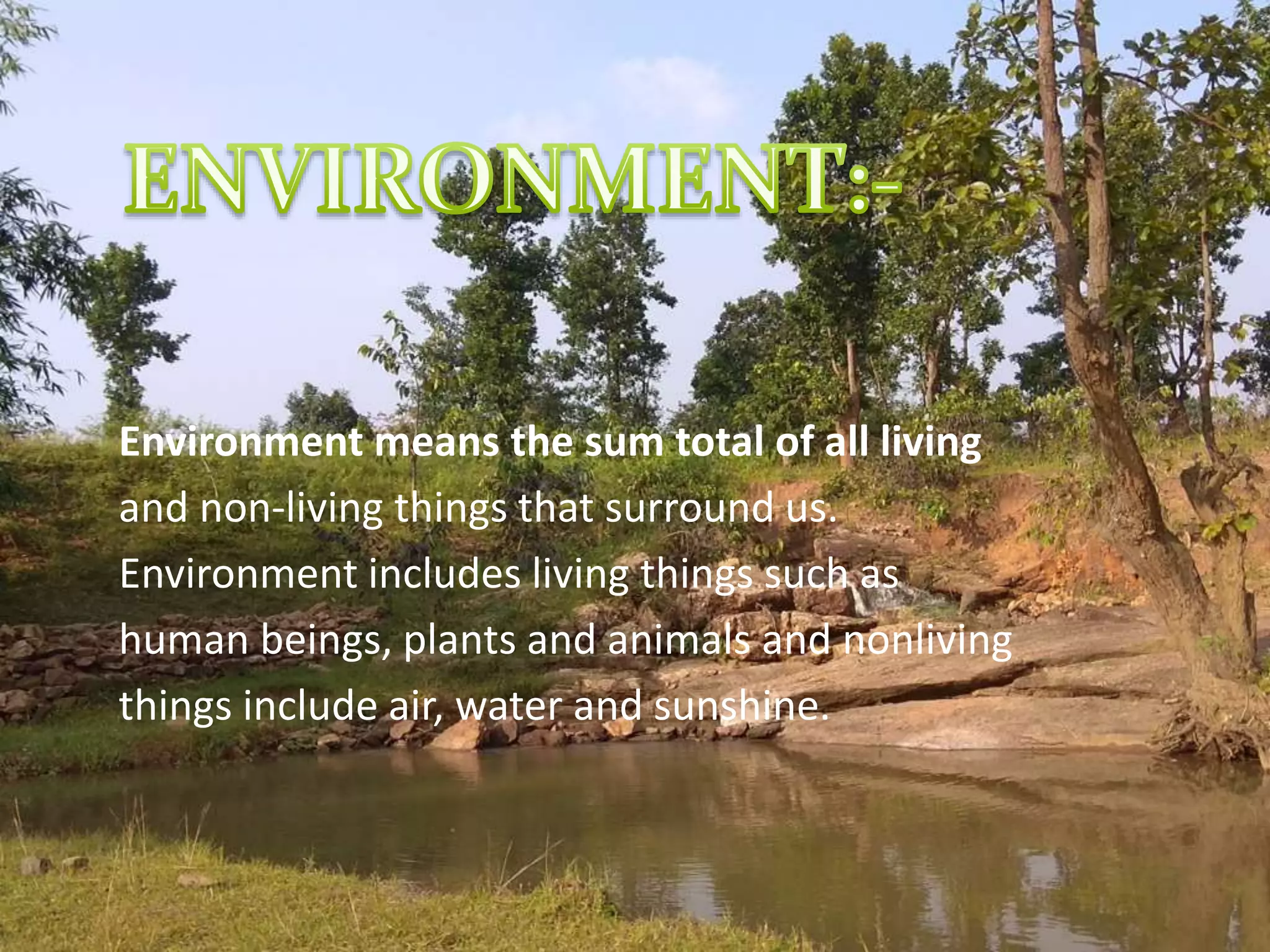
Environment means the sum total of all living
and non-living things that surround us.
Environment includes living things such as
human beings, plants and animals and nonliving
things include air, water and sunshine.
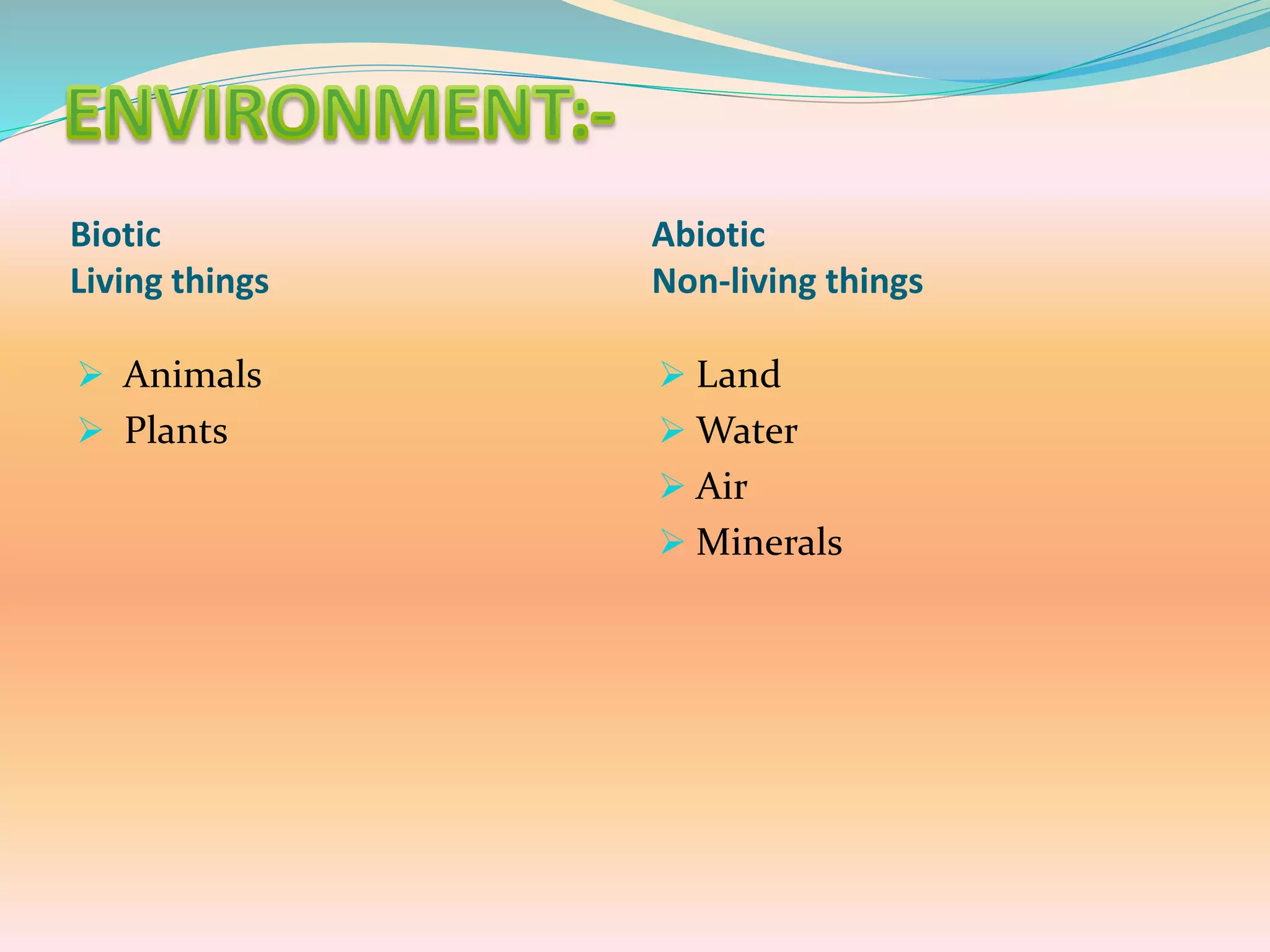
Biotic
Living things
Abiotic
Non-living things
 Animals
 Plants
 Land
 Water
 Air
 Minerals
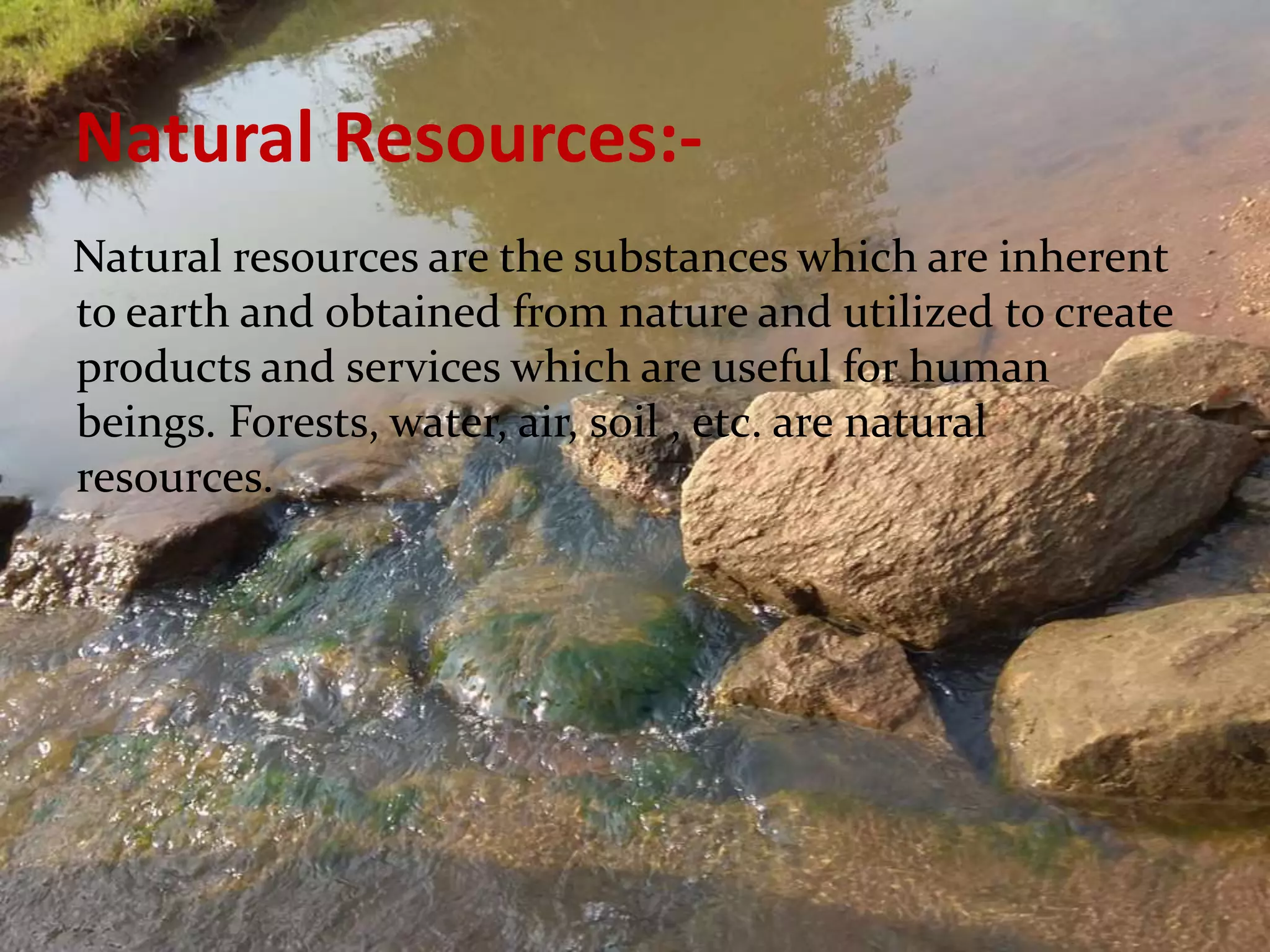
Natural Resources:-
Natural resources are the substances which are inherent
to earth and obtained from nature and utilized to create
products and services which are useful for human
beings. Forests, water, air, soil , etc. are natural
resources.
Renewable and Non Renewable Natural
Resources:-
The resources that can be harvested continuously with proper
planning and management are called renewable resources.
Example: plants, animals, solar energy , wind energy, etc.
Non Renewable resources are natural resources which are
limited in supply and cannot be replenished by natural
means. Once exhausted, they have very little chance of
recovery or resynthesis. Coal, minerals, petroleum, etc. are
Non Renewable resources.
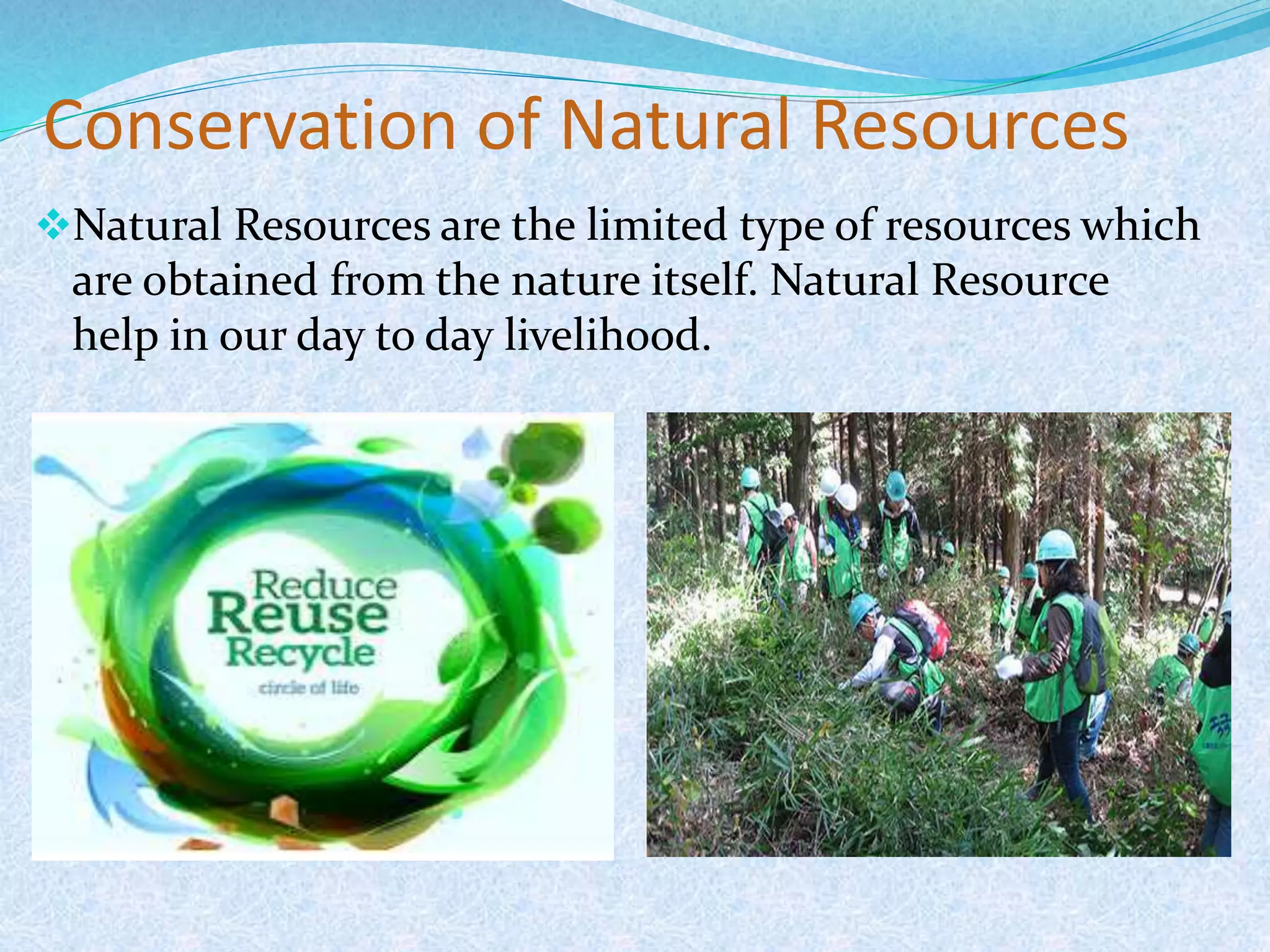
Conservation of Natural Resources
Natural Resources are the limited type of resources which
are obtained from the nature itself. Natural Resource
help in our day to day livelihood.
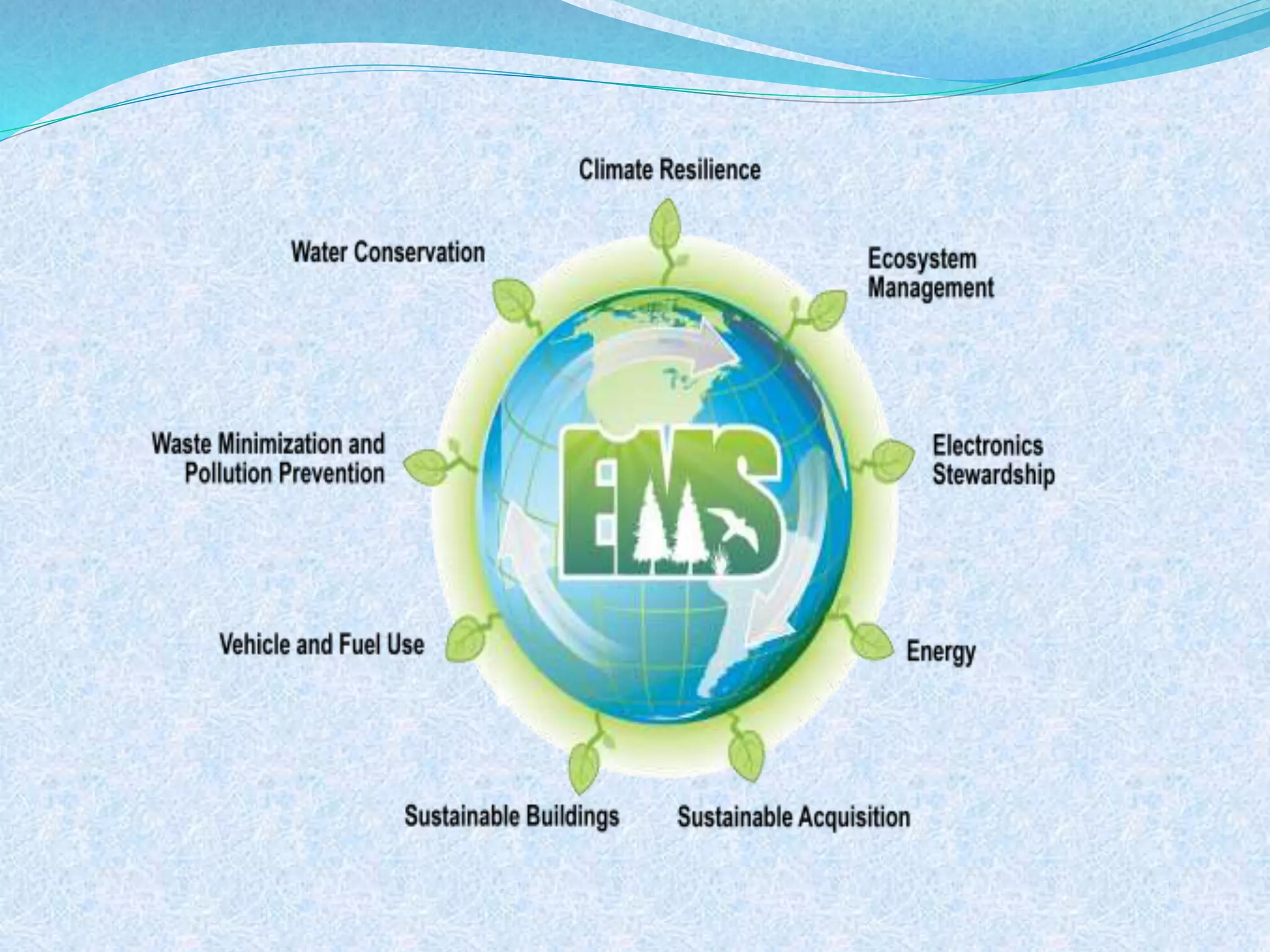
Types of conservation
 Water Conservation
 Soil Conservation
 Wetland Conservation
 Plant Conservation
 Wildlife Conservation
 Energy Conservation
Water Conservation:-
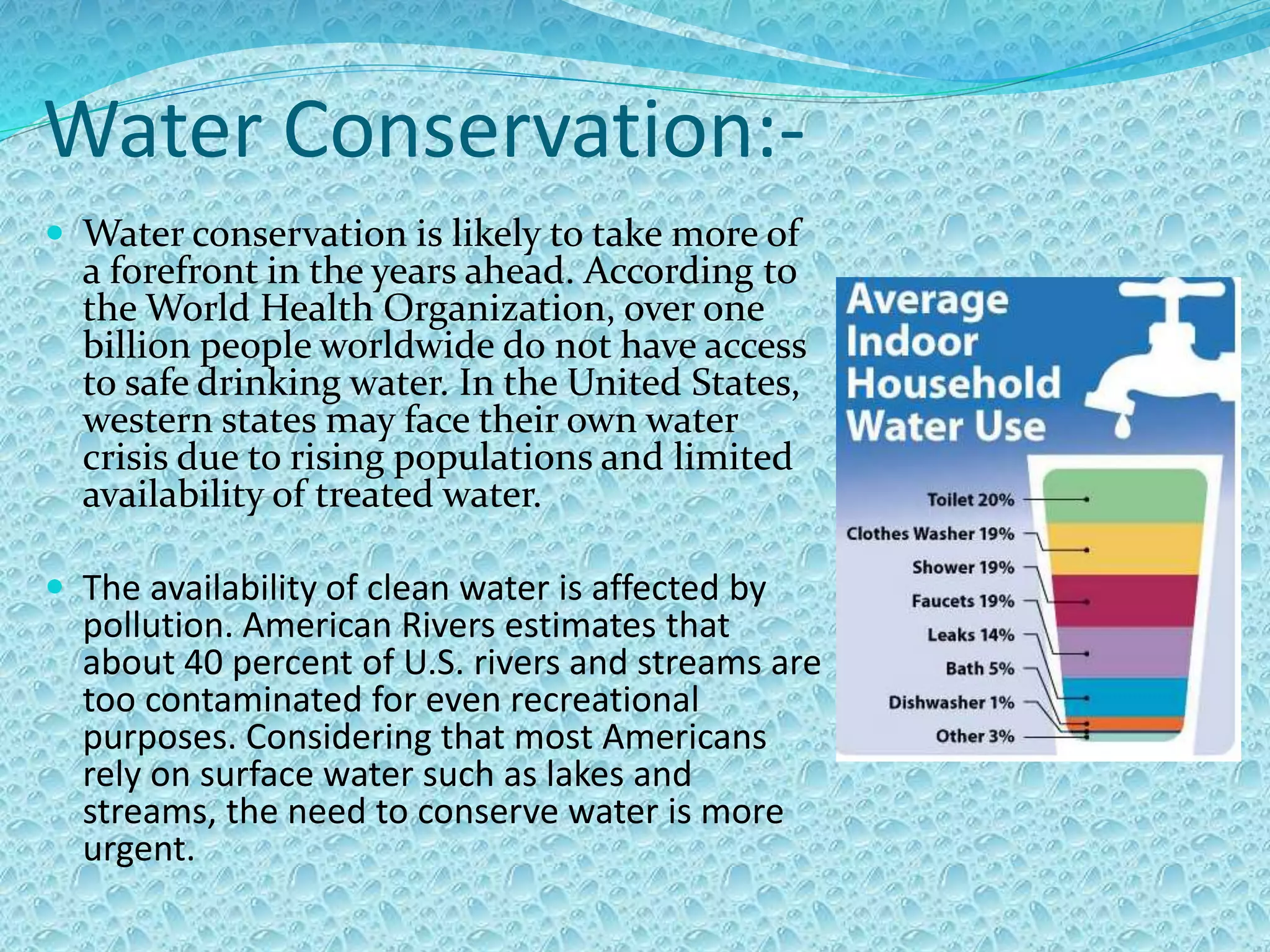
 Water conservation is likely to take more of
a forefront in the years ahead. According to
the World Health Organization, over one
billion people worldwide do not have access
to safe drinking water. In the United States,
western states may face their own water
crisis due to rising populations and limited
availability of treated water.
 The availability of clean water is affected by
pollution. American Rivers estimates that
about 40 percent of U.S. rivers and streams are
too contaminated for even recreational
purposes. Considering that most Americans
rely on surface water such as lakes and
streams, the need to conserve water is more
urgent.
Soil Conservation:-
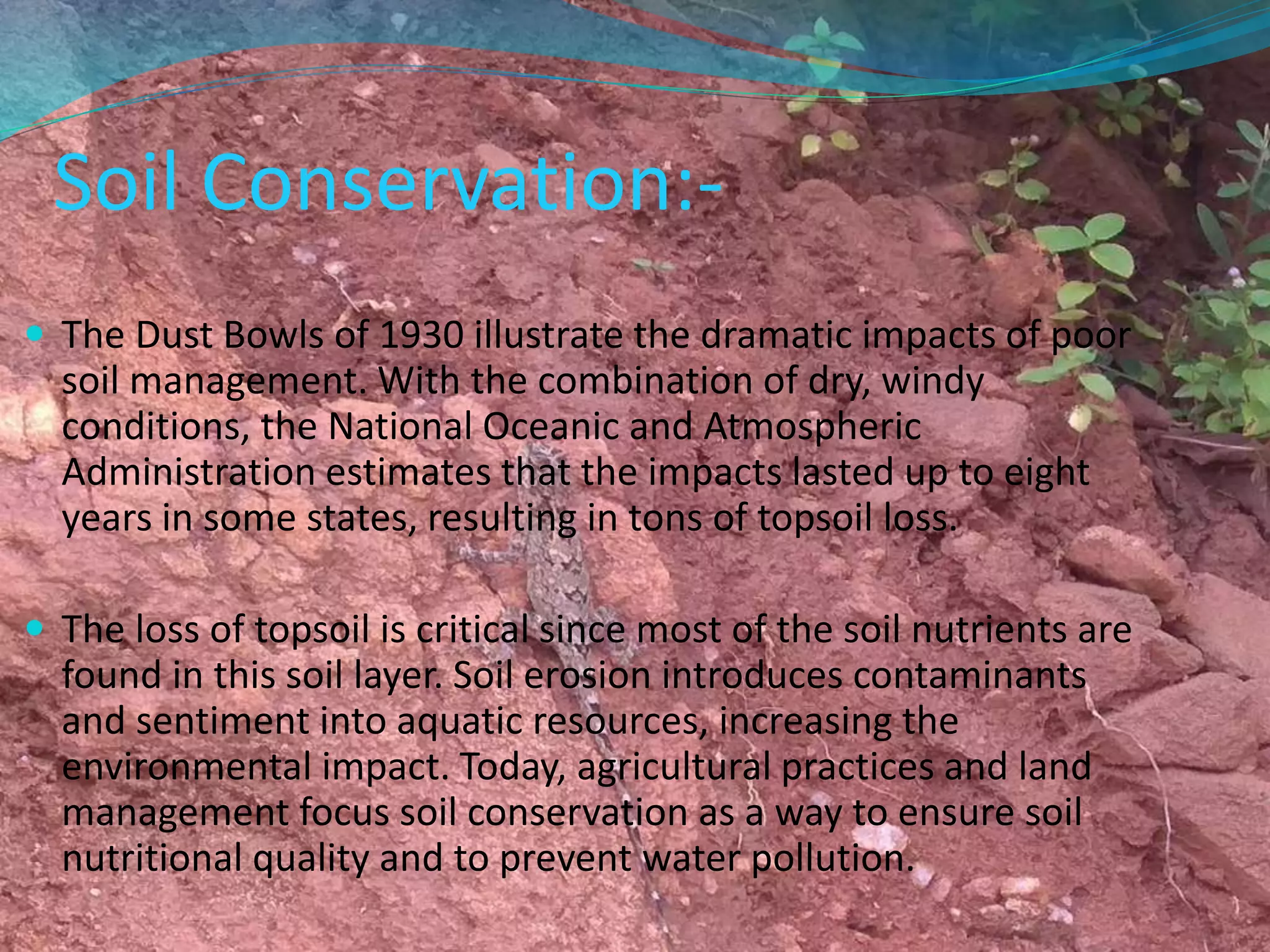
 The Dust Bowls of 1930 illustrate the dramatic impacts of poor
soil management. With the combination of dry, windy
conditions, the National Oceanic and Atmospheric
Administration estimates that the impacts lasted up to eight
years in some states, resulting in tons of topsoil loss.
 The loss of topsoil is critical since most of the soil nutrients are
found in this soil layer. Soil erosion introduces contaminants
and sentiment into aquatic resources, increasing the
environmental impact. Today, agricultural practices and land
management focus soil conservation as a way to ensure soil
nutritional quality and to prevent water pollution.
Wetland Conservation:-
 Since European settlement, the United States has seen dramatic
changes in its land cover. According to the U.S. Geological
Survey, over half of the wetlands of the contiguous 48 states have
been lost. Wetlands provide valuable flood protection as well as
habitat for plants and wildlife. The U.S. Environmental
Protection Agency estimates that one-third of the nation's
threatened and endangered species depends strictly on wetlands,
making it one of the types of conservation necessary to prevent
further environmental losses.
 Conservation efforts may focus on restoration of wetland habitat
through control over invasive species, which can out compete
native species for resources. Other methods include prevention
of runoff into wetlands through buffer strips planted adjacent to
waterways.
Plant Conservation:-
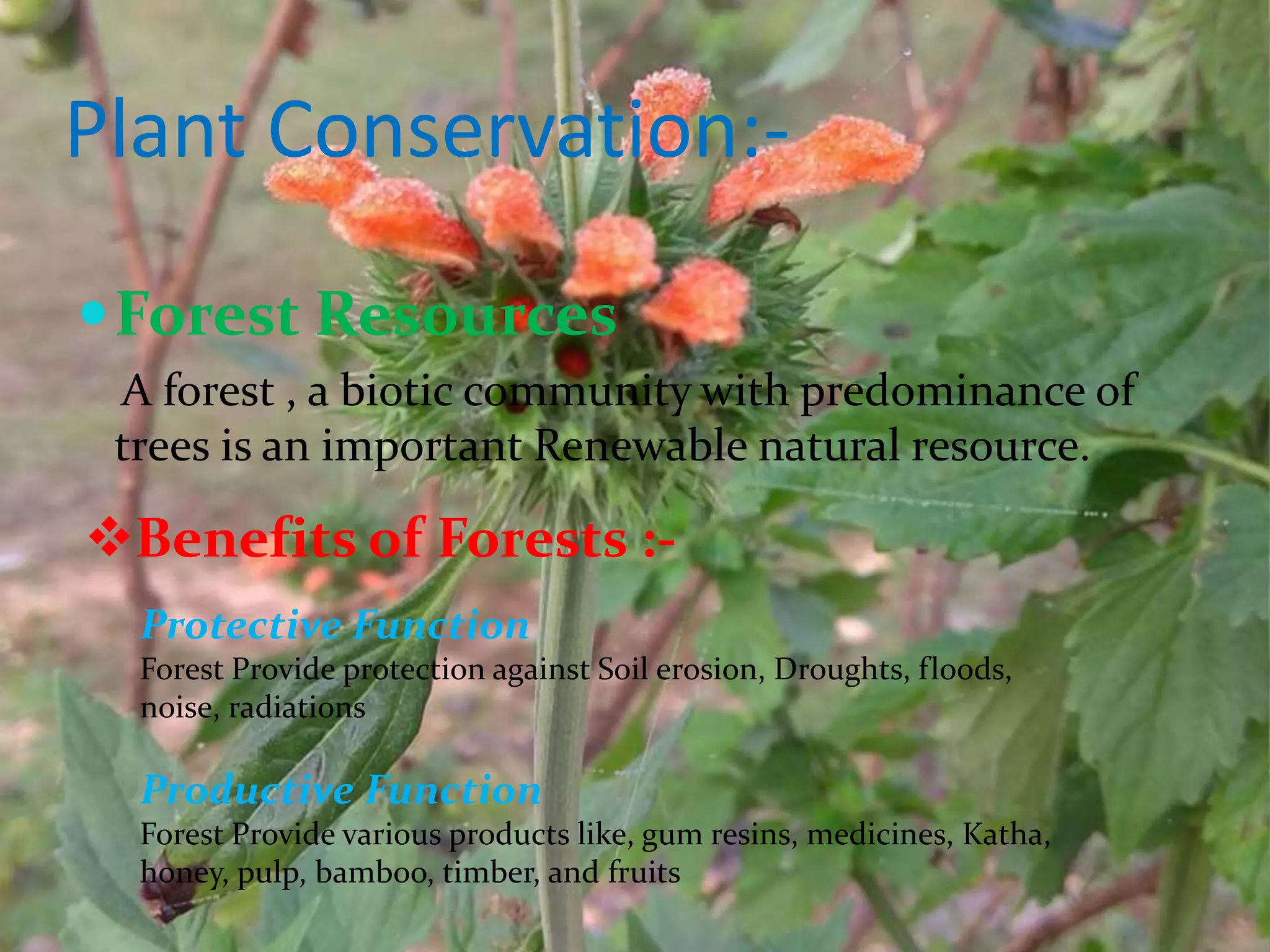
Forest Resources
A forest , a biotic community with predominance of
trees is an important Renewable natural resource.
Benefits of Forests :-
Protective Function
Forest Provide protection against Soil erosion, Droughts, floods,
noise, radiations
Productive Function
Forest Provide various products like, gum resins, medicines, Katha,
honey, pulp, bamboo, timber, and fruits
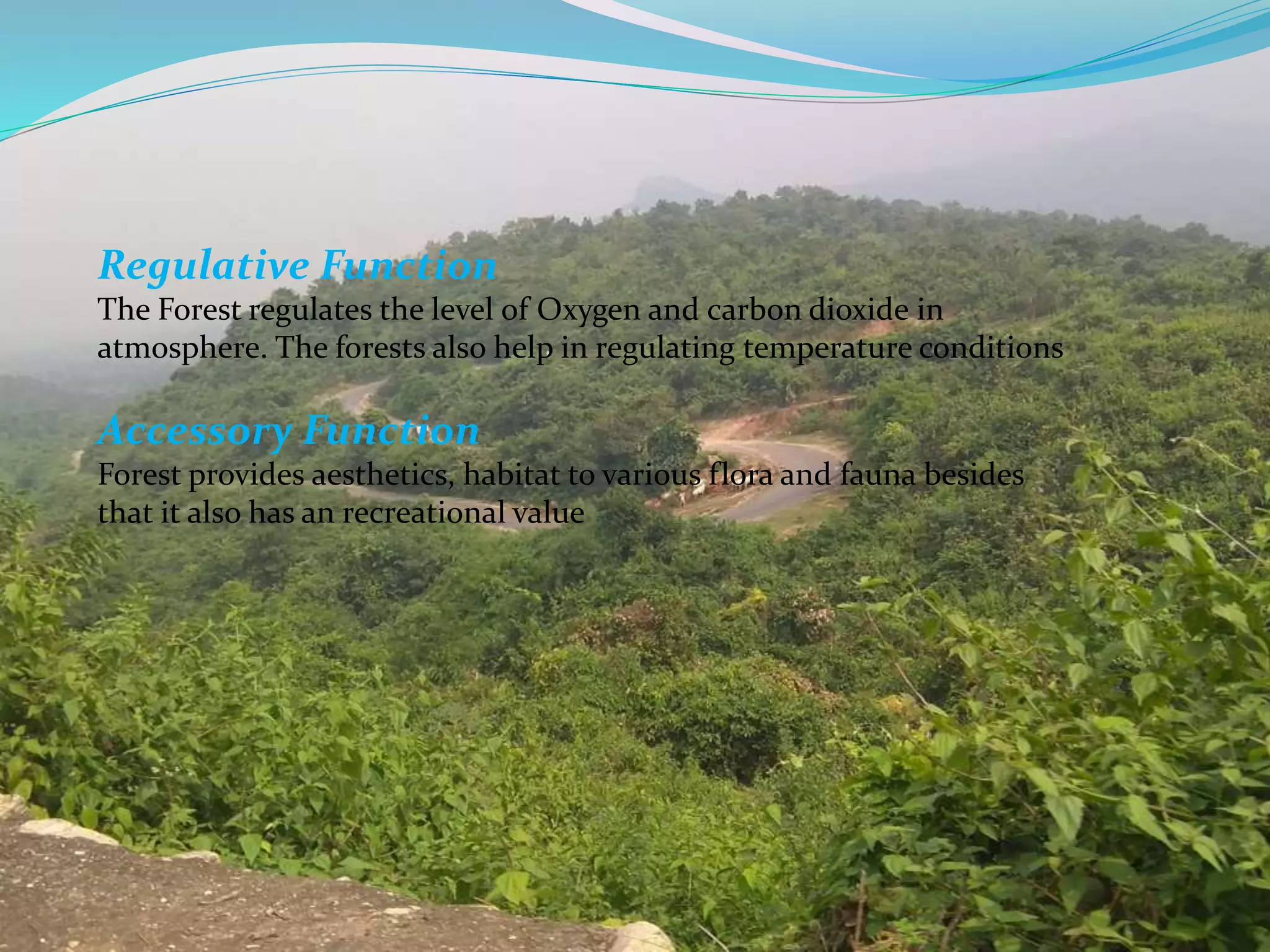
Regulative Function
The Forest regulates the level of Oxygen and carbon dioxide in
atmosphere. The forests also help in regulating temperature conditions
Accessory Function
Forest provides aesthetics, habitat to various flora and fauna besides
that it also has an recreational value
Wildlife Conservation:-
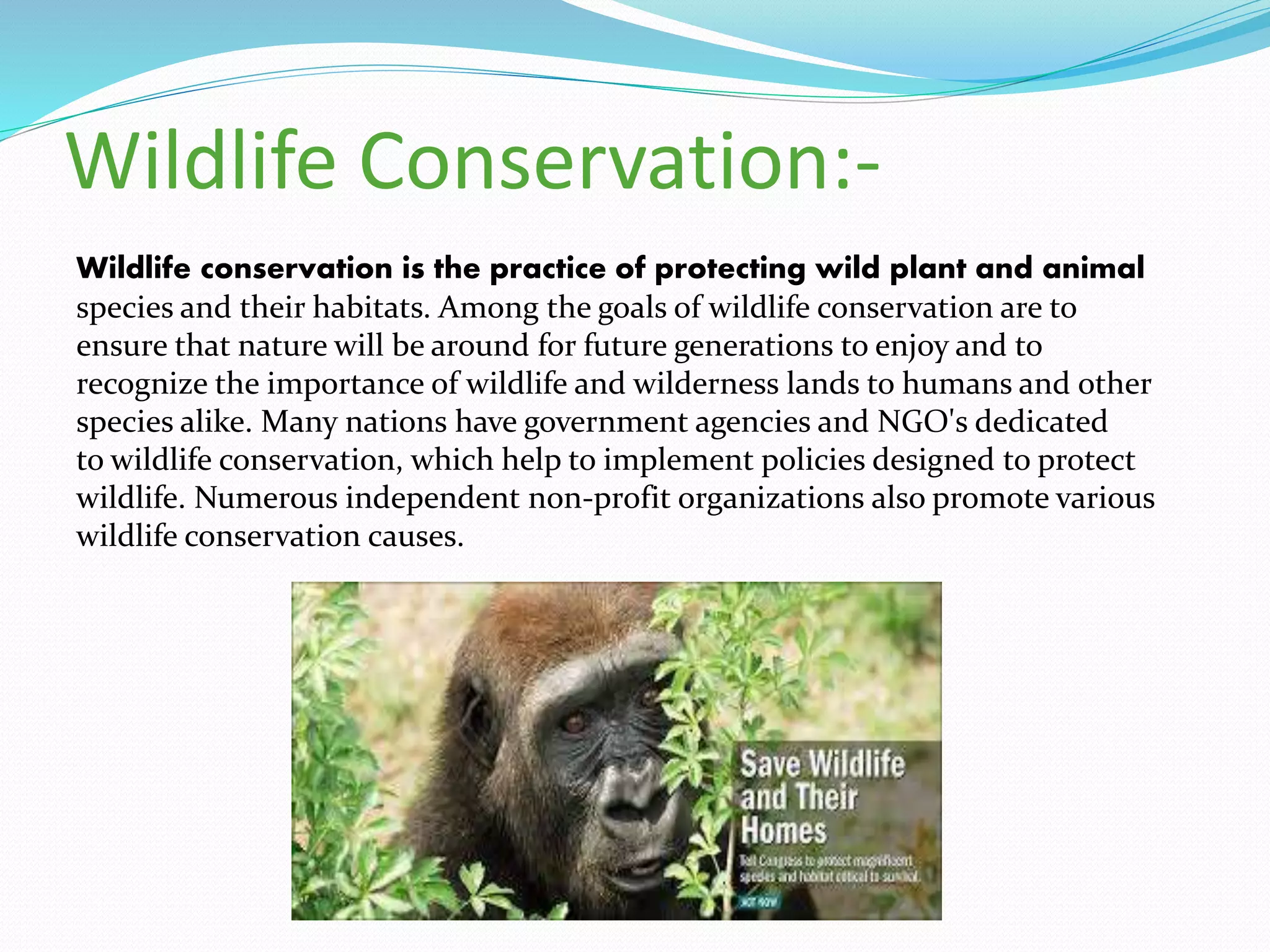
Wildlife conservation is the practice of protecting wild plant and animal
species and their habitats. Among the goals of wildlife conservation are to
ensure that nature will be around for future generations to enjoy and to
recognize the importance of wildlife and wilderness lands to humans and other
species alike. Many nations have government agencies and NGO's dedicated
to wildlife conservation, which help to implement policies designed to protect
wildlife. Numerous independent non-profit organizations also promote various
wildlife conservation causes.
Energy conservation:-
 The rising cost of fossil fuels and growing environmental concerns have made
energy conservation a top priority with governments and individuals. Energy
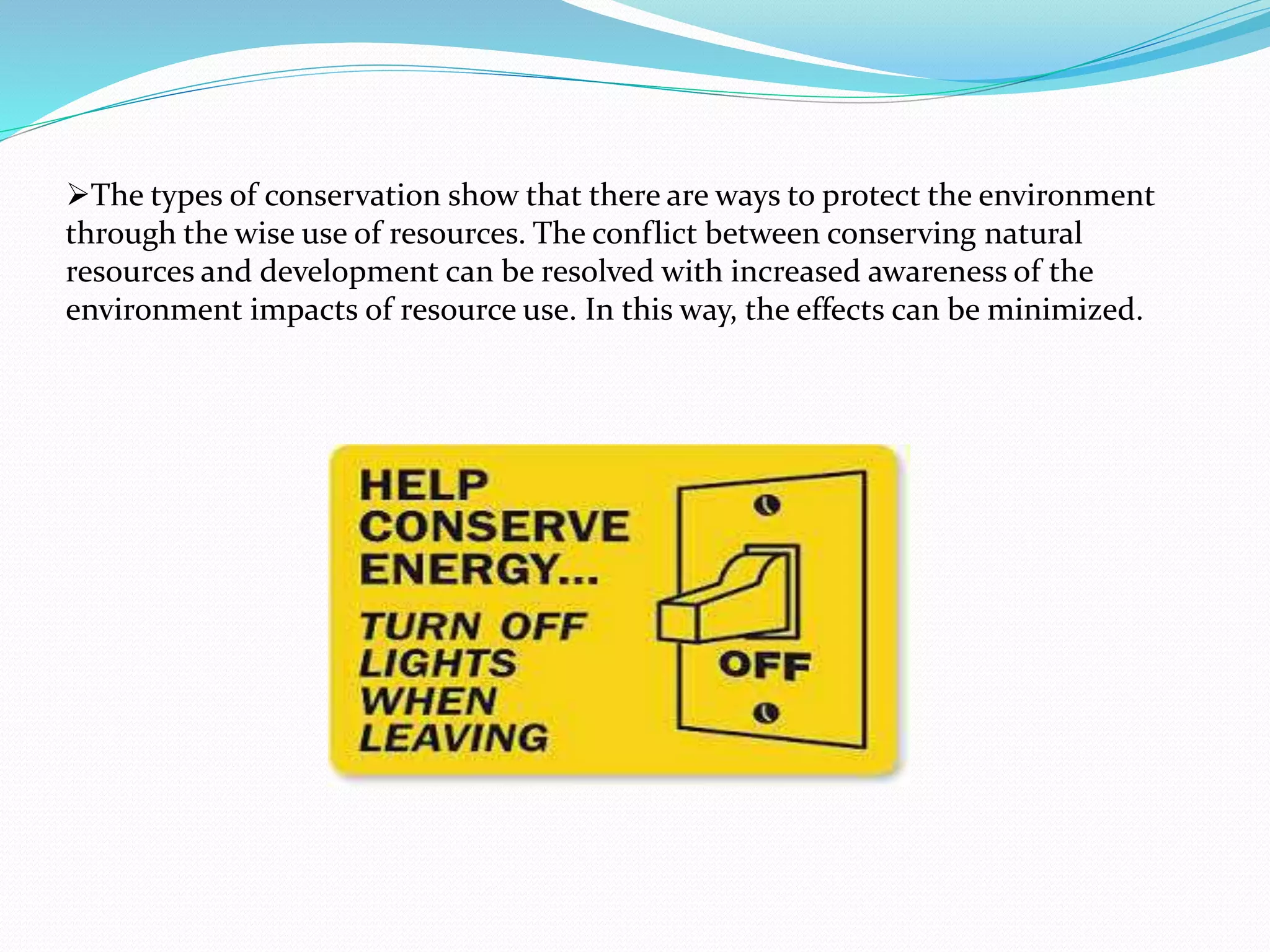
conservation may be something as simple as turning off the lights when you
leave a room. It can also involve more complex solutions such as alternative
fuel power plants. The goal of energy conservation is to balance the need for
energy with the environmental impact of fulfilling those needs.
The types of conservation show that there are ways to protect the environment
through the wise use of resources. The conflict between conserving natural
resources and development can be resolved with increased awareness of the
environment impacts of resource use. In this way, the effects can be minimized.
Conservation OF NATURAL RESOURCES.

Conservation OF NATURAL RESOURCES.

  • 1.
    DEPARTMENT OF GEOERAPHY P.GSECTION SESSION =2019-2020
  • 2.
  • 3.
    Environment means thesum total of all living and non-living things that surround us. Environment includes living things such as human beings, plants and animals and nonliving things include air, water and sunshine.
  • 4.
    Biotic Living things Abiotic Non-living things Animals  Plants  Land  Water  Air  Minerals
  • 5.
    Natural Resources:- Natural resourcesare the substances which are inherent to earth and obtained from nature and utilized to create products and services which are useful for human beings. Forests, water, air, soil , etc. are natural resources.
  • 6.
    Renewable and NonRenewable Natural Resources:- The resources that can be harvested continuously with proper planning and management are called renewable resources. Example: plants, animals, solar energy , wind energy, etc. Non Renewable resources are natural resources which are limited in supply and cannot be replenished by natural means. Once exhausted, they have very little chance of recovery or resynthesis. Coal, minerals, petroleum, etc. are Non Renewable resources.
  • 7.
    Conservation of NaturalResources Natural Resources are the limited type of resources which are obtained from the nature itself. Natural Resource help in our day to day livelihood.
  • 9.
    Types of conservation Water Conservation  Soil Conservation  Wetland Conservation  Plant Conservation  Wildlife Conservation  Energy Conservation
  • 10.
    Water Conservation:-  Waterconservation is likely to take more of a forefront in the years ahead. According to the World Health Organization, over one billion people worldwide do not have access to safe drinking water. In the United States, western states may face their own water crisis due to rising populations and limited availability of treated water.  The availability of clean water is affected by pollution. American Rivers estimates that about 40 percent of U.S. rivers and streams are too contaminated for even recreational purposes. Considering that most Americans rely on surface water such as lakes and streams, the need to conserve water is more urgent.
  • 12.
    Soil Conservation:-  TheDust Bowls of 1930 illustrate the dramatic impacts of poor soil management. With the combination of dry, windy conditions, the National Oceanic and Atmospheric Administration estimates that the impacts lasted up to eight years in some states, resulting in tons of topsoil loss.  The loss of topsoil is critical since most of the soil nutrients are found in this soil layer. Soil erosion introduces contaminants and sentiment into aquatic resources, increasing the environmental impact. Today, agricultural practices and land management focus soil conservation as a way to ensure soil nutritional quality and to prevent water pollution.
  • 13.
    Wetland Conservation:-  SinceEuropean settlement, the United States has seen dramatic changes in its land cover. According to the U.S. Geological Survey, over half of the wetlands of the contiguous 48 states have been lost. Wetlands provide valuable flood protection as well as habitat for plants and wildlife. The U.S. Environmental Protection Agency estimates that one-third of the nation's threatened and endangered species depends strictly on wetlands, making it one of the types of conservation necessary to prevent further environmental losses.  Conservation efforts may focus on restoration of wetland habitat through control over invasive species, which can out compete native species for resources. Other methods include prevention of runoff into wetlands through buffer strips planted adjacent to waterways.
  • 14.
    Plant Conservation:- Forest Resources Aforest , a biotic community with predominance of trees is an important Renewable natural resource. Benefits of Forests :- Protective Function Forest Provide protection against Soil erosion, Droughts, floods, noise, radiations Productive Function Forest Provide various products like, gum resins, medicines, Katha, honey, pulp, bamboo, timber, and fruits
  • 15.
    Regulative Function The Forestregulates the level of Oxygen and carbon dioxide in atmosphere. The forests also help in regulating temperature conditions Accessory Function Forest provides aesthetics, habitat to various flora and fauna besides that it also has an recreational value
  • 16.
    Wildlife Conservation:- Wildlife conservationis the practice of protecting wild plant and animal species and their habitats. Among the goals of wildlife conservation are to ensure that nature will be around for future generations to enjoy and to recognize the importance of wildlife and wilderness lands to humans and other species alike. Many nations have government agencies and NGO's dedicated to wildlife conservation, which help to implement policies designed to protect wildlife. Numerous independent non-profit organizations also promote various wildlife conservation causes.
  • 17.
    Energy conservation:-  Therising cost of fossil fuels and growing environmental concerns have made energy conservation a top priority with governments and individuals. Energy conservation may be something as simple as turning off the lights when you leave a room. It can also involve more complex solutions such as alternative fuel power plants. The goal of energy conservation is to balance the need for energy with the environmental impact of fulfilling those needs.
  • 18.
    The types ofconservation show that there are ways to protect the environment through the wise use of resources. The conflict between conserving natural resources and development can be resolved with increased awareness of the environment impacts of resource use. In this way, the effects can be minimized.