What is Environmental
Conversational Action.
 Every day, decisions are made at the local, state and
national levels that affect the health and safety of the
water we drink, the food we eat and the air we breathe.
The Conservancy works with government officials and
partners to support public policies that protect our
lands and waters so the next generations of
Americans can build secure and rewarding lives.
Environmental issues.
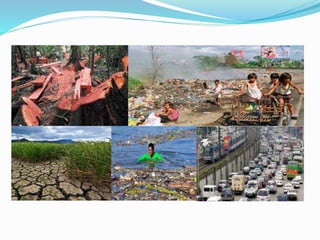
 Environmental issues are harmful effects of human
activity on the biophysical
environment. Environmental protection is a practice
of protecting the natural environment on individual,
organizational or governmental levels, for the benefit
of both the environment and
humans. Environmentalism,
a social and environmental movement, addresses
environmental issues through advocacy, education and
activism.
Environmental in Philipphines
 The Philippines' evident risk to natural disasters is due to
its location. Being a country that lies in the Pacific Ring of
Fire, it is prone to earthquake and volcanic eruptions. In
addition, the country is surrounded by large bodies of
water and faces the Pacific Ocean where 60% of the world's
typhoons are made. One of the most devastating typhoons
that hit the Philippines in 2013 was Typhoon Haiyan, or
"Yolanda", that killed over 10,000 people and destroyed
over a trillion pesos worth of properties and damage to
various sectors. Other environmental problems that the
country is facing include pollution, illegal mining and
logging, deforestation, dynamite fishing, landslides, coastal
erosion, wildlife extinction, global warming and climate
change.
The Land and Water Conservation
Fund
 The Nature Conservancy supports protecting
America’s land and water through full funding and
reauthorization of the Land and Water
Conservation Fund (LWCF). The Conservancy also
looks to reconnect Americans to nature by restoring
critical large landscapes such as the Everglades and
Flint Hills Conservation Areas.
Overview of the Fund
 The Land and Water Conservation Fund’s goal is to
balance the use of one natural resource—oil and gas—
with the conservation of another by using a portion of
drilling fees to protect important land and water
resources. But despite an increase in energy
production, funding for land and water protection has
been low and unpredictable.
Conservation=Economic Gains
 ustained investment in LWCF will stimulate our
nation's economy, create jobs and shore up our
infrastructure. LWCF makes a substantial contribution
to these critical priorities by strategically securing the
economic asset that our federal, state and local public
lands represent:
Every State Depends on the Land
and Water Conservation Fund
 From the Grand Canyon National Park to the
Appalachian National Scenic Trail, the Land and
Water Conservation Fund has helped protect some of
America’s most treasured places—conserving national
parks and public recreation areas, lands by rivers,
working forests, farms and ranches, fish and wildlife
refuges, trails, and state and local parks.
The 4 different types of
Conversation.
1. Environmental Conservation
2. Animal conservation
3. Marine Conservation
4. Human Conservation
1. Environmental Conservation
 Environmental conservation refers to the environment
being used in a way that is sustainable. By using the
environment sustainably, it won’t be destroyed for
good, meaning we can go on benefitting from it for
years to come – phew! Naturally, environmental
conservation comes in many different forms, as there
are a fair few areas to cover, from recycling household
waste, to replanting trees, to educating others about
how to take care of the environment themselves.
2. Animal conservation
 Animal conservation is the practice of protecting endangered wild
animal species, along with their habitats. Across the world there are
animal conservationists, who work to identify species that are in need
of help and protect them, which often involves keeping animals in
captivity until they have a safe place to live in the wild.
 Sadly, many species have become extinct over time and many more are
now endangered, therefore it’s essential that we find ways to protect
them and conserve their natural habitats.

So what’s making our lovely creatures of the earth disappear? There are
a number of threats that animals are facing, one of which is global
warming. The changes caused by this phenomenon are dangerous, as
so many animals have specific habitat needs, meaning global warming
could lead to a severe decrease in wildlife species.
3. Marine Conservation
 As you might have already guessed, marine conservation is
the protection of species and ecosystems that live in oceans
and seas (who’d have thought it, eh). It involves protecting
these species through reducing human activities like
fishing, whaling and water pollution.
 Regrettably, we often take the health of marine life for
granted and, due to these practices, the ocean is extremely
vulnerable to harm. There are several ways in which you
can help protect marine ecosystems, such as mapping
habitats, carrying out vital research into the state of the
oceans and the wildlife that live there, and educating local
communities- not all is lost it seems!
4. Human Conservation
 This is perhaps one type of conservation that you won’t yet have heard of,
however it’s also the one you can relate to most, being human and all. People
too are in danger and certain procedures need to be put in place to keep them
alive.
 Take the Tsa’chila tribes in Ecuador, for example, who were once prolific in the
region, but now just seven remote settlements exist. These communities are at
risk of losing their traditional culture, due to the ever-expanding influence of
Europeans and North Americans.

By living amongst communities such as these, learning about their customs
and traditions, and helping them improve their standards of living, you can
work towards conserving those humans in need.

Importants of Environmental
Conversational.
 We only have one planet and we should all do our part
to ensure that it’s protected by combining our modern
ways of living with a deeper respect and understanding
of what nature provides. Environmental
conservationists understand that the way we live is a
reflection of how we feel about the natural world, and
our everyday habits show how much we truly value all
the things that the Earth gives us
So, What Exactly is
Environmental Conservation?
 There is much to do when it comes to rebuilding and
protecting what’s left of natural resources and
the biodiversity within our ecosystems. Environmental
conservation is an umbrella term that defines anything
we do to protect our planet and conserve its natural
resources so that every living thing can have an
improved quality of life.

7 Different kinds of Pollution.
 Air Pollution
 Land Pollution
 Light Pollution
 Noise Pollution
 Thermal Pollution
 Visual Pollution
 Water Pollution
Air Pollution.
 According to the dictionary, air pollution is the
contamination of air by smoke and harmful gases,
mainly oxides of carbon, sulfur, and nitrogen. (And
maybe by that smelly uncle.) Some examples of air
pollution include:
 Exhuast fumes from vehicles
 The burning of fossil fuels, such as coal, oil, or gas
 Harmful off-gasing from things such as paint, plastic
production, and so on
 Radiation spills or nuclear accidents
Land Pollution.
 Land pollution is the degradation of the Earth's surface
caused by a misuse of resources and improper disposal of
waste. Some examples of land pollution include:
 Litter found on the side of the road
 Illegal dumping in natural habitats
 Oil spills that happen inland
 The use of pesticides and other farming chemicals
 Damage and debris caused from unsustainable mining and
logging practices
 Radiation spills or nuclear accidents
Light Pollution
 Light pollution is the brightening of the night sky
inhibiting the visibility of stars and planets by the use of
improper lighting of communities. Some examples of what
causes light pollution:
 Street lamps that shine light in all directions, instead of
with a hood to point light downward toward the street.
 Extra, unnecessary lights around the home
 Cities that run lights all night long
 Light pollution uses more energy (by shining more light up
instead of down, meaning you need brighter bulbs for the
same amount of light), may affect human health and our
sleep cycles, and most importantly, corrupts our kids
telescopes and their curiosity. (I grew up in a city. My first
no-light night in the country blew my mind. Let's not make
that such a rare occasion!)
Noise Pollution
 Noise pollution is any loud sounds that are either
harmful or annoying to humans and animals. Some
exmaples of noise pollution:
 Airplanes, helicopters, and motor vehicles
 Construction or demolition noise
 Human activities such as sporting events or concerts
 Noise pollution can be disruptive to humans' stress
levels, may be harmful to unborn babies, and drives
animals away by causing nervousness and decreasing
their ability to hear prey or predators.
Thermal Pollution.
 Thermal pollution is the increase of temperature caused by
human activity. A few examples of this include:
 Warmer lake water from nearby manufacturing (using cool
water to cool the plant and then pump it back into the
lake)
 Included in thermal pollution should also be the increase
in temperatures in areas with lots of concrete or vehicles,
generally in cities
 These kinds of environmental pollution can cause aquatic
life to suffer or die due to the increased temperature, can
cause discomfort to communities dealing with higher
temperatures, and will affect plant-life in and around the
area.
Visual Pollution
 Visual pollution is what you would call anything
unattractive or visualing damaging to the nearby
landscape. This tends to be a highly subjective topic. Some
examples of visual pollution:
 Skyscrapers that blocks a natural view
 Graffiti or carving on trees, rocks, or other natural
landscapes
 Billboards, litter, abandoned homes, and junkyards could
also be considered among three kinds of environmental
pollution
 Mostly, visual kinds of environmental pollution are
annoying and ugly, although some may say they are also
depressing, and they of course affect the surrounding
landscape with the changes they cause.

Environmental and-conversational-action-slides-24

  • 2.
    What is Environmental ConversationalAction.  Every day, decisions are made at the local, state and national levels that affect the health and safety of the water we drink, the food we eat and the air we breathe. The Conservancy works with government officials and partners to support public policies that protect our lands and waters so the next generations of Americans can build secure and rewarding lives.
  • 3.
    Environmental issues.  Environmentalissues are harmful effects of human activity on the biophysical environment. Environmental protection is a practice of protecting the natural environment on individual, organizational or governmental levels, for the benefit of both the environment and humans. Environmentalism, a social and environmental movement, addresses environmental issues through advocacy, education and activism.
  • 4.
    Environmental in Philipphines The Philippines' evident risk to natural disasters is due to its location. Being a country that lies in the Pacific Ring of Fire, it is prone to earthquake and volcanic eruptions. In addition, the country is surrounded by large bodies of water and faces the Pacific Ocean where 60% of the world's typhoons are made. One of the most devastating typhoons that hit the Philippines in 2013 was Typhoon Haiyan, or "Yolanda", that killed over 10,000 people and destroyed over a trillion pesos worth of properties and damage to various sectors. Other environmental problems that the country is facing include pollution, illegal mining and logging, deforestation, dynamite fishing, landslides, coastal erosion, wildlife extinction, global warming and climate change.
  • 5.
    The Land andWater Conservation Fund  The Nature Conservancy supports protecting America’s land and water through full funding and reauthorization of the Land and Water Conservation Fund (LWCF). The Conservancy also looks to reconnect Americans to nature by restoring critical large landscapes such as the Everglades and Flint Hills Conservation Areas.
  • 6.
    Overview of theFund  The Land and Water Conservation Fund’s goal is to balance the use of one natural resource—oil and gas— with the conservation of another by using a portion of drilling fees to protect important land and water resources. But despite an increase in energy production, funding for land and water protection has been low and unpredictable.
  • 7.
    Conservation=Economic Gains  ustainedinvestment in LWCF will stimulate our nation's economy, create jobs and shore up our infrastructure. LWCF makes a substantial contribution to these critical priorities by strategically securing the economic asset that our federal, state and local public lands represent:
  • 8.
    Every State Dependson the Land and Water Conservation Fund  From the Grand Canyon National Park to the Appalachian National Scenic Trail, the Land and Water Conservation Fund has helped protect some of America’s most treasured places—conserving national parks and public recreation areas, lands by rivers, working forests, farms and ranches, fish and wildlife refuges, trails, and state and local parks.
  • 9.
    The 4 differenttypes of Conversation. 1. Environmental Conservation 2. Animal conservation 3. Marine Conservation 4. Human Conservation
  • 10.
    1. Environmental Conservation Environmental conservation refers to the environment being used in a way that is sustainable. By using the environment sustainably, it won’t be destroyed for good, meaning we can go on benefitting from it for years to come – phew! Naturally, environmental conservation comes in many different forms, as there are a fair few areas to cover, from recycling household waste, to replanting trees, to educating others about how to take care of the environment themselves.
  • 11.
    2. Animal conservation Animal conservation is the practice of protecting endangered wild animal species, along with their habitats. Across the world there are animal conservationists, who work to identify species that are in need of help and protect them, which often involves keeping animals in captivity until they have a safe place to live in the wild.  Sadly, many species have become extinct over time and many more are now endangered, therefore it’s essential that we find ways to protect them and conserve their natural habitats.  So what’s making our lovely creatures of the earth disappear? There are a number of threats that animals are facing, one of which is global warming. The changes caused by this phenomenon are dangerous, as so many animals have specific habitat needs, meaning global warming could lead to a severe decrease in wildlife species.
  • 12.
    3. Marine Conservation As you might have already guessed, marine conservation is the protection of species and ecosystems that live in oceans and seas (who’d have thought it, eh). It involves protecting these species through reducing human activities like fishing, whaling and water pollution.  Regrettably, we often take the health of marine life for granted and, due to these practices, the ocean is extremely vulnerable to harm. There are several ways in which you can help protect marine ecosystems, such as mapping habitats, carrying out vital research into the state of the oceans and the wildlife that live there, and educating local communities- not all is lost it seems!
  • 13.
    4. Human Conservation This is perhaps one type of conservation that you won’t yet have heard of, however it’s also the one you can relate to most, being human and all. People too are in danger and certain procedures need to be put in place to keep them alive.  Take the Tsa’chila tribes in Ecuador, for example, who were once prolific in the region, but now just seven remote settlements exist. These communities are at risk of losing their traditional culture, due to the ever-expanding influence of Europeans and North Americans.  By living amongst communities such as these, learning about their customs and traditions, and helping them improve their standards of living, you can work towards conserving those humans in need. 
  • 14.
    Importants of Environmental Conversational. We only have one planet and we should all do our part to ensure that it’s protected by combining our modern ways of living with a deeper respect and understanding of what nature provides. Environmental conservationists understand that the way we live is a reflection of how we feel about the natural world, and our everyday habits show how much we truly value all the things that the Earth gives us
  • 15.
    So, What Exactlyis Environmental Conservation?  There is much to do when it comes to rebuilding and protecting what’s left of natural resources and the biodiversity within our ecosystems. Environmental conservation is an umbrella term that defines anything we do to protect our planet and conserve its natural resources so that every living thing can have an improved quality of life.
  • 17.
  • 18.
    7 Different kindsof Pollution.  Air Pollution  Land Pollution  Light Pollution  Noise Pollution  Thermal Pollution  Visual Pollution  Water Pollution
  • 19.
    Air Pollution.  Accordingto the dictionary, air pollution is the contamination of air by smoke and harmful gases, mainly oxides of carbon, sulfur, and nitrogen. (And maybe by that smelly uncle.) Some examples of air pollution include:  Exhuast fumes from vehicles  The burning of fossil fuels, such as coal, oil, or gas  Harmful off-gasing from things such as paint, plastic production, and so on  Radiation spills or nuclear accidents
  • 20.
    Land Pollution.  Landpollution is the degradation of the Earth's surface caused by a misuse of resources and improper disposal of waste. Some examples of land pollution include:  Litter found on the side of the road  Illegal dumping in natural habitats  Oil spills that happen inland  The use of pesticides and other farming chemicals  Damage and debris caused from unsustainable mining and logging practices  Radiation spills or nuclear accidents
  • 21.
    Light Pollution  Lightpollution is the brightening of the night sky inhibiting the visibility of stars and planets by the use of improper lighting of communities. Some examples of what causes light pollution:  Street lamps that shine light in all directions, instead of with a hood to point light downward toward the street.  Extra, unnecessary lights around the home  Cities that run lights all night long  Light pollution uses more energy (by shining more light up instead of down, meaning you need brighter bulbs for the same amount of light), may affect human health and our sleep cycles, and most importantly, corrupts our kids telescopes and their curiosity. (I grew up in a city. My first no-light night in the country blew my mind. Let's not make that such a rare occasion!)
  • 22.
    Noise Pollution  Noisepollution is any loud sounds that are either harmful or annoying to humans and animals. Some exmaples of noise pollution:  Airplanes, helicopters, and motor vehicles  Construction or demolition noise  Human activities such as sporting events or concerts  Noise pollution can be disruptive to humans' stress levels, may be harmful to unborn babies, and drives animals away by causing nervousness and decreasing their ability to hear prey or predators.
  • 23.
    Thermal Pollution.  Thermalpollution is the increase of temperature caused by human activity. A few examples of this include:  Warmer lake water from nearby manufacturing (using cool water to cool the plant and then pump it back into the lake)  Included in thermal pollution should also be the increase in temperatures in areas with lots of concrete or vehicles, generally in cities  These kinds of environmental pollution can cause aquatic life to suffer or die due to the increased temperature, can cause discomfort to communities dealing with higher temperatures, and will affect plant-life in and around the area.
  • 24.
    Visual Pollution  Visualpollution is what you would call anything unattractive or visualing damaging to the nearby landscape. This tends to be a highly subjective topic. Some examples of visual pollution:  Skyscrapers that blocks a natural view  Graffiti or carving on trees, rocks, or other natural landscapes  Billboards, litter, abandoned homes, and junkyards could also be considered among three kinds of environmental pollution  Mostly, visual kinds of environmental pollution are annoying and ugly, although some may say they are also depressing, and they of course affect the surrounding landscape with the changes they cause.