Conservation
Environment
of
Non living environment
Land,water,air,minerals
Living environment
plants
Living environment
animals
Non living environment
Land,water,air,minerals
ENVIRONMENT
nvironment means the sum total of all living
and non-living things that surround us.
nvironment includes living things such as
human beings, plants and animals and non-
living things include air, water and sunshine.
Biotic
Living things
 Animals
 Plants
Abiotic
Non-living things
 Land
 Water
 Air
 Minerals
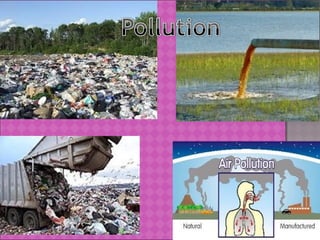
Pollution Pollutant
 Any undesirable change
in the chemical ,
physical or biological
characteristics of air ,
land and water that
affect human life
directly or indirectly is
called POLLUTION.
eg:noise, water, air,
land..
 A substance released
into the environment
due to the natural or
human activity which
affects directly or
indirectly the
environment is called
POLLUTANT.
eg:sulphur-di-oxide,
carbon-monoxide, lead,
mercury,etc..
• Substances that are not
broken down by
biological or microbial
action are called non-
bio-degradable wastes .
eg:plastic substances
mineral wastes
• Substances that are
broken down by
biological or microbal
action are called
bio-degradable waste.
eg: wood
paper
leather
Bio-degradable Non Bio-degradable
Bio
degradaBle
NoN
BiodegradaBle
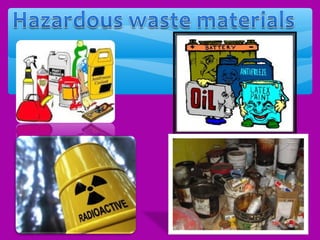
A hazardous waste is waste that poses substantial or potential
threats to public health or the environment
∗ Characteristic hazardous
wastes are materials that are
known or tested to exhibit a
hazardous trait such as:
∗ ignitability (i.e., flammable)
∗ reactivity
∗ corrosivity
∗ toxicity
Hazardous wastes fall into two major categories:
characteristic wastes and listed wastes
∗ Listed hazardous waste are
materials specifically listed by
regulatory authorities as a
hazardous waste.
∗ For example, dry cleaners,
automobile repair shops,
hospitals, exterminators, and
photo processing
! Land fills:
There are permanent storage facilities in
secured lands for military related liquid and
radioactive waste materials . High level radioactive
wastes are stored in deep underground storage.
! Deep well injection:
It involves drilling a well into dry porous
materials below ground water . Hazardous waste
liquids are pumped into the well . They are soaked into
the porous material and made to remain isolated
indefinitely.
Incineration:
The burning of materials is called incineration.
Hazardous bio-medical wastes are usually disposed
by
means of incineration . Human anatomical wastes ,
discarded medicines , toxic drugs , blood , pus ,
animal wastes , microbiological and bio-technological
wastes etc.., are called bio-medical wastes .
• Reuse and recycling technique:
The separating out of materials such as rubber, glass,
paper and scrap metal from refuse and reprocessing them for
reuse is named as reclamation of waste or recycling.
• Paper:
Can be pulped and reprocessed into recycled paper,
cardboard and other products.
• Glass:
Glass can be crushed , remelted and made into new
containers or crushes used as a substitute for gravel or sand in
construction materials such as concrete and asphalt. Food waste
and yard waste can be composted to produce humus soil
conditioner.
Water managementWater management
Water management implies making the
best use of available water resources for
human benefit, while not only controlling
its depletion and degradation but also for
our future needs.
 Surface water :
The water source
those are found on the
surface such that it can
be consumed and
utilized easily.
e.g. rivers
lakes
streams
ponds etc.,.
 Ground water
In the water table,
water that percolates in
to the ground through
porous rocks is ground
water. This water table is
mainly useful for the
plants growth, man also
taps this water through
tube wells and borewells.
 Seeding clouds
Seeding clouds with dry ice or potassium iodide
particles sometimes can initiate rain if water laden clouds
and conditions that favour precipitation are present.
 Desalination; (Reverse osmosis)
Desalination of Ocean water is a technology that has
great potential for increasing fresh water. Desalination is
more expensive than most other sources of fresh water.In
desalination, the common methods of evaporation and
recondensation are involved.
 Seeding clouds
Seeding clouds with dry ice or potassium iodide
particles sometimes can initiate rain if water laden clouds
and conditions that favour precipitation are present.
 Desalination; (Reverse osmosis)
Desalination of Ocean water is a technology that has
great potential for increasing fresh water. Desalination is
more expensive than most other sources of fresh water.In
desalination, the common methods of evaporation and
recondensation are involved.
 Dams,reservoirs and canals.
Dams and storage reservoirs tap run off water in
them and transfer the water from of excess of deficit using
canals and underground pipes.
 Water shed management.
The management of rainfall and resultant run-off is
called water shed management. Water shed is an area
characterized by construction of small dams to hold back
water which will provide useful wildlife habitat and stock
watering facilities.
 Wetland conservation:
It preserves natural water storage and acts as
aquifer recharge zones.
 Dams,reservoirs and canals.
Dams and storage reservoirs tap run off water in
them and transfer the water from of excess of deficit using
canals and underground pipes.
 Water shed management.
The management of rainfall and resultant run-off is
called water shed management. Water shed is an area
characterized by construction of small dams to hold back
water which will provide useful wildlife habitat and stock
watering facilities.
 Wetland conservation:
It preserves natural water storage and acts as
aquifer recharge zones.
Domestic conservation:
As an individual, every one can reduce the water
loss by taking shower, using low-flow taps, using recycled
water for lawns, home gardens, vehicle washing and using
water conserving appliances.
Industrial conservation:
Cooling water can be recharged and waste water can
be treated and reused.
Domestic conservation:
As an individual, every one can reduce the water
loss by taking shower, using low-flow taps, using recycled
water for lawns, home gardens, vehicle washing and using
water conserving appliances.
Industrial conservation:
Cooling water can be recharged and waste water can
be treated and reused.
Balance in ecosystem
ecosystem:
A community of organisms that interact with one another
and with the environment is called an ecosystem.
Ecosystem is of two types namely
i.Aquatic
ii.Terrestrial
There are four major components, namely:
1. Abiotic factors
2. Producers
3. Consumers
4. Decomposers.
 Pond Ecosystem
An example for aquatic ecosystem is a pond.
 Abiotic factors
It includes light, temperature, hydrogen ion
concentration, inorganic substances like CO2, H2,
O2, N, PO4, CO3 and S and organic substances like
carbohydrates, proteins and lipids.
 Biotic factors
It includes producers and consumers.
Producers are the water living plants like Hydrilla,
Vallisneria etc., and
phytoplankton like Chlamydomonas, Volvox and Spirogyra.
 Primary consumers or herbivores
Zooplanktons like insects, larvae of Dragon-fly
consume the phytoplanktons
Secondary Consumers
These are certain fishes, frogs, water beetles etc.,
which feed on the primary consumers in the pond.
Tertiary Consumers
These are big fishes and kingfisher that feed on
small fishes.
• Decomposers
Several bacteria and fungi form the decomposers
in the pond.
An ecosystem is maintained by the balance in nature
such as the balance between hawks and mice, if hawk
population is larger than the mice population, then it is not
balanced .
They are balanced between resources like a banana
tree and monkeys. If the banana trees stop growing, the
monkeys won’t get bananas.
An ecosystem maintains the balance between the
number of resources and the number of users or the
balance between prey and predators.
Presented By

Conservation

  • 1.
  • 3.
    Non living environment Land,water,air,minerals Livingenvironment plants Living environment animals Non living environment Land,water,air,minerals
  • 4.
    ENVIRONMENT nvironment means thesum total of all living and non-living things that surround us. nvironment includes living things such as human beings, plants and animals and non- living things include air, water and sunshine.
  • 5.
    Biotic Living things  Animals Plants Abiotic Non-living things  Land  Water  Air  Minerals
  • 6.
    Pollution Pollutant  Anyundesirable change in the chemical , physical or biological characteristics of air , land and water that affect human life directly or indirectly is called POLLUTION. eg:noise, water, air, land..  A substance released into the environment due to the natural or human activity which affects directly or indirectly the environment is called POLLUTANT. eg:sulphur-di-oxide, carbon-monoxide, lead, mercury,etc..
  • 8.
    • Substances thatare not broken down by biological or microbial action are called non- bio-degradable wastes . eg:plastic substances mineral wastes • Substances that are broken down by biological or microbal action are called bio-degradable waste. eg: wood paper leather Bio-degradable Non Bio-degradable
  • 9.
  • 10.
    A hazardous wasteis waste that poses substantial or potential threats to public health or the environment ∗ Characteristic hazardous wastes are materials that are known or tested to exhibit a hazardous trait such as: ∗ ignitability (i.e., flammable) ∗ reactivity ∗ corrosivity ∗ toxicity Hazardous wastes fall into two major categories: characteristic wastes and listed wastes ∗ Listed hazardous waste are materials specifically listed by regulatory authorities as a hazardous waste. ∗ For example, dry cleaners, automobile repair shops, hospitals, exterminators, and photo processing
  • 12.
    ! Land fills: Thereare permanent storage facilities in secured lands for military related liquid and radioactive waste materials . High level radioactive wastes are stored in deep underground storage. ! Deep well injection: It involves drilling a well into dry porous materials below ground water . Hazardous waste liquids are pumped into the well . They are soaked into the porous material and made to remain isolated indefinitely.
  • 13.
    Incineration: The burning ofmaterials is called incineration. Hazardous bio-medical wastes are usually disposed by means of incineration . Human anatomical wastes , discarded medicines , toxic drugs , blood , pus , animal wastes , microbiological and bio-technological wastes etc.., are called bio-medical wastes .
  • 14.
    • Reuse andrecycling technique: The separating out of materials such as rubber, glass, paper and scrap metal from refuse and reprocessing them for reuse is named as reclamation of waste or recycling. • Paper: Can be pulped and reprocessed into recycled paper, cardboard and other products.
  • 15.
    • Glass: Glass canbe crushed , remelted and made into new containers or crushes used as a substitute for gravel or sand in construction materials such as concrete and asphalt. Food waste and yard waste can be composted to produce humus soil conditioner.
  • 16.
    Water managementWater management Watermanagement implies making the best use of available water resources for human benefit, while not only controlling its depletion and degradation but also for our future needs.
  • 17.
     Surface water: The water source those are found on the surface such that it can be consumed and utilized easily. e.g. rivers lakes streams ponds etc.,.  Ground water In the water table, water that percolates in to the ground through porous rocks is ground water. This water table is mainly useful for the plants growth, man also taps this water through tube wells and borewells.
  • 19.
     Seeding clouds Seedingclouds with dry ice or potassium iodide particles sometimes can initiate rain if water laden clouds and conditions that favour precipitation are present.  Desalination; (Reverse osmosis) Desalination of Ocean water is a technology that has great potential for increasing fresh water. Desalination is more expensive than most other sources of fresh water.In desalination, the common methods of evaporation and recondensation are involved.  Seeding clouds Seeding clouds with dry ice or potassium iodide particles sometimes can initiate rain if water laden clouds and conditions that favour precipitation are present.  Desalination; (Reverse osmosis) Desalination of Ocean water is a technology that has great potential for increasing fresh water. Desalination is more expensive than most other sources of fresh water.In desalination, the common methods of evaporation and recondensation are involved.
  • 20.
     Dams,reservoirs andcanals. Dams and storage reservoirs tap run off water in them and transfer the water from of excess of deficit using canals and underground pipes.  Water shed management. The management of rainfall and resultant run-off is called water shed management. Water shed is an area characterized by construction of small dams to hold back water which will provide useful wildlife habitat and stock watering facilities.  Wetland conservation: It preserves natural water storage and acts as aquifer recharge zones.  Dams,reservoirs and canals. Dams and storage reservoirs tap run off water in them and transfer the water from of excess of deficit using canals and underground pipes.  Water shed management. The management of rainfall and resultant run-off is called water shed management. Water shed is an area characterized by construction of small dams to hold back water which will provide useful wildlife habitat and stock watering facilities.  Wetland conservation: It preserves natural water storage and acts as aquifer recharge zones.
  • 22.
    Domestic conservation: As anindividual, every one can reduce the water loss by taking shower, using low-flow taps, using recycled water for lawns, home gardens, vehicle washing and using water conserving appliances. Industrial conservation: Cooling water can be recharged and waste water can be treated and reused. Domestic conservation: As an individual, every one can reduce the water loss by taking shower, using low-flow taps, using recycled water for lawns, home gardens, vehicle washing and using water conserving appliances. Industrial conservation: Cooling water can be recharged and waste water can be treated and reused.
  • 25.
    Balance in ecosystem ecosystem: Acommunity of organisms that interact with one another and with the environment is called an ecosystem. Ecosystem is of two types namely i.Aquatic ii.Terrestrial There are four major components, namely: 1. Abiotic factors 2. Producers 3. Consumers 4. Decomposers.
  • 26.
     Pond Ecosystem Anexample for aquatic ecosystem is a pond.  Abiotic factors It includes light, temperature, hydrogen ion concentration, inorganic substances like CO2, H2, O2, N, PO4, CO3 and S and organic substances like carbohydrates, proteins and lipids.  Biotic factors It includes producers and consumers. Producers are the water living plants like Hydrilla, Vallisneria etc., and phytoplankton like Chlamydomonas, Volvox and Spirogyra.  Primary consumers or herbivores Zooplanktons like insects, larvae of Dragon-fly consume the phytoplanktons
  • 27.
    Secondary Consumers These arecertain fishes, frogs, water beetles etc., which feed on the primary consumers in the pond. Tertiary Consumers These are big fishes and kingfisher that feed on small fishes. • Decomposers Several bacteria and fungi form the decomposers in the pond.
  • 29.
    An ecosystem ismaintained by the balance in nature such as the balance between hawks and mice, if hawk population is larger than the mice population, then it is not balanced . They are balanced between resources like a banana tree and monkeys. If the banana trees stop growing, the monkeys won’t get bananas. An ecosystem maintains the balance between the number of resources and the number of users or the balance between prey and predators.
  • 30.