Conjunctions & Interjections
What is a conjunction?
• A conjunction is a word that joins words
or groups of words in a sentence.
• The most common conjunctions are and,
but and or.
• A comma should be placed before the
conjunction in a compound sentence.
• When a conjunction is used for a
compound subject or a compound
predicate, no comma is used.
Coordinating Conjunctions
• A coordinating conjunction is the most
common type of conjunction.
• And and or are used to form compound
subjects.
• And, but and or are used to form
compound predicates and compound
sentences.
What do they mean?
• And is used to introduce an additional idea.
Ex. My books and pencils fell on the floor.
• But is used to introduce a contrasting idea.
Ex. I would go to the movies, but I didn’t earn any
allowance this week.
• Or is used to introduce a choice or second
possibility.
Ex. You can play basketball or football next year.
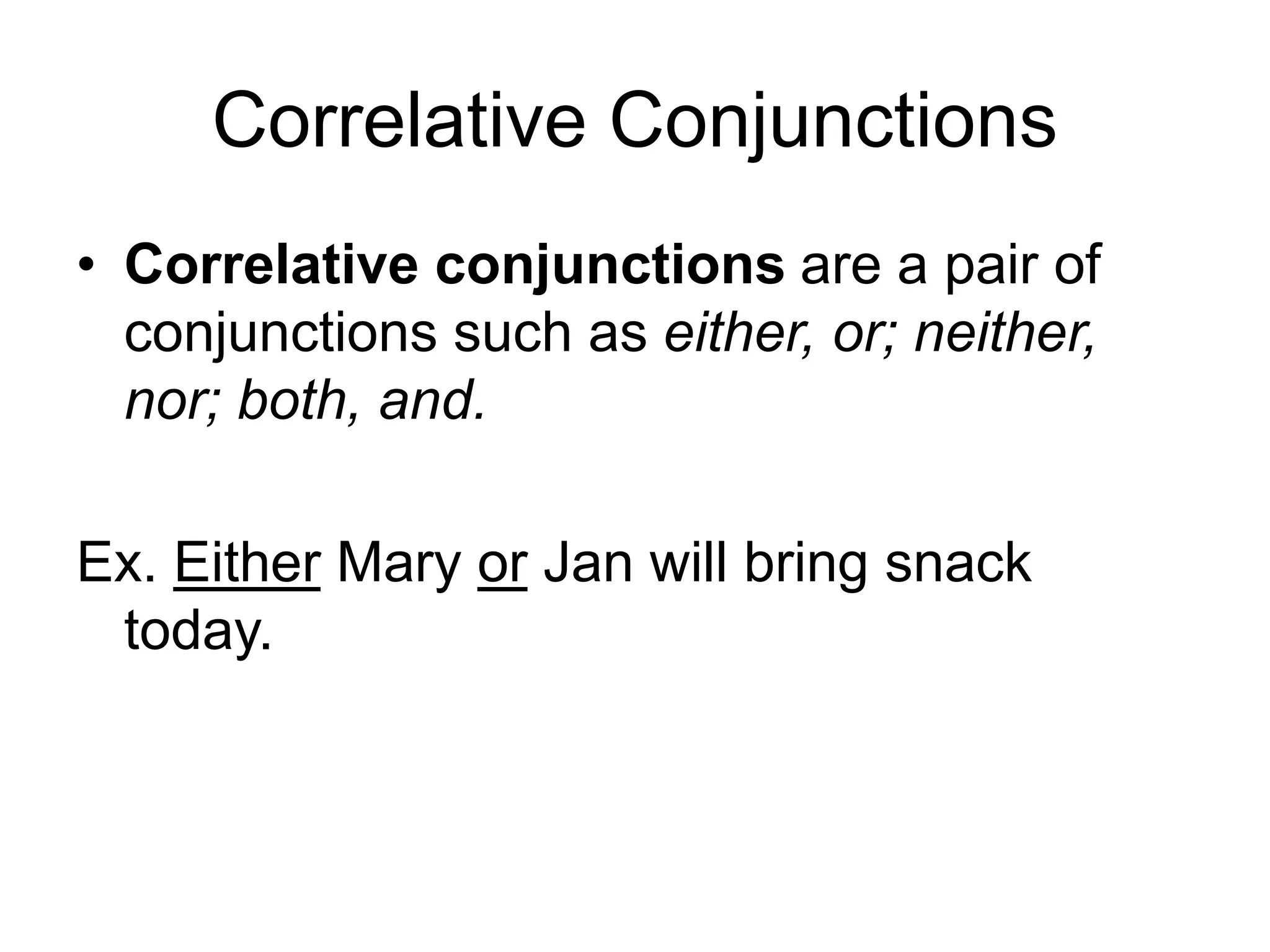
Correlative Conjunctions
• Correlative conjunctions are a pair of
conjunctions such as either, or; neither,
nor; both, and.
Ex. Either Mary or Jan will bring snack
today.
Subordinating Conjunctions
• Subordinating conjunctions join a
subordinate clause with a main clause.
• It comes at the beginning of the
subordinate clause.
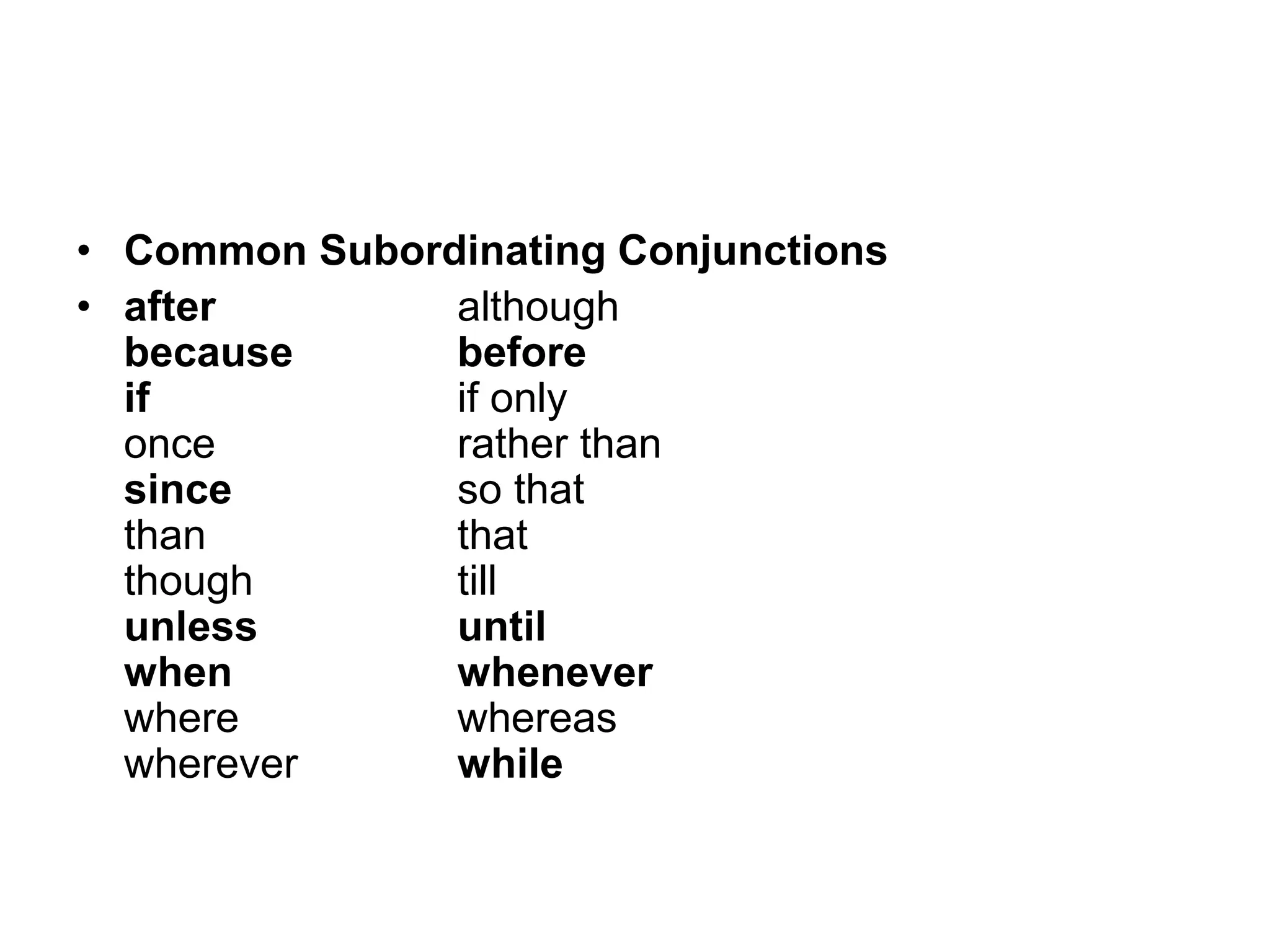
• Common Subordinating Conjunctions
• after although
because before
if if only
once rather than
since so that
than that
though till
unless until
when whenever
where whereas
wherever while
Interjections
• An interjection is a word or group of words that
expresses strong feeling.
• Common interjections:
Great
Oh
Oh, no
Wow
Well
Oops
Ouch
Yes
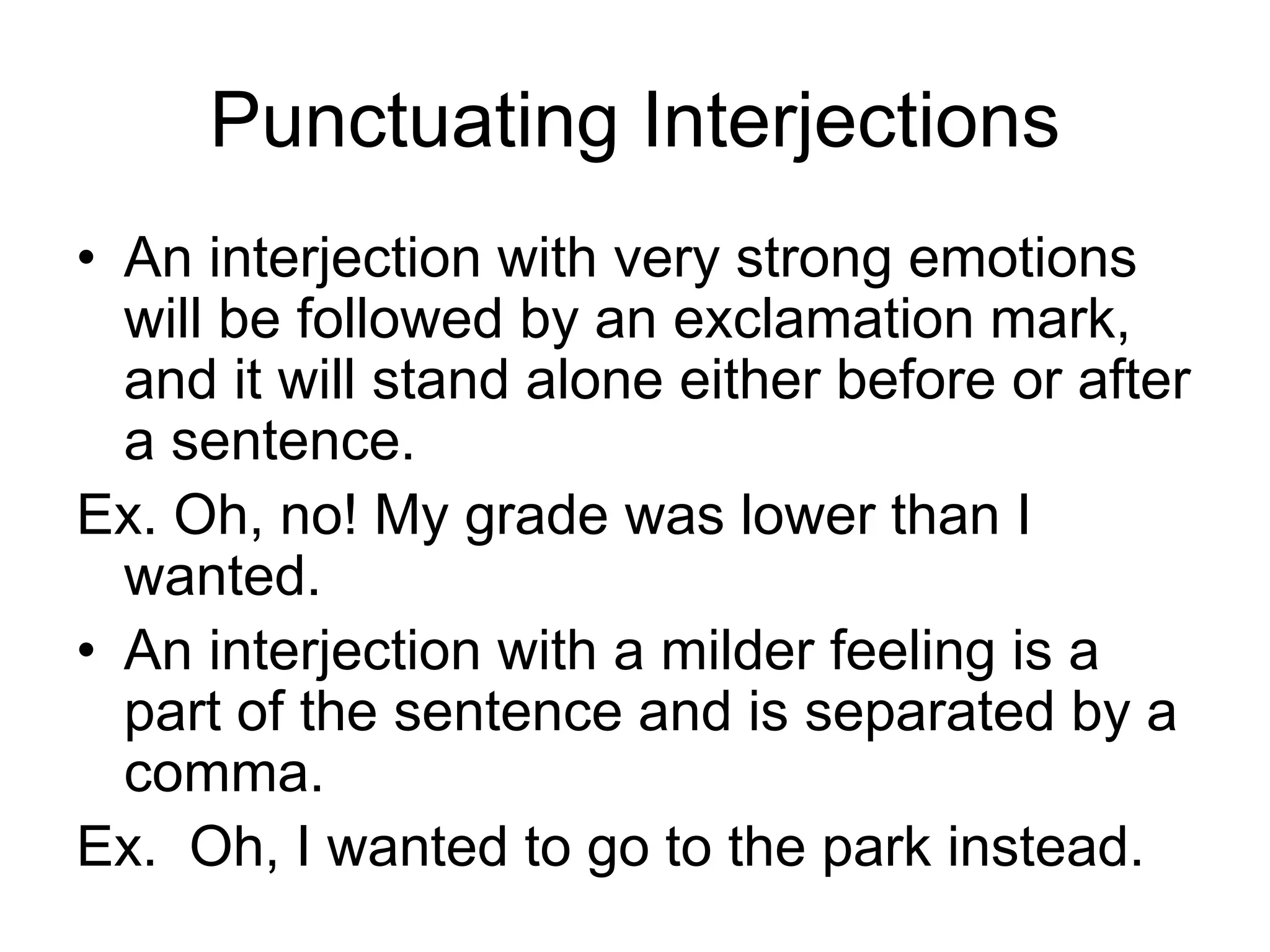
Punctuating Interjections
• An interjection with very strong emotions
will be followed by an exclamation mark,
and it will stand alone either before or after
a sentence.
Ex. Oh, no! My grade was lower than I
wanted.
• An interjection with a milder feeling is a
part of the sentence and is separated by a
comma.
Ex. Oh, I wanted to go to the park instead.

conjunctions_and_interjections.ppt eng 10

  • 1.
  • 2.
    What is aconjunction? • A conjunction is a word that joins words or groups of words in a sentence. • The most common conjunctions are and, but and or. • A comma should be placed before the conjunction in a compound sentence. • When a conjunction is used for a compound subject or a compound predicate, no comma is used.
  • 3.
    Coordinating Conjunctions • Acoordinating conjunction is the most common type of conjunction. • And and or are used to form compound subjects. • And, but and or are used to form compound predicates and compound sentences.
  • 4.
    What do theymean? • And is used to introduce an additional idea. Ex. My books and pencils fell on the floor. • But is used to introduce a contrasting idea. Ex. I would go to the movies, but I didn’t earn any allowance this week. • Or is used to introduce a choice or second possibility. Ex. You can play basketball or football next year.
  • 5.
    Correlative Conjunctions • Correlativeconjunctions are a pair of conjunctions such as either, or; neither, nor; both, and. Ex. Either Mary or Jan will bring snack today.
  • 6.
    Subordinating Conjunctions • Subordinatingconjunctions join a subordinate clause with a main clause. • It comes at the beginning of the subordinate clause.
  • 7.
    • Common SubordinatingConjunctions • after although because before if if only once rather than since so that than that though till unless until when whenever where whereas wherever while
  • 8.
    Interjections • An interjectionis a word or group of words that expresses strong feeling. • Common interjections: Great Oh Oh, no Wow Well Oops Ouch Yes
  • 9.
    Punctuating Interjections • Aninterjection with very strong emotions will be followed by an exclamation mark, and it will stand alone either before or after a sentence. Ex. Oh, no! My grade was lower than I wanted. • An interjection with a milder feeling is a part of the sentence and is separated by a comma. Ex. Oh, I wanted to go to the park instead.