The document discusses treatment options for congenitally missing maxillary lateral incisors, including canine substitution, single-tooth implants, and tooth-supported restorations. It provides details on the benefits and drawbacks of each approach. Space closure through canine substitution is presented as having the advantage of accomplishing treatment in one phase and producing permanent results independent of residual growth. However, achieving high esthetic standards requires restorative work on canines and premolars. A six-step clinical procedure is outlined to close spaces and perform restorations for an optimal esthetic outcome. Risks of biological complications with the implant approach over time are also noted.







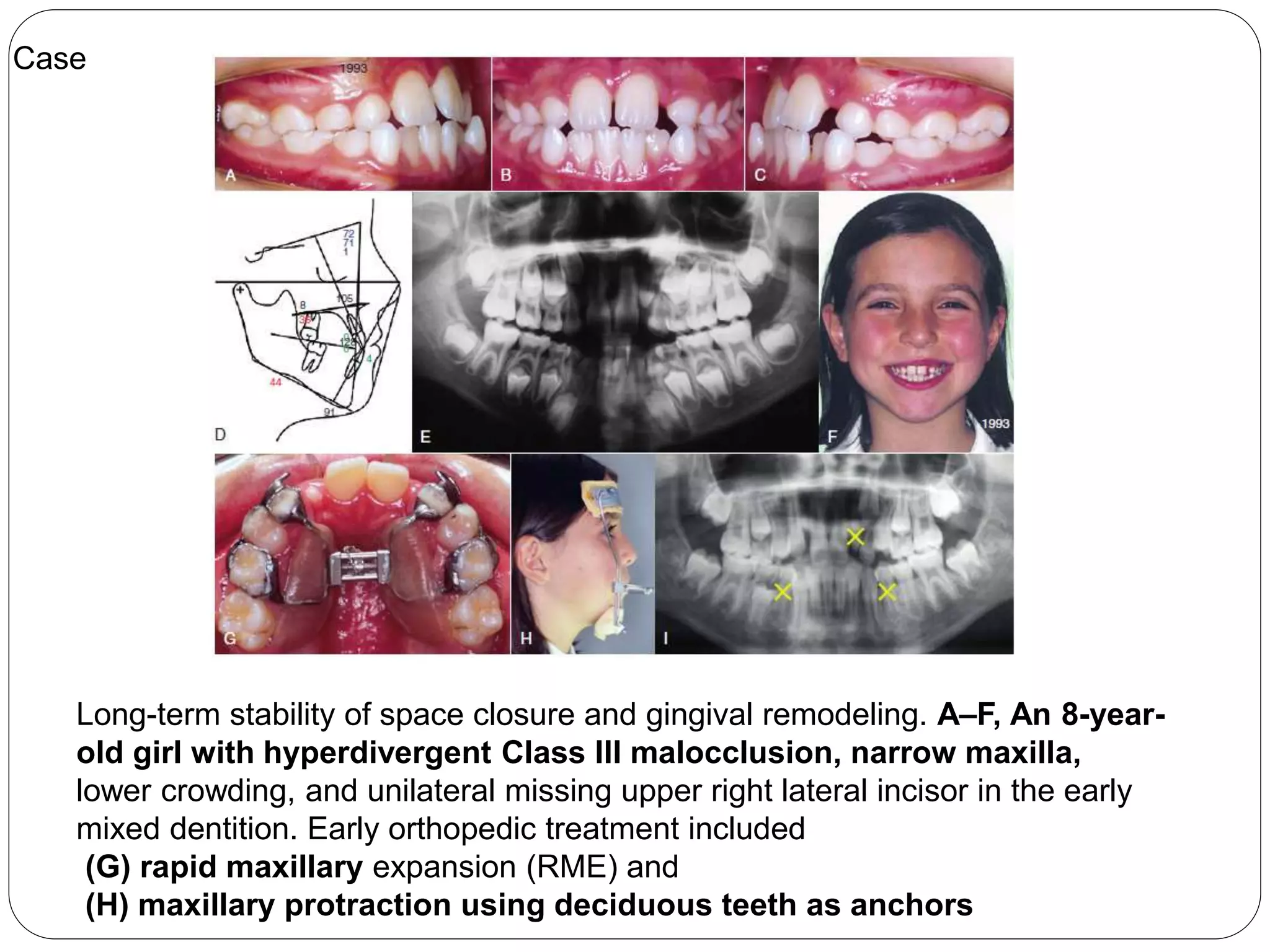


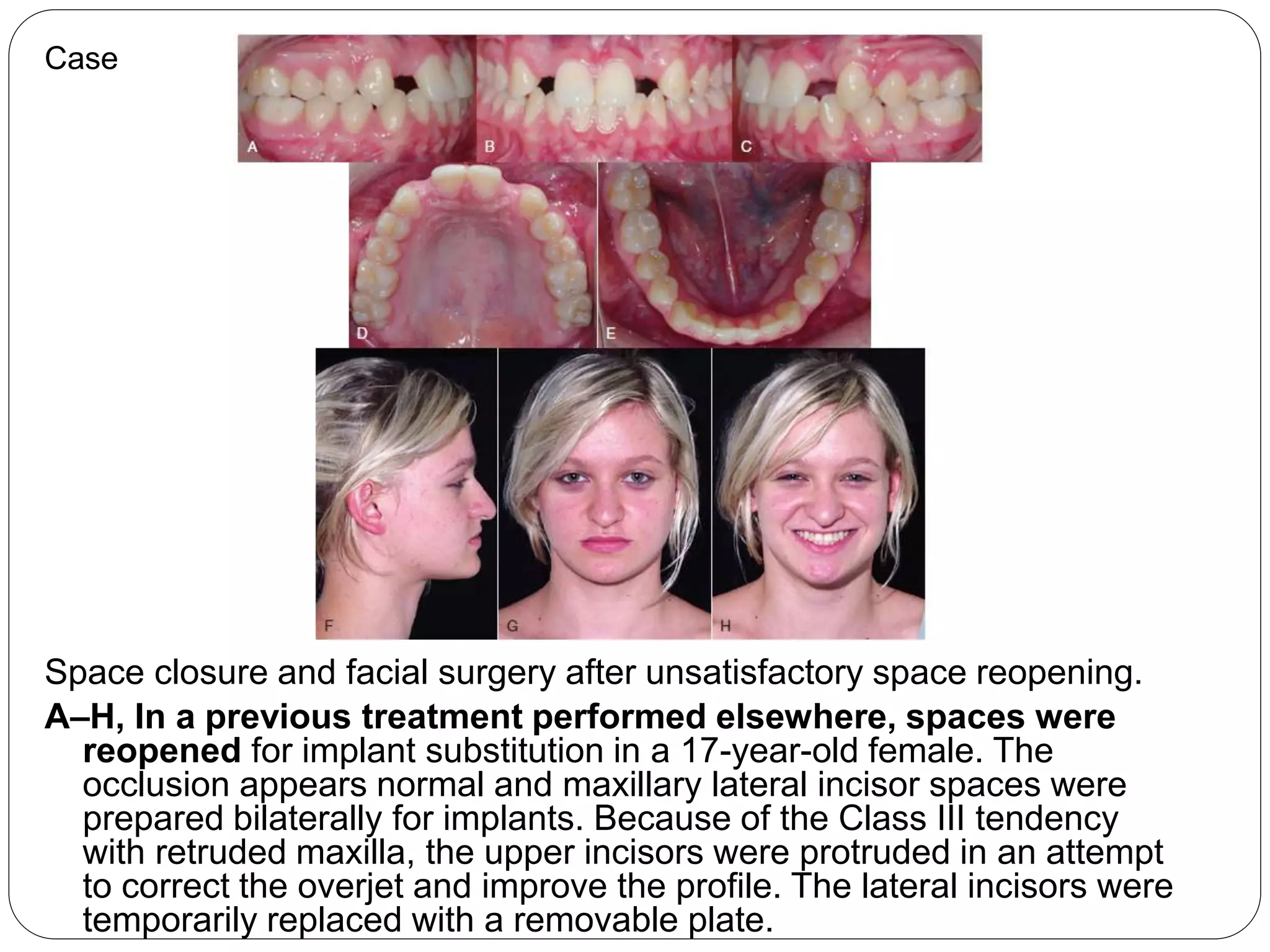


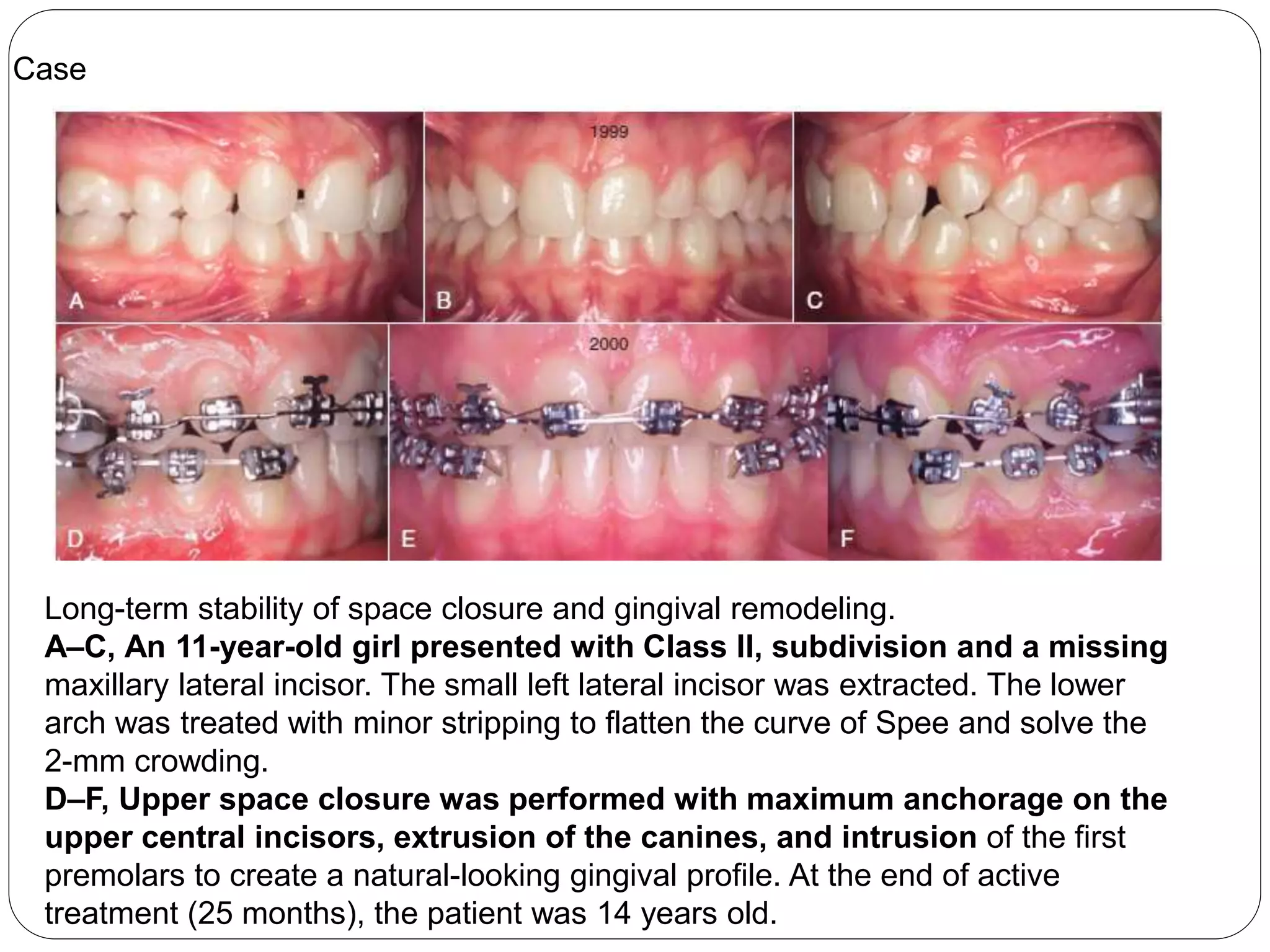
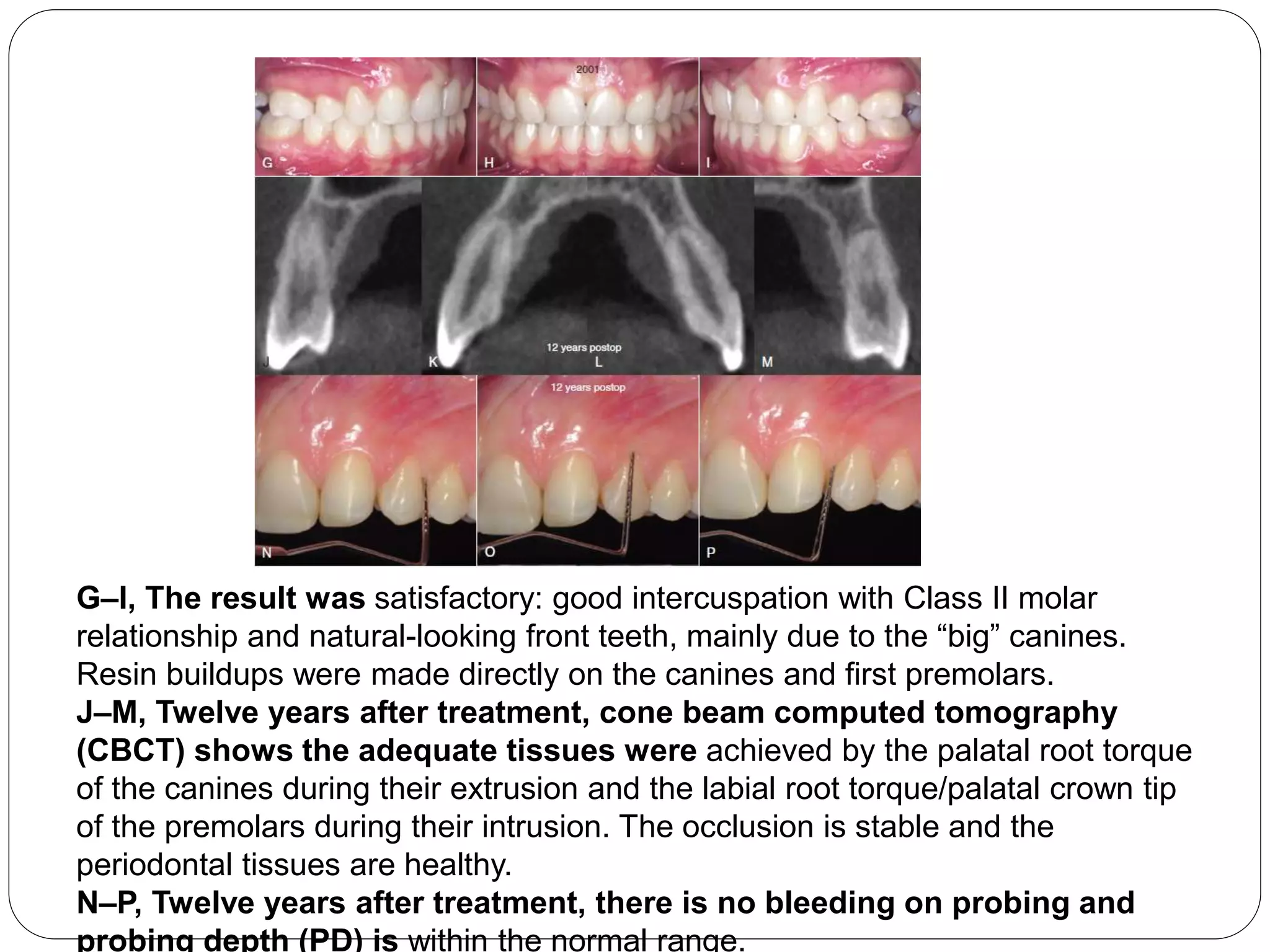


![Unilateral space closure.
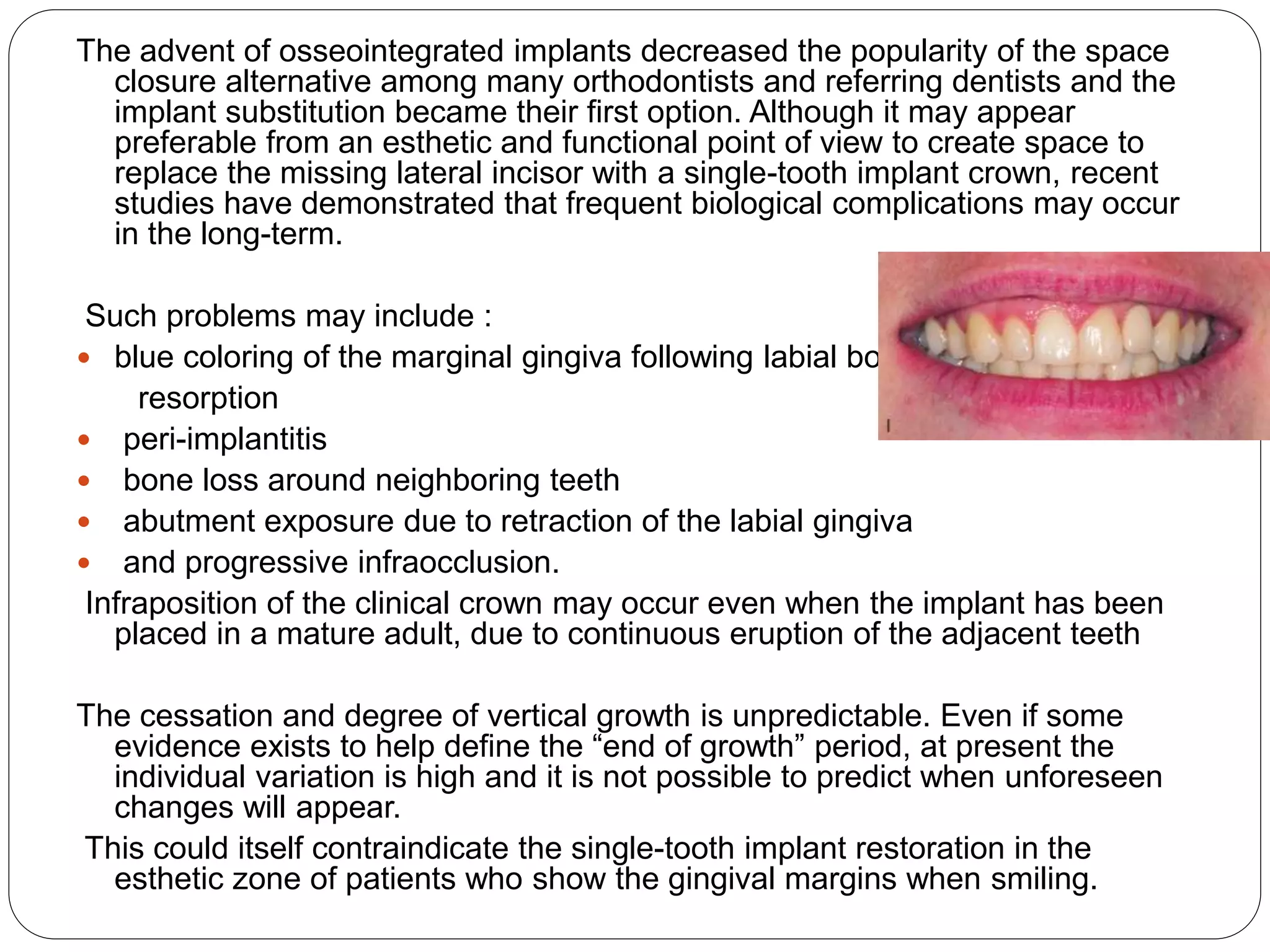
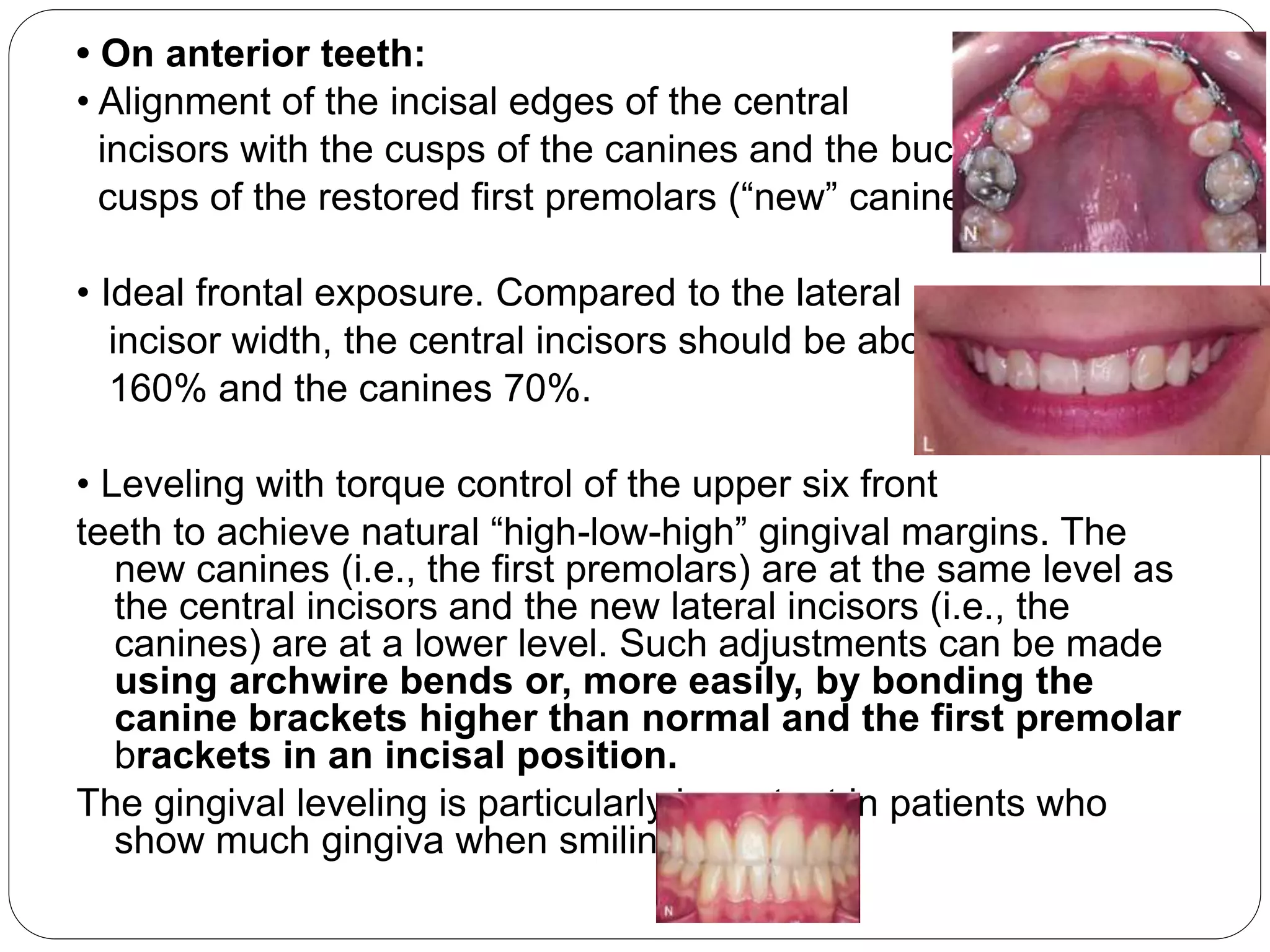
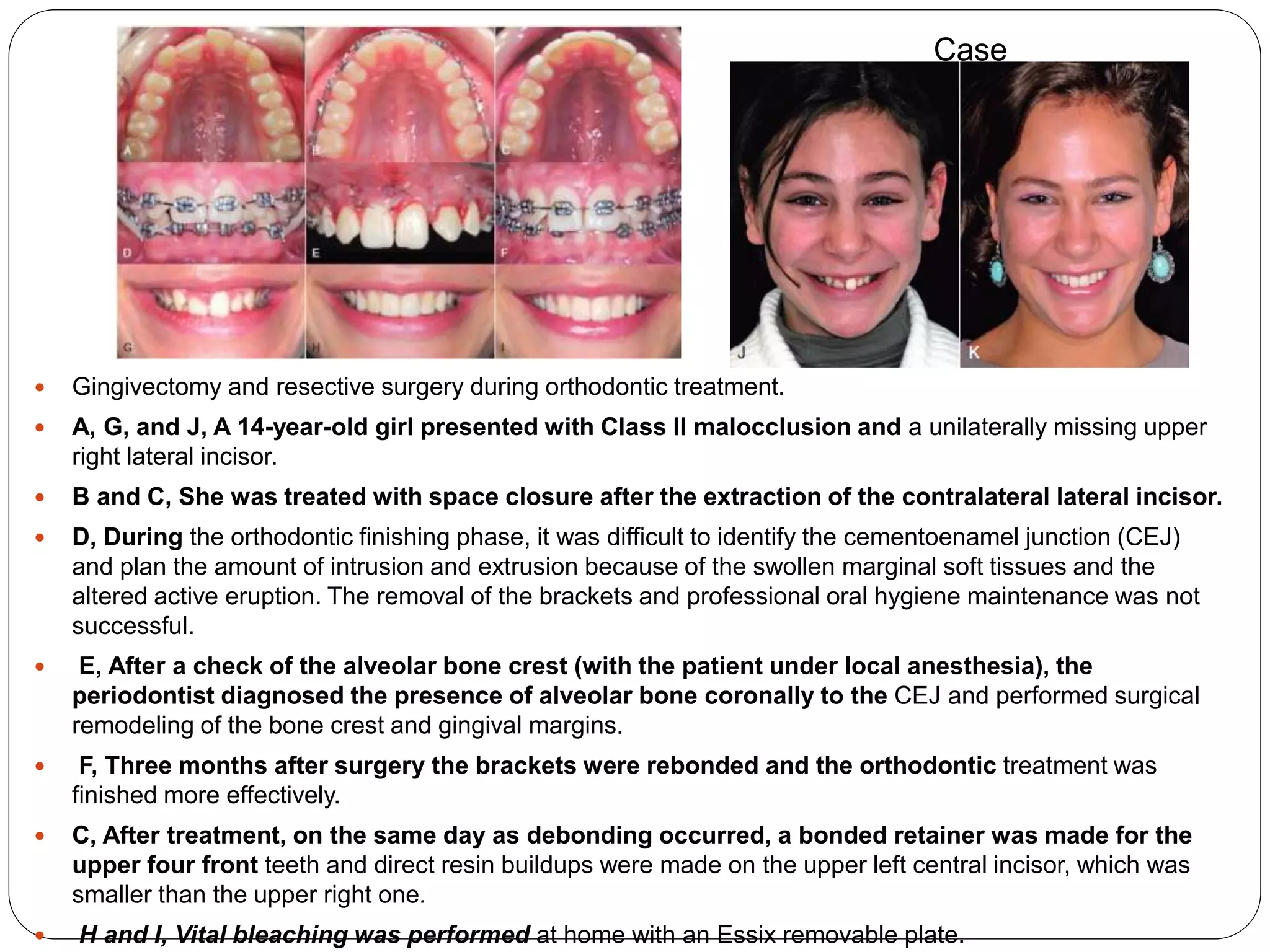
A–C, A 14-year-old girl presented with ideal conditions for unilateral space closure:
hypodivergent Class II subdivision(molar Class II only on the right side) with a solid
occlusion in the posterior segments and the upper midline deflected a few millimeters to
the right relative to the facial midline.
K, On smiling, the patient did not show the gingival margins. D–F, After orthodontic
treatment the occlusion was still Class II subdivision, a subdivision with coincident
midlines. The upper right canine was ground during orthodontic treatment. Composite
buildups were done on the upper right first premolar, canine, peg-shaped upper left
lateral incisor, and small central incisors.
L, Two years later the smile arc was correct, with incisal margins tangent to the lower
lip.
E, K, and L, The asymmetry of the gingival margins does not impair the overall smile
esthetics because of the low smile line. Lateral movements of the mandible are guided
by (H [blue mark] and J) a canine protected occlusion in the left side, while (G and I
Case](https://image.slidesharecdn.com/israamissingmaxillarylateralincisor-200601122548/75/congenital-missing-maxillary-lateral-incisor-s-53-2048.jpg)


