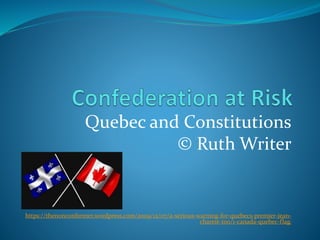
Quebec and Constitutions
© Ruth Writer
https://thenonconformer.wordpress.com/2009/12/07/a-serious-warning-for-quebecs-premier-jean-
charest-too/1-canada-quebec-flag/
One nation or two?
 Intense nationalism in Canada—1960s-1984
 Pearson & Trudeau—sweeping social welfare reform
 Care for every citizen—boasted of superior quality of life
 Medical coverage
 Welfare
 Pensions
 Unemployment
 Ideal of new Canadian state—balance of rights and stewardship
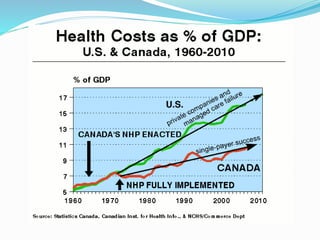
 Problems of debt and how to pay for social reform
 Quebec also nationalistic pride
 Parti Quebecois
 Goal of fundamental restructuring of relations with Canada
 French—language of government, work, education
 Intense discussions and divisions
 Referendum in 1980
https://en.wikipedia.org/wiki/File:1985_Parti_qu%C3%A9b%C3%A9cois_logo.gif.jpg
New National Identity
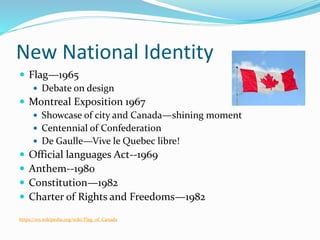
 Flag—1965
 Debate on design
 Montreal Exposition 1967
 Showcase of city and Canada—shining moment
 Centennial of Confederation
 De Gaulle—Vive le Quebec libre!
 Official languages Act--1969
 Anthem--1980
 Constitution—1982
 Charter of Rights and Freedoms—1982
https://en.wikipedia.org/wiki/Flag_of_Canada
Climate of social welfare reform
 Economic Council of Canada—1963—think tank
 Need for well trained, skilled workforce
 Need to address vertical mosaic
 Anglos at the top
 Haves vs. have not
 All Canadians need basic services
 Socialism?
 Provincial vs. National power
 How to pay for these reforms?
 Taxes increased
 Debt increased
Canadian Assistance Act of 1965
 Canadian government role of stewardship
 Responsibility for poor with national government
 Not provincial
 Not charitable organizations
 Welfare for needy
 Child care funds
 Training for unemployed
 Comprehensive medical care program
Medical Care Act--1972
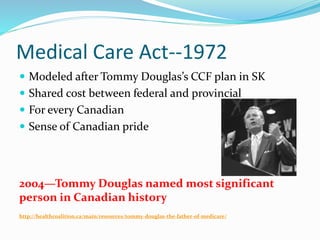
 Modeled after Tommy Douglas’s CCF plan in SK
 Shared cost between federal and provincial
 For every Canadian
 Sense of Canadian pride
2004—Tommy Douglas named most significant
person in Canadian history
http://healthcoalition.ca/main/resources/tommy-douglas-the-father-of-medicare/
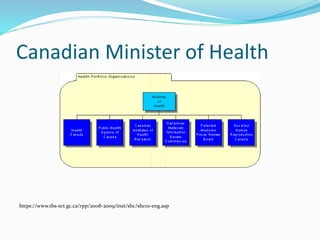
Canadian Minister of Health
https://www.tbs-sct.gc.ca/rpp/2008-2009/inst/shc/shc01-eng.asp
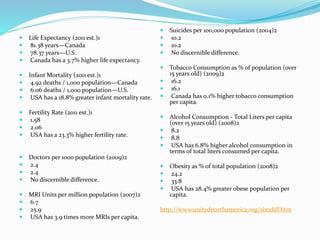
 Life Expectancy (2011 est.)1
 81.38 years—Canada
 78.37 years—U.S.
 Canada has a 3.7% higher life expectancy.
 Infant Mortality (2011 est.)1
 4.92 deaths / 1,000 population—Canada
 6.06 deaths / 1,000 population—U.S.
 USA has a 18.8% greater infant mortality rate.
 Fertility Rate (2011 est.)1
 1.58
 2.06
 USA has a 23.3% higher fertility rate.
 Doctors per 1000 population (2009)2
 2.4
 2.4
 No discernible difference.
 MRI Units per million population (2007)2
 6.7
 25.9
 USA has 3.9 times more MRIs per capita.
 Suicides per 100,000 population (2004)2
 10.2
 10.2
 No discernible difference.
 Tobacco Consumption as % of population (over
15 years old) (2009)2
 16.2
 16.1
 Canada has 0.1% higher tobacco consumption
per capita.
 Alcohol Consumption - Total Liters per capita
(over 15 years old) (2008)2
 8.2
 8.8
 USA has 6.8% higher alcohol consumption in
terms of total liters consumed per capita.
 Obesity as % of total population (2008)2
 24.2
 33.8
 USA has 28.4% greater obese population per
capita.
http://www.unitednorthamerica.org/simdiff.htm
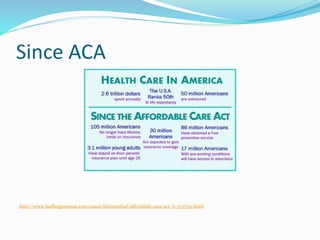
Since ACA
http://www.huffingtonpost.com/susan-blumenthal/affordable-care-act_b_1737731.html
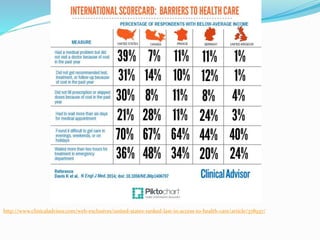
http://www.clinicaladvisor.com/web-exclusives/united-states-ranked-last-in-access-to-health-care/article/378937/
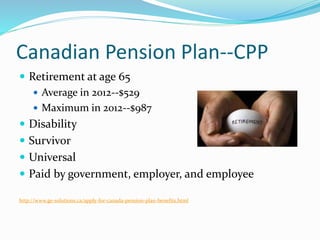
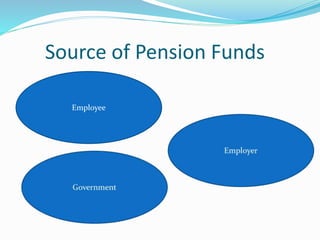
Canadian Pension Plan--CPP
 Retirement at age 65
 Average in 2012--$529
 Maximum in 2012--$987
 Disability
 Survivor
 Universal
 Paid by government, employer, and employee
http://www.ge-solutions.ca/apply-for-canada-pension-plan-benefits.html
Source of Pension Funds
Employee
Additional plans and issues
 Student loans
 Unemployment insurance
 Low income housing
 Limit on capital punishment
 Labor laws more liberal—civil servants could strike
 Immigration laws replaced by point system
 Education
 Work experience
 Financial resources
 Royal Commission on Status of Women—1967
 Family issues
 Employment issues
 Educational issues
Royal Commission on
Bilingualism and Biculturalism
 Study the history of language rights in Canada
 Result: Official Languages Act—1969
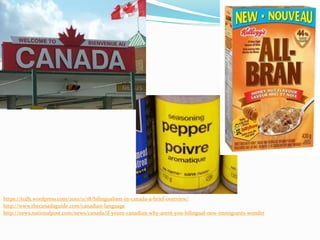
 Federal services in both English and French
 Civil servants required to be competent in both
 Consumer product labels in both
 Advertising bilingual
 Seen as tolerance example
 Language immersion programs
 Costs involved
 Implementation
 Printing
 Fielding bilingual staff across Canada
http://www.viaevolution.ca/2012/09/13/bilingualism-a-source-of-pride-and-commitment-at-via-rail/
https://tcdh.wordpress.com/2010/11/18/bilingualism-in-canada-a-brief-overview/
http://www.thecanadaguide.com/canadian-language
http://news.nationalpost.com/news/canada/if-youre-canadian-why-arent-you-bilingual-new-immigrants-wonder
Quiet Revolution = Big Change
 Began with the Conquest in 1760
 Struggle to maintain cultural identity
 Preserve language
 Protect civil laws
 La survivance
 Agrarian past
 Devotion to Catholic church
 Defend language rights
 After 1867—English domination of Canada
1840-1950s
 Jobs and opportunities changing>Quebec altered state
 Textile mills>New England exodus
 Depression
 World War II ended exodus
 Asbestos strike--1949
 Quebec became more urban, industrial
 Role of media—primarily English
 Baby boom
 Immigrants—non-Francophone population arrives
 Emigration of Quebecois—1,000,000 to U.S.
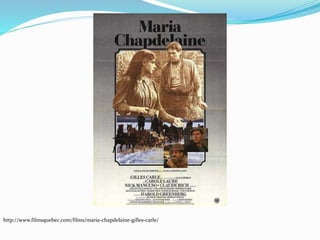
 Marie Chapdelaine—Required reading in Quebec for years
 Cherished memories of past
 Will to survive in spite of English goals
 Political power—Maurice Duplessis—Union Nationale
http://www.filmsquebec.com/films/maria-chapdelaine-gilles-carle/
1960s
 Climate of French-Canadian nationalism—Duplessis until 1960
 Opposition by Trudeau
 Jean Lesage and Liberals in power until 1966—Quiet Revolution
 Union Nationale in power until 1970
 Failed to address economic and social pressures in QC
 Official bilingualism of 1969 did not appease
 Stage for contest between
 Trudeau’s federalism
 Quebecois sense of distinct society and pride
 Riots on Saint-Jean Baptiste Day [June 24]
 Students
 Strikers
 Anglophone vs. Francophone
 Liberals again in power in 1970—Robert Bourassa
https://en.wikipedia.org/wiki/Vehicle_registration_plates_of_Canada
La revolution tranquille
 Redefined French Canadian survival
 Intellectually
 Emotional discussion
 Demographic, economic, cultural and political change
 From conservative, agrarian society
 Role of church
 Pessimistic society
 To modern, progressive, proactive society
 Lesage guide to revolution
 “Masters of our own house”
 Protected French Canadian rights
 Calling selves—Quebecois
Key points of Change
 Hydro-Quebec—developed economically independent of Canada
 Provincial monopoly
 Natural Resources Minister—Rene Levesque
 French language became business language
https://commons.wikimedia.org/wiki/File:Hydro-Qu%C3%A9bec_logo_(1944).gif
 Educational reform from grade school to university
 Separation of church and state
 Government Minister of Education
 More inclusive higher ed.—vocational and technical
 Church impact eroded—more science
 Non-church dominated society
 Criticized by Pope John Paul II
 Birth rate down to 1.4 children per family during Quiet Revolution
 Career
 Concern with self
 Desire to modernize
Trudeaumania
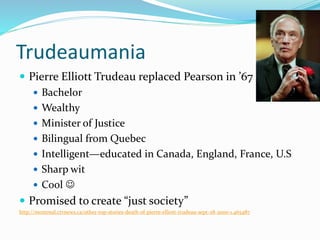
 Pierre Elliott Trudeau replaced Pearson in ’67
 Bachelor
 Wealthy
 Minister of Justice
 Bilingual from Quebec
 Intelligent—educated in Canada, England, France, U.S
 Sharp wit
 Cool 
 Promised to create “just society”
http://montreal.ctvnews.ca/other-top-stories-death-of-pierre-elliott-trudeau-sept-28-2000-1.465487
Quiet Revolution no longer Quiet
 Question of QC Sovereignty
 FLQ—Front de liberation du Quebec—’63
 Goal: INDEPENDENT QUEBEC
 Militants
 Campaign of harassment
 Focus against federal government and Anglos in QC
 Leader—wrote Negres blancs d’Amerique
 Bombings in Westmount
 Montreal Stock Exchange
 Mailboxes
 Injuries
http://www.canadiansoldiers.com/history/domesticmissions/flqcrisis.htm
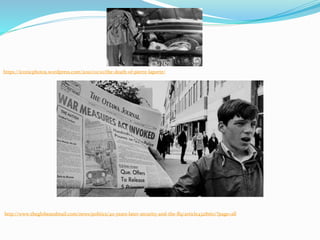
October Crisis--1970
 Kidnapped British Trade Minister—James Cross
 Release based on reading of FLQ Manifesto on radio
 Released in December
 Kidnapped QC Minister of Labor—Pierre Laporte
 By another cell of FLQ
 Body found in trunk of car—assassination rare in Canada
 Bourassa sought federal military support
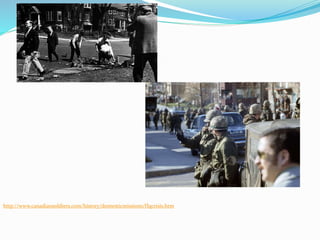
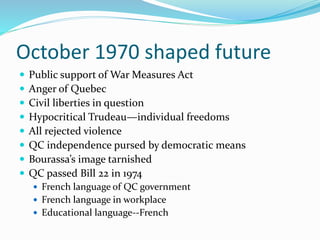
 War Measures Act invoked by Trudeau
 Sent thousands of soldiers to Montreal and Quebec City
 Looked like U.S. riots of 60s
 FLQ arrests or escaped to Cuba
https://iconicphotos.wordpress.com/2010/01/10/the-death-of-pierre-laporte/
http://www.theglobeandmail.com/news/politics/40-years-later-security-and-the-flq/article4328160/?page=all
October 1970 shaped future
 Public support of War Measures Act
 Anger of Quebec
 Civil liberties in question
 Hypocritical Trudeau—individual freedoms
 All rejected violence
 QC independence pursed by democratic means
 Bourassa’s image tarnished
 QC passed Bill 22 in 1974
 French language of QC government
 French language in workplace
 Educational language--French
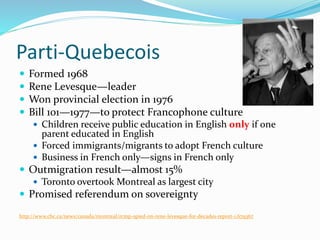
Parti-Quebecois
 Formed 1968
 Rene Levesque—leader
 Won provincial election in 1976
 Bill 101—1977—to protect Francophone culture
 Children receive public education in English only if one
parent educated in English
 Forced immigrants/migrants to adopt French culture
 Business in French only—signs in French only
 Outmigration result—almost 15%
 Toronto overtook Montreal as largest city
 Promised referendum on sovereignty
http://www.cbc.ca/news/canada/montreal/rcmp-spied-on-rene-levesque-for-decades-report-1.679367
Federal Election 1979
 Trudeau and Liberals in trouble
 Economic problems—inflation
 Social issues
 Medical programs
 Rising oil prices
 Trudeau’s personal and political life
 Progressive Conservatives won—Joe Clark
 Rising unknown
 Privatized Petro-Canada
 Lack of experience in foreign affairs—Israel
 Out after 9 months
Quebec Referendum of 1980
 Sovereignty—NOT independence
 Redesigned relationship
 QC control over taxes, laws, foreign affairs
 Retain—currency, free trade, defense, open borders
 Liberals suggested compromises
 New constitution
 Alter Senate
 Improve relations with provinces
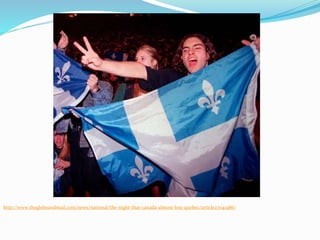
http://www.theglobeandmail.com/news/national/the-night-that-canada-almost-lost-quebec/article27041986/
May 1980—Oui/Non
 Permission to enter discussion regarding relationship
 Not true vote on separation
 Still QC would have to vote on approval
 Non—60%
 Oui—40%--much of this was youth vote
 Disappointment within Parti Quebecois
 Levesque won again in 1981
Constitutional Debate
 1867—BNA—remained statute of British Parliament
 Continuous conferences
 Balance of power—key issue
 Amendment formula—all provinces had to agree
 Language issue
 Supreme Court reform
 How to patriate constitution?
 November 1981—9-1 agreed
 Levesque anger over denial of unique QC status
 Refused to sign
 Women and First Nations also disappointed
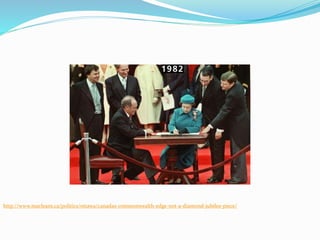
Constitution Act 1982
 Passed in March by Britain
 115 years after Canada formed
 Finally own constitution
 Foundation BNA Act and amendments
 Charter of Rights and Freedoms added
 Notwithstanding clause—legally opt out of federal law
 Still opposed by QC, women, First Nations
 Formal signing in April
 Queen Elizabeth
 Trudeau—left in 1984 [died 2000]
http://www.macleans.ca/politics/ottawa/canadas-commonwealth-edge-not-a-diamond-jubilee-piece/
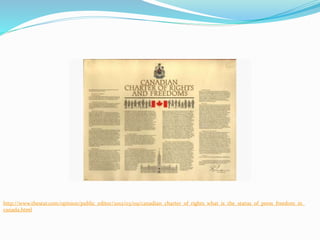
Charter of Rights and Freedoms
 Most important legacy of Trudeau
 Similar to Bill of Rights
 More exact
http://www.thestar.com/opinion/public_editor/2012/03/09/canadian_charter_of_rights_what_is_the_status_of_press_freedom_in_
canada.html
Guaranteed the following:
 Life, liberty, security
 Free thought, belief, opinion, expression
 Freedom of press and communication
 Freedom of peaceful assembly and association
 Mobility rights and right to gain livelihood
 Legal rights—search and seizure, counsel, trials, punishment
 Religious freedom and freedom of conscience
 Language rights and Minority language educational rights
 No discrimination—race, nationality, ethnicity, color, religion,
sex, ager, mental or physical disability
 Equality--political
 Aboriginal rights
 Multicultural heritage preserved and enhanced
BTW
 Canada Day—July 1
 In Montreal—July 1 is Moving Day
 Mass chaos the result
 WHY???
More referendums to follow?
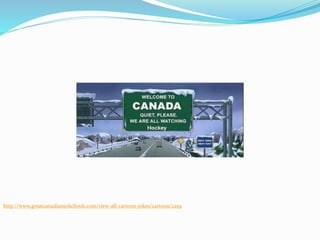
http://www.greatcanadianjokebook.com/view-all-cartoon-jokes/cartoon/2219
Resources
 Anonymous. The October Crisis http://histori.ca/peace/page.do?pageID=342
 Anonymous. The Patriation of the Constitution
 http://histori.ca/peace/page.do?pageID=258
 Anonymous. The Meech Lake Accord http://histori.ca/peace/page.do?pageID=260
 Bumstead, J. M.. The Peoples of Canada: A Post Confederation History. Don Mills,
Ontario: Oxford University Press, 2008. Pages 401-423 and 542-564.
 http://www.canadiansoldiers.com/history/domesticmissions/flqcrisis.htm
 Charter of Rights and Freedoms. http://laws-lois.justice.gc.ca/eng/const/page-15.html

Confederation at Risk

  • 1.
    Quebec and Constitutions ©Ruth Writer https://thenonconformer.wordpress.com/2009/12/07/a-serious-warning-for-quebecs-premier-jean- charest-too/1-canada-quebec-flag/
  • 2.
    One nation ortwo?  Intense nationalism in Canada—1960s-1984  Pearson & Trudeau—sweeping social welfare reform  Care for every citizen—boasted of superior quality of life  Medical coverage  Welfare  Pensions  Unemployment  Ideal of new Canadian state—balance of rights and stewardship  Problems of debt and how to pay for social reform  Quebec also nationalistic pride  Parti Quebecois  Goal of fundamental restructuring of relations with Canada  French—language of government, work, education  Intense discussions and divisions  Referendum in 1980 https://en.wikipedia.org/wiki/File:1985_Parti_qu%C3%A9b%C3%A9cois_logo.gif.jpg
  • 3.
    New National Identity Flag—1965  Debate on design  Montreal Exposition 1967  Showcase of city and Canada—shining moment  Centennial of Confederation  De Gaulle—Vive le Quebec libre!  Official languages Act--1969  Anthem--1980  Constitution—1982  Charter of Rights and Freedoms—1982 https://en.wikipedia.org/wiki/Flag_of_Canada
  • 4.
    Climate of socialwelfare reform  Economic Council of Canada—1963—think tank  Need for well trained, skilled workforce  Need to address vertical mosaic  Anglos at the top  Haves vs. have not  All Canadians need basic services  Socialism?  Provincial vs. National power  How to pay for these reforms?  Taxes increased  Debt increased
  • 5.
    Canadian Assistance Actof 1965  Canadian government role of stewardship  Responsibility for poor with national government  Not provincial  Not charitable organizations  Welfare for needy  Child care funds  Training for unemployed  Comprehensive medical care program
  • 6.
    Medical Care Act--1972 Modeled after Tommy Douglas’s CCF plan in SK  Shared cost between federal and provincial  For every Canadian  Sense of Canadian pride 2004—Tommy Douglas named most significant person in Canadian history http://healthcoalition.ca/main/resources/tommy-douglas-the-father-of-medicare/
  • 7.
    Canadian Minister ofHealth https://www.tbs-sct.gc.ca/rpp/2008-2009/inst/shc/shc01-eng.asp
  • 9.
     Life Expectancy(2011 est.)1  81.38 years—Canada  78.37 years—U.S.  Canada has a 3.7% higher life expectancy.  Infant Mortality (2011 est.)1  4.92 deaths / 1,000 population—Canada  6.06 deaths / 1,000 population—U.S.  USA has a 18.8% greater infant mortality rate.  Fertility Rate (2011 est.)1  1.58  2.06  USA has a 23.3% higher fertility rate.  Doctors per 1000 population (2009)2  2.4  2.4  No discernible difference.  MRI Units per million population (2007)2  6.7  25.9  USA has 3.9 times more MRIs per capita.  Suicides per 100,000 population (2004)2  10.2  10.2  No discernible difference.  Tobacco Consumption as % of population (over 15 years old) (2009)2  16.2  16.1  Canada has 0.1% higher tobacco consumption per capita.  Alcohol Consumption - Total Liters per capita (over 15 years old) (2008)2  8.2  8.8  USA has 6.8% higher alcohol consumption in terms of total liters consumed per capita.  Obesity as % of total population (2008)2  24.2  33.8  USA has 28.4% greater obese population per capita. http://www.unitednorthamerica.org/simdiff.htm
  • 10.
  • 11.
  • 12.
    Canadian Pension Plan--CPP Retirement at age 65  Average in 2012--$529  Maximum in 2012--$987  Disability  Survivor  Universal  Paid by government, employer, and employee http://www.ge-solutions.ca/apply-for-canada-pension-plan-benefits.html
  • 13.
    Source of PensionFunds Employee
  • 14.
    Additional plans andissues  Student loans  Unemployment insurance  Low income housing  Limit on capital punishment  Labor laws more liberal—civil servants could strike  Immigration laws replaced by point system  Education  Work experience  Financial resources  Royal Commission on Status of Women—1967  Family issues  Employment issues  Educational issues
  • 15.
    Royal Commission on Bilingualismand Biculturalism  Study the history of language rights in Canada  Result: Official Languages Act—1969  Federal services in both English and French  Civil servants required to be competent in both  Consumer product labels in both  Advertising bilingual  Seen as tolerance example  Language immersion programs  Costs involved  Implementation  Printing  Fielding bilingual staff across Canada http://www.viaevolution.ca/2012/09/13/bilingualism-a-source-of-pride-and-commitment-at-via-rail/
  • 16.
  • 17.
    Quiet Revolution =Big Change  Began with the Conquest in 1760  Struggle to maintain cultural identity  Preserve language  Protect civil laws  La survivance  Agrarian past  Devotion to Catholic church  Defend language rights  After 1867—English domination of Canada
  • 18.
    1840-1950s  Jobs andopportunities changing>Quebec altered state  Textile mills>New England exodus  Depression  World War II ended exodus  Asbestos strike--1949  Quebec became more urban, industrial  Role of media—primarily English  Baby boom  Immigrants—non-Francophone population arrives  Emigration of Quebecois—1,000,000 to U.S.  Marie Chapdelaine—Required reading in Quebec for years  Cherished memories of past  Will to survive in spite of English goals  Political power—Maurice Duplessis—Union Nationale
  • 19.
  • 20.
    1960s  Climate ofFrench-Canadian nationalism—Duplessis until 1960  Opposition by Trudeau  Jean Lesage and Liberals in power until 1966—Quiet Revolution  Union Nationale in power until 1970  Failed to address economic and social pressures in QC  Official bilingualism of 1969 did not appease  Stage for contest between  Trudeau’s federalism  Quebecois sense of distinct society and pride  Riots on Saint-Jean Baptiste Day [June 24]  Students  Strikers  Anglophone vs. Francophone  Liberals again in power in 1970—Robert Bourassa https://en.wikipedia.org/wiki/Vehicle_registration_plates_of_Canada
  • 21.
    La revolution tranquille Redefined French Canadian survival  Intellectually  Emotional discussion  Demographic, economic, cultural and political change  From conservative, agrarian society  Role of church  Pessimistic society  To modern, progressive, proactive society  Lesage guide to revolution  “Masters of our own house”  Protected French Canadian rights  Calling selves—Quebecois
  • 22.
    Key points ofChange  Hydro-Quebec—developed economically independent of Canada  Provincial monopoly  Natural Resources Minister—Rene Levesque  French language became business language https://commons.wikimedia.org/wiki/File:Hydro-Qu%C3%A9bec_logo_(1944).gif  Educational reform from grade school to university  Separation of church and state  Government Minister of Education  More inclusive higher ed.—vocational and technical  Church impact eroded—more science  Non-church dominated society  Criticized by Pope John Paul II  Birth rate down to 1.4 children per family during Quiet Revolution  Career  Concern with self  Desire to modernize
  • 23.
    Trudeaumania  Pierre ElliottTrudeau replaced Pearson in ’67  Bachelor  Wealthy  Minister of Justice  Bilingual from Quebec  Intelligent—educated in Canada, England, France, U.S  Sharp wit  Cool   Promised to create “just society” http://montreal.ctvnews.ca/other-top-stories-death-of-pierre-elliott-trudeau-sept-28-2000-1.465487
  • 24.
    Quiet Revolution nolonger Quiet  Question of QC Sovereignty  FLQ—Front de liberation du Quebec—’63  Goal: INDEPENDENT QUEBEC  Militants  Campaign of harassment  Focus against federal government and Anglos in QC  Leader—wrote Negres blancs d’Amerique  Bombings in Westmount  Montreal Stock Exchange  Mailboxes  Injuries
  • 25.
  • 26.
    October Crisis--1970  KidnappedBritish Trade Minister—James Cross  Release based on reading of FLQ Manifesto on radio  Released in December  Kidnapped QC Minister of Labor—Pierre Laporte  By another cell of FLQ  Body found in trunk of car—assassination rare in Canada  Bourassa sought federal military support  War Measures Act invoked by Trudeau  Sent thousands of soldiers to Montreal and Quebec City  Looked like U.S. riots of 60s  FLQ arrests or escaped to Cuba
  • 27.
  • 28.
    October 1970 shapedfuture  Public support of War Measures Act  Anger of Quebec  Civil liberties in question  Hypocritical Trudeau—individual freedoms  All rejected violence  QC independence pursed by democratic means  Bourassa’s image tarnished  QC passed Bill 22 in 1974  French language of QC government  French language in workplace  Educational language--French
  • 29.
    Parti-Quebecois  Formed 1968 Rene Levesque—leader  Won provincial election in 1976  Bill 101—1977—to protect Francophone culture  Children receive public education in English only if one parent educated in English  Forced immigrants/migrants to adopt French culture  Business in French only—signs in French only  Outmigration result—almost 15%  Toronto overtook Montreal as largest city  Promised referendum on sovereignty http://www.cbc.ca/news/canada/montreal/rcmp-spied-on-rene-levesque-for-decades-report-1.679367
  • 30.
    Federal Election 1979 Trudeau and Liberals in trouble  Economic problems—inflation  Social issues  Medical programs  Rising oil prices  Trudeau’s personal and political life  Progressive Conservatives won—Joe Clark  Rising unknown  Privatized Petro-Canada  Lack of experience in foreign affairs—Israel  Out after 9 months
  • 31.
    Quebec Referendum of1980  Sovereignty—NOT independence  Redesigned relationship  QC control over taxes, laws, foreign affairs  Retain—currency, free trade, defense, open borders  Liberals suggested compromises  New constitution  Alter Senate  Improve relations with provinces
  • 32.
  • 33.
    May 1980—Oui/Non  Permissionto enter discussion regarding relationship  Not true vote on separation  Still QC would have to vote on approval  Non—60%  Oui—40%--much of this was youth vote  Disappointment within Parti Quebecois  Levesque won again in 1981
  • 34.
    Constitutional Debate  1867—BNA—remainedstatute of British Parliament  Continuous conferences  Balance of power—key issue  Amendment formula—all provinces had to agree  Language issue  Supreme Court reform  How to patriate constitution?  November 1981—9-1 agreed  Levesque anger over denial of unique QC status  Refused to sign  Women and First Nations also disappointed
  • 35.
    Constitution Act 1982 Passed in March by Britain  115 years after Canada formed  Finally own constitution  Foundation BNA Act and amendments  Charter of Rights and Freedoms added  Notwithstanding clause—legally opt out of federal law  Still opposed by QC, women, First Nations  Formal signing in April  Queen Elizabeth  Trudeau—left in 1984 [died 2000]
  • 36.
  • 37.
    Charter of Rightsand Freedoms  Most important legacy of Trudeau  Similar to Bill of Rights  More exact
  • 38.
  • 39.
    Guaranteed the following: Life, liberty, security  Free thought, belief, opinion, expression  Freedom of press and communication  Freedom of peaceful assembly and association  Mobility rights and right to gain livelihood  Legal rights—search and seizure, counsel, trials, punishment  Religious freedom and freedom of conscience  Language rights and Minority language educational rights  No discrimination—race, nationality, ethnicity, color, religion, sex, ager, mental or physical disability  Equality--political  Aboriginal rights  Multicultural heritage preserved and enhanced
  • 40.
    BTW  Canada Day—July1  In Montreal—July 1 is Moving Day  Mass chaos the result  WHY???
  • 41.
  • 42.
  • 43.
    Resources  Anonymous. TheOctober Crisis http://histori.ca/peace/page.do?pageID=342  Anonymous. The Patriation of the Constitution  http://histori.ca/peace/page.do?pageID=258  Anonymous. The Meech Lake Accord http://histori.ca/peace/page.do?pageID=260  Bumstead, J. M.. The Peoples of Canada: A Post Confederation History. Don Mills, Ontario: Oxford University Press, 2008. Pages 401-423 and 542-564.  http://www.canadiansoldiers.com/history/domesticmissions/flqcrisis.htm  Charter of Rights and Freedoms. http://laws-lois.justice.gc.ca/eng/const/page-15.html