CONDUCTORS OF
TRANSMISSION LINE
General Considerations
Electrical Considerations for T.L. Design:
• Low voltage drop
• Minimum power loss for high efficiency of
power transmission.
• The line should have sufficient current
carrying capacity so that the power can be
transmitted without excessive voltage drop
or overheating.
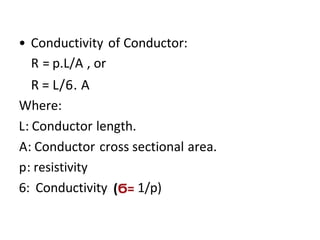
• Conductivity of Conductor:
R = p.L/A , or
R = L/6. A
Where:
L: Conductor length.
A: Conductor cross sectional area.
p: resistivity
6: Conductivity 1/p)
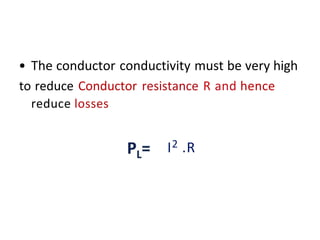
• The conductor conductivity must be very high
to reduce Conductor resistance R and hence
reduce losses
I2 .R
Mechanical Considerations for T.L. Design:
• The conductors and line supports should
have sufficient mechanical strength:
- to withstand conductor weight, Conductor
Tension and weather conditions (wind, ice).
- The Spans between the towers can be long.
- Sag will be small.
- Reducing the number and height of towers
and the number of insulators.
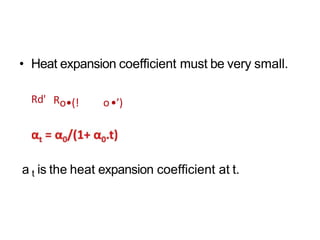
• Heat expansion coefficient must be very small.
Rd' Ro•(! o•’)
a t is the heat expansion coefficient at t.
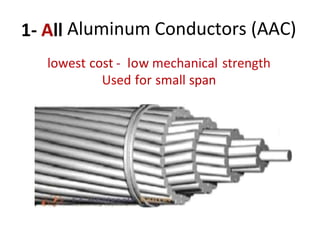
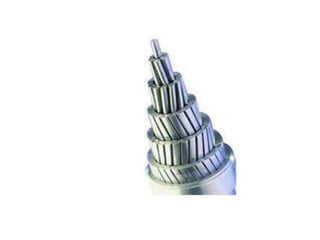
Aluminum Conductors (AAC)
lowest cost - low mechanical strength
Used for small span
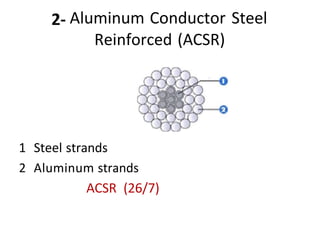
Aluminum Conductor Steel
Reinforced (ACSR)
1 Steel strands
2 Aluminum strands
ACSR (26/7)
Advantages of ACSR
• High mechanical strength can be utilized by
using spans of larger lengths.
• A reduction in the number of supports also
include reduction in insulators and the risk of
lines outage due to flash over or faults is
reduced.
• losses are reduced due to larger diameter of
conductor.
• High current carrying capacity.
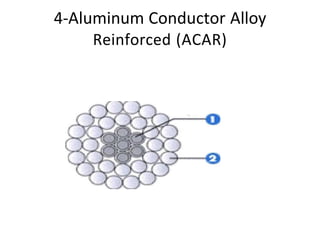
4-Aluminum Conductor Alloy
Reinforced (ACAR)

CONDUCTORS----- HIGH VOLTAGE TRANSMISSION LINE

  • 1.
  • 2.
    General Considerations Electrical Considerationsfor T.L. Design: • Low voltage drop • Minimum power loss for high efficiency of power transmission. • The line should have sufficient current carrying capacity so that the power can be transmitted without excessive voltage drop or overheating.
  • 3.
    • Conductivity ofConductor: R = p.L/A , or R = L/6. A Where: L: Conductor length. A: Conductor cross sectional area. p: resistivity 6: Conductivity 1/p)
  • 4.
    • The conductorconductivity must be very high to reduce Conductor resistance R and hence reduce losses I2 .R
  • 5.
    Mechanical Considerations forT.L. Design: • The conductors and line supports should have sufficient mechanical strength: - to withstand conductor weight, Conductor Tension and weather conditions (wind, ice). - The Spans between the towers can be long. - Sag will be small. - Reducing the number and height of towers and the number of insulators.
  • 6.
    • Heat expansioncoefficient must be very small. Rd' Ro•(! o•’) a t is the heat expansion coefficient at t.
  • 7.
    Aluminum Conductors (AAC) lowestcost - low mechanical strength Used for small span
  • 10.
    Aluminum Conductor Steel Reinforced(ACSR) 1 Steel strands 2 Aluminum strands ACSR (26/7)
  • 14.
    Advantages of ACSR •High mechanical strength can be utilized by using spans of larger lengths. • A reduction in the number of supports also include reduction in insulators and the risk of lines outage due to flash over or faults is reduced. • losses are reduced due to larger diameter of conductor. • High current carrying capacity.
  • 15.