Turning Students Into Leaders


2009 Annual Concept Schools Conference
QUESTION:


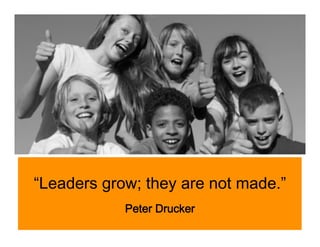
    Are leaders born or made?
the top

10 skills
Future Leaders (Your
Current Students) Will
  Need To Possess
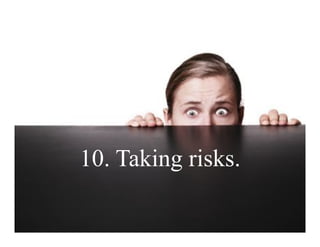
10. Taking risks.
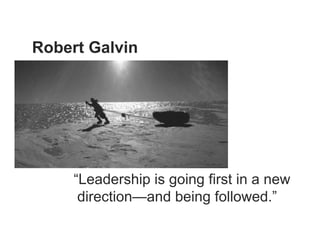
Robert Galvin


     “Leadership is going first in a new
      direction—and being followed.”
“Why won’t my
 employees take
 any initiative?”
            Common Issue
Helicopter Parents
Why are
manhole
covers
round?
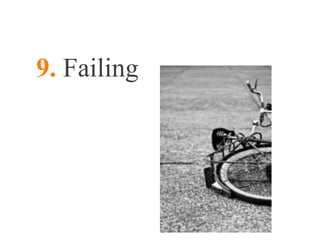
9. Failing
If you are not failing,
you are probably not
 taking enough risks.
Individuals who take
   failures personally
   have an exaggerated
    sense of their own
incompetence. They view
 taking initiative as futile
 since they expect to fail.
celebrate
   failure
“Say what?”
Celebrations provide people
with a safe forum for them to
 acknowledge their failures,
making the analysis of what
went wrong less threatening.
“We have a culture that
allows people to say, ‘It was
my fault and here’s what I’ll
 do differently next time.’”
  Michelle Peluso, CEO of Travelocity
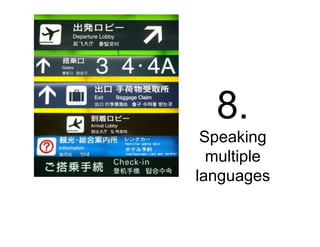
8.
 Speaking
  multiple
languages
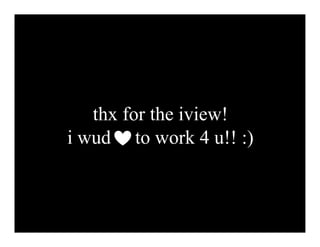
thx for the iview!
i wud to work 4 u!! :)
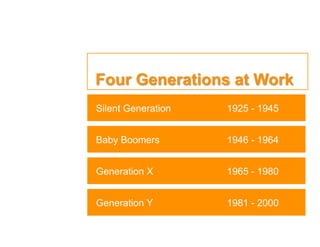
Silent Generation   1925 - 1945


Baby Boomers        1946 - 1964


Generation X        1965 - 1980

Generation Y        1981 - 2000
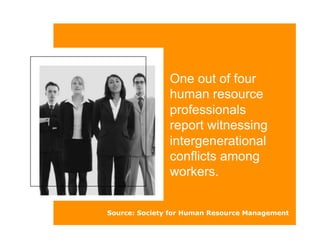
One out of four
               human resource
               professionals
               report witnessing
               intergenerational
               conflicts among
               workers.


Source: Society for Human Resource Management
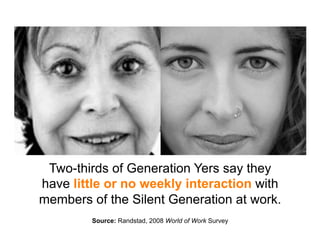
Two-thirds of Generation Yers say they
have little or no weekly interaction with
members of the Silent Generation at work.
        Source: Randstad, 2008 World of Work Survey
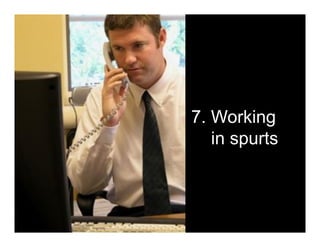
7. Working
   in spurts
workfragmentation
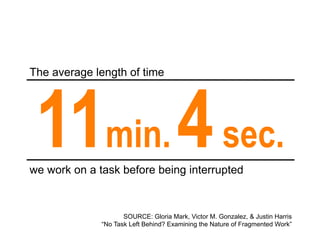
The average length of time


 11min. 4 sec.
we work on a task before being interrupted


                     SOURCE: Gloria Mark, Victor M. Gonzalez, & Justin Harris
              “No Task Left Behind? Examining the Nature of Fragmented Work”
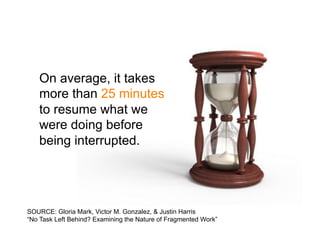
On average, it takes
   more than 25 minutes
   to resume what we
   were doing before
   being interrupted.


SOURCE: Gloria Mark, Victor M. Gonzalez, & Justin Harris
“No Task Left Behind? Examining the Nature of Fragmented Work”
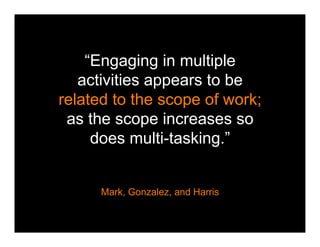
“Engaging in multiple
   activities appears to be
related to the scope of work;
 as the scope increases so
     does multi-tasking.”


      Mark, Gonzalez, and Harris
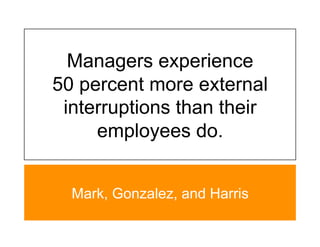
Managers experience
50 percent more external
 interruptions than their
     employees do.


  Mark, Gonzalez, and Harris
6. Sharing knowledge.
Wally who?
Giving away our authority is a
personal challenge. It involves
 sharing influence, prestige,
 and applause, while forcing
 us to deal with our personal
         insecurities.
“  A basic function of
leadership is to produce
 more leaders, not more
                ”Nader
       followers.
            Ralph
5. Pursuing mastery.
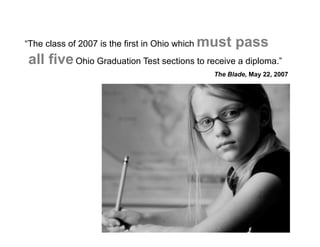
“The class of 2007 is the first in Ohio which   must pass
all five Ohio Graduation Test sections to receive a diploma.”
                                                  The Blade, May 22, 2007
When we force people
         to strive for proficiency in
         everything, we miss the
         opportunity for them to
achieve greatness in the
         one area where they may,
         indeed, achieve just that.
strivingforimprovement,
most of us do the same thing:
we take our strengths for granted,
and concentrate all our efforts on
conquering our weaknesses
Not surprisingly,

the vast majority of organizations
  appear to believe that the best
 way for individuals to grow is to
   eliminate their weaknesses.
Identifying each person’s strongest
talents permits everyone the opportunity
        to contribute what they do


        BEST.
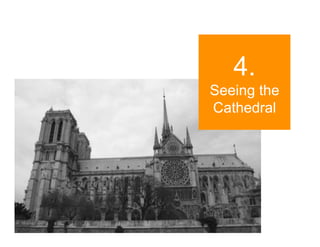
4.
Seeing the
Cathedral
Old story:
Two stonemasons are
working on the same
project. An observer
asks, “What are you
doing?”

     The first stonemason
                    replies: “I’m cutting stone.”


 The second stonemason
                 replies: “I’m building a great
                          cathedral.”
“The biggest men and women
with the biggest ideas can be
shot down by the smallest men
and women with the smallest
minds. Think big anyway.”
            Dr. Kent M. Keith
  Anyway: The Paradoxical Commandments
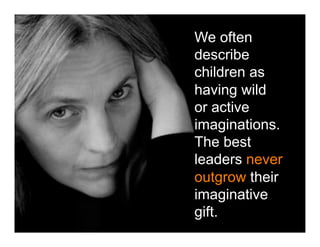
We often
describe
children as
having wild
or active
imaginations.
The best
leaders never
outgrow their
imaginative
gift.
Defy the verdict!
“The illiterate of
   the 21st century
   will not be those
  who cannot read
and write, but those
 who cannot learn,
        unlearn, and
             relearn.”
         Alvin Toffler
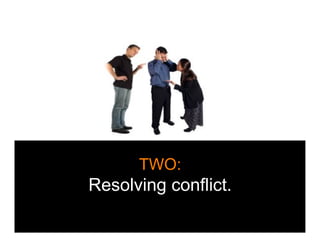
TWO:
Resolving conflict.
con .flict (kĂłn flikt)
a disagreement in
which those involved
perceive a threat to
their needs, interests,
or happiness.
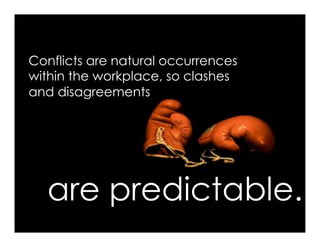
Conflicts are natural occurrences
within the workplace, so clashes
and disagreements


  are predictable.
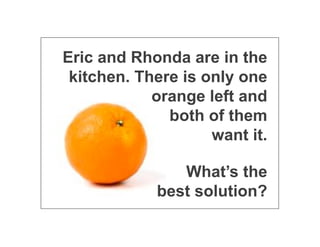
Eric and Rhonda are in the
 kitchen. There is only one
            orange left and
              both of them
                    want it.

               What’s the
            best solution?
“Seek First to Understand,
      Then to Be Understood”
                   -Stephen Covey
#   1
    Proving
    credibility.
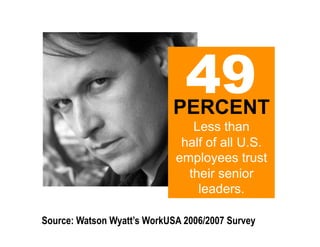
49
                            PERCENT
                                Less than
                              half of all U.S.
                             employees trust
                               their senior
                                 leaders.

Source: Watson Wyatt’s WorkUSA 2006/2007 Survey
“In corporate
America, crime
pays. Handsomely.
Grotesquely, even.”
Arianna Huffington
Pigs at the Trough
“
                           WHAT WE FOUND IN
                           OUR INVESTIGATION OF
                           ADMIRED LEADERSHIP
KOUZES & POSNER
                           QUALITIES IS THAT MORE
The Leadership Challenge   THAN ANYTHING, PEOPLE
                           WANT TO FOLLOW
                           LEADERS WHO ARE
                           CREDIBLE.”
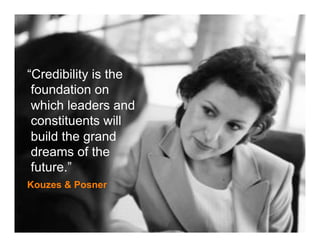
“Credibility is the
 foundation on
 which leaders and
 constituents will
 build the grand
 dreams of the
 future.”
Kouzes & Posner
DWYSYWD
Grow some of your own!
Turning Students Into Leaders


2009 Annual Concept Schools Conference

Concept Schools Turning Students Into Leaders

  • 1.
    Turning Students IntoLeaders 2009 Annual Concept Schools Conference
  • 2.
    QUESTION: Are leaders born or made?
  • 3.
    the top 10 skills FutureLeaders (Your Current Students) Will Need To Possess
  • 4.
  • 5.
    Robert Galvin “Leadership is going first in a new direction—and being followed.”
  • 6.
    “Why won’t my employees take any initiative?” Common Issue
  • 7.
  • 8.
  • 9.
  • 10.
    If you arenot failing, you are probably not taking enough risks.
  • 11.
    Individuals who take failures personally have an exaggerated sense of their own incompetence. They view taking initiative as futile since they expect to fail.
  • 12.
    celebrate failure
  • 13.
  • 14.
    Celebrations provide people witha safe forum for them to acknowledge their failures, making the analysis of what went wrong less threatening.
  • 15.
    “We have aculture that allows people to say, ‘It was my fault and here’s what I’ll do differently next time.’” Michelle Peluso, CEO of Travelocity
  • 16.
    8. Speaking multiple languages
  • 17.
    thx for theiview! i wud to work 4 u!! :)
  • 18.
    Silent Generation 1925 - 1945 Baby Boomers 1946 - 1964 Generation X 1965 - 1980 Generation Y 1981 - 2000
  • 19.
    One out offour human resource professionals report witnessing intergenerational conflicts among workers. Source: Society for Human Resource Management
  • 20.
    Two-thirds of GenerationYers say they have little or no weekly interaction with members of the Silent Generation at work. Source: Randstad, 2008 World of Work Survey
  • 21.
    7. Working in spurts
  • 22.
  • 23.
    The average lengthof time 11min. 4 sec. we work on a task before being interrupted SOURCE: Gloria Mark, Victor M. Gonzalez, & Justin Harris “No Task Left Behind? Examining the Nature of Fragmented Work”
  • 24.
    On average, ittakes more than 25 minutes to resume what we were doing before being interrupted. SOURCE: Gloria Mark, Victor M. Gonzalez, & Justin Harris “No Task Left Behind? Examining the Nature of Fragmented Work”
  • 25.
    “Engaging in multiple activities appears to be related to the scope of work; as the scope increases so does multi-tasking.” Mark, Gonzalez, and Harris
  • 26.
    Managers experience 50 percentmore external interruptions than their employees do. Mark, Gonzalez, and Harris
  • 27.
  • 28.
  • 29.
    Giving away ourauthority is a personal challenge. It involves sharing influence, prestige, and applause, while forcing us to deal with our personal insecurities.
  • 30.
    “ Abasic function of leadership is to produce more leaders, not more ”Nader followers. Ralph
  • 31.
  • 32.
    “The class of2007 is the first in Ohio which must pass all five Ohio Graduation Test sections to receive a diploma.” The Blade, May 22, 2007
  • 33.
    When we forcepeople to strive for proficiency in everything, we miss the opportunity for them to achieve greatness in the one area where they may, indeed, achieve just that.
  • 34.
    strivingforimprovement, most of usdo the same thing: we take our strengths for granted, and concentrate all our efforts on conquering our weaknesses
  • 35.
    Not surprisingly, the vastmajority of organizations appear to believe that the best way for individuals to grow is to eliminate their weaknesses.
  • 36.
    Identifying each person’sstrongest talents permits everyone the opportunity to contribute what they do BEST.
  • 37.
  • 38.
    Old story: Two stonemasonsare working on the same project. An observer asks, “What are you doing?” The first stonemason replies: “I’m cutting stone.” The second stonemason replies: “I’m building a great cathedral.”
  • 39.
    “The biggest menand women with the biggest ideas can be shot down by the smallest men and women with the smallest minds. Think big anyway.” Dr. Kent M. Keith Anyway: The Paradoxical Commandments
  • 40.
    We often describe children as havingwild or active imaginations. The best leaders never outgrow their imaginative gift.
  • 42.
  • 43.
    “The illiterate of the 21st century will not be those who cannot read and write, but those who cannot learn, unlearn, and relearn.” Alvin Toffler
  • 44.
  • 45.
    con .flict (kĂłnflikt) a disagreement in which those involved perceive a threat to their needs, interests, or happiness.
  • 46.
    Conflicts are naturaloccurrences within the workplace, so clashes and disagreements are predictable.
  • 47.
    Eric and Rhondaare in the kitchen. There is only one orange left and both of them want it. What’s the best solution?
  • 48.
    “Seek First toUnderstand, Then to Be Understood” -Stephen Covey
  • 49.
    # 1 Proving credibility.
  • 50.
    49 PERCENT Less than half of all U.S. employees trust their senior leaders. Source: Watson Wyatt’s WorkUSA 2006/2007 Survey
  • 51.
    “In corporate America, crime pays.Handsomely. Grotesquely, even.” Arianna Huffington Pigs at the Trough
  • 52.
    “ WHAT WE FOUND IN OUR INVESTIGATION OF ADMIRED LEADERSHIP KOUZES & POSNER QUALITIES IS THAT MORE The Leadership Challenge THAN ANYTHING, PEOPLE WANT TO FOLLOW LEADERS WHO ARE CREDIBLE.”
  • 53.
    “Credibility is the foundation on which leaders and constituents will build the grand dreams of the future.” Kouzes & Posner
  • 54.
  • 56.
    Grow some ofyour own!
  • 57.
    Turning Students IntoLeaders 2009 Annual Concept Schools Conference