CONCEPT OF 
PSYCHOGRAPHICS 
SUBMITTED TO :- SUBMITTED BY:- 
Dr. ANURAG SINGH KRISHNA KUMAR JAISAWAL 
FMS-BHU MBA-IB , ROLL NO. :- 012
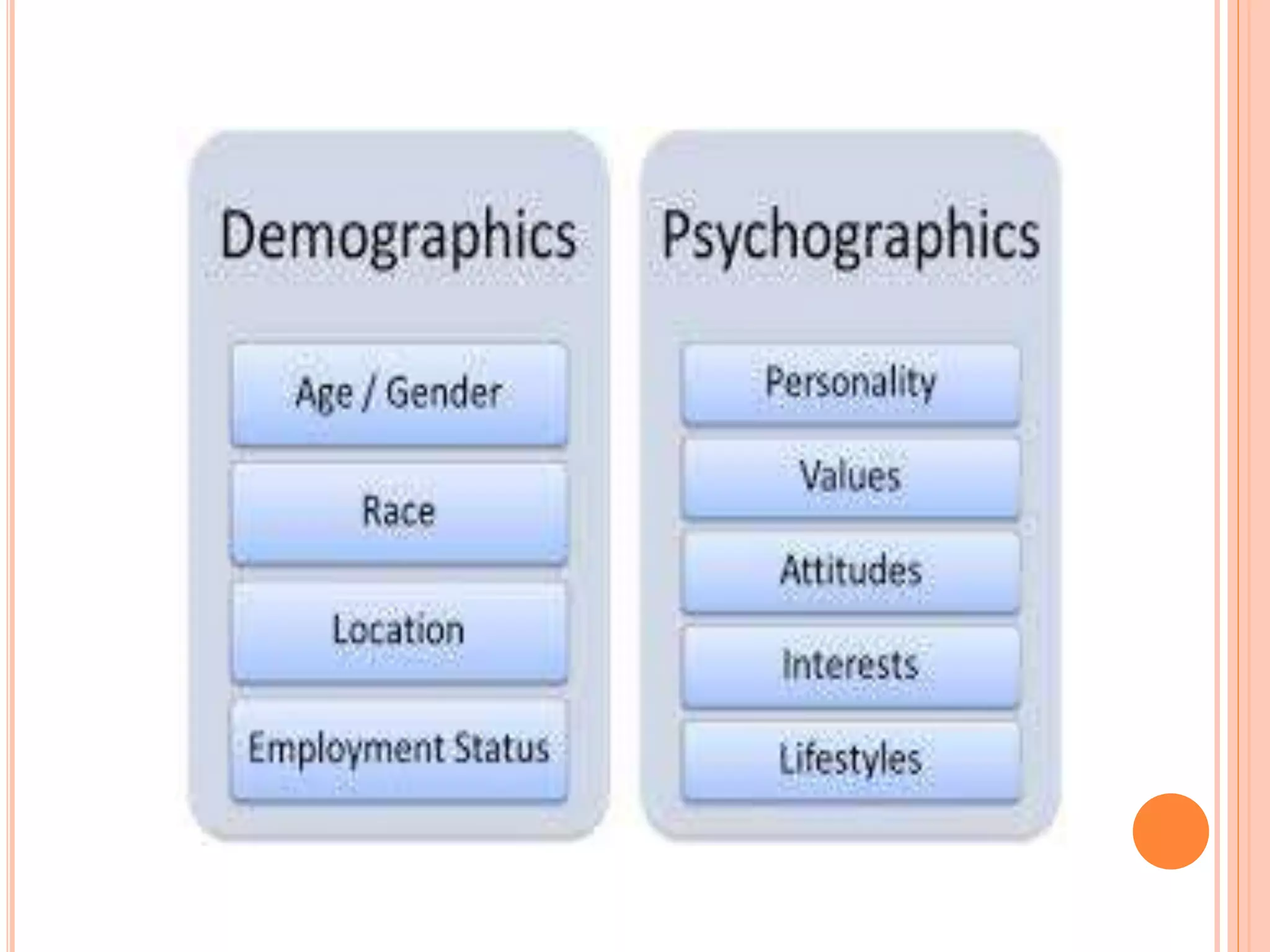
PSYCHOGRAPHICS IS THE STUDY OF PERSONALITY, 
VALUES, OPINIONS, ATTITUDES, INTERESTS, AND 
LIFESTYLES.
 this area of research focuses on interests, attitudes, and 
opinions, psychographic factors are also called IAO variables. 
 Psychographic studies of individuals or communities can be 
valuable in the fields of marketing, demographics, opinion 
research, futuring, and social research in general. 
 They can be contrasted with demographic variables (such as 
age and gender), behavioural variables (such as usage rate or 
loyalty), and organizational demographics variables such as 
industry, number of employees, and functional area.
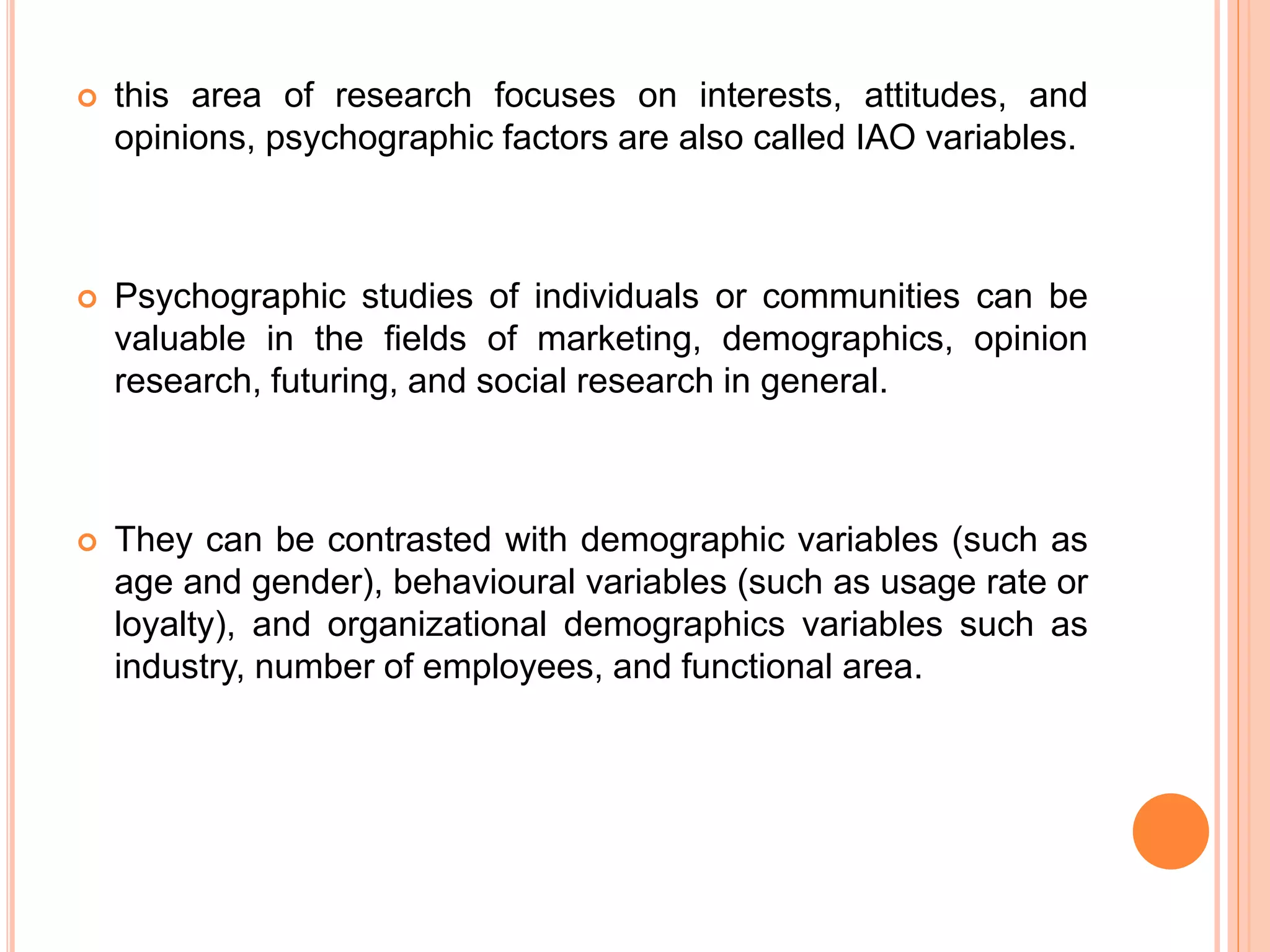
PSYCHOGRAPHICS VARIABLES
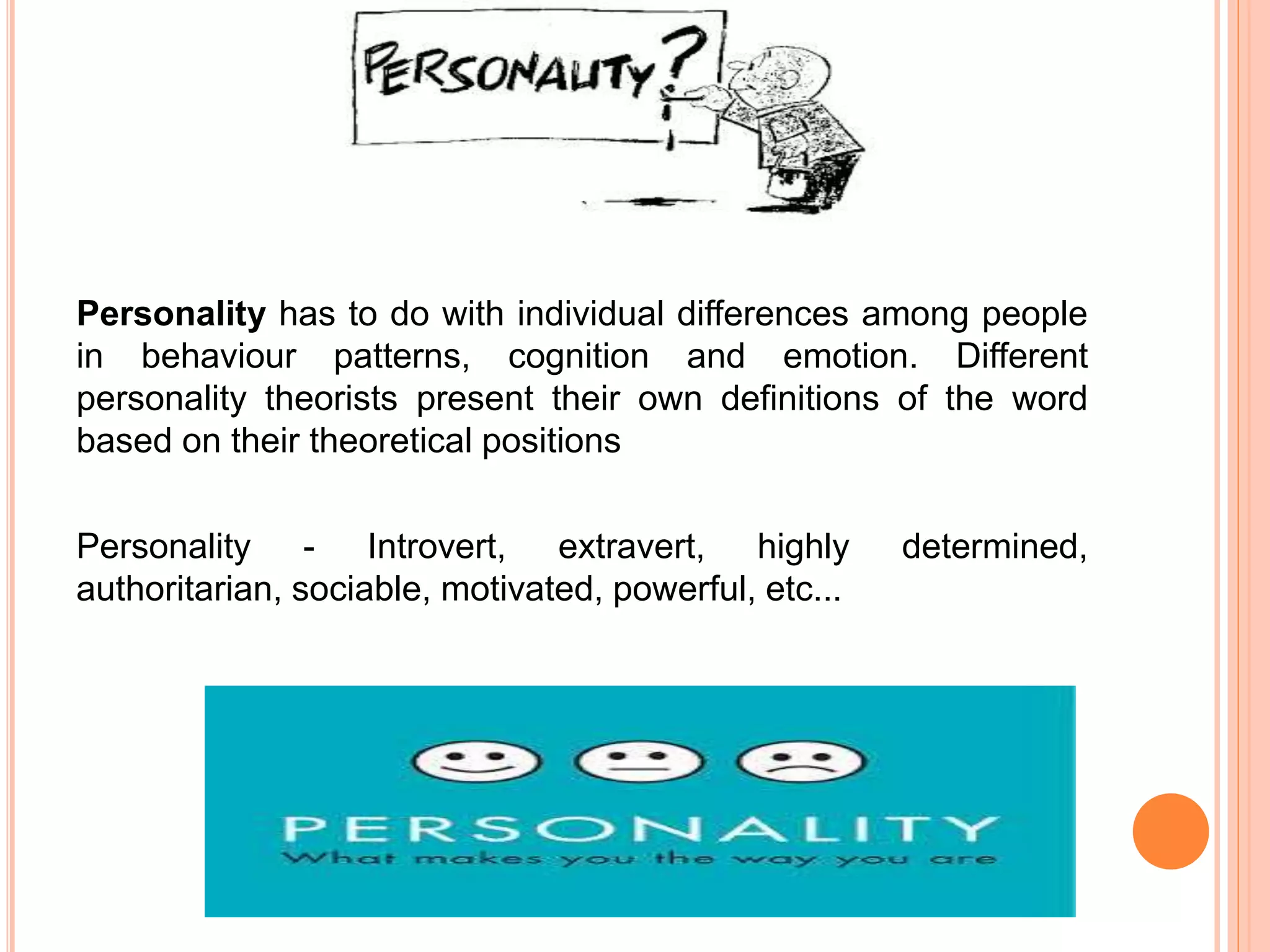
Personality has to do with individual differences among people 
in behaviour patterns, cognition and emotion. Different 
personality theorists present their own definitions of the word 
based on their theoretical positions 
Personality - Introvert, extravert, highly determined, 
authoritarian, sociable, motivated, powerful, etc...
Involves classifying people according to their values, beliefs, 
opinions, and interests. 
There is no one standardised lifestyle segmentation model, 
instead market research firms, and advertising agencies are 
constantly devising new categories, which will best help target 
possible consumers of their clients products.
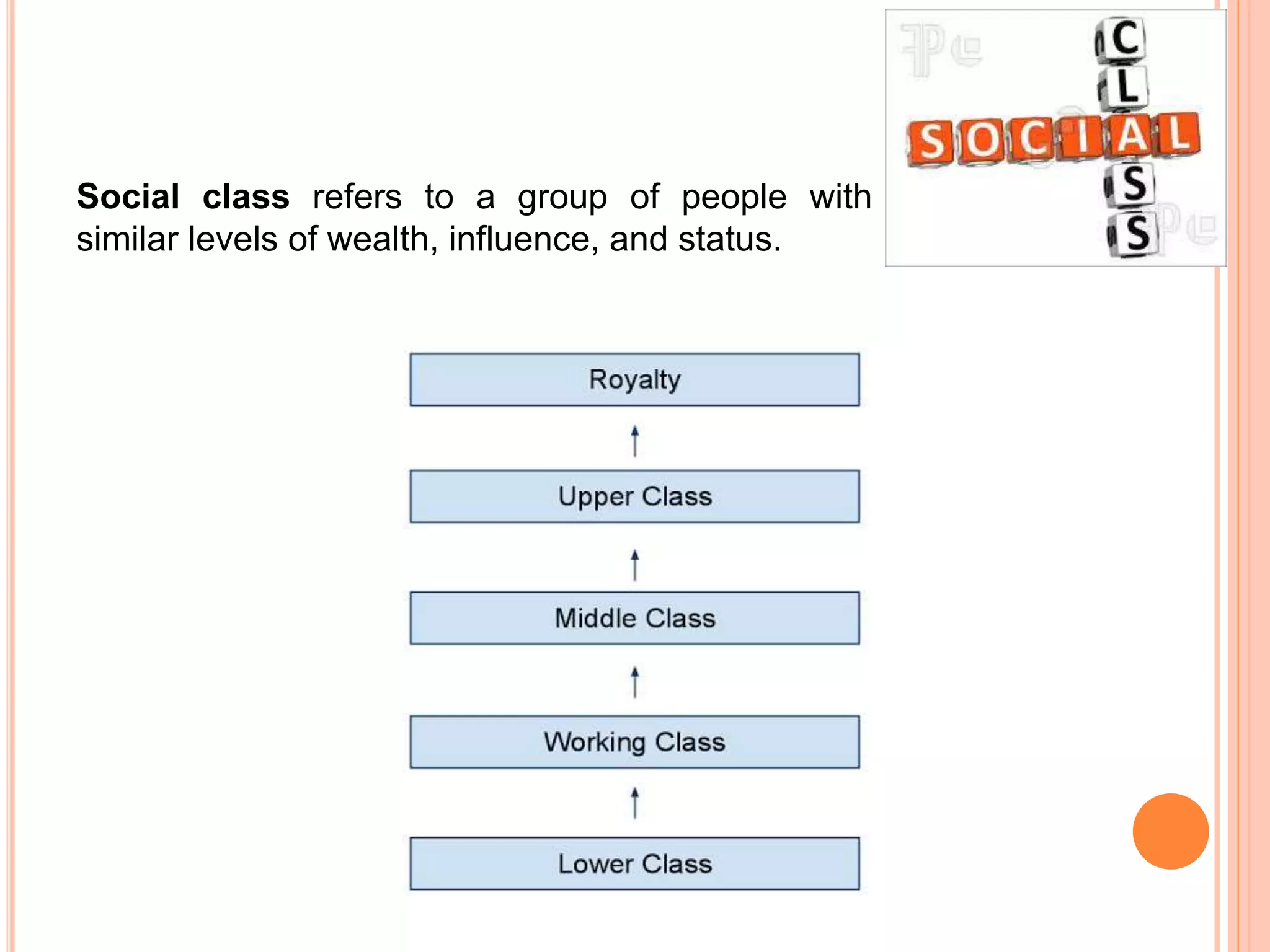
Social class refers to a group of people with 
similar levels of wealth, influence, and status.
Sociologists typically use three methods to determine social class 
 The objective method measures and analyses “hard” facts. 
 The subjective method asks people what they think of 
themselves. 
 The reputational method asks what people think of others. 
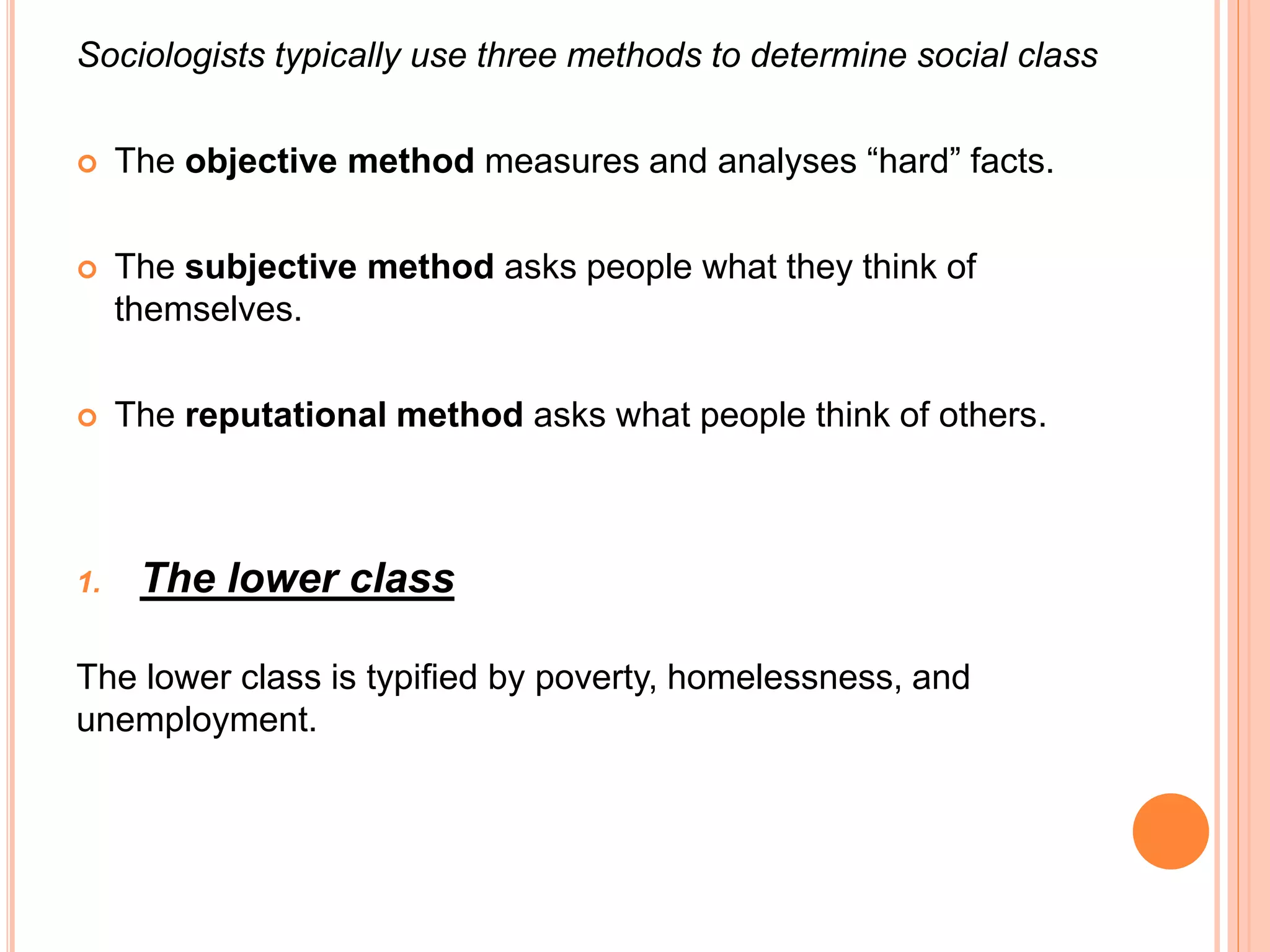
1. The lower class 
The lower class is typified by poverty, homelessness, and 
unemployment.
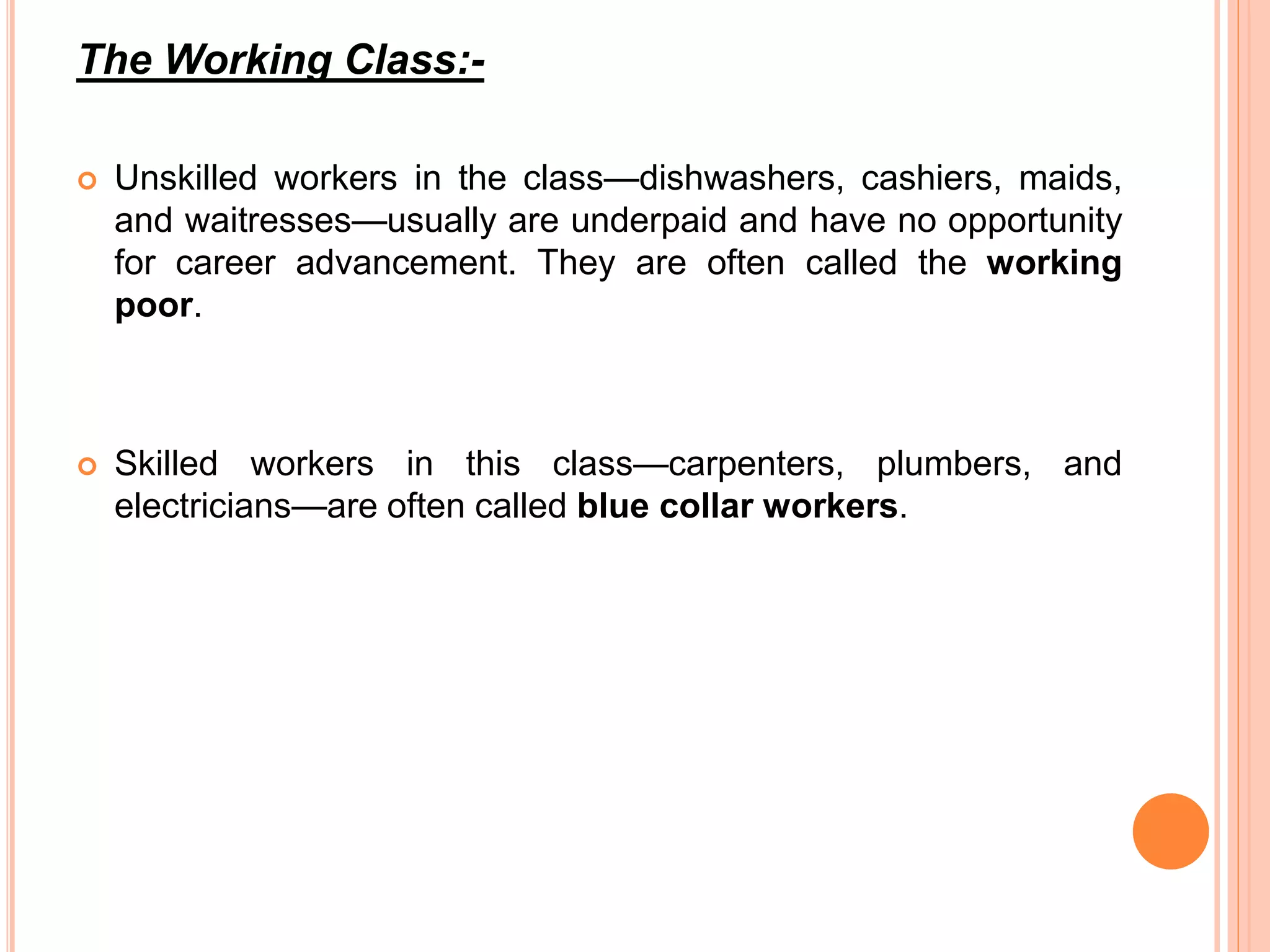
The Working Class:- 
 Unskilled workers in the class—dishwashers, cashiers, maids, 
and waitresses—usually are underpaid and have no opportunity 
for career advancement. They are often called the working 
poor. 
 Skilled workers in this class—carpenters, plumbers, and 
electricians—are often called blue collar workers.
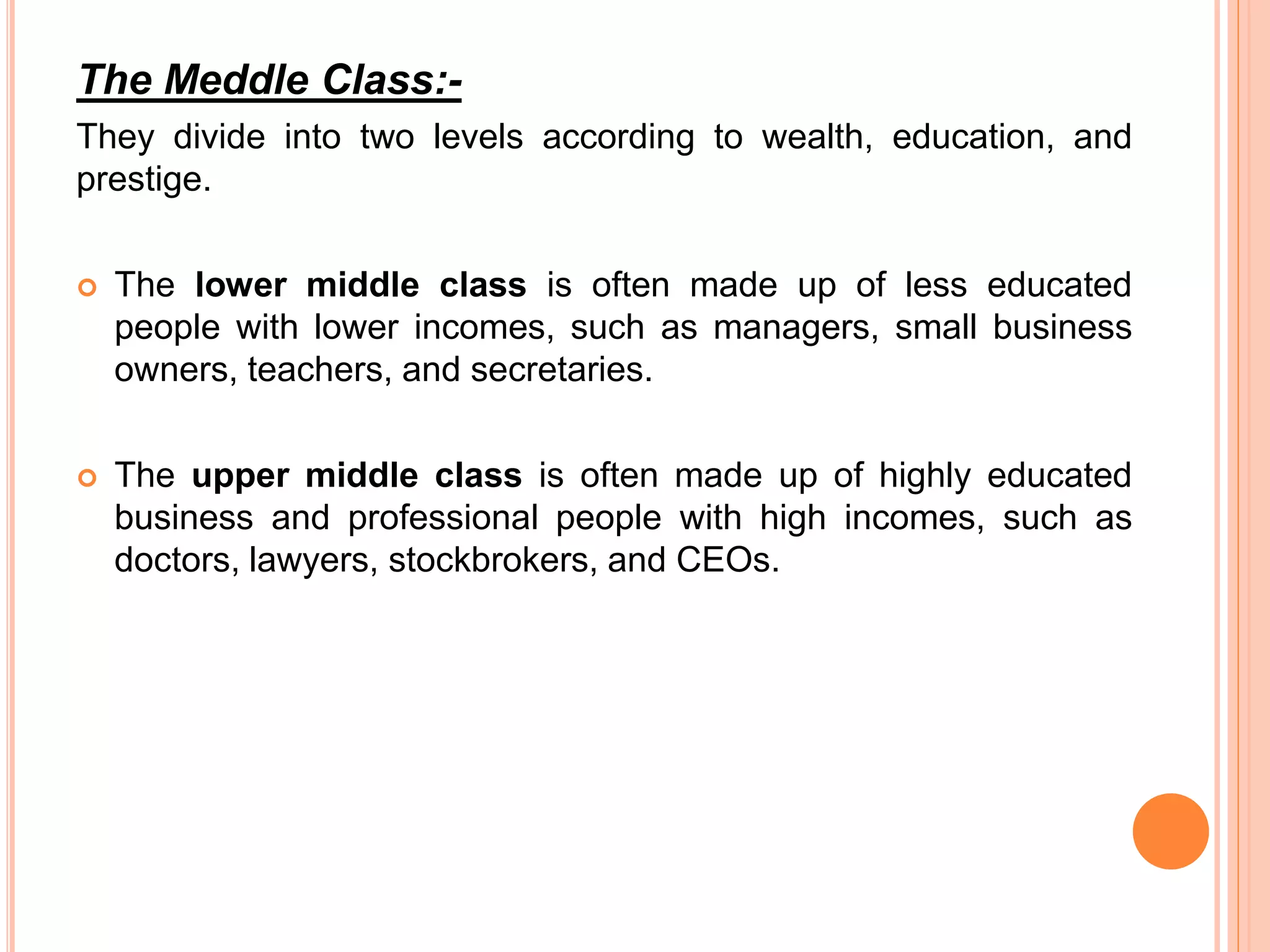
The Meddle Class:- 
They divide into two levels according to wealth, education, and 
prestige. 
 The lower middle class is often made up of less educated 
people with lower incomes, such as managers, small business 
owners, teachers, and secretaries. 
 The upper middle class is often made up of highly educated 
business and professional people with high incomes, such as 
doctors, lawyers, stockbrokers, and CEOs.
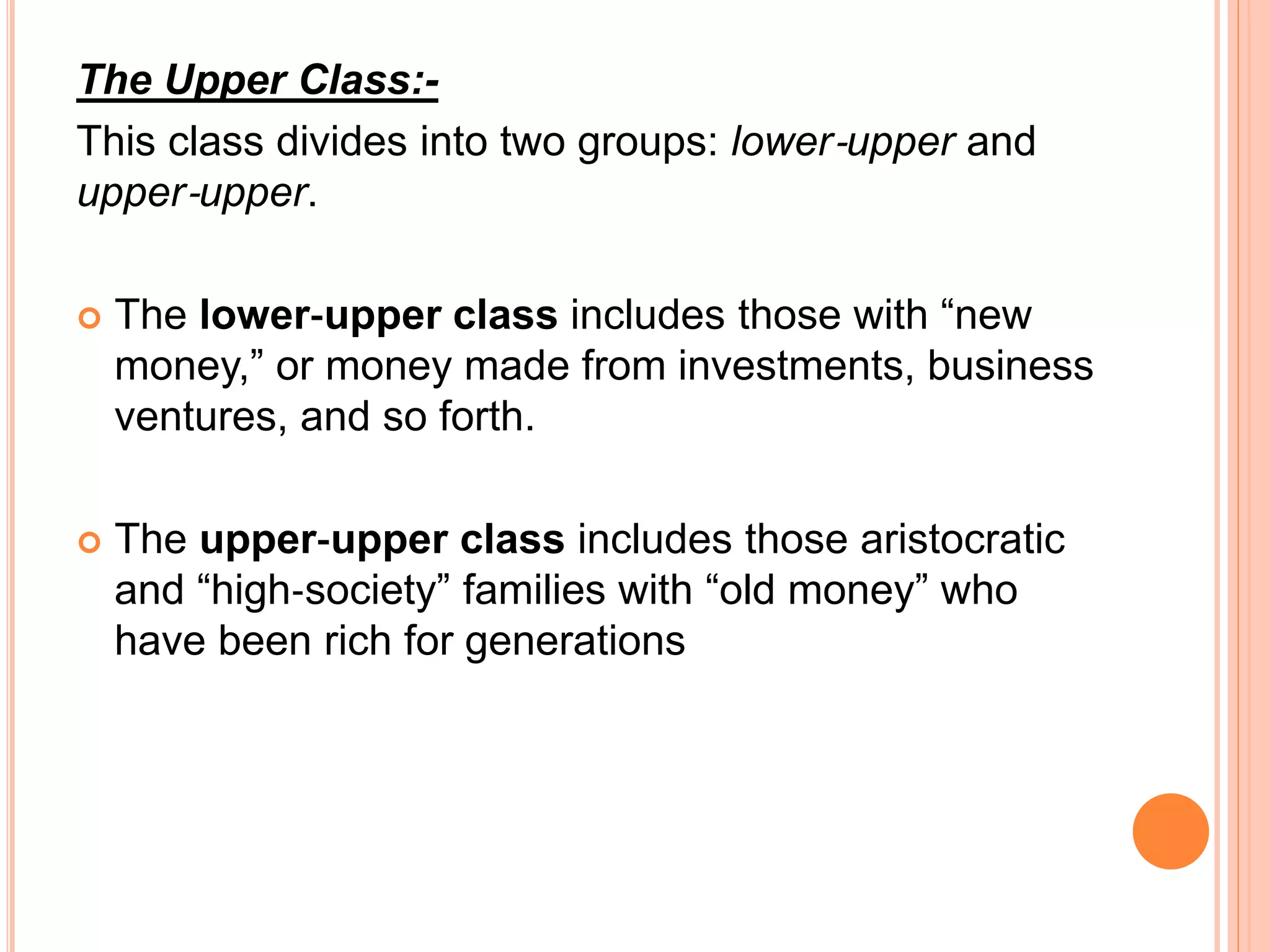
The Upper Class:- 
This class divides into two groups: lower‐upper and 
upper‐upper. 
 The lower‐upper class includes those with “new 
money,” or money made from investments, business 
ventures, and so forth. 
 The upper‐upper class includes those aristocratic 
and “high‐society” families with “old money” who 
have been rich for generations
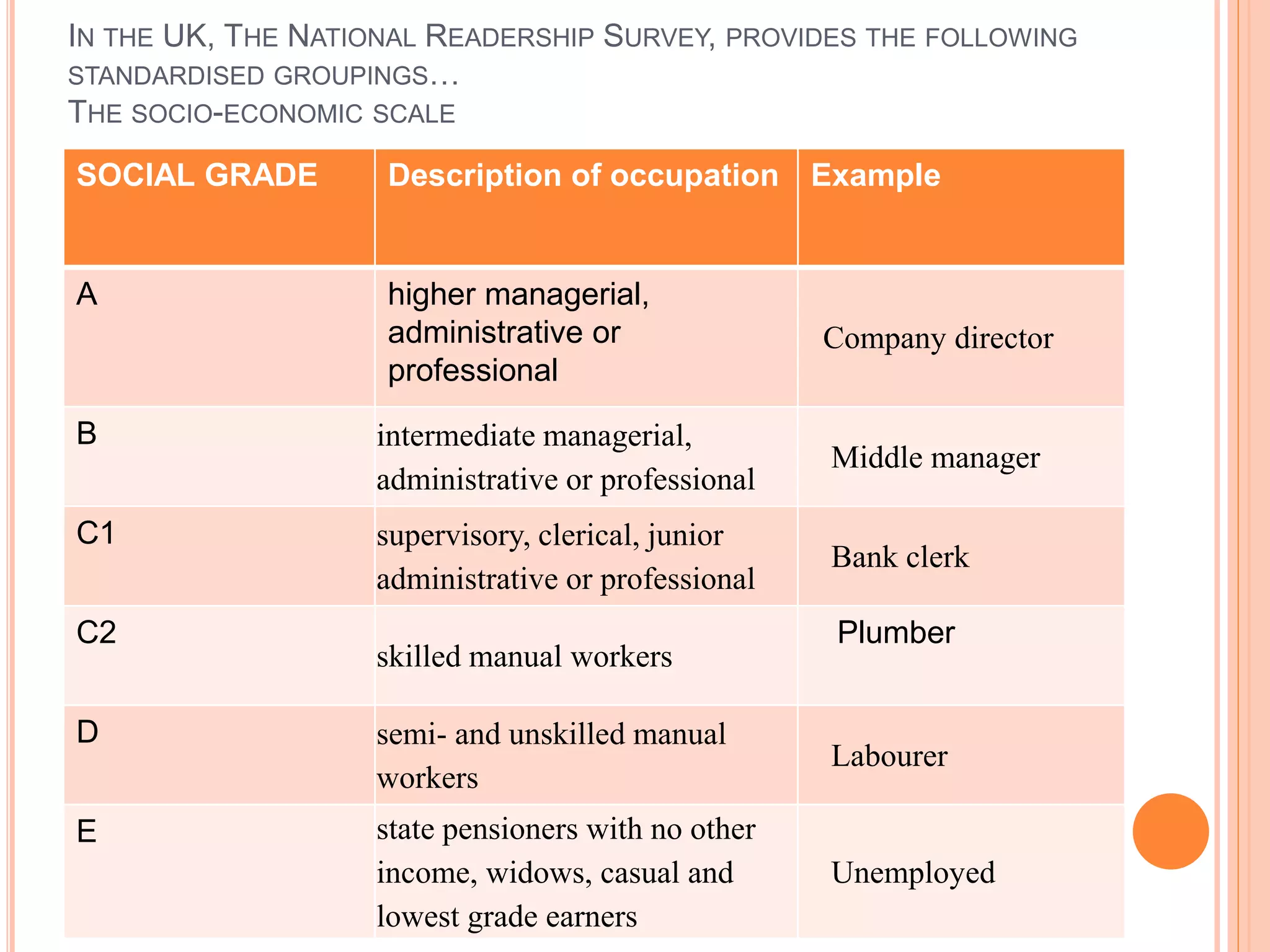
IN THE UK, THE NATIONAL READERSHIP SURVEY, PROVIDES THE FOLLOWING 
STANDARDISED GROUPINGS… 
THE SOCIO-ECONOMIC SCALE 
SOCIAL GRADE Description of occupation Example 
A higher managerial, 
administrative or 
professional 
Company director 
B intermediate managerial, 
administrative or professional 
Middle manager 
C1 supervisory, clerical, junior 
administrative or professional 
Bank clerk 
C2 
skilled manual workers 
Plumber 
D semi- and unskilled manual 
workers 
Labourer 
E state pensioners with no other 
income, widows, casual and 
lowest grade earners 
Unemployed
DEMOGRAPHICS 
Demography is used widely in public opinion polling and 
marketing. Commonly examined demographics include gender, 
age, ethnicity, knowledge of languages, disabilities, mobility, 
home ownership, employment status, and even location. 
Demographic trends describe the historical changes in 
demographics in a population over time (for example, the 
average age of a population may increase or decrease over 
time).
THANK YOU 

Concept of psychographics

  • 1.
    CONCEPT OF PSYCHOGRAPHICS SUBMITTED TO :- SUBMITTED BY:- Dr. ANURAG SINGH KRISHNA KUMAR JAISAWAL FMS-BHU MBA-IB , ROLL NO. :- 012
  • 2.
    PSYCHOGRAPHICS IS THESTUDY OF PERSONALITY, VALUES, OPINIONS, ATTITUDES, INTERESTS, AND LIFESTYLES.
  • 3.
     this areaof research focuses on interests, attitudes, and opinions, psychographic factors are also called IAO variables.  Psychographic studies of individuals or communities can be valuable in the fields of marketing, demographics, opinion research, futuring, and social research in general.  They can be contrasted with demographic variables (such as age and gender), behavioural variables (such as usage rate or loyalty), and organizational demographics variables such as industry, number of employees, and functional area.
  • 4.
  • 5.
    Personality has todo with individual differences among people in behaviour patterns, cognition and emotion. Different personality theorists present their own definitions of the word based on their theoretical positions Personality - Introvert, extravert, highly determined, authoritarian, sociable, motivated, powerful, etc...
  • 6.
    Involves classifying peopleaccording to their values, beliefs, opinions, and interests. There is no one standardised lifestyle segmentation model, instead market research firms, and advertising agencies are constantly devising new categories, which will best help target possible consumers of their clients products.
  • 7.
    Social class refersto a group of people with similar levels of wealth, influence, and status.
  • 8.
    Sociologists typically usethree methods to determine social class  The objective method measures and analyses “hard” facts.  The subjective method asks people what they think of themselves.  The reputational method asks what people think of others. 1. The lower class The lower class is typified by poverty, homelessness, and unemployment.
  • 9.
    The Working Class:-  Unskilled workers in the class—dishwashers, cashiers, maids, and waitresses—usually are underpaid and have no opportunity for career advancement. They are often called the working poor.  Skilled workers in this class—carpenters, plumbers, and electricians—are often called blue collar workers.
  • 10.
    The Meddle Class:- They divide into two levels according to wealth, education, and prestige.  The lower middle class is often made up of less educated people with lower incomes, such as managers, small business owners, teachers, and secretaries.  The upper middle class is often made up of highly educated business and professional people with high incomes, such as doctors, lawyers, stockbrokers, and CEOs.
  • 11.
    The Upper Class:- This class divides into two groups: lower‐upper and upper‐upper.  The lower‐upper class includes those with “new money,” or money made from investments, business ventures, and so forth.  The upper‐upper class includes those aristocratic and “high‐society” families with “old money” who have been rich for generations
  • 12.
    IN THE UK,THE NATIONAL READERSHIP SURVEY, PROVIDES THE FOLLOWING STANDARDISED GROUPINGS… THE SOCIO-ECONOMIC SCALE SOCIAL GRADE Description of occupation Example A higher managerial, administrative or professional Company director B intermediate managerial, administrative or professional Middle manager C1 supervisory, clerical, junior administrative or professional Bank clerk C2 skilled manual workers Plumber D semi- and unskilled manual workers Labourer E state pensioners with no other income, widows, casual and lowest grade earners Unemployed
  • 13.
    DEMOGRAPHICS Demography isused widely in public opinion polling and marketing. Commonly examined demographics include gender, age, ethnicity, knowledge of languages, disabilities, mobility, home ownership, employment status, and even location. Demographic trends describe the historical changes in demographics in a population over time (for example, the average age of a population may increase or decrease over time).
  • 15.