Concept Map Care PlanBy: Sara Rieveley
What is a concept map care plan?A diagram of patient problems, supporting data, interventions, and evaluationsThey are used to organize patient data, analyze relationships in the data, and enable you to take a holistic view of the patients situationThrough diagnoses, you can evaluate what you know about the care for the patient and what further information you need to provide effective nursing care
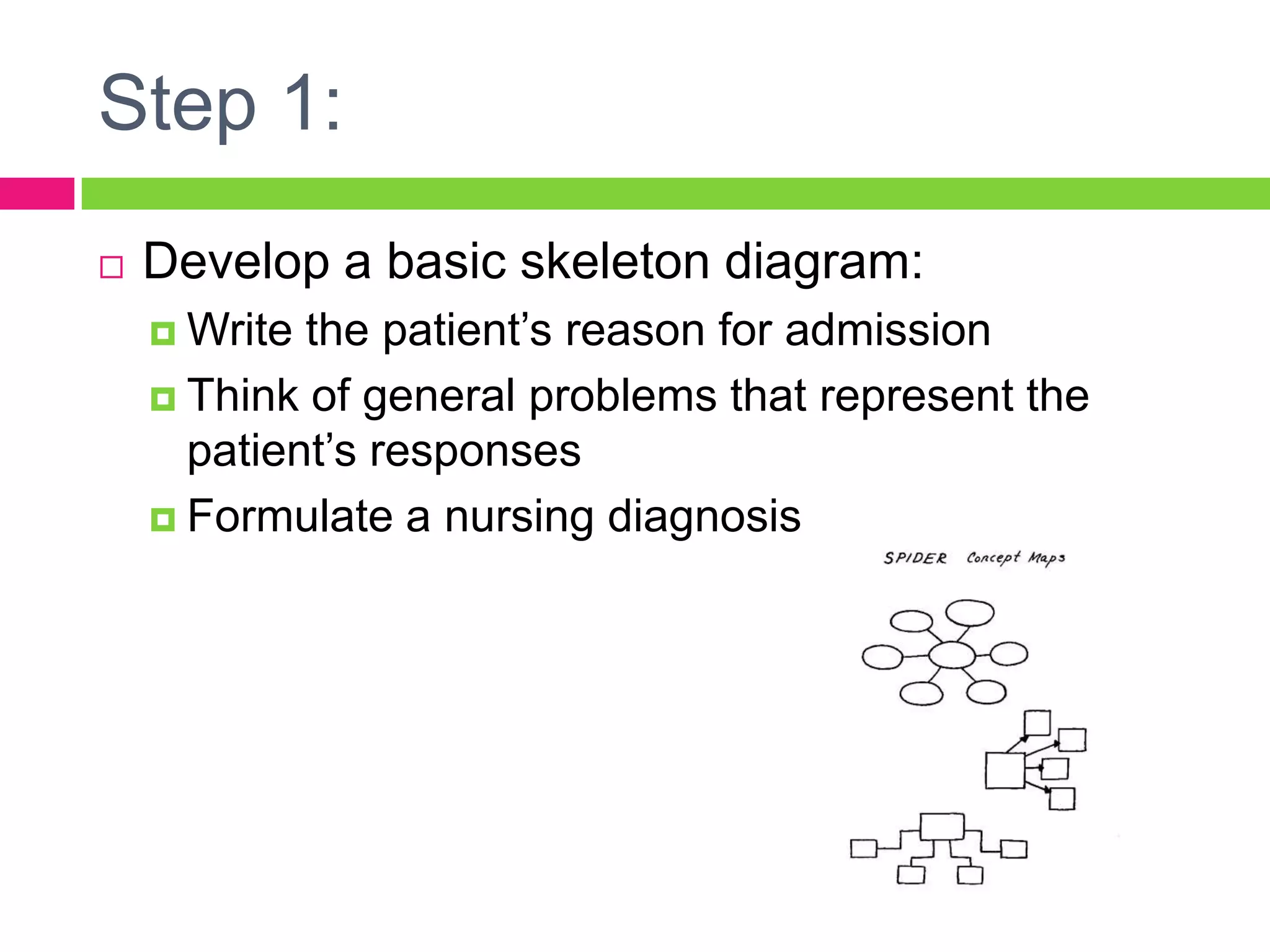
Step 1:Develop a basic skeleton diagram:Write the patient’s reason for admissionThink of general problems that represent the patient’s responsesFormulate a nursing diagnosis
Step 2:Analyze and Categorize Data:Analyze and categorize the patients data collected Group the most important information first
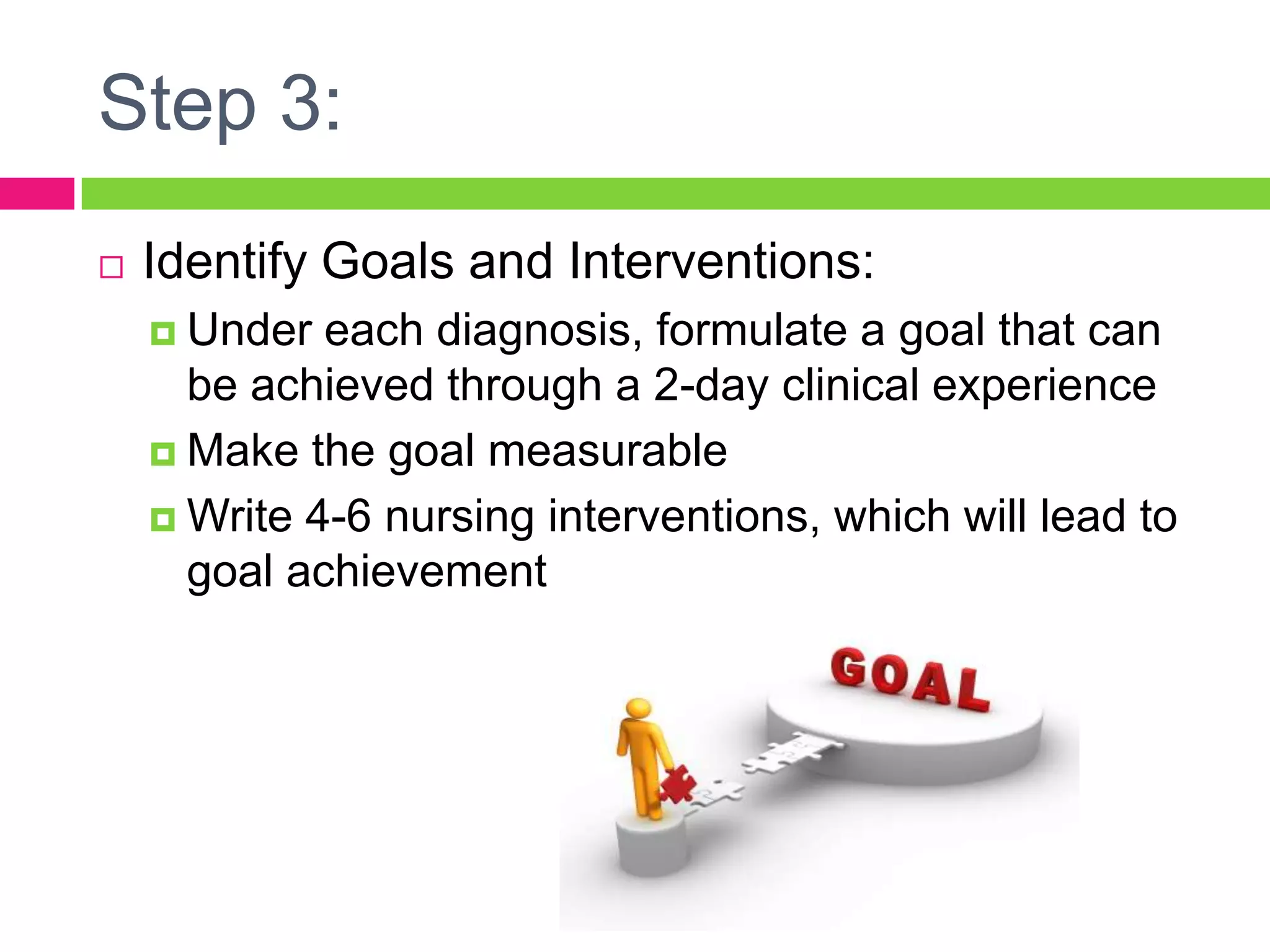
Step 3:Identify Goals and Interventions:Under each diagnosis, formulate a goal that can be achieved through a 2-day clinical experienceMake the goal measurableWrite 4-6 nursing interventions, which will lead to goal achievement
Step 4:Evaluate Patient Response:Evaluate how effective the plan was, and whether the goals were achievedInclude any revisions or recommendations you would include to achieve the desired goal
Step 5:Linking the Data:Provide a holistic view of the patientDraw dotted lines between the diagnoses that impact one anotherUtilize critical thinking
Source:http://www.snjourney.com/ClinicalInfo/CarePlans/conceptmapguide.pdf

Concept map care plan 2

  • 1.
    Concept Map CarePlanBy: Sara Rieveley
  • 2.
    What is aconcept map care plan?A diagram of patient problems, supporting data, interventions, and evaluationsThey are used to organize patient data, analyze relationships in the data, and enable you to take a holistic view of the patients situationThrough diagnoses, you can evaluate what you know about the care for the patient and what further information you need to provide effective nursing care
  • 3.
    Step 1:Develop abasic skeleton diagram:Write the patient’s reason for admissionThink of general problems that represent the patient’s responsesFormulate a nursing diagnosis
  • 4.
    Step 2:Analyze andCategorize Data:Analyze and categorize the patients data collected Group the most important information first
  • 5.
    Step 3:Identify Goalsand Interventions:Under each diagnosis, formulate a goal that can be achieved through a 2-day clinical experienceMake the goal measurableWrite 4-6 nursing interventions, which will lead to goal achievement
  • 6.
    Step 4:Evaluate PatientResponse:Evaluate how effective the plan was, and whether the goals were achievedInclude any revisions or recommendations you would include to achieve the desired goal
  • 7.
    Step 5:Linking theData:Provide a holistic view of the patientDraw dotted lines between the diagnoses that impact one anotherUtilize critical thinking
  • 8.