CON 121
Concrete Aggregate


Session 2
Concrete Aggregates Production   1
Crushed Stone, Sand, and Gravel

   Most Abundant Natural Resource
   Used From Earliest Time of Civilization
   Fundamental Building Block-Modern Society
Aggregate Production-USGS (2006)

   2.9 Billion Metric tons
   9.8 tons/person
   Types of Aggregates
       Crushed Stone- Higher volume
       Sand/Gravel
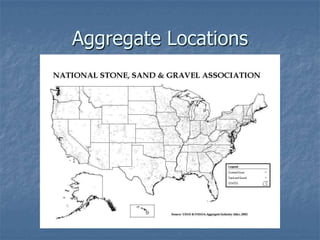
Aggregate Locations
Aggregate Trends

   Crushed Stone
       Smaller Footprint
       Limestone Reserves–100’s Feet Thick
   Sand/ Gravel
       Surficial Alluvial Deposits
       Reserves-50 Feet Deep
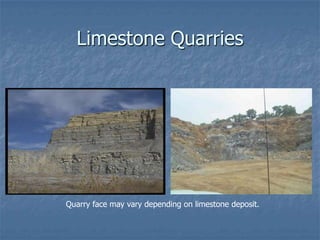
Limestone Quarries


Quarry face may vary depending on limestone deposit.
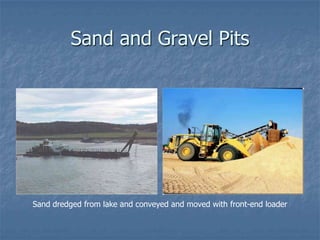
Sand and Gravel Pits


Sand dredged from lake and conveyed and moved with front-end loader
Land Use Concerns

   Mining Access
       Farmland-Agricultural
       Construction Sites
   Populated Areas
       Permitting
       Environmental noise
       Dust Issues
Aggregate Reserve Types

   Class A – Proven
   Class B – Probable
   Class C – Indicated
   Class D – Inferred
Production States (2006)
   Leading Crush Stone      Leading Sand/Gravel
       Pennsylvania             California
       Texas                    Texas
       Florida                  Michigan
       Illinois                 Arizona
       Georgia                  Ohio
Active Production (2006)
   Operations                  Average Output
       5600 Crushed stone          Crushed Stone Quarry
        quarries                     175,000 tons
       7000 Sand/Gravel            Sand/Gravel Quarry
        quarries                     100,000 tons
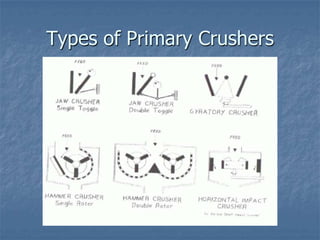
Types of Primary Crushers

   Compression
       Single Toggle Jaw Crusher
       Double Toggle Jaw Crusher
       Gyratory Crusher
   Impact
       Single roll/Hammer Mill
       Double roll/Hammer Mills
Types of Primary Crushers
Aggregate Processing
   Basic Processing
       Crushing
       Screening
       Washing
   Benefication
       Heavy media separation
       Jigging
       Rising-current classification
       Crushing
Crushing/Washing

   Screens used to Separate
       Smaller Screens
       Larger Screens
   Aggregate Crushed & Screened Several Times
   Aggregate Stockpiled According to Size
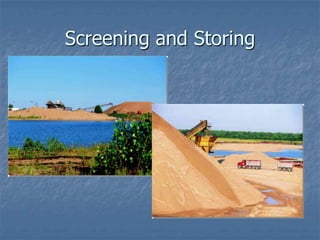
Screening and Storing
Heavy Media Separation

   Heavy Liquid – Relative Density (SpG)
   Heavier Particles Sink
   Lighter Particles Float
Jigging Separation

   Particles Separated by Density Differences
   Upward Pulsations of Water Move Lighter
    Particles on Top are Removed
Rising-Current Classification

   Particles with Large Differences in Density
    Separate
   Lighter Particles Float
Handling and Storing

   Minimize Separation
   Minimize Degradation
   Minimize Contamination
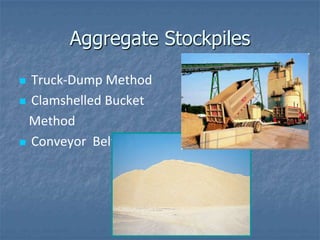
Aggregate Stockpiles

 Truck-Dump Method
 Clamshelled Bucket

  Method
 Conveyor Belt
Concrete Aggregates Production

Please return to Blackboard and watch the
following videos:
 Video 1: Storing / Handling

 Video 2: Particle Shape / Surface Texture

CON 121 Session 2 - Production

  • 1.
    CON 121 Concrete Aggregate Session2 Concrete Aggregates Production 1
  • 2.
    Crushed Stone, Sand,and Gravel  Most Abundant Natural Resource  Used From Earliest Time of Civilization  Fundamental Building Block-Modern Society
  • 3.
    Aggregate Production-USGS (2006)  2.9 Billion Metric tons  9.8 tons/person  Types of Aggregates  Crushed Stone- Higher volume  Sand/Gravel
  • 4.
  • 5.
    Aggregate Trends  Crushed Stone  Smaller Footprint  Limestone Reserves–100’s Feet Thick  Sand/ Gravel  Surficial Alluvial Deposits  Reserves-50 Feet Deep
  • 6.
    Limestone Quarries Quarry facemay vary depending on limestone deposit.
  • 7.
    Sand and GravelPits Sand dredged from lake and conveyed and moved with front-end loader
  • 8.
    Land Use Concerns  Mining Access  Farmland-Agricultural  Construction Sites  Populated Areas  Permitting  Environmental noise  Dust Issues
  • 9.
    Aggregate Reserve Types  Class A – Proven  Class B – Probable  Class C – Indicated  Class D – Inferred
  • 10.
    Production States (2006)  Leading Crush Stone  Leading Sand/Gravel  Pennsylvania  California  Texas  Texas  Florida  Michigan  Illinois  Arizona  Georgia  Ohio
  • 11.
    Active Production (2006)  Operations  Average Output  5600 Crushed stone  Crushed Stone Quarry quarries 175,000 tons  7000 Sand/Gravel  Sand/Gravel Quarry quarries 100,000 tons
  • 12.
    Types of PrimaryCrushers  Compression  Single Toggle Jaw Crusher  Double Toggle Jaw Crusher  Gyratory Crusher  Impact  Single roll/Hammer Mill  Double roll/Hammer Mills
  • 13.
  • 14.
    Aggregate Processing  Basic Processing  Crushing  Screening  Washing  Benefication  Heavy media separation  Jigging  Rising-current classification  Crushing
  • 15.
    Crushing/Washing  Screens used to Separate  Smaller Screens  Larger Screens  Aggregate Crushed & Screened Several Times  Aggregate Stockpiled According to Size
  • 16.
  • 17.
    Heavy Media Separation  Heavy Liquid – Relative Density (SpG)  Heavier Particles Sink  Lighter Particles Float
  • 18.
    Jigging Separation  Particles Separated by Density Differences  Upward Pulsations of Water Move Lighter Particles on Top are Removed
  • 19.
    Rising-Current Classification  Particles with Large Differences in Density Separate  Lighter Particles Float
  • 20.
    Handling and Storing  Minimize Separation  Minimize Degradation  Minimize Contamination
  • 21.
    Aggregate Stockpiles  Truck-DumpMethod  Clamshelled Bucket Method  Conveyor Belt
  • 22.
    Concrete Aggregates Production Pleasereturn to Blackboard and watch the following videos:  Video 1: Storing / Handling  Video 2: Particle Shape / Surface Texture