Explore the Parts of a 
Computer 
Introduction 
Hardware 
Software 
Operating System 
CPU 
RAM 
ROM 
Computer Memory 
Motherboard 
BIOS 
Storage Devices 
Peripherals 
Power Supply 
Ports
What is a computer? 
 A computer is an electronic device 
that executes the instructions in a 
program. 
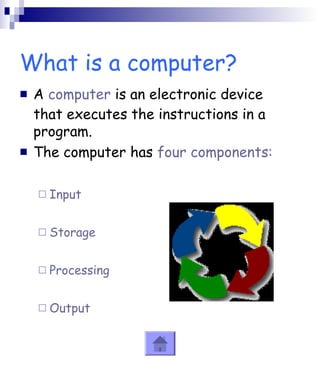
 The computer has four components: 
 Input 
 Storage 
 Processing 
 Output
Hardware 
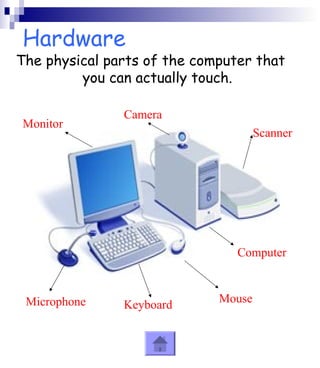
The physical parts of the computer that 
you can actually touch. 
Microphone Keyboard Mouse 
Scanner 
Monitor 
Computer 
Camera
Software 
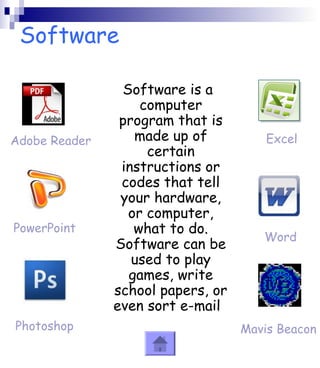
Software is a 
computer 
program that is 
made up of 
certain 
instructions or 
codes that tell 
your hardware, 
or computer, 
what to do. 
Software can be 
used to play 
games, write 
school papers, or 
even sort e-mail. 
Adobe Reader 
PowerPoint 
Excel 
Word 
Photoshop Mavis Beacon
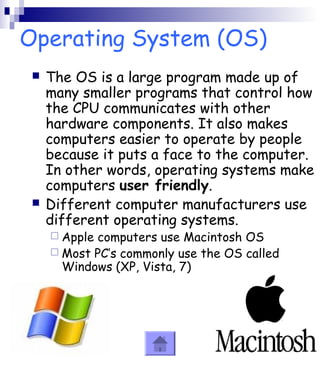
Operating System (OS) 
 The OS is a large program made up of 
many smaller programs that control how 
the CPU communicates with other 
hardware components. It also makes 
computers easier to operate by people 
because it puts a face to the computer. 
In other words, operating systems make 
computers user friendly. 
 Different computer manufacturers use 
different operating systems. 
 Apple computers use Macintosh OS 
 Most PC’s commonly use the OS called 
Windows (XP, Vista, 7)
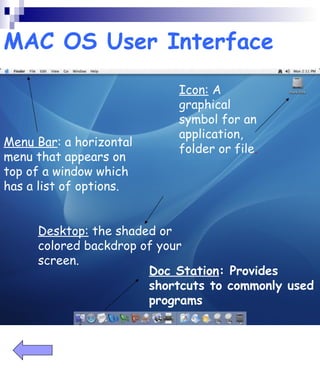
MAC OS User Interface 
Icon: A 
graphical 
symbol for an 
application, 
folder or file. 
Desktop: the shaded or 
colored backdrop of your 
screen. 
Doc Station: Provides 
shortcuts to commonly used 
programs 
Menu Bar: a horizontal 
menu that appears on 
top of a window which 
has a list of options.
CPU (Microprocessor) 
 Stands for Central Processing Unit, which is the 
brain of your computer. It does all the thinking 
for the computer and process all the 
information to be turned into files on your 
computer. 
 The clock speed of the microprocessor in now 
measured in gigahertz (GHz). 
 The higher the number; the quicker the 
information processed. 
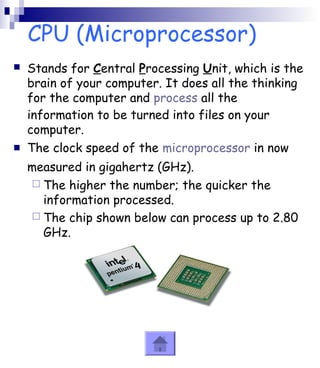
 The chip shown below can process up to 2.80 
GHz.
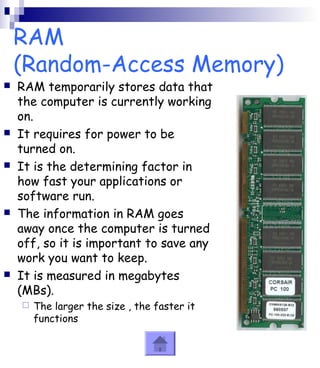
RAM 
(Random-Access Memory) 
 RAM temporarily stores data that 
the computer is currently working 
on. 
 It requires for power to be 
turned on. 
 It is the determining factor in 
how fast your applications or 
software run. 
 The information in RAM goes 
away once the computer is turned 
off, so it is important to save any 
work you want to keep. 
 It is measured in megabytes 
(MBs). 
 The larger the size , the faster it 
functions
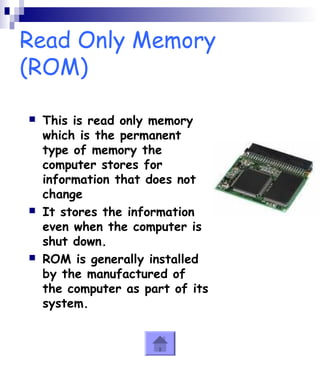
Read Only Memory 
(ROM) 
 This is read only memory 
which is the permanent 
type of memory the 
computer stores for 
information that does not 
change 
 It stores the information 
even when the computer is 
shut down. 
 ROM is generally installed 
by the manufactured of 
the computer as part of its 
system.
How is computer memory 
measured? 
 Computer memory is measured in Bytes, 
which is a unit of storage capable of 
holding a single character. 
Kilobyte = about 1000 bytes. 
Megabyte = about one million bytes. 
Gigabyte = about one billion bytes.
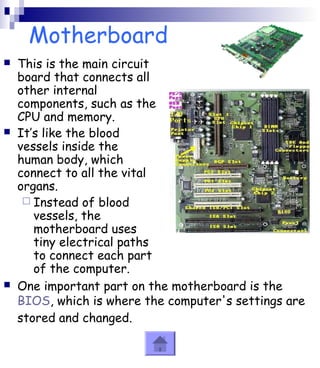
Motherboard 
 This is the main circuit 
board that connects all 
other internal 
components, such as the 
CPU and memory. 
 It’s like the blood 
vessels inside the 
human body, which 
connect to all the vital 
organs. 
 Instead of blood 
vessels, the 
motherboard uses 
tiny electrical paths 
to connect each part 
of the computer. 
 One important part on the motherboard is the 
BIOS, which is where the computer's settings are 
stored and changed.
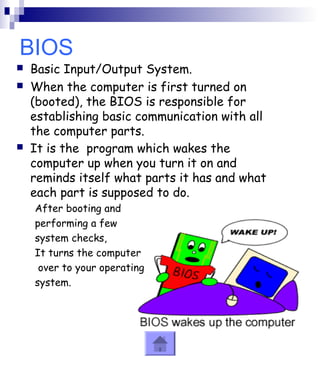
BIOS 
 Basic Input/Output System. 
 When the computer is first turned on 
(booted), the BIOS is responsible for 
establishing basic communication with all 
the computer parts. 
 It is the program which wakes the 
computer up when you turn it on and 
reminds itself what parts it has and what 
each part is supposed to do. 
After booting and 
performing a few 
system checks, 
It turns the computer 
over to your operating 
system.
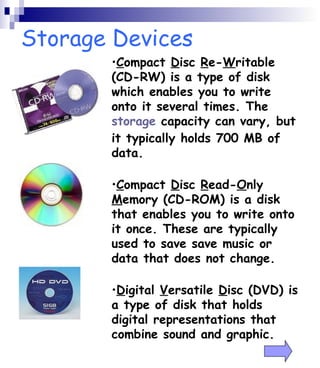
Storage Devices 
•Compact Disc Re-Writable 
(CD-RW) is a type of disk 
which enables you to write 
onto it several times. The 
storage capacity can vary, but 
it typically holds 700 MB of 
data. 
•Compact Disc Read-Only 
Memory (CD-ROM) is a disk 
that enables you to write onto 
it once. These are typically 
used to save save music or 
data that does not change. 
•Digital Versatile Disc (DVD) is 
a type of disk that holds 
digital representations that 
combine sound and graphic.
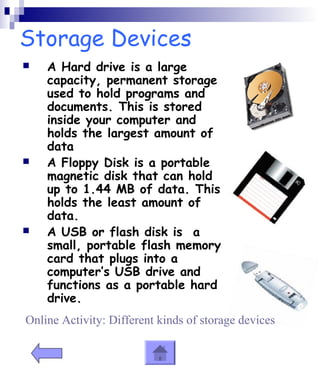
Storage Devices 
 A Hard drive is a large 
capacity, permanent storage 
used to hold programs and 
documents. This is stored 
inside your computer and 
holds the largest amount of 
data 
 A Floppy Disk is a portable 
magnetic disk that can hold 
up to 1.44 MB of data. This 
holds the least amount of 
data. 
 A USB or flash disk is a 
small, portable flash memory 
card that plugs into a 
computer’s USB drive and 
functions as a portable hard 
drive. 
Online Activity: Different kinds of storage devices
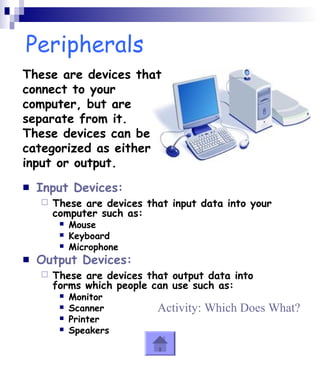
Peripherals 
These are devices that 
connect to your 
computer, but are 
separate from it. 
These devices can be 
categorized as either 
input or output. 
 Input Devices: 
 These are devices that input data into your 
computer such as: 
 Mouse 
 Keyboard 
 Microphone 
 Output Devices: 
 These are devices that output data into 
forms which people can use such as: 
 Monitor 
 Scanner 
 Printer 
 Speakers 
Activity: Which Does What?
Power Supply 
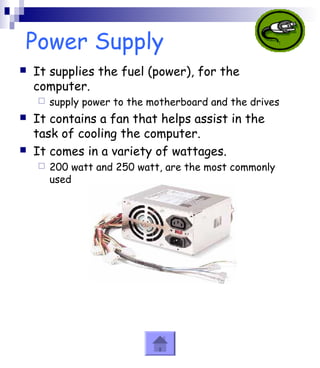
 It supplies the fuel (power), for the 
computer. 
 supply power to the motherboard and the drives 
 It contains a fan that helps assist in the 
task of cooling the computer. 
 It comes in a variety of wattages. 
 200 watt and 250 watt, are the most commonly 
used
Ports 
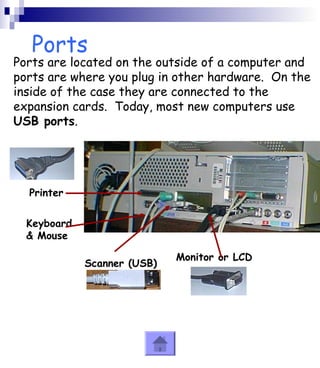
Ports are located on the outside of a computer and 
ports are where you plug in other hardware. On the 
inside of the case they are connected to the 
expansion cards. Today, most new computers use 
USB ports. 
Printer 
Keyboard 
& Mouse 
Scanner (USB) Monitor or LCD

Computerpartsppt3197

  • 1.
    Explore the Partsof a Computer Introduction Hardware Software Operating System CPU RAM ROM Computer Memory Motherboard BIOS Storage Devices Peripherals Power Supply Ports
  • 2.
    What is acomputer?  A computer is an electronic device that executes the instructions in a program.  The computer has four components:  Input  Storage  Processing  Output
  • 3.
    Hardware The physicalparts of the computer that you can actually touch. Microphone Keyboard Mouse Scanner Monitor Computer Camera
  • 4.
    Software Software isa computer program that is made up of certain instructions or codes that tell your hardware, or computer, what to do. Software can be used to play games, write school papers, or even sort e-mail. Adobe Reader PowerPoint Excel Word Photoshop Mavis Beacon
  • 5.
    Operating System (OS)  The OS is a large program made up of many smaller programs that control how the CPU communicates with other hardware components. It also makes computers easier to operate by people because it puts a face to the computer. In other words, operating systems make computers user friendly.  Different computer manufacturers use different operating systems.  Apple computers use Macintosh OS  Most PC’s commonly use the OS called Windows (XP, Vista, 7)
  • 6.
    MAC OS UserInterface Icon: A graphical symbol for an application, folder or file. Desktop: the shaded or colored backdrop of your screen. Doc Station: Provides shortcuts to commonly used programs Menu Bar: a horizontal menu that appears on top of a window which has a list of options.
  • 7.
    CPU (Microprocessor) Stands for Central Processing Unit, which is the brain of your computer. It does all the thinking for the computer and process all the information to be turned into files on your computer.  The clock speed of the microprocessor in now measured in gigahertz (GHz).  The higher the number; the quicker the information processed.  The chip shown below can process up to 2.80 GHz.
  • 8.
    RAM (Random-Access Memory)  RAM temporarily stores data that the computer is currently working on.  It requires for power to be turned on.  It is the determining factor in how fast your applications or software run.  The information in RAM goes away once the computer is turned off, so it is important to save any work you want to keep.  It is measured in megabytes (MBs).  The larger the size , the faster it functions
  • 9.
    Read Only Memory (ROM)  This is read only memory which is the permanent type of memory the computer stores for information that does not change  It stores the information even when the computer is shut down.  ROM is generally installed by the manufactured of the computer as part of its system.
  • 10.
    How is computermemory measured?  Computer memory is measured in Bytes, which is a unit of storage capable of holding a single character. Kilobyte = about 1000 bytes. Megabyte = about one million bytes. Gigabyte = about one billion bytes.
  • 11.
    Motherboard  Thisis the main circuit board that connects all other internal components, such as the CPU and memory.  It’s like the blood vessels inside the human body, which connect to all the vital organs.  Instead of blood vessels, the motherboard uses tiny electrical paths to connect each part of the computer.  One important part on the motherboard is the BIOS, which is where the computer's settings are stored and changed.
  • 12.
    BIOS  BasicInput/Output System.  When the computer is first turned on (booted), the BIOS is responsible for establishing basic communication with all the computer parts.  It is the program which wakes the computer up when you turn it on and reminds itself what parts it has and what each part is supposed to do. After booting and performing a few system checks, It turns the computer over to your operating system.
  • 13.
    Storage Devices •CompactDisc Re-Writable (CD-RW) is a type of disk which enables you to write onto it several times. The storage capacity can vary, but it typically holds 700 MB of data. •Compact Disc Read-Only Memory (CD-ROM) is a disk that enables you to write onto it once. These are typically used to save save music or data that does not change. •Digital Versatile Disc (DVD) is a type of disk that holds digital representations that combine sound and graphic.
  • 14.
    Storage Devices A Hard drive is a large capacity, permanent storage used to hold programs and documents. This is stored inside your computer and holds the largest amount of data  A Floppy Disk is a portable magnetic disk that can hold up to 1.44 MB of data. This holds the least amount of data.  A USB or flash disk is a small, portable flash memory card that plugs into a computer’s USB drive and functions as a portable hard drive. Online Activity: Different kinds of storage devices
  • 15.
    Peripherals These aredevices that connect to your computer, but are separate from it. These devices can be categorized as either input or output.  Input Devices:  These are devices that input data into your computer such as:  Mouse  Keyboard  Microphone  Output Devices:  These are devices that output data into forms which people can use such as:  Monitor  Scanner  Printer  Speakers Activity: Which Does What?
  • 16.
    Power Supply It supplies the fuel (power), for the computer.  supply power to the motherboard and the drives  It contains a fan that helps assist in the task of cooling the computer.  It comes in a variety of wattages.  200 watt and 250 watt, are the most commonly used
  • 17.
    Ports Ports arelocated on the outside of a computer and ports are where you plug in other hardware. On the inside of the case they are connected to the expansion cards. Today, most new computers use USB ports. Printer Keyboard & Mouse Scanner (USB) Monitor or LCD