COMPUTERISED WHEEL
ALIGNMENT AND
BALANCING
ANANTHU P SAJEEV
S5 MECHANICAL
ROLL NO : 17
REG NO : 17022077
Abstract
This project aimed at studying of wheel
balance by using wheel balancing machine
for passenger car wheel. This Balancing
machine for car wheel is designed for
automatic measurement and correction of
dynamic
balancing
unbalancing
machine is
normally the
integrated into a
wheel assembly line.
What is wheel balancing?
• Wheel balancing is the operation performed
in order to attain uniform traction and to
avoid vibrations in automobiles by addition of
weights on the rim in order to
the wheel mass evenly during
balancing
distribute
rotation.
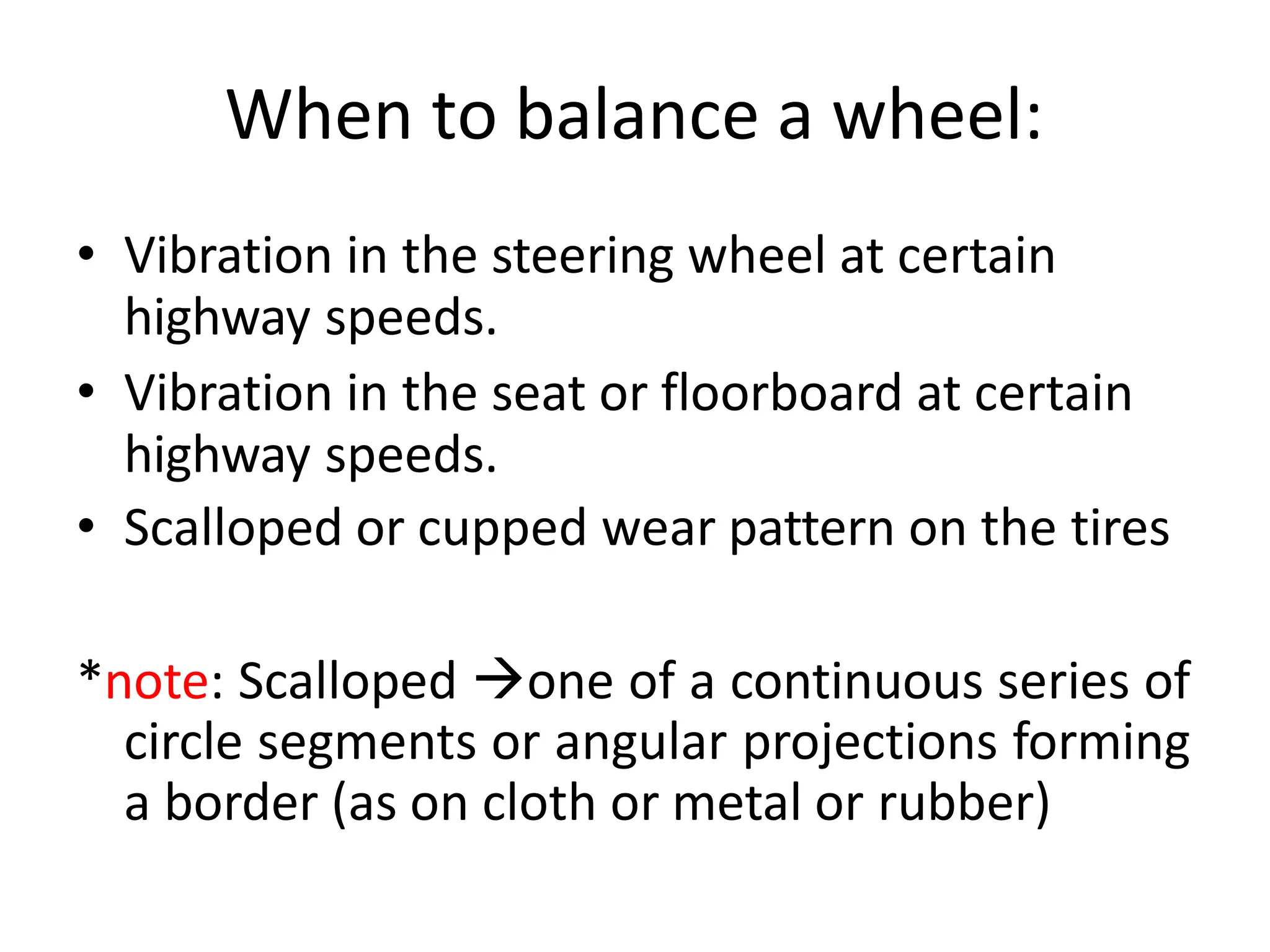
When to balance a wheel:
• Vibration in the steering wheel at certain
highway speeds.
• Vibration in the seat or floorboard at certain
highway speeds.
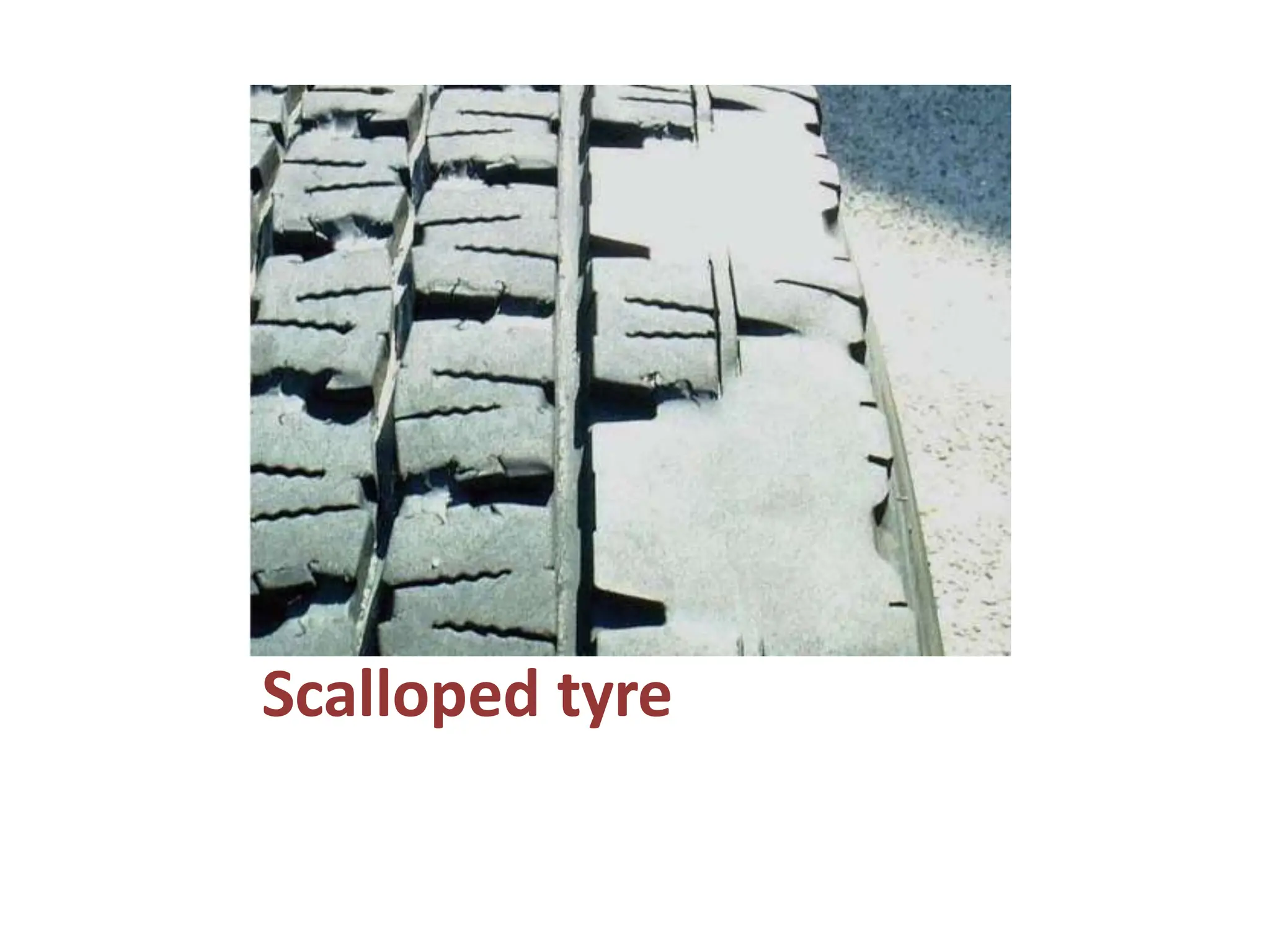
• Scalloped or cupped wear pattern on the tires
*note: Scalloped one of a continuous series of
circle segments or angular projections forming
a border (as on cloth or metal or rubber)
Scalloped tyre
DYNAMIC BALANCE
*Dynamic balance describes the forces generated by
asymmetric mass distribution when the tire is rotated,
usually at a high speed.
*In the tire factory the tire is mounted on a balancing
machine test wheel, the assembly is accelerated up to
a speed of 300 RPM or higher, and sensors measure
the forces of unbalance as the tire rotates.
*Dynamic balance is better (it is more comprehensive)
than static balance alone, because both couple and
static forces are measured and corrected.
EFFECTS OF WHEEL MISBALANCING:
• When the tire rotates, asymmetric masses
cause the wheel to wobble, which can cause
ride disturbances, usually vertical and lateral
vibrations. It can also result in a wobbling of
the steering.
• Wheels that are not balanced or are out of
balance generally produce a vibration that is
uncomfortable to drive in and results in
premature wearing of suspension and
steering components, rotating parts and tyres.
WHEEL BALANCING MACHINE
• A balancing machine is a measuring tool used
for balancing rotating machine parts such as
wheels, rotors for electric motors, fans,
turbines, disc brakes, disc drives, propellers
and pumps.
• The machine usually consists of two rigid
pedestals, with suspension and bearings on
top supporting a mounting platform.
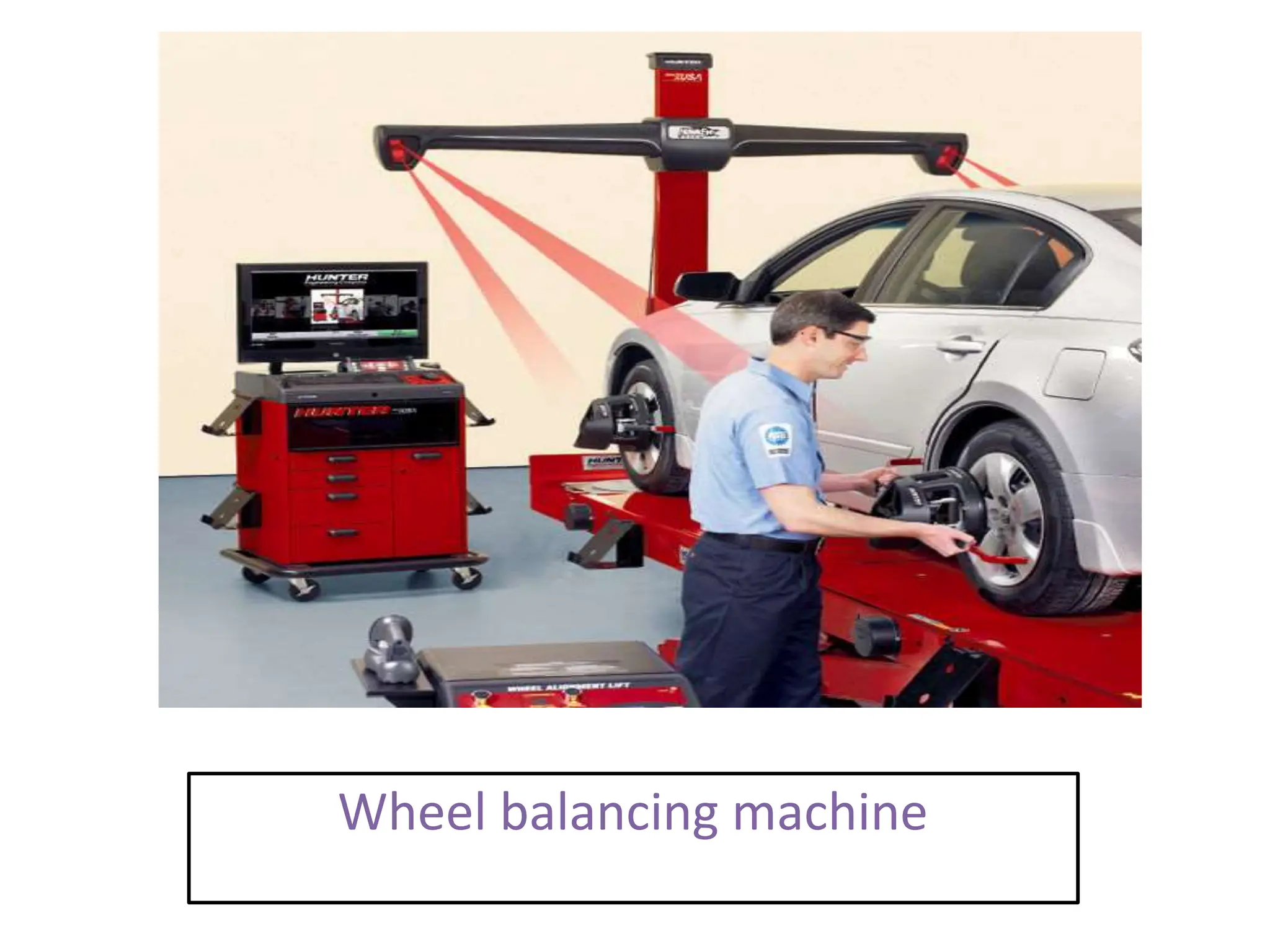
Wheel balancing machine
PROCEDURE FOR BALANCING AN
UNBALANCED WHEEL
• The tire is made free from all the small stones,
if any .
• The wheel is fixed to spindle of wheel balancing
machine by use of quick cone lock nut.
• Quick cone lock nut ensures fast mounting and
fast removal of tire.
• Wheel balancing machine is switch on.
• The spindle is made to rotate at speed of 400
rpm.
• The rotation of the spindle is stopped.
• Wheel balancing machine determines the size
of weights and where to locate weight on the
wheel.
• The size of the weight and location of the
weight to be placed is shown on the monitor
of the wheel balancing machine.
• The weight is fixed to rim at exact location
which is shown on the monitor.
• And wheel is removed from the spindle of
wheel balancing by the use of quick cone lock
nut.
• Now the wheel is balanced.
• Now it can be used for comfortable driving.
Weight on rim
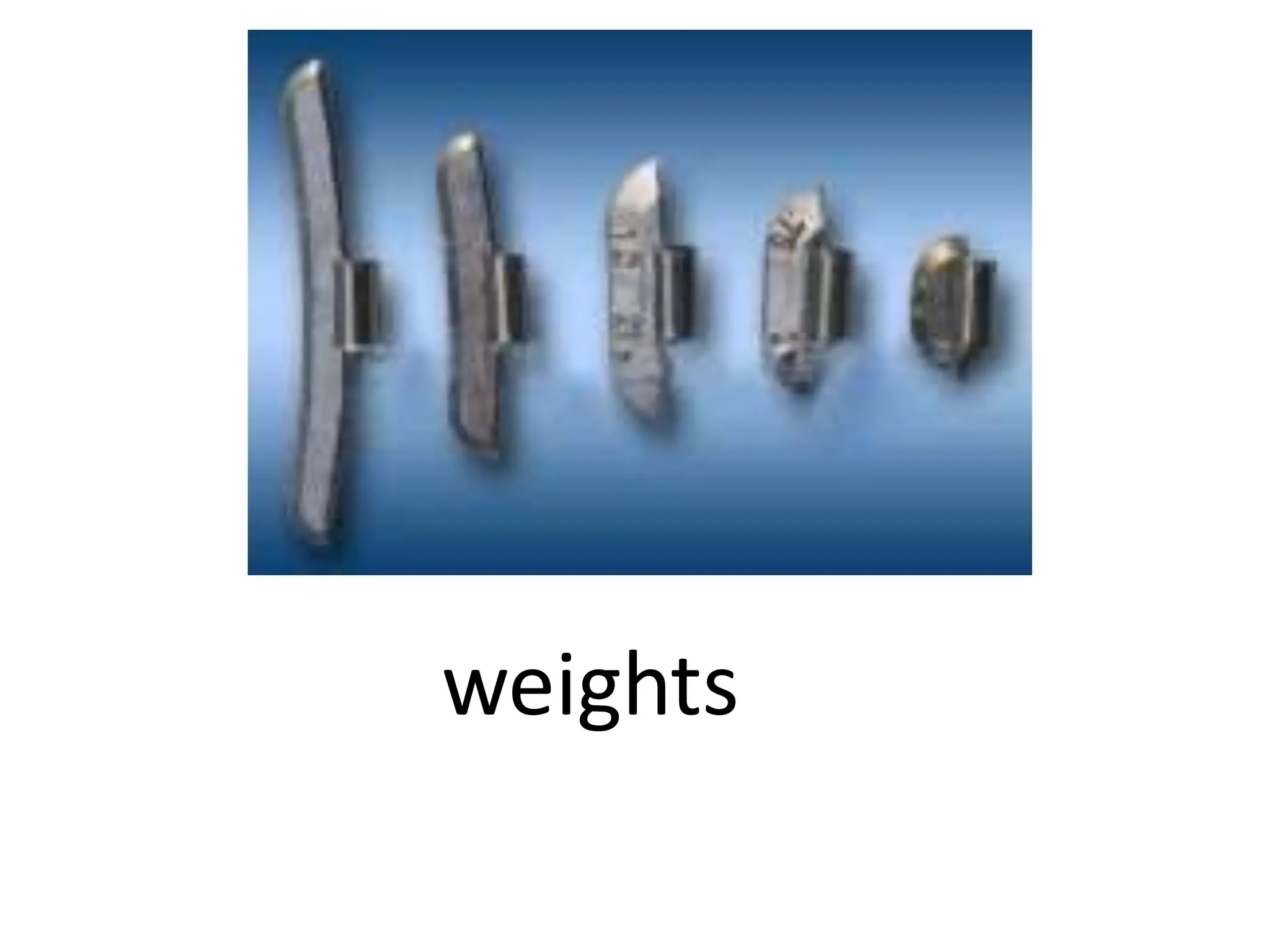
Material of balancing masses
• Previously lead is used as a
material for manufacturing a
weight. Because lead is toxic
material so zinc is used for
preparing weights.
weights
Conclusion
• Wheels are balanced on a wheel balancing
machine. The machine rotates the tire and wheel
assembly and automatically calculates the weight
and location of the balance counter weight. And
require amount of weights are added to rim of
wheel.
• It is observed that by balancing the wheel, the
life of the tire will increases, hence there will not
be any vibrations in steering or car and the drive
will be smooth and comfortable.
REFERENCE
[1] "Indian Tyre Technical Advisory Committee" (ITTAC) Standard
Manual 2014, Pages R-08-R-20.
[2] Jim Lyons "Dynamic Balancing Causes, Corrections and Consequences" Main
Tech South '98, 1998, Pages 3-5.
[3] Luigi Buzzi,"Technical Elements of Rotor Balancing", CEMB Technical Booklet
N. 3 II Edition 1995, Pages 7-10

Computerized wheel alignment and balancing PPT.pptx

  • 1.
    COMPUTERISED WHEEL ALIGNMENT AND BALANCING ANANTHUP SAJEEV S5 MECHANICAL ROLL NO : 17 REG NO : 17022077
  • 2.
    Abstract This project aimedat studying of wheel balance by using wheel balancing machine for passenger car wheel. This Balancing machine for car wheel is designed for automatic measurement and correction of dynamic balancing unbalancing machine is normally the integrated into a wheel assembly line.
  • 3.
    What is wheelbalancing? • Wheel balancing is the operation performed in order to attain uniform traction and to avoid vibrations in automobiles by addition of weights on the rim in order to the wheel mass evenly during balancing distribute rotation.
  • 4.
    When to balancea wheel: • Vibration in the steering wheel at certain highway speeds. • Vibration in the seat or floorboard at certain highway speeds. • Scalloped or cupped wear pattern on the tires *note: Scalloped one of a continuous series of circle segments or angular projections forming a border (as on cloth or metal or rubber)
  • 5.
  • 10.
    DYNAMIC BALANCE *Dynamic balancedescribes the forces generated by asymmetric mass distribution when the tire is rotated, usually at a high speed. *In the tire factory the tire is mounted on a balancing machine test wheel, the assembly is accelerated up to a speed of 300 RPM or higher, and sensors measure the forces of unbalance as the tire rotates. *Dynamic balance is better (it is more comprehensive) than static balance alone, because both couple and static forces are measured and corrected.
  • 11.
    EFFECTS OF WHEELMISBALANCING: • When the tire rotates, asymmetric masses cause the wheel to wobble, which can cause ride disturbances, usually vertical and lateral vibrations. It can also result in a wobbling of the steering. • Wheels that are not balanced or are out of balance generally produce a vibration that is uncomfortable to drive in and results in premature wearing of suspension and steering components, rotating parts and tyres.
  • 12.
    WHEEL BALANCING MACHINE •A balancing machine is a measuring tool used for balancing rotating machine parts such as wheels, rotors for electric motors, fans, turbines, disc brakes, disc drives, propellers and pumps. • The machine usually consists of two rigid pedestals, with suspension and bearings on top supporting a mounting platform.
  • 13.
  • 14.
    PROCEDURE FOR BALANCINGAN UNBALANCED WHEEL • The tire is made free from all the small stones, if any . • The wheel is fixed to spindle of wheel balancing machine by use of quick cone lock nut. • Quick cone lock nut ensures fast mounting and fast removal of tire. • Wheel balancing machine is switch on. • The spindle is made to rotate at speed of 400 rpm. • The rotation of the spindle is stopped.
  • 15.
    • Wheel balancingmachine determines the size of weights and where to locate weight on the wheel. • The size of the weight and location of the weight to be placed is shown on the monitor of the wheel balancing machine. • The weight is fixed to rim at exact location which is shown on the monitor. • And wheel is removed from the spindle of wheel balancing by the use of quick cone lock nut. • Now the wheel is balanced. • Now it can be used for comfortable driving.
  • 16.
  • 17.
    Material of balancingmasses • Previously lead is used as a material for manufacturing a weight. Because lead is toxic material so zinc is used for preparing weights.
  • 18.
  • 19.
    Conclusion • Wheels arebalanced on a wheel balancing machine. The machine rotates the tire and wheel assembly and automatically calculates the weight and location of the balance counter weight. And require amount of weights are added to rim of wheel. • It is observed that by balancing the wheel, the life of the tire will increases, hence there will not be any vibrations in steering or car and the drive will be smooth and comfortable.
  • 20.
    REFERENCE [1] "Indian TyreTechnical Advisory Committee" (ITTAC) Standard Manual 2014, Pages R-08-R-20. [2] Jim Lyons "Dynamic Balancing Causes, Corrections and Consequences" Main Tech South '98, 1998, Pages 3-5. [3] Luigi Buzzi,"Technical Elements of Rotor Balancing", CEMB Technical Booklet N. 3 II Edition 1995, Pages 7-10