1
Computer Architecture – An Overview
Session by
C.UDHAYAKUMAR, AP/ECEEC 8552 – Computer Architecture and Organization
2
Agenda of the session
2
• Course Preface
• Course Objective
• Syllabus
• Introduction to Basic Organization of a Computer
• Video Clip of Computer Architecture and Organization
3
Course Preface
3
• The definition of the term “organizing” is to put together into an orderly, functional,
and structured whole.
• The term Computer Organization refers to a conceptual understanding of the inner
workings of computers.
Computer Organization
Computer Architecture:
• Computer architecture is the conceptual design and fundamental operational
structure of a computer system.
• It is a functional description of requirements and design implementations for the
various parts of a computer, focusing largely on the way by which the central
processing unit (CPU) performs internally and accesses addresses in memory.
4
Course Objective
4
• To make students understand the basic structure and operation of digital computer.
• To understand the hardware-software interface.
• To familiarize the students with arithmetic and logic unit and implementation of fixed
point and floating- point arithmetic operations.
• To expose the students to the concept of pipelining.
• To familiarize the students with hierarchical memory system including cache
memories and virtual memory.
• To expose the students with different ways of communicating with I/O devices and
standard I/O interfaces.
5
Syllabus
5
Unit 1 - COMPUTER ORGANIZATION & INSTRUCTIONS
Basics of a computer system: Evolution, Ideas, Technology, Performance, Power wall,
Uniprocessors to Multiprocessors. Addressing and addressing modes. Instructions:
Operations and Operands, Representing instructions, Logical operations, control
operations.
66
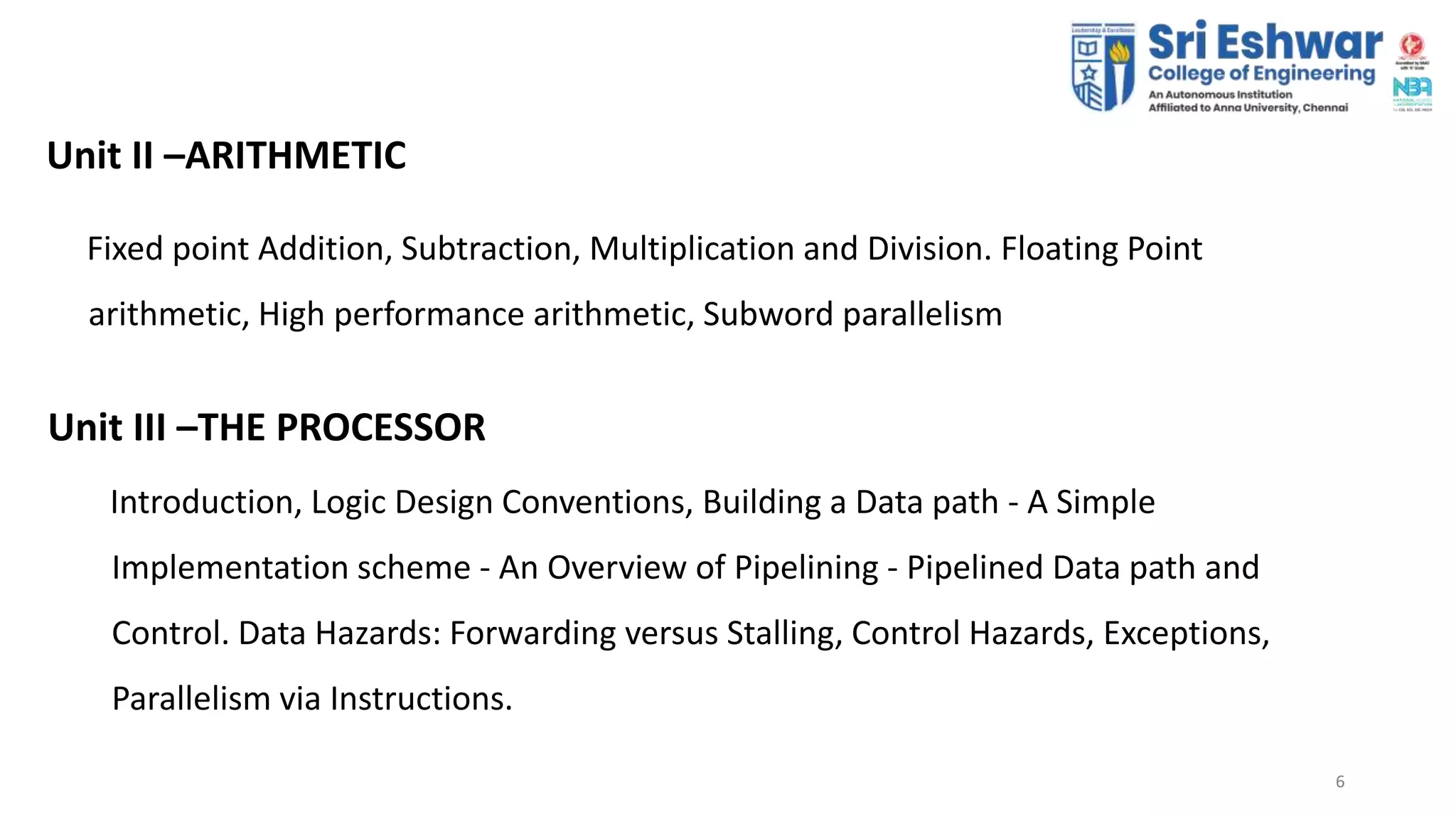
Unit II –ARITHMETIC
Fixed point Addition, Subtraction, Multiplication and Division. Floating Point
arithmetic, High performance arithmetic, Subword parallelism
Unit III –THE PROCESSOR
Introduction, Logic Design Conventions, Building a Data path - A Simple
Implementation scheme - An Overview of Pipelining - Pipelined Data path and
Control. Data Hazards: Forwarding versus Stalling, Control Hazards, Exceptions,
Parallelism via Instructions.
77
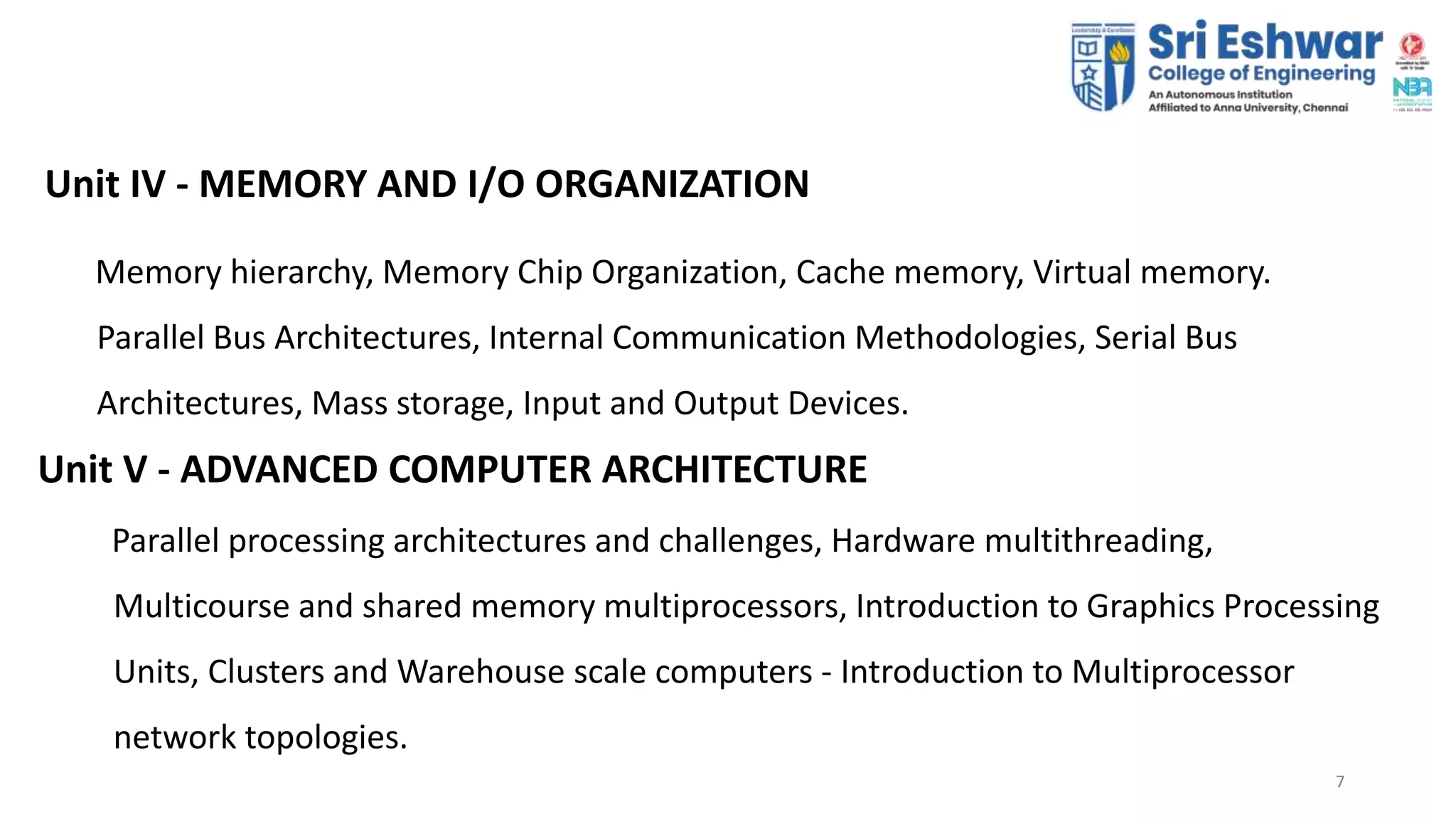
Unit IV - MEMORY AND I/O ORGANIZATION
Memory hierarchy, Memory Chip Organization, Cache memory, Virtual memory.
Parallel Bus Architectures, Internal Communication Methodologies, Serial Bus
Architectures, Mass storage, Input and Output Devices.
Unit V - ADVANCED COMPUTER ARCHITECTURE
Parallel processing architectures and challenges, Hardware multithreading,
Multicourse and shared memory multiprocessors, Introduction to Graphics Processing
Units, Clusters and Warehouse scale computers - Introduction to Multiprocessor
network topologies.
8
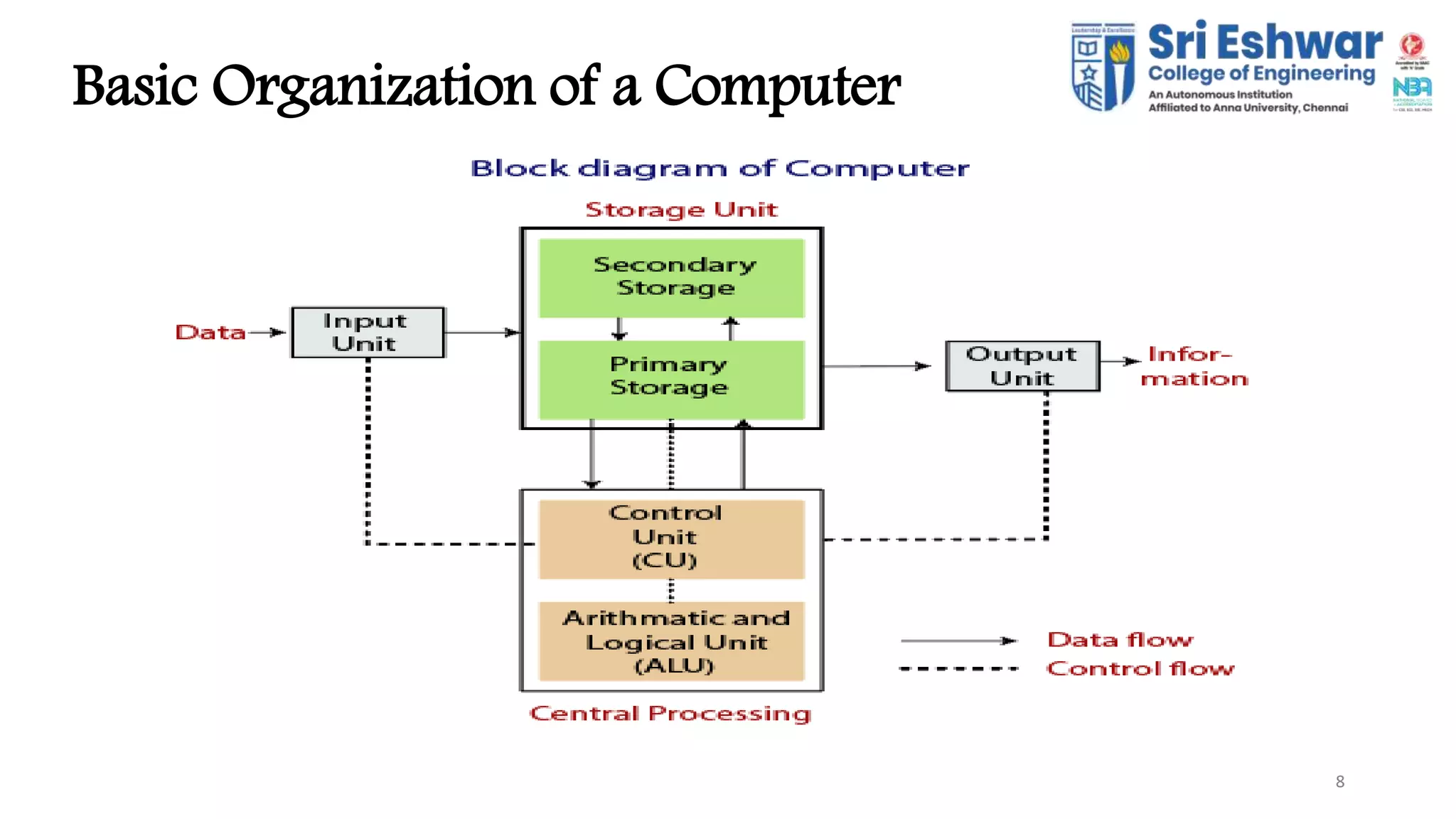
Basic Organization of a Computer
8
9
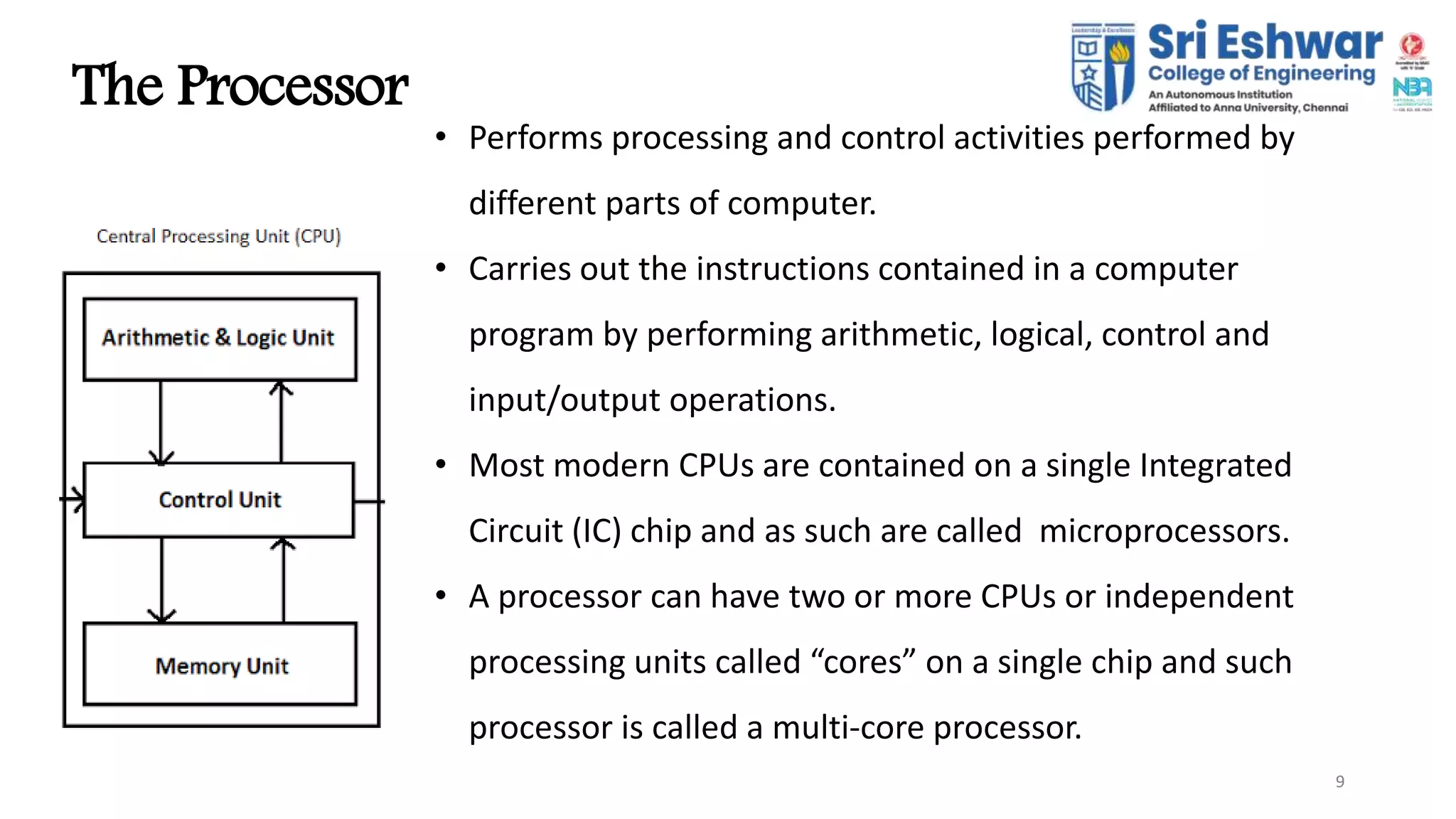
The Processor
9
• Performs processing and control activities performed by
different parts of computer.
• Carries out the instructions contained in a computer
program by performing arithmetic, logical, control and
input/output operations.
• Most modern CPUs are contained on a single Integrated
Circuit (IC) chip and as such are called microprocessors.
• A processor can have two or more CPUs or independent
processing units called “cores” on a single chip and such
processor is called a multi-core processor.
10
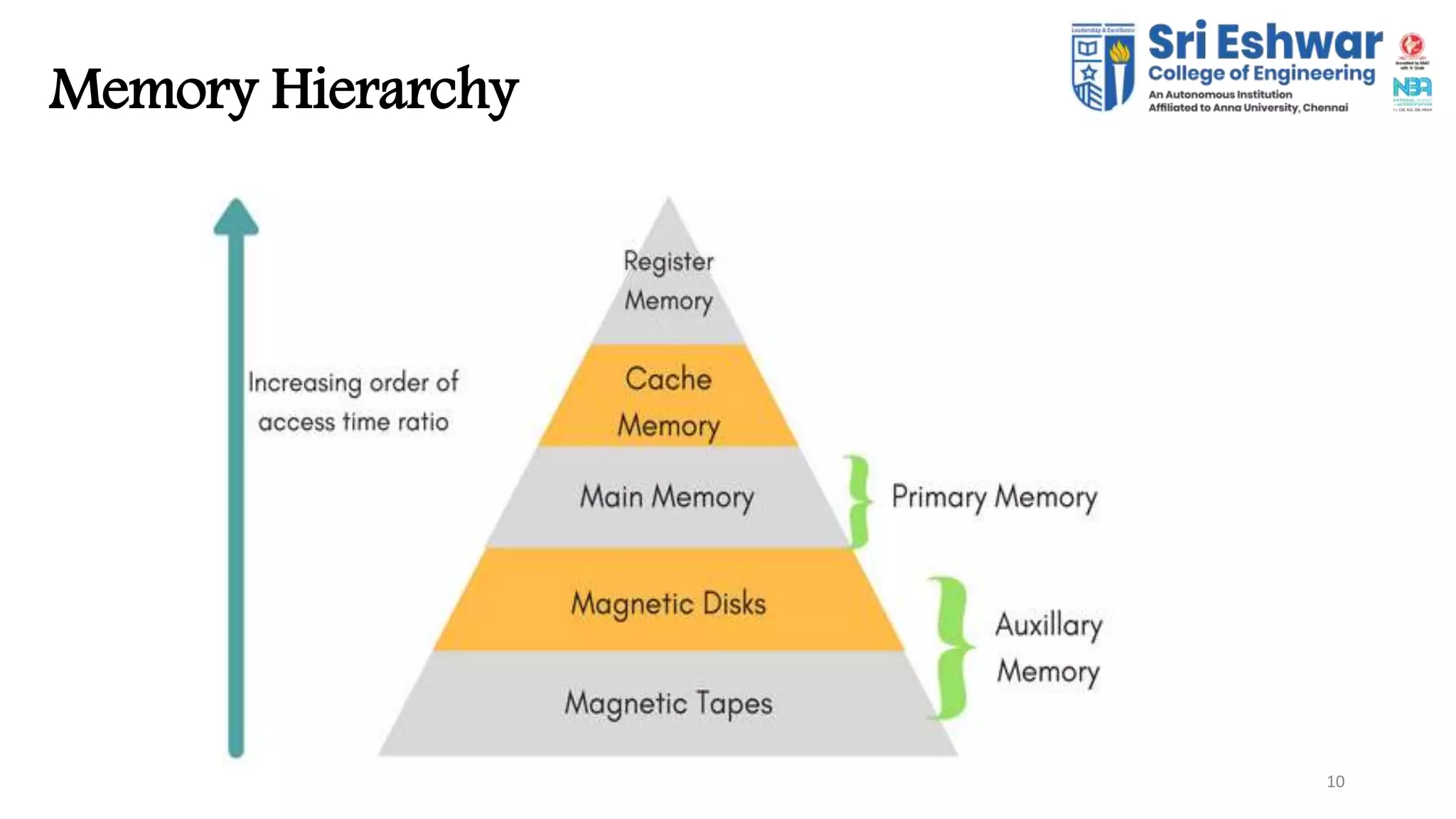
Memory Hierarchy
11
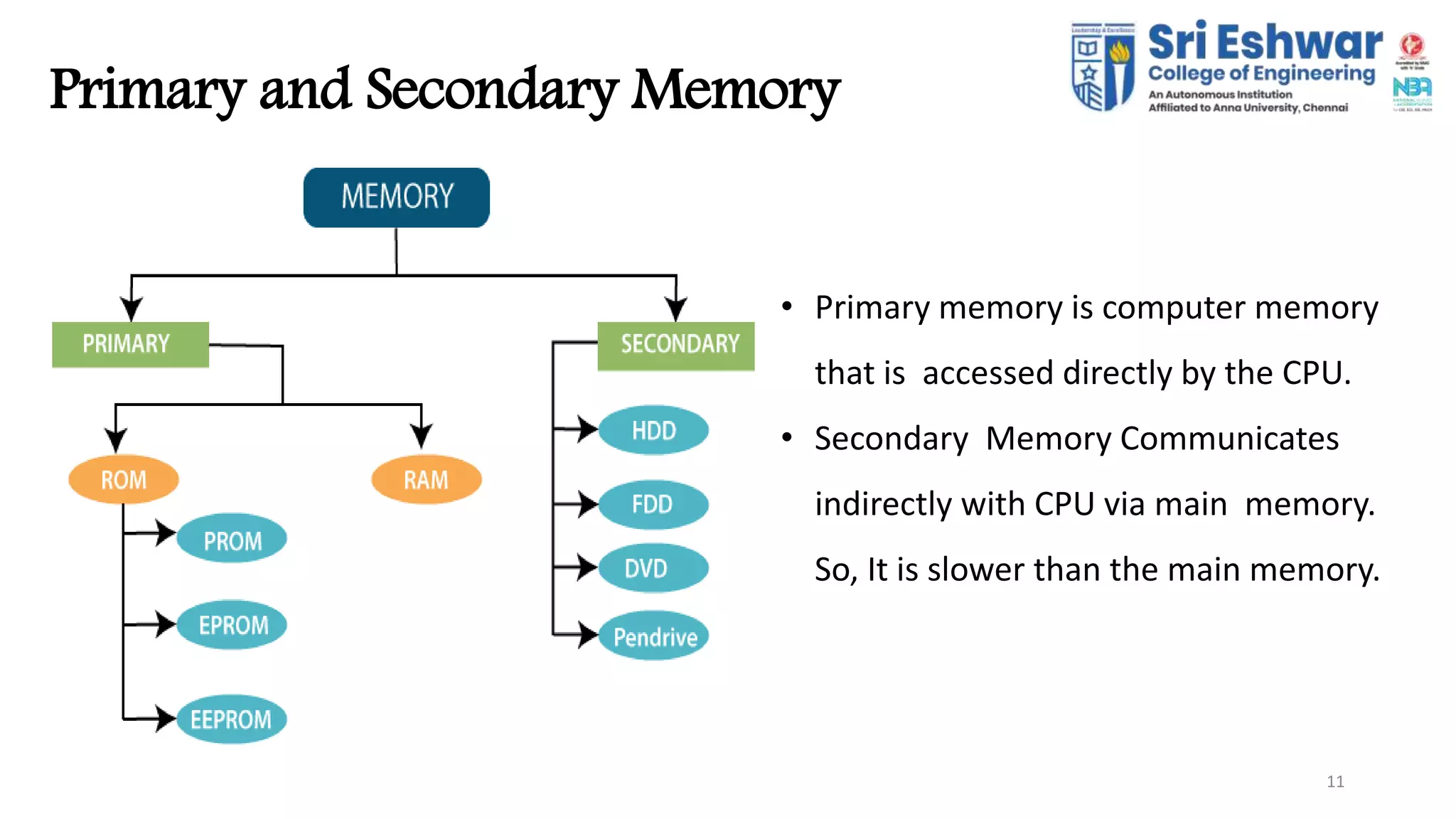
Primary and Secondary Memory
• Primary memory is computer memory
that is accessed directly by the CPU.
• Secondary Memory Communicates
indirectly with CPU via main memory.
So, It is slower than the main memory.
12
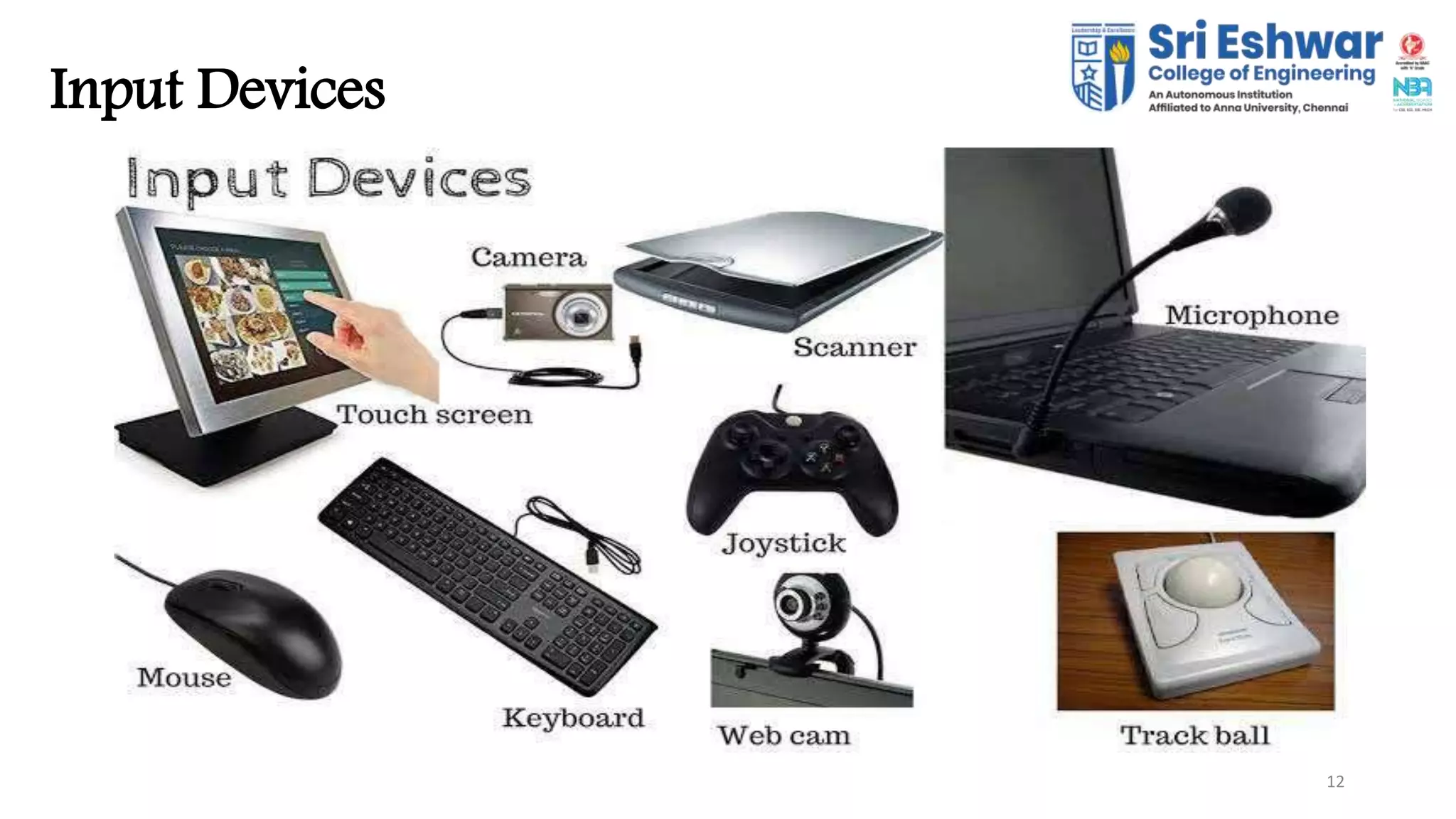
Input Devices
13
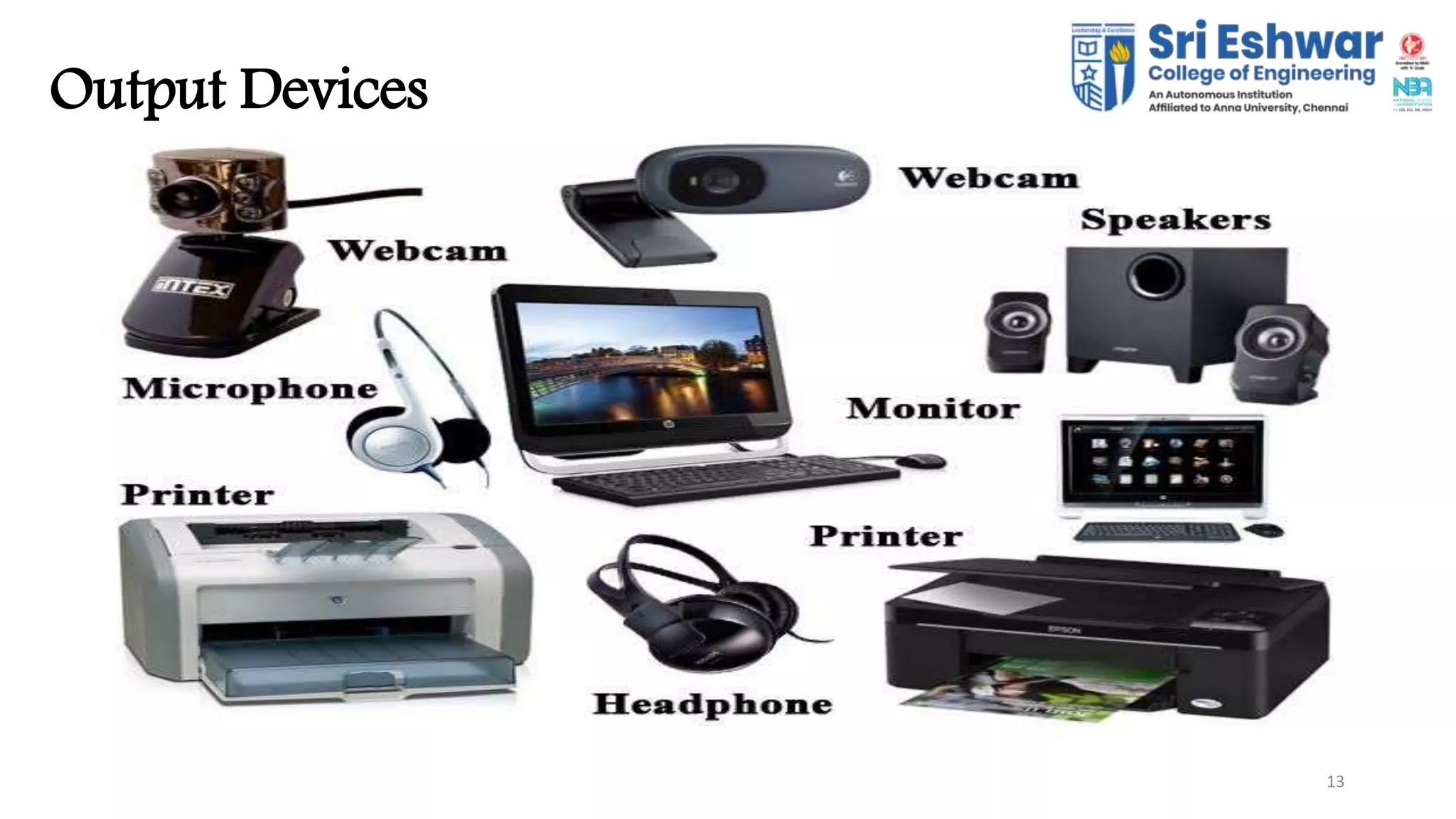
Output Devices
14
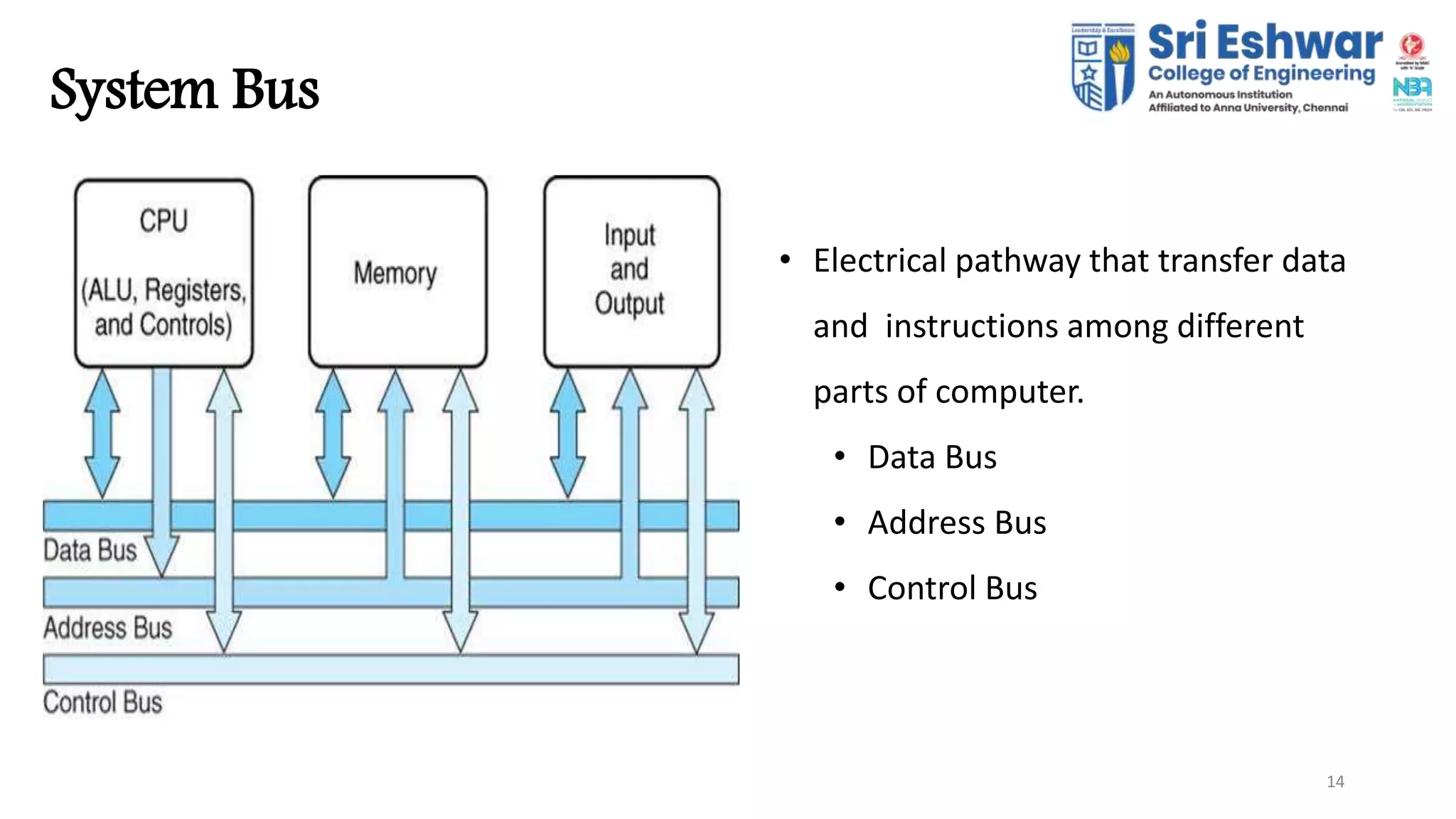
System Bus
• Electrical pathway that transfer data
and instructions among different
parts of computer.
• Data Bus
• Address Bus
• Control Bus
15
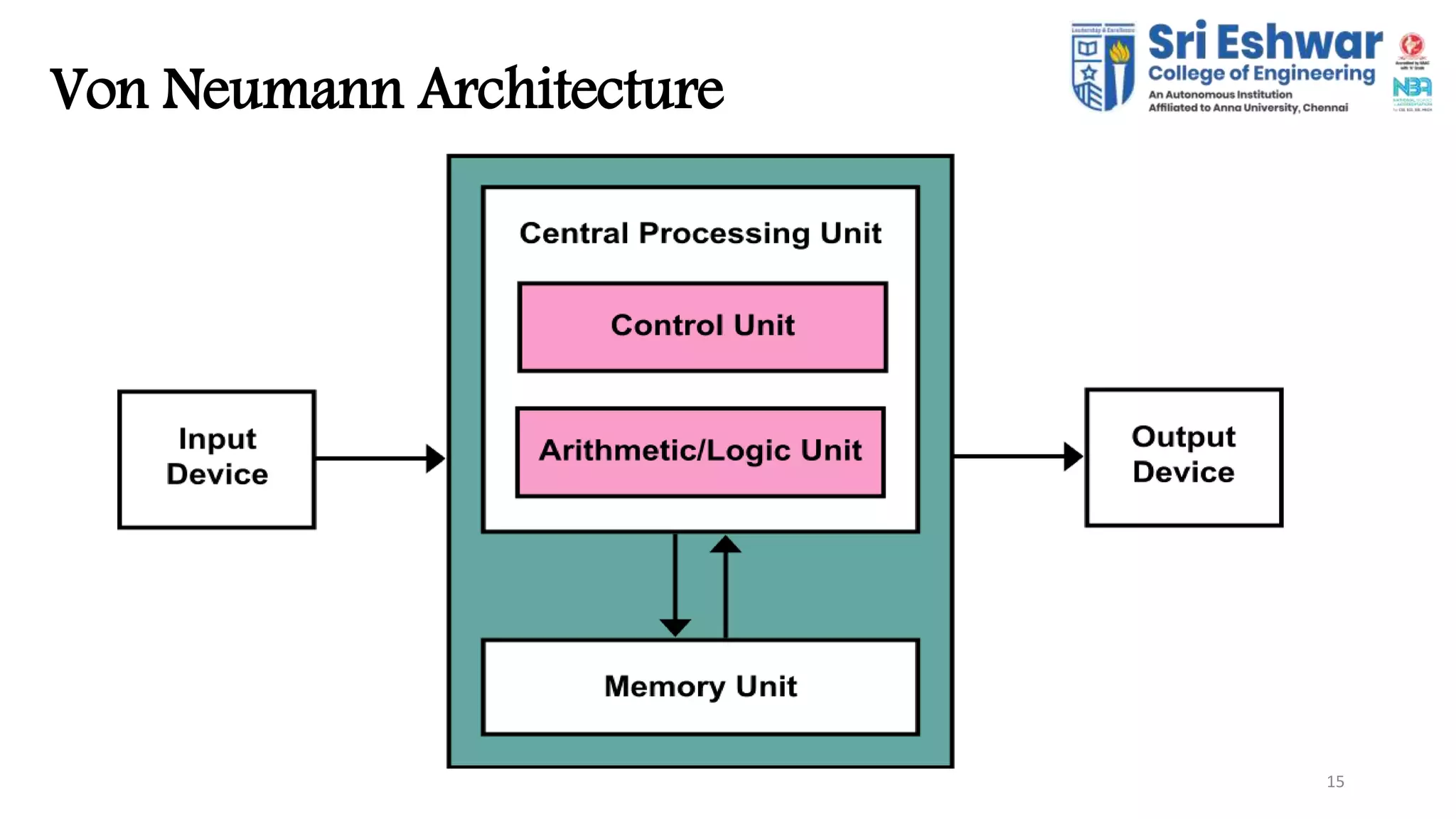
Von Neumann Architecture
16
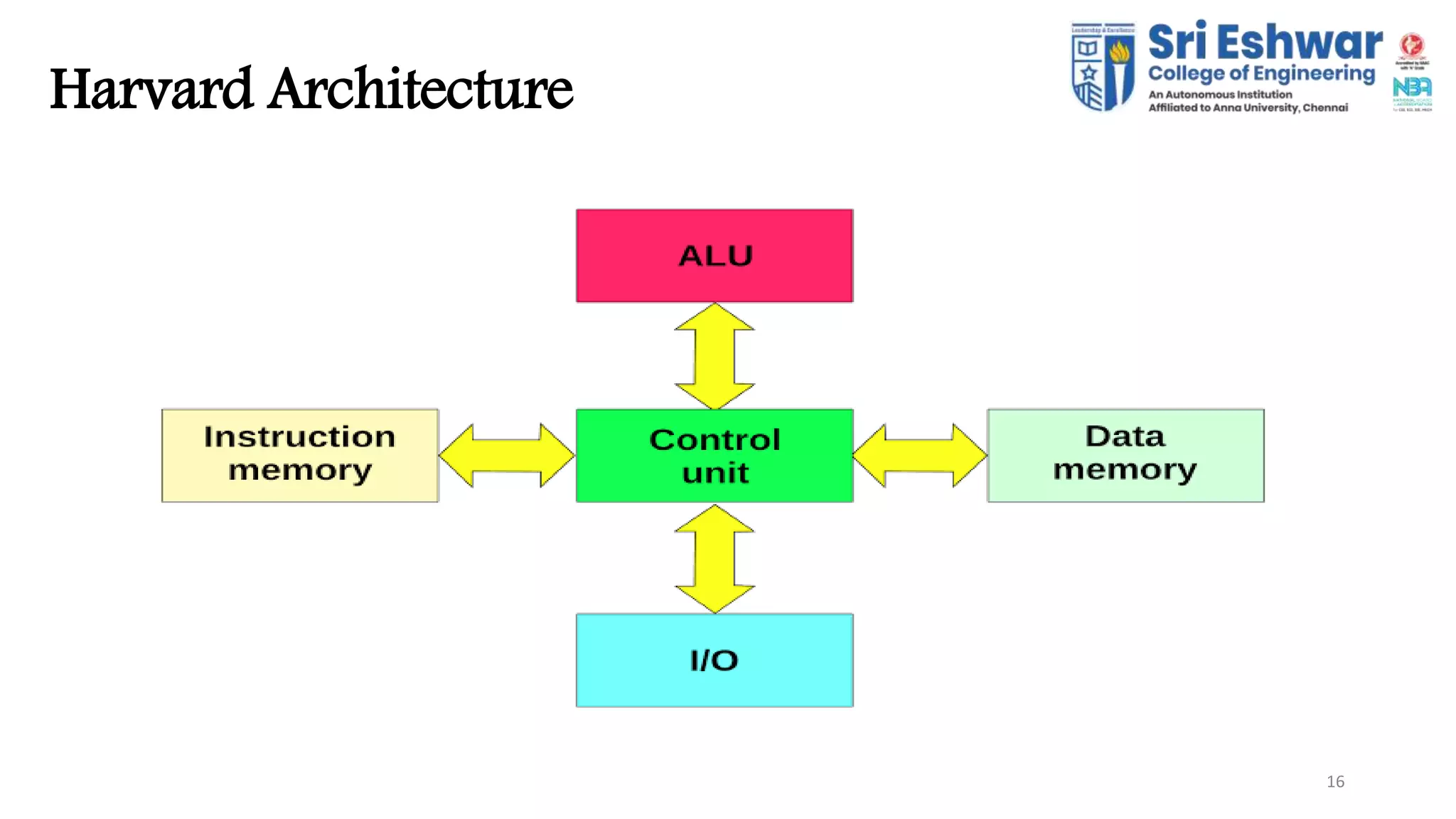
Harvard Architecture
17
Video Clip of Computer Architecture
and Organization
https://youtu.be/OqbAWydNlcw
18
Session Handler Details
C.Udhayakumar,
AP/ECE
udhayakumar.c@sece.ac.in

Computer Architecture and Organiaztion- intro

  • 1.
    1 Computer Architecture –An Overview Session by C.UDHAYAKUMAR, AP/ECEEC 8552 – Computer Architecture and Organization
  • 2.
    2 Agenda of thesession 2 • Course Preface • Course Objective • Syllabus • Introduction to Basic Organization of a Computer • Video Clip of Computer Architecture and Organization
  • 3.
    3 Course Preface 3 • Thedefinition of the term “organizing” is to put together into an orderly, functional, and structured whole. • The term Computer Organization refers to a conceptual understanding of the inner workings of computers. Computer Organization Computer Architecture: • Computer architecture is the conceptual design and fundamental operational structure of a computer system. • It is a functional description of requirements and design implementations for the various parts of a computer, focusing largely on the way by which the central processing unit (CPU) performs internally and accesses addresses in memory.
  • 4.
    4 Course Objective 4 • Tomake students understand the basic structure and operation of digital computer. • To understand the hardware-software interface. • To familiarize the students with arithmetic and logic unit and implementation of fixed point and floating- point arithmetic operations. • To expose the students to the concept of pipelining. • To familiarize the students with hierarchical memory system including cache memories and virtual memory. • To expose the students with different ways of communicating with I/O devices and standard I/O interfaces.
  • 5.
    5 Syllabus 5 Unit 1 -COMPUTER ORGANIZATION & INSTRUCTIONS Basics of a computer system: Evolution, Ideas, Technology, Performance, Power wall, Uniprocessors to Multiprocessors. Addressing and addressing modes. Instructions: Operations and Operands, Representing instructions, Logical operations, control operations.
  • 6.
    66 Unit II –ARITHMETIC Fixedpoint Addition, Subtraction, Multiplication and Division. Floating Point arithmetic, High performance arithmetic, Subword parallelism Unit III –THE PROCESSOR Introduction, Logic Design Conventions, Building a Data path - A Simple Implementation scheme - An Overview of Pipelining - Pipelined Data path and Control. Data Hazards: Forwarding versus Stalling, Control Hazards, Exceptions, Parallelism via Instructions.
  • 7.
    77 Unit IV -MEMORY AND I/O ORGANIZATION Memory hierarchy, Memory Chip Organization, Cache memory, Virtual memory. Parallel Bus Architectures, Internal Communication Methodologies, Serial Bus Architectures, Mass storage, Input and Output Devices. Unit V - ADVANCED COMPUTER ARCHITECTURE Parallel processing architectures and challenges, Hardware multithreading, Multicourse and shared memory multiprocessors, Introduction to Graphics Processing Units, Clusters and Warehouse scale computers - Introduction to Multiprocessor network topologies.
  • 8.
  • 9.
    9 The Processor 9 • Performsprocessing and control activities performed by different parts of computer. • Carries out the instructions contained in a computer program by performing arithmetic, logical, control and input/output operations. • Most modern CPUs are contained on a single Integrated Circuit (IC) chip and as such are called microprocessors. • A processor can have two or more CPUs or independent processing units called “cores” on a single chip and such processor is called a multi-core processor.
  • 10.
  • 11.
    11 Primary and SecondaryMemory • Primary memory is computer memory that is accessed directly by the CPU. • Secondary Memory Communicates indirectly with CPU via main memory. So, It is slower than the main memory.
  • 12.
  • 13.
  • 14.
    14 System Bus • Electricalpathway that transfer data and instructions among different parts of computer. • Data Bus • Address Bus • Control Bus
  • 15.
  • 16.
  • 17.
    17 Video Clip ofComputer Architecture and Organization https://youtu.be/OqbAWydNlcw
  • 18.