Compression & Capsule Filling
in Pharmaceutical IndustriesBy: Aseel Abuhamdah
Index
• Why do we make granules?
• Compression/Tableting mechanism
• Example of Punches/Die Shapes
• Capsule filling mechanism
2
By the end of this ppt, you should be familiar with
• Upper Punch
• Lower Punch
• Die
• Filling cam
• Weight Adjustment Ramp
• Scraper /and tail over die
• Pre-compression wheels
• Main compression wheels
• Ejection Cam
• Upper/ Lowering Lifting Cam
• Data Control
• Metal detector
• Body and Cap
• Sigma
• Disc
• Pins
• Sorting Machine
3
Granulation
• It is important to know the difference between fine/powder and
granules
Granules vs Powder/fines
4
Why do we do granulation if we have
powders?
• Granulation is the formation of large granules (aggregates) that have
bigger particle size compared to powders
• Granules are formed by wet or dry granulation
• As there are several ingredients in tablets(API, lubricant, filler etc.)
each material has a different density so if you mix them together
segregation will occur.
• To prevent segregation due to different densities we do granulation
• So all granules will have uniform density
5
Why do we do granules if we have powder?
• The granules need to flow from one stage to another during
manufacturing. To improve flowability and ensure there is no sticking.
6
Tableting Mechanism
Process starts at Filling Cam which gives room for lower punch to descend and to fill in powder from feeder. Filling cam is a
changeable compartment, and its unit is 8mm, 12 mm, etc. i.e lower punch descends 8 or 12 mm respectively. The weight
adjustment ramp adjusts the depth of lower punch to adjust content weight of powder in lower punch. The scraper and tail over
die removes excess powder from lower punch. The pre-compression wheels provide pre pressure on upper and lower punches
that become near from one another to remove air voids and avoid capping. The main compression wheels provide more pressure
on punches that they become so near to form tablet. The ejection cam lifts lower punch upwards to eject tablet. Upper Lowering
and Upper Lifting Cam allow upper punches to descend and rise respectively. 7
Tableting mechanism (Detailed - if you like)
8
Tableting Mechanism
Lower punches are longer as they
descend and allow powder to fill in
Usually tablets for cardiovascular
diseases are heart shaped and
these punches/die form the shape
of tablet
Different tablet shapes mean
different punch/die shape
9
Tableting Mechanism
Compression machine come with a
data control (to the left) which has
parameters and weight limits. If
weight of tablet produced exceeds
limit, the data control stops
compression machine immediately
and operator does adjustments.
A metal detector is connected to
output of compression machines
and it separates tablets with metal
traces (reject) from good ones.
Metal traces could come from
punches or sieves during milling in
preparation/granulation stage. 10
Capsule Filling
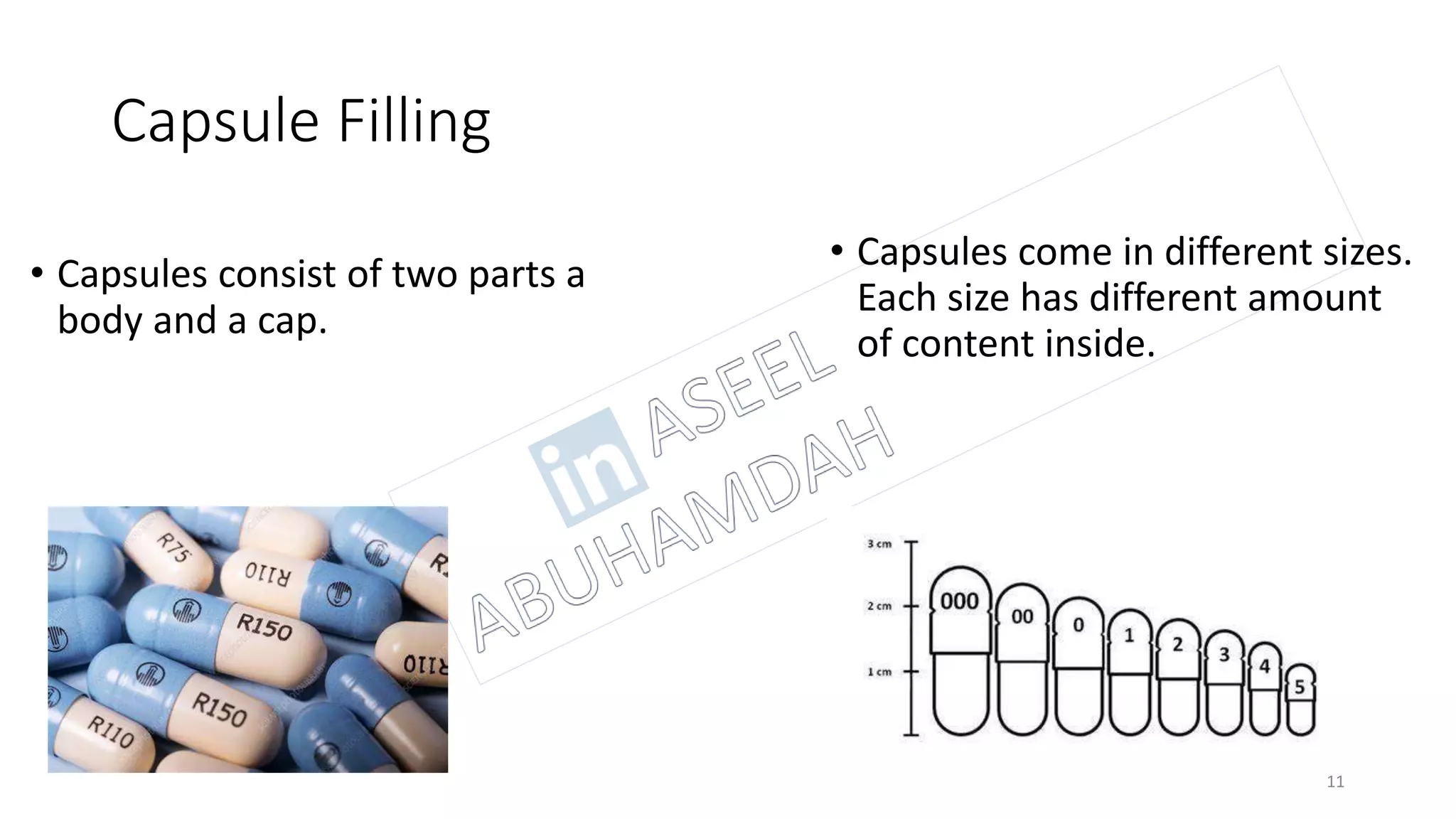
• Capsules consist of two parts a
body and a cap.
• Capsules come in different sizes.
Each size has different amount
of content inside.
11
Capsule Filling
In order to fill the capsules with powder
the capsules are opened to body and
cap using vacuum
The sigma is the cavity where the
separated body/cap are seated. The
picture to the right represents double
sigma for body and double sigma for
cap as there are two rows in each one.
To the left side of this picture is sigma
holder
Sigma = cavity
12
Capsule Filling
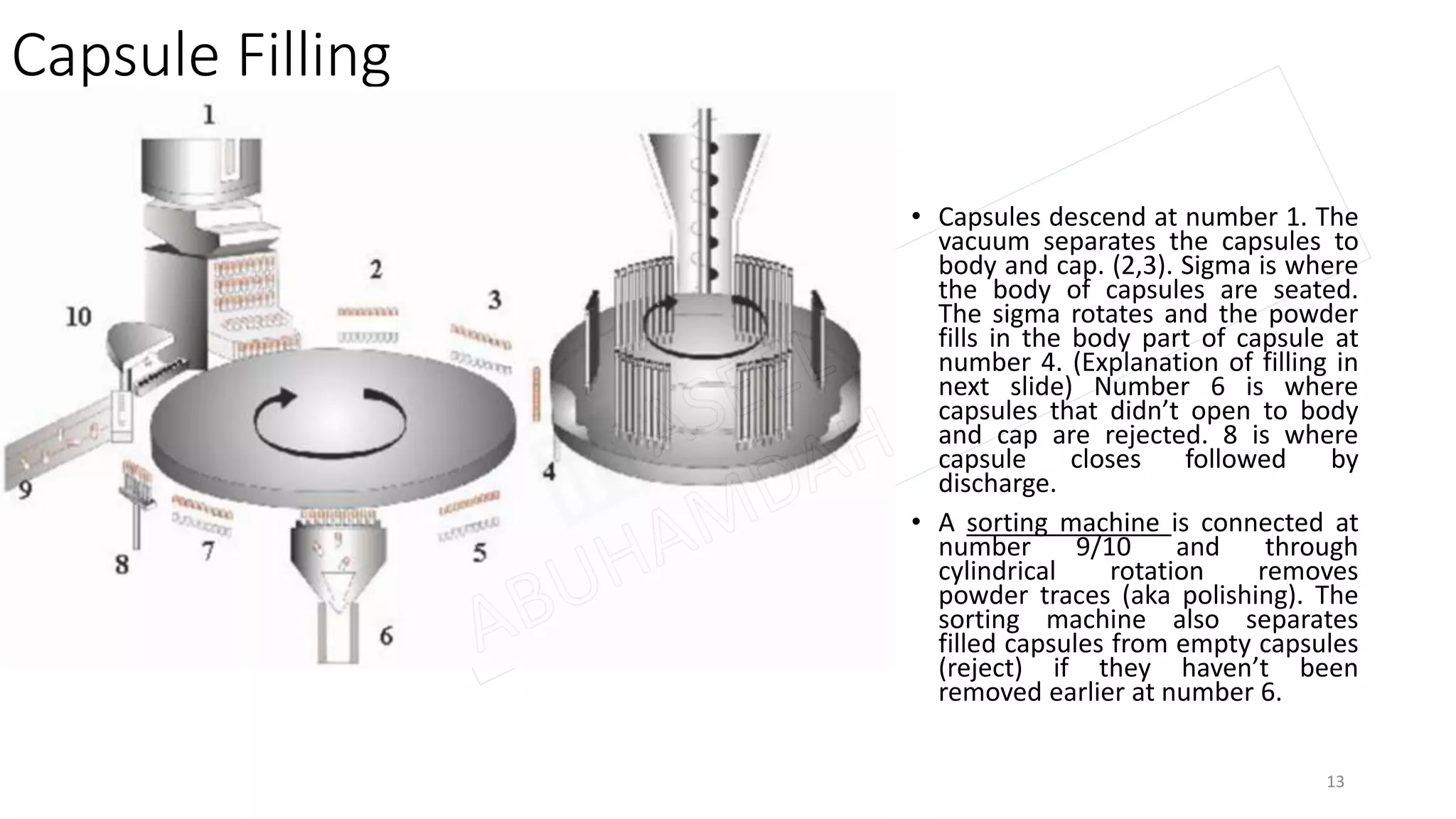
• Capsules descend at number 1. The
vacuum separates the capsules to
body and cap. (2,3). Sigma is where
the body of capsules are seated.
The sigma rotates and the powder
fills in the body part of capsule at
number 4. (Explanation of filling in
next slide) Number 6 is where
capsules that didn’t open to body
and cap are rejected. 8 is where
capsule closes followed by
discharge.
• A sorting machine is connected at
number 9/10 and through
cylindrical rotation removes
powder traces (aka polishing). The
sorting machine also separates
filled capsules from empty capsules
(reject) if they haven’t been
removed earlier at number 6.
13
Capsule Filling
To the right side of the picture, there is a disc and pistons/pins
embedded in it. As the powder descends it is pressured using
these pins into cavity present in disc. There are 6 sets of pins in
this picture. In each set, the five(or more) pistons fill in powder
into five/or more cavities. The disc rotates to allow another set
of pistons to do more filling until a rotation is complete. At
number 4, the compacted powder is released into body part of
capsule after a complete rotation through all pistons has been
done.
This picture shows what happens between the pins in every set
and is the representation of last set (number 4). There are five
stations in the pic where five pins/tamping pins do filling of
powder inside five cavities inside disc. After a complete rotation
through all pistons/sets is completed the compacted powder is
transferred to five/or more capsules present on a sigma at
number 4.
Disc
Pins
Powder/
granules
descend
Pins
Disc(has cavities)
14
Capsule Filling and Sorting Machine
15
• Special thanks to “Njood Dmair” who helped me understand the
process thoroughly and compile it into this file.
16
Video
• https://www.youtube.com/watch?v=YBAswFuRJMU&list=PLqn-
NDbSJ33u8cTR-RbyJs5NuC5G8AGzC&index=1
17
References (highly recommended for more
details)
• https://www.pharmaguideline.com/2016/02/principle-of-tablet-
compression-machine.html
• https://www.saintytec.com/capsule-sorting-machine/
• https://www.saintytec.com/tamping-pin-capsule-filling-machine-vs-
dosator-type-capsule-filling-machine-ultimate-comparison/
18

Tableting/Capsule Filling Mechanisms in Pharmaceutical Industries

  • 1.
    Compression & CapsuleFilling in Pharmaceutical IndustriesBy: Aseel Abuhamdah
  • 2.
    Index • Why dowe make granules? • Compression/Tableting mechanism • Example of Punches/Die Shapes • Capsule filling mechanism 2
  • 3.
    By the endof this ppt, you should be familiar with • Upper Punch • Lower Punch • Die • Filling cam • Weight Adjustment Ramp • Scraper /and tail over die • Pre-compression wheels • Main compression wheels • Ejection Cam • Upper/ Lowering Lifting Cam • Data Control • Metal detector • Body and Cap • Sigma • Disc • Pins • Sorting Machine 3
  • 4.
    Granulation • It isimportant to know the difference between fine/powder and granules Granules vs Powder/fines Granules vs Powder/fines 4
  • 5.
    Why do wedo granulation if we have powders? • Granulation is the formation of large granules (aggregates) that have bigger particle size compared to powders • Granules are formed by wet or dry granulation • As there are several ingredients in tablets(API, lubricant, filler etc.) each material has a different density so if you mix them together segregation will occur. • To prevent segregation due to different densities we do granulation • So all granules will have uniform density 5
  • 6.
    Why do wedo granules if we have powder? • The granules need to flow from one stage to another during manufacturing. To improve flowability and ensure there is no sticking. 6
  • 7.
    Tableting Mechanism Process startsat Filling Cam which gives room for lower punch to descend and to fill in powder from feeder. Filling cam is a changeable compartment, and its unit is 8mm, 12 mm, etc. i.e lower punch descends 8 or 12 mm respectively. The weight adjustment ramp adjusts the depth of lower punch to adjust content weight of powder in lower punch. The scraper and tail over die removes excess powder from lower punch. The pre-compression wheels provide pre pressure on upper and lower punches that become near from one another to remove air voids and avoid capping. The main compression wheels provide more pressure on punches that they become so near to form tablet. The ejection cam lifts lower punch upwards to eject tablet. Upper Lowering and Upper Lifting Cam allow upper punches to descend and rise respectively. 7
  • 8.
  • 9.
    Tableting Mechanism Lower punchesare longer as they descend and allow powder to fill in Usually tablets for cardiovascular diseases are heart shaped and these punches/die form the shape of tablet Different tablet shapes mean different punch/die shape 9
  • 10.
    Tableting Mechanism Compression machinecome with a data control (to the left) which has parameters and weight limits. If weight of tablet produced exceeds limit, the data control stops compression machine immediately and operator does adjustments. A metal detector is connected to output of compression machines and it separates tablets with metal traces (reject) from good ones. Metal traces could come from punches or sieves during milling in preparation/granulation stage. 10
  • 11.
    Capsule Filling • Capsulesconsist of two parts a body and a cap. • Capsules come in different sizes. Each size has different amount of content inside. 11
  • 12.
    Capsule Filling In orderto fill the capsules with powder the capsules are opened to body and cap using vacuum The sigma is the cavity where the separated body/cap are seated. The picture to the right represents double sigma for body and double sigma for cap as there are two rows in each one. To the left side of this picture is sigma holder Sigma = cavity 12
  • 13.
    Capsule Filling • Capsulesdescend at number 1. The vacuum separates the capsules to body and cap. (2,3). Sigma is where the body of capsules are seated. The sigma rotates and the powder fills in the body part of capsule at number 4. (Explanation of filling in next slide) Number 6 is where capsules that didn’t open to body and cap are rejected. 8 is where capsule closes followed by discharge. • A sorting machine is connected at number 9/10 and through cylindrical rotation removes powder traces (aka polishing). The sorting machine also separates filled capsules from empty capsules (reject) if they haven’t been removed earlier at number 6. 13
  • 14.
    Capsule Filling To theright side of the picture, there is a disc and pistons/pins embedded in it. As the powder descends it is pressured using these pins into cavity present in disc. There are 6 sets of pins in this picture. In each set, the five(or more) pistons fill in powder into five/or more cavities. The disc rotates to allow another set of pistons to do more filling until a rotation is complete. At number 4, the compacted powder is released into body part of capsule after a complete rotation through all pistons has been done. This picture shows what happens between the pins in every set and is the representation of last set (number 4). There are five stations in the pic where five pins/tamping pins do filling of powder inside five cavities inside disc. After a complete rotation through all pistons/sets is completed the compacted powder is transferred to five/or more capsules present on a sigma at number 4. Disc Pins Powder/ granules descend Pins Disc(has cavities) 14
  • 15.
    Capsule Filling andSorting Machine 15
  • 16.
    • Special thanksto “Njood Dmair” who helped me understand the process thoroughly and compile it into this file. 16
  • 17.
  • 18.
    References (highly recommendedfor more details) • https://www.pharmaguideline.com/2016/02/principle-of-tablet- compression-machine.html • https://www.saintytec.com/capsule-sorting-machine/ • https://www.saintytec.com/tamping-pin-capsule-filling-machine-vs- dosator-type-capsule-filling-machine-ultimate-comparison/ 18