Compression of Granules into
Tablets
Presented by: Armaan Khan
Introduction to Tablet Compression
• Definition: Tablet compression is the process
of transforming a powder or granular blend of
active pharmaceutical ingredients (APIs) and
excipients into a solid dosage form, typically
tablets, by applying pressure using a tablet
press machine.
• The primary goals are to achieve precise
dosage, uniformity, stability, and ease of
administration.
• Aim: To create a solid dose form with specific
weight, shape, and hardness.
• Applications: Tablet compression has a wide
range of applications, particularly in the
pharmaceutical industry.
• For example: Medicinal Tablets, Vitamins and
Supplements, Effervescent Tablets.
The Tablet Compression Process
• Granulation: The process typically starts with
granulation, where the powdered ingredients
are aggregated to improve flow and handling.
• Blending: The granules are blended with other
ingredients, including binders, disintegrants,
lubricants, and sometimes colorants or
flavorings, to ensure uniform distribution of
the active pharmaceutical ingredient (API).
• Feeding: The blend is fed into the tablet press
machine, which precisely controls the amount
of material delivered into the dies.
• Compression: The blend is compressed into
tablets using punches and dies in the tablet
press. This involves two key stages:
Pre-compression
Main Compression
Why Compress Granules?
• Uniform Dosage: Ensures consistent active
ingredient distribution.
• Improved Flow Properties: Granules flow
better than powders, preventing clogging in
tablet press.
• Enhanced Stability: Granules improve physical
and chemical stability.
Stages of Tablet Compression
• 1. Die Filling: Granules enter the die cavity.
• 2. Compression: Upper and lower punches
compress the granules.
• 3. Ejection: The compressed tablet is pushed
out of the die.
Types of Granulation Methods
• Wet Granulation: Uses a liquid binder to
agglomerate powder particles.
• Dry Granulation: Involves compaction of
powder without a liquid binder, ideal for
moisture-sensitive materials.
• Direct Compression: Directly compresses
powders into tablets; suitable for materials
with good flow and compressibility.
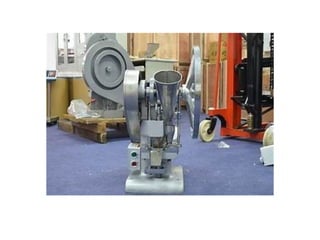
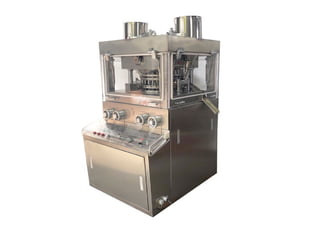
Tablet Compression Machines
• Single-Station Press: A simple, low-capacity
press with one die-punch pair.
• Rotary Press: High-capacity machine with
multiple die-punch stations, ideal for mass
production.
Challenges in Tablet Compression
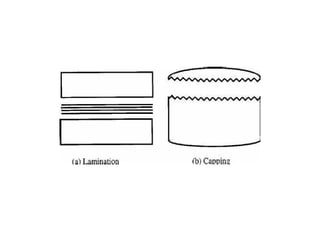
• Capping & Lamination: Separation of tablet
layers due to insufficient binding.
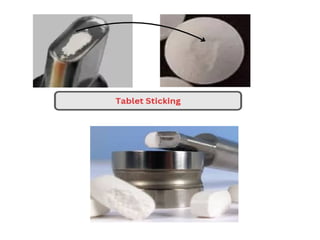
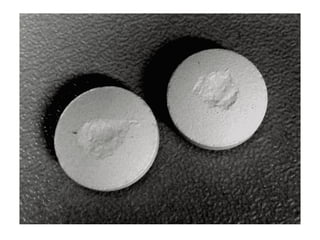
• Sticking & Picking: Granules stick to the punch,
disrupting tablet surface.
• Weight Variation: Caused by inconsistent flow
or granule size.
• Tablet Hardness Control: Balancing
compression force to achieve the right
hardness.
Optimizing the Compression
Process
• Granule Characteristics: Improve flowability
and density.
• Equipment Calibration: Regularly check
machine settings for accuracy.
• Environmental Control: Maintain humidity and
temperature levels.
• Quality Control: Conduct regular inspections
to ensure batch consistency.
Conclusion
• Summary: Tablet compression is essential for
producing uniform, stable, and effective
dosage forms.
• Ensuring high-quality tablet production is vital
for patient safety and efficacy.
THANKYOU

Compression of Granules Using Tablet Punching Machine

  • 1.
    Compression of Granulesinto Tablets Presented by: Armaan Khan
  • 2.
    Introduction to TabletCompression • Definition: Tablet compression is the process of transforming a powder or granular blend of active pharmaceutical ingredients (APIs) and excipients into a solid dosage form, typically tablets, by applying pressure using a tablet press machine. • The primary goals are to achieve precise dosage, uniformity, stability, and ease of administration.
  • 3.
    • Aim: Tocreate a solid dose form with specific weight, shape, and hardness. • Applications: Tablet compression has a wide range of applications, particularly in the pharmaceutical industry. • For example: Medicinal Tablets, Vitamins and Supplements, Effervescent Tablets.
  • 4.
    The Tablet CompressionProcess • Granulation: The process typically starts with granulation, where the powdered ingredients are aggregated to improve flow and handling. • Blending: The granules are blended with other ingredients, including binders, disintegrants, lubricants, and sometimes colorants or flavorings, to ensure uniform distribution of the active pharmaceutical ingredient (API).
  • 5.
    • Feeding: Theblend is fed into the tablet press machine, which precisely controls the amount of material delivered into the dies. • Compression: The blend is compressed into tablets using punches and dies in the tablet press. This involves two key stages: Pre-compression Main Compression
  • 6.
    Why Compress Granules? •Uniform Dosage: Ensures consistent active ingredient distribution. • Improved Flow Properties: Granules flow better than powders, preventing clogging in tablet press. • Enhanced Stability: Granules improve physical and chemical stability.
  • 7.
    Stages of TabletCompression • 1. Die Filling: Granules enter the die cavity. • 2. Compression: Upper and lower punches compress the granules. • 3. Ejection: The compressed tablet is pushed out of the die.
  • 8.
    Types of GranulationMethods • Wet Granulation: Uses a liquid binder to agglomerate powder particles. • Dry Granulation: Involves compaction of powder without a liquid binder, ideal for moisture-sensitive materials. • Direct Compression: Directly compresses powders into tablets; suitable for materials with good flow and compressibility.
  • 9.
    Tablet Compression Machines •Single-Station Press: A simple, low-capacity press with one die-punch pair. • Rotary Press: High-capacity machine with multiple die-punch stations, ideal for mass production.
  • 12.
    Challenges in TabletCompression • Capping & Lamination: Separation of tablet layers due to insufficient binding. • Sticking & Picking: Granules stick to the punch, disrupting tablet surface. • Weight Variation: Caused by inconsistent flow or granule size. • Tablet Hardness Control: Balancing compression force to achieve the right hardness.
  • 16.
    Optimizing the Compression Process •Granule Characteristics: Improve flowability and density. • Equipment Calibration: Regularly check machine settings for accuracy. • Environmental Control: Maintain humidity and temperature levels. • Quality Control: Conduct regular inspections to ensure batch consistency.
  • 17.
    Conclusion • Summary: Tabletcompression is essential for producing uniform, stable, and effective dosage forms. • Ensuring high-quality tablet production is vital for patient safety and efficacy.
  • 18.