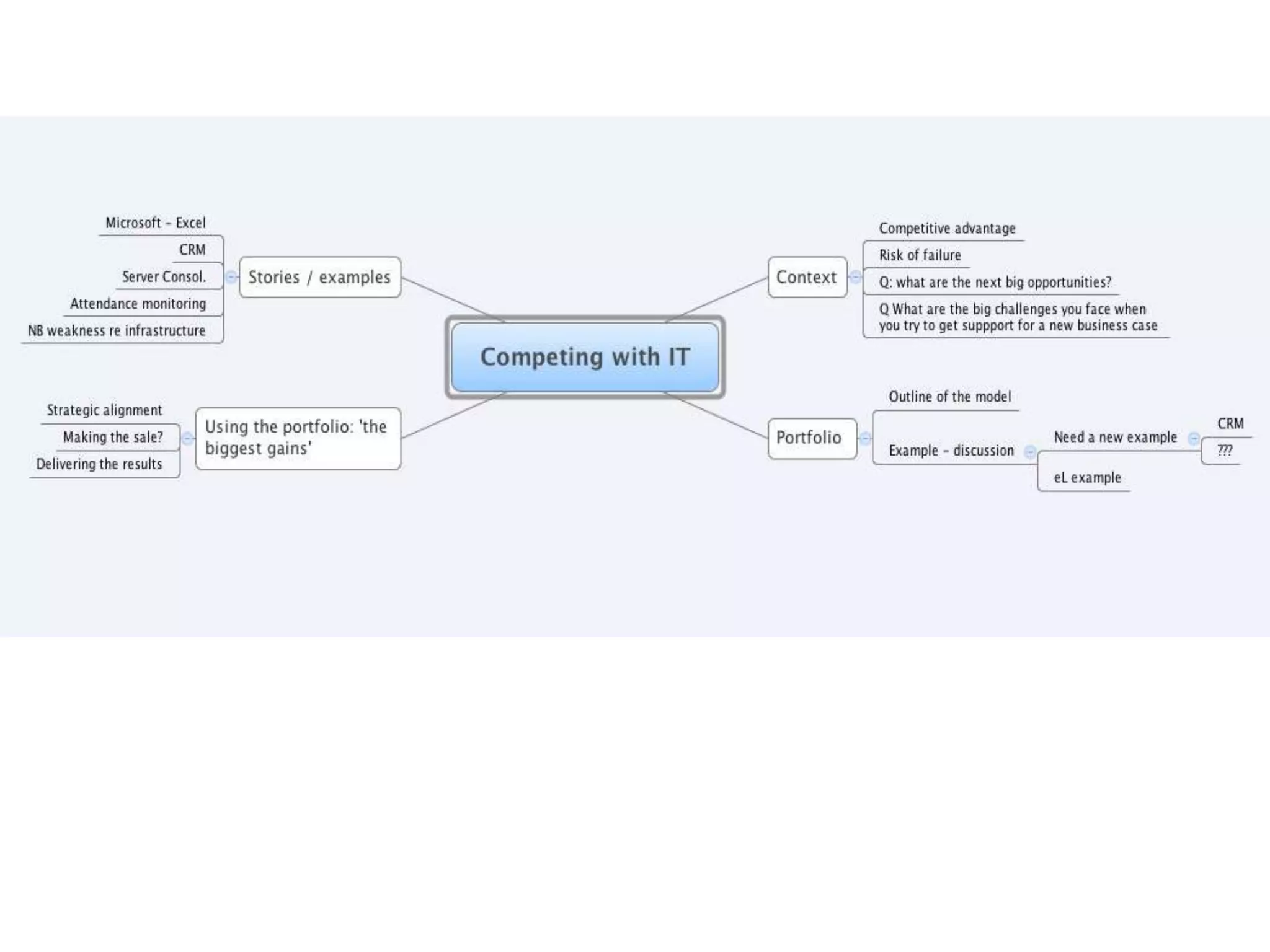
Competing with IT
- breaking through to enable
business innovation


Colin Ashurst
Alison Freer
15th March 2013
Creating value for stakeholders
by exploiting ongoing
innovation in IS / IT
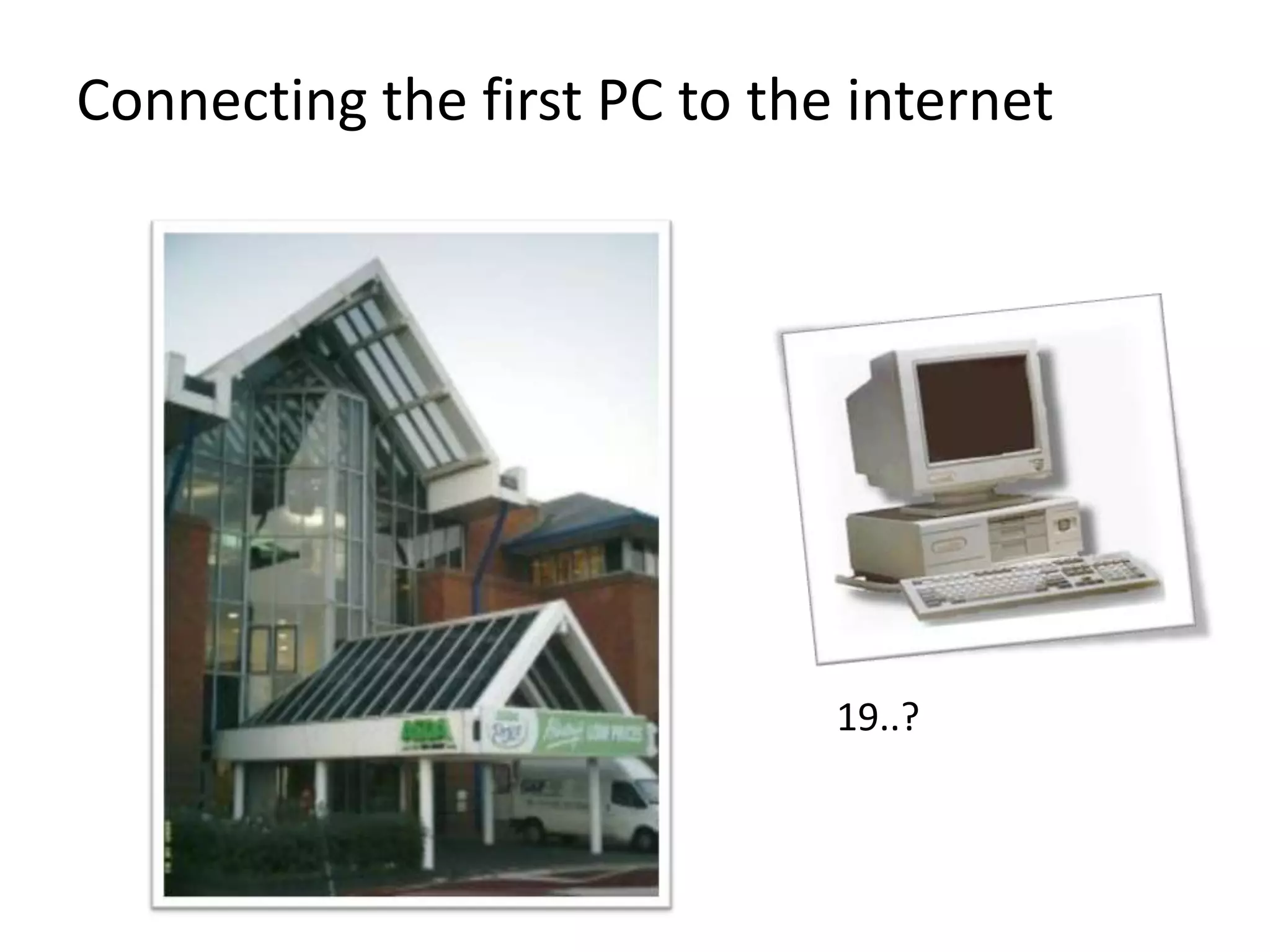
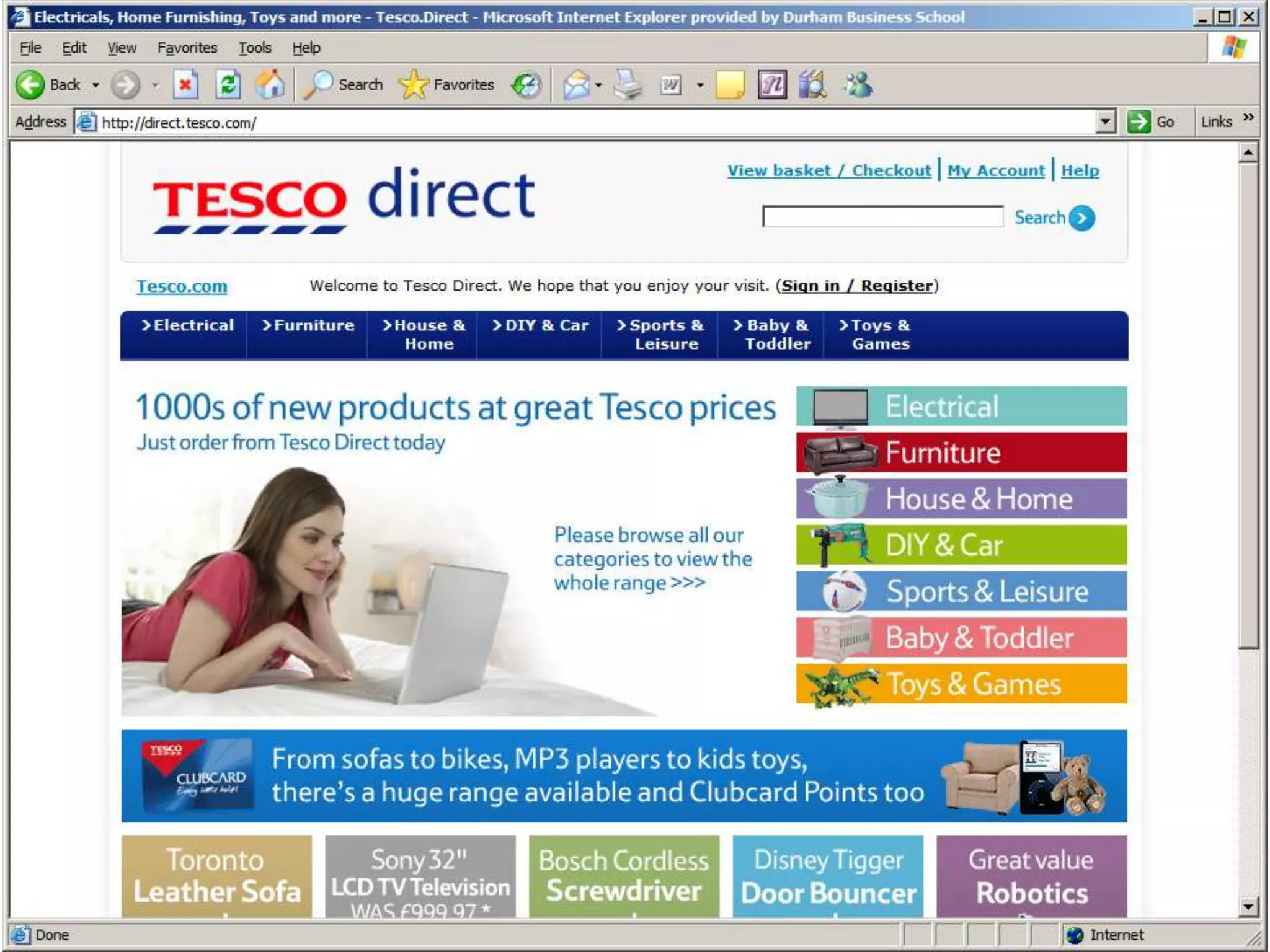
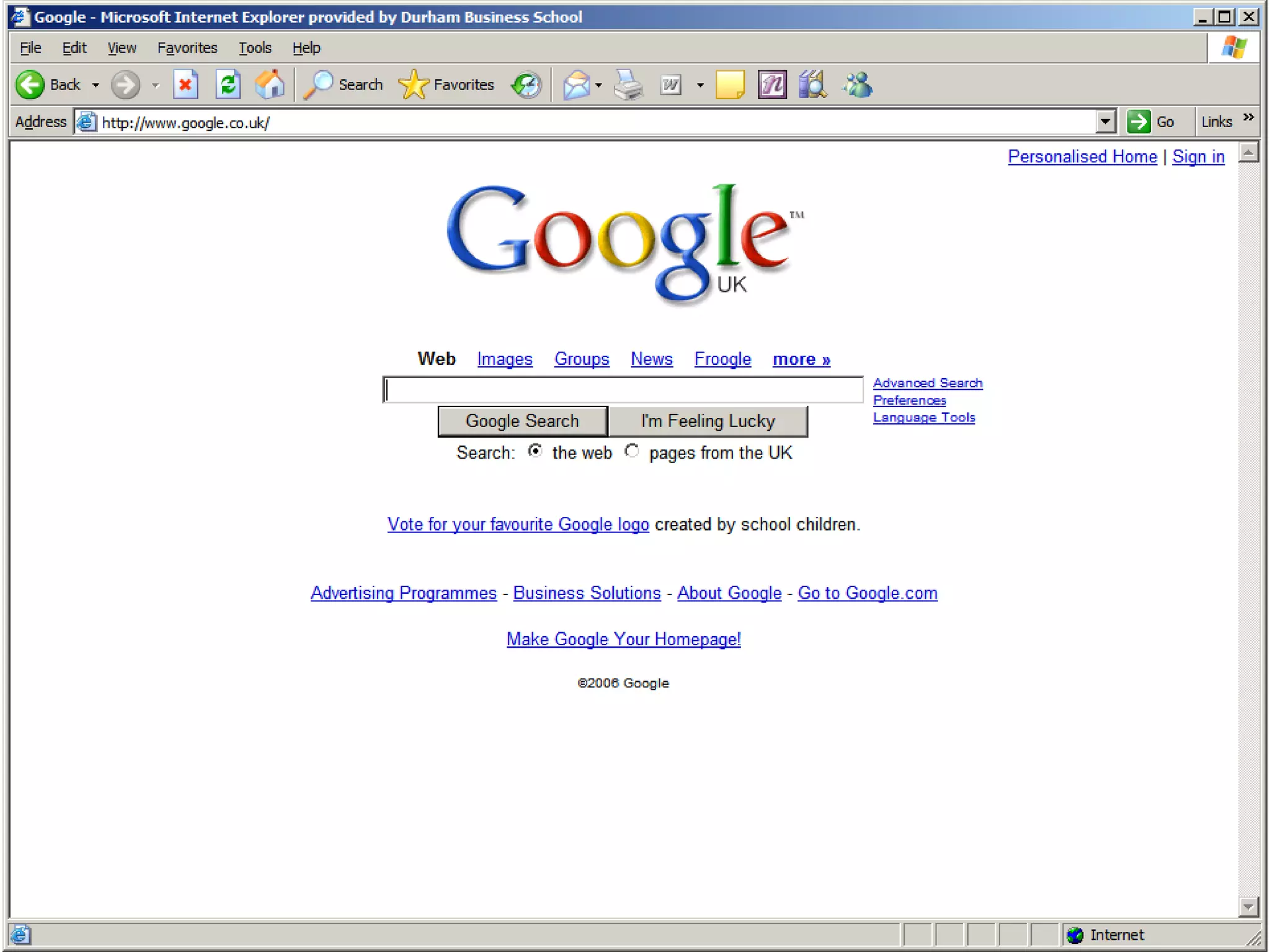
Connecting the first PC to the internet


                              19..?
7
8
9
10
11
12
13
Where next?


What opportunities will current
innovations in IS/IT provide
organisations?
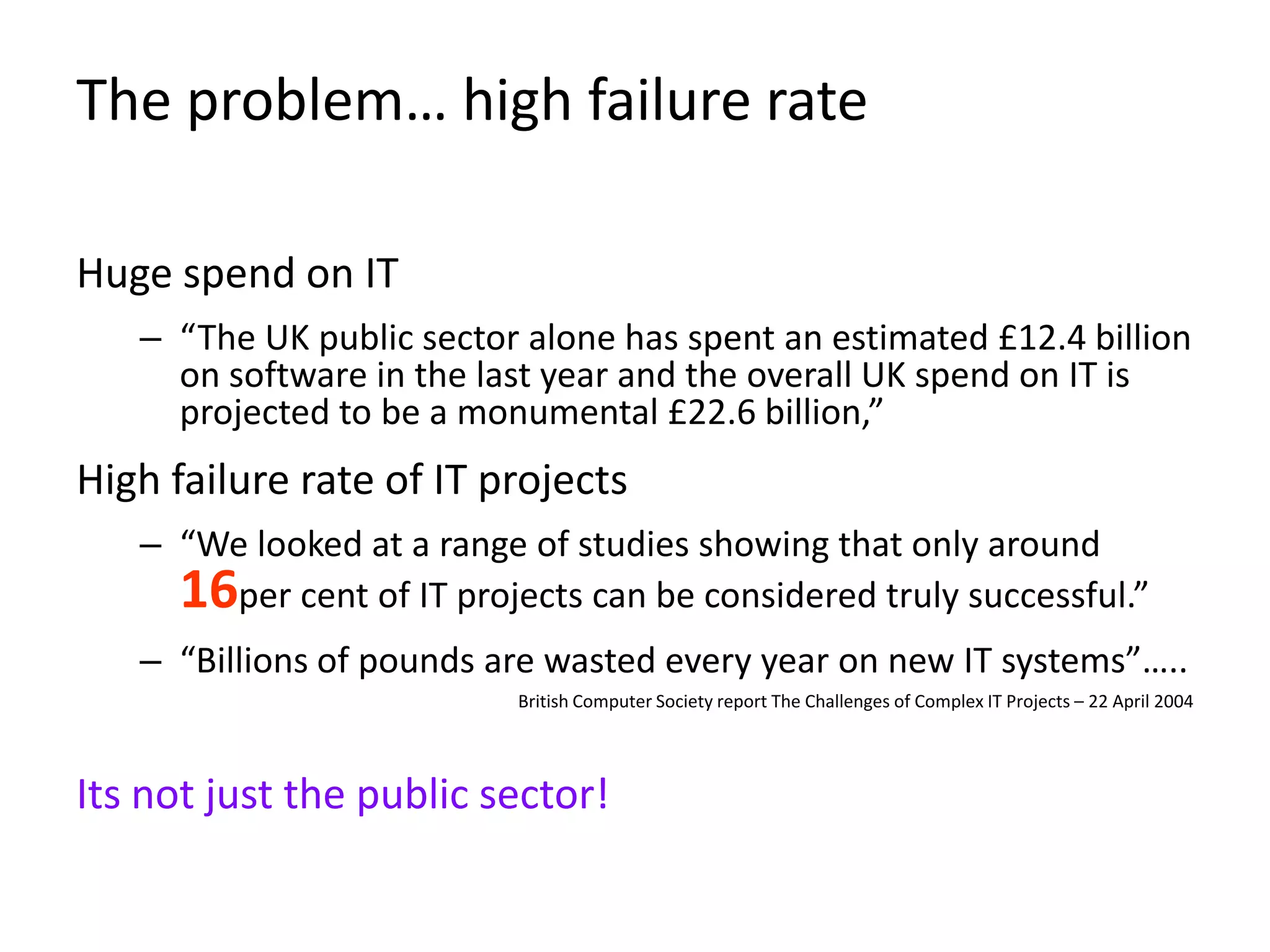
The problem… high failure rate

Huge spend on IT
   – “The UK public sector alone has spent an estimated £12.4 billion
     on software in the last year and the overall UK spend on IT is
     projected to be a monumental £22.6 billion,”
High failure rate of IT projects
   – “We looked at a range of studies showing that only around
     16per cent of IT projects can be considered truly successful.”
   – “Billions of pounds are wasted every year on new IT systems”…..
                          British Computer Society report The Challenges of Complex IT Projects – 22 April 2004


Its not just the public sector!
The major gains come from
“doing the right things.”
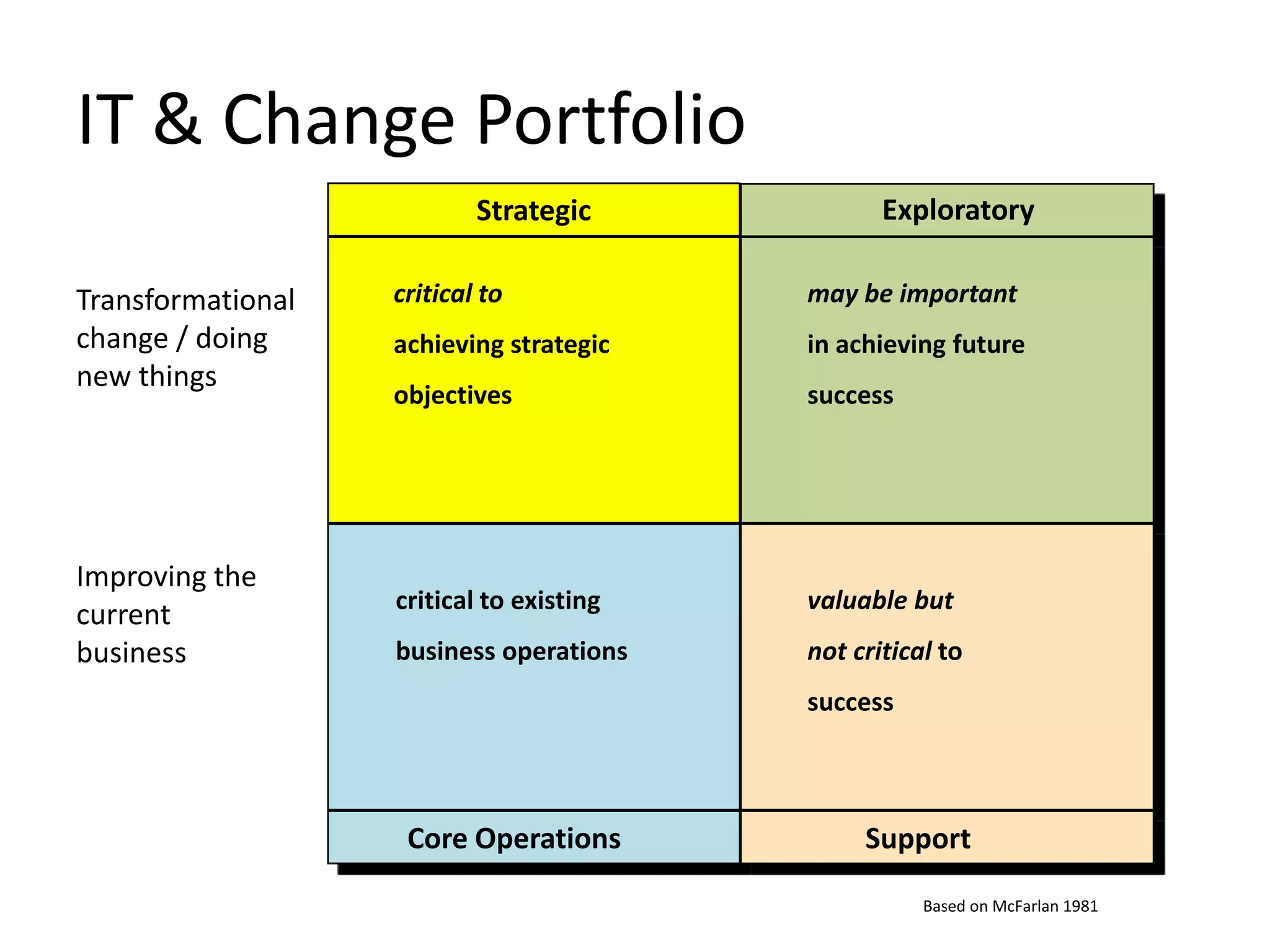
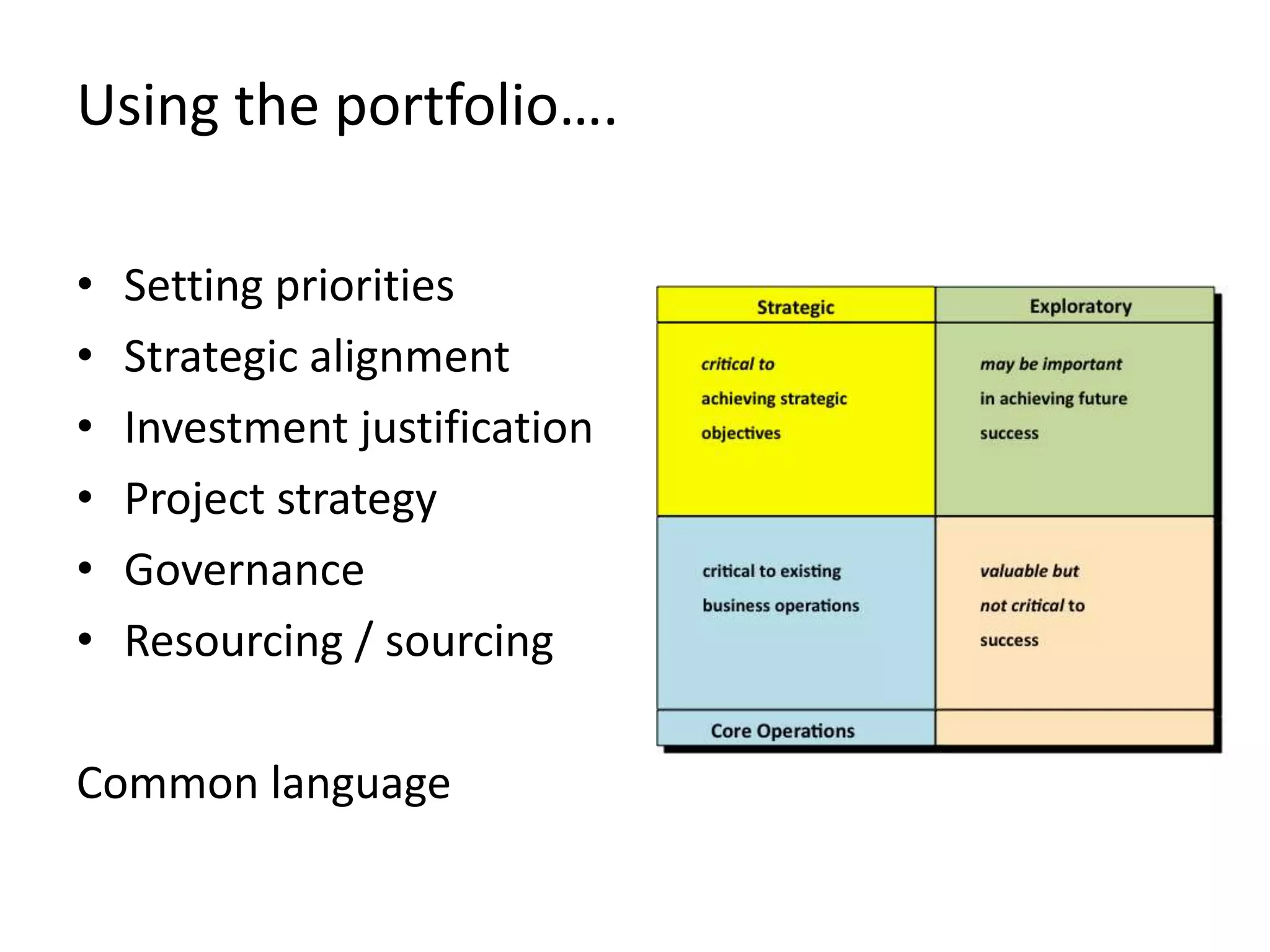
IT & Change Portfolio
                           Strategic             Exploratory

Transformational   critical to            may be important
change / doing     achieving strategic    in achieving future
new things
                   objectives             success


Improving the
                   critical to existing   valuable but
current
business           business operations    not critical to
                                          success


                    Core Operations            Support
                                                     Based on McFarlan 1981
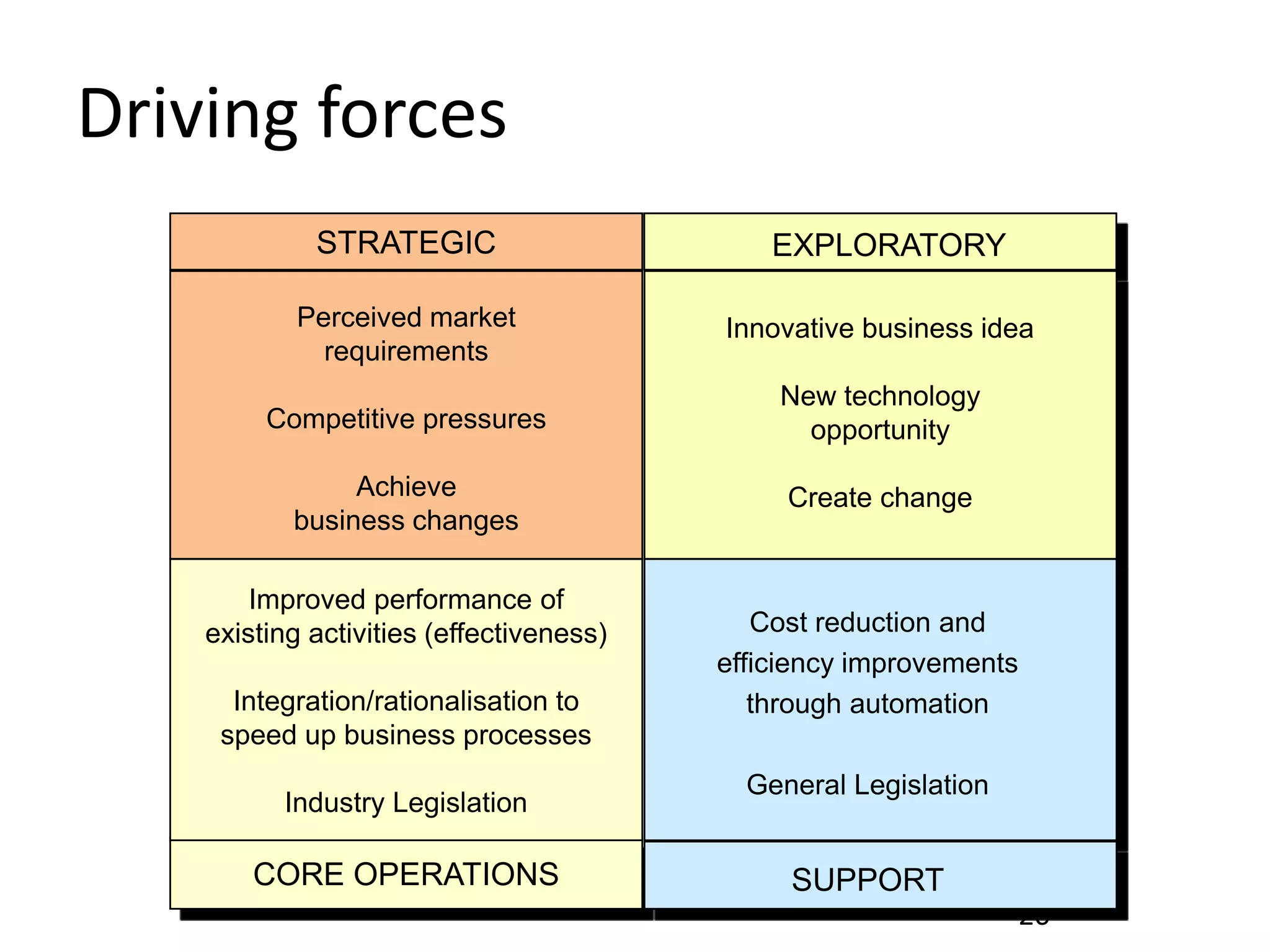
Driving forces
             STRATEGIC                        EXPLORATORY

           Perceived market               Innovative business idea
             requirements
                                              New technology
         Competitive pressures                  opportunity

                Achieve                        Create change
           business changes

        Improved performance of
    existing activities (effectiveness)      Cost reduction and
                                          efficiency improvements
      Integration/rationalisation to         through automation
     speed up business processes
                                            General Legislation
          Industry Legislation

        CORE OPERATIONS                        SUPPORT
                                                                  20
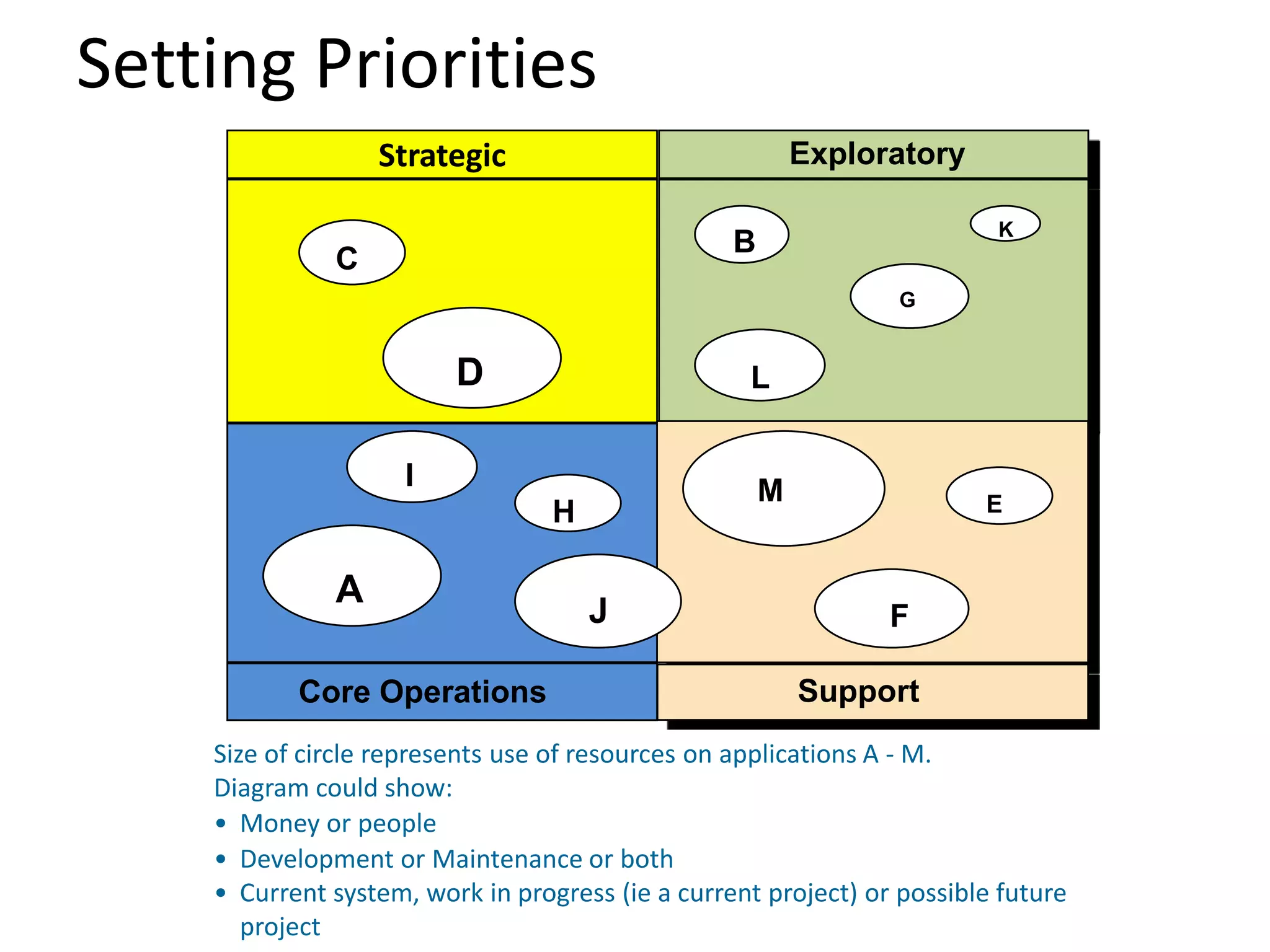
Setting Priorities
                  Strategic                               Exploratory

                                                                         K
                                                  B
              C
                                                                 G


                         D                         L


                     I                                M
                                  H                                     E


              A
                                      J                         F

           Core Operations                                Support
    Size of circle represents use of resources on applications A - M.
    Diagram could show:
    • Money or people
    • Development or Maintenance or both
    • Current system, work in progress (ie a current project) or possible future
       project
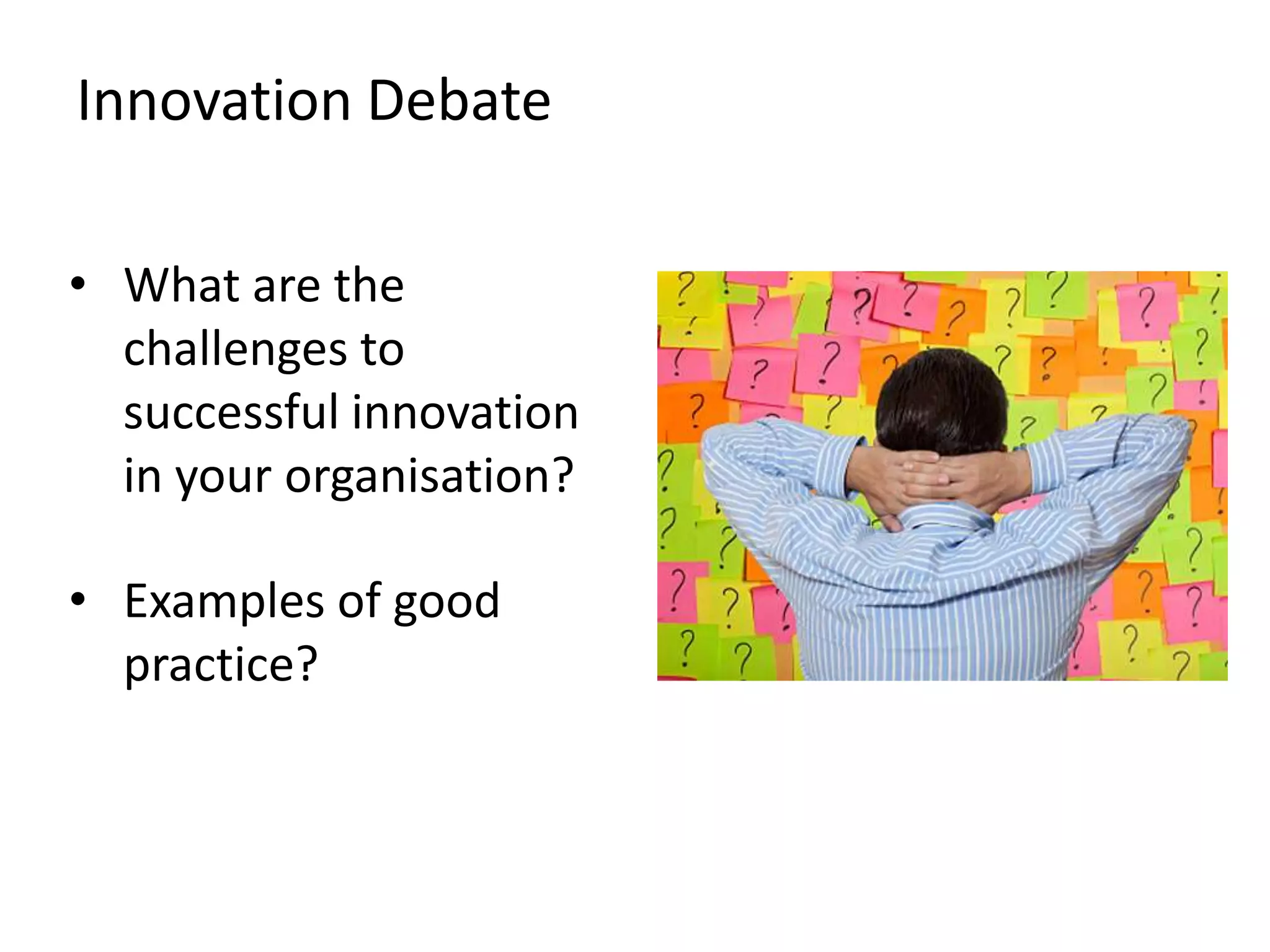
Innovation Debate

• What are the
  challenges to
  successful innovation
  in your organisation?

• Examples of good
  practice?
Case Studies
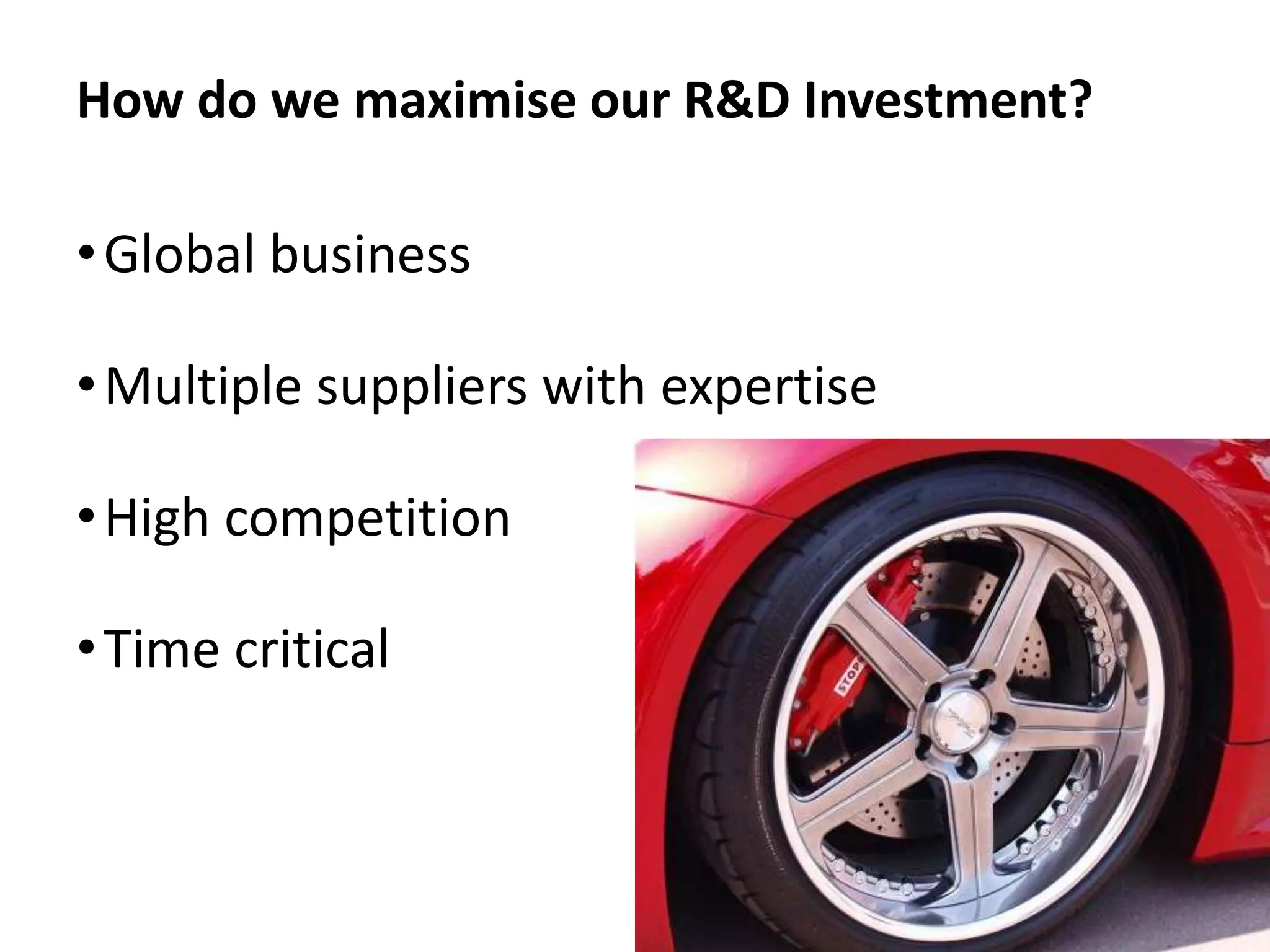
How do we maximise our R&D Investment?

• Global business

• Multiple suppliers with expertise

• High competition

• Time critical
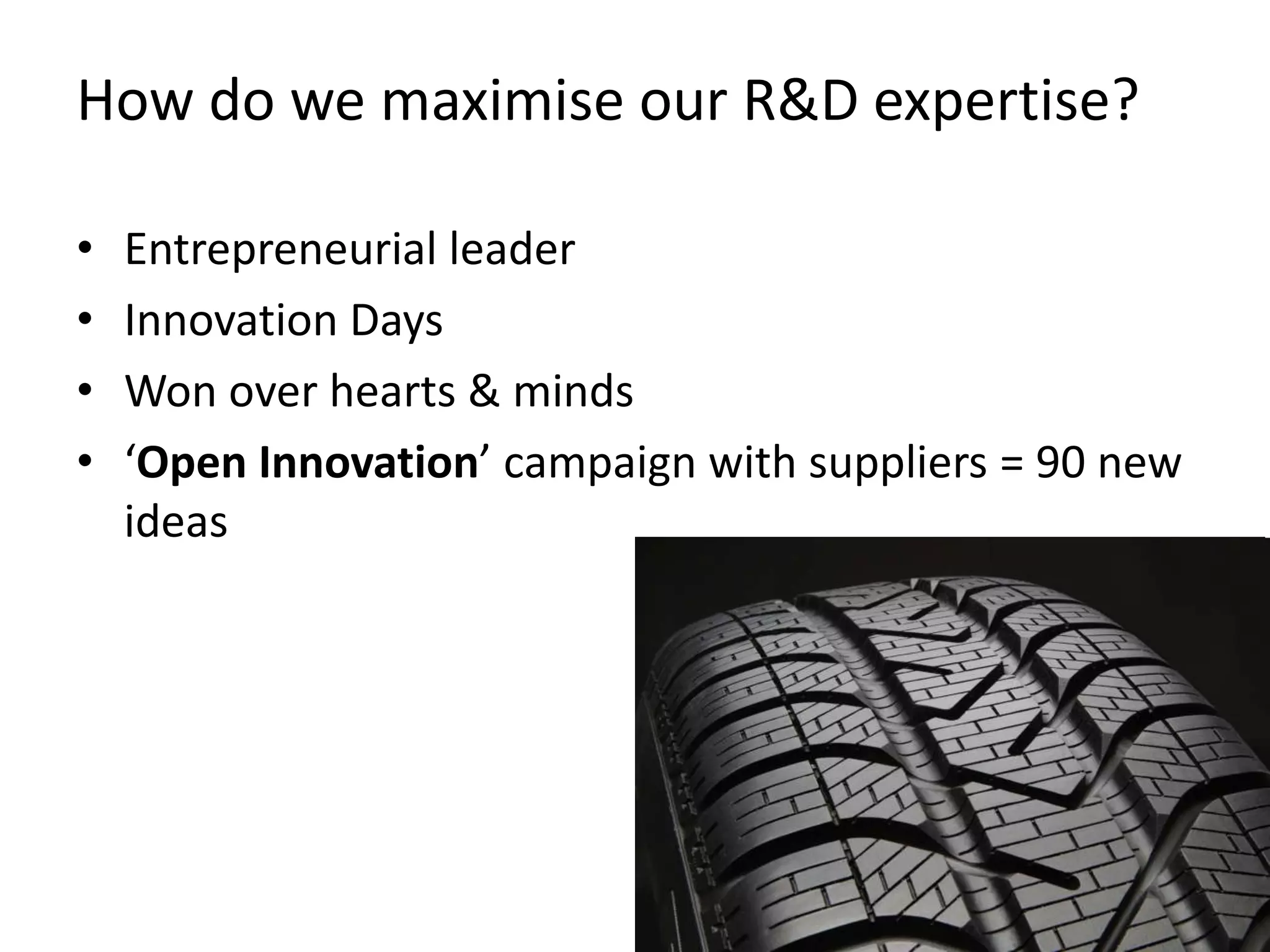
How do we maximise our R&D expertise?

•   Entrepreneurial leader
•   Innovation Days
•   Won over hearts & minds
•   ‘Open Innovation’ campaign with suppliers = 90 new
    ideas
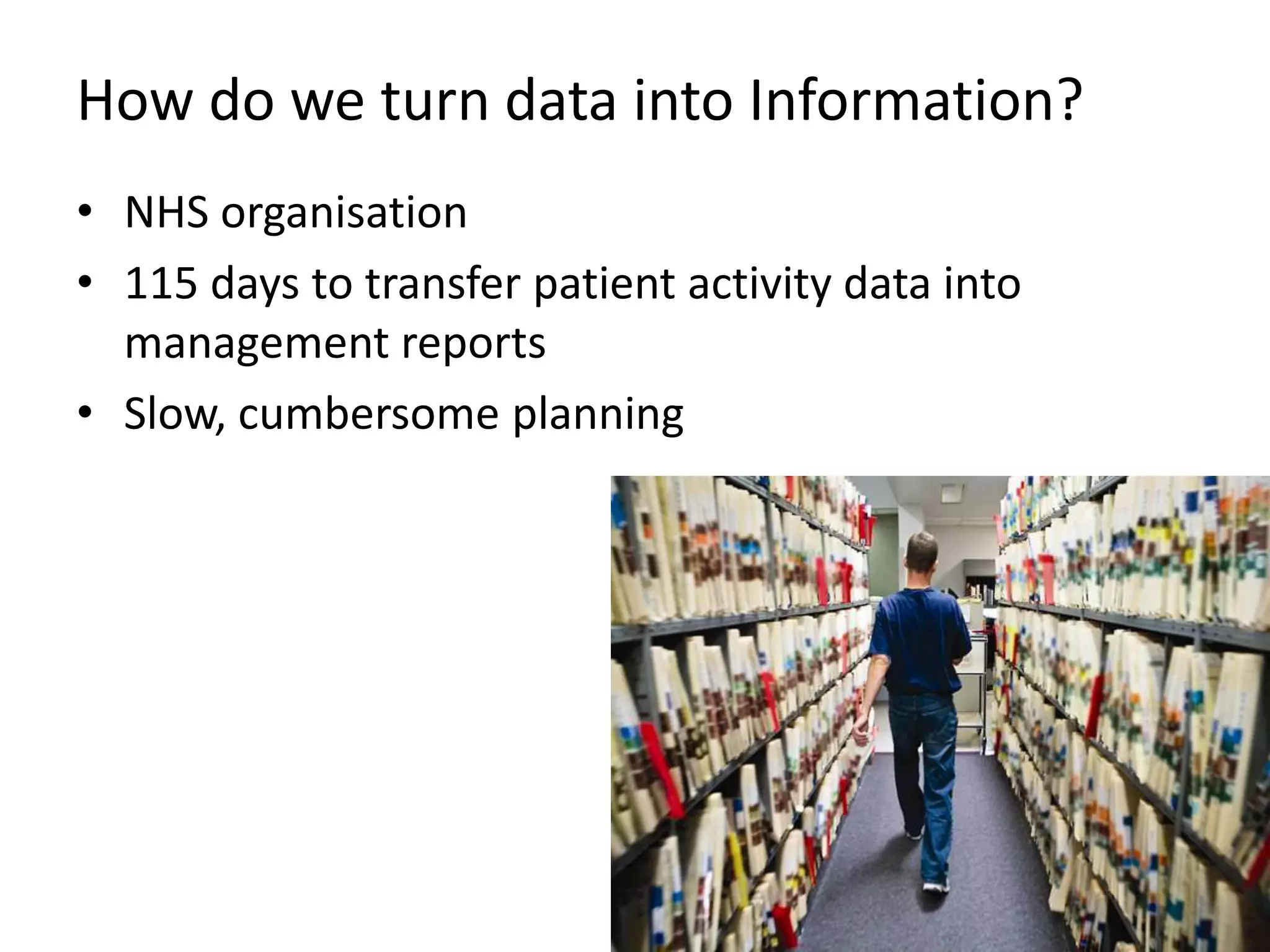
How do we turn data into Information?
• NHS organisation
• 115 days to transfer patient activity data into
  management reports
• Slow, cumbersome planning
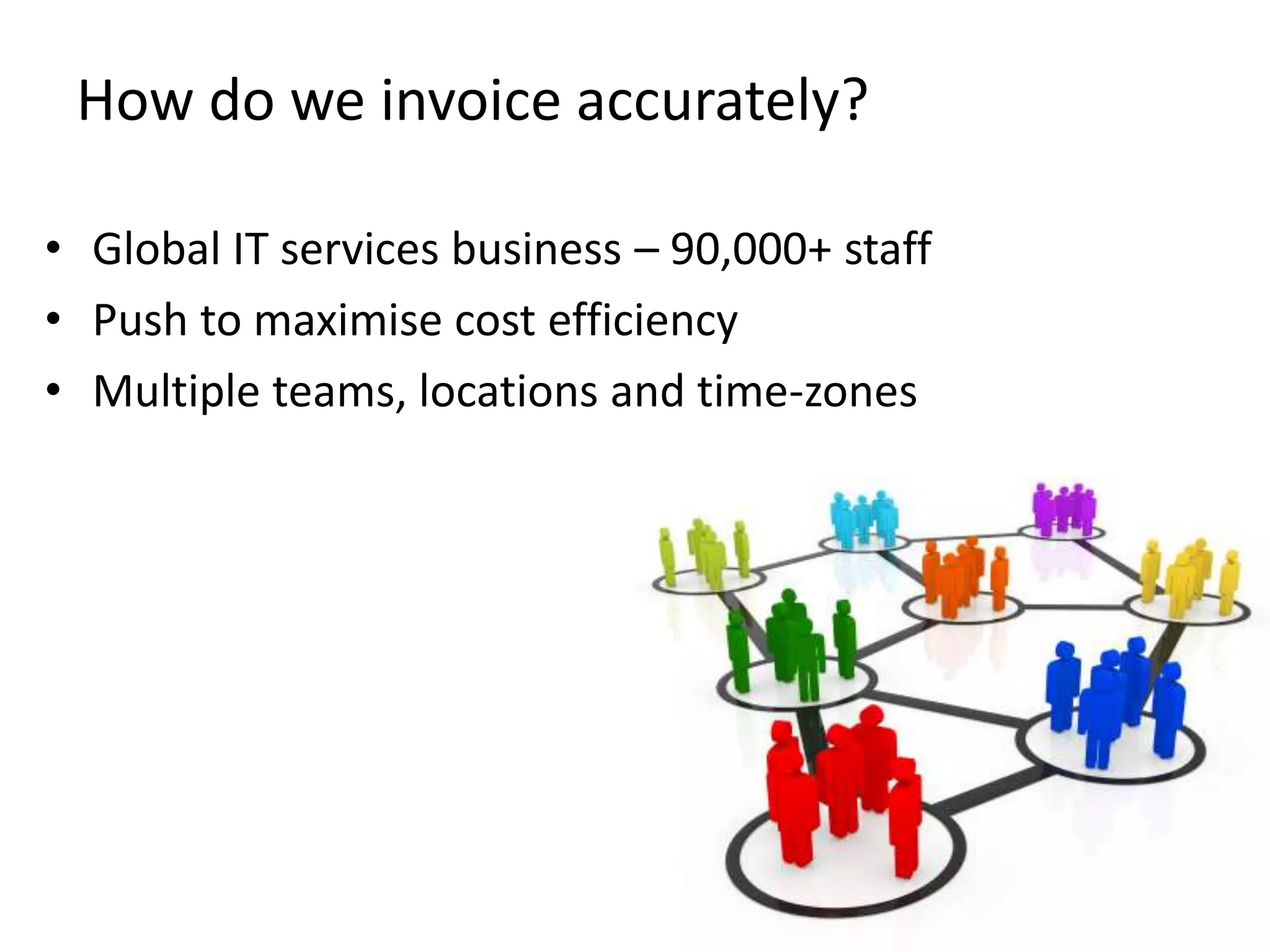
How do we invoice accurately?

• Global IT services business – 90,000+ staff
• Push to maximise cost efficiency
• Multiple teams, locations and time-zones
How do we invoice accurately?

• Used ‘Ideation’ as “21st Century Suggestion Scheme”
• 3000 staff contributed to a 6 week Ideation event
• Ideas adopted yielded $64M increase in cash-flow
eLearning case study

The university has a core eLearning system       Action:
used by 90% of its 20,000 students. It is        Use the IT & Change
reliable and effective. However it looks dated   portfolio to assess the
and does not provide Web 2.0 features.           current situation and
A professor in Computer Science has              develop options for action
developed a new eLearning system. Usage is
gradually growing in other departments. It
looks up to date and it has some clear
functional advantages over the core
university system. The system is hosted on a
server under the professors desk. It is
becoming unreliable and no one other than
the professor can provide support.
Successful Innovation Engages the Crowd
Successful Innovation Requires a Toolkit
Successful Innovation is Enabled by IT


  • IT & Business strategies
    aligned

  • Open Innovation
    Platforms

  • Scope for exploration &
    experimentation
Successful Innovation has Clear Sponsorship
• Idea Portfolio Manager
• Global Head of Collective
  Intelligence
• Chief Growth Officer
• Chief Innovation Officer
• Chief Inspiration Officer
• Chief Imagination Officer
• Chief Detonator
• Chief Lizard Wrangler
Successful Innovation Requires Diversity
 • Demographics
 • Personalities
 • Experience
 • Cultures
 • Sectors
 • Life
Successful Innovation Requires IT Leadership

 • Envisioning Future Trends

 • Experimentation

 • Engaging with users

 • Embedded in strategy

 • Empowered IT Teams
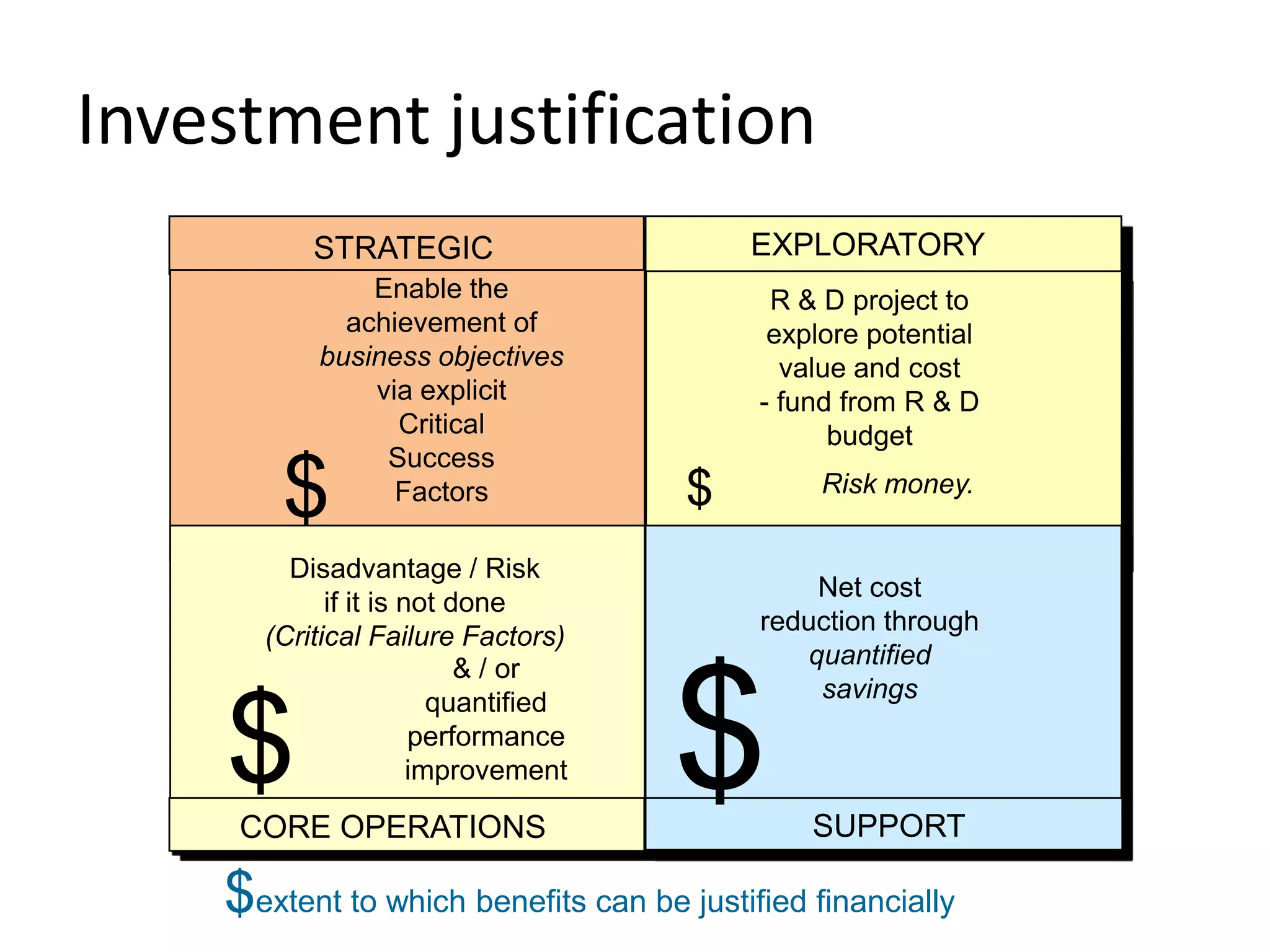
Investment justification
          STRATEGIC                       EXPLORATORY
               Enable the                   R & D project to
             achievement of                 explore potential
           business objectives               value and cost
               via explicit                - fund from R & D
                 Critical                        budget
                Success
        $        Factors              $         Risk money.


        Disadvantage / Risk
                                               Net cost
            if it is not done
                                           reduction through
      (Critical Failure Factors)
                          & / or              quantified


                                     $
                        quantified             savings

    $CORE OPERATIONS
                      performance
                      improvement

                                               SUPPORT

    $extent to which benefits can be justified financially
Thank you, questions or comments?


• colin.ashurst@ncl.ac.uk
• alison.freer@leadtransform.co
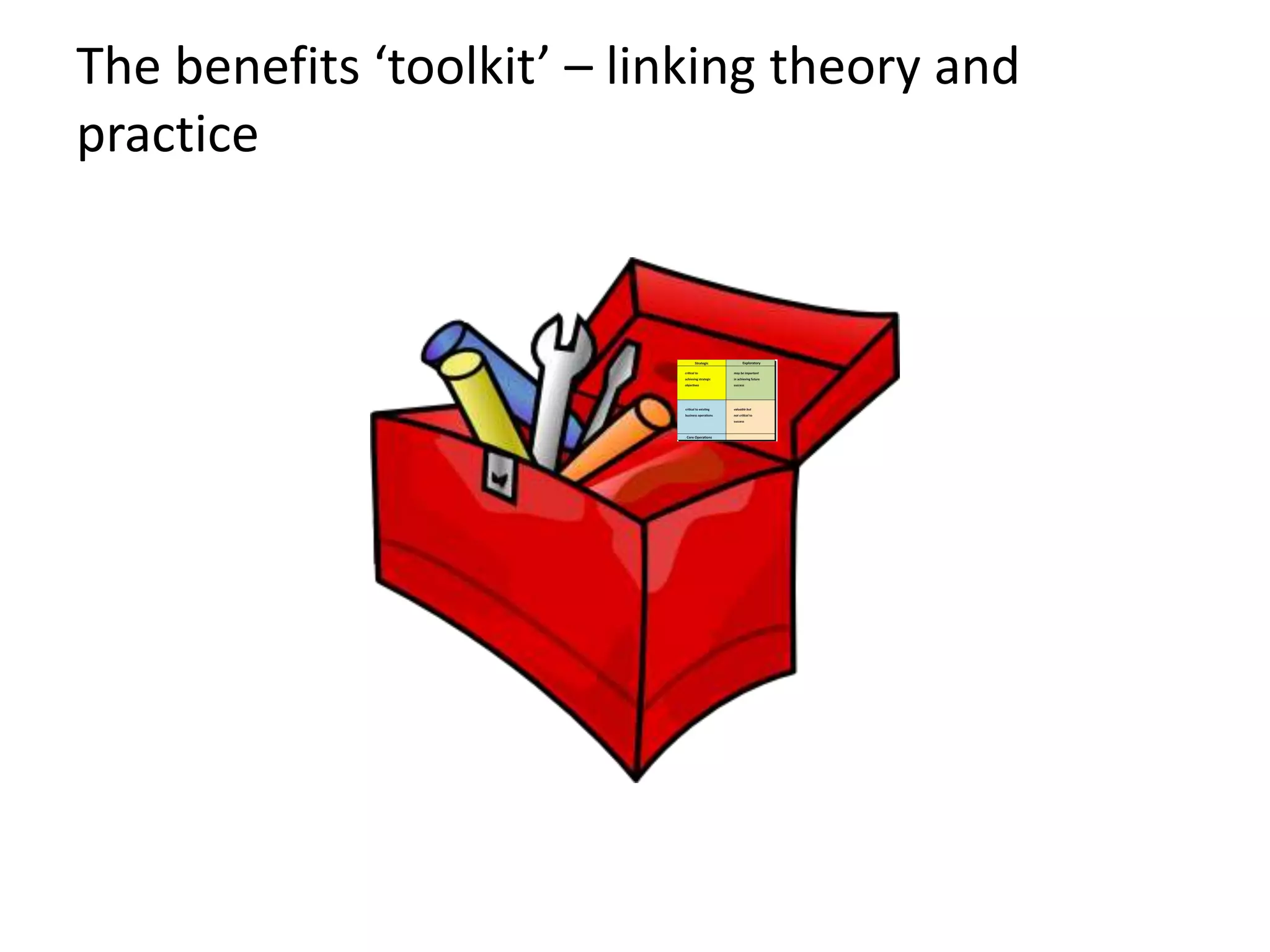
The benefits ‘toolkit’ – linking theory and
practice
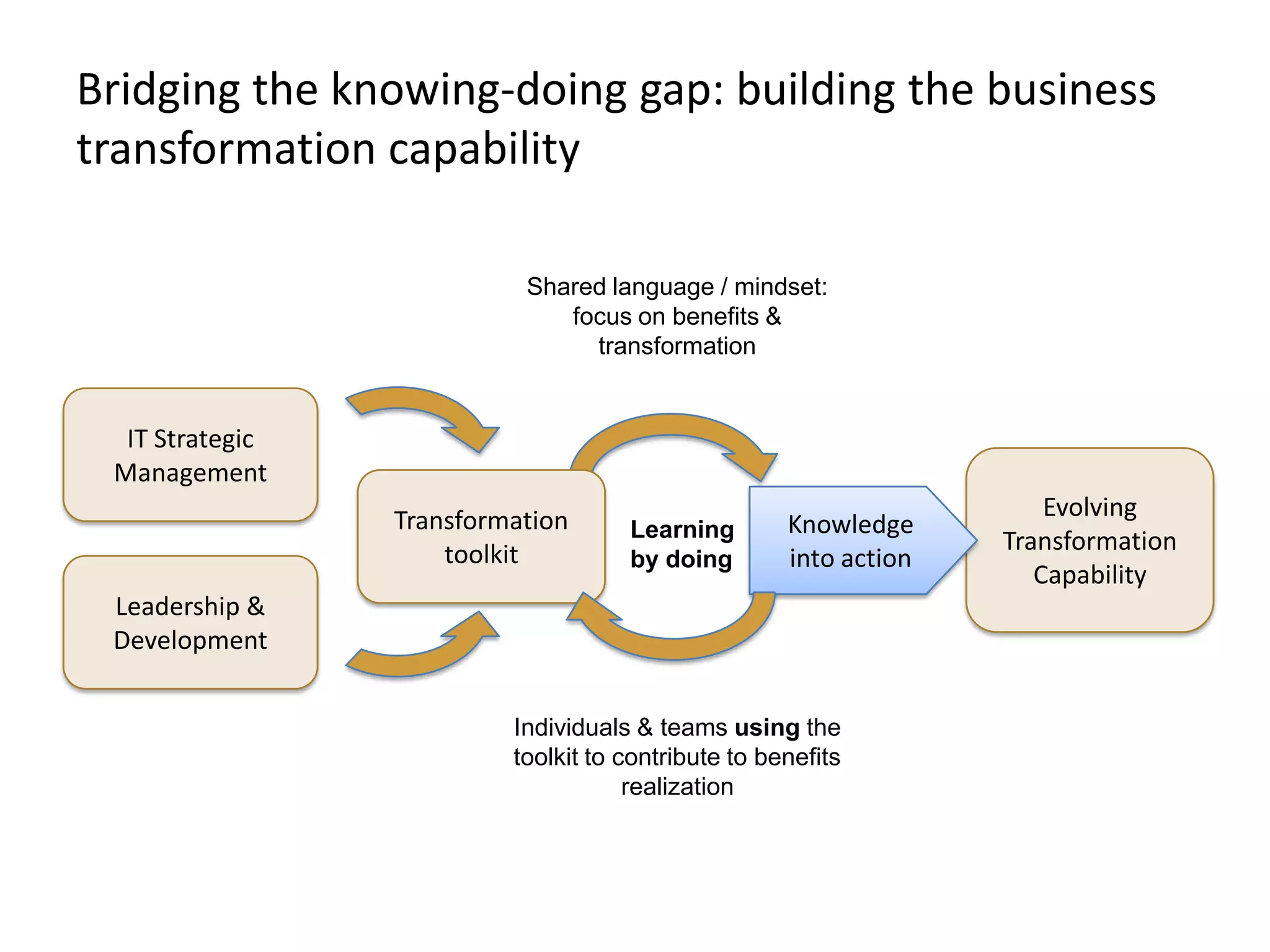
Bridging the knowing-doing gap: building the business
transformation capability

                           Shared language / mindset:
                              focus on benefits &
                                transformation


  IT Strategic
 Management
                 Transformation                                        Evolving
                                     Learning        Knowledge
                     toolkit                                       Transformation
                                     by doing        into action
                                                                      Capability
 Leadership &
 Development


                          Individuals & teams using the
                          toolkit to contribute to benefits
                                      realization
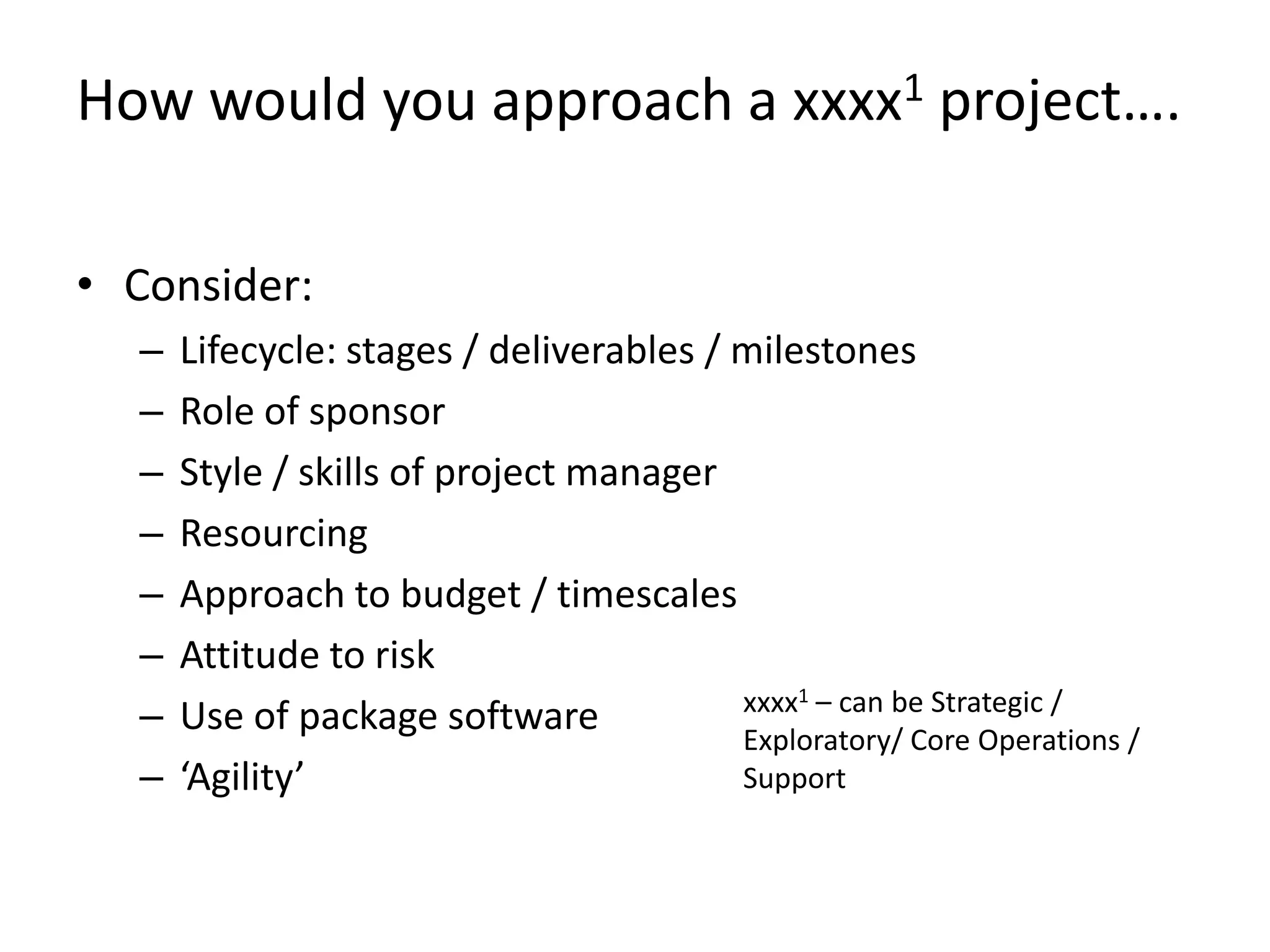
How would you approach a xxxx1 project….

• Consider:
  –   Lifecycle: stages / deliverables / milestones
  –   Role of sponsor
  –   Style / skills of project manager
  –   Resourcing
  –   Approach to budget / timescales
  –   Attitude to risk
                                         xxxx1 – can be Strategic /
  –   Use of package software            Exploratory/ Core Operations /
  –   ‘Agility’                          Support
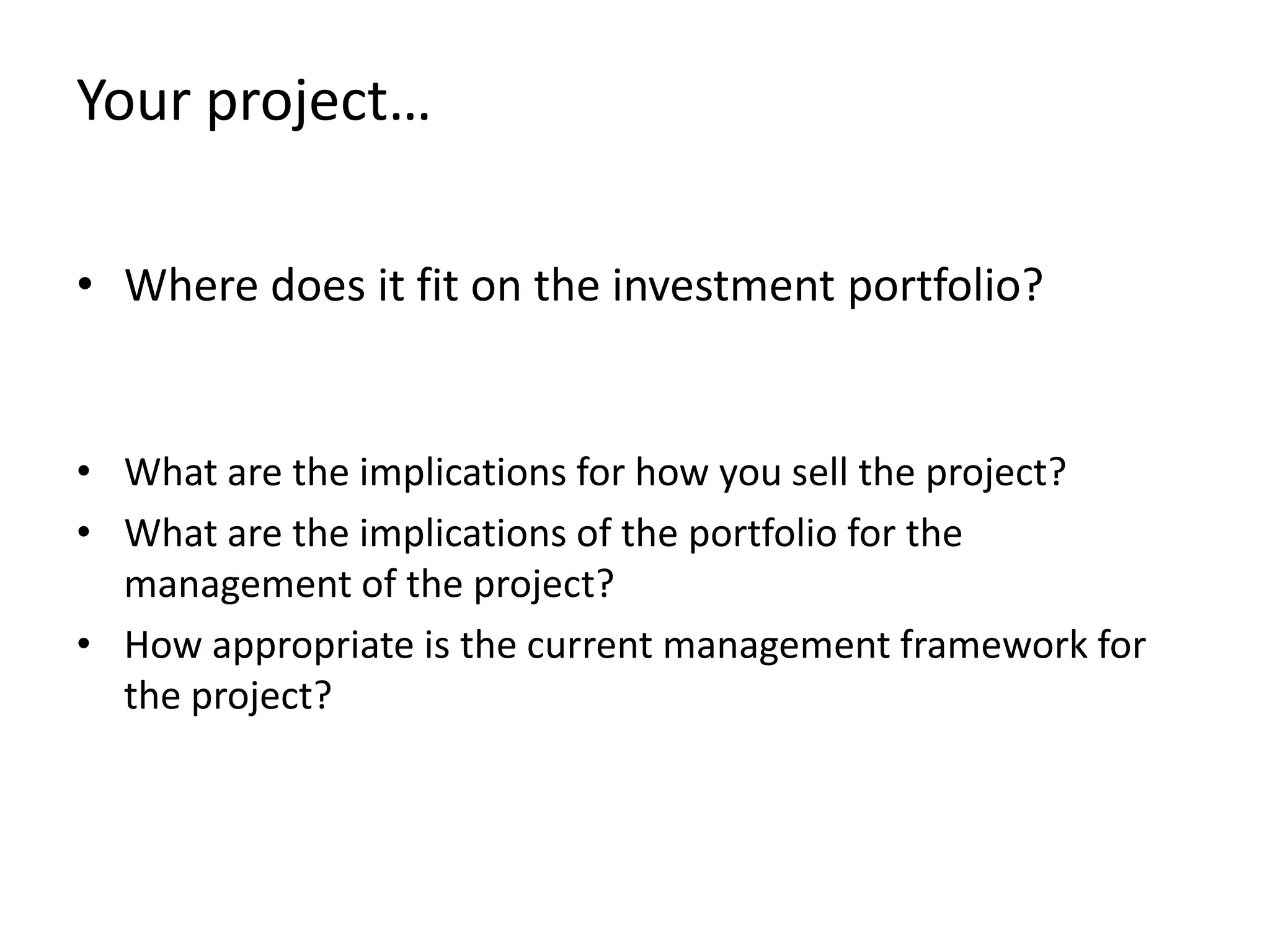
Your project…

• Where does it fit on the investment portfolio?


• What are the implications for how you sell the project?
• What are the implications of the portfolio for the
  management of the project?
• How appropriate is the current management framework for
  the project?
What examples of good practice for portfolio
management can you share?

How has the practice contributed to
improved realization of benefits from your
portfolio?
How can you use the portfolio to build
engagement with colleagues and build
the capability of your organization to
realize benefits from IT?
Using the portfolio….

•   Setting priorities
•   Strategic alignment
•   Investment justification
•   Project strategy
•   Governance
•   Resourcing / sourcing

Common language

Competing with IT 15 March 13

  • 1.
    Competing with IT -breaking through to enable business innovation Colin Ashurst Alison Freer 15th March 2013
  • 2.
    Creating value forstakeholders by exploiting ongoing innovation in IS / IT
  • 6.
    Connecting the firstPC to the internet 19..?
  • 7.
  • 8.
  • 9.
  • 10.
  • 11.
  • 12.
  • 13.
  • 16.
    Where next? What opportunitieswill current innovations in IS/IT provide organisations?
  • 17.
    The problem… highfailure rate Huge spend on IT – “The UK public sector alone has spent an estimated £12.4 billion on software in the last year and the overall UK spend on IT is projected to be a monumental £22.6 billion,” High failure rate of IT projects – “We looked at a range of studies showing that only around 16per cent of IT projects can be considered truly successful.” – “Billions of pounds are wasted every year on new IT systems”….. British Computer Society report The Challenges of Complex IT Projects – 22 April 2004 Its not just the public sector!
  • 18.
    The major gainscome from “doing the right things.”
  • 19.
    IT & ChangePortfolio Strategic Exploratory Transformational critical to may be important change / doing achieving strategic in achieving future new things objectives success Improving the critical to existing valuable but current business business operations not critical to success Core Operations Support Based on McFarlan 1981
  • 20.
    Driving forces STRATEGIC EXPLORATORY Perceived market Innovative business idea requirements New technology Competitive pressures opportunity Achieve Create change business changes Improved performance of existing activities (effectiveness) Cost reduction and efficiency improvements Integration/rationalisation to through automation speed up business processes General Legislation Industry Legislation CORE OPERATIONS SUPPORT 20
  • 21.
    Setting Priorities Strategic Exploratory K B C G D L I M H E A J F Core Operations Support Size of circle represents use of resources on applications A - M. Diagram could show: • Money or people • Development or Maintenance or both • Current system, work in progress (ie a current project) or possible future project
  • 22.
    Innovation Debate • Whatare the challenges to successful innovation in your organisation? • Examples of good practice?
  • 23.
  • 24.
    How do wemaximise our R&D Investment? • Global business • Multiple suppliers with expertise • High competition • Time critical
  • 25.
    How do wemaximise our R&D expertise? • Entrepreneurial leader • Innovation Days • Won over hearts & minds • ‘Open Innovation’ campaign with suppliers = 90 new ideas
  • 26.
    How do weturn data into Information? • NHS organisation • 115 days to transfer patient activity data into management reports • Slow, cumbersome planning
  • 27.
    How do weinvoice accurately? • Global IT services business – 90,000+ staff • Push to maximise cost efficiency • Multiple teams, locations and time-zones
  • 28.
    How do weinvoice accurately? • Used ‘Ideation’ as “21st Century Suggestion Scheme” • 3000 staff contributed to a 6 week Ideation event • Ideas adopted yielded $64M increase in cash-flow
  • 29.
    eLearning case study Theuniversity has a core eLearning system Action: used by 90% of its 20,000 students. It is Use the IT & Change reliable and effective. However it looks dated portfolio to assess the and does not provide Web 2.0 features. current situation and A professor in Computer Science has develop options for action developed a new eLearning system. Usage is gradually growing in other departments. It looks up to date and it has some clear functional advantages over the core university system. The system is hosted on a server under the professors desk. It is becoming unreliable and no one other than the professor can provide support.
  • 30.
  • 31.
  • 32.
    Successful Innovation isEnabled by IT • IT & Business strategies aligned • Open Innovation Platforms • Scope for exploration & experimentation
  • 33.
    Successful Innovation hasClear Sponsorship • Idea Portfolio Manager • Global Head of Collective Intelligence • Chief Growth Officer • Chief Innovation Officer • Chief Inspiration Officer • Chief Imagination Officer • Chief Detonator • Chief Lizard Wrangler
  • 34.
    Successful Innovation RequiresDiversity • Demographics • Personalities • Experience • Cultures • Sectors • Life
  • 35.
    Successful Innovation RequiresIT Leadership • Envisioning Future Trends • Experimentation • Engaging with users • Embedded in strategy • Empowered IT Teams
  • 36.
    Investment justification STRATEGIC EXPLORATORY Enable the R & D project to achievement of explore potential business objectives value and cost via explicit - fund from R & D Critical budget Success $ Factors $ Risk money. Disadvantage / Risk Net cost if it is not done reduction through (Critical Failure Factors) & / or quantified $ quantified savings $CORE OPERATIONS performance improvement SUPPORT $extent to which benefits can be justified financially
  • 37.
    Thank you, questionsor comments? • colin.ashurst@ncl.ac.uk • alison.freer@leadtransform.co
  • 38.
    The benefits ‘toolkit’– linking theory and practice
  • 39.
    Bridging the knowing-doinggap: building the business transformation capability Shared language / mindset: focus on benefits & transformation IT Strategic Management Transformation Evolving Learning Knowledge toolkit Transformation by doing into action Capability Leadership & Development Individuals & teams using the toolkit to contribute to benefits realization
  • 41.
    How would youapproach a xxxx1 project…. • Consider: – Lifecycle: stages / deliverables / milestones – Role of sponsor – Style / skills of project manager – Resourcing – Approach to budget / timescales – Attitude to risk xxxx1 – can be Strategic / – Use of package software Exploratory/ Core Operations / – ‘Agility’ Support
  • 42.
    Your project… • Wheredoes it fit on the investment portfolio? • What are the implications for how you sell the project? • What are the implications of the portfolio for the management of the project? • How appropriate is the current management framework for the project?
  • 43.
    What examples ofgood practice for portfolio management can you share? How has the practice contributed to improved realization of benefits from your portfolio?
  • 44.
    How can youuse the portfolio to build engagement with colleagues and build the capability of your organization to realize benefits from IT?
  • 45.
    Using the portfolio…. • Setting priorities • Strategic alignment • Investment justification • Project strategy • Governance • Resourcing / sourcing Common language

Editor's Notes

  • #20 Colin – brief introduction to the portfolio with examplesPortfolio of what?
  • #22 Colin – brief wrap up on portfolio – depending on timing. Refer to report
  • #30 Brief discussion in groups and then discuss together
  • #40 Colin Using the toolkit as part of a change programme
  • #42 Colin – get different groups to work on different types of project – start with risk then move one from there
  • #44 Colin – brief opportunity to share good practices
  • #45 Steve: Question