International Reading 
Association (IRA) 
Competencies
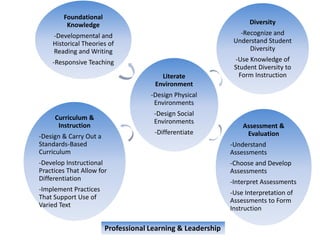
Foundational 
Knowledge Diversity 
Literate 
Environment 
Assessment & 
Evaluation 
Curriculum 
& 
Instruction 
Professional Learning & Leadership
Literate 
Environment 
-Design Physical 
Environments 
-Design Social 
Environments 
-Differentiate 
Foundational 
Knowledge 
-Developmental and 
Historical Theories of 
Reading and Writing 
-Responsive Teaching 
Diversity 
-Recognize and 
Understand Student 
Diversity 
-Use Knowledge of 
Student Diversity to 
Form Instruction 
Assessment & 
Evaluation 
-Understand 
Assessments 
-Choose and Develop 
Assessments 
-Interpret Assessments 
-Use Interpretation of 
Assessments to Form 
Instruction 
Curriculum & 
Instruction 
-Design & Carry Out a 
Standards-Based 
Curriculum 
-Develop Instructional 
Practices That Allow for 
Differentiation 
-Implement Practices 
That Support Use of 
Varied Text 
Professional Learning & Leadership
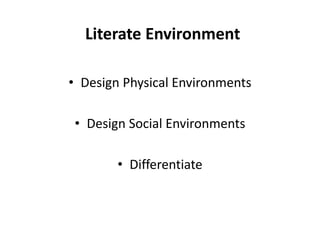
Literate Environment 
• Design Physical Environments 
• Design Social Environments 
• Differentiate
Foundational Knowledge 
• Developmental and Historical Theories of 
Reading and Writing 
• Responsive Teaching
Diversity 
• Recognize and Understand Student Diversity 
• Use Knowledge of Student Diversity to Form 
Instruction
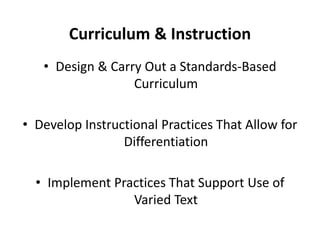
Curriculum & Instruction 
• Design & Carry Out a Standards-Based 
Curriculum 
• Develop Instructional Practices That Allow for 
Differentiation 
• Implement Practices That Support Use of 
Varied Text
Assessment & Evaluation 
• Understand Assessments 
• Choose and Develop Assessments 
• Interpret Assessments 
• Use Interpretation of Assessments to Form 
Instruction
Professional Learning & Leadership 
• Understand Adult Learning Theories and Systems 
for Change 
• Display Positive Dispositions Related to Ourselves 
as Readers and Writers and to the Teaching of 
Readers and Writers 
• Participate In, Design, Facilitate, Lead, and 
Evaluate Effective and Differentiated PD 
• Be a Knowledgeable Political Advocate on the 
Local, State, and National Level
Literate 
Environment 
-Design Physical 
Environments 
-Design Social 
Environments 
-Differentiate 
Foundational 
Knowledge 
-Developmental and 
Historical Theories of 
Reading and Writing 
-Responsive Teaching 
Diversity 
-Recognize and 
Understand Student 
Diversity 
-Use Knowledge of 
Student Diversity to 
Form Instruction 
Assessment & 
Evaluation 
-Understand 
Assessments 
-Choose and Develop 
Assessments 
-Interpret Assessments 
-Use Interpretation of 
Assessments to Form 
Instruction 
Curriculum & 
Instruction 
-Design & Carry Out a 
Standards-Based 
Curriculum 
-Develop Instructional 
Practices That Allow for 
Differentiation 
-Implement Practices 
That Support Use of 
Varied Text 
Professional Learning & Leadership
LE: Reading 
Engagement 
-Design Physical 
Environments 
-Design Social 
Environments 
-Differentiate 
Foundational 
Knowledge 
-Whatever We Read 
or Theorists' Names 
Diversity 
-Choice 
-Awareness of 
Interests 
-Awareness of 
Abilities 
Assessment & 
Evaluation 
- Observation Tool: 
Environment 
-Classroom Library 
Inventories 
-Reading 
Engagement Data 
Curriculum & 
Instruction 
-Refining our 
definitions 
Understanding 
authentic 
engagement vs. 
compliance
“The best way to strengthen children’s learning 
is to let children live like richly literate people the 
world over.” 
Lucy Calkins

Competencies 3-views

  • 1.
  • 2.
    Foundational Knowledge Diversity Literate Environment Assessment & Evaluation Curriculum & Instruction Professional Learning & Leadership
  • 3.
    Literate Environment -DesignPhysical Environments -Design Social Environments -Differentiate Foundational Knowledge -Developmental and Historical Theories of Reading and Writing -Responsive Teaching Diversity -Recognize and Understand Student Diversity -Use Knowledge of Student Diversity to Form Instruction Assessment & Evaluation -Understand Assessments -Choose and Develop Assessments -Interpret Assessments -Use Interpretation of Assessments to Form Instruction Curriculum & Instruction -Design & Carry Out a Standards-Based Curriculum -Develop Instructional Practices That Allow for Differentiation -Implement Practices That Support Use of Varied Text Professional Learning & Leadership
  • 4.
    Literate Environment •Design Physical Environments • Design Social Environments • Differentiate
  • 5.
    Foundational Knowledge •Developmental and Historical Theories of Reading and Writing • Responsive Teaching
  • 6.
    Diversity • Recognizeand Understand Student Diversity • Use Knowledge of Student Diversity to Form Instruction
  • 7.
    Curriculum & Instruction • Design & Carry Out a Standards-Based Curriculum • Develop Instructional Practices That Allow for Differentiation • Implement Practices That Support Use of Varied Text
  • 8.
    Assessment & Evaluation • Understand Assessments • Choose and Develop Assessments • Interpret Assessments • Use Interpretation of Assessments to Form Instruction
  • 9.
    Professional Learning &Leadership • Understand Adult Learning Theories and Systems for Change • Display Positive Dispositions Related to Ourselves as Readers and Writers and to the Teaching of Readers and Writers • Participate In, Design, Facilitate, Lead, and Evaluate Effective and Differentiated PD • Be a Knowledgeable Political Advocate on the Local, State, and National Level
  • 10.
    Literate Environment -DesignPhysical Environments -Design Social Environments -Differentiate Foundational Knowledge -Developmental and Historical Theories of Reading and Writing -Responsive Teaching Diversity -Recognize and Understand Student Diversity -Use Knowledge of Student Diversity to Form Instruction Assessment & Evaluation -Understand Assessments -Choose and Develop Assessments -Interpret Assessments -Use Interpretation of Assessments to Form Instruction Curriculum & Instruction -Design & Carry Out a Standards-Based Curriculum -Develop Instructional Practices That Allow for Differentiation -Implement Practices That Support Use of Varied Text Professional Learning & Leadership
  • 11.
    LE: Reading Engagement -Design Physical Environments -Design Social Environments -Differentiate Foundational Knowledge -Whatever We Read or Theorists' Names Diversity -Choice -Awareness of Interests -Awareness of Abilities Assessment & Evaluation - Observation Tool: Environment -Classroom Library Inventories -Reading Engagement Data Curriculum & Instruction -Refining our definitions Understanding authentic engagement vs. compliance
  • 12.
    “The best wayto strengthen children’s learning is to let children live like richly literate people the world over.” Lucy Calkins

Editor's Notes