Community Social Work in Scotland – What it is
and Why it Matters
Colin Turbett
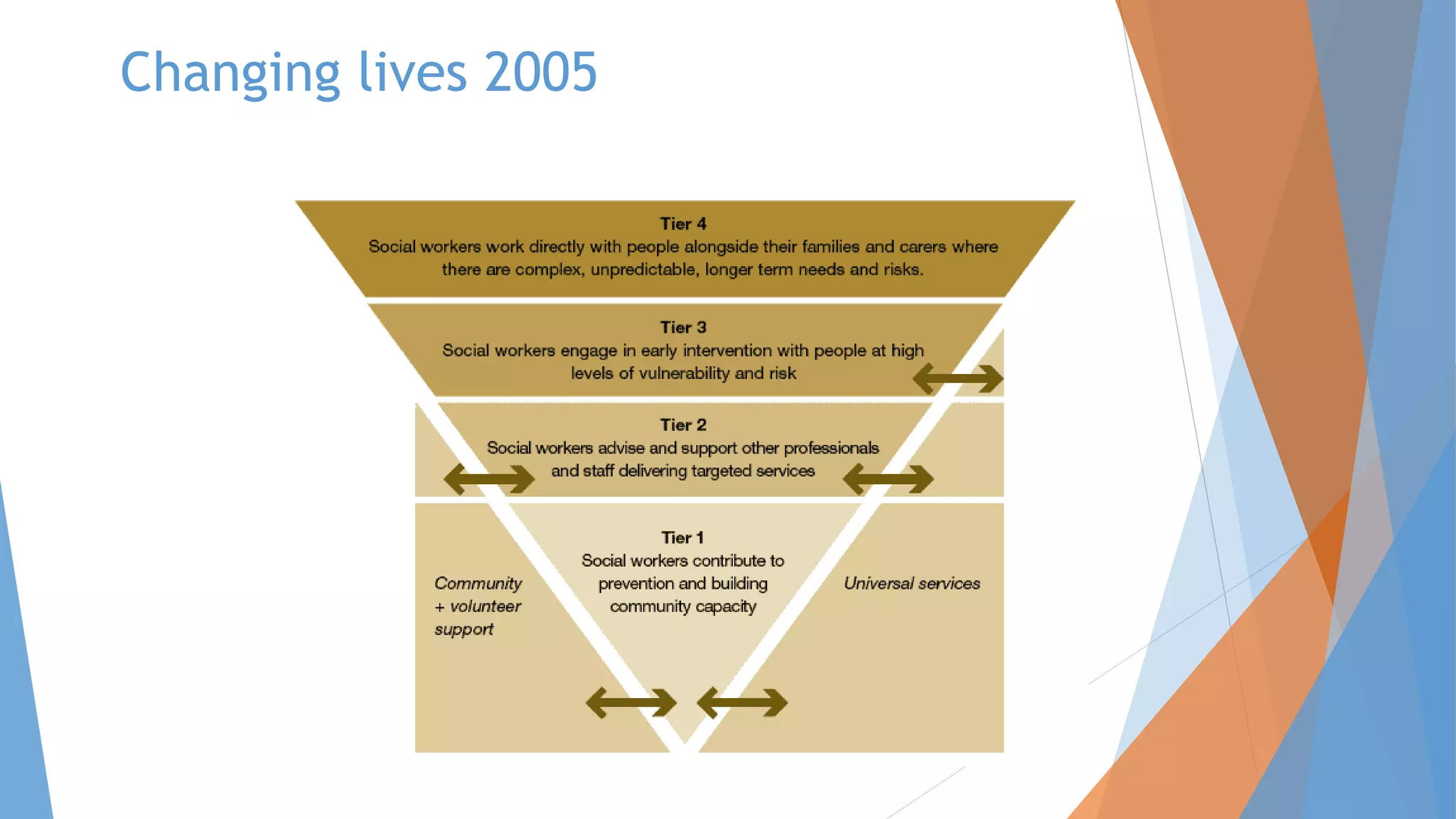
Changing lives 2005
1968 Act s12
"Social workers should be attentive to events and developments within the communities they
serve, anticipating needs that are likely to arise… The workload of local authority social work
teams should be planned to include activity designed to explore and monitor situations and
developments within communities they serve with a view to anticipating need and planning
ahead for the provision to meet it.” and "Social workers should be attentive to the plans and
activities of agencies – their own and any others… it might involve, for example, direct
negotiation, enabling people in the community to exercise direct influence, and/or referring
information to senior management level for action.”
Social Work Services Group, 1968
COMMUNITY SOCIAL WORK IN
SCOTLAND – what happened ?
 Community development projects / Barclay report 1982 / NISW PRACTICE &
DEVELOPMENT exchange / various csw projects
 Miners strike 1984-85
 Tory government policy for the public sector
 Clyde report / Jasmine Beckford / Cleveland / NHS Care & Community Act -
Reduction of QSW task to specialised assessments
 1996 Local government reorganisation – reduction of power and influence of
social work departments
 2000 on – “Integration” Agendas
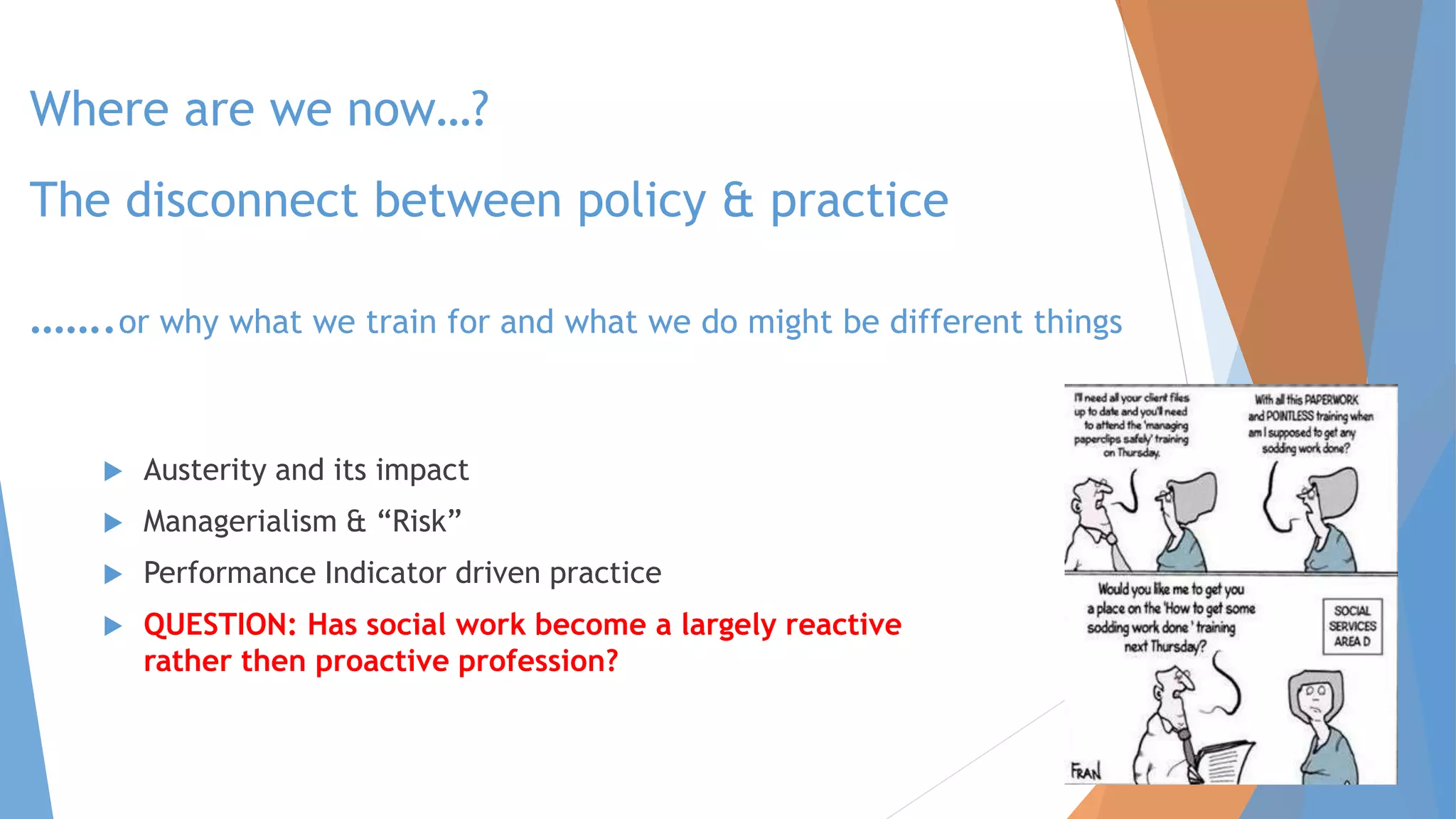
Where are we now…?
The disconnect between policy & practice
…….or why what we train for and what we do might be different things
 Austerity and its impact
 Managerialism & “Risk”
 Performance Indicator driven practice
 QUESTION: Has social work become a largely reactive
rather then proactive profession?
Current policy-drivers - and need for change…
From Person-Centred to People-Powered!?
 ‘Doing with, not to’ – a human rights based approach
 Individuals and families
 Communities
 Financial and legislative drivers
 Community Empowerment (Scotland) Act 2015
 The Public Bodies (Joint Working) (Scotland) Act 2014
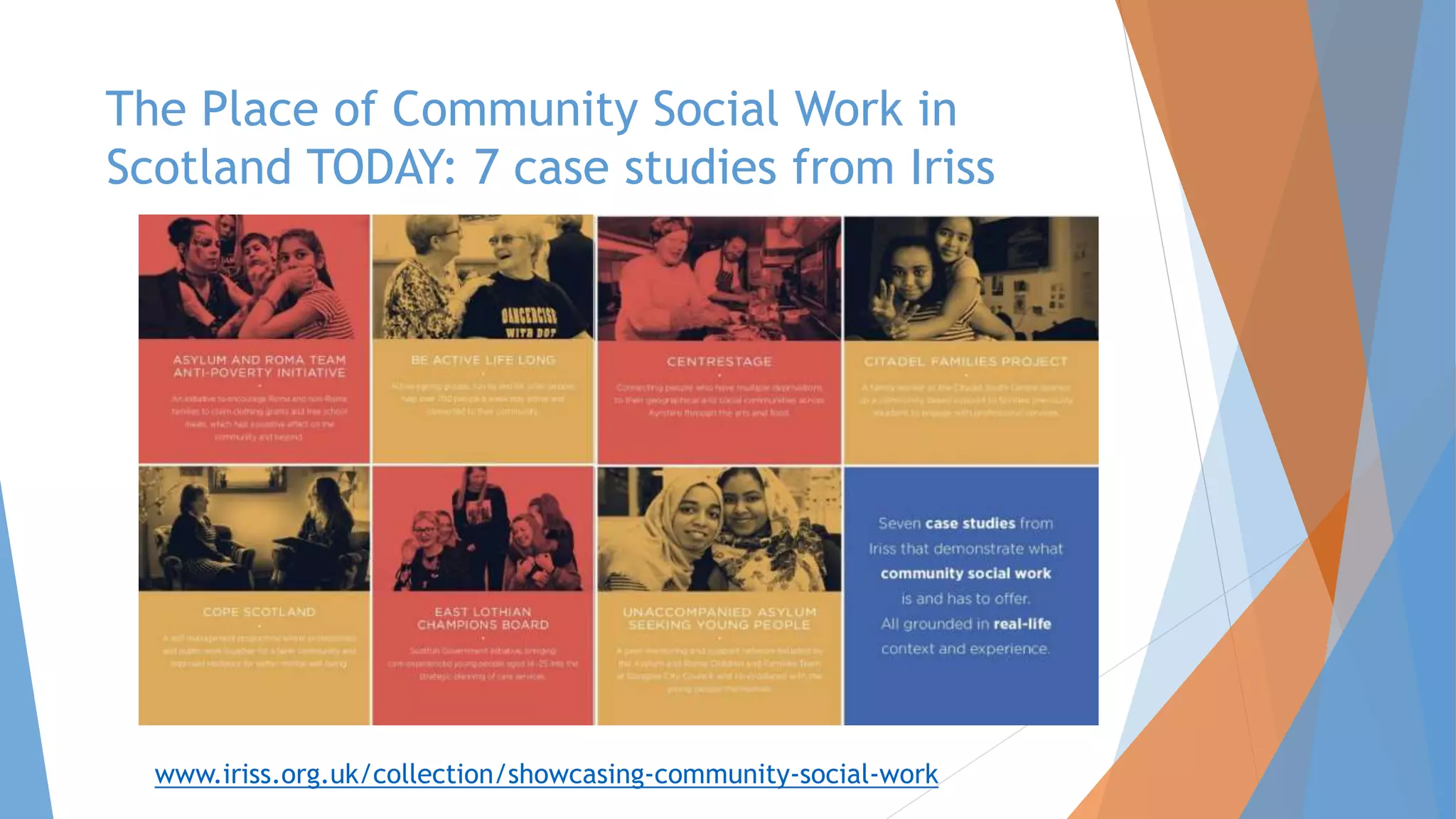
The Place of Community Social Work in
Scotland TODAY: 7 case studies from Iriss
www.iriss.org.uk/collection/showcasing-community-social-work
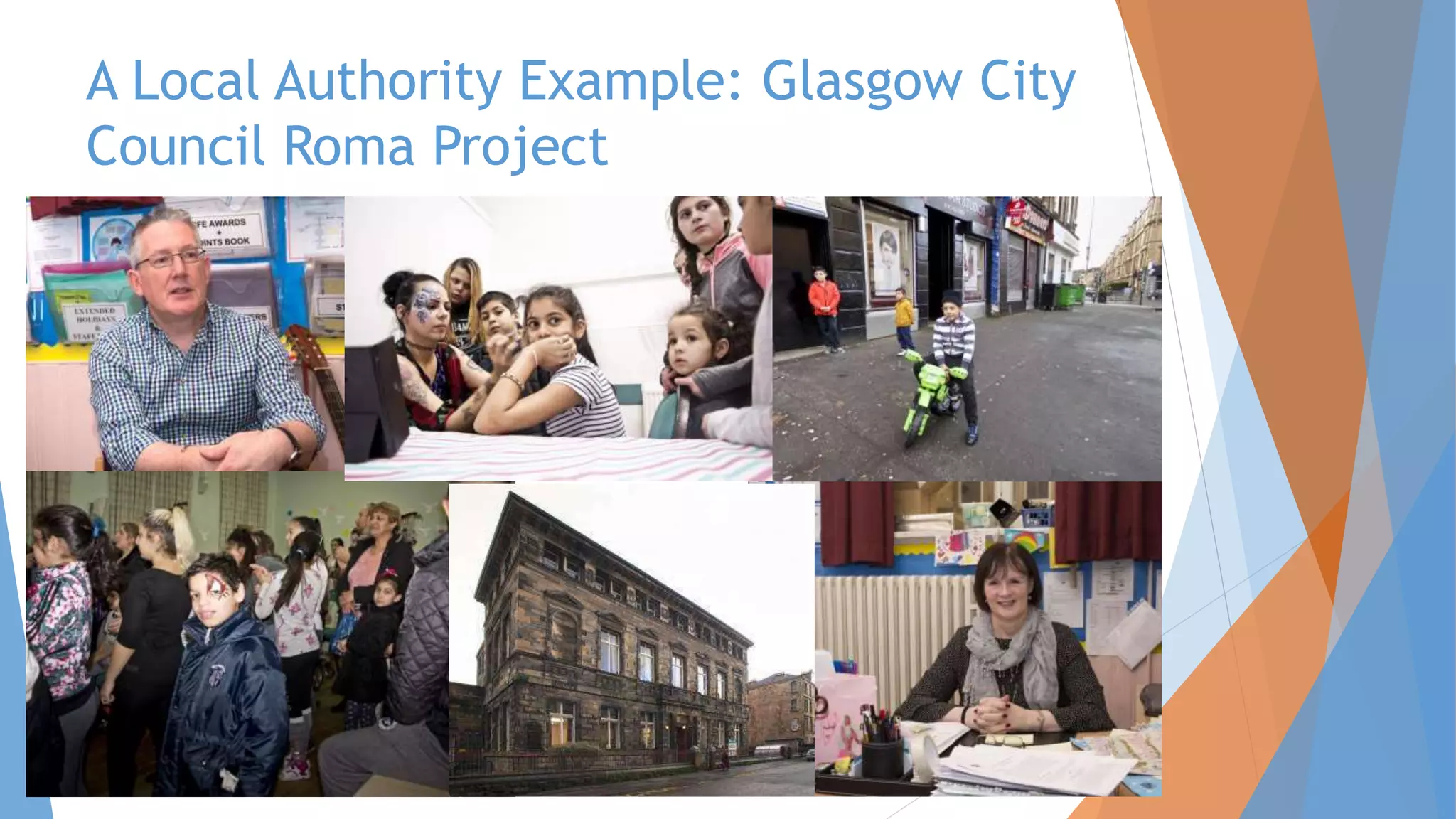
A Local Authority Example: Glasgow City
Council Roma Project
Rural Social Work’s Particular
Possibilities:
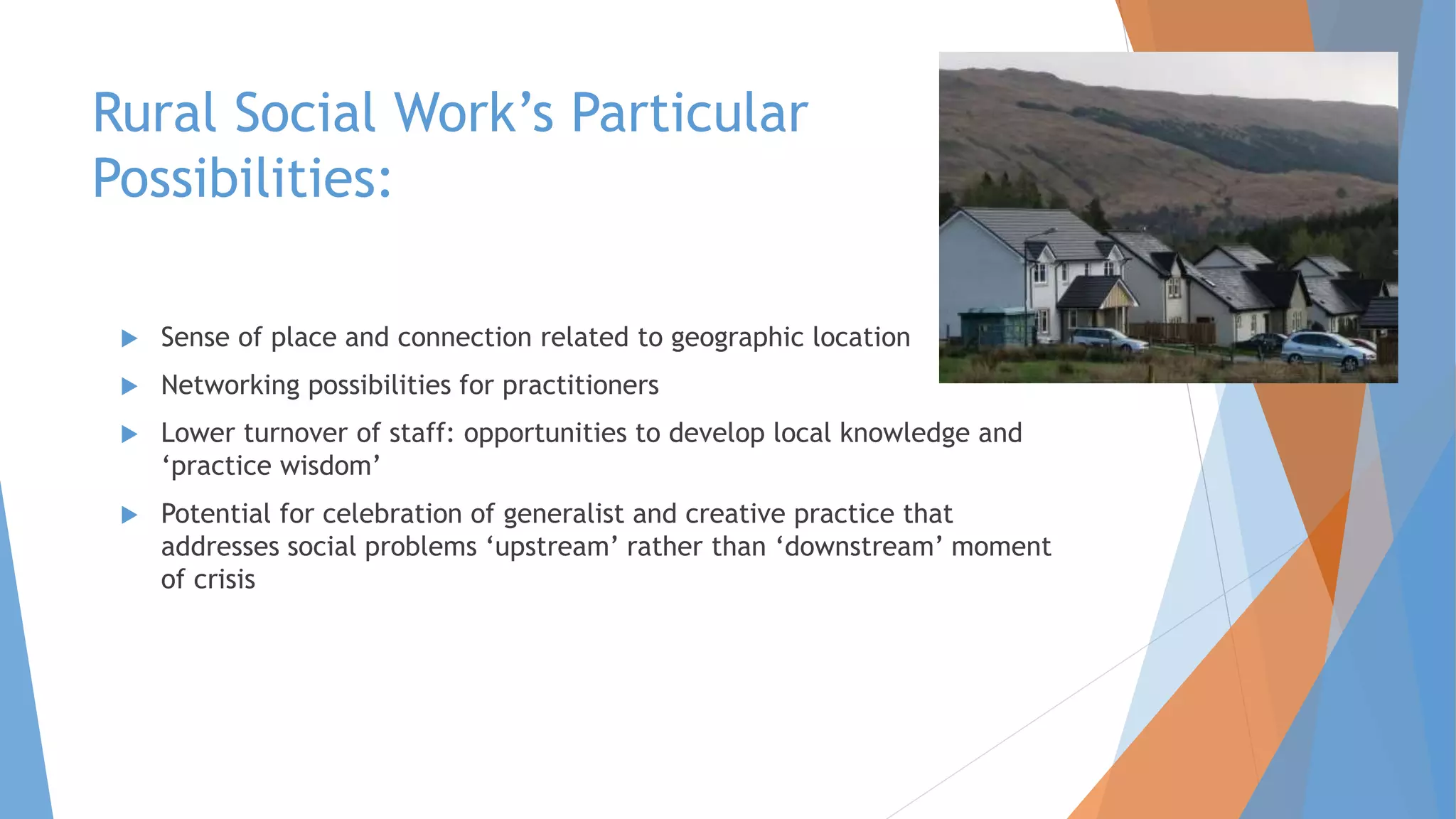
 Sense of place and connection related to geographic location
 Networking possibilities for practitioners
 Lower turnover of staff: opportunities to develop local knowledge and
‘practice wisdom’
 Potential for celebration of generalist and creative practice that
addresses social problems ‘upstream’ rather than ‘downstream’ moment
of crisis
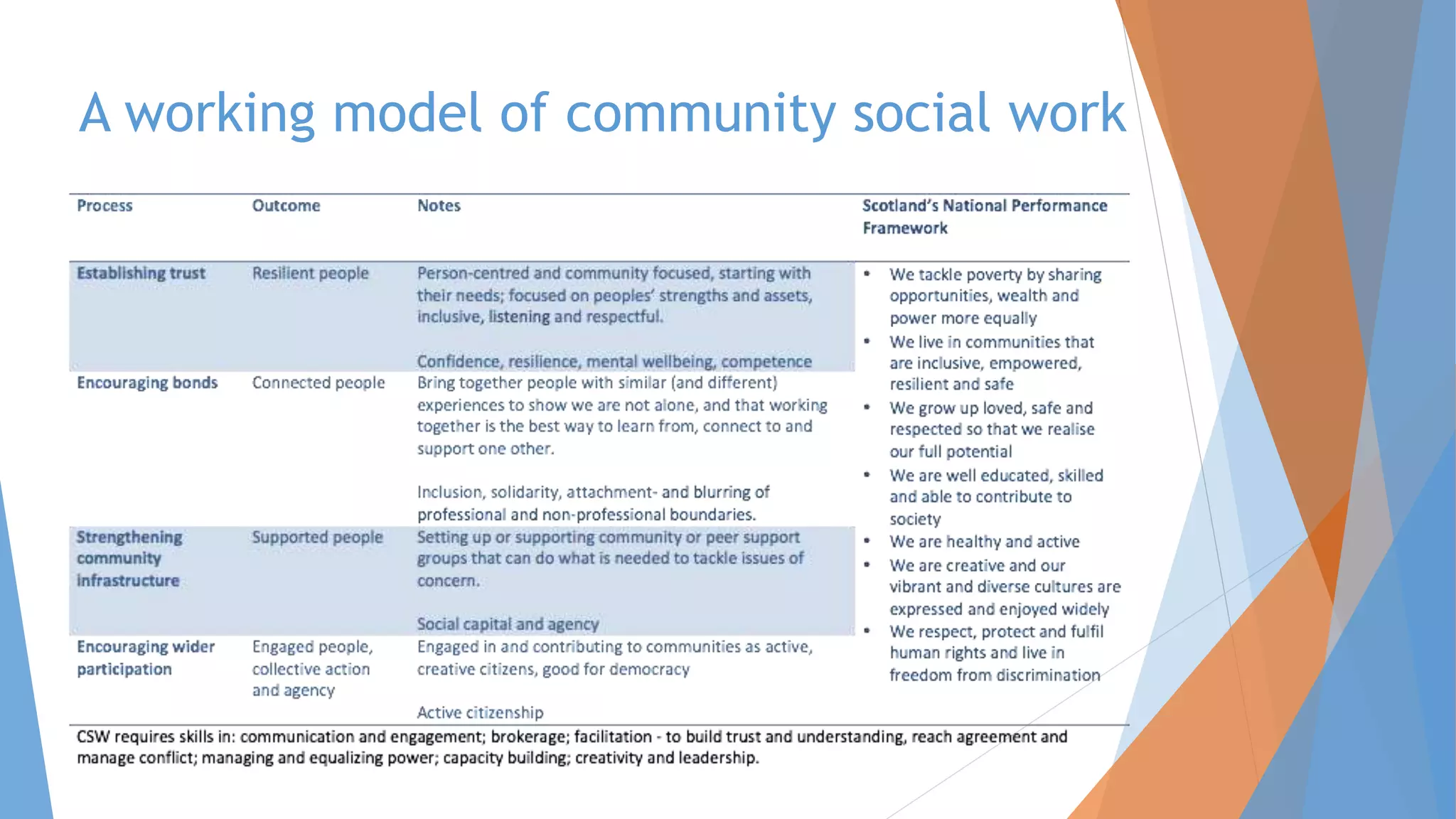
A working model of community social work
Broad Characteristics of Community
Social Work
 It (CSW) recognizes that people are entwined with and
inseparable from the social environment and that
strengthening community helps to solve individual as well as
shared problems;
 It believes that knowledge of the wider world is empowering
so education is key to successful citizenship;
 It sees collective as well as individual activity as valuable in
building social capital and avoiding marginalization;
 It contends that community involvement is good for individual
mental health, reducing stress and its consequences
 It sees collective activity as empowering for the individual -
this holds politicians and policy makers to account and so is
good for democracy.
The CSW Mindset:
The Community Orientated Practitioner………….
 Thinks tactically – doing what she can with what she has –
power is not only what you have but what others think you
have
 Exerts influence – at every system level there are many ways
to do so
 Avoids romantic notions of community – they can be repressive
institutions and do not always contain the seeds of a better
future for their members
 Wins respect for their efforts by being a good social worker
who supports and help individuals – whether adults suffering
disadvantage or children requiring protection from harm
 Maintains the rage – but uses it wisely!
 Managers perform an enabling and supportive role rather than
a controlling one concerned mainly with process
PARTNERSHIPS NOT PARACHUTES
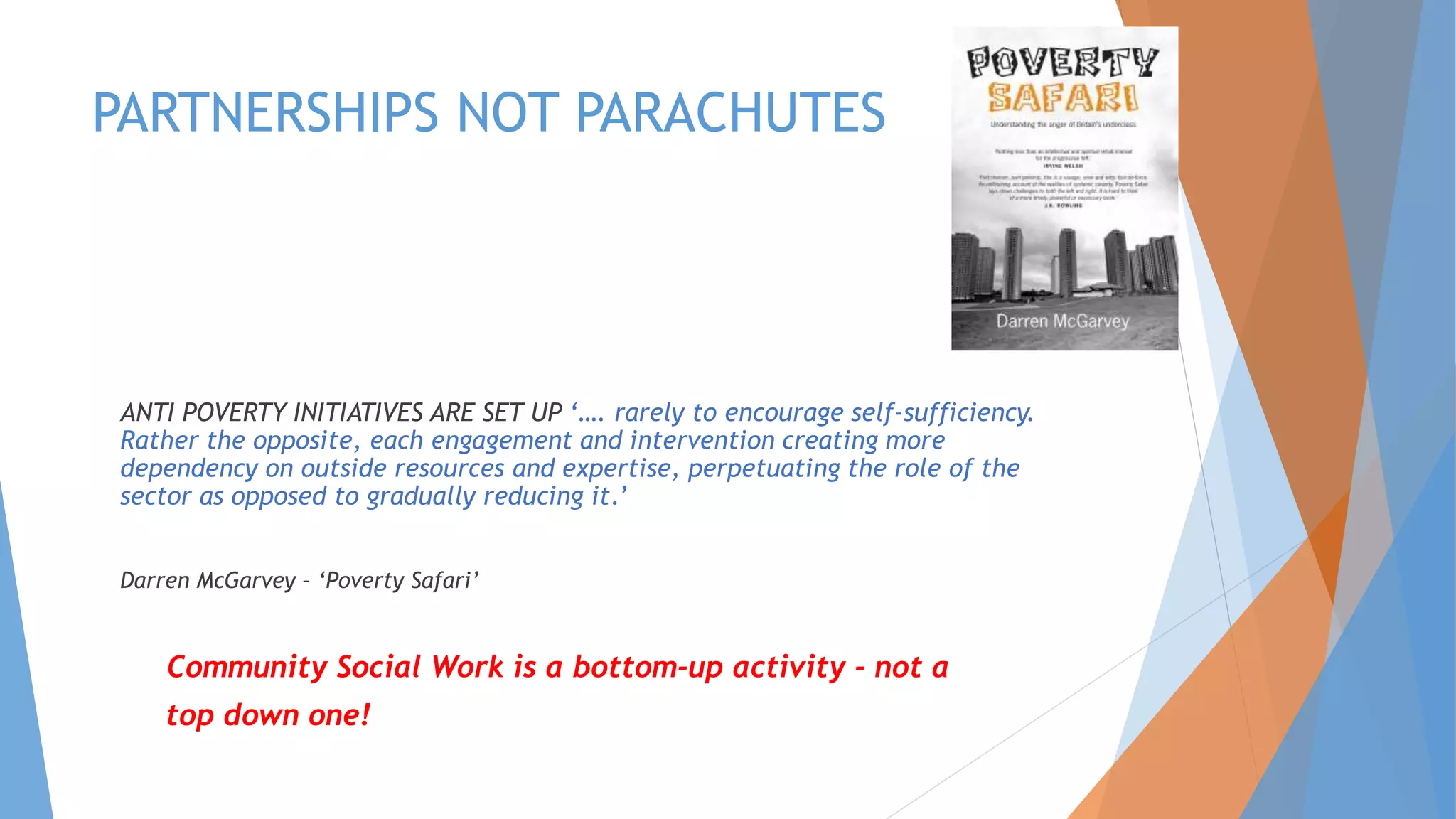
ANTI POVERTY INITIATIVES ARE SET UP ‘…. rarely to encourage self-sufficiency.
Rather the opposite, each engagement and intervention creating more
dependency on outside resources and expertise, perpetuating the role of the
sector as opposed to gradually reducing it.’
Darren McGarvey – ‘Poverty Safari’
Community Social Work is a bottom-up activity - not a
top down one!
Examples & Ideas
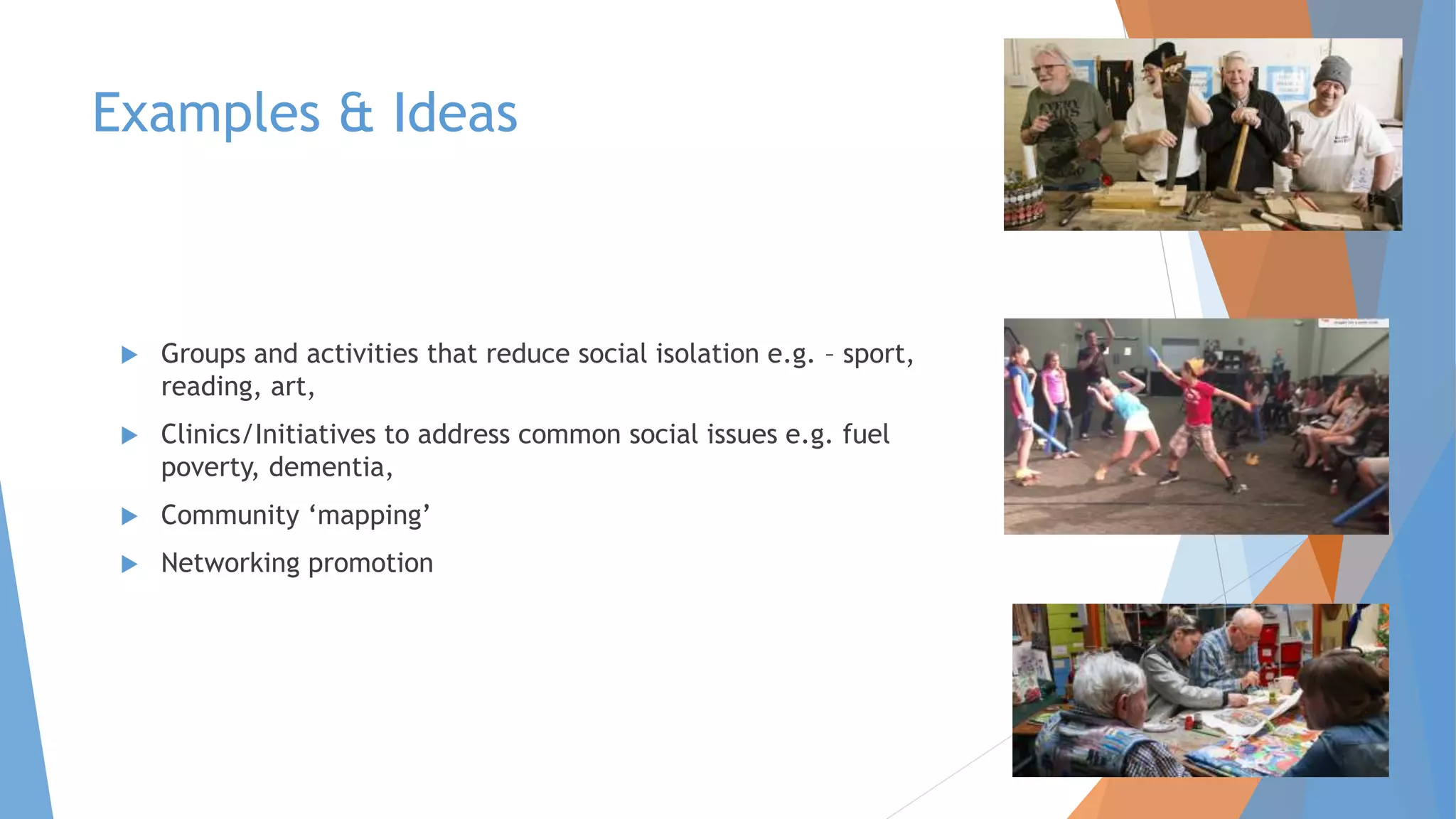
 Groups and activities that reduce social isolation e.g. – sport,
reading, art,
 Clinics/Initiatives to address common social issues e.g. fuel
poverty, dementia,
 Community ‘mapping’
 Networking promotion

Community social work: what it is and why it matters

  • 1.
    Community Social Workin Scotland – What it is and Why it Matters Colin Turbett
  • 2.
  • 3.
    1968 Act s12 "Socialworkers should be attentive to events and developments within the communities they serve, anticipating needs that are likely to arise… The workload of local authority social work teams should be planned to include activity designed to explore and monitor situations and developments within communities they serve with a view to anticipating need and planning ahead for the provision to meet it.” and "Social workers should be attentive to the plans and activities of agencies – their own and any others… it might involve, for example, direct negotiation, enabling people in the community to exercise direct influence, and/or referring information to senior management level for action.” Social Work Services Group, 1968
  • 4.
    COMMUNITY SOCIAL WORKIN SCOTLAND – what happened ?  Community development projects / Barclay report 1982 / NISW PRACTICE & DEVELOPMENT exchange / various csw projects  Miners strike 1984-85  Tory government policy for the public sector  Clyde report / Jasmine Beckford / Cleveland / NHS Care & Community Act - Reduction of QSW task to specialised assessments  1996 Local government reorganisation – reduction of power and influence of social work departments  2000 on – “Integration” Agendas
  • 5.
    Where are wenow…? The disconnect between policy & practice …….or why what we train for and what we do might be different things  Austerity and its impact  Managerialism & “Risk”  Performance Indicator driven practice  QUESTION: Has social work become a largely reactive rather then proactive profession?
  • 6.
    Current policy-drivers -and need for change… From Person-Centred to People-Powered!?  ‘Doing with, not to’ – a human rights based approach  Individuals and families  Communities  Financial and legislative drivers  Community Empowerment (Scotland) Act 2015  The Public Bodies (Joint Working) (Scotland) Act 2014
  • 7.
    The Place ofCommunity Social Work in Scotland TODAY: 7 case studies from Iriss www.iriss.org.uk/collection/showcasing-community-social-work
  • 8.
    A Local AuthorityExample: Glasgow City Council Roma Project
  • 9.
    Rural Social Work’sParticular Possibilities:  Sense of place and connection related to geographic location  Networking possibilities for practitioners  Lower turnover of staff: opportunities to develop local knowledge and ‘practice wisdom’  Potential for celebration of generalist and creative practice that addresses social problems ‘upstream’ rather than ‘downstream’ moment of crisis
  • 10.
    A working modelof community social work
  • 11.
    Broad Characteristics ofCommunity Social Work  It (CSW) recognizes that people are entwined with and inseparable from the social environment and that strengthening community helps to solve individual as well as shared problems;  It believes that knowledge of the wider world is empowering so education is key to successful citizenship;  It sees collective as well as individual activity as valuable in building social capital and avoiding marginalization;  It contends that community involvement is good for individual mental health, reducing stress and its consequences  It sees collective activity as empowering for the individual - this holds politicians and policy makers to account and so is good for democracy.
  • 12.
    The CSW Mindset: TheCommunity Orientated Practitioner………….  Thinks tactically – doing what she can with what she has – power is not only what you have but what others think you have  Exerts influence – at every system level there are many ways to do so  Avoids romantic notions of community – they can be repressive institutions and do not always contain the seeds of a better future for their members  Wins respect for their efforts by being a good social worker who supports and help individuals – whether adults suffering disadvantage or children requiring protection from harm  Maintains the rage – but uses it wisely!  Managers perform an enabling and supportive role rather than a controlling one concerned mainly with process
  • 13.
    PARTNERSHIPS NOT PARACHUTES ANTIPOVERTY INITIATIVES ARE SET UP ‘…. rarely to encourage self-sufficiency. Rather the opposite, each engagement and intervention creating more dependency on outside resources and expertise, perpetuating the role of the sector as opposed to gradually reducing it.’ Darren McGarvey – ‘Poverty Safari’ Community Social Work is a bottom-up activity - not a top down one!
  • 14.
    Examples & Ideas Groups and activities that reduce social isolation e.g. – sport, reading, art,  Clinics/Initiatives to address common social issues e.g. fuel poverty, dementia,  Community ‘mapping’  Networking promotion