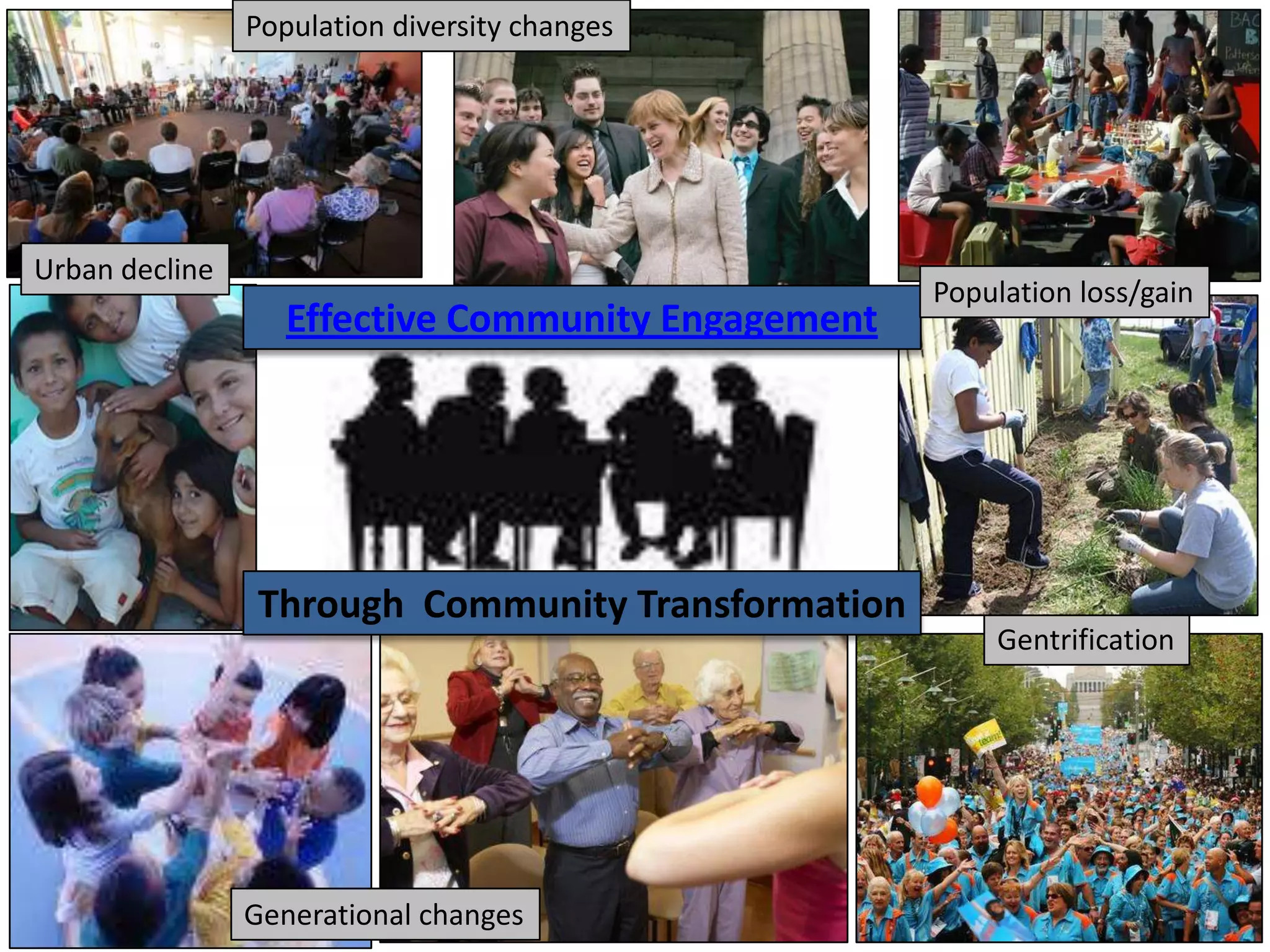
Population diversity changes


Urban decline
                                                    Population loss/gain
                   Effective Community Engagement


                Through Community Transformation
                                                        Gentrification


                Generational changes
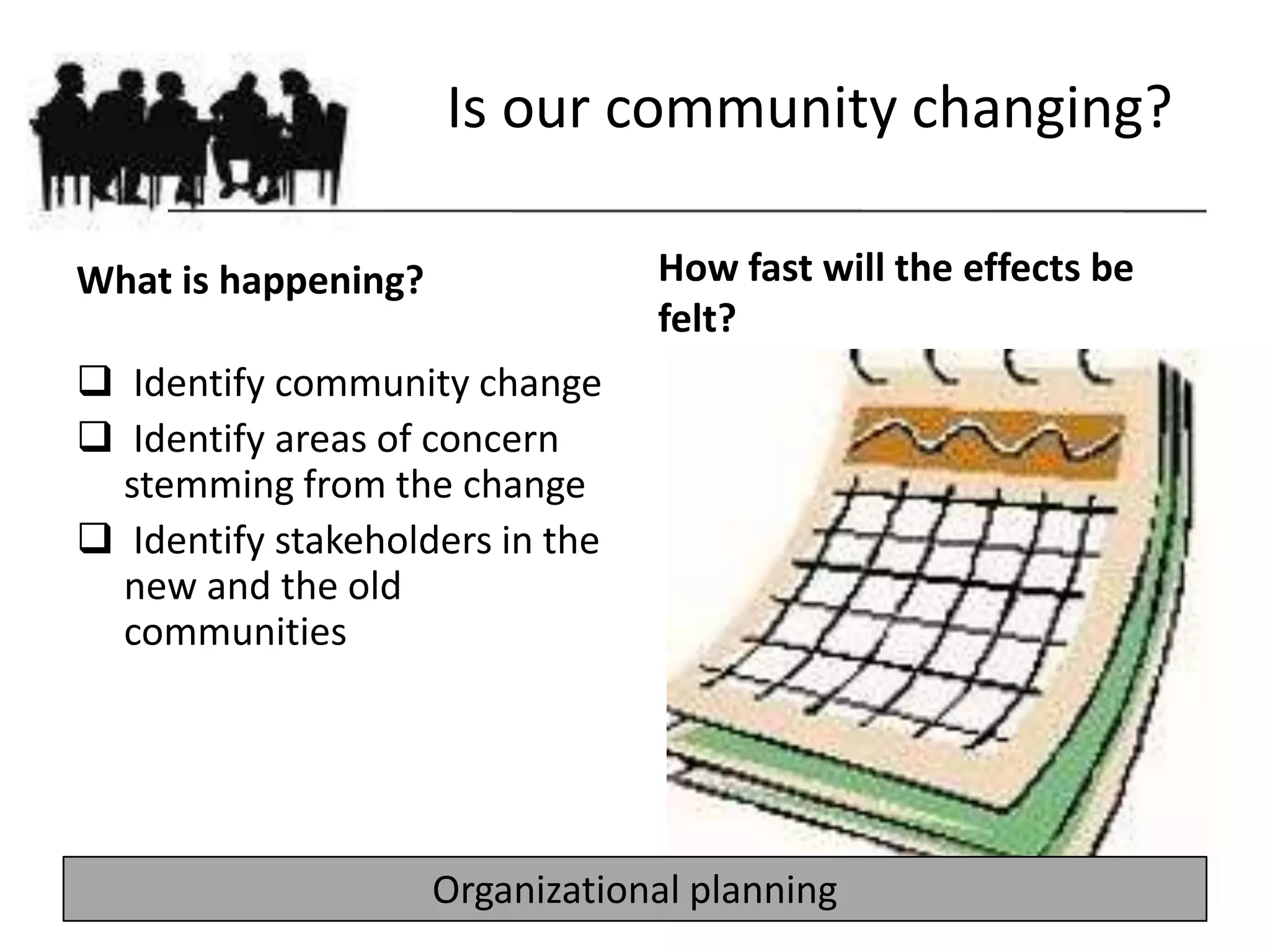
Is our community changing?

What is happening?               How fast will the effects be
                                 felt?
 Identify community change
 Identify areas of concern
  stemming from the change
 Identify stakeholders in the
  new and the old
  communities


                     Organizational planning
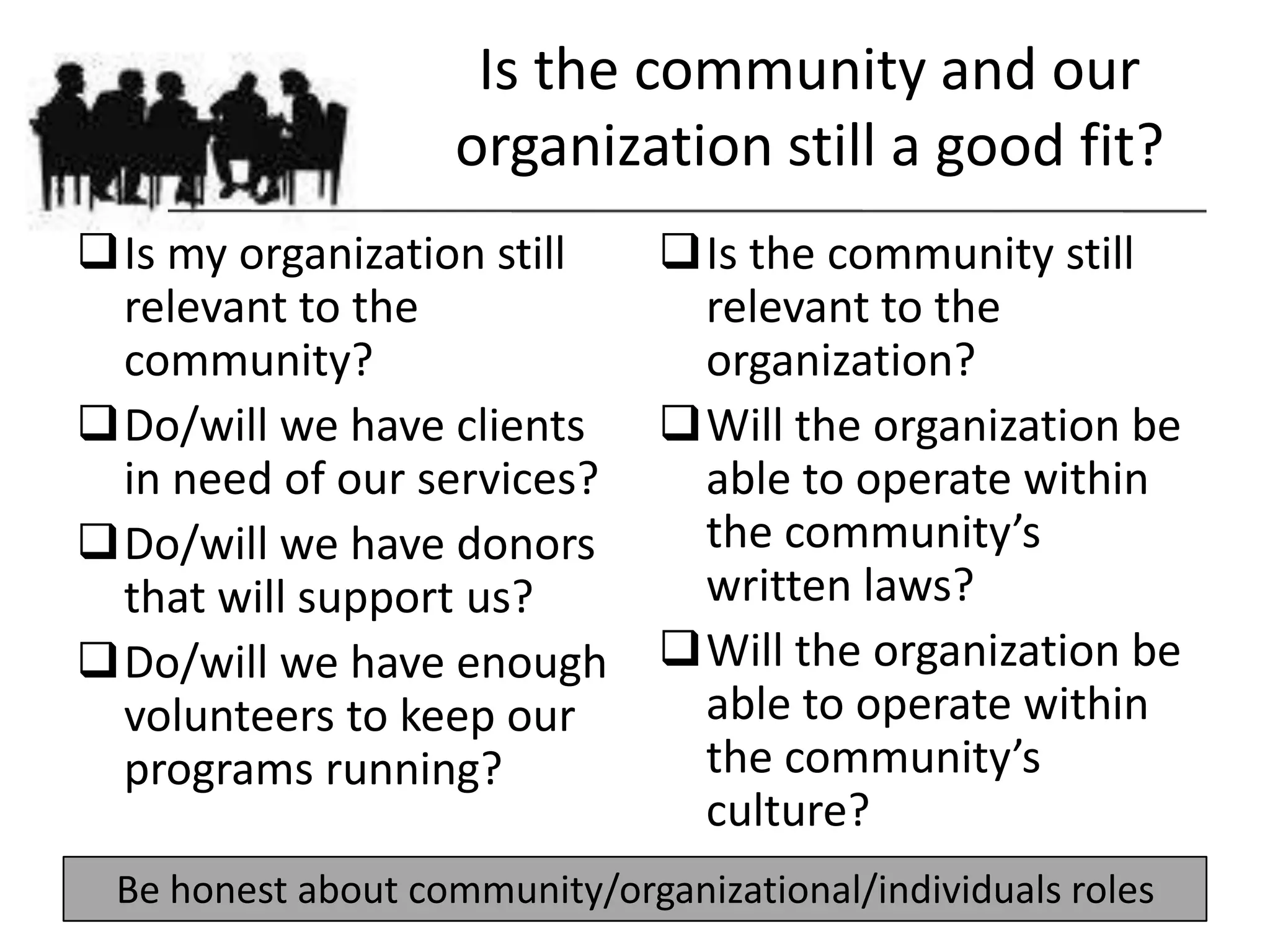
Is the community and our
                   organization still a good fit?
Is my organization still      Is the community still
 relevant to the                relevant to the
 community?                     organization?
Do/will we have clients       Will the organization be
 in need of our services?       able to operate within
Do/will we have donors         the community’s
 that will support us?          written laws?
Do/will we have enough        Will the organization be
 volunteers to keep our         able to operate within
 programs running?              the community’s
                                culture?
 Be honest about community/organizational/individuals roles
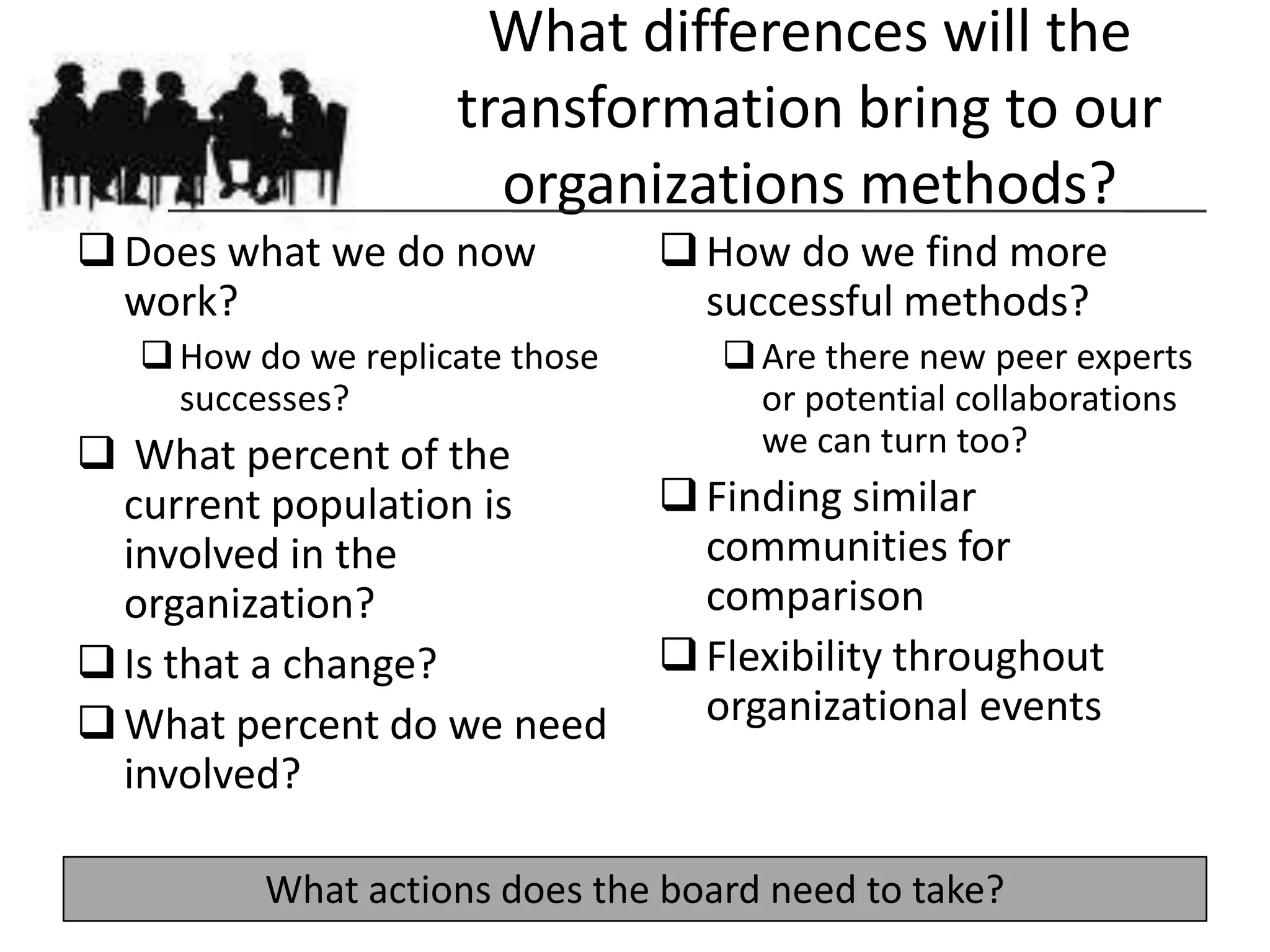
What differences will the
                    transformation bring to our
                      organizations methods?
 Does what we do now            How do we find more
  work?                           successful methods?
   How do we replicate those       Are there new peer experts
    successes?                       or potential collaborations
 What percent of the                we can turn too?
  current population is          Finding similar
  involved in the                 communities for
  organization?                   comparison
 Is that a change?              Flexibility throughout
 What percent do we need         organizational events
  involved?

         What actions does the board need to take?
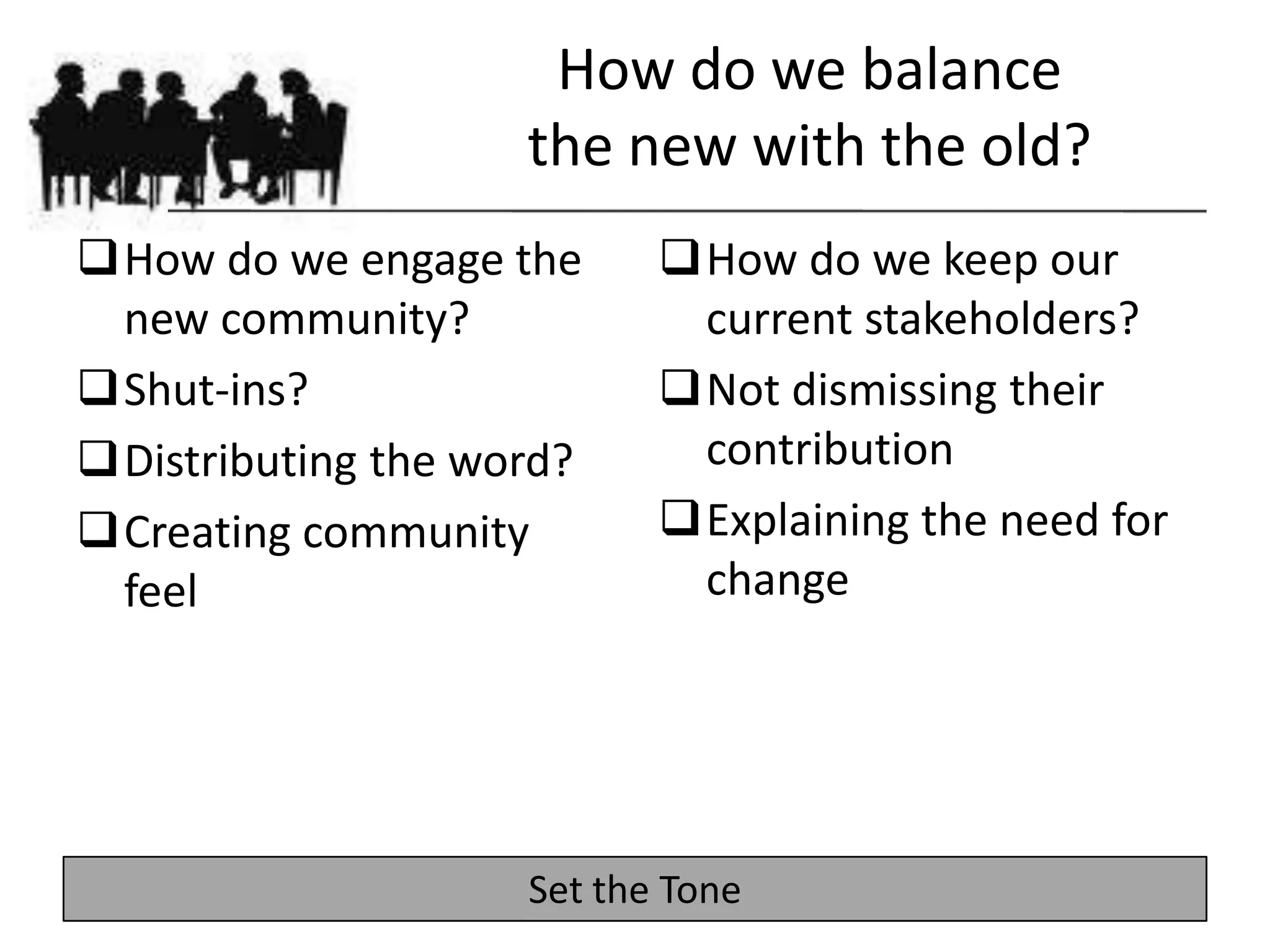
How do we balance
                    the new with the old?
How do we engage the      How do we keep our
 new community?             current stakeholders?
Shut-ins?                 Not dismissing their
Distributing the word?     contribution
Creating community        Explaining the need for
 feel                       change


                    Set the Tone
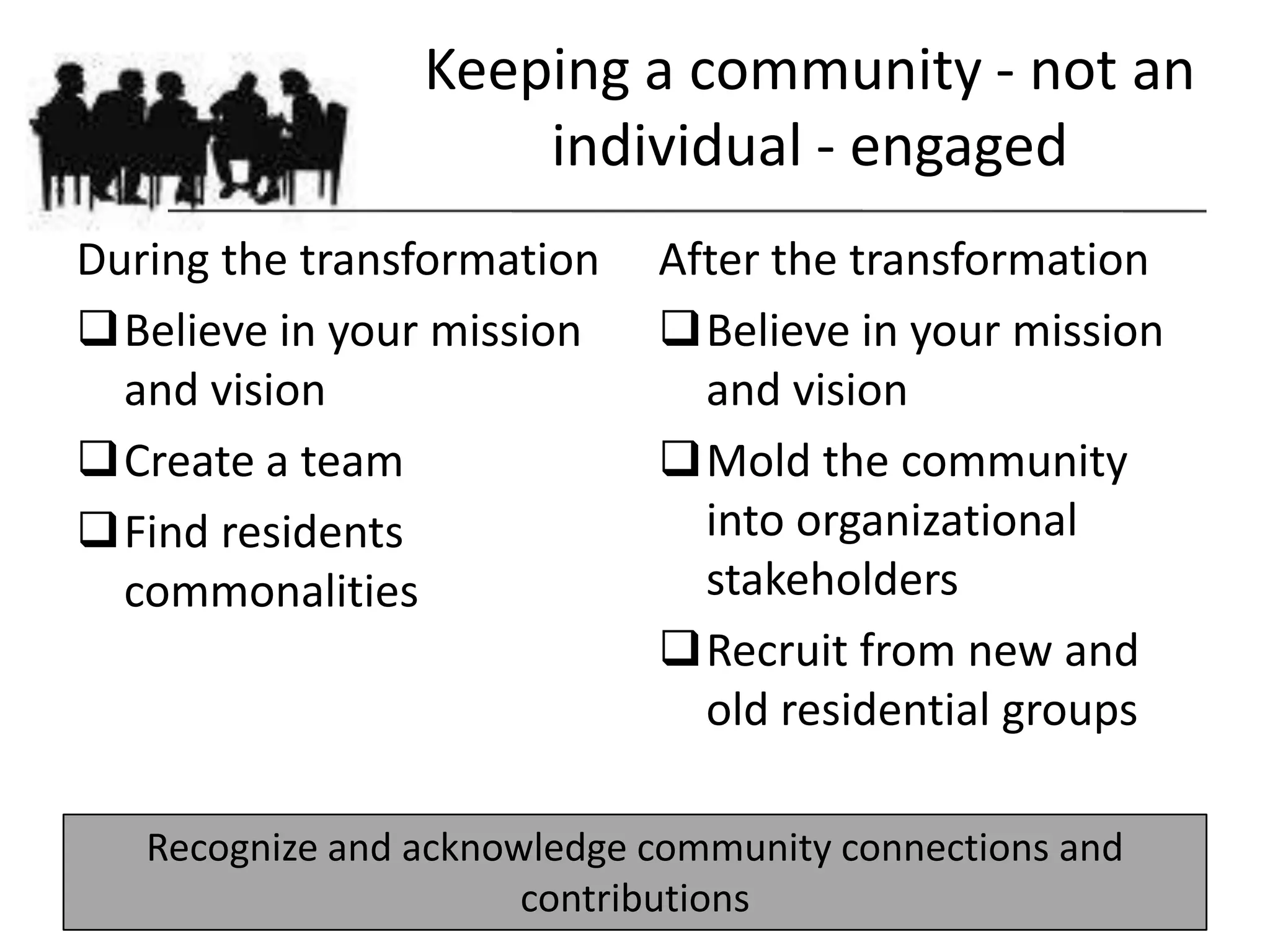
Keeping a community - not an
                     individual - engaged
During the transformation    After the transformation
Believe in your mission     Believe in your mission
  and vision                   and vision
Create a team               Mold the community
Find residents                into organizational
  commonalities                stakeholders
                             Recruit from new and
                               old residential groups

   Recognize and acknowledge community connections and
                       contributions
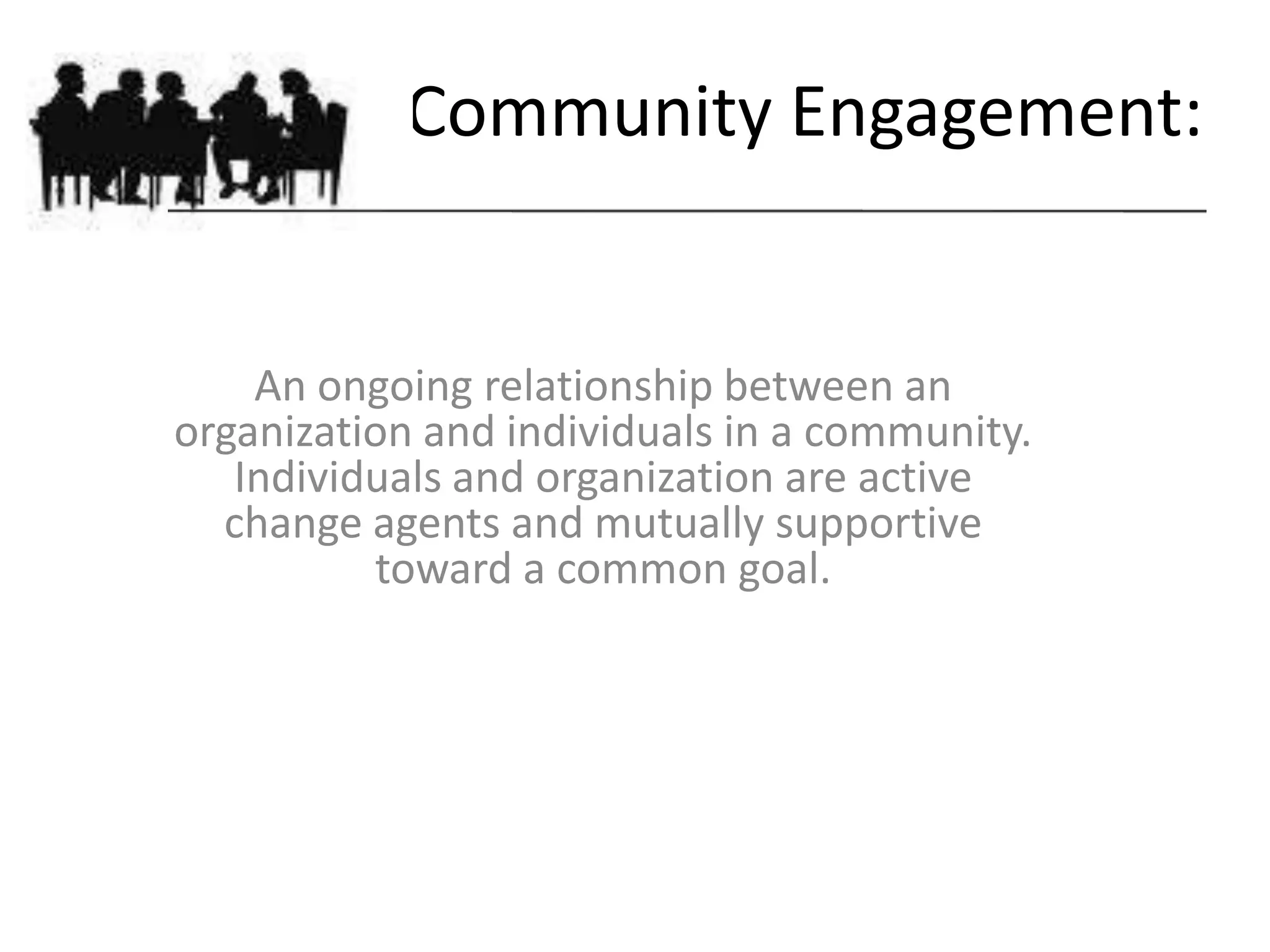
Community Engagement:


    An ongoing relationship between an
organization and individuals in a community.
   Individuals and organization are active
  change agents and mutually supportive
          toward a common goal.
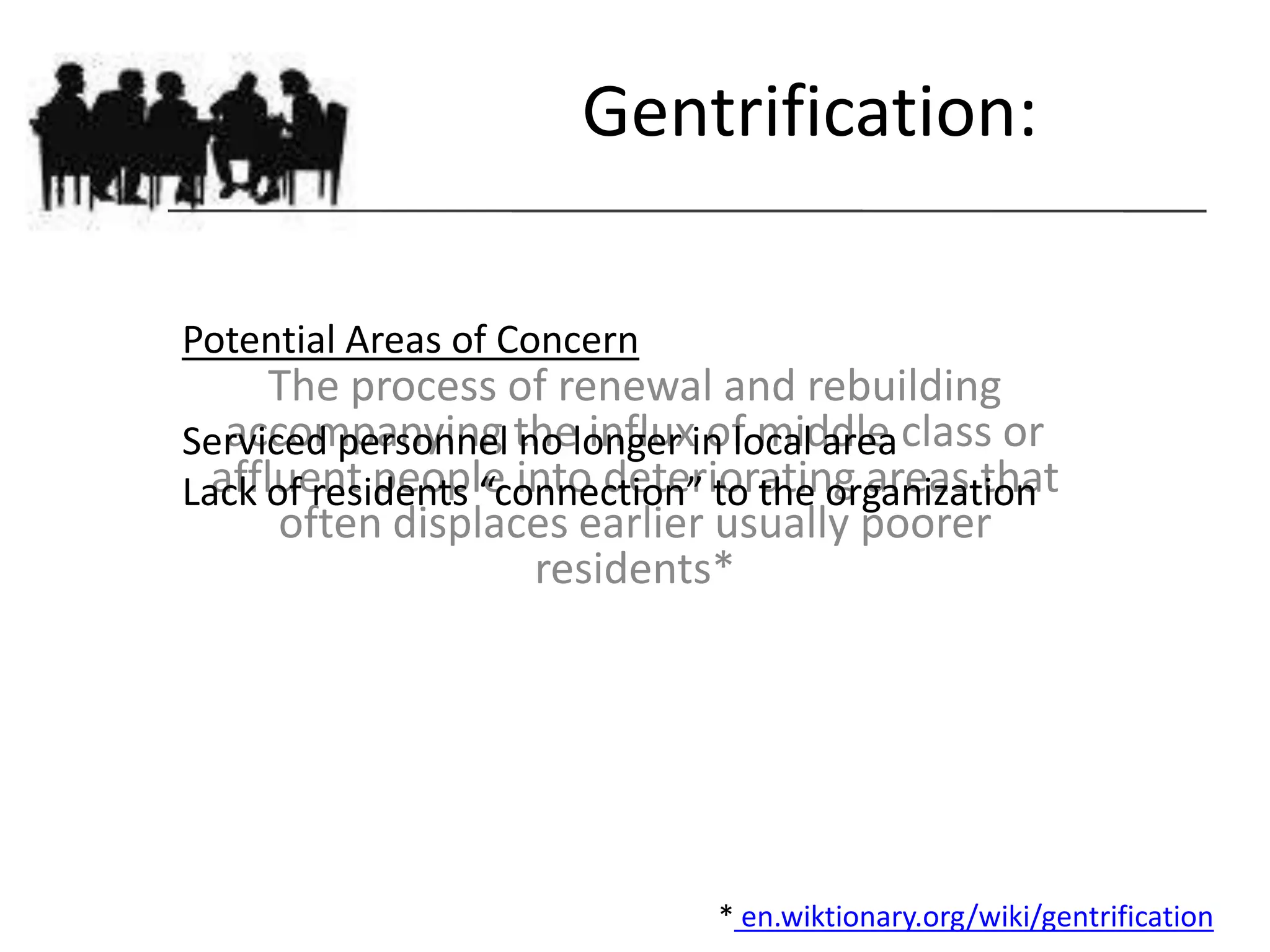
Gentrification:

Potential Areas of Concern
      The process of renewal and rebuilding
Serviced personnel thelonger in local area class or
   accompanying no influx of middle
  affluent people into deteriorating areas that
Lack of residents “connection” to the organization
      often displaces earlier usually poorer
                     residents*


                               * en.wiktionary.org/wiki/gentrification
Urban decline:

Potential Areas of Concern
          Area falls into disrepair, involving
   deindustrialization, depopulation or changing
Loss of donors
  population, economic restructuring, abandoned
Increased need for services unemployment,
        buildings, high local
Increased crime rate decreases visitation to rates.
    disenfranchisement, and higher crime physical
locations
Population loss/gain:

Potential Areas of Concern
     Significant changes in an areas
Lack of stakeholders
            population numbers.
Community feels ‘someone else’ is taking care of the
organization
Getting lost in the crowd
Community feels smaller community will no longer have
the same issues
Generational changes:

Potential Areas of Concern
     Significant changes in the average
Disconnection toan area’s residents. For
       age of the organization’s goals
Residents not understanding how the mission will affect
them
       example an aging population.
Population diversity
                      changes:

Potential Areas of Concern
  Significant changes in the make up of
Language barriers
     residents. For example increased
Cultural barriers
    immigrant population or decreased
              traditional families.
Organizational Planning
 Have a systematic planning process
 Identify common ground/identity between old
 and new
 Identify future changes
 Anticipate issues
 Adjust future plans
 Be accountable
   Assess group/individual board affects in regards to
   outreach efforts
 Identify common ground/identity
Roles through transformation
 Define traditional and new roles and
 interaction honestly
   Community
   Organization
   Clients
   Donors
   Volunteers
   Board members
Board Action Checklist
 Know your audience                     Build relationships
    Get out into the community          Listen to each other and the
    Be an ambassador                     community
    Community sleuthing                 Ensure the board is representative
 Articulate organizational mission       of the community
  and vision                                Recommend board recruits
 Frame discussions about the                 from new and old residents
  organization to the audience           Identify areas for new services
    Be honest about both                Identify areas for new
      successes and challenges            collaborations
    How the organization will affect
      new community
Set the Tone
 Be responsive to the community
 View change as an opportunity
 Welcome newcomers
 Peer learning – find the new experts
 Share concerns and knowledge
Community connections
 Be present at community events
 Public relations/advertising
   Audiences preferred communication methods
 Collaboration opportunities
 Be honest on the organizations affect on the
 community
Additional Resources
• Chait, R., Ryan, W., & Taylor, B. (2005). Governance as
  leadership: Reframing the work of nonprofit boards.
  Hoboken, NJ: John Wiley & Sons, Inc.
• Axelrod, N. (2007). Culture of inquiry: Healthy debate in
  the boardroom. Washington, DC: BoardSource.
• Gottlieb, H. (2006). FriendRaising: Community
  engagement strategies for boards who hate
  fundraising but love making friends. Tucson, AZ:
  Renaissance Press.
• Duquesne University SL-MSCL-513-55 201030 board
  resources
• Debra Beck’s identified web board resources

Community engagement through community transformation

  • 1.
    Population diversity changes Urbandecline Population loss/gain Effective Community Engagement Through Community Transformation Gentrification Generational changes
  • 2.
    Is our communitychanging? What is happening? How fast will the effects be felt?  Identify community change  Identify areas of concern stemming from the change  Identify stakeholders in the new and the old communities Organizational planning
  • 3.
    Is the communityand our organization still a good fit? Is my organization still Is the community still relevant to the relevant to the community? organization? Do/will we have clients Will the organization be in need of our services? able to operate within Do/will we have donors the community’s that will support us? written laws? Do/will we have enough Will the organization be volunteers to keep our able to operate within programs running? the community’s culture? Be honest about community/organizational/individuals roles
  • 4.
    What differences willthe transformation bring to our organizations methods?  Does what we do now  How do we find more work? successful methods?  How do we replicate those  Are there new peer experts successes? or potential collaborations  What percent of the we can turn too? current population is  Finding similar involved in the communities for organization? comparison  Is that a change?  Flexibility throughout  What percent do we need organizational events involved? What actions does the board need to take?
  • 5.
    How do webalance the new with the old? How do we engage the How do we keep our new community? current stakeholders? Shut-ins? Not dismissing their Distributing the word? contribution Creating community Explaining the need for feel change Set the Tone
  • 6.
    Keeping a community- not an individual - engaged During the transformation After the transformation Believe in your mission Believe in your mission and vision and vision Create a team Mold the community Find residents into organizational commonalities stakeholders Recruit from new and old residential groups Recognize and acknowledge community connections and contributions
  • 7.
    Community Engagement: An ongoing relationship between an organization and individuals in a community. Individuals and organization are active change agents and mutually supportive toward a common goal.
  • 8.
    Gentrification: Potential Areas ofConcern The process of renewal and rebuilding Serviced personnel thelonger in local area class or accompanying no influx of middle affluent people into deteriorating areas that Lack of residents “connection” to the organization often displaces earlier usually poorer residents* * en.wiktionary.org/wiki/gentrification
  • 9.
    Urban decline: Potential Areasof Concern Area falls into disrepair, involving deindustrialization, depopulation or changing Loss of donors population, economic restructuring, abandoned Increased need for services unemployment, buildings, high local Increased crime rate decreases visitation to rates. disenfranchisement, and higher crime physical locations
  • 10.
    Population loss/gain: Potential Areasof Concern Significant changes in an areas Lack of stakeholders population numbers. Community feels ‘someone else’ is taking care of the organization Getting lost in the crowd Community feels smaller community will no longer have the same issues
  • 11.
    Generational changes: Potential Areasof Concern Significant changes in the average Disconnection toan area’s residents. For age of the organization’s goals Residents not understanding how the mission will affect them example an aging population.
  • 12.
    Population diversity changes: Potential Areas of Concern Significant changes in the make up of Language barriers residents. For example increased Cultural barriers immigrant population or decreased traditional families.
  • 13.
    Organizational Planning  Havea systematic planning process  Identify common ground/identity between old and new  Identify future changes  Anticipate issues  Adjust future plans  Be accountable  Assess group/individual board affects in regards to outreach efforts  Identify common ground/identity
  • 14.
    Roles through transformation Define traditional and new roles and interaction honestly  Community  Organization  Clients  Donors  Volunteers  Board members
  • 15.
    Board Action Checklist Know your audience  Build relationships  Get out into the community  Listen to each other and the  Be an ambassador community  Community sleuthing  Ensure the board is representative  Articulate organizational mission of the community and vision  Recommend board recruits  Frame discussions about the from new and old residents organization to the audience  Identify areas for new services  Be honest about both  Identify areas for new successes and challenges collaborations  How the organization will affect new community
  • 16.
    Set the Tone Be responsive to the community  View change as an opportunity  Welcome newcomers  Peer learning – find the new experts  Share concerns and knowledge
  • 17.
    Community connections  Bepresent at community events  Public relations/advertising  Audiences preferred communication methods  Collaboration opportunities  Be honest on the organizations affect on the community
  • 18.
    Additional Resources • Chait,R., Ryan, W., & Taylor, B. (2005). Governance as leadership: Reframing the work of nonprofit boards. Hoboken, NJ: John Wiley & Sons, Inc. • Axelrod, N. (2007). Culture of inquiry: Healthy debate in the boardroom. Washington, DC: BoardSource. • Gottlieb, H. (2006). FriendRaising: Community engagement strategies for boards who hate fundraising but love making friends. Tucson, AZ: Renaissance Press. • Duquesne University SL-MSCL-513-55 201030 board resources • Debra Beck’s identified web board resources

Editor's Notes

  • #2 Although you can choose to go through the presentation slide by slide, hyperlinks are set up for ease of movement. The picture of the board in the upper left hand corner will always take you back to the start of the slideshow.