Communication
It’s Types, Process, and
Barriers
Prepared by Trushali Dodiya
Assistant Professor
The School of Arts,
Birsa Munda Tribal University
Table of contents
01
04
02
05
03
What is
Communication?
Process of
Communication
Verbal
Communication
Non-Verbal
Communication
Barriers of
Communication
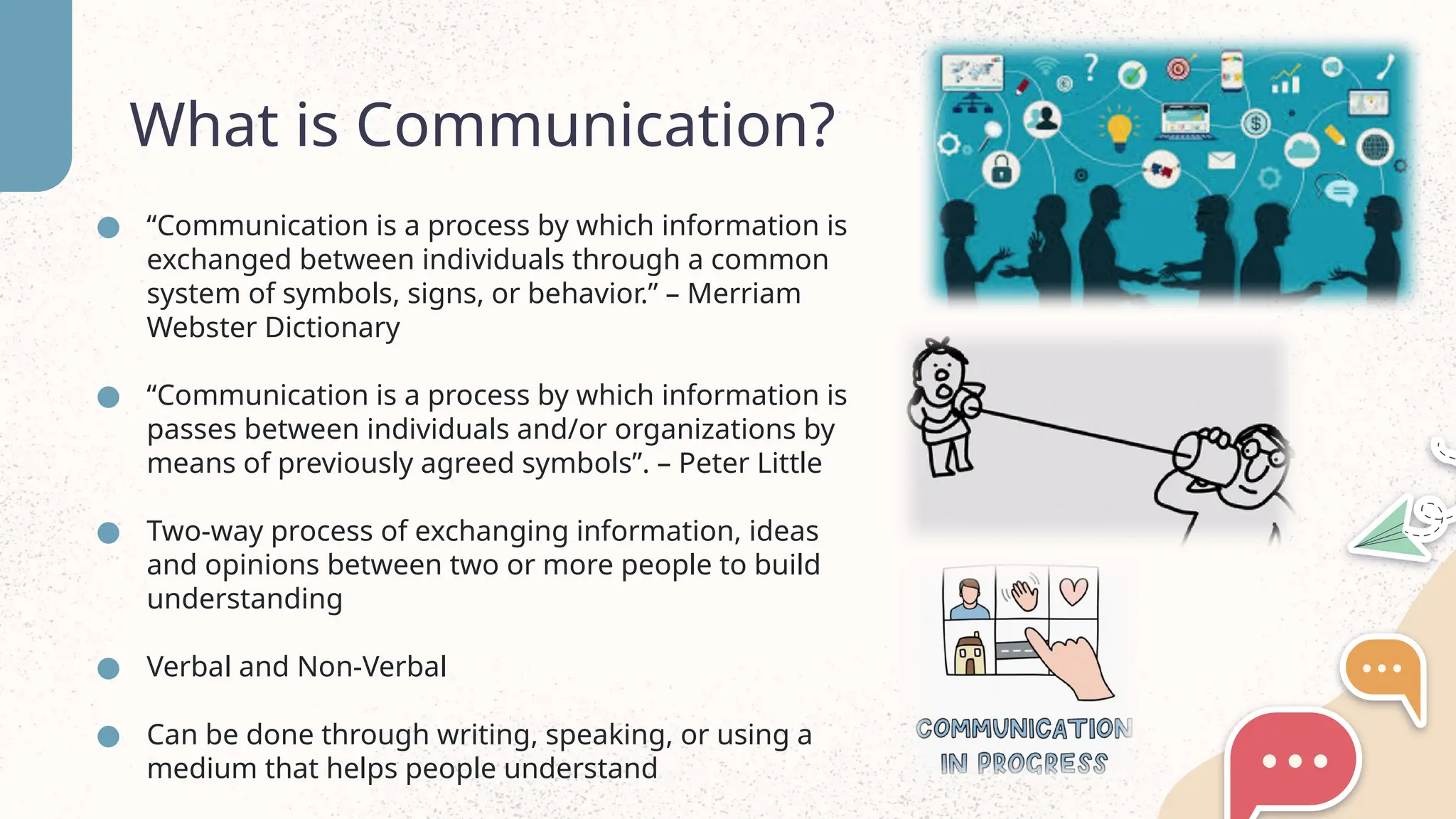
What is Communication?
● “Communication is a process by which information is
exchanged between individuals through a common
system of symbols, signs, or behavior.” – Merriam
Webster Dictionary
● “Communication is a process by which information is
passes between individuals and/or organizations by
means of previously agreed symbols”. – Peter Little
● Two-way process of exchanging information, ideas
and opinions between two or more people to build
understanding
● Verbal and Non-Verbal
● Can be done through writing, speaking, or using a
medium that helps people understand
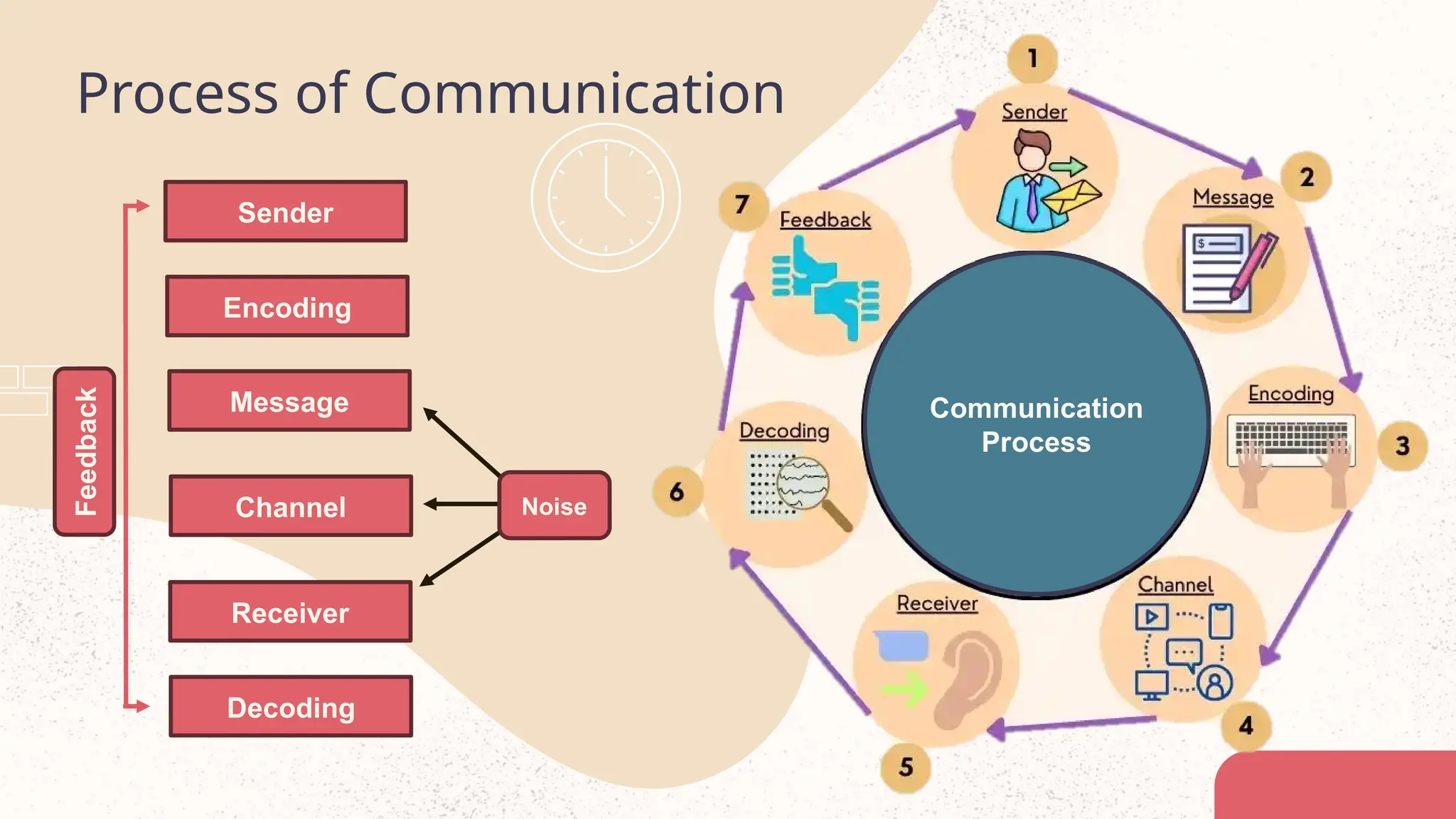
Process of Communication
Communication
Process
Sender
Encoding
Message
Channel
Receiver
Decoding
Noise
Feedback
 Sender: The one who sends the message
 Message: It is the idea, information, view, fact, feeling, etc. that
is generated by the sender and is then intended to be
communicated further.
 Encoding: The message generated by the sender is encoded
symbolically such as in the form of words, pictures, gestures,
etc. before it is being conveyed.
 Media: It is the manner in which the encoded message is
transmitted. The message may be transmitted orally or in
writing. The medium of communication includes telephone,
internet, post, fax, e-mail, etc. The choice of medium is decided
by the sender.
 Noise: It refers to any obstruction that is caused by the sender,
message or receiver during the process of communication. For
example, bad telephone connection, faulty encoding, faulty
decoding, inattentive receiver, poor understanding of message
due to prejudice or inappropriate gestures, etc.
 Receiver: The one who receives the message
 Decoding: It is the process of converting the symbols encoded
by the sender. After decoding the message is received by the
receiver.
 Feedback: Once the receiver confirms to the sender that he
has received the message and understood it, the process of
communication is complete.
Verbal Communication
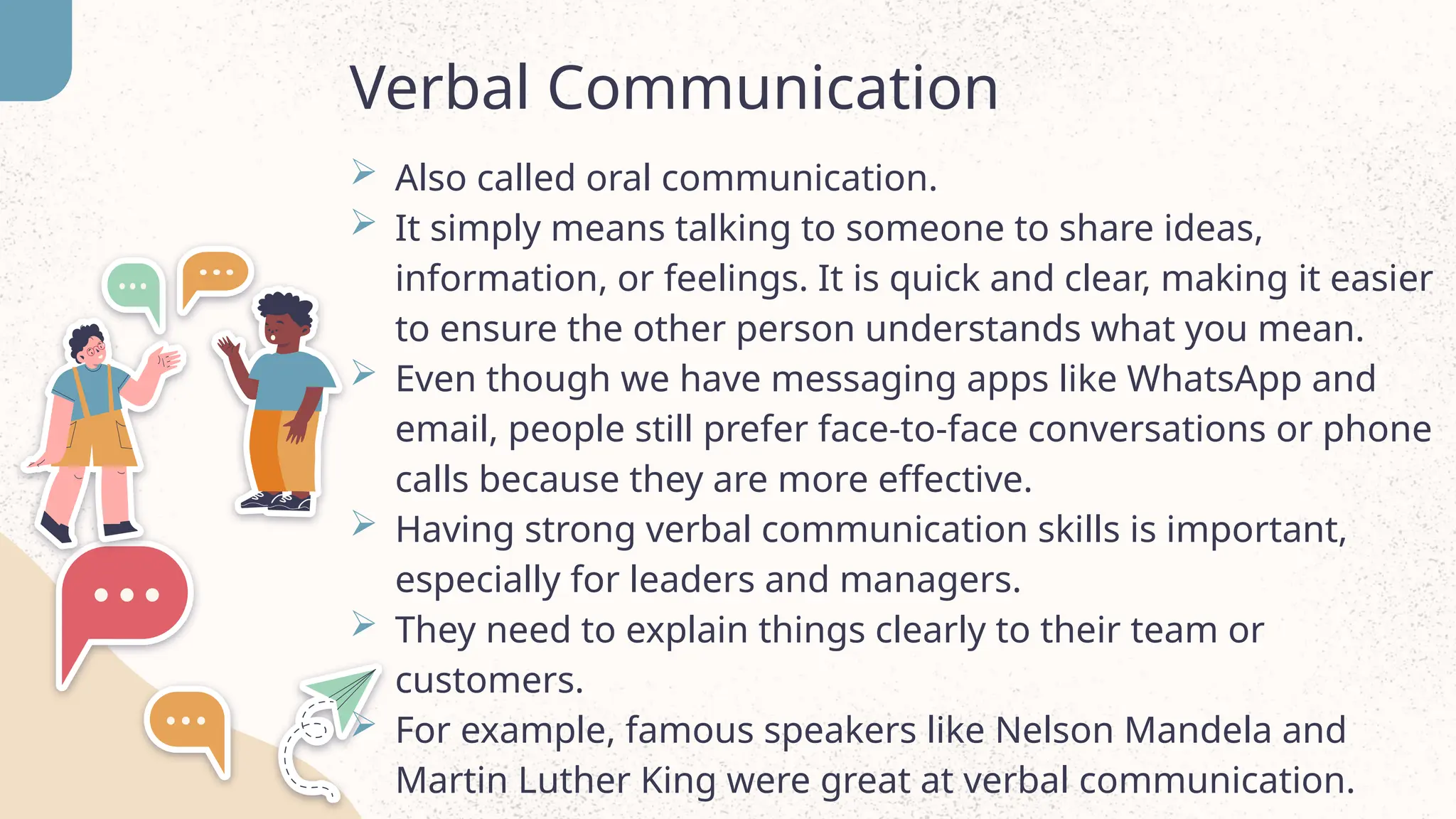
 Also called oral communication.
 It simply means talking to someone to share ideas,
information, or feelings. It is quick and clear, making it easier
to ensure the other person understands what you mean.
 Even though we have messaging apps like WhatsApp and
email, people still prefer face-to-face conversations or phone
calls because they are more effective.
 Having strong verbal communication skills is important,
especially for leaders and managers.
 They need to explain things clearly to their team or
customers.
 For example, famous speakers like Nelson Mandela and
Martin Luther King were great at verbal communication.
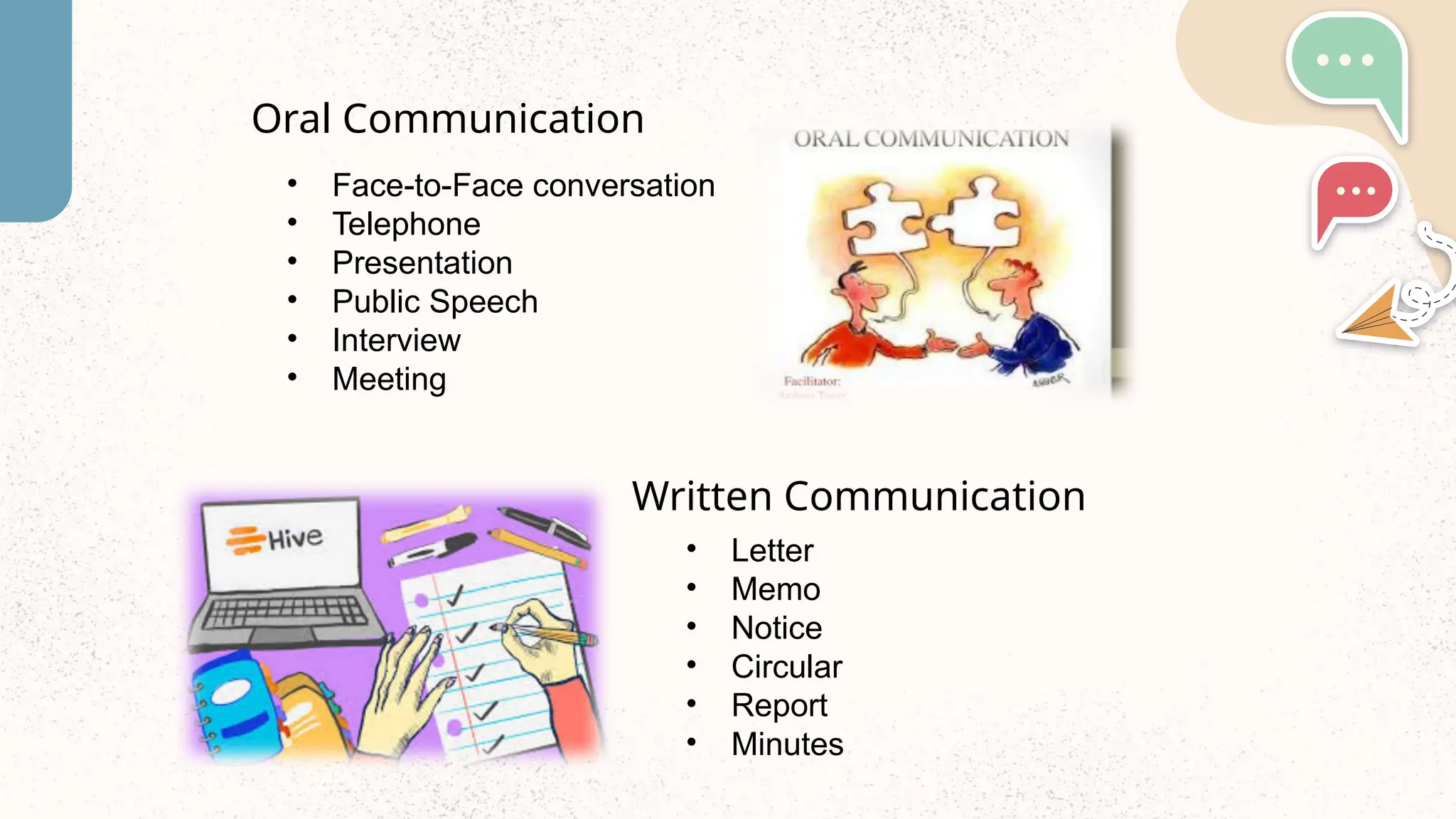
• Face-to-Face conversation
• Telephone
• Presentation
• Public Speech
• Interview
• Meeting
Oral Communication
• Letter
• Memo
• Notice
• Circular
• Report
• Minutes
Written Communication
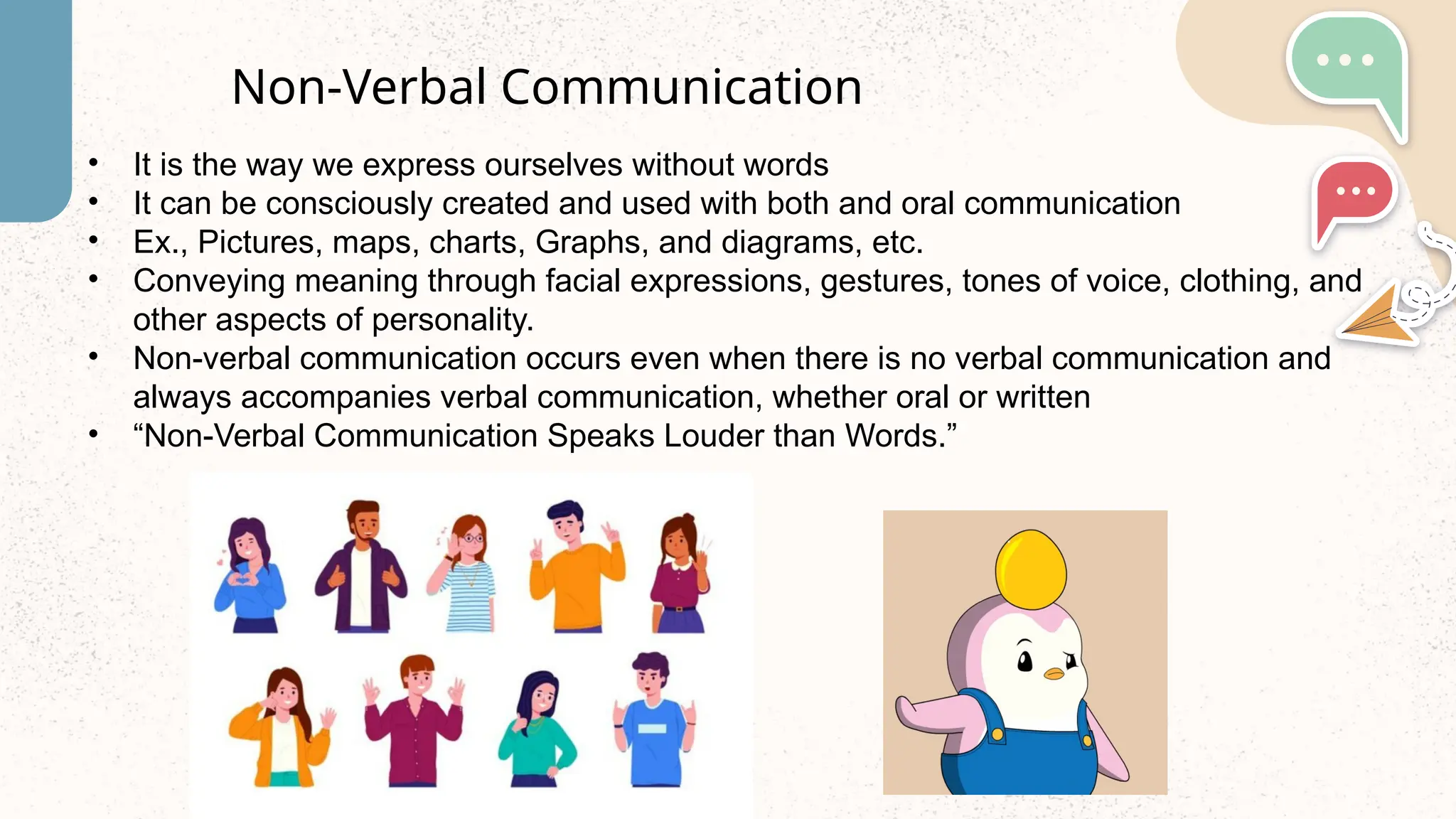
• It is the way we express ourselves without words
• It can be consciously created and used with both and oral communication
• Ex., Pictures, maps, charts, Graphs, and diagrams, etc.
• Conveying meaning through facial expressions, gestures, tones of voice, clothing, and
other aspects of personality.
• Non-verbal communication occurs even when there is no verbal communication and
always accompanies verbal communication, whether oral or written
• “Non-Verbal Communication Speaks Louder than Words.”
Non-Verbal Communication
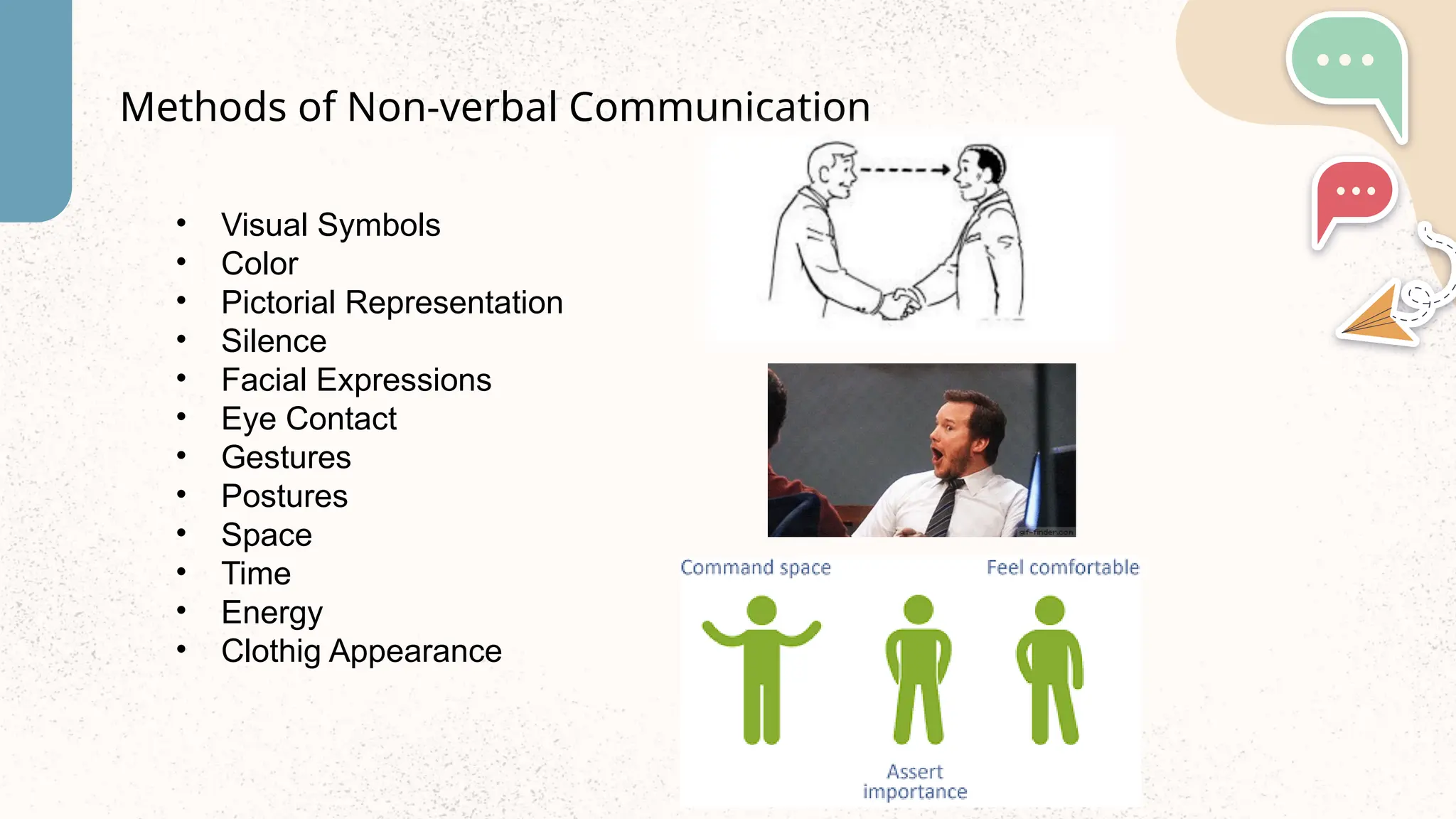
• Visual Symbols
• Color
• Pictorial Representation
• Silence
• Facial Expressions
• Eye Contact
• Gestures
• Postures
• Space
• Time
• Energy
• Clothig Appearance
Methods of Non-verbal Communication
Communication is essential for sharing ideas and information, but sometimes, there are
barriers that make it difficult. These barriers can cause misunderstandings and prevent
people from effectively communicating with each other. Here are some common
barriers to communication:
Barriers of Communication
1. Physical, External or Mechanical Barriers
 Defect in the medium
 Noise
 Defect in the Organisation’s
Communication system
 Language
 Socio-Phychological
 Self-Centred Attributes
 Group Identification
 Self-Image
 Selective Perception
 Defensiveness
 Filtering
 Status Block
 Resistance to change
 Closed Mind
 Poor Communication Skills
2. Poor Listening Skills
 Wandering Attention
 Noise
 Planning to present a good argument
 Lack of Interest
 Voiding the effort to understand difficult ideas
 Criticising the Speaker’s appearance or style
 Emotional Blocks
 Over-reaction to words used
 Impatience
 Personal Anxiety
 State of Health
Thank you
References
Rai, Urmaila, and S. M. Rai. Business Communication.
9th ed., Himalaya Publishing House, 2015.
Rai, Urmila, and S. M. Rai. Essentials of Communication
Skills. First ed., Himalaya Publishing House, 2002.

Communication: It's Definition, Types, Barriers, Verbal and Non Verbal Communication

  • 1.
    Communication It’s Types, Process,and Barriers Prepared by Trushali Dodiya Assistant Professor The School of Arts, Birsa Munda Tribal University
  • 2.
    Table of contents 01 04 02 05 03 Whatis Communication? Process of Communication Verbal Communication Non-Verbal Communication Barriers of Communication
  • 3.
    What is Communication? ●“Communication is a process by which information is exchanged between individuals through a common system of symbols, signs, or behavior.” – Merriam Webster Dictionary ● “Communication is a process by which information is passes between individuals and/or organizations by means of previously agreed symbols”. – Peter Little ● Two-way process of exchanging information, ideas and opinions between two or more people to build understanding ● Verbal and Non-Verbal ● Can be done through writing, speaking, or using a medium that helps people understand
  • 4.
  • 5.
     Sender: Theone who sends the message  Message: It is the idea, information, view, fact, feeling, etc. that is generated by the sender and is then intended to be communicated further.  Encoding: The message generated by the sender is encoded symbolically such as in the form of words, pictures, gestures, etc. before it is being conveyed.  Media: It is the manner in which the encoded message is transmitted. The message may be transmitted orally or in writing. The medium of communication includes telephone, internet, post, fax, e-mail, etc. The choice of medium is decided by the sender.
  • 6.
     Noise: Itrefers to any obstruction that is caused by the sender, message or receiver during the process of communication. For example, bad telephone connection, faulty encoding, faulty decoding, inattentive receiver, poor understanding of message due to prejudice or inappropriate gestures, etc.  Receiver: The one who receives the message  Decoding: It is the process of converting the symbols encoded by the sender. After decoding the message is received by the receiver.  Feedback: Once the receiver confirms to the sender that he has received the message and understood it, the process of communication is complete.
  • 7.
    Verbal Communication  Alsocalled oral communication.  It simply means talking to someone to share ideas, information, or feelings. It is quick and clear, making it easier to ensure the other person understands what you mean.  Even though we have messaging apps like WhatsApp and email, people still prefer face-to-face conversations or phone calls because they are more effective.  Having strong verbal communication skills is important, especially for leaders and managers.  They need to explain things clearly to their team or customers.  For example, famous speakers like Nelson Mandela and Martin Luther King were great at verbal communication.
  • 8.
    • Face-to-Face conversation •Telephone • Presentation • Public Speech • Interview • Meeting Oral Communication • Letter • Memo • Notice • Circular • Report • Minutes Written Communication
  • 9.
    • It isthe way we express ourselves without words • It can be consciously created and used with both and oral communication • Ex., Pictures, maps, charts, Graphs, and diagrams, etc. • Conveying meaning through facial expressions, gestures, tones of voice, clothing, and other aspects of personality. • Non-verbal communication occurs even when there is no verbal communication and always accompanies verbal communication, whether oral or written • “Non-Verbal Communication Speaks Louder than Words.” Non-Verbal Communication
  • 10.
    • Visual Symbols •Color • Pictorial Representation • Silence • Facial Expressions • Eye Contact • Gestures • Postures • Space • Time • Energy • Clothig Appearance Methods of Non-verbal Communication
  • 11.
    Communication is essentialfor sharing ideas and information, but sometimes, there are barriers that make it difficult. These barriers can cause misunderstandings and prevent people from effectively communicating with each other. Here are some common barriers to communication: Barriers of Communication 1. Physical, External or Mechanical Barriers  Defect in the medium  Noise  Defect in the Organisation’s Communication system  Language  Socio-Phychological  Self-Centred Attributes  Group Identification  Self-Image  Selective Perception  Defensiveness  Filtering  Status Block  Resistance to change  Closed Mind  Poor Communication Skills
  • 12.
    2. Poor ListeningSkills  Wandering Attention  Noise  Planning to present a good argument  Lack of Interest  Voiding the effort to understand difficult ideas  Criticising the Speaker’s appearance or style  Emotional Blocks  Over-reaction to words used  Impatience  Personal Anxiety  State of Health
  • 13.
  • 14.
    References Rai, Urmaila, andS. M. Rai. Business Communication. 9th ed., Himalaya Publishing House, 2015. Rai, Urmila, and S. M. Rai. Essentials of Communication Skills. First ed., Himalaya Publishing House, 2002.