EDUC 345 3- Classroom Assessment
June 20th, 2012
“THE BIGGEST
PROBLEM WITH
COMMUNICATION IS
THE MISCONCEPTION
THAT IT HAS
OCCURRED.”
Dennis Punjabi
 Invention
 Organization
 Style
 Memory
 Delivery
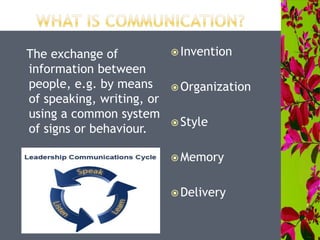
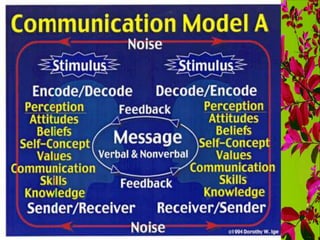
The exchange of
information between
people, e.g. by means
of speaking, writing, or
using a common system
of signs or behaviour.
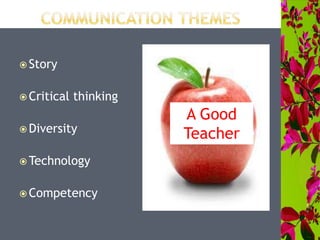
 Story
 Critical thinking
 Diversity
 Technology
 Competency
A Good
Teacher
A relatively
permanent
change in, or
acquisition
of, knowledge,
understanding,
or behaviour.
Knowledgeable
Experienced
Firm
Attractive
Friendly
Seductive
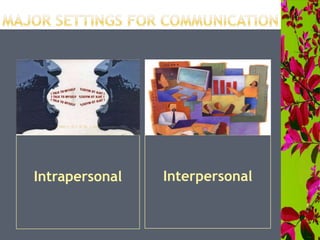
Intrapersonal Interpersonal
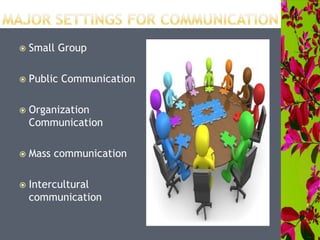
 Small Group
 Public Communication
 Organization
Communication
 Mass communication
 Intercultural
communication
When communicating about
student learning we must keep
the student as the primary
audience for assessment
information without forgetting
the other audiences whose
information needs must be met.
 How do we synchronize assessment for and
of learning in actual practice?
 How do we encourage students to do
practice work if the score is not figured into
the final grade?
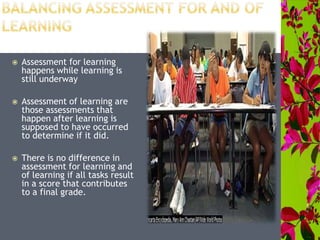
 Assessment for learning
happens while learning is
still underway
 Assessment of learning are
those assessments that
happen after learning is
supposed to have occurred
to determine if it did.
 There is no difference in
assessment for learning and
of learning if all tasks result
in a score that contributes
to a final grade.
 Separate them entirely so formative assessment never
contribute to a grade. Teacher provides descriptive
feedback. E.g.: homework assignments, drafting
assessment questions, self assessment.
 NOTE: These are assessed so as to provide information about
strengths and areas of further learning but the assessment
information will not be used in calculating final grade.
 OR
 Under certain circumstances, we can use assessments
originally intended to be formative as part of our
summing up. E.g.: Paragraph writing
 OR
 We can also use assessments e intended to be
summative as sources of formative information and
motivation to further learning.
 Reduce evaluative feedback and increase
descriptive feedback to affect motivation and
achievement.
 If students know the learning target, constantly receive
feedback about where they are in relationship to the
target, and are able to practice, without penalty and
with as much assistance as they need, they will be
motivated to set goals to reach intended learning.
 Teacher must make the students get used to descriptive
feedback.
 Communicate to students and parents what assessments
will contribute to final grade.
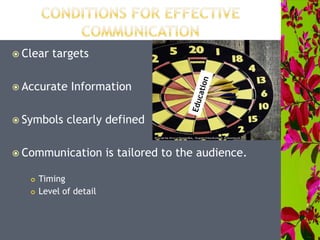
 Clear targets
 Accurate Information
 Symbols clearly defined
 Communication is tailored to the audience.
 Timing
 Level of detail
Stiggins,R.,Arter,J.,Chappuis, J., & Chappuis,
S.(2007). Classroom assessment for
students learning:Doing it right-using it
well. Upper Saddle River,NJ:Pearson
Prentice Hall.
Lewis, Todd. Communicating Literature.
Debuque: Kendall-Hunt, 1991
Zeusner, R. B., ed. The Handbook on
Communication processes. Los Angeles:
PSCFA, 1978

Communication to the learner

  • 1.
    EDUC 345 3-Classroom Assessment June 20th, 2012
  • 2.
    “THE BIGGEST PROBLEM WITH COMMUNICATIONIS THE MISCONCEPTION THAT IT HAS OCCURRED.” Dennis Punjabi
  • 3.
     Invention  Organization Style  Memory  Delivery The exchange of information between people, e.g. by means of speaking, writing, or using a common system of signs or behaviour.
  • 4.
     Story  Criticalthinking  Diversity  Technology  Competency A Good Teacher
  • 5.
    A relatively permanent change in,or acquisition of, knowledge, understanding, or behaviour.
  • 8.
  • 12.
  • 13.
     Small Group Public Communication  Organization Communication  Mass communication  Intercultural communication
  • 15.
    When communicating about studentlearning we must keep the student as the primary audience for assessment information without forgetting the other audiences whose information needs must be met.
  • 16.
     How dowe synchronize assessment for and of learning in actual practice?  How do we encourage students to do practice work if the score is not figured into the final grade?
  • 17.
     Assessment forlearning happens while learning is still underway  Assessment of learning are those assessments that happen after learning is supposed to have occurred to determine if it did.  There is no difference in assessment for learning and of learning if all tasks result in a score that contributes to a final grade.
  • 18.
     Separate thementirely so formative assessment never contribute to a grade. Teacher provides descriptive feedback. E.g.: homework assignments, drafting assessment questions, self assessment.  NOTE: These are assessed so as to provide information about strengths and areas of further learning but the assessment information will not be used in calculating final grade.  OR  Under certain circumstances, we can use assessments originally intended to be formative as part of our summing up. E.g.: Paragraph writing  OR  We can also use assessments e intended to be summative as sources of formative information and motivation to further learning.
  • 19.
     Reduce evaluativefeedback and increase descriptive feedback to affect motivation and achievement.  If students know the learning target, constantly receive feedback about where they are in relationship to the target, and are able to practice, without penalty and with as much assistance as they need, they will be motivated to set goals to reach intended learning.  Teacher must make the students get used to descriptive feedback.  Communicate to students and parents what assessments will contribute to final grade.
  • 20.
     Clear targets Accurate Information  Symbols clearly defined  Communication is tailored to the audience.  Timing  Level of detail
  • 24.
    Stiggins,R.,Arter,J.,Chappuis, J., &Chappuis, S.(2007). Classroom assessment for students learning:Doing it right-using it well. Upper Saddle River,NJ:Pearson Prentice Hall. Lewis, Todd. Communicating Literature. Debuque: Kendall-Hunt, 1991 Zeusner, R. B., ed. The Handbook on Communication processes. Los Angeles: PSCFA, 1978