Communication
Skills
Shaftain Rasool
M. Zubair
Ahmad Azib
Ahmad Hasham
Mubashir
12-06-2023
To: Sir Nauman
Communication Skills
Communication skills play a
crucial role in the field of
Behavioral Sciences.
An effective communication is
essential for gathering data,
conducting research, Working with
clients or patients, collaborating
with colleagues, and disseminating
findings.
List of Communication Skills
Active Listening
Verbal
Communication
Non-Verbal
Communication
Empathy
Reflective Skills Written Skills
Interpersonal
Skills
Cultural
Sensitivity
Presentation
Skills
Ethical
Communication
Active Listening:
Paying full attention to the speaking person, understanding their
message, providing an appropriate response.
This Skill is crucial for therapists, counselors and researchers to
understand the thoughts, emotions and experiences of
individuals.
Verbal
Communication:
Clear and concise verbal communication is important
when explaining complex concepts, Presenting
research findings, Conducting interviews using
appropriate language, tone and delivery can help
conveying information effectively and build report.
Non-Verbal Communication
Non-verbal `cues such as body language, facial expression and
gesture can greatly impact communication.
Understanding and effectively using non-verbal cues can help
establishing trust, convey empathy, and enhance understanding
in interpersonal interactions.
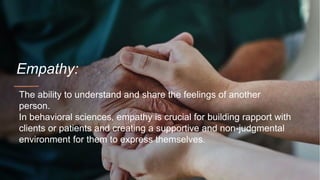
Empathy:
The ability to understand and share the feelings of another
person.
In behavioral sciences, empathy is crucial for building rapport with
clients or patients and creating a supportive and non-judgmental
environment for them to express themselves.
Reflective Skills:
Involves the ability to accurately and objectively
observe and analyze behaviors, emotions and
interaction.
This skill is particularly important for therapists,
counselors, and researchers who need to make
accurate observations and interpretations.
Written Communication:
Clear and concise writing skills are important for
documenting research findings, preparing reports, writing
articles and communicating effectively through emails or
other written form of communication.
Interpersonal Skills:
Involve the ability to interact and communicate
effectively with others. This includes skills such as
building reports, resolving conflicts, and working
collaboratively in a team setting.
Cultural Sensitivity:
Behavioral sciences often involve
working with individuals from
different backgrounds. Cultural
sensitivity is crucial to ensure
effective communication, respect
cultural differences and avoid
misunderstandings or
Presentation Skills:
Presenting research findings or delivering
lectures requires strong presentation skills.
Being able to organize information, use
visual aids effectively and engage the
audience can enhance the impact and
clarity of message.
Ethical Communication:
Involves maintaining confidently, respecting
privacy for ensuring informed constant.
Professionals in behavioral sciences need to
adhere to ethical guidelines when
communicating with clients, colleagues and
research participants.
Conclusion:
Having and developing these
communication skills can greatly
enhance the effectiveness and
impact of professionals in the
field of behavioral sciences.
Continuous practice, feedback
and self-reflection are essential
for improving these skills.
communication skills ( behavioral science)

communication skills ( behavioral science)

  • 2.
    Communication Skills Shaftain Rasool M. Zubair AhmadAzib Ahmad Hasham Mubashir 12-06-2023 To: Sir Nauman
  • 3.
    Communication Skills Communication skillsplay a crucial role in the field of Behavioral Sciences. An effective communication is essential for gathering data, conducting research, Working with clients or patients, collaborating with colleagues, and disseminating findings.
  • 4.
    List of CommunicationSkills Active Listening Verbal Communication Non-Verbal Communication Empathy Reflective Skills Written Skills Interpersonal Skills Cultural Sensitivity Presentation Skills Ethical Communication
  • 5.
    Active Listening: Paying fullattention to the speaking person, understanding their message, providing an appropriate response. This Skill is crucial for therapists, counselors and researchers to understand the thoughts, emotions and experiences of individuals.
  • 6.
    Verbal Communication: Clear and conciseverbal communication is important when explaining complex concepts, Presenting research findings, Conducting interviews using appropriate language, tone and delivery can help conveying information effectively and build report.
  • 7.
    Non-Verbal Communication Non-verbal `cuessuch as body language, facial expression and gesture can greatly impact communication. Understanding and effectively using non-verbal cues can help establishing trust, convey empathy, and enhance understanding in interpersonal interactions.
  • 8.
    Empathy: The ability tounderstand and share the feelings of another person. In behavioral sciences, empathy is crucial for building rapport with clients or patients and creating a supportive and non-judgmental environment for them to express themselves.
  • 9.
    Reflective Skills: Involves theability to accurately and objectively observe and analyze behaviors, emotions and interaction. This skill is particularly important for therapists, counselors, and researchers who need to make accurate observations and interpretations.
  • 10.
    Written Communication: Clear andconcise writing skills are important for documenting research findings, preparing reports, writing articles and communicating effectively through emails or other written form of communication.
  • 11.
    Interpersonal Skills: Involve theability to interact and communicate effectively with others. This includes skills such as building reports, resolving conflicts, and working collaboratively in a team setting.
  • 12.
    Cultural Sensitivity: Behavioral sciencesoften involve working with individuals from different backgrounds. Cultural sensitivity is crucial to ensure effective communication, respect cultural differences and avoid misunderstandings or
  • 13.
    Presentation Skills: Presenting researchfindings or delivering lectures requires strong presentation skills. Being able to organize information, use visual aids effectively and engage the audience can enhance the impact and clarity of message.
  • 14.
    Ethical Communication: Involves maintainingconfidently, respecting privacy for ensuring informed constant. Professionals in behavioral sciences need to adhere to ethical guidelines when communicating with clients, colleagues and research participants.
  • 16.
    Conclusion: Having and developingthese communication skills can greatly enhance the effectiveness and impact of professionals in the field of behavioral sciences. Continuous practice, feedback and self-reflection are essential for improving these skills.