Communication Skills: A
Comprehensive Guide
Communication is a fundamental aspect of human interaction, evolving significantly
over time. From early humans using gestures and vocalizations to convey basic
needs, to the development of language and written communication, humans have
continuously innovated ways to share information and ideas. Today, communication
skills are essential for personal and professional success, encompassing verbal, non-
verbal, and written methods. This guide explores the origins, meaning, process, and
types of communication, providing a comprehensive understanding of this vital skill.
The Origin of the Word "Communication"
1 Latin Roots
The term "communication" originates from the Latin verb "communicare," meaning "to
share, divide out; communicate, impart, inform; join, unite, participate in." This concept of
sharing and making information common is at the heart of communication.
2 French Influence
The word traveled through time and languages, reaching English via Old French as
"communicacion." In French, it's "communication."
3 Meaning and Usage
Originally, it referred to the act of imparting, discussing, debating, or conferring. Over
time, it expanded to encompass "that which is communicated" and eventually took on the
sense of "means of communication."
Defining Communication
1 Keith Davis
Communication is a process of passing information and understanding from one
person to another.
2 John Adair
Communication is essentially the ability of one person to make contact with another
and make himself or herself understood.
3 William Newman and Charles Summer
Communication is an exchange of ideas, facts, opinions or emotions of two or more
persons.
4 Louis Allen
Communication is a bridge of meaning. It involves a systematic and continuous
process of telling, listening and understanding.
The Communication Process
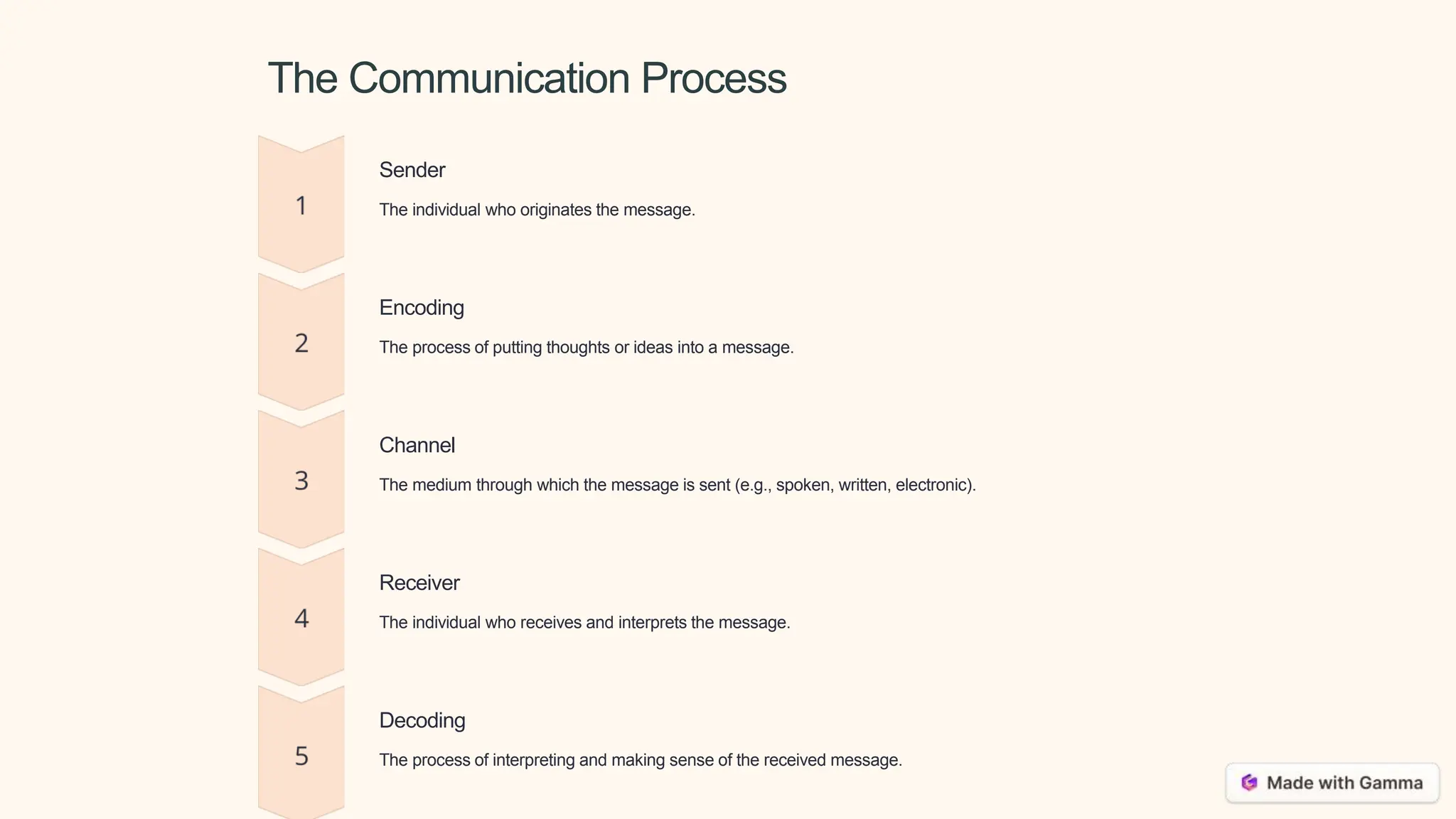
Sender
The individual who originates the message.
Encoding
The process of putting thoughts or ideas into a message.
Channel
The medium through which the message is sent (e.g., spoken, written, electronic).
Receiver
The individual who receives and interprets the message.
Decoding
The process of interpreting and making sense of the received message.
Types of Communication
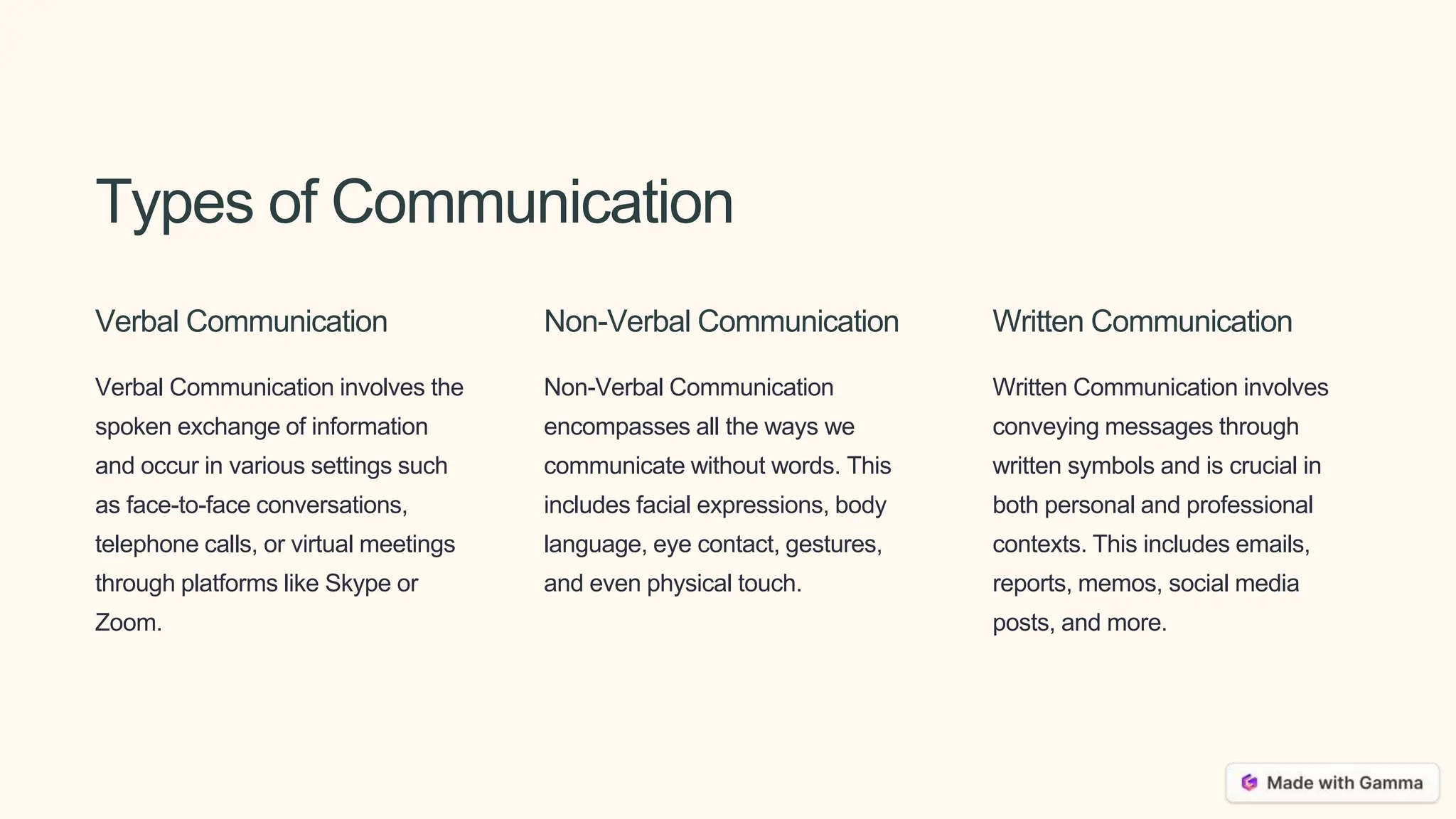
Verbal Communication
Verbal Communication involves the
spoken exchange of information
and occur in various settings such
as face-to-face conversations,
telephone calls, or virtual meetings
through platforms like Skype or
Zoom.
Non-Verbal Communication
encompasses all the ways we
communicate without words. This
includes facial expressions, body
language, eye contact, gestures,
and even physical touch.
Written Communication
Written Communication involves
conveying messages through
written symbols and is crucial in
both personal and professional
contexts. This includes emails,
reports, memos, social media
posts, and more.
Listening Skills
Active Listening
Active listening involves fully engaging with the
speaker, understanding their message, and providing
thoughtful responses.
Importance of Listening
Effective listening is essential for successful
interactions, such as negotiations, where
understanding the needs and perspectives of others
is key to finding mutually beneficial solutions.
Visual Communication
Photographs
Photographs capture moments in time and convey emotions, stories, and information
visually.
Videos
Videos combine visuals and sound to create engaging and immersive experiences.
Infographics
Infographics use visuals to present data, statistics, and information in a clear and concise
way.
Conclusion
Communication is a multifaceted process that involves the exchange
of information and understanding between individuals or groups.
Mastering the various types of communication, including verbal, non-
verbal, written, listening, and visual, is crucial for personal and
professional success. By understanding the communication process,
its elements, and the different types involved, individuals can
enhance their ability to interact effectively, build relationships, and
achieve their goals.

Communication-Skills-A-Comprehensive-Guide.pptx

  • 1.
    Communication Skills: A ComprehensiveGuide Communication is a fundamental aspect of human interaction, evolving significantly over time. From early humans using gestures and vocalizations to convey basic needs, to the development of language and written communication, humans have continuously innovated ways to share information and ideas. Today, communication skills are essential for personal and professional success, encompassing verbal, non- verbal, and written methods. This guide explores the origins, meaning, process, and types of communication, providing a comprehensive understanding of this vital skill.
  • 2.
    The Origin ofthe Word "Communication" 1 Latin Roots The term "communication" originates from the Latin verb "communicare," meaning "to share, divide out; communicate, impart, inform; join, unite, participate in." This concept of sharing and making information common is at the heart of communication. 2 French Influence The word traveled through time and languages, reaching English via Old French as "communicacion." In French, it's "communication." 3 Meaning and Usage Originally, it referred to the act of imparting, discussing, debating, or conferring. Over time, it expanded to encompass "that which is communicated" and eventually took on the sense of "means of communication."
  • 3.
    Defining Communication 1 KeithDavis Communication is a process of passing information and understanding from one person to another. 2 John Adair Communication is essentially the ability of one person to make contact with another and make himself or herself understood. 3 William Newman and Charles Summer Communication is an exchange of ideas, facts, opinions or emotions of two or more persons. 4 Louis Allen Communication is a bridge of meaning. It involves a systematic and continuous process of telling, listening and understanding.
  • 4.
    The Communication Process Sender Theindividual who originates the message. Encoding The process of putting thoughts or ideas into a message. Channel The medium through which the message is sent (e.g., spoken, written, electronic). Receiver The individual who receives and interprets the message. Decoding The process of interpreting and making sense of the received message.
  • 5.
    Types of Communication VerbalCommunication Verbal Communication involves the spoken exchange of information and occur in various settings such as face-to-face conversations, telephone calls, or virtual meetings through platforms like Skype or Zoom. Non-Verbal Communication Non-Verbal Communication encompasses all the ways we communicate without words. This includes facial expressions, body language, eye contact, gestures, and even physical touch. Written Communication Written Communication involves conveying messages through written symbols and is crucial in both personal and professional contexts. This includes emails, reports, memos, social media posts, and more.
  • 6.
    Listening Skills Active Listening Activelistening involves fully engaging with the speaker, understanding their message, and providing thoughtful responses. Importance of Listening Effective listening is essential for successful interactions, such as negotiations, where understanding the needs and perspectives of others is key to finding mutually beneficial solutions.
  • 7.
    Visual Communication Photographs Photographs capturemoments in time and convey emotions, stories, and information visually. Videos Videos combine visuals and sound to create engaging and immersive experiences. Infographics Infographics use visuals to present data, statistics, and information in a clear and concise way.
  • 8.
    Conclusion Communication is amultifaceted process that involves the exchange of information and understanding between individuals or groups. Mastering the various types of communication, including verbal, non- verbal, written, listening, and visual, is crucial for personal and professional success. By understanding the communication process, its elements, and the different types involved, individuals can enhance their ability to interact effectively, build relationships, and achieve their goals.