A Study on Communication 
Submitted To:- 
Nitin Pillai 
Submitted By:- 
Chirag 
Vishal 
Varun 
Aman 
Jatin 
1
FLOW OF PRESENTATION 
• Introduction 
• Definitions By Different Authors 
• Communication barriers 
• Summary of Chapter -1 
2
Introduction 
• Communication from Latin commūnicāre which means "to 
share“ is the activity of conveying information. 
• Communicating with others involves three primary steps:_ 
1. Thought:- First, information exists in the mind of the sender. 
This can be a concept, idea, information, or feeling. 
2. Encoding:- Next, a message is sent to a receiver in words or 
other symbols. 
3. Decoding:- Lastly, the receiver translates the words or symbols 
into a concept or information that a person can understand. 
3
Definitions By Different Authors 
“Communication is transfer of information from one 
person to another, whether or not it elicits confidence. 
But the information transferred must be 
understandable to the receiver” 
- G.G. Brown 
“The most important thing in communication is hearing 
what isn't said.” 
-Peter ducker 
4
Conti… 
“Communication is the sum of all the things one person does 
when he wants to create understanding in the mind of 
another. It involves a systematic and continuous process of 
telling, listening and understanding.” 
-Allen Louis 
“Effective communication is 20% what you know and 80% 
how you feel about what you know.” 
-Jim Ron 
5
Conti… 
“Communication is the exchange and flow of 
information and ideas from one person to another; it 
involves a sender transmitting an idea, information, 
or feeling to a receiver.” 
- U.S. Army 
6
7
Conti… 
8
Noise 
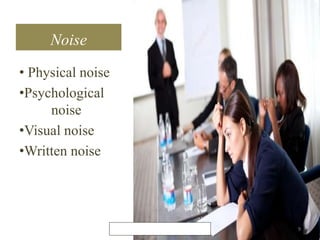
• Physical noise 
•Psychological 
noise 
•Visual noise 
•Written noise 
9
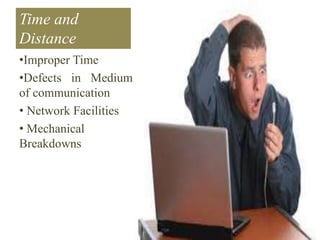
Time and 
Distance 
•Improper Time 
•Defects in Medium 
of communication 
• Network Facilities 
• Mechanical 
Breakdowns 
10
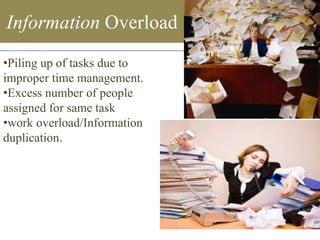
Information Overload 
11 
•Piling up of tasks due to 
improper time management. 
•Excess number of people 
assigned for same task 
•work overload/Information 
duplication.
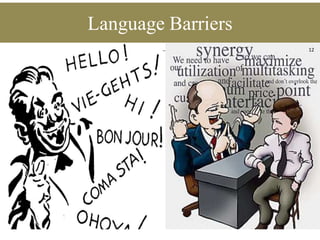
Language Barriers 
12
Psychological barriers 
• Attitude 
• Emotions 
• Filtering and distortion of message 
• Status difference 
• In attention 
• Closed mind 
• Fields of experience 
13
14
Conti…. 
• Loss or distortion of messages as they pass from one 
level to another 
• Messages not read completely or not understood 
correctly 
• Lack of communication policy 
• Information gap if upper level does not know the true 
state of affairs 
• Poorly Defined Authority and Responsibility 
15
Cross-Cultural Barriers 
• Language 
• Values 
• Social Relation 
• Concept of time 
• Concept of space 
• Gestures 
16
Summary 
 Three Important issues that effective management 
should have:- 
– Rhetoric 
– Manager’s Identity 
– Organizational Goal 
• Managers Activities:- 
Dealing with distinct or different issues 
Unimportant issues alongside important 
Casual interactions, phones, one-on-one meetings 
17
Conti…. 
• Managerial role:- 
– Interpersonal 
– Informational 
– Decisional 
• Characteristics of manager’s job:- 
Time is fragmented 
Values Compete 
Job is overloaded 
Efficiency-Core Skill 
18
Conti… 
• Language Skill:- 
– Talk 
One on one 
Presentations & Public Speaking 
Telephone, Video conferencing 
– Writing 
A career sifter 
Own writing and editing 
Documents take on lives of their own 
19
Thank You 
20

Communication

  • 1.
    A Study onCommunication Submitted To:- Nitin Pillai Submitted By:- Chirag Vishal Varun Aman Jatin 1
  • 2.
    FLOW OF PRESENTATION • Introduction • Definitions By Different Authors • Communication barriers • Summary of Chapter -1 2
  • 3.
    Introduction • Communicationfrom Latin commūnicāre which means "to share“ is the activity of conveying information. • Communicating with others involves three primary steps:_ 1. Thought:- First, information exists in the mind of the sender. This can be a concept, idea, information, or feeling. 2. Encoding:- Next, a message is sent to a receiver in words or other symbols. 3. Decoding:- Lastly, the receiver translates the words or symbols into a concept or information that a person can understand. 3
  • 4.
    Definitions By DifferentAuthors “Communication is transfer of information from one person to another, whether or not it elicits confidence. But the information transferred must be understandable to the receiver” - G.G. Brown “The most important thing in communication is hearing what isn't said.” -Peter ducker 4
  • 5.
    Conti… “Communication isthe sum of all the things one person does when he wants to create understanding in the mind of another. It involves a systematic and continuous process of telling, listening and understanding.” -Allen Louis “Effective communication is 20% what you know and 80% how you feel about what you know.” -Jim Ron 5
  • 6.
    Conti… “Communication isthe exchange and flow of information and ideas from one person to another; it involves a sender transmitting an idea, information, or feeling to a receiver.” - U.S. Army 6
  • 7.
  • 8.
  • 9.
    Noise • Physicalnoise •Psychological noise •Visual noise •Written noise 9
  • 10.
    Time and Distance •Improper Time •Defects in Medium of communication • Network Facilities • Mechanical Breakdowns 10
  • 11.
    Information Overload 11 •Piling up of tasks due to improper time management. •Excess number of people assigned for same task •work overload/Information duplication.
  • 12.
  • 13.
    Psychological barriers •Attitude • Emotions • Filtering and distortion of message • Status difference • In attention • Closed mind • Fields of experience 13
  • 14.
  • 15.
    Conti…. • Lossor distortion of messages as they pass from one level to another • Messages not read completely or not understood correctly • Lack of communication policy • Information gap if upper level does not know the true state of affairs • Poorly Defined Authority and Responsibility 15
  • 16.
    Cross-Cultural Barriers •Language • Values • Social Relation • Concept of time • Concept of space • Gestures 16
  • 17.
    Summary  ThreeImportant issues that effective management should have:- – Rhetoric – Manager’s Identity – Organizational Goal • Managers Activities:- Dealing with distinct or different issues Unimportant issues alongside important Casual interactions, phones, one-on-one meetings 17
  • 18.
    Conti…. • Managerialrole:- – Interpersonal – Informational – Decisional • Characteristics of manager’s job:- Time is fragmented Values Compete Job is overloaded Efficiency-Core Skill 18
  • 19.
    Conti… • LanguageSkill:- – Talk One on one Presentations & Public Speaking Telephone, Video conferencing – Writing A career sifter Own writing and editing Documents take on lives of their own 19
  • 20.