Introduction
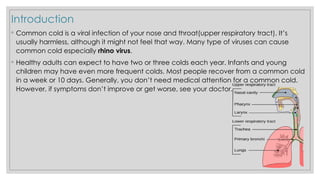
◦ Common coldis a viral infection of your nose and throat(upper respiratory tract). It’s
usually harmless, although it might not feel that way. Many type of viruses can cause
common cold especially rhino virus.
◦ Healthy adults can expect to have two or three colds each year. Infants and young
children may have even more frequent colds. Most people recover from a common cold
in a week or 10 days. Generally, you don’t need medical attention for a common cold.
However, if symptoms don’t improve or get worse, see your doctor.
3.
Causes
◦ Although manytypes of viruses can cause a common cold, rhinovirus are the most
common cause
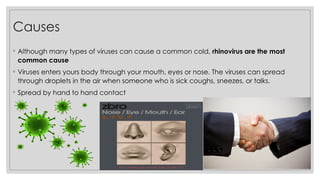
◦ Viruses enters yours body through your mouth, eyes or nose. The viruses can spread
through droplets in the air when someone who is sick coughs, sneezes, or talks.
◦ Spread by hand to hand contact
4.
Symptoms of commoncold
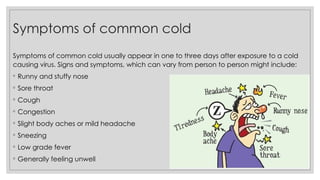
Symptoms of common cold usually appear in one to three days after exposure to a cold
causing virus. Signs and symptoms, which can vary from person to person might include:
◦ Runny and stuffy nose
◦ Sore throat
◦ Cough
◦ Congestion
◦ Slight body aches or mild headache
◦ Sneezing
◦ Low grade fever
◦ Generally feeling unwell
5.
Risk Factors
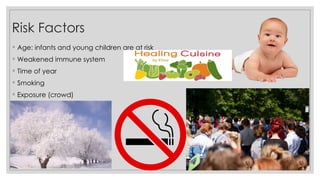
◦ Age:infants and young children are at risk
◦ Weakened immune system
◦ Time of year
◦ Smoking
◦ Exposure (crowd)
6.
No vaccine forcommon cold
◦ Wash your hand
◦ Disinfect your stuff
◦ Cover your mouth while coughing
◦ Don’t share your personal belongings
◦ Stay away from people with colds
◦ Eating well, exercise and enough sleep
◦ Good hygiene practices
Prevention
7.
Treatment at home
◦Drink plenty of warm liquids
◦ Adequate rest
◦ Use saline nasal rinses
◦ Sip warm liquids
◦ Adjust your room tempreture and humidity
◦ Soothe a sore throat
8.
When to seea doctor
Generally, you don’t need medical attention for a common cold. However, seek
medical attention if you have:
◦ Symptoms that worsen or fail to improve
◦ Fever greater than 101.3 degree F lasting more than 3 days
◦ Fever returning after fever free period
◦ Shortness of breath,wheezing
◦ Severe sore throat, headache or sinus pain
◦ Ear pain
◦ Extreme fussiness






![COMMON COLD [Autosaved].pptx for pharmacy students](https://cdn.slidesharecdn.com/ss_thumbnails/commoncoldautosaved-250722181037-88deee24-thumbnail.jpg?width=640&height=640&fit=bounds)


![PERI-PROSTHETIC FRACTURE NAIL-PLATE CONSTRUCT [NPC].pptx](https://cdn.slidesharecdn.com/ss_thumbnails/drarunkumardrmohamedashrafperiprostheticfrasturenail-plateconstructnpc-260209164459-7e9d15a1-thumbnail.jpg?width=640&height=640&fit=bounds)

![CTEV [ clubfoot] DR ARUN LAL ,DR MOHAMED ASHRAF travancore medical college k...](https://cdn.slidesharecdn.com/ss_thumbnails/ctevclubfootdrarunlaldrmohamedashraftravancoremedicalcollegekollamkeralaindia-260208063247-18fc466c-thumbnail.jpg?width=640&height=640&fit=bounds)


