www.cademy1.com
College Major vs Minor:
What's the difference?
Major — A major is a student's primary field of
study and provides in-depth knowledge and
expertise in that subject. It is often seen as the
primary way to prepare for a specific career field.
Differences in
Purpose
Minor — A minor is a secondary field of study
that provides complementary knowledge and
skills in a related subject. It is meant to broaden a
student's education.
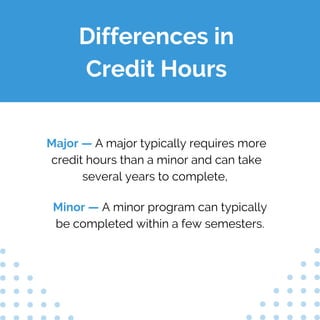
Major — A major typically requires more
credit hours than a minor and can take
several years to complete,
Differences in
Credit Hours
Minor — A minor program can typically
be completed within a few semesters.
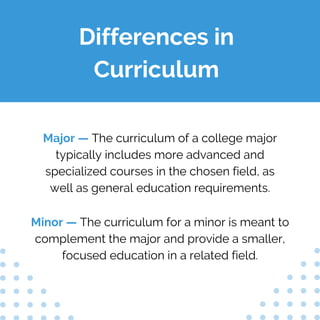
Major — The curriculum of a college major
typically includes more advanced and
specialized courses in the chosen field, as
well as general education requirements.
Differences in
Curriculum
Minor — The curriculum for a minor is meant to
complement the major and provide a smaller,
focused education in a related field.
Major — A major can open up a wider
range of career opportunities than a minor.
A major demonstrates a certain level of
knowledge and skills in a specific field and
can be a requirement for certain jobs.
Differences in Career
Opportunities
Minor — A minor may provide an advantage
for certain jobs or professions, but is not
typically a requirement.
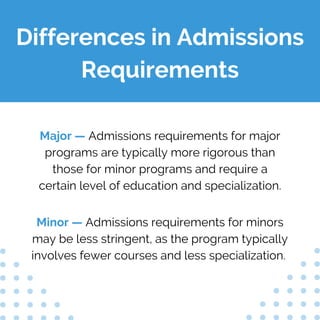
Major — Admissions requirements for major
programs are typically more rigorous than
those for minor programs and require a
certain level of education and specialization.
Differences in Admissions
Requirements
Minor — Admissions requirements for minors
may be less stringent, as the program typically
involves fewer courses and less specialization.
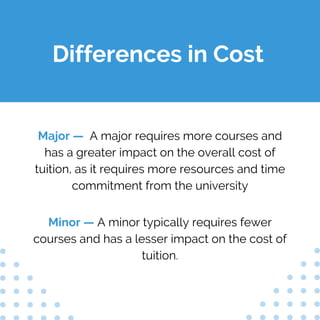
Major — A major requires more courses and
has a greater impact on the overall cost of
tuition, as it requires more resources and time
commitment from the university
Differences in Cost
Minor — A minor typically requires fewer
courses and has a lesser impact on the cost of
tuition.
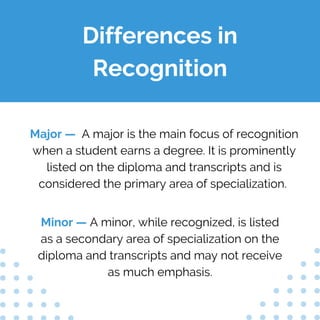
Major — A major is the main focus of recognition
when a student earns a degree. It is prominently
listed on the diploma and transcripts and is
considered the primary area of specialization.
Differences in
Recognition
Minor — A minor, while recognized, is listed
as a secondary area of specialization on the
diploma and transcripts and may not receive
as much emphasis.
Can't decide whether you
should choose a major or minor?
Visit cademy1.com and create your free
account and access all the expert college
guidance.

College Major vs Minor.pdf

  • 1.
    www.cademy1.com College Major vsMinor: What's the difference?
  • 2.
    Major — Amajor is a student's primary field of study and provides in-depth knowledge and expertise in that subject. It is often seen as the primary way to prepare for a specific career field. Differences in Purpose Minor — A minor is a secondary field of study that provides complementary knowledge and skills in a related subject. It is meant to broaden a student's education.
  • 3.
    Major — Amajor typically requires more credit hours than a minor and can take several years to complete, Differences in Credit Hours Minor — A minor program can typically be completed within a few semesters.
  • 4.
    Major — Thecurriculum of a college major typically includes more advanced and specialized courses in the chosen field, as well as general education requirements. Differences in Curriculum Minor — The curriculum for a minor is meant to complement the major and provide a smaller, focused education in a related field.
  • 5.
    Major — Amajor can open up a wider range of career opportunities than a minor. A major demonstrates a certain level of knowledge and skills in a specific field and can be a requirement for certain jobs. Differences in Career Opportunities Minor — A minor may provide an advantage for certain jobs or professions, but is not typically a requirement.
  • 6.
    Major — Admissionsrequirements for major programs are typically more rigorous than those for minor programs and require a certain level of education and specialization. Differences in Admissions Requirements Minor — Admissions requirements for minors may be less stringent, as the program typically involves fewer courses and less specialization.
  • 7.
    Major — Amajor requires more courses and has a greater impact on the overall cost of tuition, as it requires more resources and time commitment from the university Differences in Cost Minor — A minor typically requires fewer courses and has a lesser impact on the cost of tuition.
  • 8.
    Major — Amajor is the main focus of recognition when a student earns a degree. It is prominently listed on the diploma and transcripts and is considered the primary area of specialization. Differences in Recognition Minor — A minor, while recognized, is listed as a secondary area of specialization on the diploma and transcripts and may not receive as much emphasis.
  • 9.
    Can't decide whetheryou should choose a major or minor? Visit cademy1.com and create your free account and access all the expert college guidance.