COLLATERAL HOST
MANAGEMENT
COLLATERAL HOST
A collateral host is a plant that is susceptible to a crop
plant pathogen and allows the pathogen to grow and
reproduce during off-seasons.
Collateral hosts belong to the same family as the primary
host.
EXAMPLES OF COLLATERAL HOST
Alternaria solani is a fungal
pathogen that produces a
disease in tomato and potato
plants called early blight
EXAMPLE
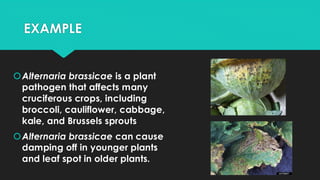
Alternaria brassicae is a plant
pathogen that affects many
cruciferous crops, including
broccoli, cauliflower, cabbage,
kale, and Brussels sprouts
Alternaria brassicae can cause
damping off in younger plants
and leaf spot in older plants.
ROLE OF COLLATERAL HOST IN DISEASE
CYCLE
Reservoir for Pathogens: Collateral hosts often serve as
reservoirs for pathogens during off-seasons or when the
primary host is not available
Source of Inoculum: Collateral hosts can maintain and
produce the infectious stage (spores, bacteria, viruses,
etc.) of pathogens, which can then spread to primary host
plants.
STRATEGIES FOR COLLATERAL HOST
MANAGEMENT
 Effective management of collateral hosts is essential because
they can serve as a reservoir for pathogens, allowing diseases to
persist even when the main crop is not present.
Host eradication:
 This could involve physical removal, herbicide application, or
cultural practices.
 For example, controlling volunteer plants (plants that grow from
seeds left behind from previous crops) or weeds near crop fields is
a common collateral host management strategy.
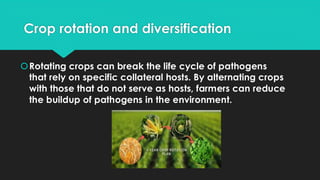
Crop rotation and diversification
Rotating crops can break the life cycle of pathogens
that rely on specific collateral hosts. By alternating crops
with those that do not serve as hosts, farmers can reduce
the buildup of pathogens in the environment.
Sanitation and field hygiene
Cleaning equipment, removing crop debris, and
managing field hygiene can prevent the spread of
pathogens from collateral hosts to crops.
This is essentially important in greenhouse or controlled
environment agriculture, where collateral hosts can thrive
in unsupervised areas.
Biological control
Use of biological agents, such as natural predators or
antagonistic organisms, can target collateral hosts or the
pathogens they harbor.
For example, certain fungal Antagonists can be
introduced to target pathogen populations in non-croo
plants.
Monitoring and early detection
Surveillance systems that include the monitoring of
collateral hosts are crucial for early detection of potential
pathogen reservoirs.
Advanced diagnostic tools, including molecular
techniques such as PCR and genomic sequencing, have
improved the ability to detect pathogens in
asymptomatic collateral hosts
Contd.,
Trap Plants
Planting known collateral hosts or susceptible species
near crops can serve as a monitoring system.
If these trap plants become infected, it can signal early
pathogen activity in the area. This technique provides an
early warning, enabling quicker responses
Integrated Pest Management (IPM)
This holistc approach combines multiple control tactics,
including the judicious use of pesticides, biological
control, and cultural practices, to manage plant
diseases.
In IPM, the management of collateral host is coordinated
with other pests and disease Control methods to maximize
effectiveness while minimizing environmental damage.
CHALLENGES OF COLLATERAL HOST
MANAGEMENT
Identification of collateral host is difficult when pathogens
have widehost range
Some collateral hosts are asymptomatic, making them
difficult to detect.
Control of collateral hosts may have unintended
ecological consequences.
Collateral host Management PATHOLOGY 202.pdf

Collateral host Management PATHOLOGY 202.pdf

  • 1.
  • 2.
    COLLATERAL HOST A collateralhost is a plant that is susceptible to a crop plant pathogen and allows the pathogen to grow and reproduce during off-seasons. Collateral hosts belong to the same family as the primary host.
  • 3.
    EXAMPLES OF COLLATERALHOST Alternaria solani is a fungal pathogen that produces a disease in tomato and potato plants called early blight
  • 4.
    EXAMPLE Alternaria brassicae isa plant pathogen that affects many cruciferous crops, including broccoli, cauliflower, cabbage, kale, and Brussels sprouts Alternaria brassicae can cause damping off in younger plants and leaf spot in older plants.
  • 5.
    ROLE OF COLLATERALHOST IN DISEASE CYCLE Reservoir for Pathogens: Collateral hosts often serve as reservoirs for pathogens during off-seasons or when the primary host is not available Source of Inoculum: Collateral hosts can maintain and produce the infectious stage (spores, bacteria, viruses, etc.) of pathogens, which can then spread to primary host plants.
  • 6.
    STRATEGIES FOR COLLATERALHOST MANAGEMENT  Effective management of collateral hosts is essential because they can serve as a reservoir for pathogens, allowing diseases to persist even when the main crop is not present. Host eradication:  This could involve physical removal, herbicide application, or cultural practices.  For example, controlling volunteer plants (plants that grow from seeds left behind from previous crops) or weeds near crop fields is a common collateral host management strategy.
  • 7.
    Crop rotation anddiversification Rotating crops can break the life cycle of pathogens that rely on specific collateral hosts. By alternating crops with those that do not serve as hosts, farmers can reduce the buildup of pathogens in the environment.
  • 8.
    Sanitation and fieldhygiene Cleaning equipment, removing crop debris, and managing field hygiene can prevent the spread of pathogens from collateral hosts to crops. This is essentially important in greenhouse or controlled environment agriculture, where collateral hosts can thrive in unsupervised areas.
  • 9.
    Biological control Use ofbiological agents, such as natural predators or antagonistic organisms, can target collateral hosts or the pathogens they harbor. For example, certain fungal Antagonists can be introduced to target pathogen populations in non-croo plants.
  • 10.
    Monitoring and earlydetection Surveillance systems that include the monitoring of collateral hosts are crucial for early detection of potential pathogen reservoirs. Advanced diagnostic tools, including molecular techniques such as PCR and genomic sequencing, have improved the ability to detect pathogens in asymptomatic collateral hosts
  • 11.
    Contd., Trap Plants Planting knowncollateral hosts or susceptible species near crops can serve as a monitoring system. If these trap plants become infected, it can signal early pathogen activity in the area. This technique provides an early warning, enabling quicker responses
  • 12.
    Integrated Pest Management(IPM) This holistc approach combines multiple control tactics, including the judicious use of pesticides, biological control, and cultural practices, to manage plant diseases. In IPM, the management of collateral host is coordinated with other pests and disease Control methods to maximize effectiveness while minimizing environmental damage.
  • 13.
    CHALLENGES OF COLLATERALHOST MANAGEMENT Identification of collateral host is difficult when pathogens have widehost range Some collateral hosts are asymptomatic, making them difficult to detect. Control of collateral hosts may have unintended ecological consequences.