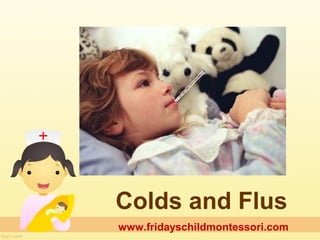
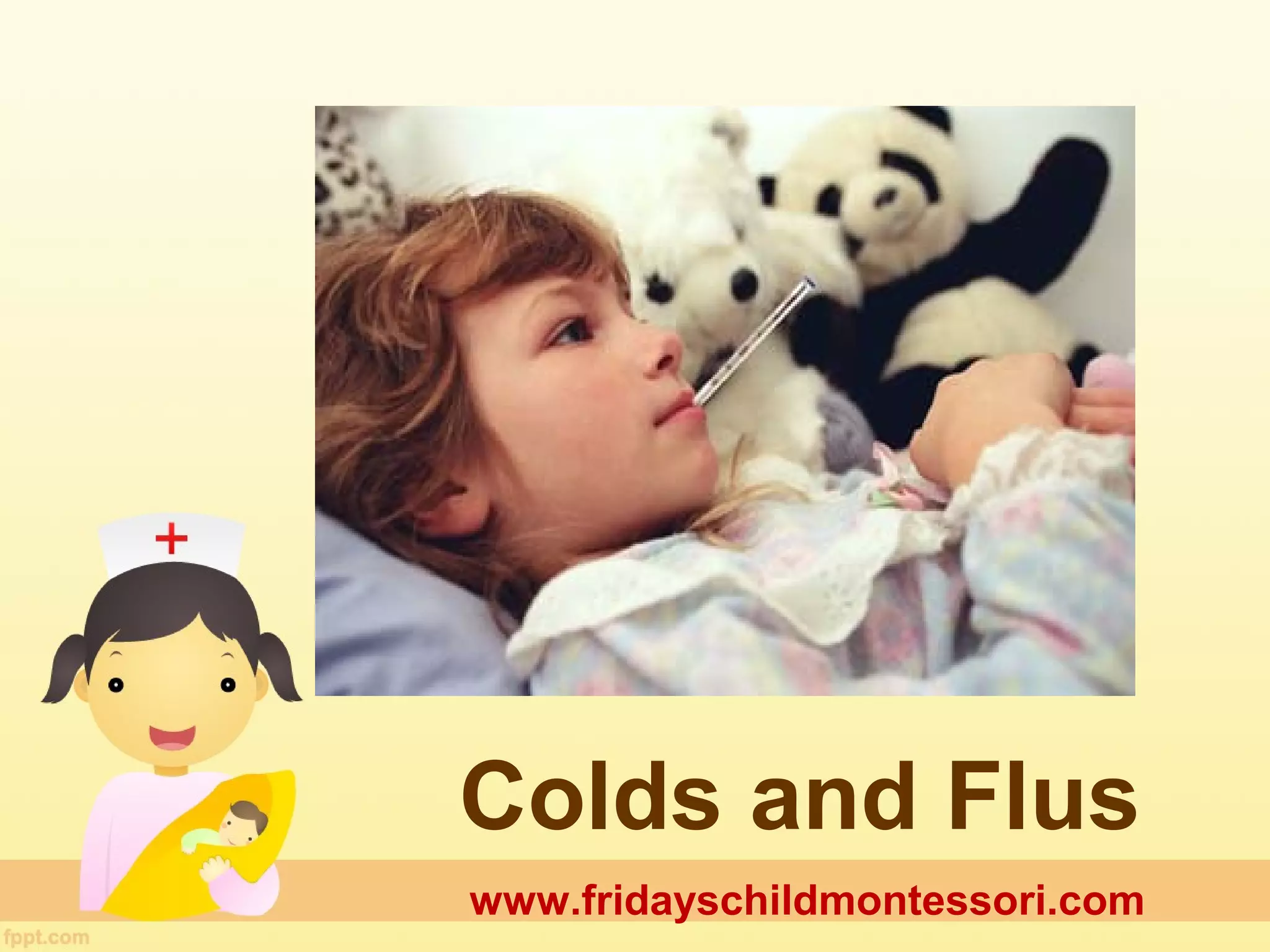
Colds and Flus
www.fridayschildmontessori.com
So your child is under the weather
and doesn’t feel like coming along
  to join us at Friday’s Child
           Montessori.
You think that he or she has a cold
 or the flu and think that it’s best
  that he or she doesn’t go today.
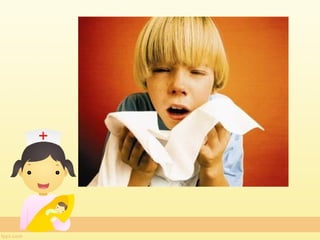
Good move – whether it’s a cold or
 the flu, it’s best to keep your child
 home if he or she is sick so all the
other children at the early childhood
           centre don’t get it.
Should you be getting in touch with
         your local GP?
Montessori principles advocate
sharing – but there are some things
that we really, really don’t want you
 to share!) But does your child just
have a cold or does he or she have
               the flu?
Colds and flus have a lot in
common. They are both spread by
  viruses rather than bacteria.
Viruses and bacteria are lumped
together as “germs” when you’re
explaining about the principles of
hygiene to a child, but they aren’t
         the same thing.
Bacteria are single-celled
  organisms that reproduce by
  splitting in the same way that
amoebae do, and there are some
“helpful” bacteria around, like the
ones that live in your insides and
keep your intestines healthy; the
          yeasts in bread;
and the bacteria that ferment wine,
cheese and yoghurt. Viruses, on the
 other hand, reproduce by sneaking
    into your cells and using their
  mechanisms to reproduce – they
 squirt their DNA into the nucleus of
           one of your cells,
like a cuckoo laying eggs in another
   bird’s nest. Unless you count the
   viruses that are used for genetic
       modification (and that’s a
  controversial topic), there are few
          helpful ones, if any.
At this point, you might be asking,
             so what?
Why is it important to know that
colds and flus are spread by
viruses instead of bacteria?
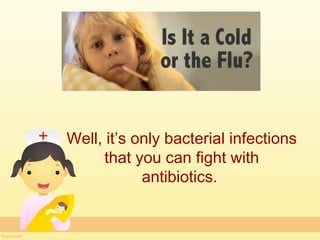
Well, it’s only bacterial infections
      that you can fight with
            antibiotics.
Antibiotics don’t do diddley-squat to
help deal to viral infections. In fact,
   if you try fighting a virus with
 antibiotics, the only thing you’re
going to do is increase the chance
      of superbugs developing,
superbugs being dangerous bacteria
  that are resistant to antibiotics. A
number of worried parents have tried
asking the doctor for antibiotics when
              their child
        has a nasty cold, but
               this isn’t
            the best thing.
Both the cold and flus share a
few symptoms and they both are
   spread by various insanitary
   habits such as not washing
         hands properly,
sharing food and drink items,
   picking noses and so forth.
  However, the flu is a lot more
dangerous than a cold. People can
        die from the flu –
look at what happened in a lot of
 the Western world shortly after
World War 1 (as if enough people
      hadn’t died already!):
fatalities of this particular strain of
the flu are in the millions, making it
about as big a medical disaster as
  the Plague in the Middle Ages or
         AIDS in Africa today.
Keep your child away from colds
and flus. If symptoms occur, consult
               your GP.
A friendly reminder by

www.fridayschildmontessori.com

Colds and flus

  • 1.
  • 2.
    So your childis under the weather and doesn’t feel like coming along to join us at Friday’s Child Montessori.
  • 3.
    You think thathe or she has a cold or the flu and think that it’s best that he or she doesn’t go today.
  • 4.
    Good move –whether it’s a cold or the flu, it’s best to keep your child home if he or she is sick so all the other children at the early childhood centre don’t get it.
  • 6.
    Should you begetting in touch with your local GP?
  • 7.
    Montessori principles advocate sharing– but there are some things that we really, really don’t want you to share!) But does your child just have a cold or does he or she have the flu?
  • 8.
    Colds and flushave a lot in common. They are both spread by viruses rather than bacteria.
  • 9.
    Viruses and bacteriaare lumped together as “germs” when you’re explaining about the principles of hygiene to a child, but they aren’t the same thing.
  • 10.
    Bacteria are single-celled organisms that reproduce by splitting in the same way that amoebae do, and there are some “helpful” bacteria around, like the ones that live in your insides and keep your intestines healthy; the yeasts in bread;
  • 11.
    and the bacteriathat ferment wine, cheese and yoghurt. Viruses, on the other hand, reproduce by sneaking into your cells and using their mechanisms to reproduce – they squirt their DNA into the nucleus of one of your cells,
  • 12.
    like a cuckoolaying eggs in another bird’s nest. Unless you count the viruses that are used for genetic modification (and that’s a controversial topic), there are few helpful ones, if any.
  • 13.
    At this point,you might be asking, so what?
  • 14.
    Why is itimportant to know that colds and flus are spread by viruses instead of bacteria?
  • 15.
    Well, it’s onlybacterial infections that you can fight with antibiotics.
  • 16.
    Antibiotics don’t dodiddley-squat to help deal to viral infections. In fact, if you try fighting a virus with antibiotics, the only thing you’re going to do is increase the chance of superbugs developing,
  • 17.
    superbugs being dangerousbacteria that are resistant to antibiotics. A number of worried parents have tried asking the doctor for antibiotics when their child has a nasty cold, but this isn’t the best thing.
  • 18.
    Both the coldand flus share a few symptoms and they both are spread by various insanitary habits such as not washing hands properly,
  • 19.
    sharing food anddrink items, picking noses and so forth. However, the flu is a lot more dangerous than a cold. People can die from the flu –
  • 20.
    look at whathappened in a lot of the Western world shortly after World War 1 (as if enough people hadn’t died already!):
  • 21.
    fatalities of thisparticular strain of the flu are in the millions, making it about as big a medical disaster as the Plague in the Middle Ages or AIDS in Africa today.
  • 22.
    Keep your childaway from colds and flus. If symptoms occur, consult your GP.
  • 23.
    A friendly reminderby www.fridayschildmontessori.com