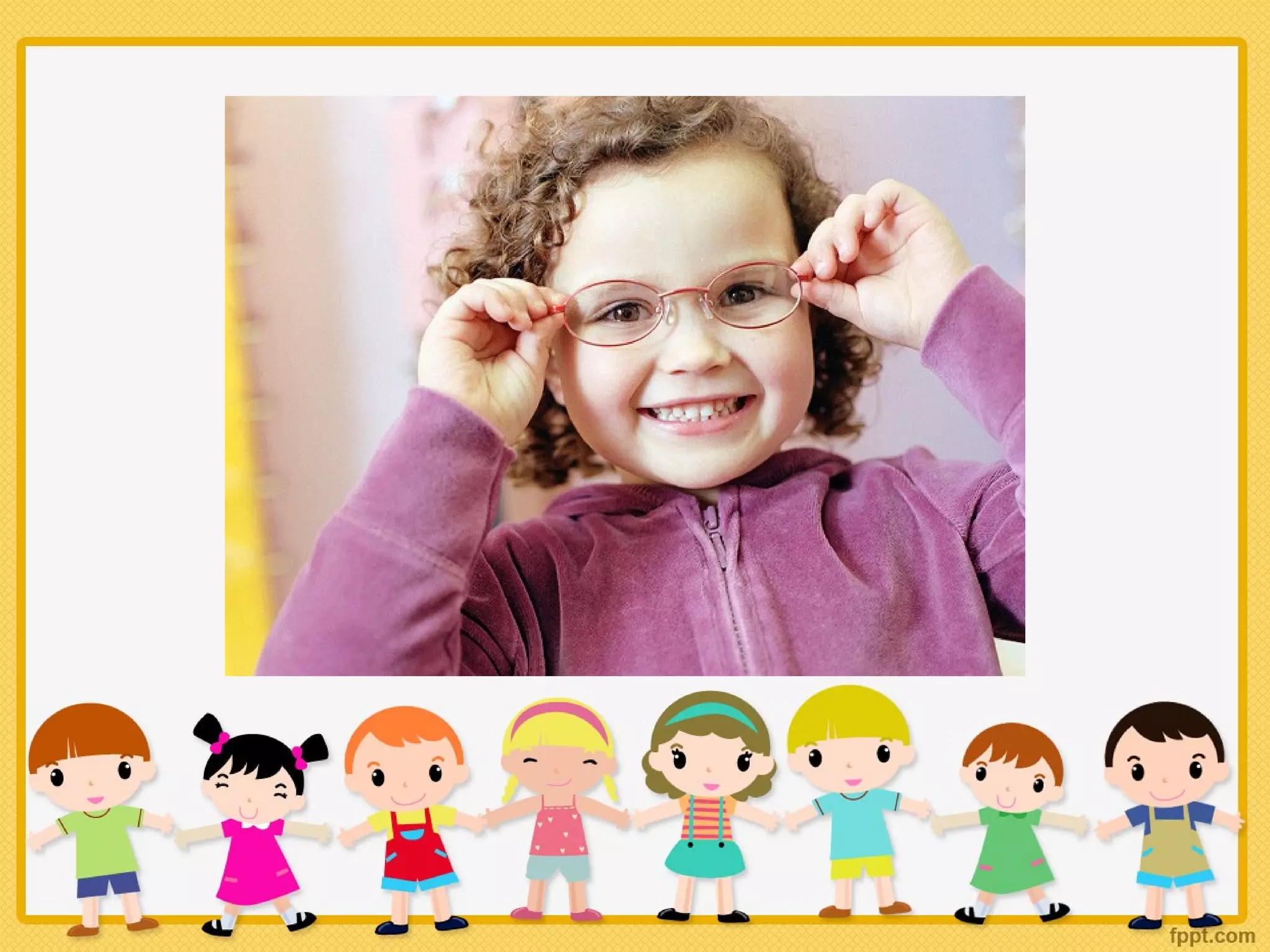
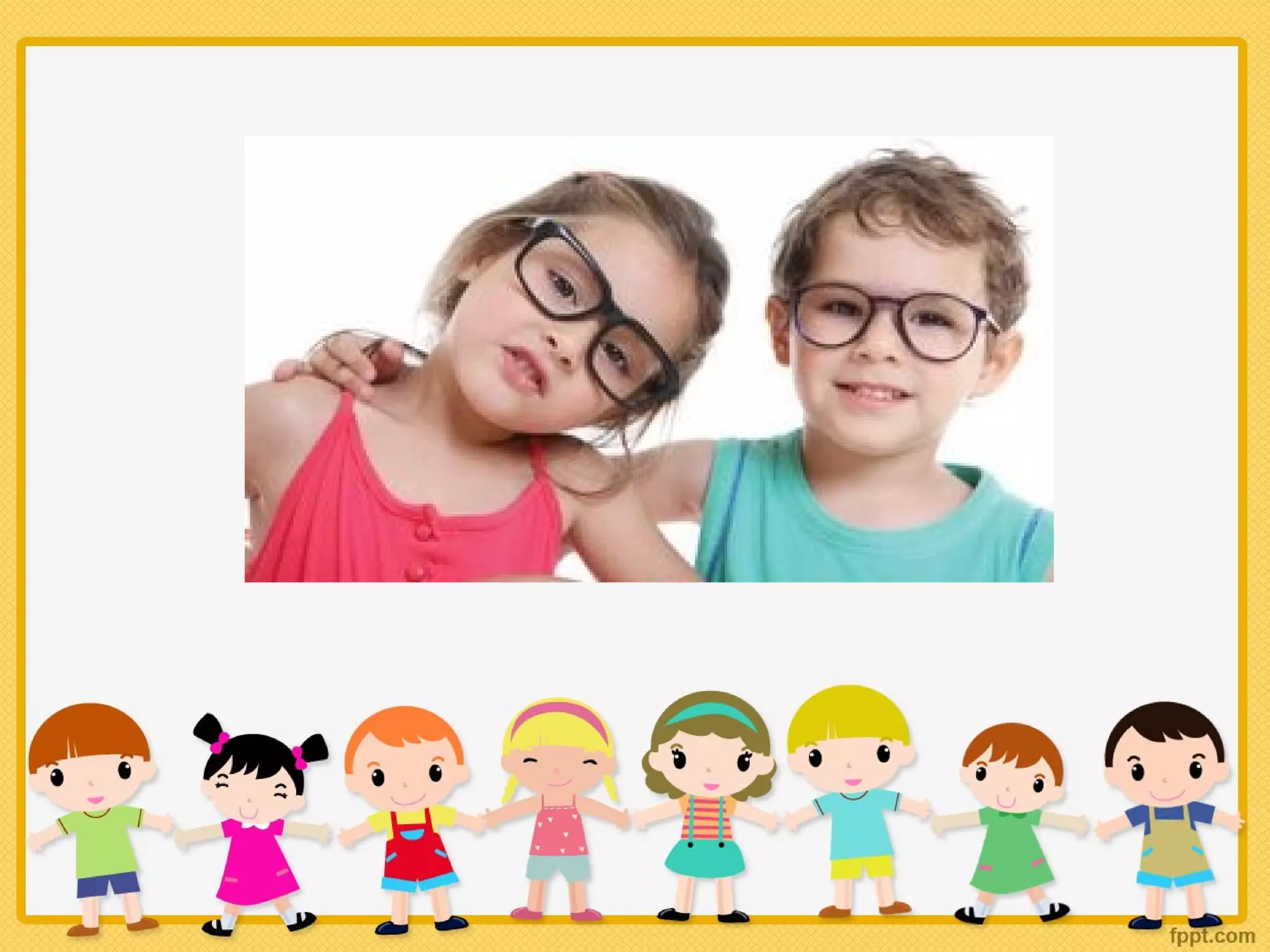
Does your child need
      glasses?
We all know that as we get
older, our eyesight tends to go.
 However, a lot of people need
   glasses at a younger age.
Some people start having to use
glasses in their teens and some
 need them when they’re even
            younger.
But how can you tell if your pre-
   schooler needs glasses?
If your pre-schooler does need
glasses, it’s best if you can pick
    up on this straight away.
At Friday’s Child Montessori,
and at nearly every Montessori
early learning centre worth its
  salt, we believe in helping
 children move onto reading
skills as soon as they show the
          aptitude for it.
But if your child has problems
with vision, this could prove to
   be a real barrier to their
           learning.
Waiting until school isn’t a good
idea, as a child who is ready to
   learn their letters but has
    trouble seeing them and
  recognising them will easily
       become frustrated.
This will lead to the early days of
reading being filled with tension
and anxiety, rather than being a
 stage when a whole new world
     of discovery opens up.
Often, the problems that mean
that a child will need glasses are
congenital (i.e. they’re born with
           the problem).
This is especially the case with
 short-sightedness (short vision
or myopia) and long-sightedness
 (farsightedness or hyperopia).
In these conditions, often the
problem is in the shape of the
          eyeball.
In a normal eye, the eyeball is
  exactly the right length so that
 the light rays going through the
     lens of the cornea will be
  focussed when they reach the
retina on the back of the eyeball.
However, if the eyeball is too long or
 too short, the focal point is either
 forward of the retina or beyond it,
   meaning that the light rays (and
  thus the image) that reaches the
  retina isn’t focused properly and
           looks all blurry.
The thickness of the cornea also
    creates problems – it’s the
 thickening of the lens during or
   after middle age that causes
  age-related short-sightedness
   (also known as presbyopia).
There are other problems that
 may require your child to wear
glasses. Astigmatism is another
 problem that is also caused by
    an odd-shaped eyeball.
If a person of any age has
astigmatism, nearby things and
far away things will look blurry.
  Again, glasses are the most
       common corrective.
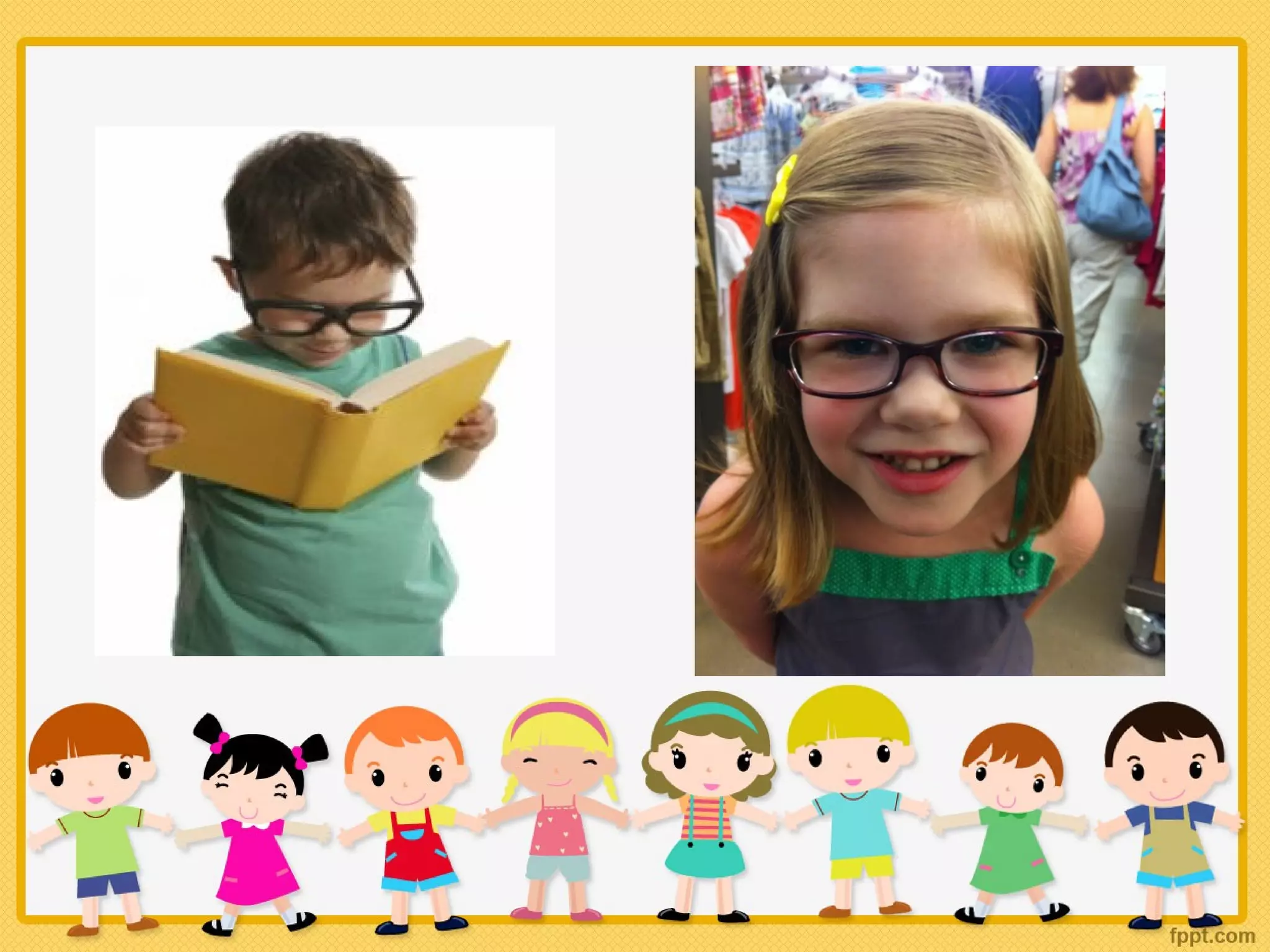
Some of these problems show
up in later childhood or in the
          teen years.
In many ways, it’s easier for a
     parent when children get
problems with vision at this age,
    as he or she can notice the
 trouble and complain about it.
For example, they’ll tell you that
  the words on the page or the
   pictures on the screen are
blurry, which is a real giveaway.
If you suspect that your child
    has a problem with his/her
vision, then your first port of call
       should be your GP.
An eye test will soon see for
    certain if your child has a
problem, and your next stop will
    be the optician or the eye
specialist to get glasses with the
  lenses that will correct your
     child’s unique problem.
This article is brought to you by:

   Fridays Child Montessori

Does your child need glasses

  • 1.
    Does your childneed glasses?
  • 2.
    We all knowthat as we get older, our eyesight tends to go. However, a lot of people need glasses at a younger age.
  • 3.
    Some people starthaving to use glasses in their teens and some need them when they’re even younger.
  • 4.
    But how canyou tell if your pre- schooler needs glasses?
  • 6.
    If your pre-schoolerdoes need glasses, it’s best if you can pick up on this straight away.
  • 7.
    At Friday’s ChildMontessori, and at nearly every Montessori early learning centre worth its salt, we believe in helping children move onto reading skills as soon as they show the aptitude for it.
  • 8.
    But if yourchild has problems with vision, this could prove to be a real barrier to their learning.
  • 9.
    Waiting until schoolisn’t a good idea, as a child who is ready to learn their letters but has trouble seeing them and recognising them will easily become frustrated.
  • 11.
    This will leadto the early days of reading being filled with tension and anxiety, rather than being a stage when a whole new world of discovery opens up.
  • 12.
    Often, the problemsthat mean that a child will need glasses are congenital (i.e. they’re born with the problem).
  • 13.
    This is especiallythe case with short-sightedness (short vision or myopia) and long-sightedness (farsightedness or hyperopia).
  • 14.
    In these conditions,often the problem is in the shape of the eyeball.
  • 15.
    In a normaleye, the eyeball is exactly the right length so that the light rays going through the lens of the cornea will be focussed when they reach the retina on the back of the eyeball.
  • 16.
    However, if theeyeball is too long or too short, the focal point is either forward of the retina or beyond it, meaning that the light rays (and thus the image) that reaches the retina isn’t focused properly and looks all blurry.
  • 17.
    The thickness ofthe cornea also creates problems – it’s the thickening of the lens during or after middle age that causes age-related short-sightedness (also known as presbyopia).
  • 19.
    There are otherproblems that may require your child to wear glasses. Astigmatism is another problem that is also caused by an odd-shaped eyeball.
  • 20.
    If a personof any age has astigmatism, nearby things and far away things will look blurry. Again, glasses are the most common corrective.
  • 21.
    Some of theseproblems show up in later childhood or in the teen years.
  • 22.
    In many ways,it’s easier for a parent when children get problems with vision at this age, as he or she can notice the trouble and complain about it.
  • 23.
    For example, they’lltell you that the words on the page or the pictures on the screen are blurry, which is a real giveaway.
  • 24.
    If you suspectthat your child has a problem with his/her vision, then your first port of call should be your GP.
  • 25.
    An eye testwill soon see for certain if your child has a problem, and your next stop will be the optician or the eye specialist to get glasses with the lenses that will correct your child’s unique problem.
  • 26.
    This article isbrought to you by: Fridays Child Montessori