PREVENTIVE
MEASURES IN VIRAL
INFECTIONS
Get a Flu Shot
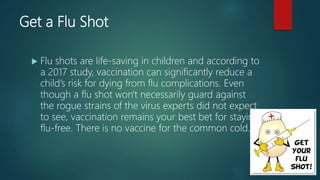
 Flu shots are life-saving in children and according to
a 2017 study, vaccination can significantly reduce a
child’s risk for dying from flu complications. Even
though a flu shot won't necessarily guard against
the rogue strains of the virus experts did not expect
to see, vaccination remains your best bet for staying
flu-free. There is no vaccine for the common cold.
Steer Clear of Sick People
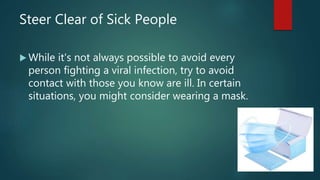
 While it's not always possible to avoid every
person fighting a viral infection, try to avoid
contact with those you know are ill. In certain
situations, you might consider wearing a mask.
Don’t Share
 if you want to avoid getting a viral infection,
one of the best ways to do that is to not share
germs. Anything that goes on, in, or near a
person’s mouth can transfer germs, and
coming into contact with another person's
saliva is a sure way to catch a virus.
Wash Your Hands
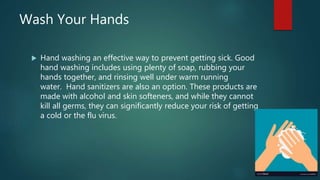
 Hand washing an effective way to prevent getting sick. Good
hand washing includes using plenty of soap, rubbing your
hands together, and rinsing well under warm running
water. Hand sanitizers are also an option. These products are
made with alcohol and skin softeners, and while they cannot
kill all germs, they can significantly reduce your risk of getting
a cold or the flu virus.
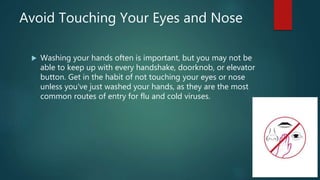
Avoid Touching Your Eyes and Nose
 Washing your hands often is important, but you may not be
able to keep up with every handshake, doorknob, or elevator
button. Get in the habit of not touching your eyes or nose
unless you've just washed your hands, as they are the most
common routes of entry for flu and cold viruses.
Stay Hydrated
 Staying hydrating is the best way to boost your
immune system and fight off viruses. Dry, centrally
heated air can promote dehydration, which may leave
you more susceptible to illness Drink beverages
throughout the day to stay hydrated.
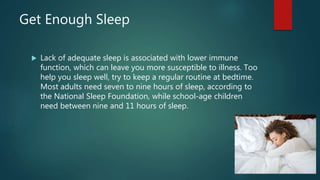
Get Enough Sleep
 Lack of adequate sleep is associated with lower immune
function, which can leave you more susceptible to illness. Too
help you sleep well, try to keep a regular routine at bedtime.
Most adults need seven to nine hours of sleep, according to
the National Sleep Foundation, while school-age children
need between nine and 11 hours of sleep.
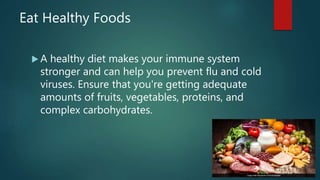
Eat Healthy Foods
 A healthy diet makes your immune system
stronger and can help you prevent flu and cold
viruses. Ensure that you're getting adequate
amounts of fruits, vegetables, proteins, and
complex carbohydrates.

Gonzales slideshare

  • 1.
  • 2.
    Get a FluShot  Flu shots are life-saving in children and according to a 2017 study, vaccination can significantly reduce a child’s risk for dying from flu complications. Even though a flu shot won't necessarily guard against the rogue strains of the virus experts did not expect to see, vaccination remains your best bet for staying flu-free. There is no vaccine for the common cold.
  • 3.
    Steer Clear ofSick People  While it's not always possible to avoid every person fighting a viral infection, try to avoid contact with those you know are ill. In certain situations, you might consider wearing a mask.
  • 4.
    Don’t Share  ifyou want to avoid getting a viral infection, one of the best ways to do that is to not share germs. Anything that goes on, in, or near a person’s mouth can transfer germs, and coming into contact with another person's saliva is a sure way to catch a virus.
  • 5.
    Wash Your Hands Hand washing an effective way to prevent getting sick. Good hand washing includes using plenty of soap, rubbing your hands together, and rinsing well under warm running water. Hand sanitizers are also an option. These products are made with alcohol and skin softeners, and while they cannot kill all germs, they can significantly reduce your risk of getting a cold or the flu virus.
  • 6.
    Avoid Touching YourEyes and Nose  Washing your hands often is important, but you may not be able to keep up with every handshake, doorknob, or elevator button. Get in the habit of not touching your eyes or nose unless you've just washed your hands, as they are the most common routes of entry for flu and cold viruses.
  • 7.
    Stay Hydrated  Stayinghydrating is the best way to boost your immune system and fight off viruses. Dry, centrally heated air can promote dehydration, which may leave you more susceptible to illness Drink beverages throughout the day to stay hydrated.
  • 8.
    Get Enough Sleep Lack of adequate sleep is associated with lower immune function, which can leave you more susceptible to illness. Too help you sleep well, try to keep a regular routine at bedtime. Most adults need seven to nine hours of sleep, according to the National Sleep Foundation, while school-age children need between nine and 11 hours of sleep.
  • 9.
    Eat Healthy Foods A healthy diet makes your immune system stronger and can help you prevent flu and cold viruses. Ensure that you're getting adequate amounts of fruits, vegetables, proteins, and complex carbohydrates.