Units 4 and 5:  50s to 80s Outline for the next 3 weeks
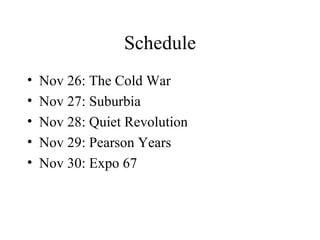
Schedule Nov 26: The Cold War Nov 27: Suburbia Nov 28: Quiet Revolution Nov 29: Pearson Years Nov 30: Expo 67
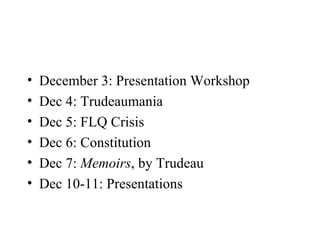
December 3: Presentation Workshop Dec 4: Trudeaumania Dec 5: FLQ Crisis Dec 6: Constitution Dec 7:  Memoirs , by Trudeau Dec 10-11: Presentations
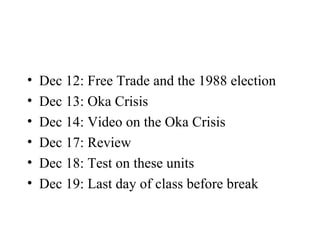
Dec 12: Free Trade and the 1988 election Dec 13: Oka Crisis Dec 14: Video on the Oka Crisis Dec 17: Review Dec 18: Test on these units Dec 19: Last day of class before break
Key Themes Pierre Elliot Trudeau Quebec’s place in Canada Native peoples in Canada
Readings Your books on Jean Chretien and Pierre Trudeau will both be used I will also give out some other readings
Group Presentations The Group Presentations for this unit will cover topics from all the decades: Avro Arrow Summit Series of 72 Acid Rain Olympic Games in Montreal and Calgary National Energy Program Newfoundland joins Canada St Lawrence Seaway
The Cold War November 26 th
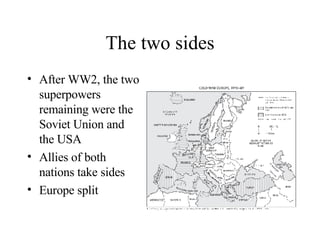
The two sides After WW2, the two superpowers remaining were the Soviet Union and the USA Allies of both nations take sides Europe split
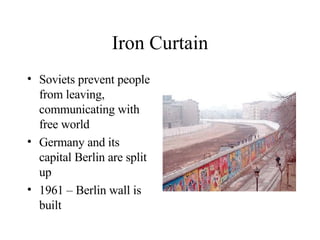
Iron Curtain Soviets prevent people from leaving, communicating with free world Germany and its capital Berlin are split up 1961 – Berlin wall is built
The Cold War spreads Both the US and the Soviets seek to make allies with other nations in the world, in particular Africa, Asia and the Americas Fidel Castro overthrows a dictatorship in Cuba in 1959, eventually sides with the Soviets
Occasionally it heats up Several small wars were fought that involved American and Soviet interests:  - Greece - Korea - Vietnam Angola and Mozambique Afghanistan Cuban Missile Crisis in 1962
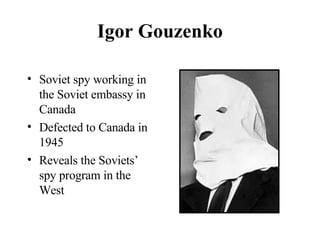
Igor Gouzenko Soviet spy working in the Soviet embassy in Canada Defected to Canada in 1945 Reveals the Soviets’ spy program in the West
Alliances US, Canada, Great Britain and other Western Allies form NATO  Soviet Union and other Eastern European nations form the Warsaw Pact Canada and the US form NORAD Debate in Canada over the use of nuclear weapons

Cold War

  • 1.
    Units 4 and5: 50s to 80s Outline for the next 3 weeks
  • 2.
    Schedule Nov 26:The Cold War Nov 27: Suburbia Nov 28: Quiet Revolution Nov 29: Pearson Years Nov 30: Expo 67
  • 3.
    December 3: PresentationWorkshop Dec 4: Trudeaumania Dec 5: FLQ Crisis Dec 6: Constitution Dec 7: Memoirs , by Trudeau Dec 10-11: Presentations
  • 4.
    Dec 12: FreeTrade and the 1988 election Dec 13: Oka Crisis Dec 14: Video on the Oka Crisis Dec 17: Review Dec 18: Test on these units Dec 19: Last day of class before break
  • 5.
    Key Themes PierreElliot Trudeau Quebec’s place in Canada Native peoples in Canada
  • 6.
    Readings Your bookson Jean Chretien and Pierre Trudeau will both be used I will also give out some other readings
  • 7.
    Group Presentations TheGroup Presentations for this unit will cover topics from all the decades: Avro Arrow Summit Series of 72 Acid Rain Olympic Games in Montreal and Calgary National Energy Program Newfoundland joins Canada St Lawrence Seaway
  • 8.
    The Cold WarNovember 26 th
  • 9.
    The two sidesAfter WW2, the two superpowers remaining were the Soviet Union and the USA Allies of both nations take sides Europe split
  • 10.
    Iron Curtain Sovietsprevent people from leaving, communicating with free world Germany and its capital Berlin are split up 1961 – Berlin wall is built
  • 11.
    The Cold Warspreads Both the US and the Soviets seek to make allies with other nations in the world, in particular Africa, Asia and the Americas Fidel Castro overthrows a dictatorship in Cuba in 1959, eventually sides with the Soviets
  • 12.
    Occasionally it heatsup Several small wars were fought that involved American and Soviet interests: - Greece - Korea - Vietnam Angola and Mozambique Afghanistan Cuban Missile Crisis in 1962
  • 13.
    Igor Gouzenko Sovietspy working in the Soviet embassy in Canada Defected to Canada in 1945 Reveals the Soviets’ spy program in the West
  • 14.
    Alliances US, Canada,Great Britain and other Western Allies form NATO Soviet Union and other Eastern European nations form the Warsaw Pact Canada and the US form NORAD Debate in Canada over the use of nuclear weapons