Codes and conventions:
Magazine front cover
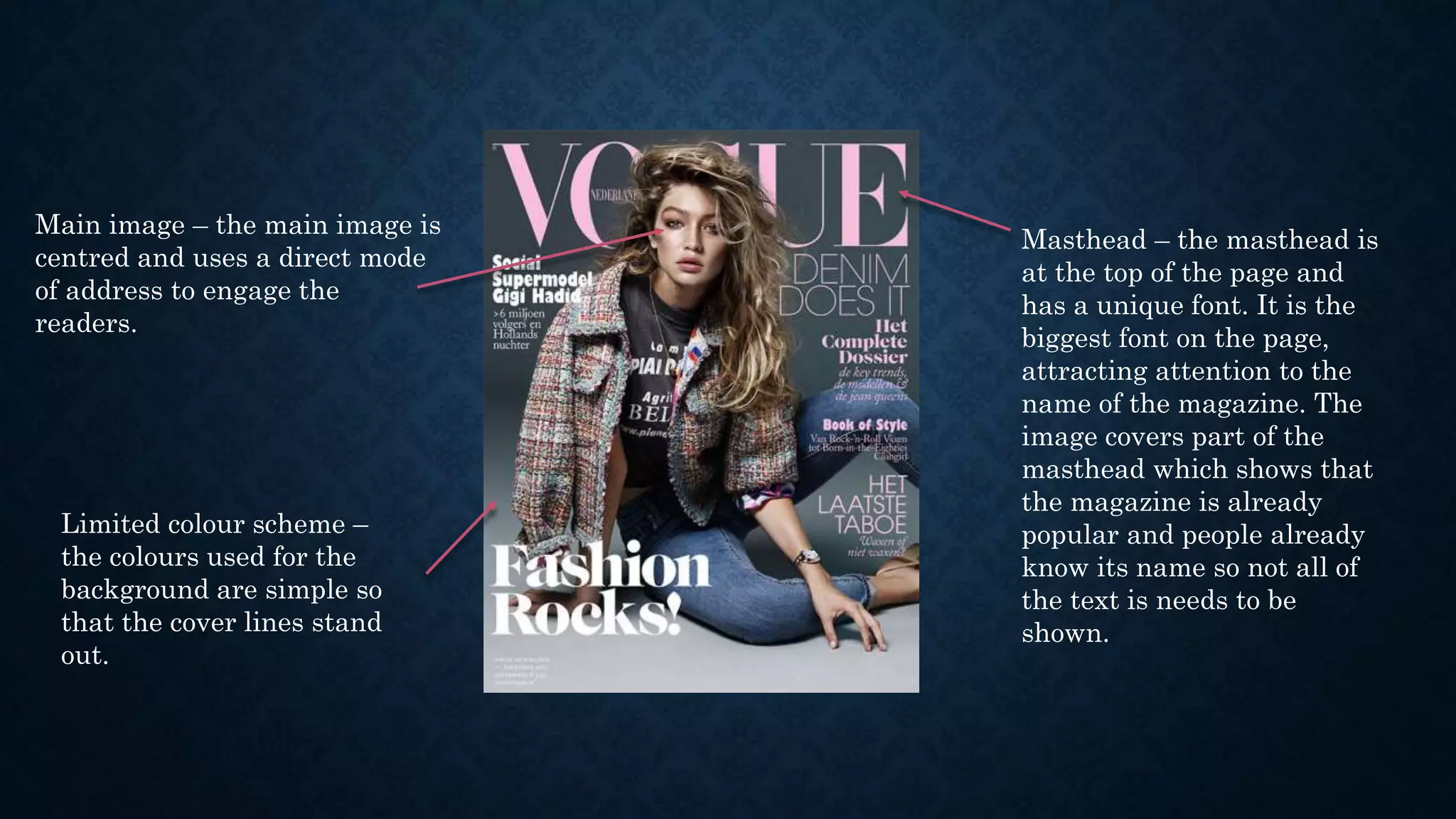
Main image – the main image is
centred and uses a direct mode
of address to engage the
readers.
Masthead – the masthead is
at the top of the page and
has a unique font. It is the
biggest font on the page,
attracting attention to the
name of the magazine. The
image covers part of the
masthead which shows that
the magazine is already
popular and people already
know its name so not all of
the text is needs to be
shown.
Limited colour scheme –
the colours used for the
background are simple so
that the cover lines stand
out.
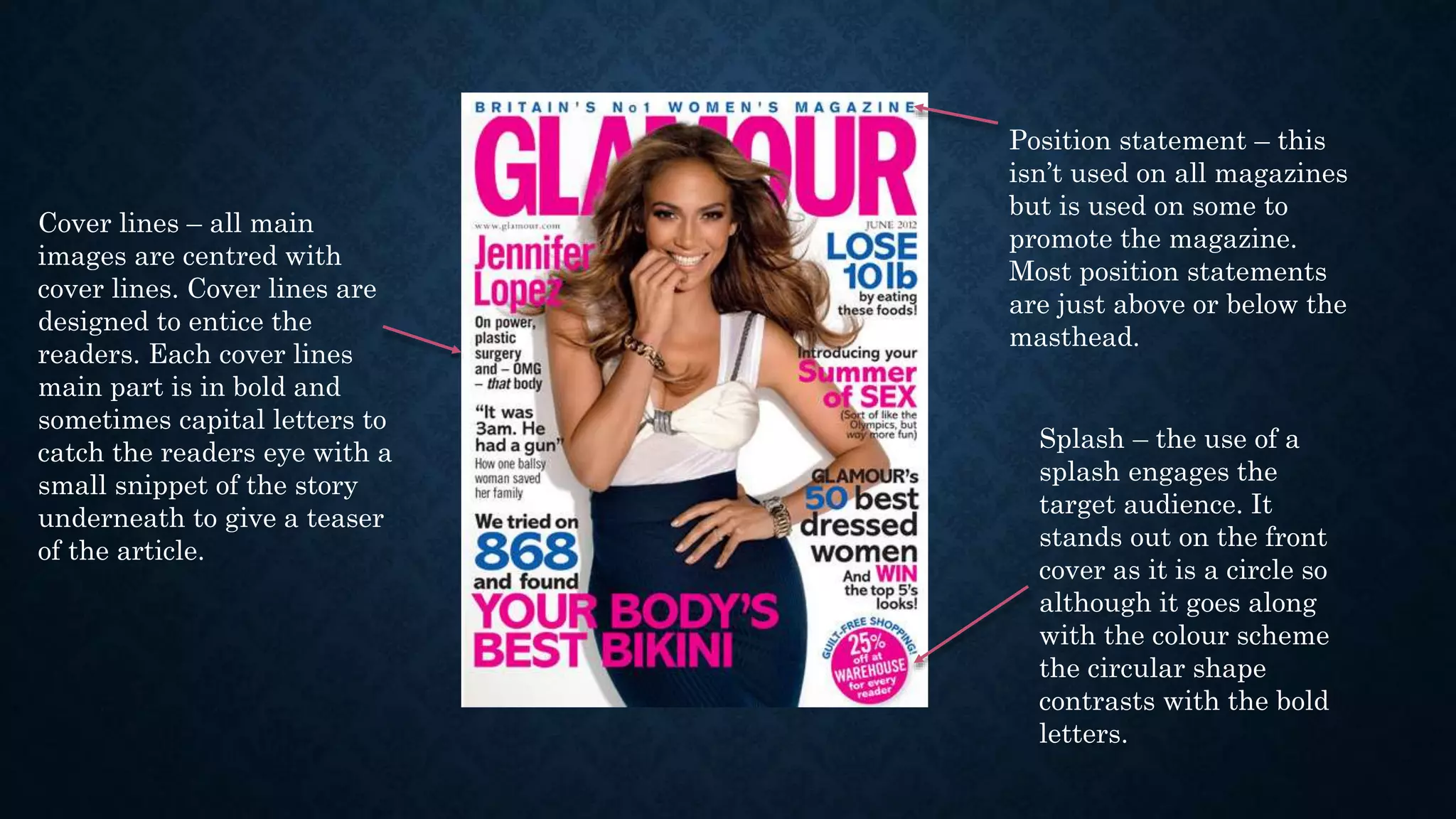
Splash – the use of a
splash engages the
target audience. It
stands out on the front
cover as it is a circle so
although it goes along
with the colour scheme
the circular shape
contrasts with the bold
letters.
Position statement – this
isn’t used on all magazines
but is used on some to
promote the magazine.
Most position statements
are just above or below the
masthead.
Cover lines – all main
images are centred with
cover lines. Cover lines are
designed to entice the
readers. Each cover lines
main part is in bold and
sometimes capital letters to
catch the readers eye with a
small snippet of the story
underneath to give a teaser
of the article.
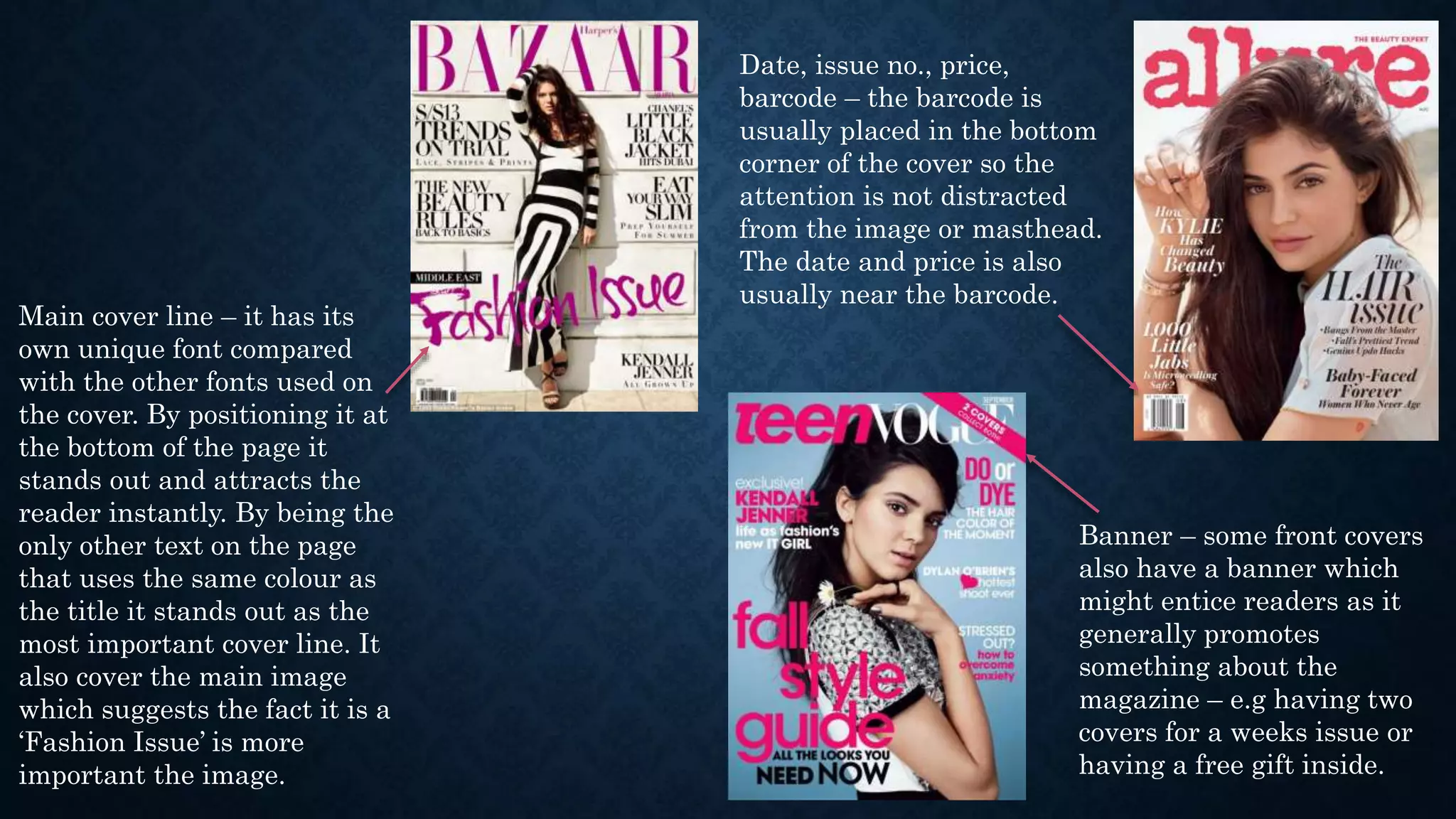
Main cover line – it has its
own unique font compared
with the other fonts used on
the cover. By positioning it at
the bottom of the page it
stands out and attracts the
reader instantly. By being the
only other text on the page
that uses the same colour as
the title it stands out as the
most important cover line. It
also cover the main image
which suggests the fact it is a
‘Fashion Issue’ is more
important the image.
Banner – some front covers
also have a banner which
might entice readers as it
generally promotes
something about the
magazine – e.g having two
covers for a weeks issue or
having a free gift inside.
Date, issue no., price,
barcode – the barcode is
usually placed in the bottom
corner of the cover so the
attention is not distracted
from the image or masthead.
The date and price is also
usually near the barcode.

Codes and conventions magazine front cover

  • 1.
  • 2.
    Main image –the main image is centred and uses a direct mode of address to engage the readers. Masthead – the masthead is at the top of the page and has a unique font. It is the biggest font on the page, attracting attention to the name of the magazine. The image covers part of the masthead which shows that the magazine is already popular and people already know its name so not all of the text is needs to be shown. Limited colour scheme – the colours used for the background are simple so that the cover lines stand out.
  • 3.
    Splash – theuse of a splash engages the target audience. It stands out on the front cover as it is a circle so although it goes along with the colour scheme the circular shape contrasts with the bold letters. Position statement – this isn’t used on all magazines but is used on some to promote the magazine. Most position statements are just above or below the masthead. Cover lines – all main images are centred with cover lines. Cover lines are designed to entice the readers. Each cover lines main part is in bold and sometimes capital letters to catch the readers eye with a small snippet of the story underneath to give a teaser of the article.
  • 4.
    Main cover line– it has its own unique font compared with the other fonts used on the cover. By positioning it at the bottom of the page it stands out and attracts the reader instantly. By being the only other text on the page that uses the same colour as the title it stands out as the most important cover line. It also cover the main image which suggests the fact it is a ‘Fashion Issue’ is more important the image. Banner – some front covers also have a banner which might entice readers as it generally promotes something about the magazine – e.g having two covers for a weeks issue or having a free gift inside. Date, issue no., price, barcode – the barcode is usually placed in the bottom corner of the cover so the attention is not distracted from the image or masthead. The date and price is also usually near the barcode.