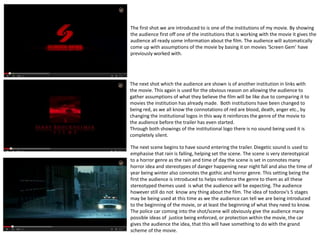
The first shot we are introduced to is one of the institutions of my movie. By showing 
the audience first off one of the institutions that is working with the movie it gives the 
audience all ready some information about the film. The audience will automatically 
come up with assumptions of the movie by basing it on movies ‘Screen Gem’ have 
previously worked with. 
The next shot which the audience are shown is of another institution in links with 
the movie. This again is used for the obvious reason on allowing the audience to 
gather assumptions of what they believe the film will be like due to comparing it to 
movies the institution has already made. Both institutions have been changed to 
being red, as we all know the connotations of red are blood, death, anger etc., by 
changing the institutional logos in this way it reinforces the genre of the movie to 
the audience before the trailer has even started. 
Through both showings of the institutional logo there is no sound being used it is 
completely silent. 
The next scene begins to have sound entering the trailer. Diegetic sound is used to 
emphasise that rain is falling, helping set the scene. The scene is very stereotypical 
to a horror genre as the rain and time of day the scene is set in connotes many 
horror idea and stereotypes of danger happening near night fall and also the time of 
year being winter also connotes the gothic and horror genre. This setting being the 
first the audience is introduced to helps reinforce the genre to them as all these 
stereotyped themes used is what the audience will be expecting. The audience 
however still do not know any thing about the film. The idea of todorov’s 5 stages 
may be being used at this time as we the audience can tell we are being introduced 
to the beginning of the movie, or at least the beginning of what they need to know. 
The police car coming into the shot/scene will obviously give the audience many 
possible ideas of justice being enforced, or protection within the movie, the car 
gives the audience the idea, that this will have something to do with the grand 
scheme of the movie.
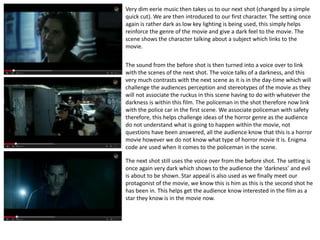
Very dim eerie music then takes us to our next shot (changed by a simple 
quick cut). We are then introduced to our first character. The setting once 
again is rather dark as low key lighting is being used, this simply helps 
reinforce the genre of the movie and give a dark feel to the movie. The 
scene shows the character talking about a subject which links to the 
movie. 
The sound from the before shot is then turned into a voice over to link 
with the scenes of the next shot. The voice talks of a darkness, and this 
very much contrasts with the next scene as it is in the day-time which will 
challenge the audiences perception and stereotypes of the movie as they 
will not associate the ruckus in this scene having to do with whatever the 
darkness is within this film. The policeman in the shot therefore now link 
with the police car in the first scene. We associate policeman with safety 
therefore, this helps challenge ideas of the horror genre as the audience 
do not understand what is going to happen within the movie, not 
questions have been answered, all the audience know that this is a horror 
movie however we do not know what type of horror movie it is. Enigma 
code are used when it comes to the policeman in the scene. 
The next shot still uses the voice over from the before shot. The setting is 
once again very dark which shows to the audience the ‘darkness’ and evil 
is about to be shown. Star appeal is also used as we finally meet our 
protagonist of the movie, we know this is him as this is the second shot he 
has been in. This helps get the audience know interested in the film as a 
star they know is in the movie now.
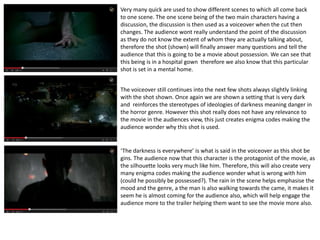
Very many quick are used to show different scenes to which all come back 
to one scene. The one scene being of the two main characters having a 
discussion, the discussion is then used as a voiceover when the cut then 
changes. The audience wont really understand the point of the discussion 
as they do not know the extent of whom they are actually talking about, 
therefore the shot (shown) will finally answer many questions and tell the 
audience that this is going to be a movie about possession. We can see that 
this being is in a hospital gown therefore we also know that this particular 
shot is set in a mental home. 
The voiceover still continues into the next few shots always slightly linking 
with the shot shown. Once again we are shown a setting that is very dark 
and reinforces the stereotypes of ideologies of darkness meaning danger in 
the horror genre. However this shot really does not have any relevance to 
the movie in the audiences view, this just creates enigma codes making the 
audience wonder why this shot is used. 
‘The darkness is everywhere’ is what is said in the voiceover as this shot be 
gins. The audience now that this character is the protagonist of the movie, as 
the silhouette looks very much like him. Therefore, this will also create very 
many enigma codes making the audience wonder what is wrong with him 
(could he possibly be possessed?). The rain in the scene helps emphasise the 
mood and the genre, a the man is also walking towards the came, it makes it 
seem he is almost coming for the audience also, which will help engage the 
audience more to the trailer helping them want to see the movie more also.
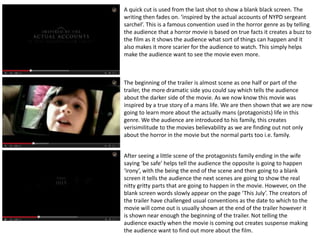
A quick cut is used from the last shot to show a blank black screen. The 
writing then fades on. ‘inspired by the actual accounts of NYPD sergeant 
sarchel’. This is a famous convention used in the horror genre as by telling 
the audience that a horror movie is based on true facts it creates a buzz to 
the film as it shows the audience what sort of things can happen and it 
also makes it more scarier for the audience to watch. This simply helps 
make the audience want to see the movie even more. 
The beginning of the trailer is almost scene as one half or part of the 
trailer, the more dramatic side you could say which tells the audience 
about the darker side of the movie. As we now know this movie was 
inspired by a true story of a mans life. We are then shown that we are now 
going to learn more about the actually mans (protagonists) life in this 
genre. We the audience are introduced to his family, this creates 
verisimilitude to the movies believability as we are finding out not only 
about the horror in the movie but the normal parts too i.e. family. 
After seeing a little scene of the protagonists family ending in the wife 
saying ‘be safe’ helps tell the audience the opposite is going to happen 
‘irony’, with the being the end of the scene and then going to a blank 
screen it tells the audience the next scenes are going to show the real 
nitty gritty parts that are going to happen in the movie. However, on the 
blank screen words slowly appear on the page ‘This July’. The creators of 
the trailer have challenged usual conventions as the date to which to the 
movie will come out is usually shown at the end of the trailer however it 
is shown near enough the beginning of the trailer. Not telling the 
audience exactly when the movie is coming out creates suspense making 
the audience want to find out more about the film.
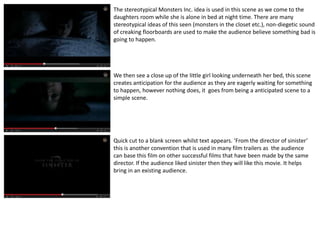
The stereotypical Monsters Inc. idea is used in this scene as we come to the 
daughters room while she is alone in bed at night time. There are many 
stereotypical ideas of this seen (monsters in the closet etc.), non-diegetic sound 
of creaking floorboards are used to make the audience believe something bad is 
going to happen. 
We then see a close up of the little girl looking underneath her bed, this scene 
creates anticipation for the audience as they are eagerly waiting for something 
to happen, however nothing does, it goes from being a anticipated scene to a 
simple scene. 
Quick cut to a blank screen whilst text appears. ‘From the director of sinister’ 
this is another convention that is used in many film trailers as the audience 
can base this film on other successful films that have been made by the same 
director. If the audience liked sinister then they will like this movie. It helps 
bring in an existing audience.
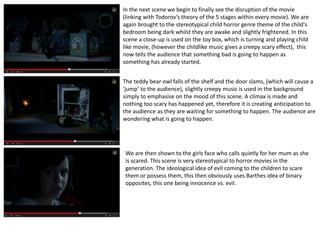
In the next scene we begin to finally see the disruption of the movie 
(linking with Todorov’s theory of the 5 stages within every movie). We are 
again brought to the stereotypical child horror genre theme of the child's 
bedroom being dark whilst they are awake and slightly frightened. In this 
scene a close-up is used on the toy box, which is turning and playing child 
like movie, (however the childlike music gives a creepy scary effect), this 
now tells the audience that something bad is going to happen as 
something has already started. 
The teddy bear owl falls of the shelf and the door slams, (which will cause a 
‘jump’ to the audience), slightly creepy music is used in the background 
simply to emphasise on the mood of this scene. A climax is made and 
nothing too scary has happened yet, therefore it is creating anticipation to 
the audience as they are waiting for something to happen. The audience are 
wondering what is going to happen. 
We are then shown to the girls face who calls quietly for her mum as she 
is scared. This scene is very stereotypical to horror movies in the 
generation. The ideological idea of evil coming to the children to scare 
them or possess them, this then obviously uses Barthes idea of binary 
opposites, this one being innocence vs. evil.
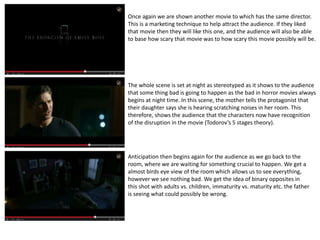
Once again we are shown another movie to which has the same director. 
This is a marketing technique to help attract the audience. If they liked 
that movie then they will like this one, and the audience will also be able 
to base how scary that movie was to how scary this movie possibly will be. 
The whole scene is set at night as stereotyped as it shows to the audience 
that some thing bad is going to happen as the bad in horror movies always 
begins at night time. In this scene, the mother tells the protagonist that 
their daughter says she is hearing scratching noises in her room. This 
therefore, shows the audience that the characters now have recognition 
of the disruption in the movie (Todorov’s 5 stages theory). 
Anticipation then begins again for the audience as we go back to the 
room, where we are waiting for something crucial to happen. We get a 
almost birds eye view of the room which allows us to see everything, 
however we see nothing bad. We get the idea of binary opposites in 
this shot with adults vs. children, immaturity vs. maturity etc. the father 
is seeing what could possibly be wrong.
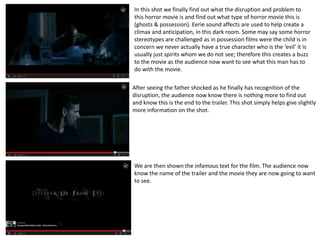
In this shot we finally find out what the disruption and problem to 
this horror movie is and find out what type of horror movie this is 
(ghosts & possession). Eerie sound affects are used to help create a 
climax and anticipation, in this dark room. Some may say some horror 
stereotypes are challenged as in possession films were the child is in 
concern we never actually have a true character who is the ‘evil’ it is 
usually just spirits whom we do not see; therefore this creates a buzz 
to the movie as the audience now want to see what this man has to 
do with the movie. 
After seeing the father shocked as he finally has recognition of the 
disruption, the audience now know there is nothing more to find out 
and know this is the end to the trailer. This shot simply helps give slightly 
more information on the shot. 
We are then shown the infamous text for the film. The audience now 
know the name of the trailer and the movie they are now going to want 
to see.
The last information we find out for the movie is the institutional 
information, i.e. the institutions making the film and all the directors 
producers and soundtrack names. This doesn’t interest the audience 
much however this information has to be put at the end of a trailer and 
sometimes it may be of interest to the audience as they can see if great 
people are making this film.

Deliver us trailer analysis

  • 2.
    The first shotwe are introduced to is one of the institutions of my movie. By showing the audience first off one of the institutions that is working with the movie it gives the audience all ready some information about the film. The audience will automatically come up with assumptions of the movie by basing it on movies ‘Screen Gem’ have previously worked with. The next shot which the audience are shown is of another institution in links with the movie. This again is used for the obvious reason on allowing the audience to gather assumptions of what they believe the film will be like due to comparing it to movies the institution has already made. Both institutions have been changed to being red, as we all know the connotations of red are blood, death, anger etc., by changing the institutional logos in this way it reinforces the genre of the movie to the audience before the trailer has even started. Through both showings of the institutional logo there is no sound being used it is completely silent. The next scene begins to have sound entering the trailer. Diegetic sound is used to emphasise that rain is falling, helping set the scene. The scene is very stereotypical to a horror genre as the rain and time of day the scene is set in connotes many horror idea and stereotypes of danger happening near night fall and also the time of year being winter also connotes the gothic and horror genre. This setting being the first the audience is introduced to helps reinforce the genre to them as all these stereotyped themes used is what the audience will be expecting. The audience however still do not know any thing about the film. The idea of todorov’s 5 stages may be being used at this time as we the audience can tell we are being introduced to the beginning of the movie, or at least the beginning of what they need to know. The police car coming into the shot/scene will obviously give the audience many possible ideas of justice being enforced, or protection within the movie, the car gives the audience the idea, that this will have something to do with the grand scheme of the movie.
  • 3.
    Very dim eeriemusic then takes us to our next shot (changed by a simple quick cut). We are then introduced to our first character. The setting once again is rather dark as low key lighting is being used, this simply helps reinforce the genre of the movie and give a dark feel to the movie. The scene shows the character talking about a subject which links to the movie. The sound from the before shot is then turned into a voice over to link with the scenes of the next shot. The voice talks of a darkness, and this very much contrasts with the next scene as it is in the day-time which will challenge the audiences perception and stereotypes of the movie as they will not associate the ruckus in this scene having to do with whatever the darkness is within this film. The policeman in the shot therefore now link with the police car in the first scene. We associate policeman with safety therefore, this helps challenge ideas of the horror genre as the audience do not understand what is going to happen within the movie, not questions have been answered, all the audience know that this is a horror movie however we do not know what type of horror movie it is. Enigma code are used when it comes to the policeman in the scene. The next shot still uses the voice over from the before shot. The setting is once again very dark which shows to the audience the ‘darkness’ and evil is about to be shown. Star appeal is also used as we finally meet our protagonist of the movie, we know this is him as this is the second shot he has been in. This helps get the audience know interested in the film as a star they know is in the movie now.
  • 4.
    Very many quickare used to show different scenes to which all come back to one scene. The one scene being of the two main characters having a discussion, the discussion is then used as a voiceover when the cut then changes. The audience wont really understand the point of the discussion as they do not know the extent of whom they are actually talking about, therefore the shot (shown) will finally answer many questions and tell the audience that this is going to be a movie about possession. We can see that this being is in a hospital gown therefore we also know that this particular shot is set in a mental home. The voiceover still continues into the next few shots always slightly linking with the shot shown. Once again we are shown a setting that is very dark and reinforces the stereotypes of ideologies of darkness meaning danger in the horror genre. However this shot really does not have any relevance to the movie in the audiences view, this just creates enigma codes making the audience wonder why this shot is used. ‘The darkness is everywhere’ is what is said in the voiceover as this shot be gins. The audience now that this character is the protagonist of the movie, as the silhouette looks very much like him. Therefore, this will also create very many enigma codes making the audience wonder what is wrong with him (could he possibly be possessed?). The rain in the scene helps emphasise the mood and the genre, a the man is also walking towards the came, it makes it seem he is almost coming for the audience also, which will help engage the audience more to the trailer helping them want to see the movie more also.
  • 5.
    A quick cutis used from the last shot to show a blank black screen. The writing then fades on. ‘inspired by the actual accounts of NYPD sergeant sarchel’. This is a famous convention used in the horror genre as by telling the audience that a horror movie is based on true facts it creates a buzz to the film as it shows the audience what sort of things can happen and it also makes it more scarier for the audience to watch. This simply helps make the audience want to see the movie even more. The beginning of the trailer is almost scene as one half or part of the trailer, the more dramatic side you could say which tells the audience about the darker side of the movie. As we now know this movie was inspired by a true story of a mans life. We are then shown that we are now going to learn more about the actually mans (protagonists) life in this genre. We the audience are introduced to his family, this creates verisimilitude to the movies believability as we are finding out not only about the horror in the movie but the normal parts too i.e. family. After seeing a little scene of the protagonists family ending in the wife saying ‘be safe’ helps tell the audience the opposite is going to happen ‘irony’, with the being the end of the scene and then going to a blank screen it tells the audience the next scenes are going to show the real nitty gritty parts that are going to happen in the movie. However, on the blank screen words slowly appear on the page ‘This July’. The creators of the trailer have challenged usual conventions as the date to which to the movie will come out is usually shown at the end of the trailer however it is shown near enough the beginning of the trailer. Not telling the audience exactly when the movie is coming out creates suspense making the audience want to find out more about the film.
  • 6.
    The stereotypical MonstersInc. idea is used in this scene as we come to the daughters room while she is alone in bed at night time. There are many stereotypical ideas of this seen (monsters in the closet etc.), non-diegetic sound of creaking floorboards are used to make the audience believe something bad is going to happen. We then see a close up of the little girl looking underneath her bed, this scene creates anticipation for the audience as they are eagerly waiting for something to happen, however nothing does, it goes from being a anticipated scene to a simple scene. Quick cut to a blank screen whilst text appears. ‘From the director of sinister’ this is another convention that is used in many film trailers as the audience can base this film on other successful films that have been made by the same director. If the audience liked sinister then they will like this movie. It helps bring in an existing audience.
  • 7.
    In the nextscene we begin to finally see the disruption of the movie (linking with Todorov’s theory of the 5 stages within every movie). We are again brought to the stereotypical child horror genre theme of the child's bedroom being dark whilst they are awake and slightly frightened. In this scene a close-up is used on the toy box, which is turning and playing child like movie, (however the childlike music gives a creepy scary effect), this now tells the audience that something bad is going to happen as something has already started. The teddy bear owl falls of the shelf and the door slams, (which will cause a ‘jump’ to the audience), slightly creepy music is used in the background simply to emphasise on the mood of this scene. A climax is made and nothing too scary has happened yet, therefore it is creating anticipation to the audience as they are waiting for something to happen. The audience are wondering what is going to happen. We are then shown to the girls face who calls quietly for her mum as she is scared. This scene is very stereotypical to horror movies in the generation. The ideological idea of evil coming to the children to scare them or possess them, this then obviously uses Barthes idea of binary opposites, this one being innocence vs. evil.
  • 8.
    Once again weare shown another movie to which has the same director. This is a marketing technique to help attract the audience. If they liked that movie then they will like this one, and the audience will also be able to base how scary that movie was to how scary this movie possibly will be. The whole scene is set at night as stereotyped as it shows to the audience that some thing bad is going to happen as the bad in horror movies always begins at night time. In this scene, the mother tells the protagonist that their daughter says she is hearing scratching noises in her room. This therefore, shows the audience that the characters now have recognition of the disruption in the movie (Todorov’s 5 stages theory). Anticipation then begins again for the audience as we go back to the room, where we are waiting for something crucial to happen. We get a almost birds eye view of the room which allows us to see everything, however we see nothing bad. We get the idea of binary opposites in this shot with adults vs. children, immaturity vs. maturity etc. the father is seeing what could possibly be wrong.
  • 9.
    In this shotwe finally find out what the disruption and problem to this horror movie is and find out what type of horror movie this is (ghosts & possession). Eerie sound affects are used to help create a climax and anticipation, in this dark room. Some may say some horror stereotypes are challenged as in possession films were the child is in concern we never actually have a true character who is the ‘evil’ it is usually just spirits whom we do not see; therefore this creates a buzz to the movie as the audience now want to see what this man has to do with the movie. After seeing the father shocked as he finally has recognition of the disruption, the audience now know there is nothing more to find out and know this is the end to the trailer. This shot simply helps give slightly more information on the shot. We are then shown the infamous text for the film. The audience now know the name of the trailer and the movie they are now going to want to see.
  • 10.
    The last informationwe find out for the movie is the institutional information, i.e. the institutions making the film and all the directors producers and soundtrack names. This doesn’t interest the audience much however this information has to be put at the end of a trailer and sometimes it may be of interest to the audience as they can see if great people are making this film.