By Group 8
Reshmi Wilson
Shahanas M H
Jeffin George
Sharath G Pillai
INTRODUCTION
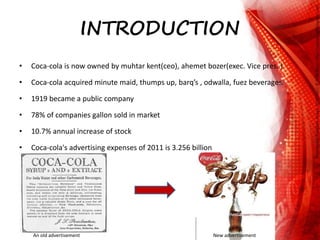
• Coca-cola is now owned by muhtar kent(ceo), ahemet bozer(exec. Vice pres. )
• Coca-cola acquired minute maid, thumps up, barq’s , odwalla, fuez beverages.
• 1919 became a public company
• 78% of companies gallon sold in market
• 10.7% annual increase of stock
• Coca-cola's advertising expenses of 2011 is 3.256 billion
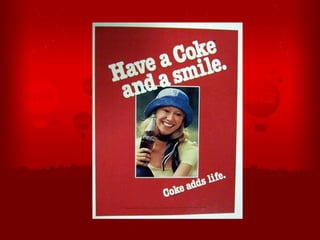
An old advertisement New advertisement
HISTORY
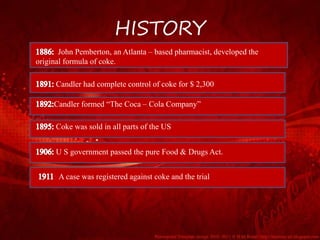
John Pemberton, an Atlanta – based pharmacist, developed the
original formula of coke.
Candler had complete control of coke for $ 2,300
Candler formed “The Coca – Cola Company”
Coke was sold in all parts of the US
U S government passed the pure Food & Drugs Act.
: A case was registered against coke and the trial
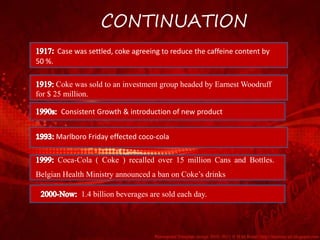
Coke was sold to an investment group headed by Earnest Woodruff
for $ 25 million.
Coca-Cola ( Coke ) recalled over 15 million Cans and Bottles.
Belgian Health Ministry announced a ban on Coke’s drinks
1.4 billion beverages are sold each day.
Marlboro Friday effected coco-cola
Case was settled, coke agreeing to reduce the caffeine content by
50 %.
Consistent Growth & introduction of new product
CONTINUATION
INGREDIENTS
•The primary ingredients of coca-cola syrup include corn
syrup or sucrose, caramel colour, caffeine, phosphoric
acid, coca extract, lime extract, vanilla, and glycerin.[Citation
needed]
• High fructose corn syrup or sucrose are major ingredients.
•Coca-cola syrup does not contain any kola nut extract. Since
no kola extracts are present in the recipe
•The primary taste of coca-cola comes
from vanilla and cinnamon with trace amounts
of orange, lime and lemon and spices such as nutmeg.
PROBLEMS
• School children’s affected with health problems
• 15 million bottles were recalled by coca-cola
• Ban of coca-cola brands in Belgium, France, Spain and Luxemburg
• Causes health problems ( tooth decay, acidity)
• Consist of pesticides ( found by CSE)
• Environment degradation
• Questionable marketing strategies.
SWOT ANALYSIS
• Brand available all over the world
• Brand recognition
• Bottling plant
• Promotional scheme
• Good employees
STRENGTH
WEAKNESS
• The formula is not reveled
• Use of addictive drugs
• Health problems
• Ban of coke brand in several countries
OPPORTUNITY
• Wide scope
• Opportunity in many business areas outlets
• More schemes must be introduced
TREAT
• Health hazard
• High competition
• Weak R & D
SUGGESTIONS
• Bring product variance
• Physical evidence (Packaging)
• Reduce of hazardous compounds
• Strengthen R & D department
• Retail outlets in other area of business other than schools
coco cola

coco cola

  • 1.
    By Group 8 ReshmiWilson Shahanas M H Jeffin George Sharath G Pillai
  • 2.
    INTRODUCTION • Coca-cola isnow owned by muhtar kent(ceo), ahemet bozer(exec. Vice pres. ) • Coca-cola acquired minute maid, thumps up, barq’s , odwalla, fuez beverages. • 1919 became a public company • 78% of companies gallon sold in market • 10.7% annual increase of stock • Coca-cola's advertising expenses of 2011 is 3.256 billion An old advertisement New advertisement
  • 3.
    HISTORY John Pemberton, anAtlanta – based pharmacist, developed the original formula of coke. Candler had complete control of coke for $ 2,300 Candler formed “The Coca – Cola Company” Coke was sold in all parts of the US U S government passed the pure Food & Drugs Act. : A case was registered against coke and the trial
  • 4.
    Coke was soldto an investment group headed by Earnest Woodruff for $ 25 million. Coca-Cola ( Coke ) recalled over 15 million Cans and Bottles. Belgian Health Ministry announced a ban on Coke’s drinks 1.4 billion beverages are sold each day. Marlboro Friday effected coco-cola Case was settled, coke agreeing to reduce the caffeine content by 50 %. Consistent Growth & introduction of new product CONTINUATION
  • 5.
    INGREDIENTS •The primary ingredientsof coca-cola syrup include corn syrup or sucrose, caramel colour, caffeine, phosphoric acid, coca extract, lime extract, vanilla, and glycerin.[Citation needed] • High fructose corn syrup or sucrose are major ingredients. •Coca-cola syrup does not contain any kola nut extract. Since no kola extracts are present in the recipe •The primary taste of coca-cola comes from vanilla and cinnamon with trace amounts of orange, lime and lemon and spices such as nutmeg.
  • 6.
    PROBLEMS • School children’saffected with health problems • 15 million bottles were recalled by coca-cola • Ban of coca-cola brands in Belgium, France, Spain and Luxemburg • Causes health problems ( tooth decay, acidity) • Consist of pesticides ( found by CSE) • Environment degradation • Questionable marketing strategies.
  • 7.
    SWOT ANALYSIS • Brandavailable all over the world • Brand recognition • Bottling plant • Promotional scheme • Good employees STRENGTH
  • 8.
    WEAKNESS • The formulais not reveled • Use of addictive drugs • Health problems • Ban of coke brand in several countries
  • 9.
    OPPORTUNITY • Wide scope •Opportunity in many business areas outlets • More schemes must be introduced TREAT • Health hazard • High competition • Weak R & D
  • 10.
    SUGGESTIONS • Bring productvariance • Physical evidence (Packaging) • Reduce of hazardous compounds • Strengthen R & D department • Retail outlets in other area of business other than schools