1
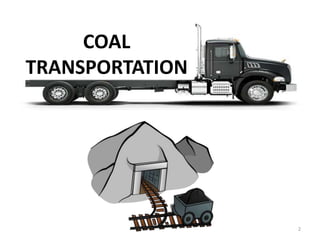
COAL
TRANSPORTATION
2
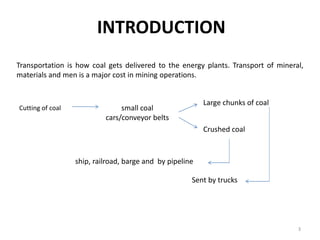
INTRODUCTION
3
Cutting of coal small coal
cars/conveyor belts
Large chunks of coal
Crushed coal
Sent by trucks
ship, railroad, barge and by pipeline
Transportation is how coal gets delivered to the energy plants. Transport of mineral,
materials and men is a major cost in mining operations.
4
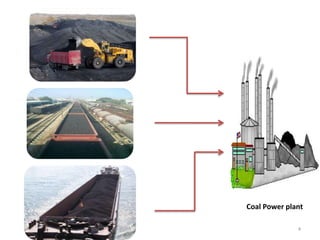
Coal Power plant
NEED FOR PROPER
TRANSPORTATION METHOD
5
• Safety
• Without production delays no transport restrictions.
• Quick response to very different demands.
• Minimize degradation and dust problems.
• Optimum economy in labor requirement.
• Compatible with other systems.
MAIN TYPES OF TRANSPORT
SYSTEM IN COAL MINES
• CONTINUOUS TRANSPORT SYSTEM
• NON-CONTINUOUS TRANSPORT SYSTEM
6
TRANSPORTATION BY RAIL
Rail Reliability
Weather and other natural
phenomena, such as
earthquakes, fires, and
floods, have the potential
to cause localized line
outages that can, in turn,
adversely affect an entire
rail network.
Faster than free steered vehicles.
One operator can transport bigger loads.
7
8
TRANSPOTATION BY TRUCKS
Trucks are the most versatile of all transportation modes for coal
hauling because they can operate over the widest areas where
roads are available.
DRAWBACKS
•Highest unit energy consumption requirements.
• Highest net operating costs.
• Greatest external damage to highways
9
10
WATERBORNE COAL TRANSPORTATION
BARGES
It is often cheaper to transport coal on river barges, but barges
are unable to take coal everywhere it's needed.
CARGO SHIPS
Coal transported by cargo ship represents a significant share of
shipping on the inland waterways, accounting for approximately
20 percent of total cargo.
11
These deliver the coal to the power plant that are located
overseas.
• by Barges
• by Cargo ships
12
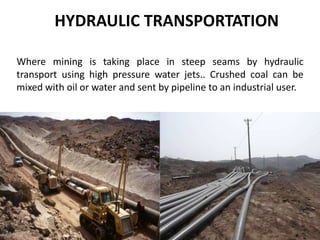
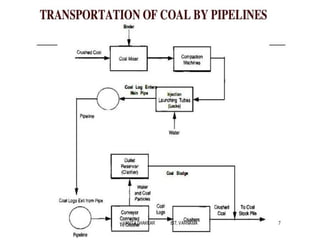
Where mining is taking place in steep seams by hydraulic
transport using high pressure water jets.. Crushed coal can be
mixed with oil or water and sent by pipeline to an industrial user.
HYDRAULIC TRANSPORTATION
13
14
UNDERGROUND MINE
TRANSPORTATION METHODS
• By shaft winding
• By conveyor system
• By trolley
• Hand tramming
15
16
SHAFT HOISTING
LIMITING FACTORS
• Location inflexibility, making a truck haul still necessary.
• Maximum angle of inclination is normally 25 degrees.
• The maximum lump size is to be less than about half the width of
the belt.
The conveyors enable the continuous transport of overburden or
coal and use for coal transport in hilly terrain where roads are
relatively inaccessible, typically being used to move coal over 5-mile
to I5-mile distances.
CONVEYOR SYSTEMS
17
ADVANTAGE
The advantage of being relatively maintenance free
18
A donkey carrying sacks of
coal walks through the
narrow tunnels of a coal
mine. The donkeys can make
around 20 trips per day
carrying sacks weighing about
20 kg each. The work is
dangerous with the constant
risk of cave-ins.
TRANSPORTATION BY
DONKEY
19
20
• Truck and rail, affects communities through which the coal
passes.
• Trucks hauling damage roads and cause deaths or injuries in
accidents.
• Coal trains temporarily block those roads, and temporarily
cutting off some residents from emergency services.
• During the transportation the coal may set to fire and it causes
adverse situations and accidents.
SOME DRAWBACKS
21

Coal Transportation Methods

  • 1.
  • 2.
  • 3.
    INTRODUCTION 3 Cutting of coalsmall coal cars/conveyor belts Large chunks of coal Crushed coal Sent by trucks ship, railroad, barge and by pipeline Transportation is how coal gets delivered to the energy plants. Transport of mineral, materials and men is a major cost in mining operations.
  • 4.
  • 5.
    NEED FOR PROPER TRANSPORTATIONMETHOD 5 • Safety • Without production delays no transport restrictions. • Quick response to very different demands. • Minimize degradation and dust problems. • Optimum economy in labor requirement. • Compatible with other systems.
  • 6.
    MAIN TYPES OFTRANSPORT SYSTEM IN COAL MINES • CONTINUOUS TRANSPORT SYSTEM • NON-CONTINUOUS TRANSPORT SYSTEM 6
  • 7.
    TRANSPORTATION BY RAIL RailReliability Weather and other natural phenomena, such as earthquakes, fires, and floods, have the potential to cause localized line outages that can, in turn, adversely affect an entire rail network. Faster than free steered vehicles. One operator can transport bigger loads. 7
  • 8.
  • 9.
    TRANSPOTATION BY TRUCKS Trucksare the most versatile of all transportation modes for coal hauling because they can operate over the widest areas where roads are available. DRAWBACKS •Highest unit energy consumption requirements. • Highest net operating costs. • Greatest external damage to highways 9
  • 10.
  • 11.
    WATERBORNE COAL TRANSPORTATION BARGES Itis often cheaper to transport coal on river barges, but barges are unable to take coal everywhere it's needed. CARGO SHIPS Coal transported by cargo ship represents a significant share of shipping on the inland waterways, accounting for approximately 20 percent of total cargo. 11 These deliver the coal to the power plant that are located overseas. • by Barges • by Cargo ships
  • 12.
  • 13.
    Where mining istaking place in steep seams by hydraulic transport using high pressure water jets.. Crushed coal can be mixed with oil or water and sent by pipeline to an industrial user. HYDRAULIC TRANSPORTATION 13
  • 14.
  • 15.
    UNDERGROUND MINE TRANSPORTATION METHODS •By shaft winding • By conveyor system • By trolley • Hand tramming 15
  • 16.
  • 17.
    LIMITING FACTORS • Locationinflexibility, making a truck haul still necessary. • Maximum angle of inclination is normally 25 degrees. • The maximum lump size is to be less than about half the width of the belt. The conveyors enable the continuous transport of overburden or coal and use for coal transport in hilly terrain where roads are relatively inaccessible, typically being used to move coal over 5-mile to I5-mile distances. CONVEYOR SYSTEMS 17 ADVANTAGE The advantage of being relatively maintenance free
  • 18.
  • 19.
    A donkey carryingsacks of coal walks through the narrow tunnels of a coal mine. The donkeys can make around 20 trips per day carrying sacks weighing about 20 kg each. The work is dangerous with the constant risk of cave-ins. TRANSPORTATION BY DONKEY 19
  • 20.
    20 • Truck andrail, affects communities through which the coal passes. • Trucks hauling damage roads and cause deaths or injuries in accidents. • Coal trains temporarily block those roads, and temporarily cutting off some residents from emergency services. • During the transportation the coal may set to fire and it causes adverse situations and accidents. SOME DRAWBACKS
  • 21.