Rural Community Organising in England
James Derounian
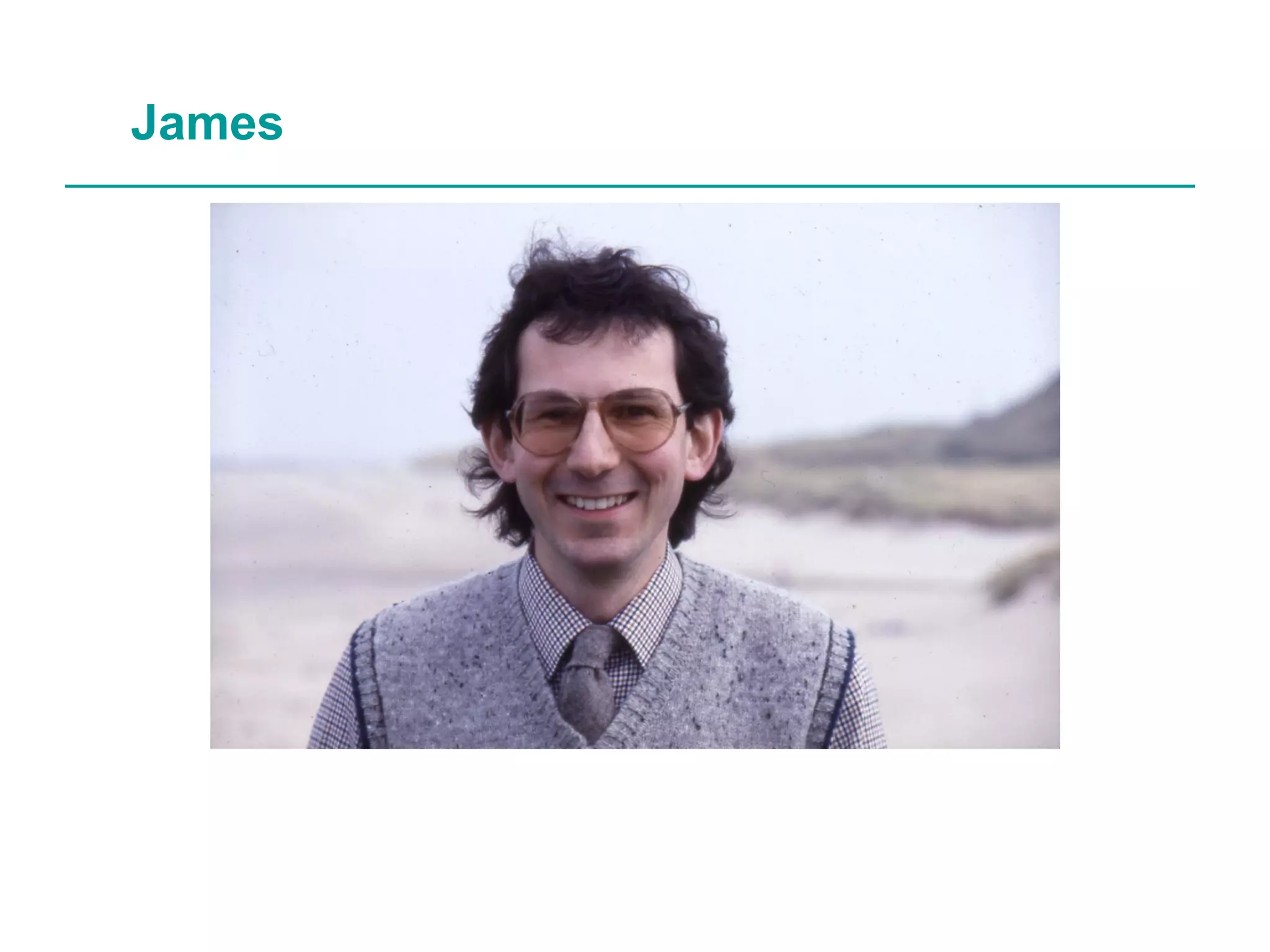
About James
 33 years in (rural) community development
 NCVO – RCC – RDP - CA
 Central involvement in Winchcombe NP & Examiner
 CLP: Skeffington - RWP2000 - Localism Act 2011
 Continuing community-based trajectory
James
Where are we?
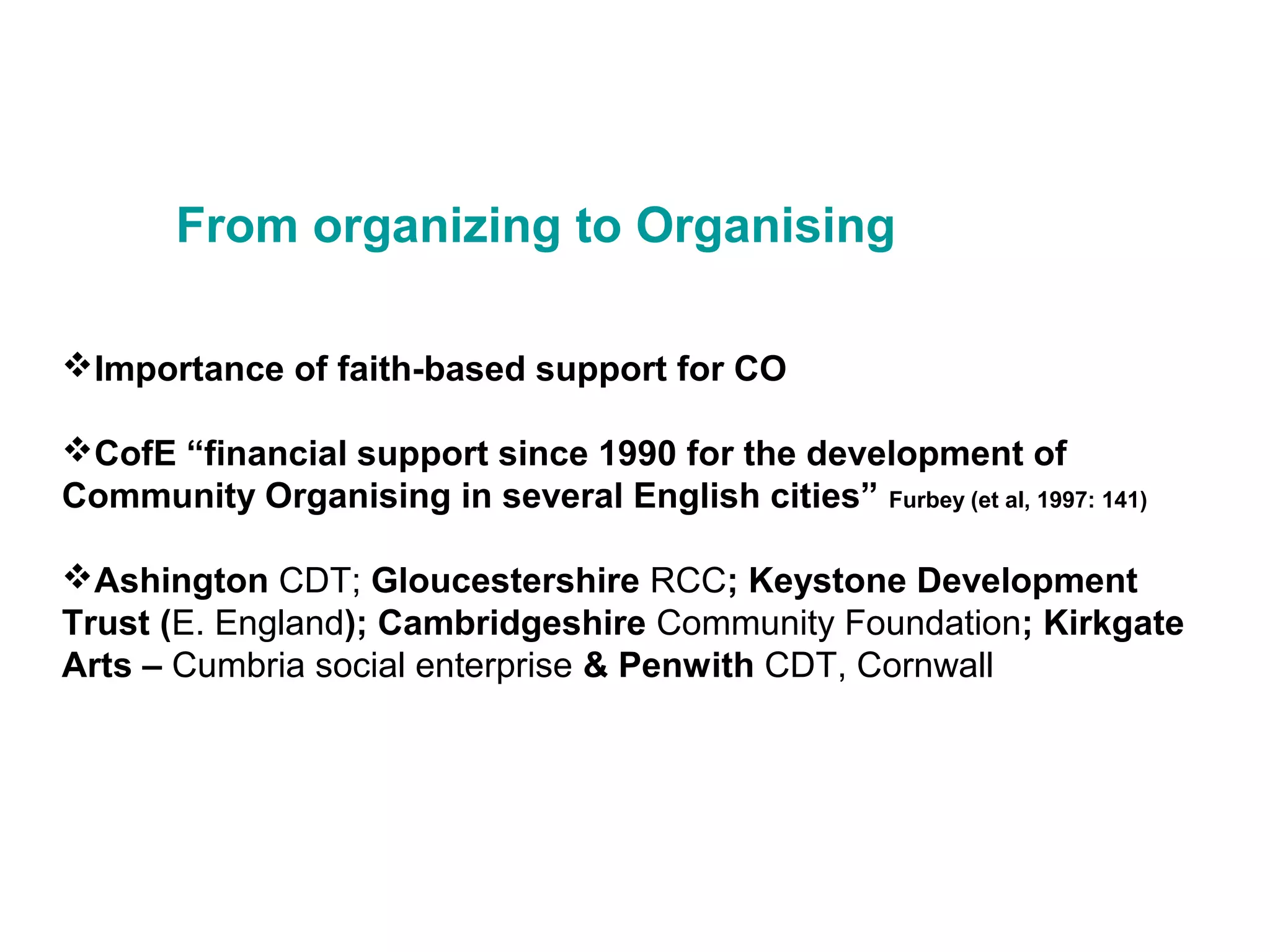
From organizing to Organising
Importance of faith-based support for CO
CofE “financial support since 1990 for the development of
Community Organising in several English cities” Furbey (et al, 1997: 141)
Ashington CDT; Gloucestershire RCC; Keystone Development
Trust (E. England); Cambridgeshire Community Foundation; Kirkgate
Arts – Cumbria social enterprise & Penwith CDT, Cornwall
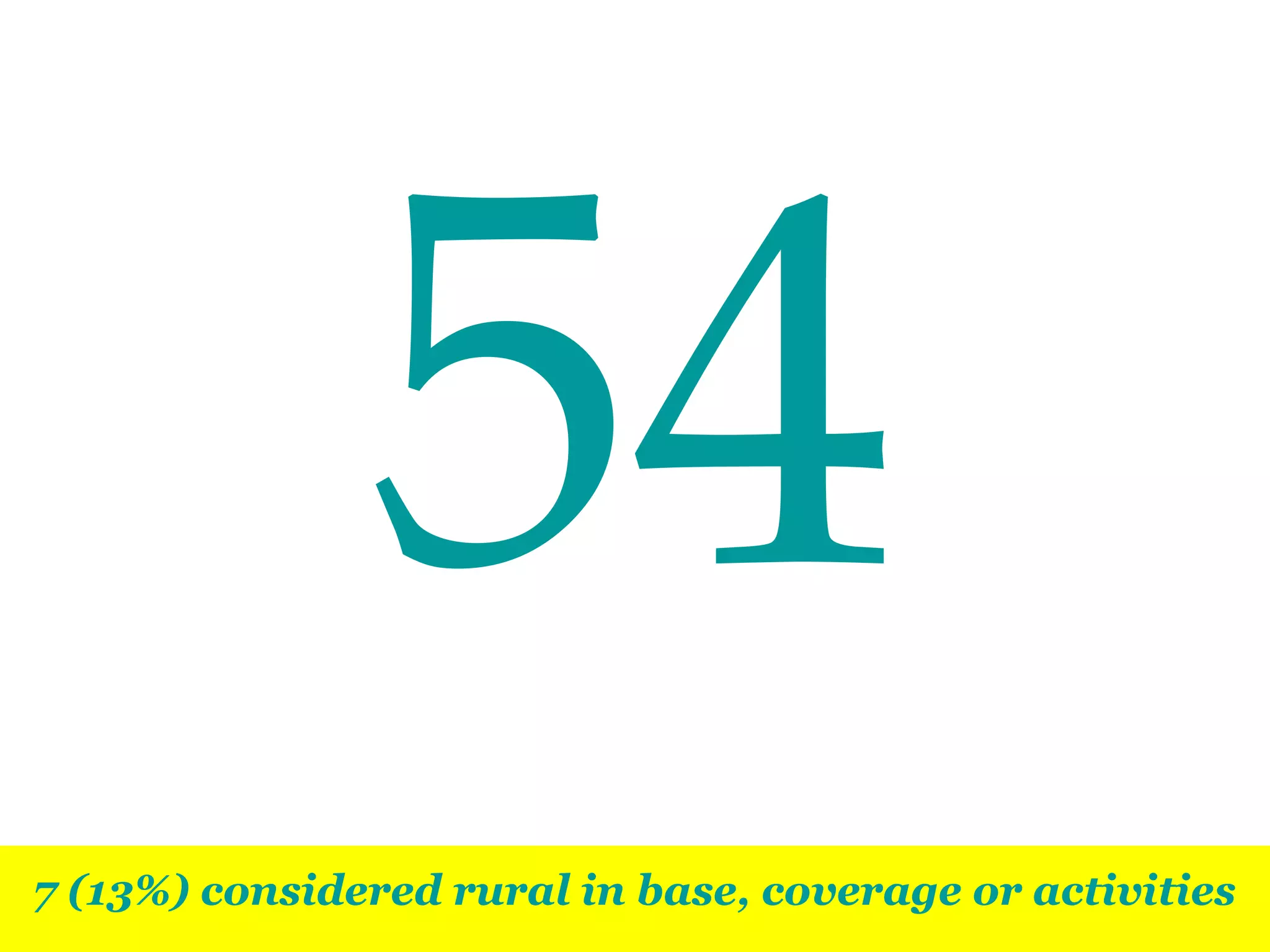
54
7 (13%) considered rural in base, coverage or activities
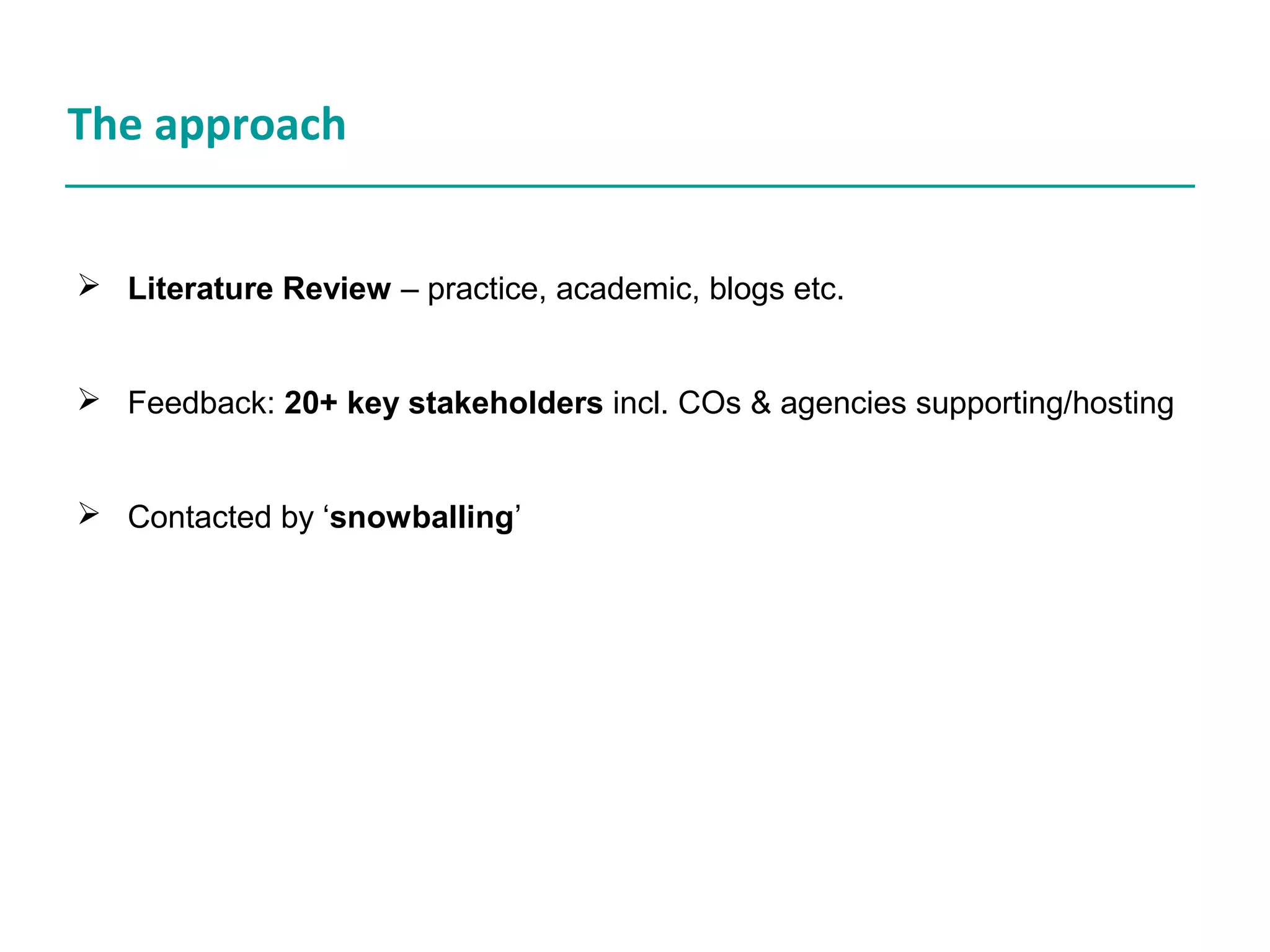
The approach
 Literature Review – practice, academic, blogs etc.
 Feedback: 20+ key stakeholders incl. COs & agencies supporting/hosting
 Contacted by ‘snowballing’
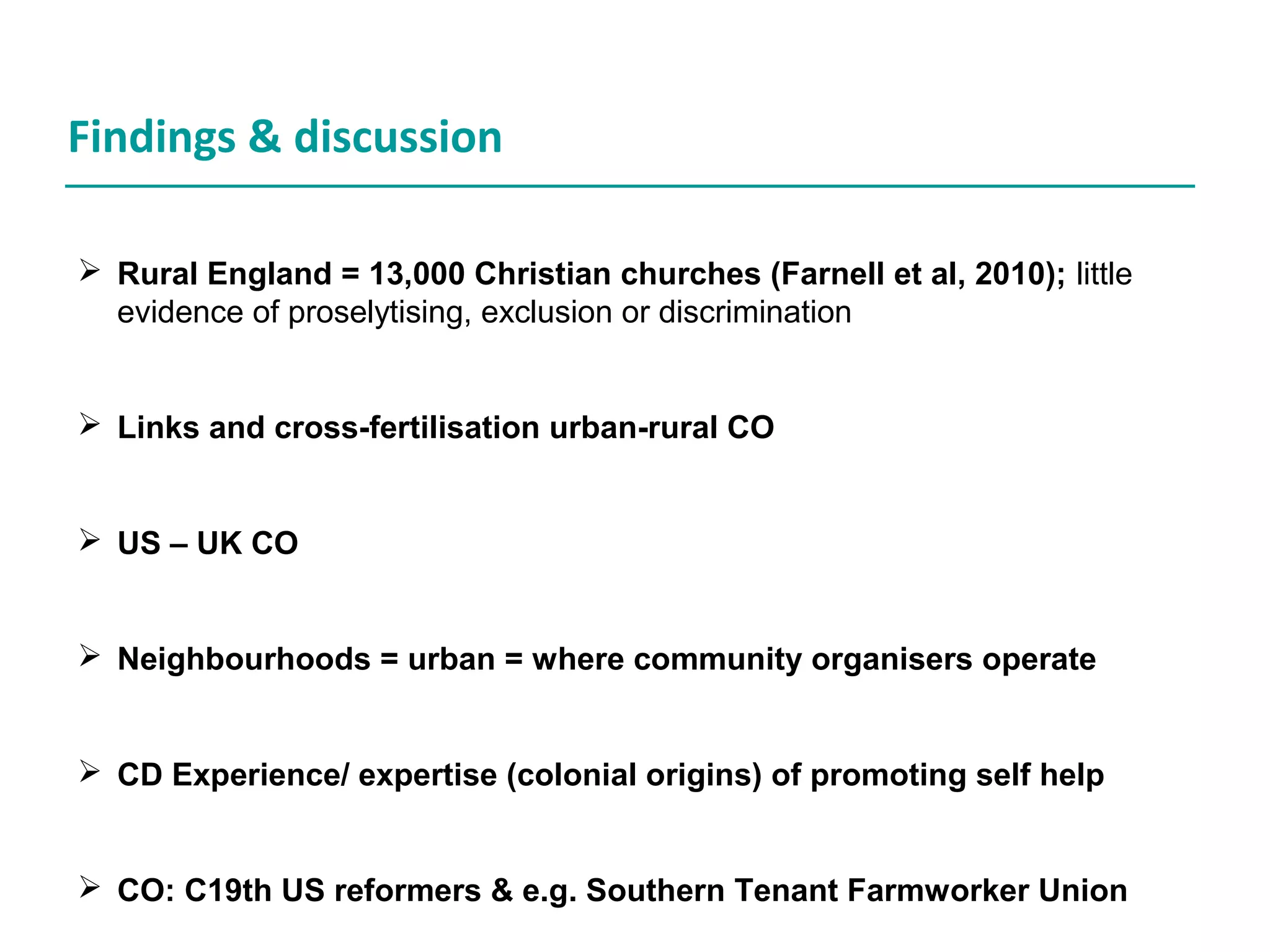
Findings & discussion
 Rural England = 13,000 Christian churches (Farnell et al, 2010); little
evidence of proselytising, exclusion or discrimination

 Links and cross-fertilisation urban-rural CO

 US – UK CO

 Neighbourhoods = urban = where community organisers operate

 CD Experience/ expertise (colonial origins) of promoting self help

 CO: C19th US reformers & e.g. Southern Tenant Farmworker Union
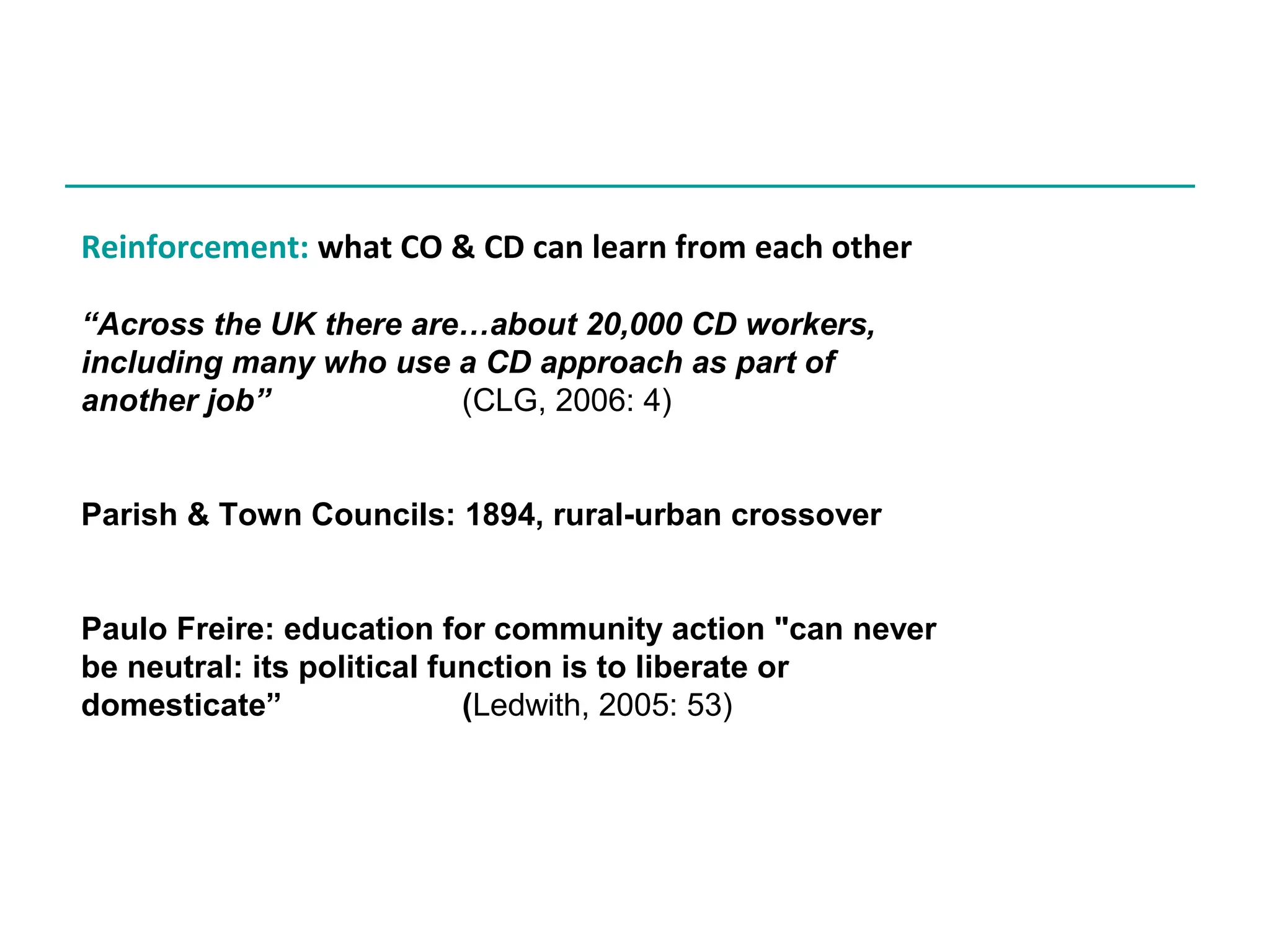
Reinforcement: what CO & CD can learn from each other
“Across the UK there are…about 20,000 CD workers,
including many who use a CD approach as part of
another job”
(CLG, 2006: 4)
Parish & Town Councils: 1894, rural-urban crossover
Paulo Freire: education for community action "can never
be neutral: its political function is to liberate or
domesticate”
(Ledwith, 2005: 53)
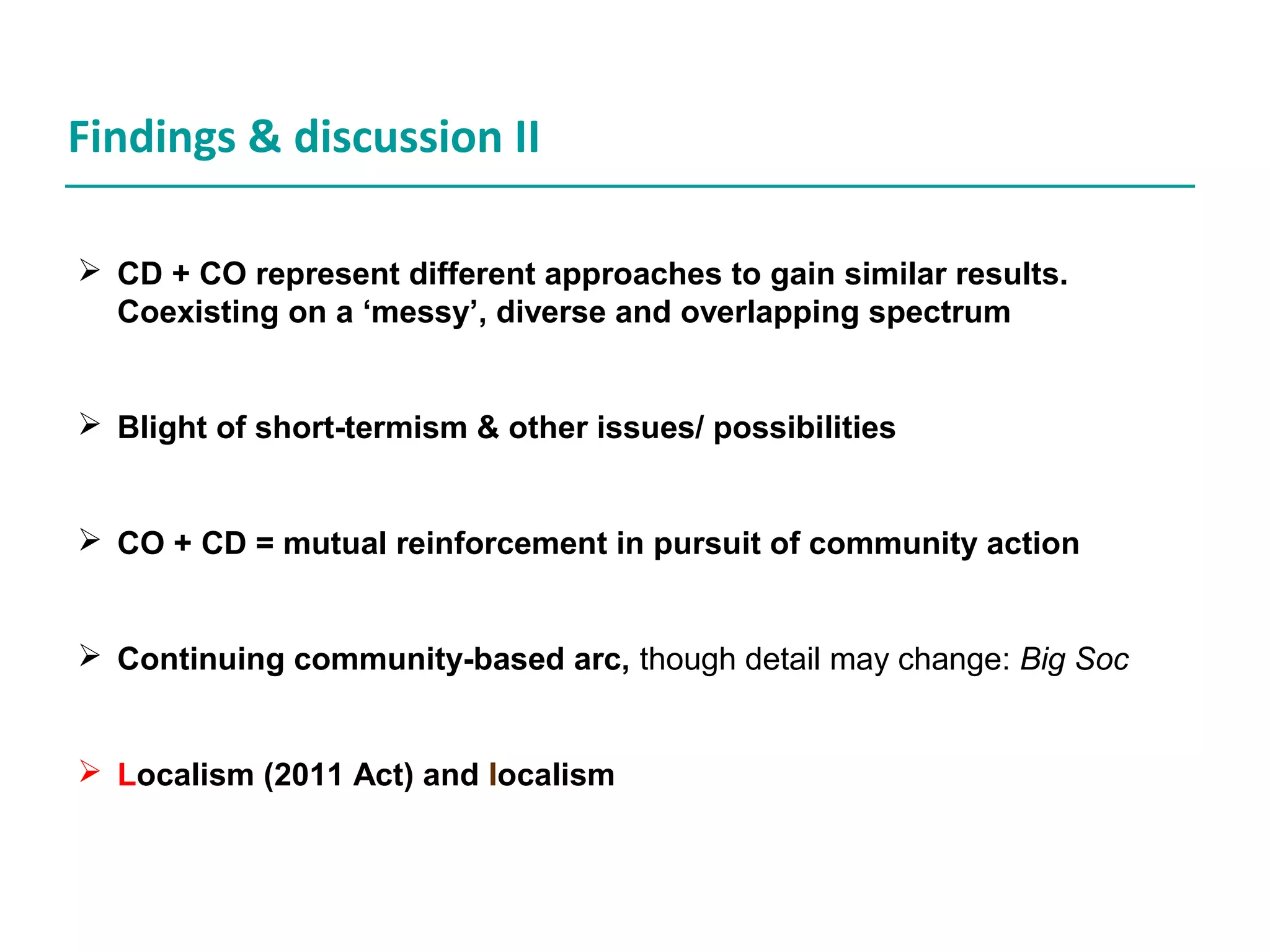
Findings & discussion II
 CD + CO represent different approaches to gain similar results.
Coexisting on a ‘messy’, diverse and overlapping spectrum

 Blight of short-termism & other issues/ possibilities

 CO + CD = mutual reinforcement in pursuit of community action

 Continuing community-based arc, though detail may change: Big Soc

 Localism (2011 Act) and localism
Engaging

a
Questions questions…
What can CD learn from CO in rural contexts and vice versa?

What are the key challenges for organising in & with rural
communities?

What are the ways forward for rural CD and Organising?

Rural Community Organising in England (James Derounian)

  • 1.
    Rural Community Organisingin England James Derounian
  • 2.
    About James  33years in (rural) community development  NCVO – RCC – RDP - CA  Central involvement in Winchcombe NP & Examiner  CLP: Skeffington - RWP2000 - Localism Act 2011  Continuing community-based trajectory
  • 3.
  • 4.
  • 5.
    From organizing toOrganising Importance of faith-based support for CO CofE “financial support since 1990 for the development of Community Organising in several English cities” Furbey (et al, 1997: 141) Ashington CDT; Gloucestershire RCC; Keystone Development Trust (E. England); Cambridgeshire Community Foundation; Kirkgate Arts – Cumbria social enterprise & Penwith CDT, Cornwall
  • 6.
    54 7 (13%) consideredrural in base, coverage or activities
  • 7.
    The approach  LiteratureReview – practice, academic, blogs etc.  Feedback: 20+ key stakeholders incl. COs & agencies supporting/hosting  Contacted by ‘snowballing’
  • 8.
    Findings & discussion Rural England = 13,000 Christian churches (Farnell et al, 2010); little evidence of proselytising, exclusion or discrimination  Links and cross-fertilisation urban-rural CO  US – UK CO  Neighbourhoods = urban = where community organisers operate  CD Experience/ expertise (colonial origins) of promoting self help  CO: C19th US reformers & e.g. Southern Tenant Farmworker Union
  • 9.
    Reinforcement: what CO& CD can learn from each other “Across the UK there are…about 20,000 CD workers, including many who use a CD approach as part of another job” (CLG, 2006: 4) Parish & Town Councils: 1894, rural-urban crossover Paulo Freire: education for community action "can never be neutral: its political function is to liberate or domesticate” (Ledwith, 2005: 53)
  • 10.
    Findings & discussionII  CD + CO represent different approaches to gain similar results. Coexisting on a ‘messy’, diverse and overlapping spectrum  Blight of short-termism & other issues/ possibilities  CO + CD = mutual reinforcement in pursuit of community action  Continuing community-based arc, though detail may change: Big Soc  Localism (2011 Act) and localism
  • 11.
  • 12.
    Questions questions… What canCD learn from CO in rural contexts and vice versa? What are the key challenges for organising in & with rural communities? What are the ways forward for rural CD and Organising?