Download to read offline












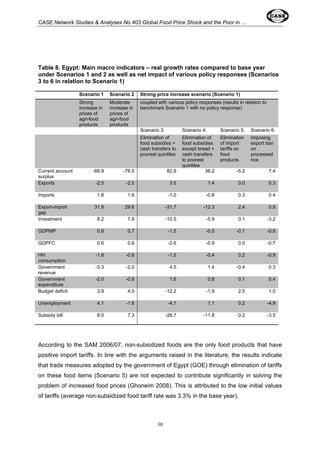


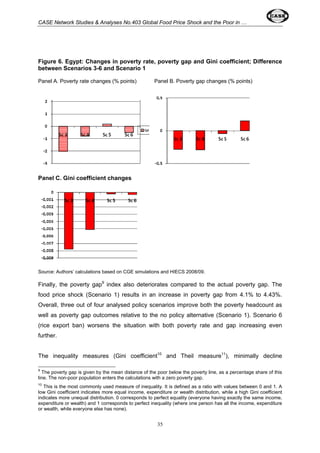


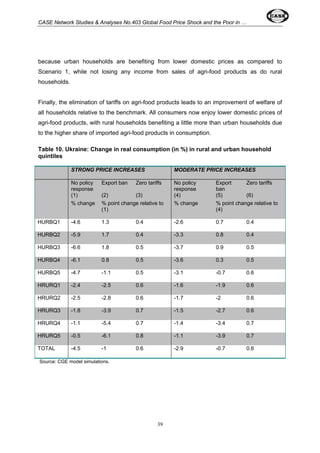
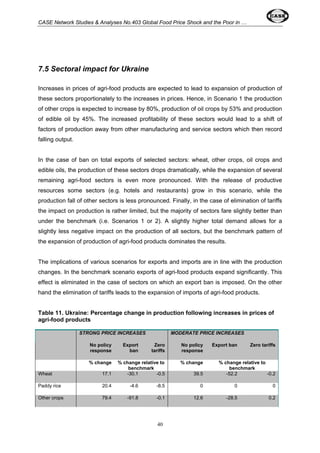

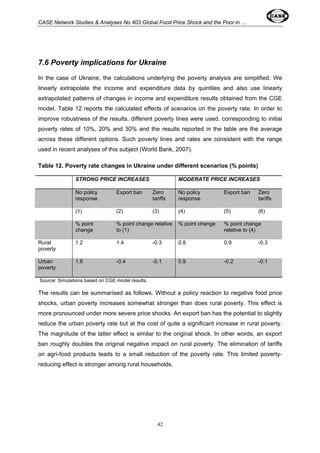


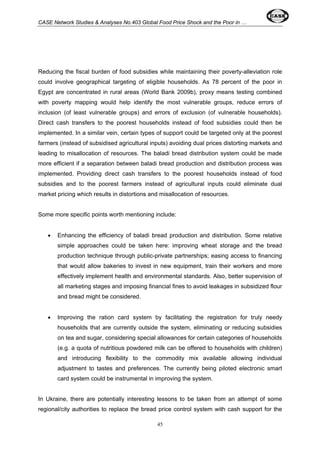


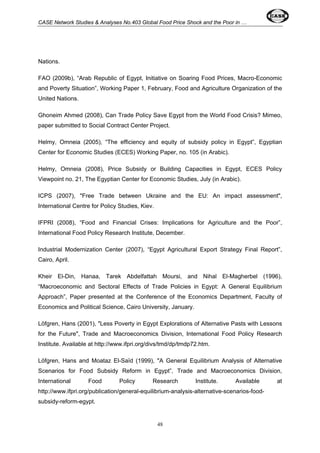





The document analyzes the impact of the global food price shock from 2006 to 2008 on poorer populations in Egypt and Ukraine, assessing food subsidy policies and their effectiveness in mitigating poverty. It employs computable general equilibrium models to simulate the socio-economic outcomes of the price surge and suggests that reforming Egypt's food subsidy system is necessary to enhance targeting and reduce fiscal burdens. The findings indicate limited ability of current policies to alleviate the adverse effects of external shocks, calling for substantial policy revisions.


