
CMMI and AgileAnglo-American and Rhinelandic
AgendaIntroductionCMMI versus AgileRhinelandic versus Anglo-american thinkingConclusions
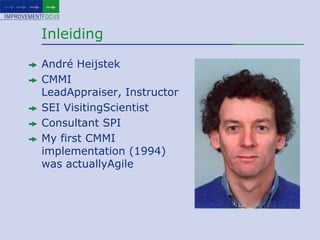
InleidingAndré HeijstekCMMI LeadAppraiser, InstructorSEI VisitingScientistConsultant SPIMy first CMMI implementation (1994) was actuallyAgile
Inspiration
AgendaIntroductionCMMI versus AgileRhinelandic versus Anglo-american thinkingConclusions
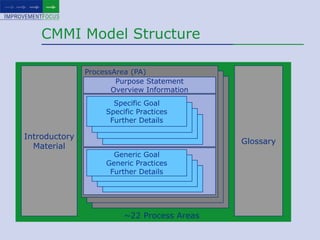
CMMI Model StructureSpecific GoalSpecific PracticesFurther DetailsGeneric GoalGeneric PracticesFurther DetailsGlossaryProcessArea (PA)IntroductoryMaterialPurpose StatementOverview Information~22 Process Areas
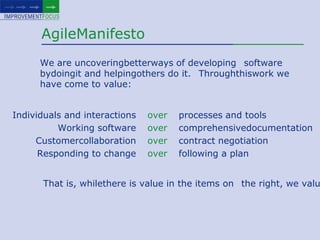
AgileManifestoWe are uncoveringbetterways of developing 
software bydoingit and helpingothers do it. 
Throughthiswork we have come to value:overoveroveroverprocesses and toolscomprehensivedocumentationcontract negotiationfollowing a plan Individuals and interactionsWorking softwareCustomercollaborationResponding to changeThat is, whilethere is value in the items on 
the right, we value the items on the left more.
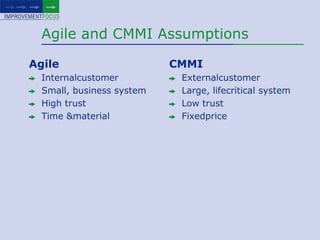
Agile and CMMI AssumptionsAgileInternalcustomerSmall, business systemHigh trustTime & materialCMMIExternalcustomerLarge, lifecritical systemLow trustFixedprice
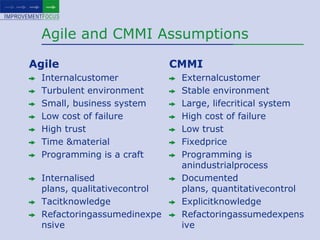
Agile and CMMI AssumptionsAgileInternalcustomerTurbulent environmentSmall, business systemLow cost of failureHigh trustTime & materialProgramming is a craftInternalised plans, qualitativecontrolTacitknowledgeRefactoringassumedinexpensiveCMMIExternalcustomerStable environmentLarge, lifecritical systemHigh cost of failureLow trustFixedpriceProgramming is anindustrialprocessDocumented plans, quantitativecontrolExplicitknowledgeRefactoringassumedexpensive
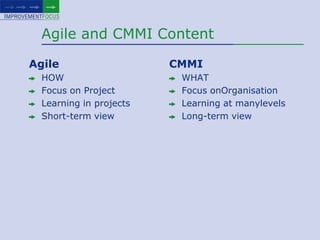
Agile and CMMI ContentAgileHOWFocus on ProjectLearning in projectsShort-term viewCMMIWHATFocus onOrganisationLearning at manylevelsLong-term view
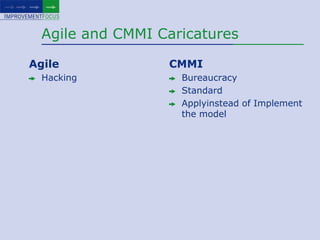
Agile and CMMI CaricaturesAgileHackingCMMIBureaucracyStandardApplyinstead of Implement the model
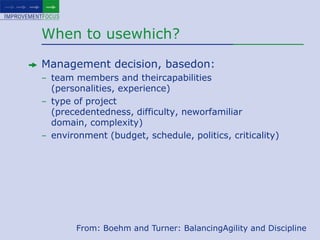
When to usewhich?Management decision, basedon:team members and theircapabilities (personalities, experience)type of project (precedentedness, difficulty, neworfamiliar domain, complexity)environment (budget, schedule, politics, criticality)From: Boehm and Turner: BalancingAgility and Discipline
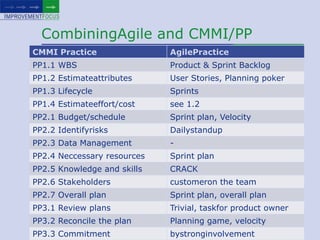
CombiningAgile and CMMI/PP
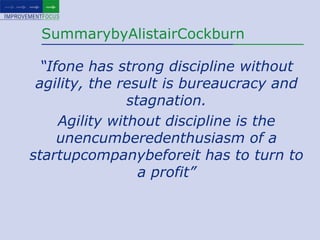
SummarybyAlistairCockburn“Ifone has strong discipline without agility, the result is bureaucracy and stagnation. Agility without discipline is the unencumberedenthusiasm of a startupcompanybeforeit has to turn to a profit”
AgendaIntroductionCMMI versus AgileRhinelandic versus Anglo-american thinkingConclusions
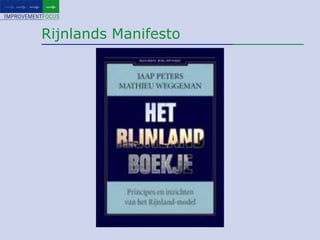
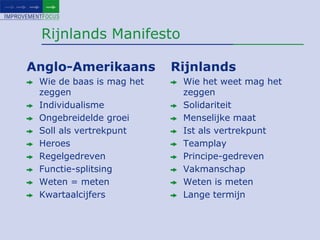
Rijnlands Manifesto
Rijnlands ManifestoRijnlandsWie het weet mag het zeggenSolidariteitMenselijke maatIst als vertrekpuntTeamplayPrincipe-gedrevenVakmanschapWeten is metenLange termijnAnglo-AmerikaansWie de baas is mag het zeggenIndividualismeOngebreidelde groeiSoll als vertrekpuntHeroesRegelgedrevenFunctie-splitsingWeten = metenKwartaalcijfers
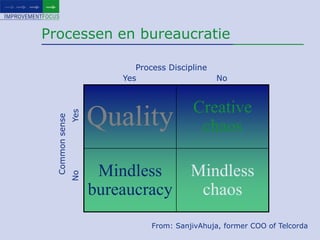
Processen en bureaucratieProcess DisciplineYesNoYesCommon senseNoFrom: SanjivAhuja, former COO of Telcorda
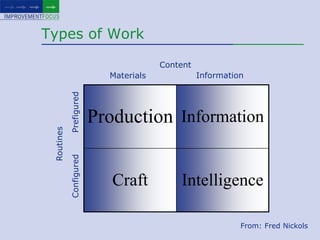
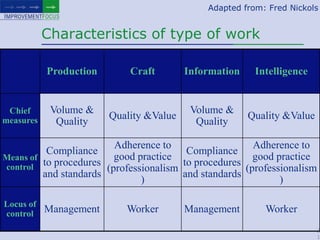
Types of WorkContentInformationMaterialsPrefiguredRoutinesConfiguredFrom: Fred Nickols
Characteristics of type of workAdapted from: Fred Nickols21
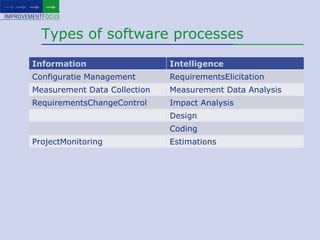
Types of software processes
AgendaIntroductionCMMI versus AgileRhinelandic versus Anglo-american thinkingConclusions
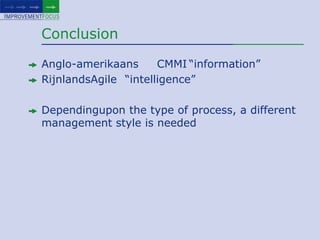
ConclusionAnglo-amerikaans	CMMI	“information”RijnlandsAgile 	“intelligence”Dependingupon the type of process, a different management style is needed
More questionsorremarks?andre.heijstek @ improvementfocus.com0648476451

Cmmi and agile