DIAGNOSIS MANAGEMENT AND
RECENT ADVANCES IN CML
DR RAJESH S
PLAN
 Introduction
 BCR ABL and its Action
 Clinical and Laboratory Features
 Goals and Concepts of Management
 Diagnostic modalities
 Tyrosine Kinase Inhibitors
 Other Modalities of treatment
 Monitoring Of therapy
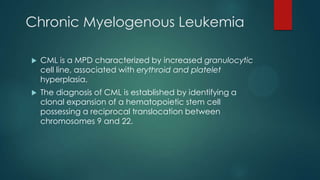
Chronic Myelogenous Leukemia
 CML is a MPD characterized by increased granulocytic
cell line, associated with erythroid and platelet
hyperplasia.
 The diagnosis of CML is established by identifying a
clonal expansion of a hematopoietic stem cell
possessing a reciprocal translocation between
chromosomes 9 and 22.
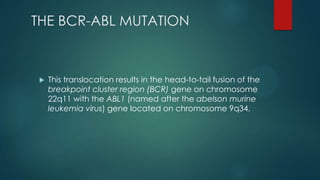
THE BCR-ABL MUTATION
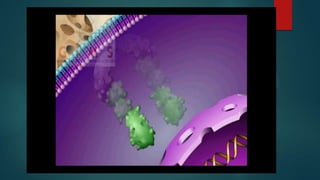
 This translocation results in the head-to-tail fusion of the
breakpoint cluster region (BCR) gene on chromosome
22q11 with the ABL1 (named after the abelson murine
leukemia virus) gene located on chromosome 9q34.
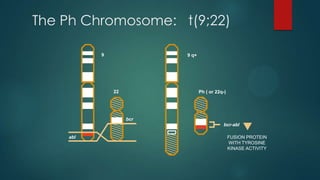
The Ph Chromosome: t(9;22)
22
bcr
abl
Ph ( or 22q-)
bcr-abl
FUSION PROTEIN
WITH TYROSINE
KINASE ACTIVITY
9 9 q+
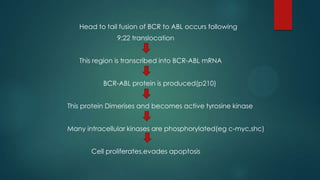
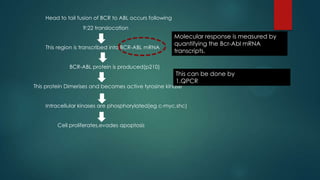
Head to tail fusion of BCR to ABL occurs following
9:22 translocation
This region is transcribed into BCR-ABL mRNA
BCR-ABL protein is produced(p210)
This protein Dimerises and becomes active tyrosine kinase
Many intracellular kinases are phosphorylated(eg c-myc,shc)
Cell proliferates,evades apoptosis
Erythrocytes
BCR ABL
MUTATION
OCCURS in
MYELOID
STEM CELLS
ALL COMPONENTS OF
MYELOID SERIES i.e
MYELOCYTES,RBC’S AND
PLATELETS ARE AFFECTED
CLINICAL AND LAB FEATURES
CLINICAL FEATURES
 30% patients are Asymptomatic at diagnosis.
 Symptoms are usually Non specific(Fatigue,anorexia,weight loss)
 Symptoms because of splenomegaly are common(abdominal pain,
dragging sensation in abdomen)
 Rare presentations include Vasoocclusive disease, cerebrovascular
accidents, myocardial infarction, venous thrombosis, priapism, visual
disturbances, and pulmonary insufficiency.
LABORATORY FEATURES
 Elevated white blood cell counts (WBCs), with increases in both immature
and mature granulocytes, are present at diagnosis. Usually <5% circulating
blasts and <10% blasts and promyelocytes are noted, with the majority of
cells being myelocytes, metamyelocytes, and band forms.
 Platelet counts are almost always elevated at diagnosis,
 Mild degree of normocytic normochromic anemia is present.
 Leukocyte alkaline phosphatase is low in CML cells.
LABORATORY FEATURES
 The marrow is hypercellular (granulocytic hyperplasia)
 Reticulin fibrosis
 Hyperuricemia and hyperuricosuria
 Serum vitamin B12-binding proteins are increased.
 Pseudohyperkalemia, and spurious hypoxemia and hypoglycemia.
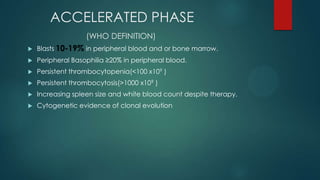
ACCELERATED PHASE
(WHO DEFINITION)
 Blasts 10-19% in peripheral blood and or bone marrow.
 Peripheral Basophilia ≥20% in peripheral blood.
 Persistent thrombocytopenia(<100 x109 )
 Persistent thrombocytosis(>1000 x109 )
 Increasing spleen size and white blood count despite therapy.
 Cytogenetic evidence of clonal evolution
10-19%
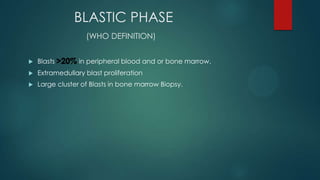
BLASTIC PHASE
(WHO DEFINITION)
 Blasts >20% in peripheral blood and or bone marrow.
 Extramedullary blast proliferation
 Large cluster of Blasts in bone marrow Biopsy.
>20%
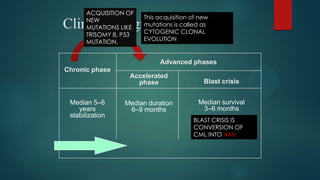
Clinical progression of CML
Chronic phase
Median 5–6
years
stabilization
Accelerated
phase
Median duration
6–9 months
Blast crisis
Median survival
3–6 months
Advanced phases
ACQUISITION OF
NEW
MUTATIONS LIKE
TRISOMY 8, P53
MUTATION.
BLAST CRISIS IS
CONVERSION OF
CML INTO AML
This acquisition of new
mutations is called as
CYTOGENIC CLONAL
EVOLUTION
GOALS, CONCEPTS OF MANAGEMENT
AND DIAGNOSTIC MODALITIES
Response to treatment can be defined under three sequential
categories.
1.Hematological Response
2.Cyto-Genetic Response(CyR)
3.Molecular Response(MR)
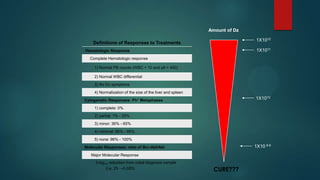
Definitions of Responses to Treatments
Hematologic Response
Complete Hematologic response
1) Normal PB counts (WBC < 10 and plt < 450)
2) Normal WBC differential
3) No Dz symptoms
4) Normalization of the size of the liver and spleen
Cytogenetic Responses: Ph+ Metaphases
1) complete: 0%
2) partial: 1% - 35%
3) minor: 36% - 65%
4) minimal: 66% - 95%
5) none: 96% - 100%
Molecular Responses: ratio of Bcr-Abl/Abl
Major Molecular Response
3-log10 reduction from initial diagnosis sample
(i.e. 25 →0.025)
Amount of Dz
1X10¹²
1X10¹¹
1X10¹⁰
1X10 8-9
CURE???
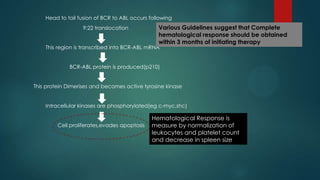
Head to tail fusion of BCR to ABL occurs following
9:22 translocation
This region is transcribed into BCR-ABL mRNA
BCR-ABL protein is produced(p210)
This protein Dimerises and becomes active tyrosine kinase
Intracellular kinases are phosphorylated(eg c-myc,shc)
Cell proliferates,evades apoptosis
Hematological Response is
measure by normalization of
leukocytes and platelet count
and decrease in spleen size
Various Guidelines suggest that Complete
hematological response should be obtained
within 3 months of initiating therapy
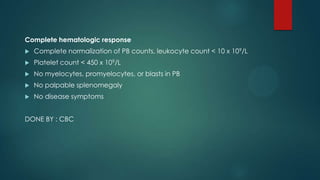
Complete hematologic response
 Complete normalization of PB counts, leukocyte count < 10 x 109/L
 Platelet count < 450 x 109/L
 No myelocytes, promyelocytes, or blasts in PB
 No palpable splenomegaly
 No disease symptoms
DONE BY : CBC
Head to tail fusion of BCR to ABL occurs following
9:22 translocation
This region is transcribed into BCR-ABL mRNA
BCR-ABL protein is produced(p210)
This protein Dimerises and becomes active tyrosine kinase
I Intracellular kinases are phosphorylated(eg c-myc,shc)
Cell proliferates,evades apoptosis
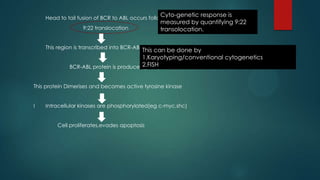
Cyto-genetic response is
measured by quantifying 9:22
transolocation.
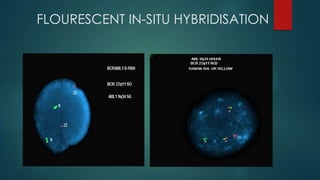
This can be done by
1.Karyotyping/conventional cytogenetics
2.FISH
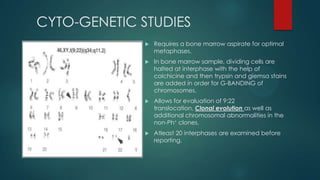
CYTO-GENETIC STUDIES
 Requires a bone marrow aspirate for optimal
metaphases.
 In bone marrow sample, dividing cells are
halted at interphase with the help of
colchicine and then trypsin and giemsa stains
are added in order for G-BANDING of
chromosomes.
 Allows for evaluation of 9:22
translocation, Clonal evolution as well as
additional chromosomal abnormalities in the
non-Ph+ clones.
 Atleast 20 interphases are examined before
reporting.
FLOURESCENT IN-SITU HYBRIDISATION
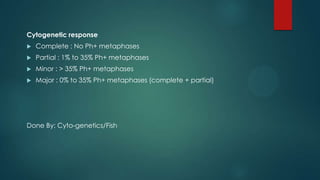
Cytogenetic response
 Complete : No Ph+ metaphases
 Partial : 1% to 35% Ph+ metaphases
 Minor : > 35% Ph+ metaphases
 Major : 0% to 35% Ph+ metaphases (complete + partial)
Done By: Cyto-genetics/Fish
Head to tail fusion of BCR to ABL occurs following
9:22 translocation
This region is transcribed into BCR-ABL mRNA
BCR-ABL protein is produced(p210)
This protein Dimerises and becomes active tyrosine kinase
Intracellular kinases are phosphorylated(eg c-myc,shc)
Cell proliferates,evades apoptosis
Molecular response is measured by
quantifying the Bcr-Abl mRNA
transcripts.
This can be done by
1.QPCR
Bcr-Abl
Bcr
Abl
cDNA
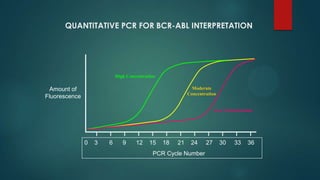
QUANTITATIVE PCR FOR BCR-ABL INTERPRETATION
0 3 6 9 12 15 18 21 24 27 30 33 36
PCR Cycle Number
Amount of
Fluorescence
High Concentration
Moderate
Concentration
Low Concentration
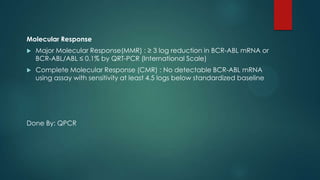
Molecular Response
 Major Molecular Response(MMR) : ≥ 3 log reduction in BCR-ABL mRNA or
BCR-ABL/ABL ≤ 0.1% by QRT-PCR (International Scale)
 Complete Molecular Response (CMR) : No detectable BCR-ABL mRNA
using assay with sensitivity at least 4.5 logs below standardized baseline
Done By: QPCR
PROGNOSTIC CLASSIFICATION
SOKAL INDEX
 Age
 Blast percentage
 Cytogenic clonal Evolution
 Spleen size
 Platelet counts
HASFORD INDEX
 Age
 Blast percentage
 Basophil and Eosinophils %
 Spleen size
 Platelet counts
TREATMENT WITH TYROSINE KINASE
INHIBITORS
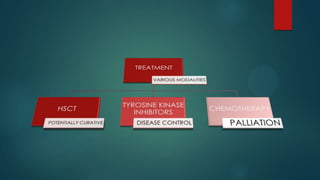
IMATINIB
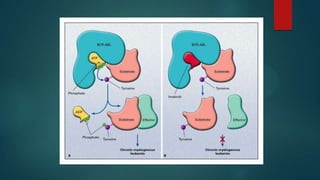
 Imatinib mesylate (Gleevec) functions through competitive inhibition at
the ATP-binding site of the Abl kinase in the inactive conformation,
which leads to inhibition of tyrosine phosphorylation of proteins involved
in Bcr-Abl signal transduction.
 It shows specificity for Bcr-Abl, the receptor for platelet-derived growth
factor, and Kit TK.
 Imatinib induces apoptosis in cells expressing Bcr-Abl.
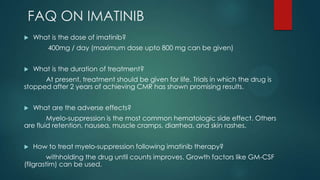
FAQ ON IMATINIB
 What is the dose of imatinib?
400mg / day (maximum dose upto 800 mg can be given)
 What is the duration of treatment?
At present, treatment should be given for life. Trials in which the drug is
stopped after 2 years of achieving CMR has shown promising results.
 What are the adverse effects?
Myelo-suppression is the most common hematologic side effect. Others
are fluid retention, nausea, muscle cramps, diarrhea, and skin rashes.
 How to treat myelo-suppression following imatinib therapy?
withholding the drug until counts improves. Growth factors like GM-CSF
(filgrastim) can be used.
FAQ ON IMATINIB
 Can we use imatinib in pregnant patients?
imatinib is shown to be teratogenic and embryotoxic in animal studies.so it
is avoided in pregnancy
 Does imatinib affects fertility?
It has shown to cause oligospermia. So men desiring conception shold
consider sperm cryo-preservation before TKI therapy
 When to review the patient for monitoring response?
After 3 months of therapy and every 3 months thereafter.
MONITORING RESPONSE
 Patients on imatinib should be reviewed at 3rd month and investigations
to be done at that time are
1.CBC
2.Bone Marrow Cytogenetics/Blood FISH
3.QPCR
 If patient had achieved hematological and complete cytological
response, then patient can be monitored with QPCR every 3 months
thereafter until MMR is aceived, then QPCR can be done every 6 months.
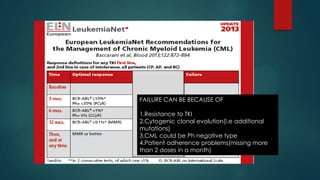
 What is the ideal response at 3 months?
FAILURE CAN BE BECAUSE OF
1.Resistance to TKI
2.Cytogenic clonal evolution(i.e additional
mutations)
3.CML could be Ph negative type
4.Patient adherence problems(missing more
than 2 doses in a month)
Resistance to imatinib
Four mechanisms of resistance to imatinib have been described to date.
These are
1. Gene amplification i.e more Bcr-Abl are produced
 Treated by increasing dose to 800mg
2. Enhanced expression of multidrug exporter proteins
 Treated by increasing dose to 800mg
3. Mutations at the kinase site
 Replace with Nilotinib or Dasatinib
4. Alternative signaling pathways functionally compensating for the
imatinib - sensitive mechanisms (SRC family of kinases get mutated
and they start phosphorylating the kinases)
 Replace with Dasatinib
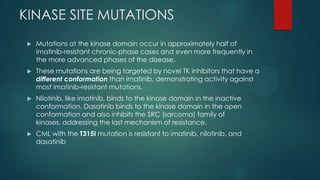
KINASE SITE MUTATIONS
 Mutations at the kinase domain occur in approximately half of
imatinib-resistant chronic-phase cases and even more frequently in
the more advanced phases of the disease.
 These mutations are being targeted by novel TK inhibitors that have a
different conformation than imatinib, demonstrating activity against
most imatinib-resistant mutations.
 Nilotinib, like imatinib, binds to the kinase domain in the inactive
conformation. Dasatinib binds to the kinase domain in the open
conformation and also inhibits the SRC (sarcoma) family of
kinases, addressing the last mechanism of resistance.
 CML with the T315I mutation is resistant to imatinib, nilotinib, and
dasatinib
Bcr-Abl imatinib
Mut. Bcr-Abl imatinib
Mut. Bcr-Abl dasatinib
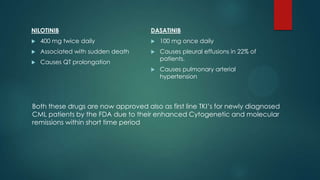
NILOTINIB
 400 mg twice daily
 Associated with sudden death
 Causes QT prolongation
DASATINIB
 100 mg once daily
 Causes pleural effusions in 22% of
patients.
 Causes pulmonary arterial
hypertension
Both these drugs are now approved also as first line TKI’s for newly diagnosed
CML patients by the FDA due to their enhanced Cytogenetic and molecular
remissions within short time period
NEWER Drugs
 Omacetaxine (formerly known as homoharringtonine) Protein
translation inhibitor
 Sorafenib : Raf kinase inhibitor that down regulates down stream Bcr-
Abl targets
 FTY720 (also known as fingolimod) : Activation of protein
phosphatase 2A that is essential for ABL1-mediated leukemogenesis
Allogenic Hematopoietic Stem Cell Transplant(HSCT)
INDICATIONS IN CP-CML:
1.Patients with T315I Mutations
2.Bcr-Abl mutations that are resistant to all TKI’s
3.Patient intolerant to TKI’s
 Allogenic HSCT is no longer recommended as first line therapy in chronic
phase CML. It can be offered to candidates of accelerated or blast crisis.
 Even after HSCT TKI’s should be continued till one year.
CHEMOTHERAPY
 Currently reserved for rapid lowering of WBCs, reduction of
symptoms, and reversal of symptomatic splenomegaly.
 Hydroxyurea induces rapid disease control. The initial dose is 1–4
g/d; the dose should be halved with each 50% reduction of the
leukocyte count. Unfortunately, cytogenetic remissions with
hydroxyurea are uncommon.
 Busulphan, an alkylating agent that acts on early progenitor cells,
has a more prolonged effect. However not used because of its
serious side effects, which include unexpected, and occasionally
fatal, myelosuppression in 5–10% of patients; pulmonary,
endocardial, and marrow fibrosis; and an Addison-like wasting
syndrome
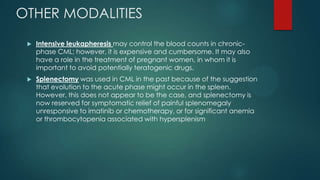
OTHER MODALITIES
 Intensive leukapheresis may control the blood counts in chronic-
phase CML; however, it is expensive and cumbersome. It may also
have a role in the treatment of pregnant women, in whom it is
important to avoid potentially teratogenic drugs.
 Splenectomy was used in CML in the past because of the suggestion
that evolution to the acute phase might occur in the spleen.
However, this does not appear to be the case, and splenectomy is
now reserved for symptomatic relief of painful splenomegaly
unresponsive to imatinib or chemotherapy, or for significant anemia
or thrombocytopenia associated with hypersplenism
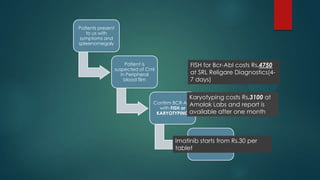
HOW CAN WE MANAGE CML
PATIENTS IN MBGH HOSPITAL SETUP
Patients present
to us with
symptoms and
spleenomegaly
Patient is
suspected of Cml
in Peripheral
blood film
Confirm BCR-ABL
with FISH or
KARYOTYPING
Start on IMATINIB
therapy
FISH for Bcr-Abl costs Rs.4750
at SRL Religare Diagnostics(4-
7 days)
Imatinib starts from Rs.30 per
tablet
Karyotyping costs Rs.3100 at
Amolak Labs and report is
available after one month
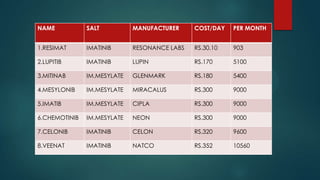
NAME SALT MANUFACTURER COST/DAY PER MONTH
1.RESIMAT IMATINIB RESONANCE LABS RS.30.10 903
2.LUPITIB IMATINIB LUPIN RS.170 5100
3.MITINAB IM.MESYLATE GLENMARK RS.180 5400
4.MESYLONIB IM.MESYLATE MIRACALUS RS.300 9000
5.IMATIB IM.MESYLATE CIPLA RS.300 9000
6.CHEMOTINIB IM.MESYLATE NEON RS.300 9000
7.CELONIB IMATINIB CELON RS.320 9600
8.VEENAT IMATINIB NATCO RS.352 10560
THANK YOU

CML - DIAGNOSIS,MANAGEMENT AND RECENT ADVANCES

  • 1.
    DIAGNOSIS MANAGEMENT AND RECENTADVANCES IN CML DR RAJESH S
  • 2.
    PLAN  Introduction  BCRABL and its Action  Clinical and Laboratory Features  Goals and Concepts of Management  Diagnostic modalities  Tyrosine Kinase Inhibitors  Other Modalities of treatment  Monitoring Of therapy
  • 3.
    Chronic Myelogenous Leukemia CML is a MPD characterized by increased granulocytic cell line, associated with erythroid and platelet hyperplasia.  The diagnosis of CML is established by identifying a clonal expansion of a hematopoietic stem cell possessing a reciprocal translocation between chromosomes 9 and 22.
  • 4.
    THE BCR-ABL MUTATION This translocation results in the head-to-tail fusion of the breakpoint cluster region (BCR) gene on chromosome 22q11 with the ABL1 (named after the abelson murine leukemia virus) gene located on chromosome 9q34.
  • 5.
    The Ph Chromosome:t(9;22) 22 bcr abl Ph ( or 22q-) bcr-abl FUSION PROTEIN WITH TYROSINE KINASE ACTIVITY 9 9 q+
  • 6.
    Head to tailfusion of BCR to ABL occurs following 9:22 translocation This region is transcribed into BCR-ABL mRNA BCR-ABL protein is produced(p210) This protein Dimerises and becomes active tyrosine kinase Many intracellular kinases are phosphorylated(eg c-myc,shc) Cell proliferates,evades apoptosis
  • 8.
    Erythrocytes BCR ABL MUTATION OCCURS in MYELOID STEMCELLS ALL COMPONENTS OF MYELOID SERIES i.e MYELOCYTES,RBC’S AND PLATELETS ARE AFFECTED
  • 9.
  • 10.
    CLINICAL FEATURES  30%patients are Asymptomatic at diagnosis.  Symptoms are usually Non specific(Fatigue,anorexia,weight loss)  Symptoms because of splenomegaly are common(abdominal pain, dragging sensation in abdomen)  Rare presentations include Vasoocclusive disease, cerebrovascular accidents, myocardial infarction, venous thrombosis, priapism, visual disturbances, and pulmonary insufficiency.
  • 11.
    LABORATORY FEATURES  Elevatedwhite blood cell counts (WBCs), with increases in both immature and mature granulocytes, are present at diagnosis. Usually <5% circulating blasts and <10% blasts and promyelocytes are noted, with the majority of cells being myelocytes, metamyelocytes, and band forms.  Platelet counts are almost always elevated at diagnosis,  Mild degree of normocytic normochromic anemia is present.  Leukocyte alkaline phosphatase is low in CML cells.
  • 12.
    LABORATORY FEATURES  Themarrow is hypercellular (granulocytic hyperplasia)  Reticulin fibrosis  Hyperuricemia and hyperuricosuria  Serum vitamin B12-binding proteins are increased.  Pseudohyperkalemia, and spurious hypoxemia and hypoglycemia.
  • 14.
    ACCELERATED PHASE (WHO DEFINITION) Blasts 10-19% in peripheral blood and or bone marrow.  Peripheral Basophilia ≥20% in peripheral blood.  Persistent thrombocytopenia(<100 x109 )  Persistent thrombocytosis(>1000 x109 )  Increasing spleen size and white blood count despite therapy.  Cytogenetic evidence of clonal evolution 10-19%
  • 15.
    BLASTIC PHASE (WHO DEFINITION) Blasts >20% in peripheral blood and or bone marrow.  Extramedullary blast proliferation  Large cluster of Blasts in bone marrow Biopsy. >20%
  • 16.
    Clinical progression ofCML Chronic phase Median 5–6 years stabilization Accelerated phase Median duration 6–9 months Blast crisis Median survival 3–6 months Advanced phases ACQUISITION OF NEW MUTATIONS LIKE TRISOMY 8, P53 MUTATION. BLAST CRISIS IS CONVERSION OF CML INTO AML This acquisition of new mutations is called as CYTOGENIC CLONAL EVOLUTION
  • 17.
    GOALS, CONCEPTS OFMANAGEMENT AND DIAGNOSTIC MODALITIES
  • 18.
    Response to treatmentcan be defined under three sequential categories. 1.Hematological Response 2.Cyto-Genetic Response(CyR) 3.Molecular Response(MR)
  • 19.
    Definitions of Responsesto Treatments Hematologic Response Complete Hematologic response 1) Normal PB counts (WBC < 10 and plt < 450) 2) Normal WBC differential 3) No Dz symptoms 4) Normalization of the size of the liver and spleen Cytogenetic Responses: Ph+ Metaphases 1) complete: 0% 2) partial: 1% - 35% 3) minor: 36% - 65% 4) minimal: 66% - 95% 5) none: 96% - 100% Molecular Responses: ratio of Bcr-Abl/Abl Major Molecular Response 3-log10 reduction from initial diagnosis sample (i.e. 25 →0.025) Amount of Dz 1X10¹² 1X10¹¹ 1X10¹⁰ 1X10 8-9 CURE???
  • 20.
    Head to tailfusion of BCR to ABL occurs following 9:22 translocation This region is transcribed into BCR-ABL mRNA BCR-ABL protein is produced(p210) This protein Dimerises and becomes active tyrosine kinase Intracellular kinases are phosphorylated(eg c-myc,shc) Cell proliferates,evades apoptosis Hematological Response is measure by normalization of leukocytes and platelet count and decrease in spleen size Various Guidelines suggest that Complete hematological response should be obtained within 3 months of initiating therapy
  • 21.
    Complete hematologic response Complete normalization of PB counts, leukocyte count < 10 x 109/L  Platelet count < 450 x 109/L  No myelocytes, promyelocytes, or blasts in PB  No palpable splenomegaly  No disease symptoms DONE BY : CBC
  • 22.
    Head to tailfusion of BCR to ABL occurs following 9:22 translocation This region is transcribed into BCR-ABL mRNA BCR-ABL protein is produced(p210) This protein Dimerises and becomes active tyrosine kinase I Intracellular kinases are phosphorylated(eg c-myc,shc) Cell proliferates,evades apoptosis Cyto-genetic response is measured by quantifying 9:22 transolocation. This can be done by 1.Karyotyping/conventional cytogenetics 2.FISH
  • 23.
    CYTO-GENETIC STUDIES  Requiresa bone marrow aspirate for optimal metaphases.  In bone marrow sample, dividing cells are halted at interphase with the help of colchicine and then trypsin and giemsa stains are added in order for G-BANDING of chromosomes.  Allows for evaluation of 9:22 translocation, Clonal evolution as well as additional chromosomal abnormalities in the non-Ph+ clones.  Atleast 20 interphases are examined before reporting.

  • 24.
  • 25.
    Cytogenetic response  Complete: No Ph+ metaphases  Partial : 1% to 35% Ph+ metaphases  Minor : > 35% Ph+ metaphases  Major : 0% to 35% Ph+ metaphases (complete + partial) Done By: Cyto-genetics/Fish
  • 26.
    Head to tailfusion of BCR to ABL occurs following 9:22 translocation This region is transcribed into BCR-ABL mRNA BCR-ABL protein is produced(p210) This protein Dimerises and becomes active tyrosine kinase Intracellular kinases are phosphorylated(eg c-myc,shc) Cell proliferates,evades apoptosis Molecular response is measured by quantifying the Bcr-Abl mRNA transcripts. This can be done by 1.QPCR
  • 27.
  • 28.
    QUANTITATIVE PCR FORBCR-ABL INTERPRETATION 0 3 6 9 12 15 18 21 24 27 30 33 36 PCR Cycle Number Amount of Fluorescence High Concentration Moderate Concentration Low Concentration
  • 29.
    Molecular Response  MajorMolecular Response(MMR) : ≥ 3 log reduction in BCR-ABL mRNA or BCR-ABL/ABL ≤ 0.1% by QRT-PCR (International Scale)  Complete Molecular Response (CMR) : No detectable BCR-ABL mRNA using assay with sensitivity at least 4.5 logs below standardized baseline Done By: QPCR
  • 30.
    PROGNOSTIC CLASSIFICATION SOKAL INDEX Age  Blast percentage  Cytogenic clonal Evolution  Spleen size  Platelet counts HASFORD INDEX  Age  Blast percentage  Basophil and Eosinophils %  Spleen size  Platelet counts
  • 31.
    TREATMENT WITH TYROSINEKINASE INHIBITORS
  • 34.
    IMATINIB  Imatinib mesylate(Gleevec) functions through competitive inhibition at the ATP-binding site of the Abl kinase in the inactive conformation, which leads to inhibition of tyrosine phosphorylation of proteins involved in Bcr-Abl signal transduction.  It shows specificity for Bcr-Abl, the receptor for platelet-derived growth factor, and Kit TK.  Imatinib induces apoptosis in cells expressing Bcr-Abl.
  • 35.
    FAQ ON IMATINIB What is the dose of imatinib? 400mg / day (maximum dose upto 800 mg can be given)  What is the duration of treatment? At present, treatment should be given for life. Trials in which the drug is stopped after 2 years of achieving CMR has shown promising results.  What are the adverse effects? Myelo-suppression is the most common hematologic side effect. Others are fluid retention, nausea, muscle cramps, diarrhea, and skin rashes.  How to treat myelo-suppression following imatinib therapy? withholding the drug until counts improves. Growth factors like GM-CSF (filgrastim) can be used.
  • 36.
    FAQ ON IMATINIB Can we use imatinib in pregnant patients? imatinib is shown to be teratogenic and embryotoxic in animal studies.so it is avoided in pregnancy  Does imatinib affects fertility? It has shown to cause oligospermia. So men desiring conception shold consider sperm cryo-preservation before TKI therapy  When to review the patient for monitoring response? After 3 months of therapy and every 3 months thereafter.
  • 38.
    MONITORING RESPONSE  Patientson imatinib should be reviewed at 3rd month and investigations to be done at that time are 1.CBC 2.Bone Marrow Cytogenetics/Blood FISH 3.QPCR  If patient had achieved hematological and complete cytological response, then patient can be monitored with QPCR every 3 months thereafter until MMR is aceived, then QPCR can be done every 6 months.  What is the ideal response at 3 months?
  • 39.
    FAILURE CAN BEBECAUSE OF 1.Resistance to TKI 2.Cytogenic clonal evolution(i.e additional mutations) 3.CML could be Ph negative type 4.Patient adherence problems(missing more than 2 doses in a month)
  • 40.
    Resistance to imatinib Fourmechanisms of resistance to imatinib have been described to date. These are 1. Gene amplification i.e more Bcr-Abl are produced  Treated by increasing dose to 800mg 2. Enhanced expression of multidrug exporter proteins  Treated by increasing dose to 800mg 3. Mutations at the kinase site  Replace with Nilotinib or Dasatinib 4. Alternative signaling pathways functionally compensating for the imatinib - sensitive mechanisms (SRC family of kinases get mutated and they start phosphorylating the kinases)  Replace with Dasatinib
  • 41.
    KINASE SITE MUTATIONS Mutations at the kinase domain occur in approximately half of imatinib-resistant chronic-phase cases and even more frequently in the more advanced phases of the disease.  These mutations are being targeted by novel TK inhibitors that have a different conformation than imatinib, demonstrating activity against most imatinib-resistant mutations.  Nilotinib, like imatinib, binds to the kinase domain in the inactive conformation. Dasatinib binds to the kinase domain in the open conformation and also inhibits the SRC (sarcoma) family of kinases, addressing the last mechanism of resistance.  CML with the T315I mutation is resistant to imatinib, nilotinib, and dasatinib
  • 42.
    Bcr-Abl imatinib Mut. Bcr-Ablimatinib Mut. Bcr-Abl dasatinib
  • 43.
    NILOTINIB  400 mgtwice daily  Associated with sudden death  Causes QT prolongation DASATINIB  100 mg once daily  Causes pleural effusions in 22% of patients.  Causes pulmonary arterial hypertension Both these drugs are now approved also as first line TKI’s for newly diagnosed CML patients by the FDA due to their enhanced Cytogenetic and molecular remissions within short time period
  • 44.
    NEWER Drugs  Omacetaxine(formerly known as homoharringtonine) Protein translation inhibitor  Sorafenib : Raf kinase inhibitor that down regulates down stream Bcr- Abl targets  FTY720 (also known as fingolimod) : Activation of protein phosphatase 2A that is essential for ABL1-mediated leukemogenesis
  • 45.
    Allogenic Hematopoietic StemCell Transplant(HSCT) INDICATIONS IN CP-CML: 1.Patients with T315I Mutations 2.Bcr-Abl mutations that are resistant to all TKI’s 3.Patient intolerant to TKI’s  Allogenic HSCT is no longer recommended as first line therapy in chronic phase CML. It can be offered to candidates of accelerated or blast crisis.  Even after HSCT TKI’s should be continued till one year.
  • 46.
    CHEMOTHERAPY  Currently reservedfor rapid lowering of WBCs, reduction of symptoms, and reversal of symptomatic splenomegaly.  Hydroxyurea induces rapid disease control. The initial dose is 1–4 g/d; the dose should be halved with each 50% reduction of the leukocyte count. Unfortunately, cytogenetic remissions with hydroxyurea are uncommon.  Busulphan, an alkylating agent that acts on early progenitor cells, has a more prolonged effect. However not used because of its serious side effects, which include unexpected, and occasionally fatal, myelosuppression in 5–10% of patients; pulmonary, endocardial, and marrow fibrosis; and an Addison-like wasting syndrome
  • 47.
    OTHER MODALITIES  Intensiveleukapheresis may control the blood counts in chronic- phase CML; however, it is expensive and cumbersome. It may also have a role in the treatment of pregnant women, in whom it is important to avoid potentially teratogenic drugs.  Splenectomy was used in CML in the past because of the suggestion that evolution to the acute phase might occur in the spleen. However, this does not appear to be the case, and splenectomy is now reserved for symptomatic relief of painful splenomegaly unresponsive to imatinib or chemotherapy, or for significant anemia or thrombocytopenia associated with hypersplenism
  • 48.
    HOW CAN WEMANAGE CML PATIENTS IN MBGH HOSPITAL SETUP
  • 49.
    Patients present to uswith symptoms and spleenomegaly Patient is suspected of Cml in Peripheral blood film Confirm BCR-ABL with FISH or KARYOTYPING Start on IMATINIB therapy FISH for Bcr-Abl costs Rs.4750 at SRL Religare Diagnostics(4- 7 days) Imatinib starts from Rs.30 per tablet Karyotyping costs Rs.3100 at Amolak Labs and report is available after one month
  • 50.
    NAME SALT MANUFACTURERCOST/DAY PER MONTH 1.RESIMAT IMATINIB RESONANCE LABS RS.30.10 903 2.LUPITIB IMATINIB LUPIN RS.170 5100 3.MITINAB IM.MESYLATE GLENMARK RS.180 5400 4.MESYLONIB IM.MESYLATE MIRACALUS RS.300 9000 5.IMATIB IM.MESYLATE CIPLA RS.300 9000 6.CHEMOTINIB IM.MESYLATE NEON RS.300 9000 7.CELONIB IMATINIB CELON RS.320 9600 8.VEENAT IMATINIB NATCO RS.352 10560
  • 51.

Editor's Notes

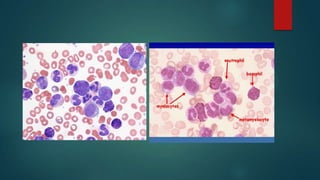
  • #14 Myeloblast: large nucleus fine chromatin and blue cytoplasmMyelocyte: large nucleus flattened on one side with pink cytoplasmic granulesMetamyelocyte : large nucleus with indented nucleus
  • #38 1993: imatinib was patented in us.Europe.at that time no patents in india..so it was produced by generic companies1998: Novartis filed a petition for im.mesylate in india(after india announced that it will allow proxduct patents)2005: indian laws were enacted for product patenting and started processing requestsIndia rejected it saying that just by adding mesylate, it could not patent it for NovartisIt moved to supreme court and final verdict given in apr 2013 that modifications could not be patented.