Clustering by Maximizing Mutual
Information Across Views
Kien Do, Truyen Tran, Svetha Venkatesh
Applied AI Institute (A2I2), Deakin University, Australia
1
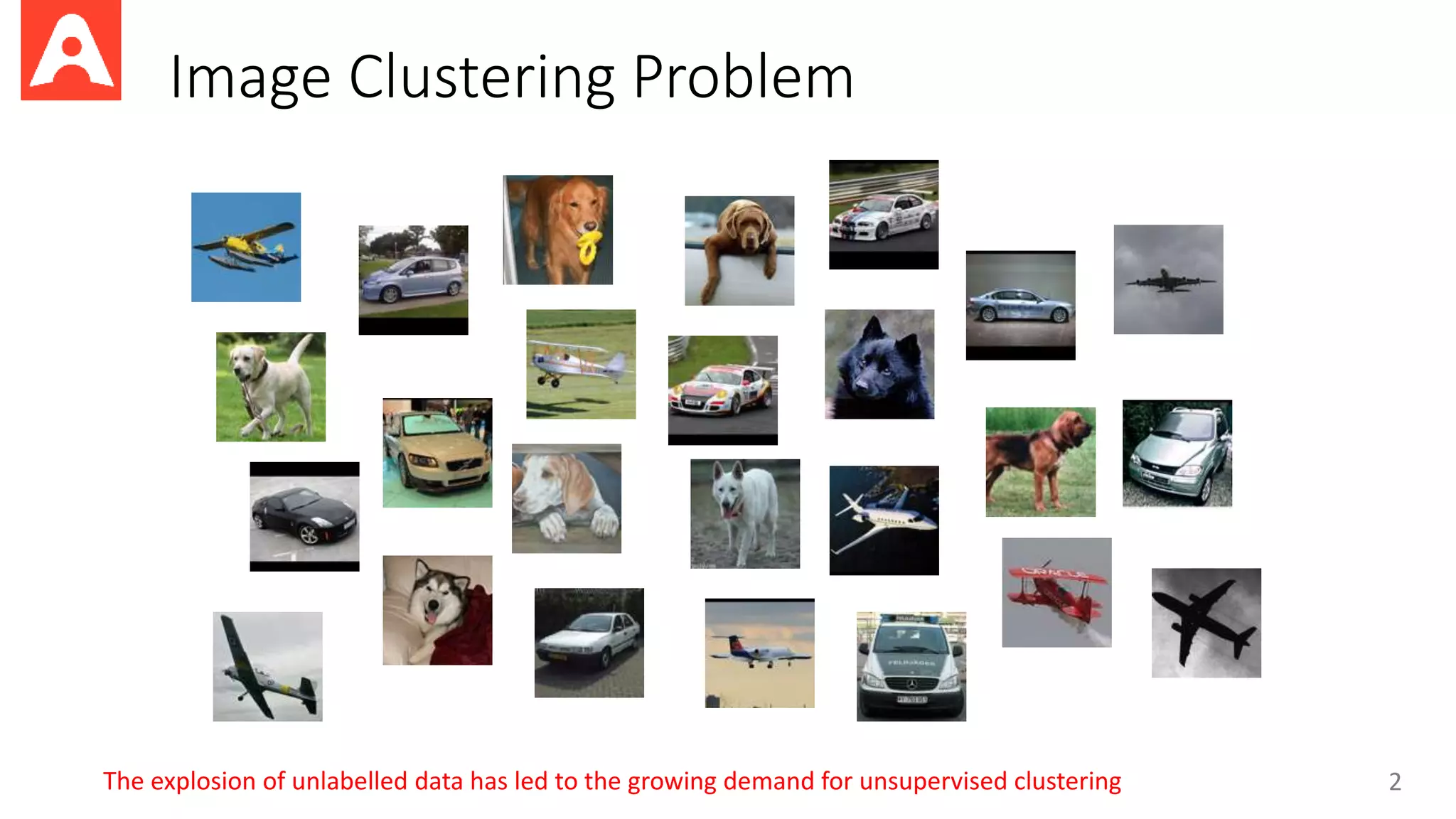
Image Clustering Problem
2
The explosion of unlabelled data has led to the growing demand for unsupervised clustering
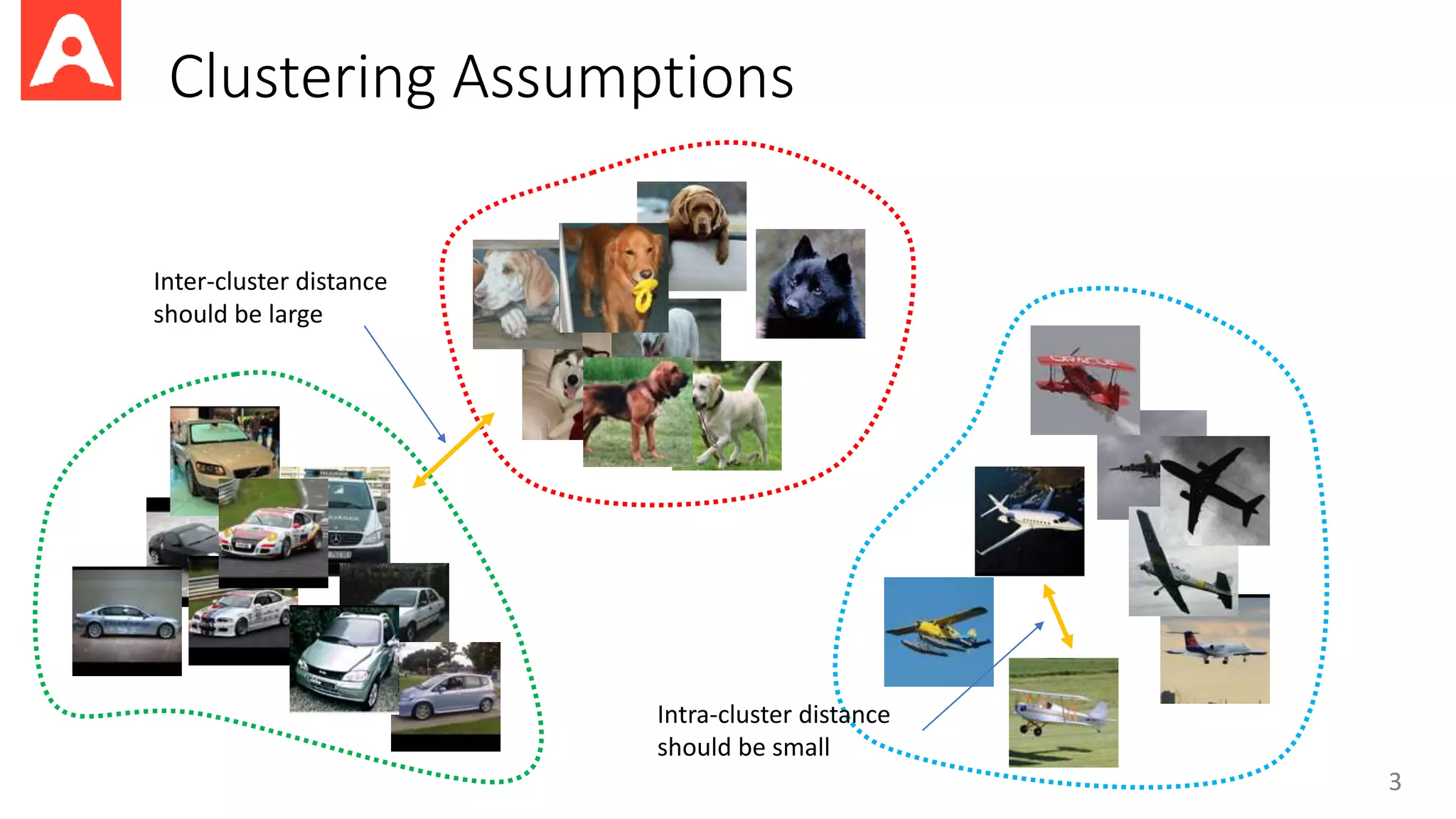
Clustering Assumptions
3
Inter-cluster distance
should be large
Intra-cluster distance
should be small
Existing Clustering Methods
4
Enc Dec
Clustering the latent code
Autoencoder-based methods (e.g., DCN, VaDE, DGG)
DCN [1]
Closer in the latent space of the AE
The latent should only capture semantic information from the input
[1] Towards k-means-friendly spaces: Simultaneous deep learning and clustering, Yang et al., ICML 2017
Existing Clustering Methods (cont.)
5
IIC [1]
Methods that only use the cluster-assignment probability (e.g., IIC, PICA)
Problem: May not capture enough useful
information from data => over-clustering is
often required.
[1] Invariant Information Clustering for Unsupervised Image Classification and Segmentation, Ji et al., ICCV 2019
Motivation
• We need a method that can model the cluster-level and the instance-
level semantics.
• The InfoMax/Contrastive Learning principle can be applied to this
scenario.
6
Overview about InfoMax/Contrastive Learning
• A principle for learning view-invariant representations. These
representations often capture the data semantics.
• The idea is maximizing the mutual information (MI) between 2
different views.
• Since direct computation of the MI is hard, we maximize its
variational lower bound instead.
7
The InfoNCE bound
• InfoNCE [1] is a lower bound of MI
• It is biased but has low variance
• Maximizing InfoNCE is equivalent to minimizing a contrastive loss:
8
[1] On Variational Bounds of Mutual Information, Poole et al., ICML 2019
is a “critic” measuring the similarity between and
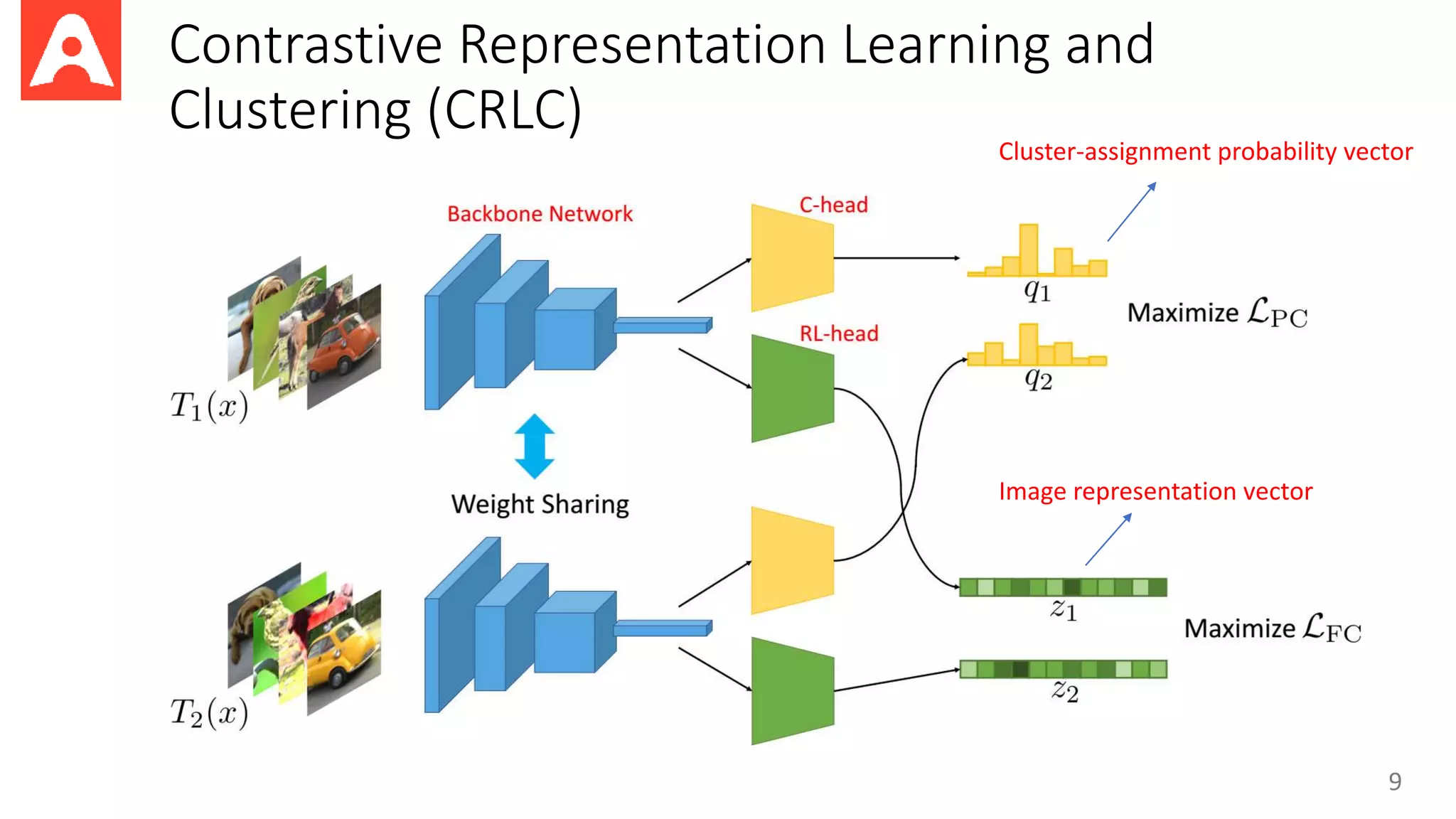
Contrastive Representation Learning and
Clustering (CRLC)
9
Image representation vector
Cluster-assignment probability vector
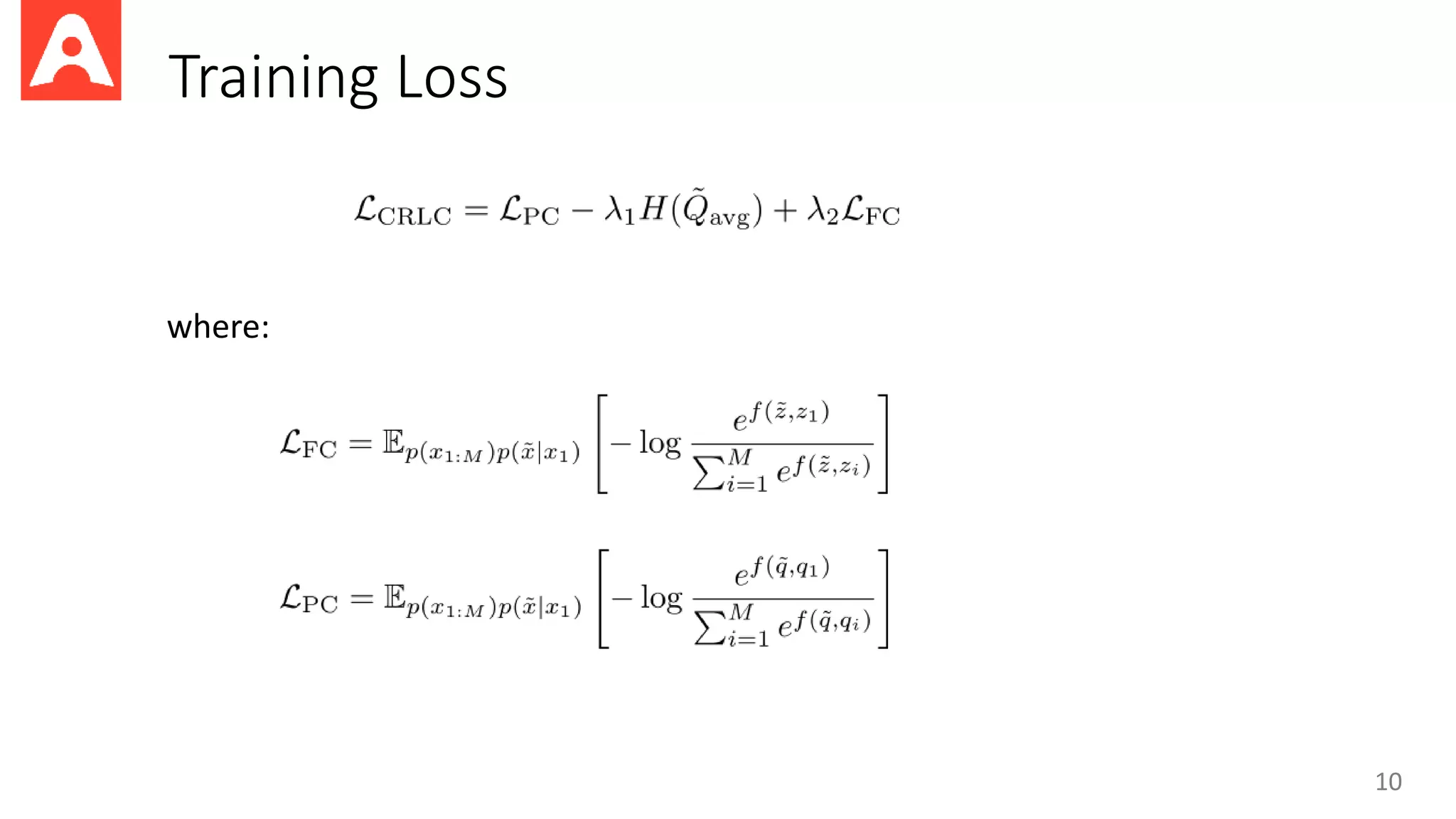
Training Loss
10
where:
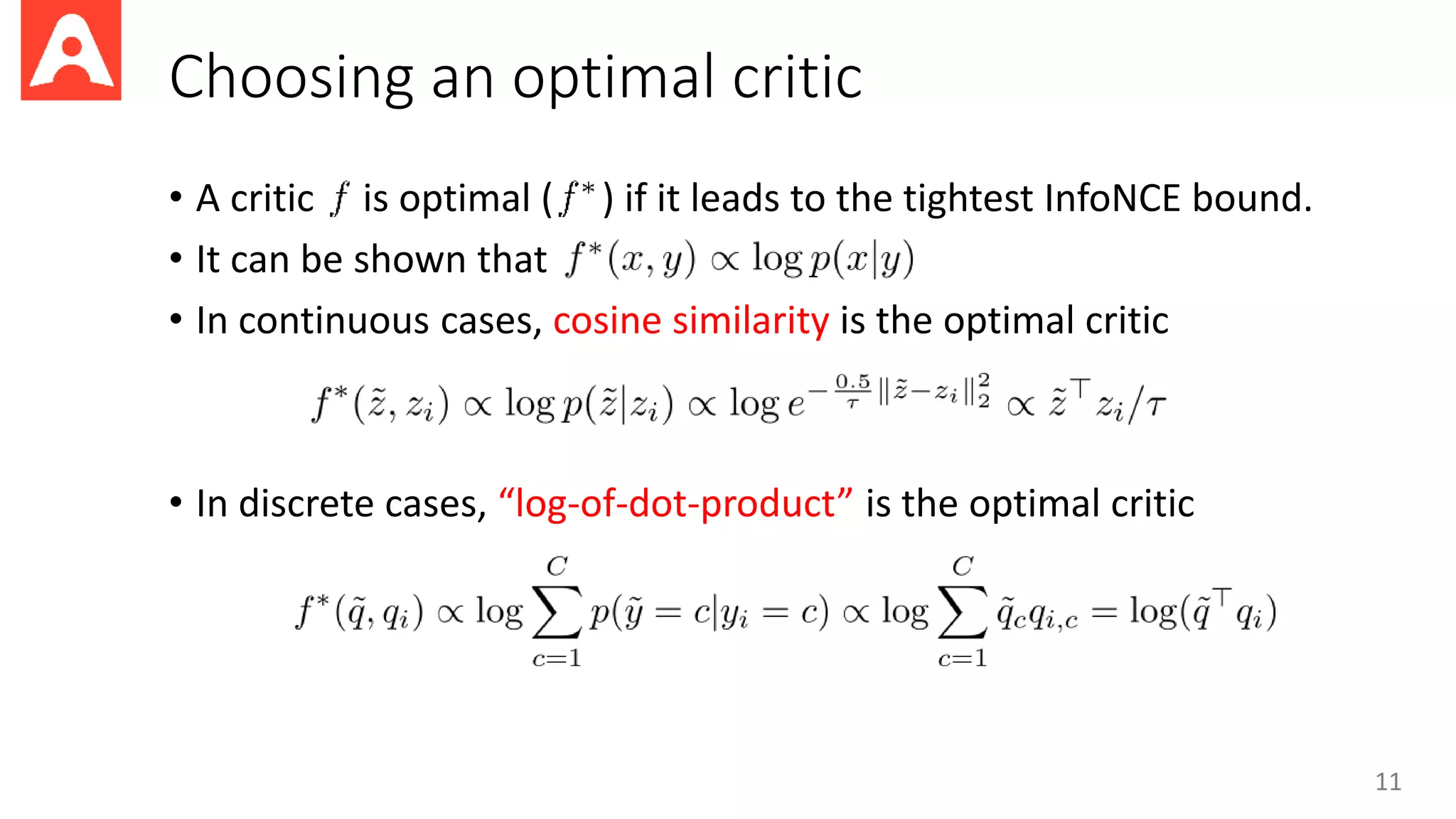
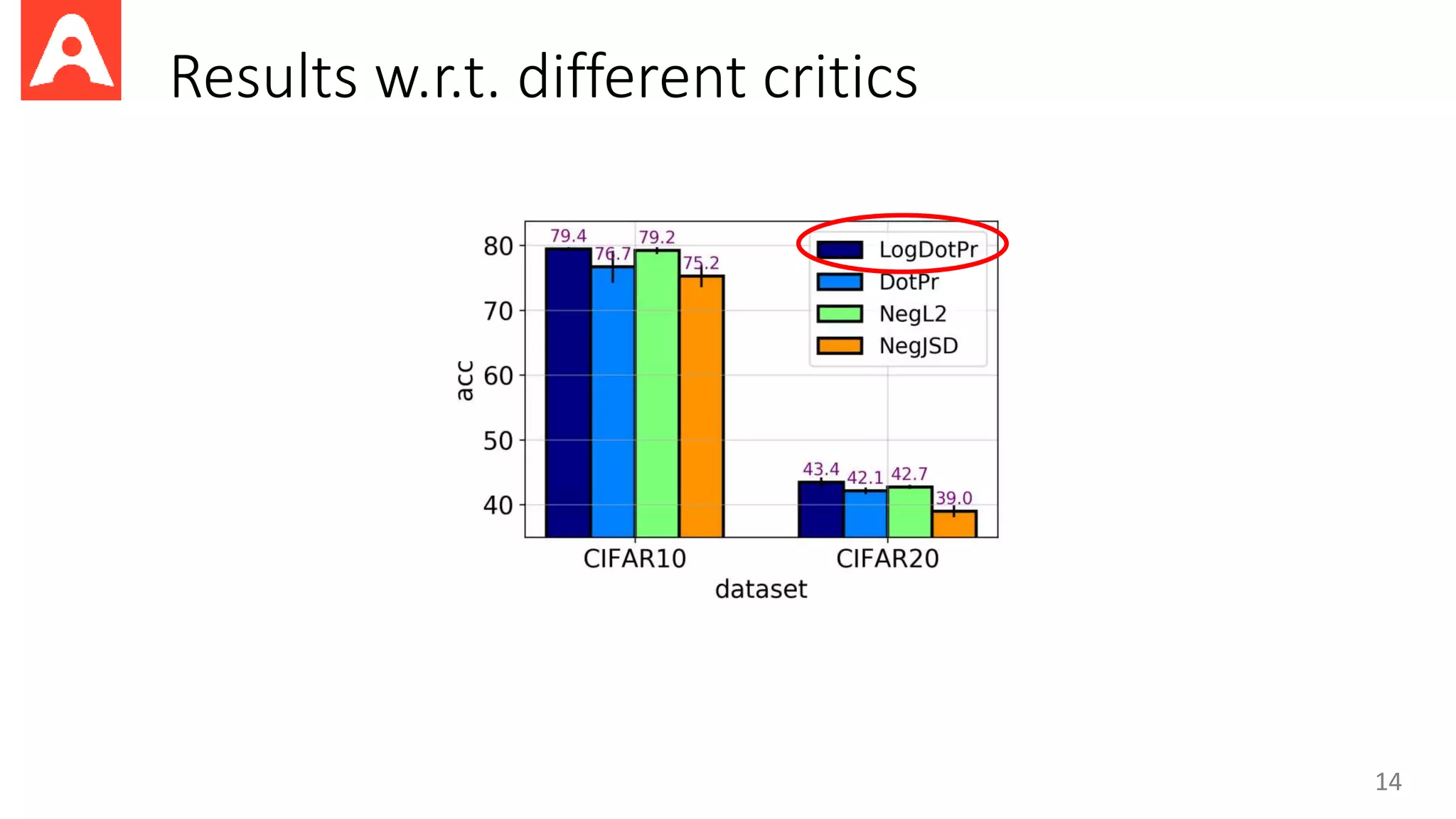
Choosing an optimal critic
• A critic is optimal ( ) if it leads to the tightest InfoNCE bound.
• It can be shown that
• In continuous cases, cosine similarity is the optimal critic
• In discrete cases, “log-of-dot-product” is the optimal critic
11
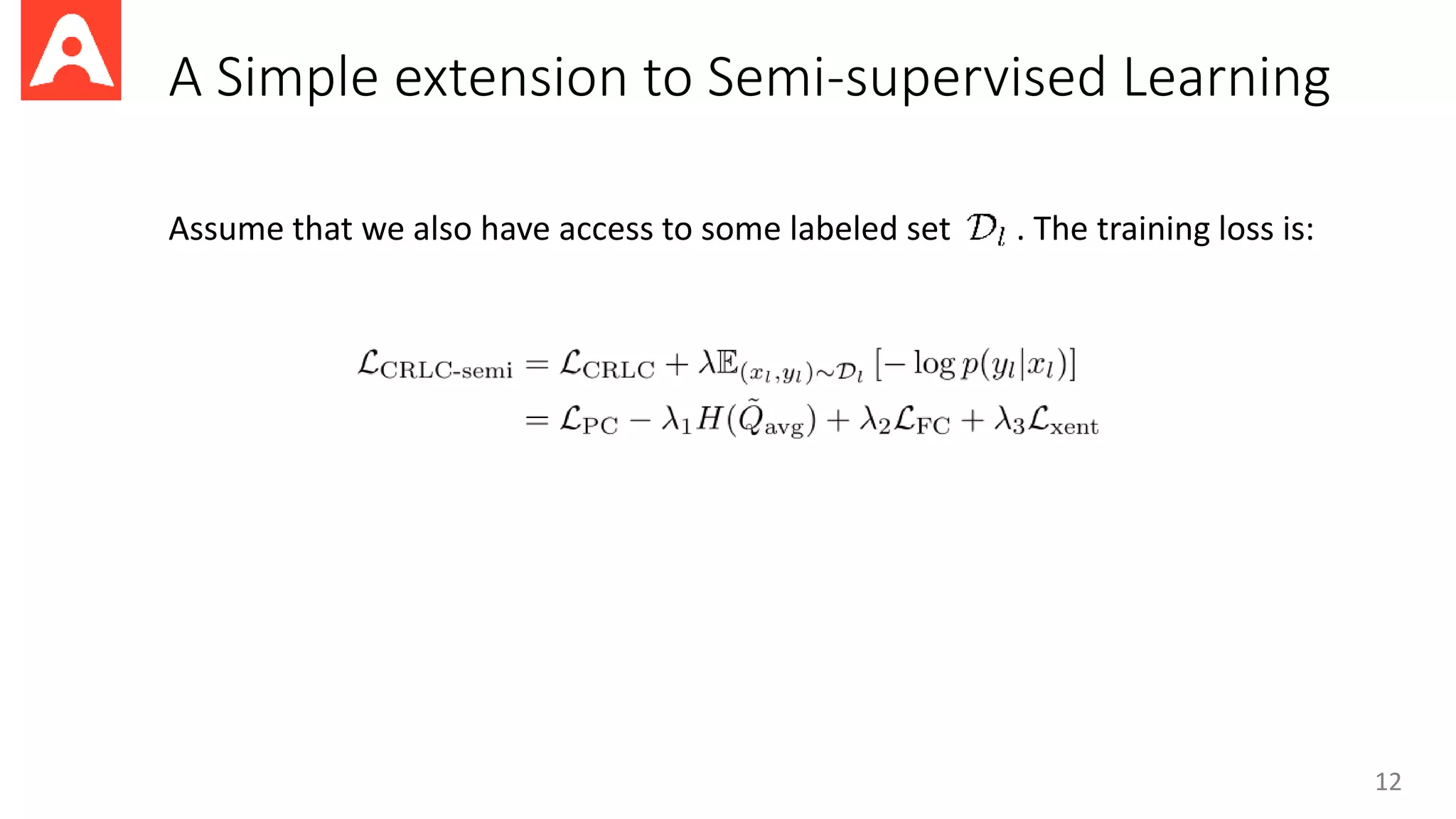
A Simple extension to Semi-supervised Learning
12
Assume that we also have access to some labeled set . The training loss is:
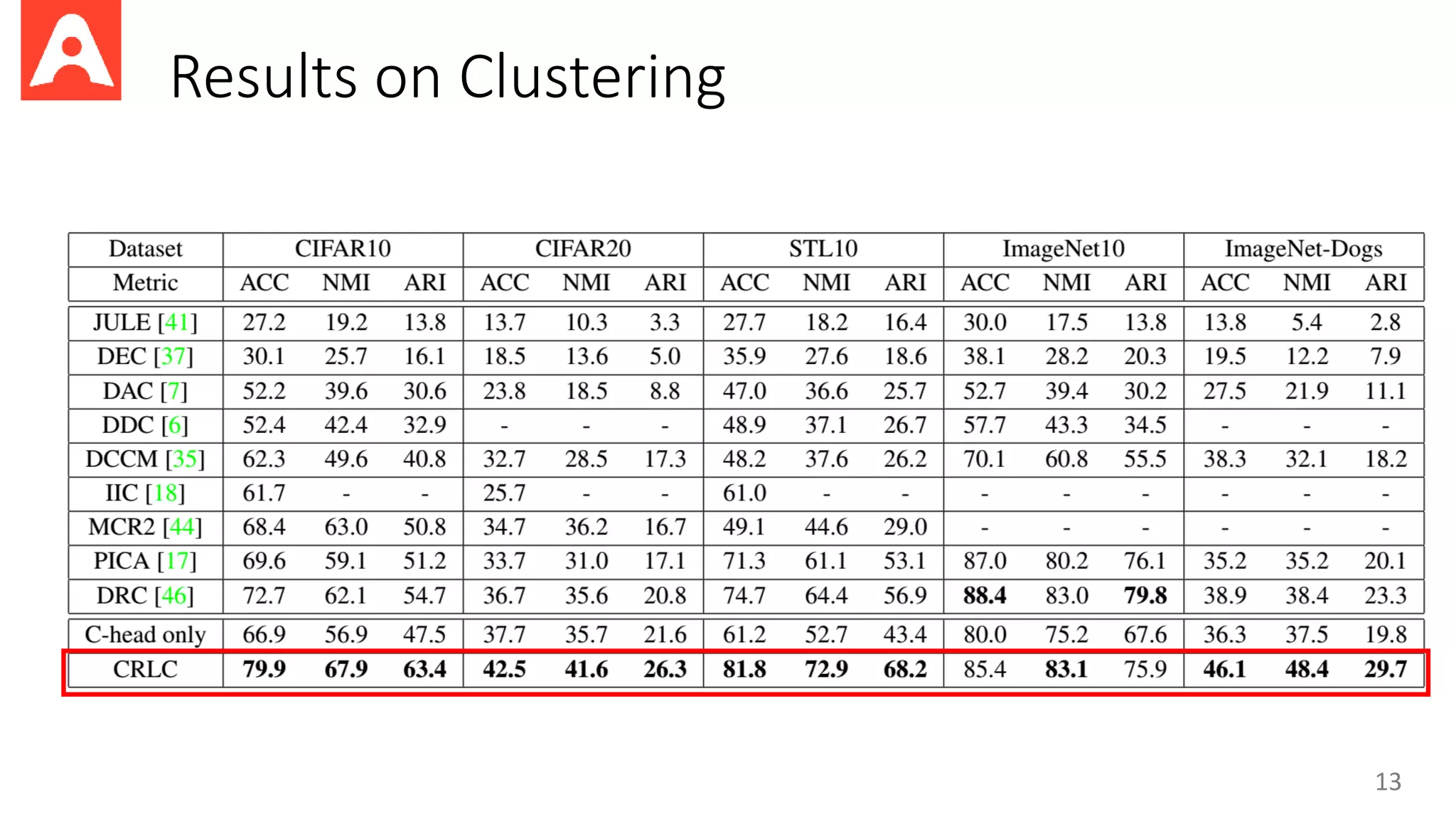
Results on Clustering
13
Results w.r.t. different critics
14
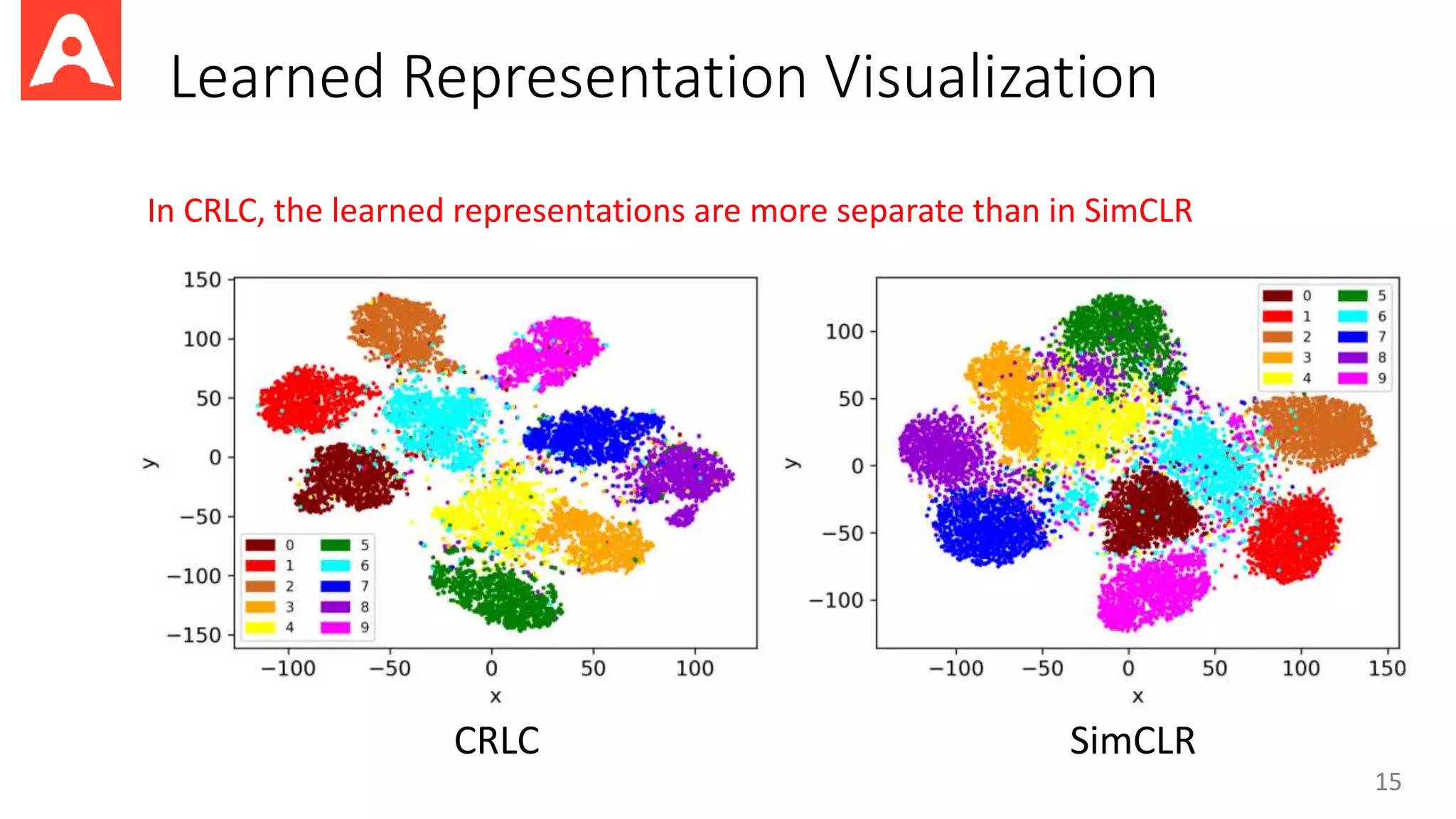
Learned Representation Visualization
15
CRLC SimCLR
In CRLC, the learned representations are more separate than in SimCLR
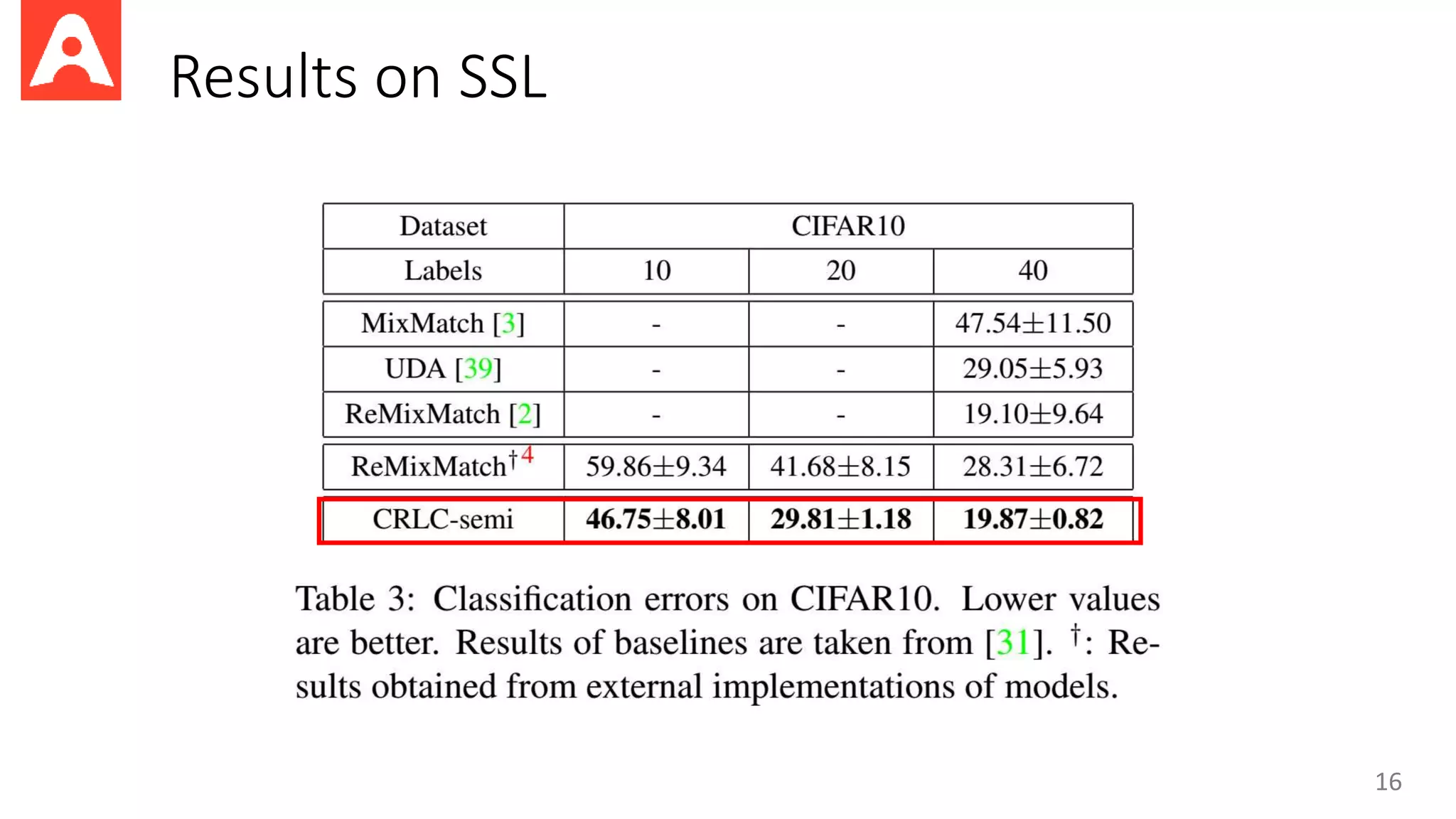
Results on SSL
16
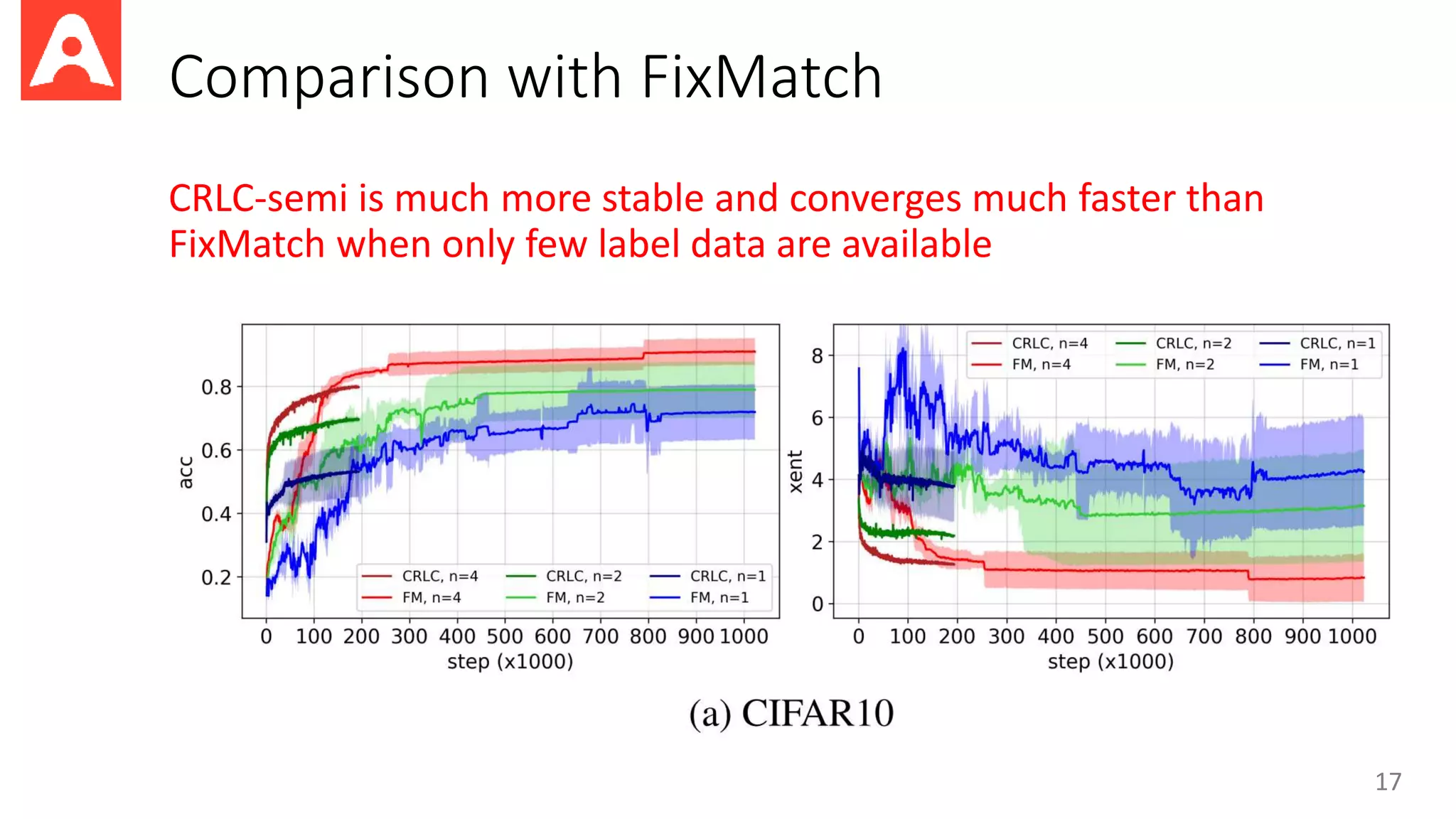
Comparison with FixMatch
CRLC-semi is much more stable and converges much faster than
FixMatch when only few label data are available
17
18
Thank you for your attention!

Clustering by Maximizing Mutual Information Across Views

  • 1.
    Clustering by MaximizingMutual Information Across Views Kien Do, Truyen Tran, Svetha Venkatesh Applied AI Institute (A2I2), Deakin University, Australia 1
  • 2.
    Image Clustering Problem 2 Theexplosion of unlabelled data has led to the growing demand for unsupervised clustering
  • 3.
    Clustering Assumptions 3 Inter-cluster distance shouldbe large Intra-cluster distance should be small
  • 4.
    Existing Clustering Methods 4 EncDec Clustering the latent code Autoencoder-based methods (e.g., DCN, VaDE, DGG) DCN [1] Closer in the latent space of the AE The latent should only capture semantic information from the input [1] Towards k-means-friendly spaces: Simultaneous deep learning and clustering, Yang et al., ICML 2017
  • 5.
    Existing Clustering Methods(cont.) 5 IIC [1] Methods that only use the cluster-assignment probability (e.g., IIC, PICA) Problem: May not capture enough useful information from data => over-clustering is often required. [1] Invariant Information Clustering for Unsupervised Image Classification and Segmentation, Ji et al., ICCV 2019
  • 6.
    Motivation • We needa method that can model the cluster-level and the instance- level semantics. • The InfoMax/Contrastive Learning principle can be applied to this scenario. 6
  • 7.
    Overview about InfoMax/ContrastiveLearning • A principle for learning view-invariant representations. These representations often capture the data semantics. • The idea is maximizing the mutual information (MI) between 2 different views. • Since direct computation of the MI is hard, we maximize its variational lower bound instead. 7
  • 8.
    The InfoNCE bound •InfoNCE [1] is a lower bound of MI • It is biased but has low variance • Maximizing InfoNCE is equivalent to minimizing a contrastive loss: 8 [1] On Variational Bounds of Mutual Information, Poole et al., ICML 2019 is a “critic” measuring the similarity between and
  • 9.
    Contrastive Representation Learningand Clustering (CRLC) 9 Image representation vector Cluster-assignment probability vector
  • 10.
  • 11.
    Choosing an optimalcritic • A critic is optimal ( ) if it leads to the tightest InfoNCE bound. • It can be shown that • In continuous cases, cosine similarity is the optimal critic • In discrete cases, “log-of-dot-product” is the optimal critic 11
  • 12.
    A Simple extensionto Semi-supervised Learning 12 Assume that we also have access to some labeled set . The training loss is:
  • 13.
  • 14.
  • 15.
    Learned Representation Visualization 15 CRLCSimCLR In CRLC, the learned representations are more separate than in SimCLR
  • 16.
  • 17.
    Comparison with FixMatch CRLC-semiis much more stable and converges much faster than FixMatch when only few label data are available 17
  • 18.
    18 Thank you foryour attention!

Editor's Notes

  • #3 The explosion of unlabelled data has led to the growing demand for unsupervised clustering