ECONOMICS OF

THE CLOUD

Michel N’Guettia
Business Group Lead

micheln@microsoft.com
Slide 1
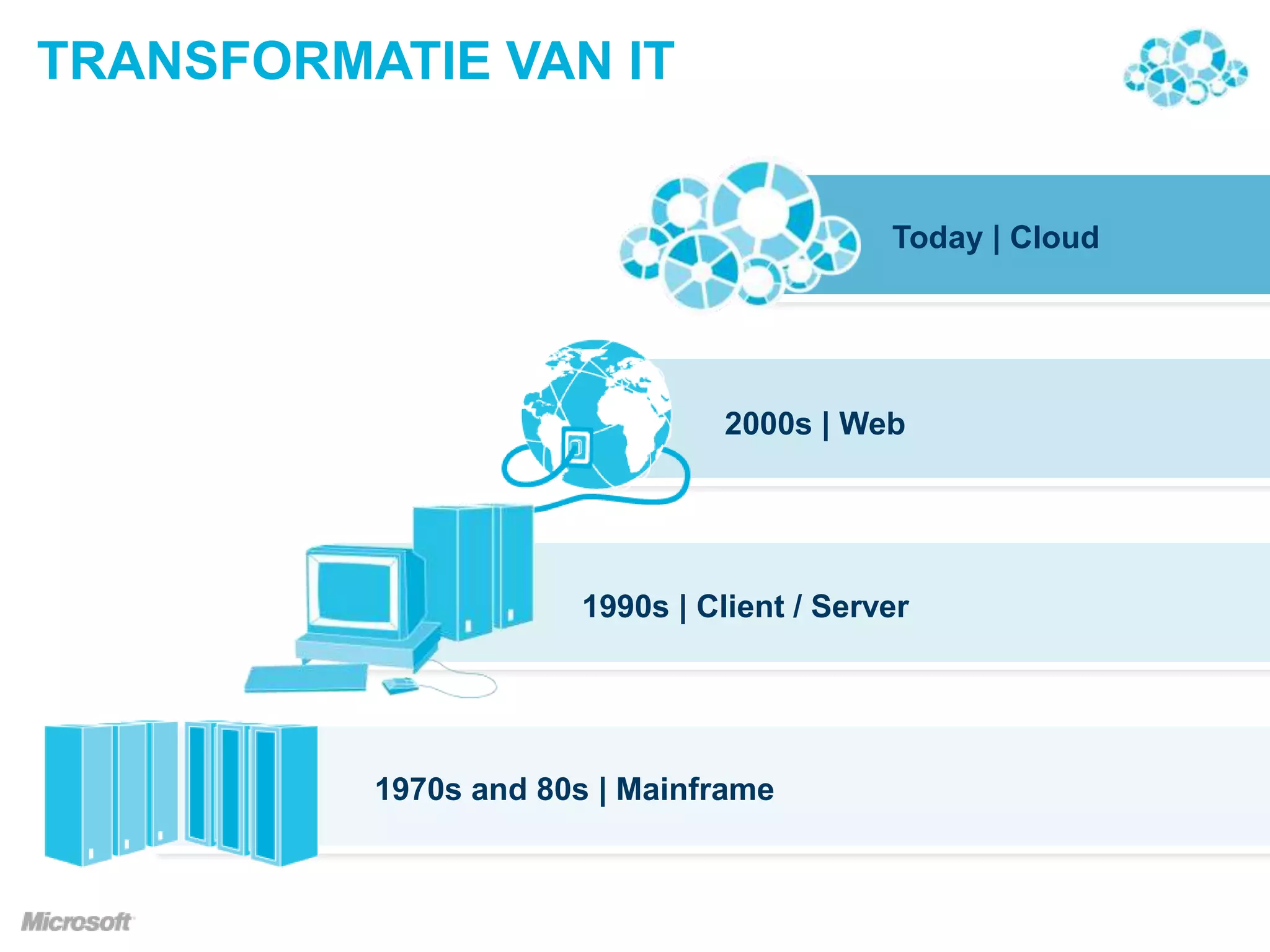
TRANSFORMATIE VAN IT

Today | Cloud

2000s | Web

1990s | Client / Server

1970s and 80s | Mainframe
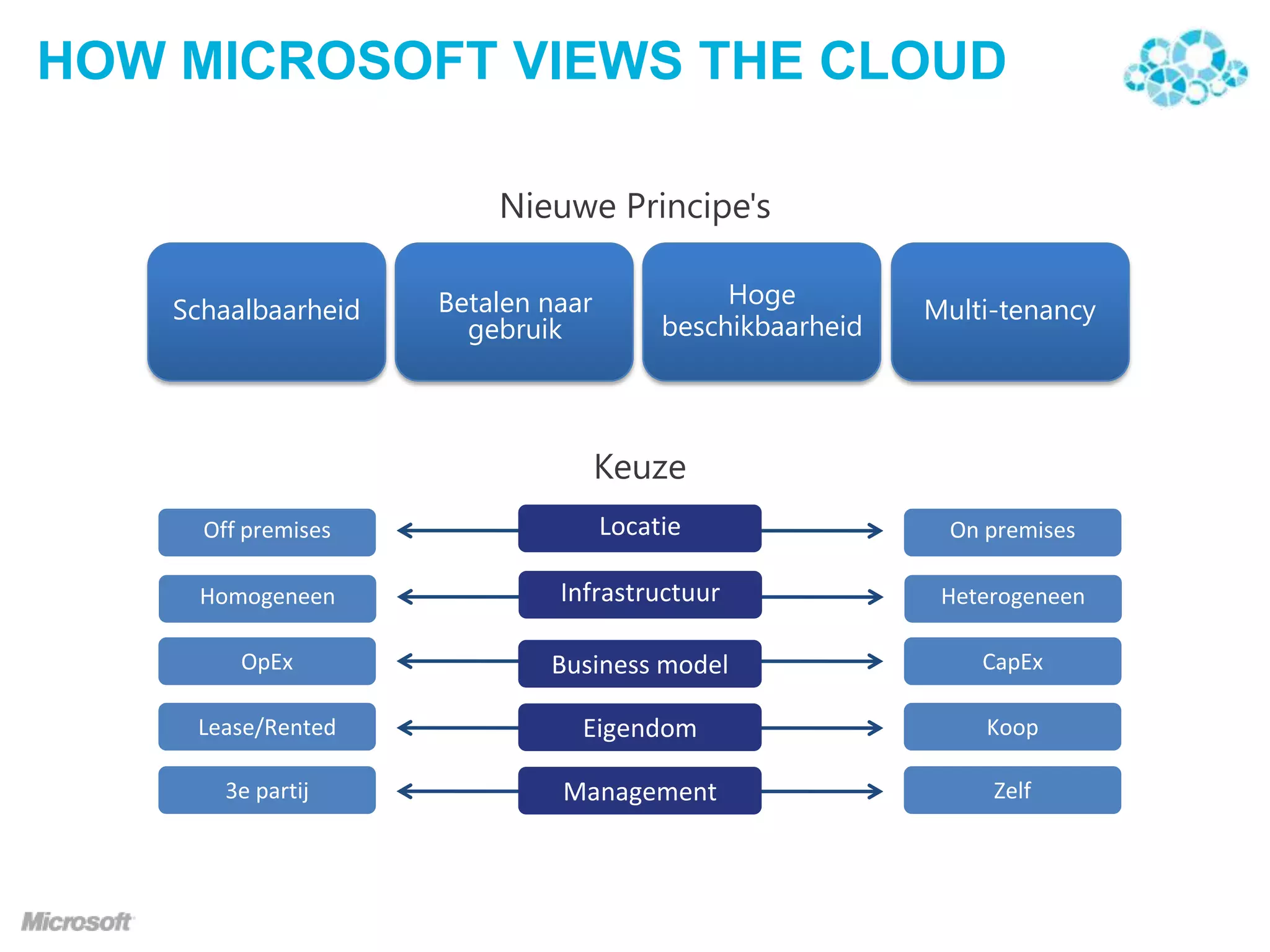
HOW MICROSOFT VIEWS THE CLOUD
Nieuwe Principe's
Schaalbaarheid

Betalen naar
gebruik

Hoge
beschikbaarheid

Keuze
Locatie
Infrastructuur
Business model

Eigendom
Management

Multi-tenancy
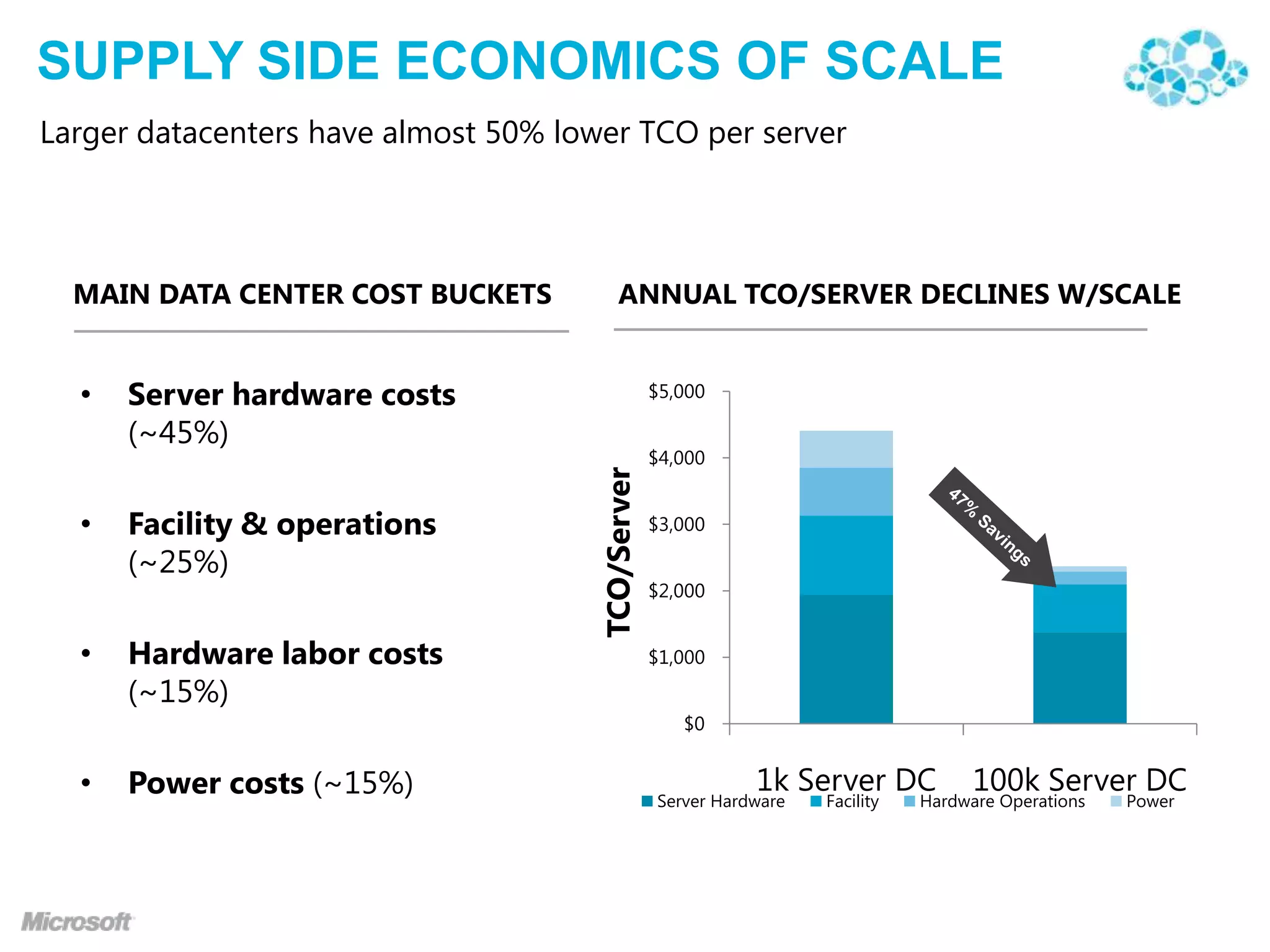
SUPPLY SIDE ECONOMICS OF SCALE
Larger datacenters have almost 50% lower TCO per server

MAIN DATA CENTER COST BUCKETS

•

•

Server hardware costs
(~45%)
Facility & operations
(~25%)

Hardware labor costs
(~15%)

$5,000

TCO/Server

•

ANNUAL TCO/SERVER DECLINES W/SCALE

$4,000
$3,000
$2,000
$1,000
$0

•

Power costs (~15%)

1k Server DC

Server Hardware

Facility

100k Server DC

Hardware Operations

Power
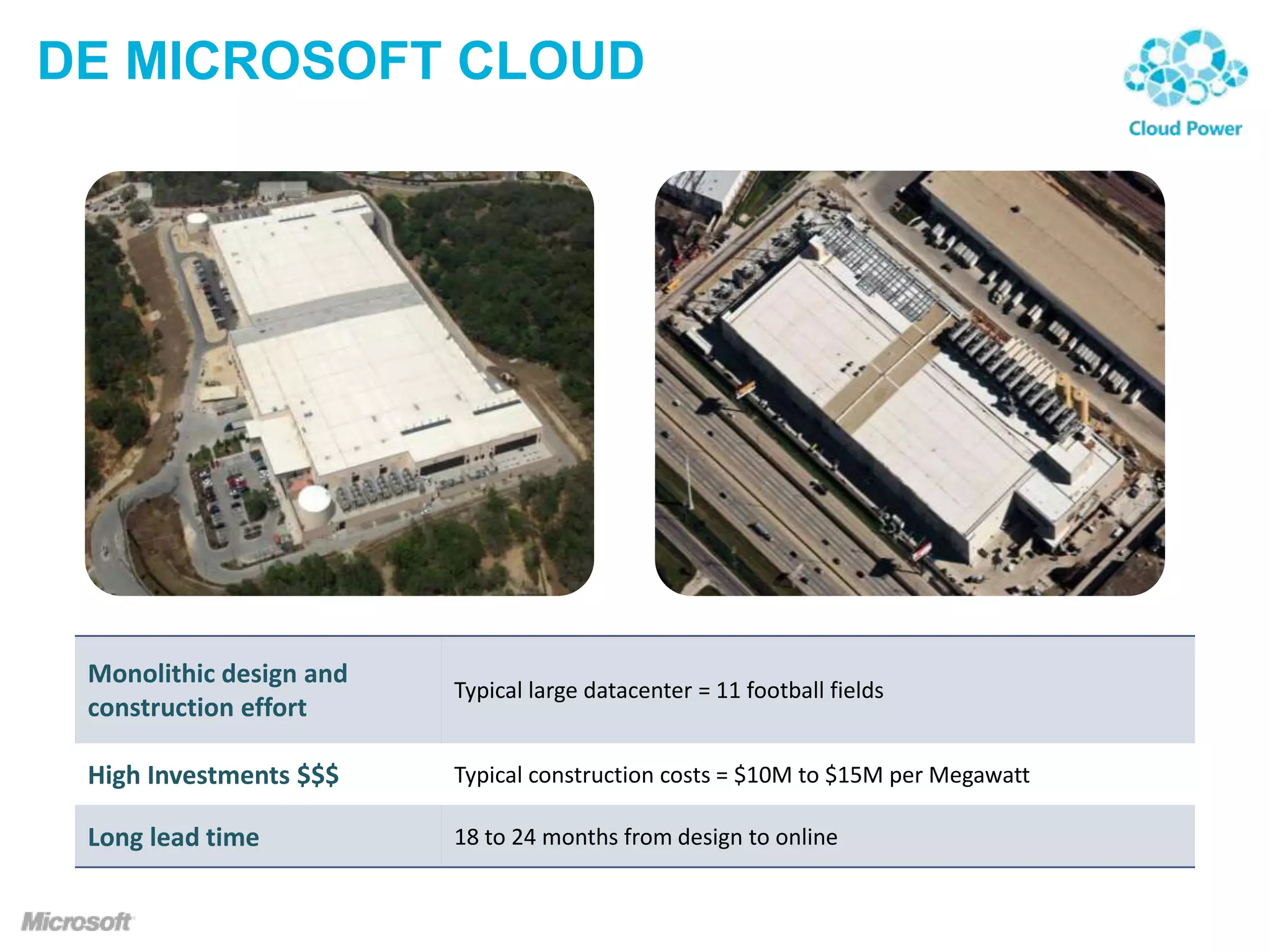
DE MICROSOFT CLOUD

Monolithic design and
construction effort

Typical large datacenter = 11 football fields

High Investments $$$

Typical construction costs = $10M to $15M per Megawatt

Long lead time

18 to 24 months from design to online
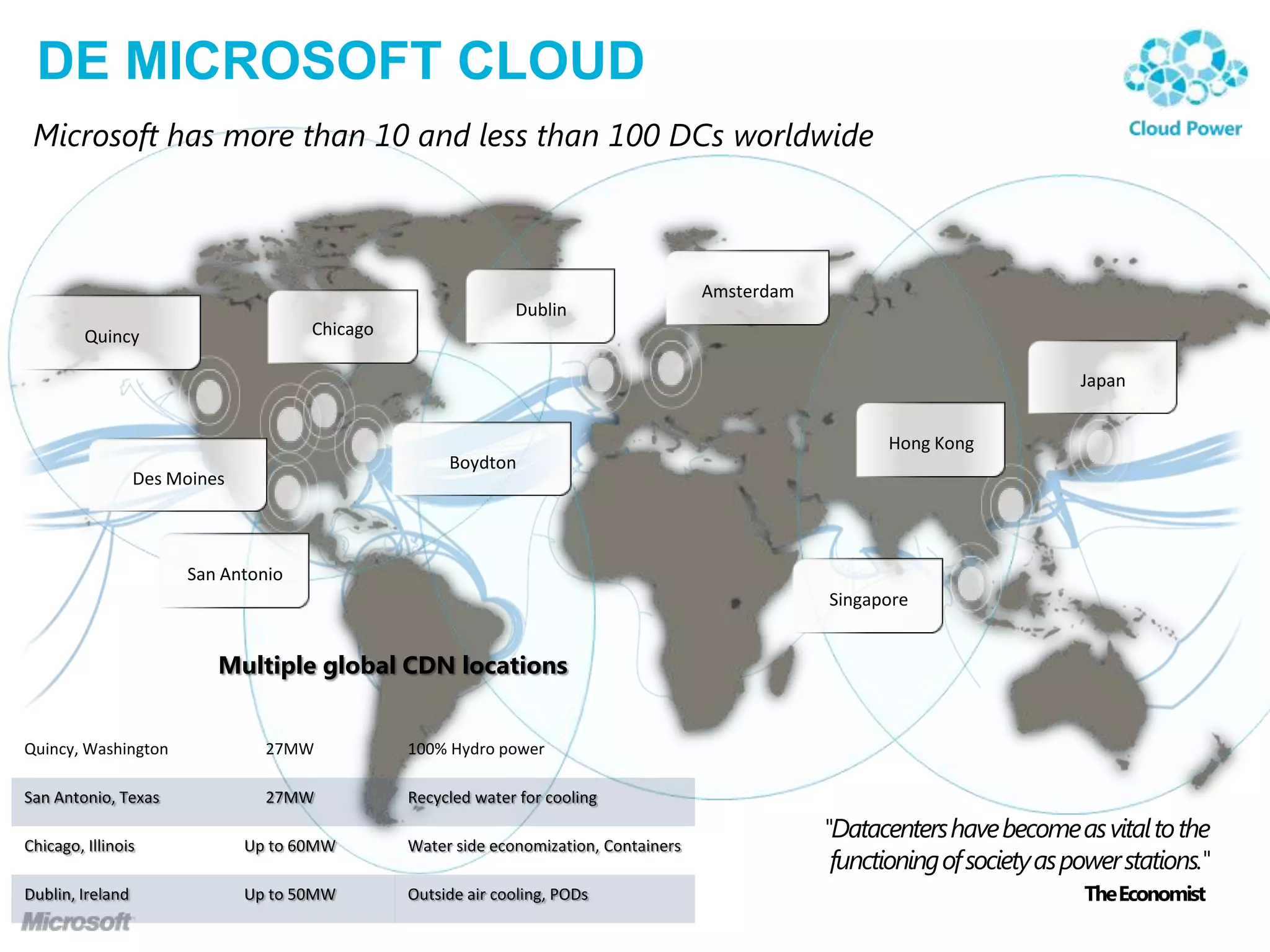
DE MICROSOFT CLOUD
Microsoft has more than 10 and less than 100 DCs worldwide

Chicago

Quincy

Dublin

Amsterdam

Japan

Boydton

Des Moines

Hong Kong

San Antonio
Singapore

Multiple global CDN locations

Quincy, Washington

27MW

100% Hydro power

San Antonio, Texas

27MW

Recycled water for cooling

Chicago, Illinois

Up to 60MW

Water side economization, Containers

Dublin, Ireland

Up to 50MW

Outside air cooling, PODs

"Datacenters have become as vital to the
functioning of society as power stations."
The Economist
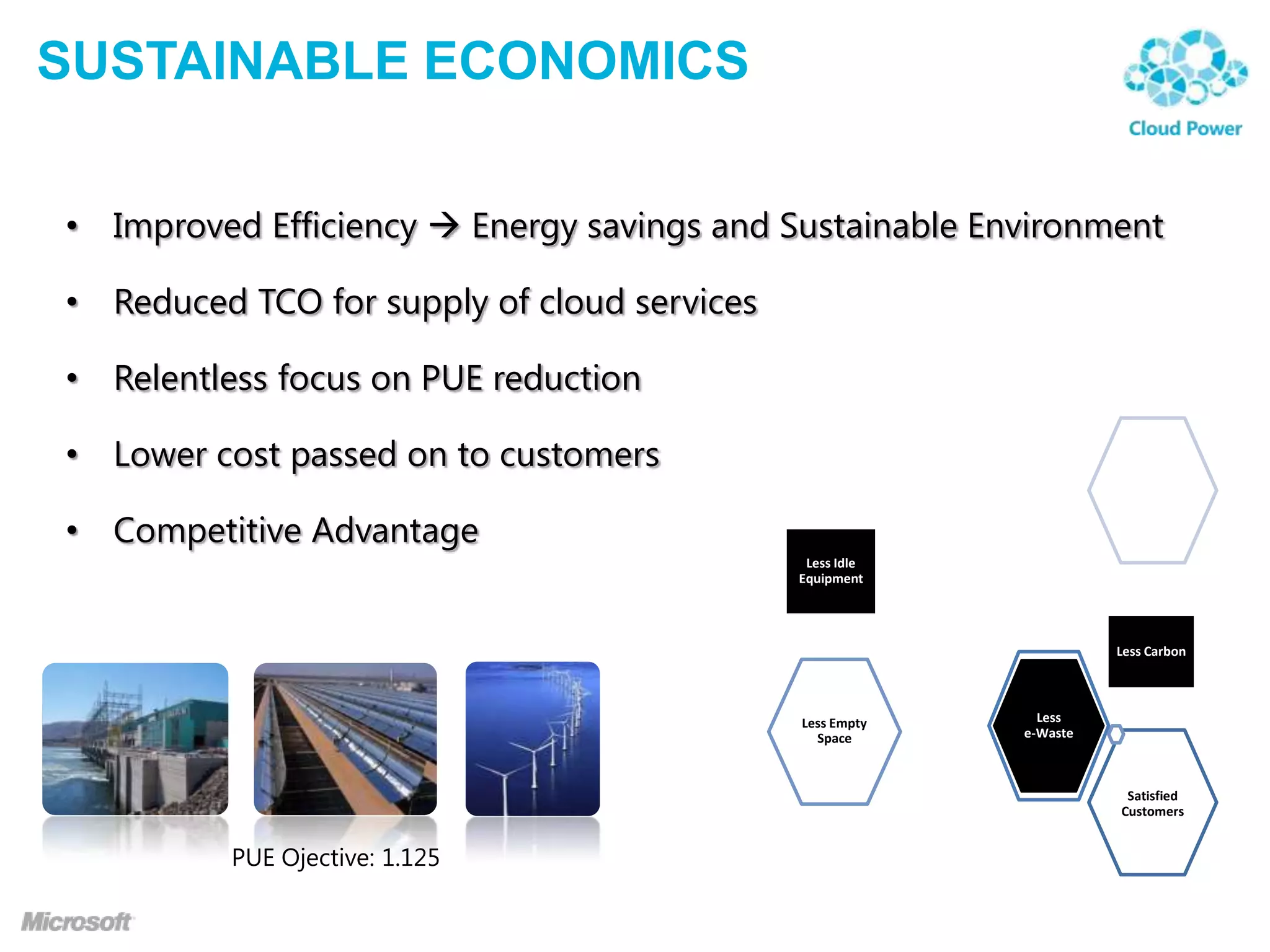
SUSTAINABLE ECONOMICS
• Improved Efficiency  Energy savings and Sustainable Environment
• Reduced TCO for supply of cloud services
• Relentless focus on PUE reduction
Less Raw
Materials

• Lower cost passed on to customers

Less Wasted
Power

• Competitive Advantage
Less Idle
Equipment

Less Carbon

Less Empty
Space

Less
e-Waste

Satisfied
Customers

PUE Ojective: 1.125
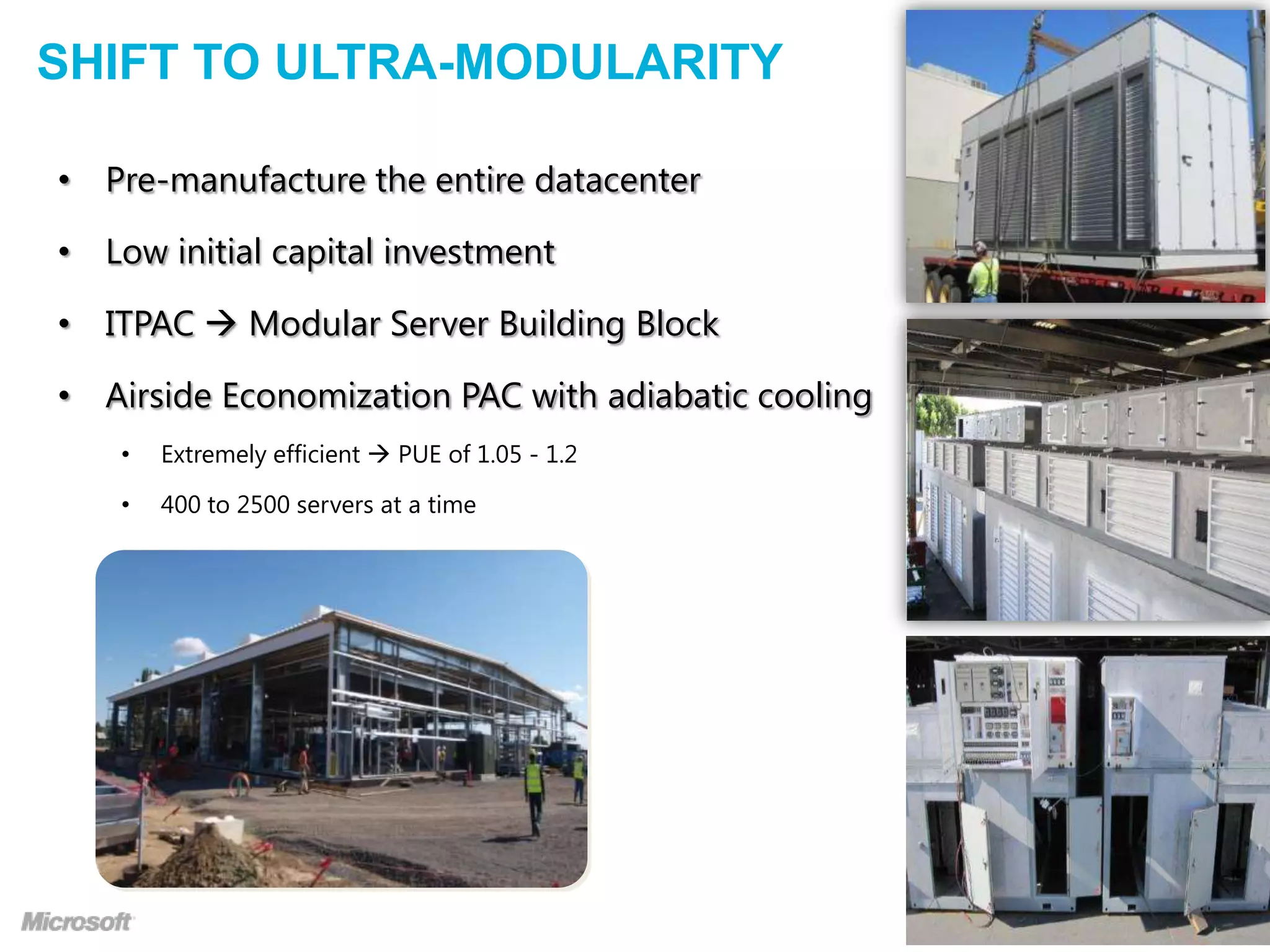
SHIFT TO ULTRA-MODULARITY
• Pre-manufacture the entire datacenter
• Low initial capital investment
• ITPAC  Modular Server Building Block
• Airside Economization PAC with adiabatic cooling
•

Extremely efficient  PUE of 1.05 - 1.2

•

400 to 2500 servers at a time
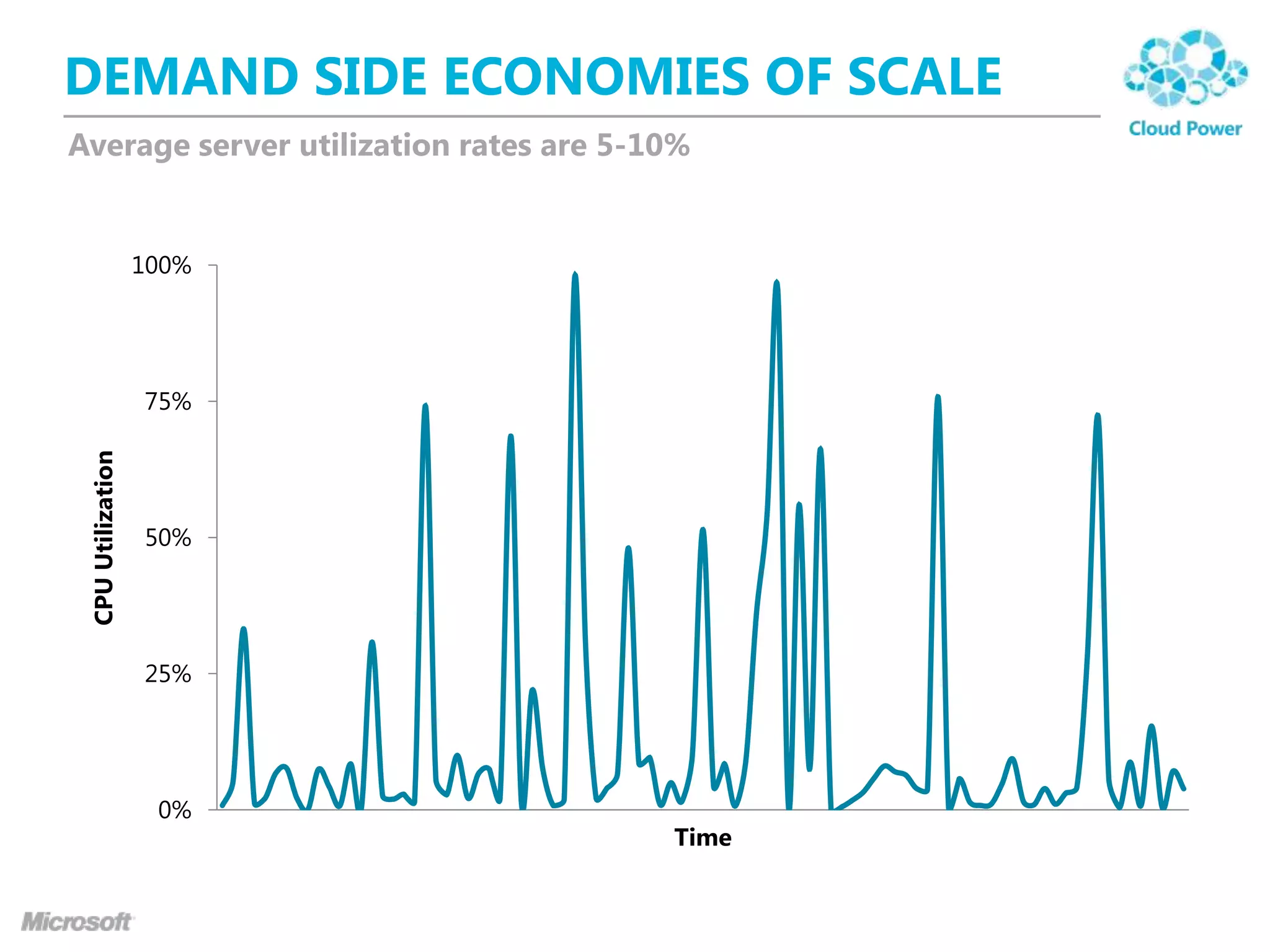
DEMAND SIDE ECONOMIES OF SCALE
Average server utilization rates are 5-10%

100%

CPU Utilization

75%

50%

25%

0%

Time
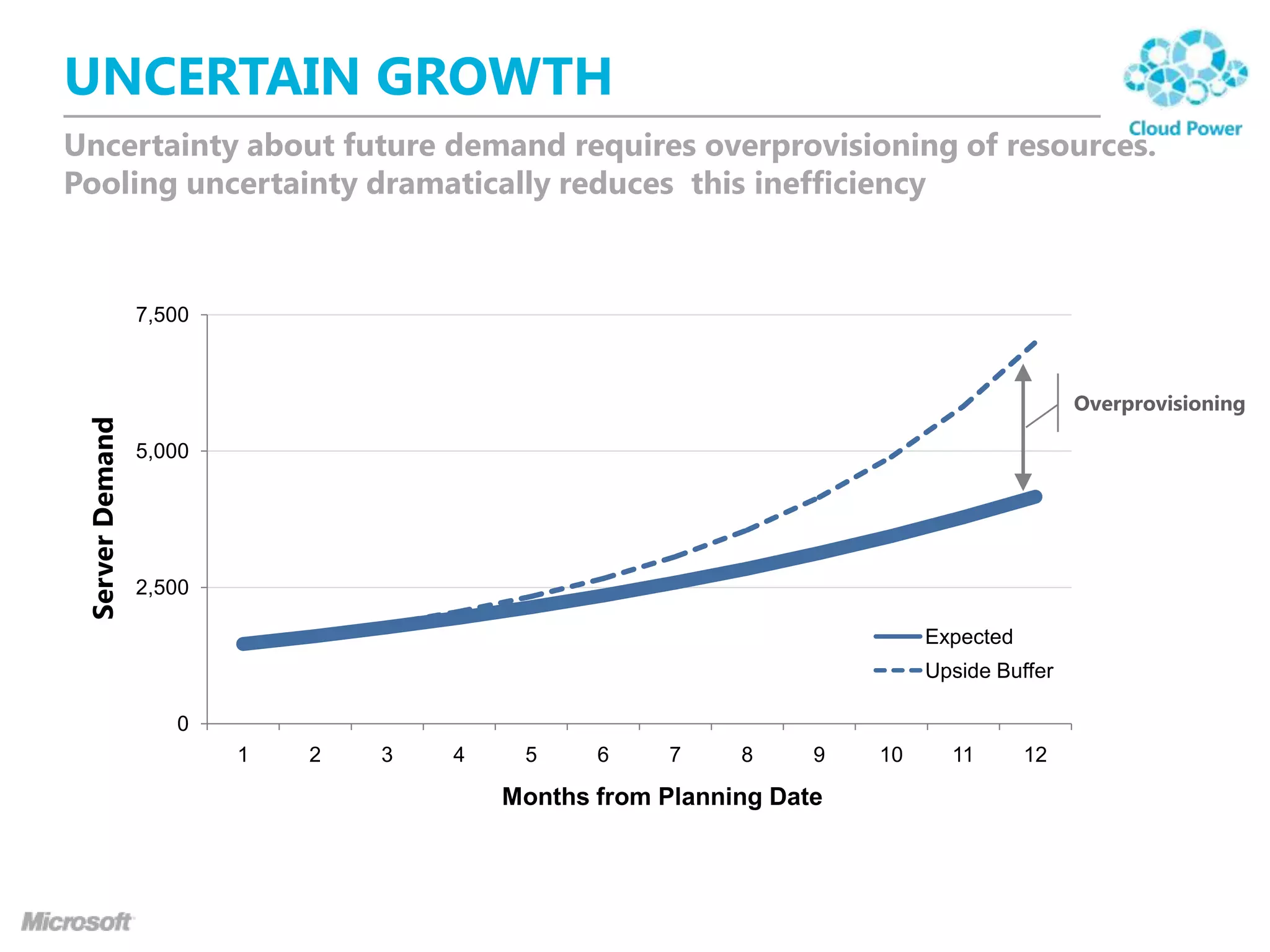
UNCERTAIN GROWTH
Uncertainty about future demand requires overprovisioning of resources.
Pooling uncertainty dramatically reduces this inefficiency
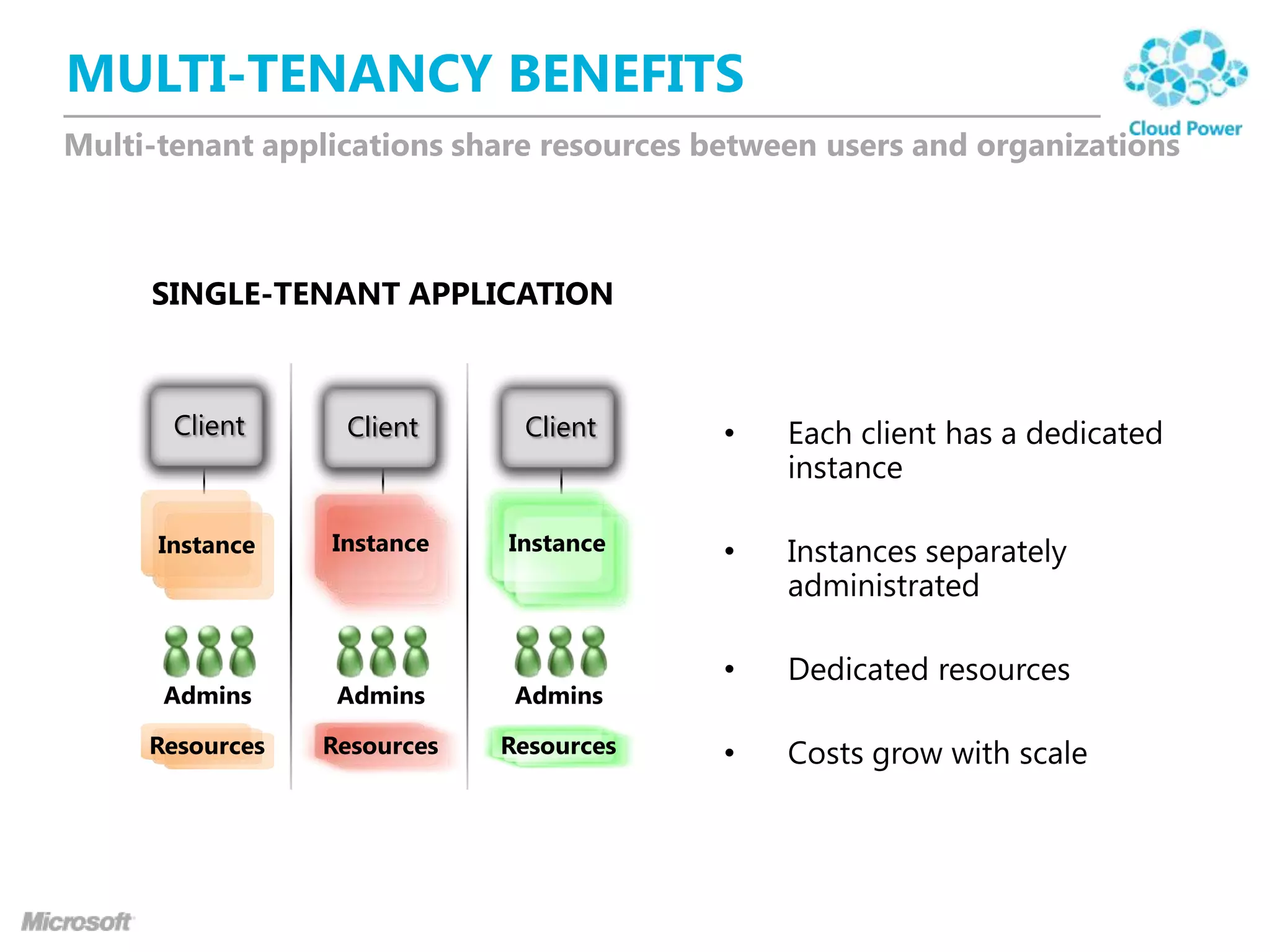
MULTI-TENANCY BENEFITS
Multi-tenant applications share resources between users and organizations

SINGLE-TENANT APPLICATION

Client

Client

Instance

Instance

Instance

Admins

Admins

Admins

Resources

Resources

Resources
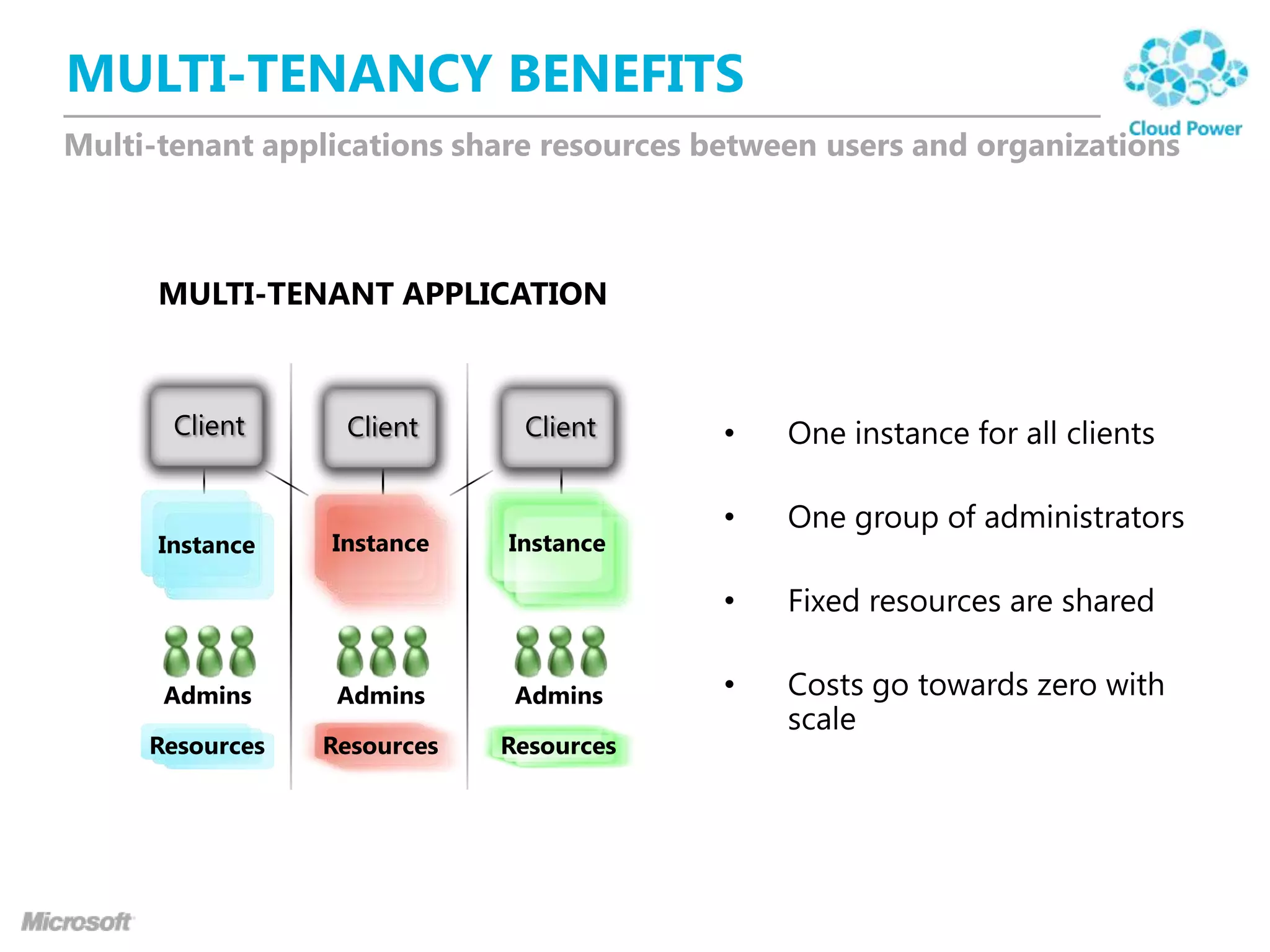
MULTI-TENANCY BENEFITS
Multi-tenant applications share resources between users and organizations

MULTI-TENANT APPLICATION

Instance

Instance

Instance

Admins

Admins

Admins

Resources

Resources

Resources
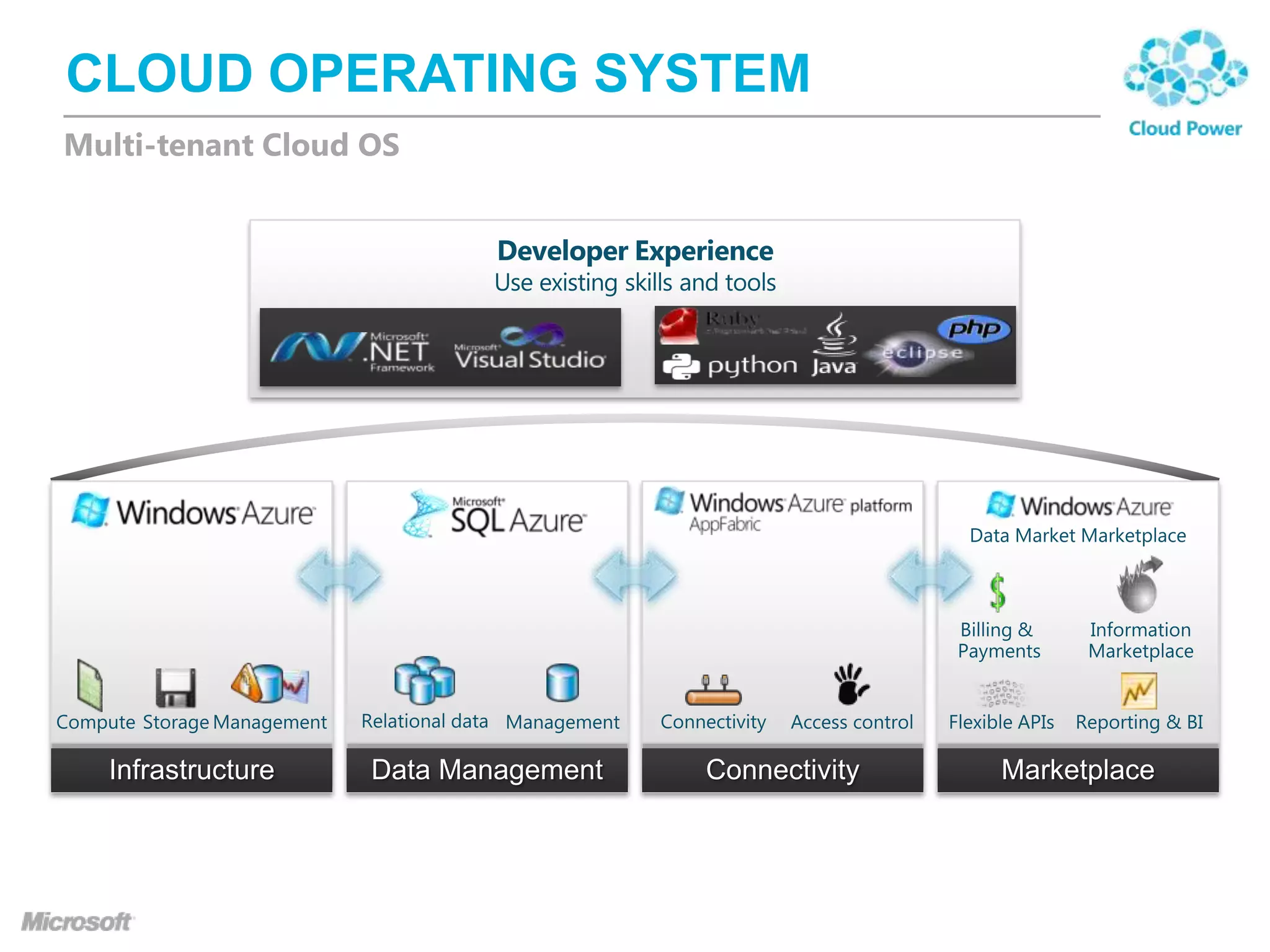
CLOUD OPERATING SYSTEM
Multi-tenant Cloud OS
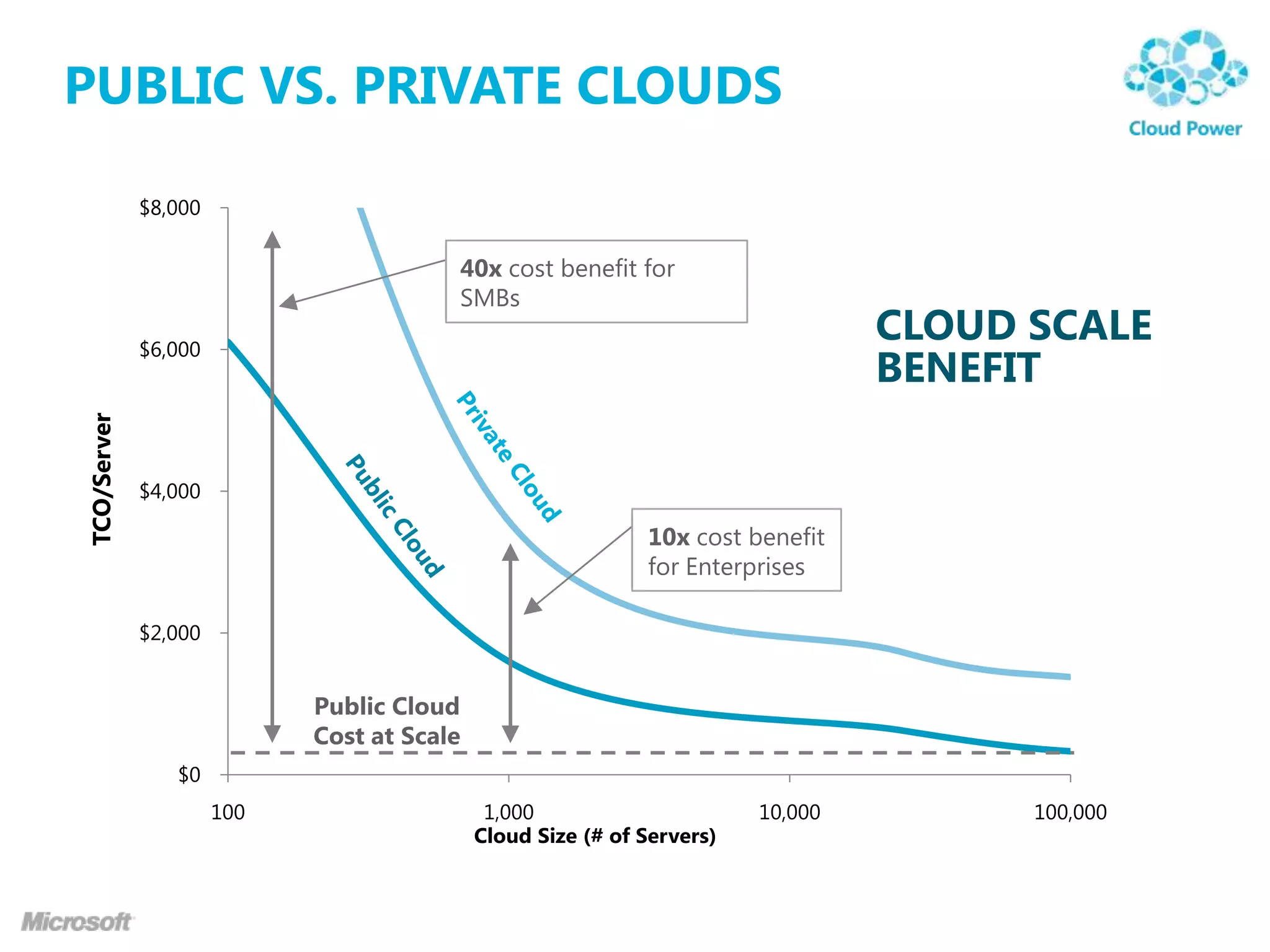
PUBLIC VS. PRIVATE CLOUDS
$8,000

CLOUD SCALE
BENEFIT

TCO/Server

$6,000

$4,000

$2,000

$0
100

1,000
Cloud Size (# of Servers)

10,000

100,000
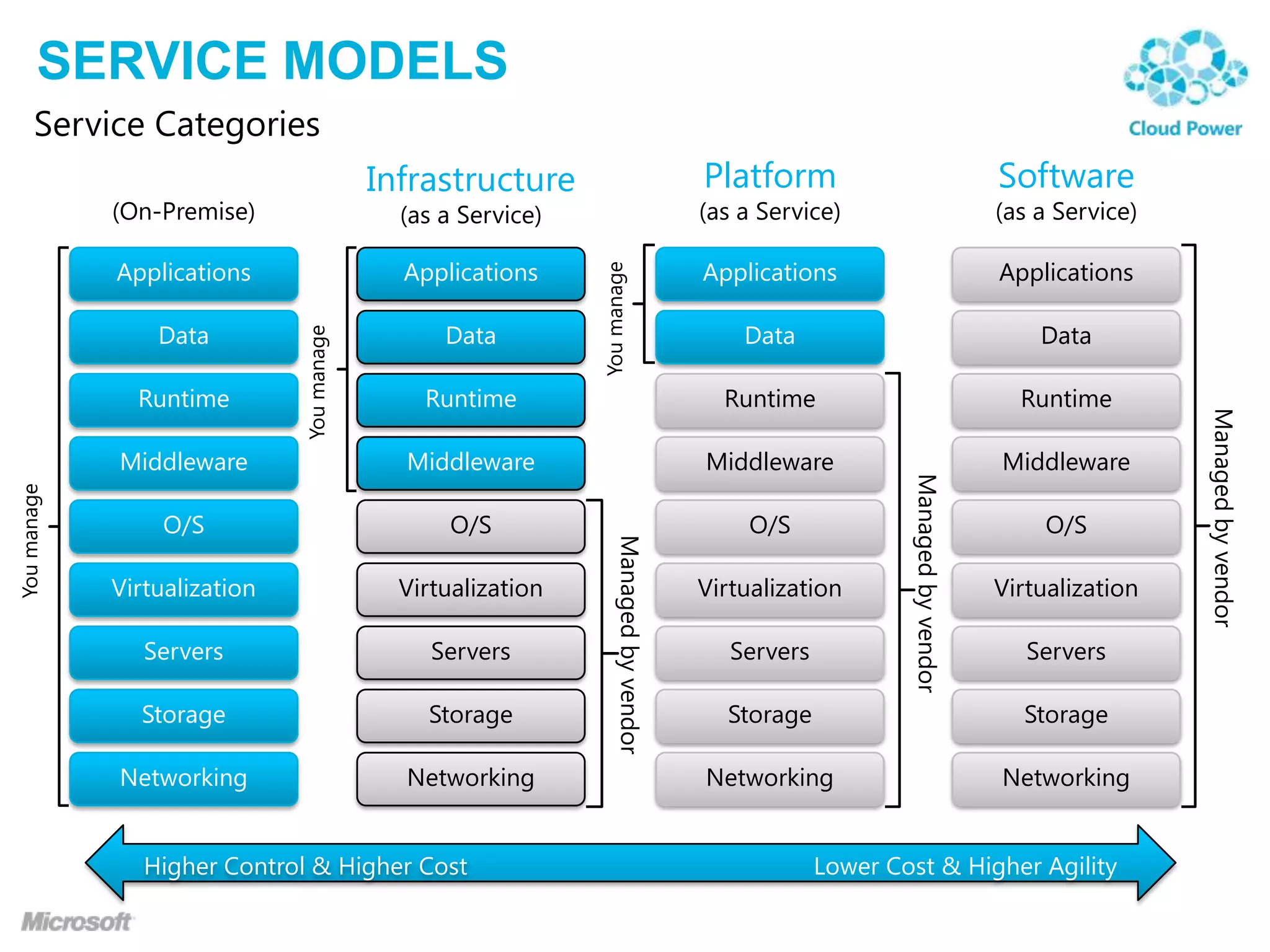
SERVICE MODELS
Service Categories

Platform

Infrastructure

Applications

Applications

Applications

Applications

Data

Data

Data

Data

Runtime

Runtime

Runtime

Middleware

Middleware

Middleware

Middleware

O/S

O/S

O/S

Virtualization

Virtualization

Servers

Servers

Storage

Storage

Networking

Networking

Higher Control & Higher Cost

Managed by vendor

You manage

Runtime

You manage

(as a Service)

Virtualization
Servers

O/S
Virtualization
Servers

Storage

Storage

Networking

Networking

Lower Cost & Higher Agility

Managed by vendor

(as a Service)

Managed by vendor

(as a Service)

You manage

(On-Premise)

Software
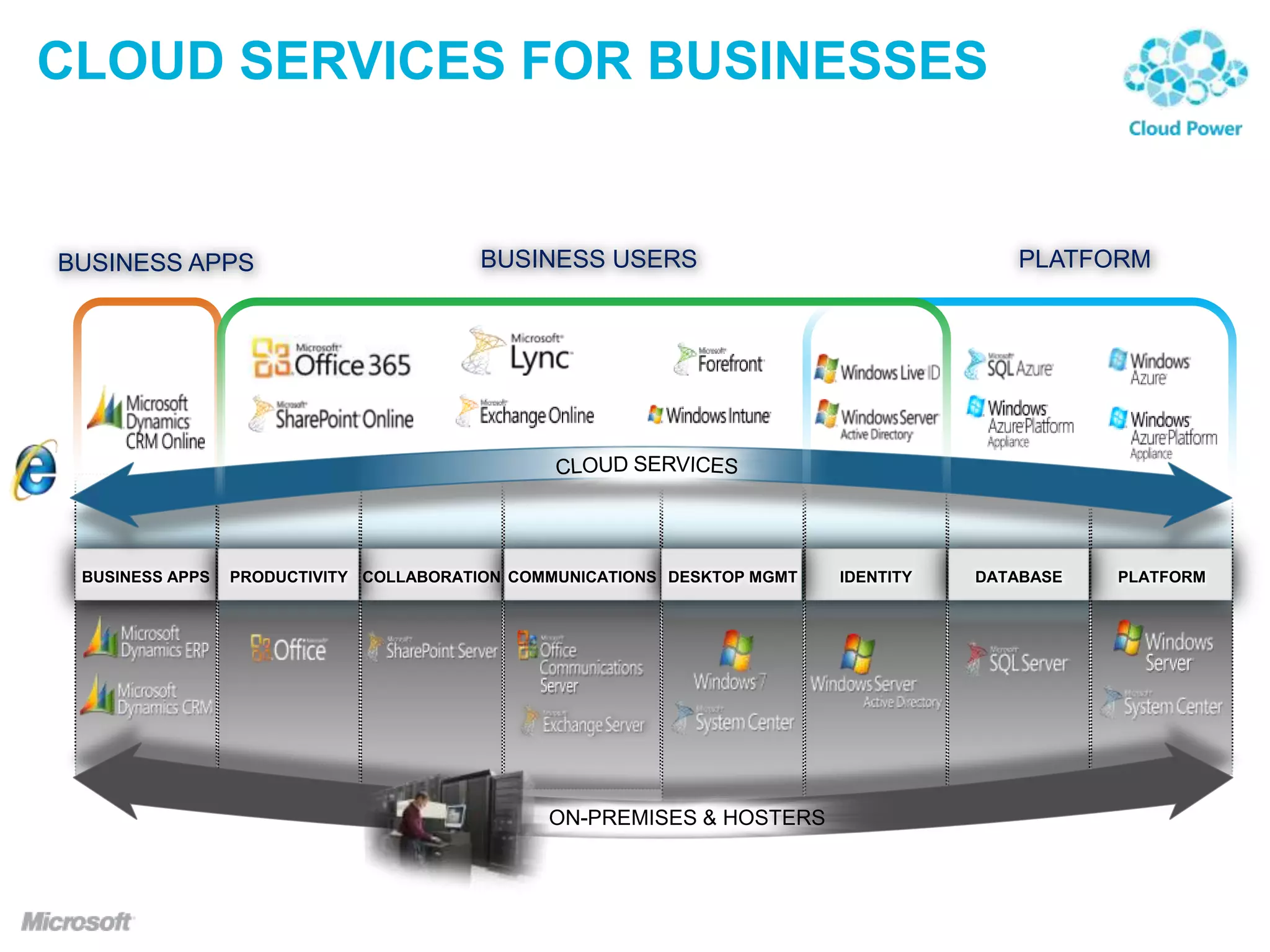
CLOUD SERVICES FOR BUSINESSES

BUSINESS APPS

BUSINESS USERS

PLATFORM
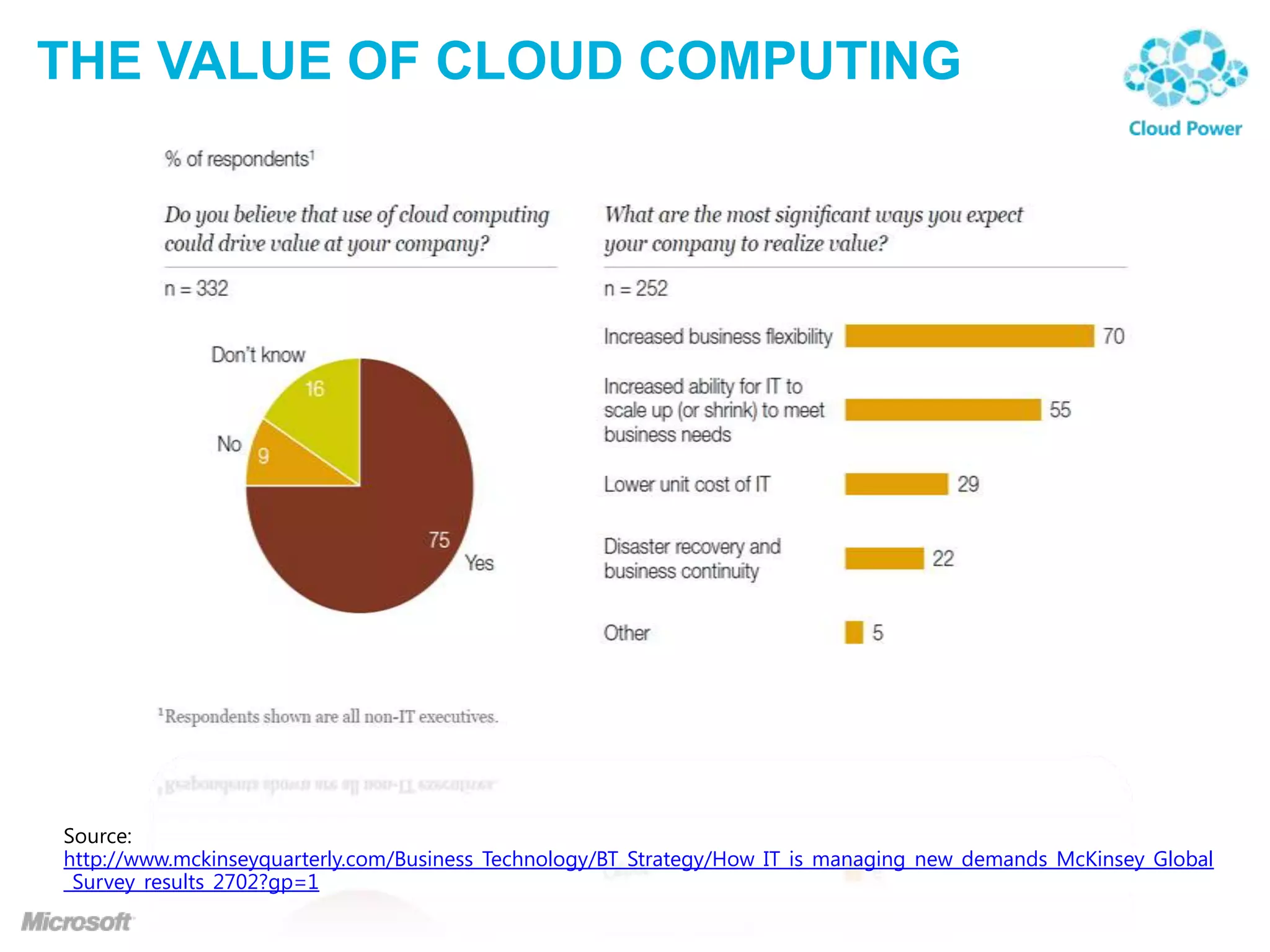
THE VALUE OF CLOUD COMPUTING

http://www.mckinseyquarterly.com/Business_Technology/BT_Strategy/How_IT_is_managing_new_demands_McKinsey_Global
_Survey_results_2702?gp=1
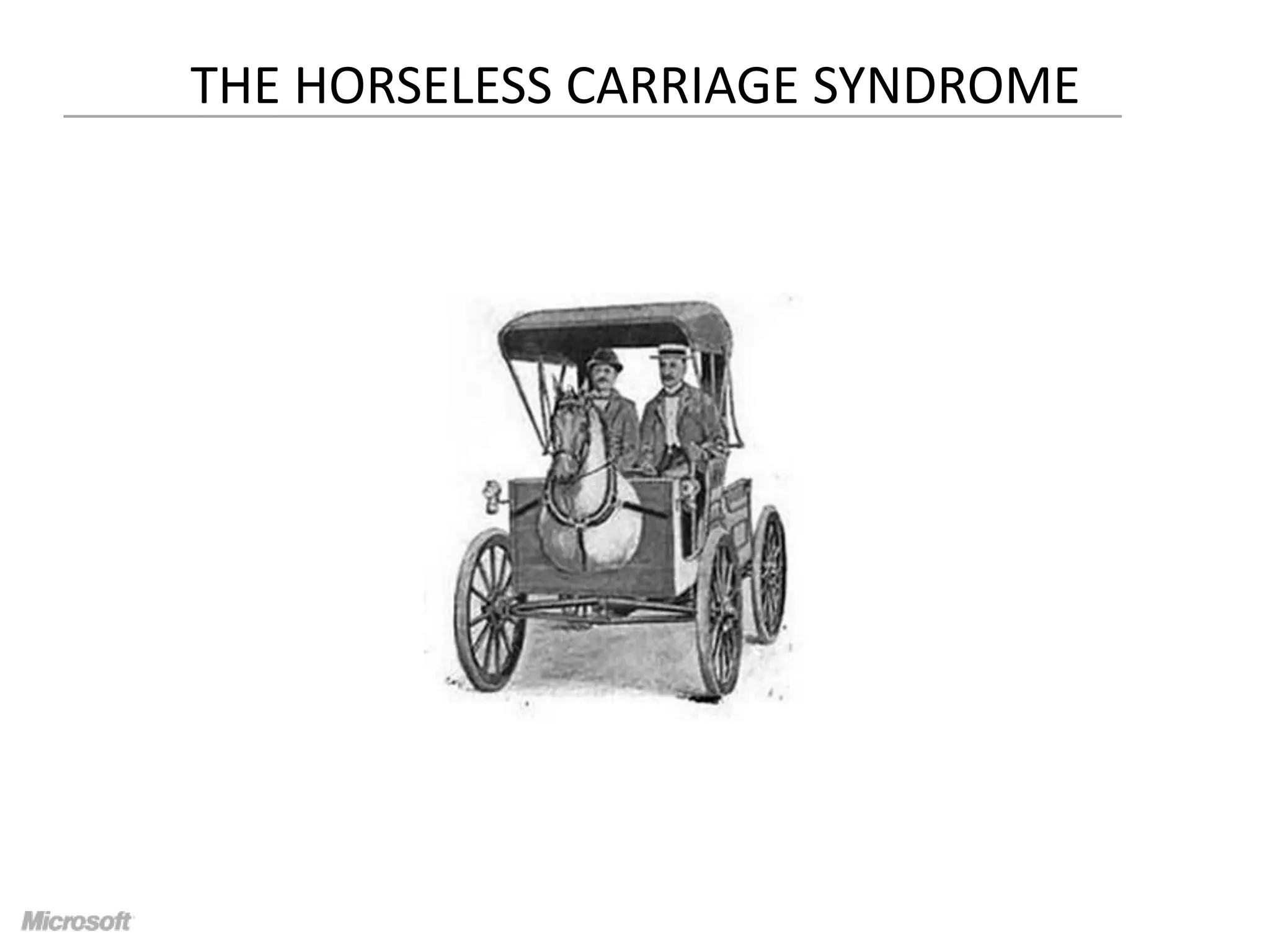
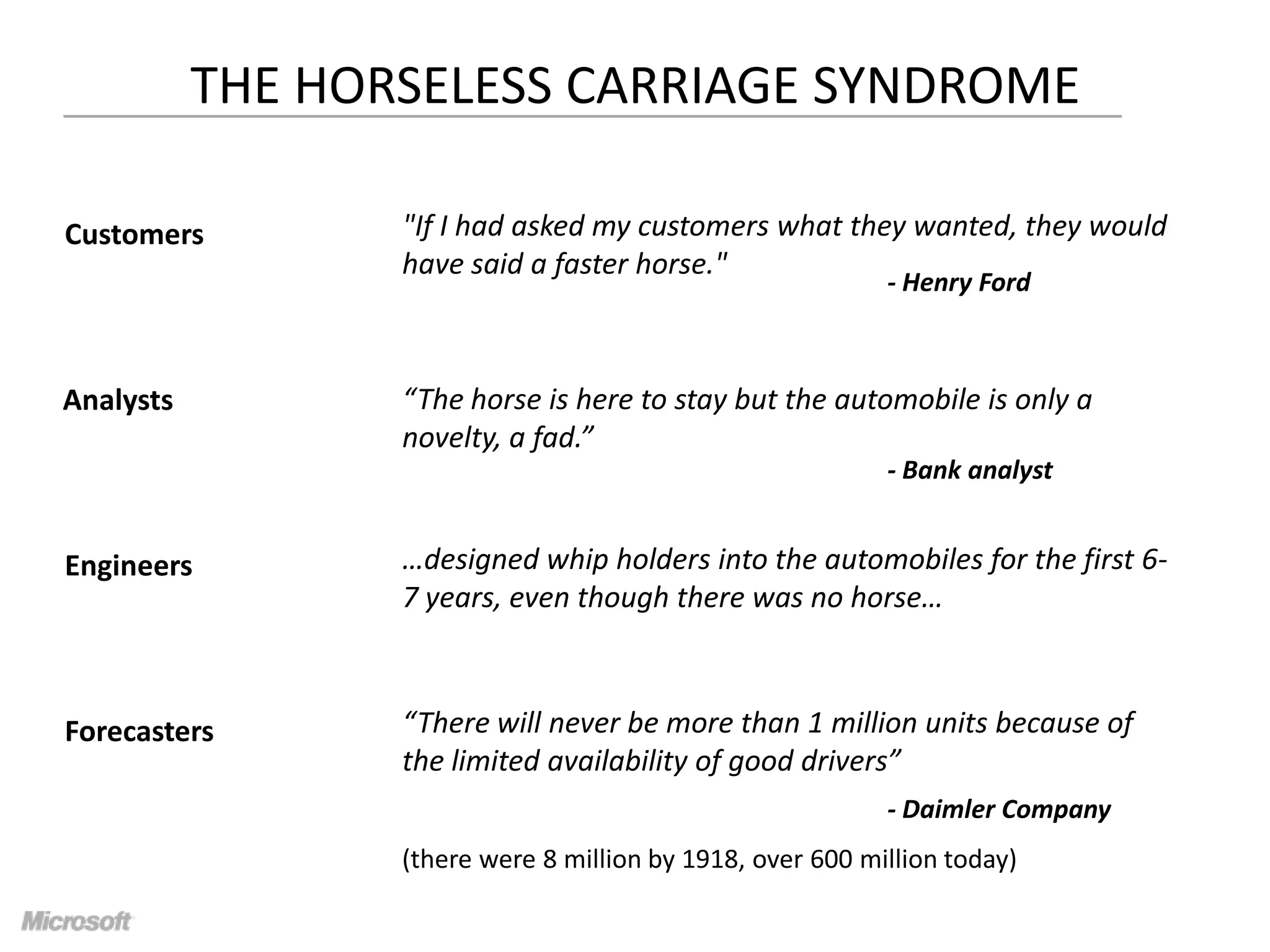
THE HORSELESS CARRIAGE SYNDROME
Customers

"If I had asked my customers what they wanted, they would
have said a faster horse."
- Henry Ford

Analysts

“The horse is here to stay but the automobile is only a
novelty, a fad.”
- Bank analyst

Engineers

…designed whip holders into the automobiles for the first 67 years, even though there was no horse…

Forecasters

“There will never be more than 1 million units because of
the limited availability of good drivers”
- Daimler Company
(there were 8 million by 1918, over 600 million today)
© 2010 Microsoft Corporation. All rights reserved. Microsoft, Windows, Windows Vista and other product names are or may be registered trademarks and/or trademarks in the U.S. and/or other countries.
The information herein is for informational purposes only and represents the current view of Microsoft Corporation as of the date of this presentation. Because Microsoft must respond to changing market
conditions, it should not be interpreted to be a commitment on the part of Microsoft, and Microsoft cannot guarantee the accuracy of any information provided after the date of this presentation.
MICROSOFT MAKES NO WARRANTIES, EXPRESS, IMPLIED OR STATUTORY, AS TO THE INFORMATION IN THIS PRESENTATION.

MS Cloudeconomics

  • 1.
    ECONOMICS OF THE CLOUD MichelN’Guettia Business Group Lead micheln@microsoft.com Slide 1
  • 2.
    TRANSFORMATIE VAN IT Today| Cloud 2000s | Web 1990s | Client / Server 1970s and 80s | Mainframe
  • 3.
    HOW MICROSOFT VIEWSTHE CLOUD Nieuwe Principe's Schaalbaarheid Betalen naar gebruik Hoge beschikbaarheid Keuze Locatie Infrastructuur Business model Eigendom Management Multi-tenancy
  • 4.
    SUPPLY SIDE ECONOMICSOF SCALE Larger datacenters have almost 50% lower TCO per server MAIN DATA CENTER COST BUCKETS • • Server hardware costs (~45%) Facility & operations (~25%) Hardware labor costs (~15%) $5,000 TCO/Server • ANNUAL TCO/SERVER DECLINES W/SCALE $4,000 $3,000 $2,000 $1,000 $0 • Power costs (~15%) 1k Server DC Server Hardware Facility 100k Server DC Hardware Operations Power
  • 5.
    DE MICROSOFT CLOUD Monolithicdesign and construction effort Typical large datacenter = 11 football fields High Investments $$$ Typical construction costs = $10M to $15M per Megawatt Long lead time 18 to 24 months from design to online
  • 6.
    DE MICROSOFT CLOUD Microsofthas more than 10 and less than 100 DCs worldwide Chicago Quincy Dublin Amsterdam Japan Boydton Des Moines Hong Kong San Antonio Singapore Multiple global CDN locations Quincy, Washington 27MW 100% Hydro power San Antonio, Texas 27MW Recycled water for cooling Chicago, Illinois Up to 60MW Water side economization, Containers Dublin, Ireland Up to 50MW Outside air cooling, PODs "Datacenters have become as vital to the functioning of society as power stations." The Economist
  • 7.
    SUSTAINABLE ECONOMICS • ImprovedEfficiency  Energy savings and Sustainable Environment • Reduced TCO for supply of cloud services • Relentless focus on PUE reduction Less Raw Materials • Lower cost passed on to customers Less Wasted Power • Competitive Advantage Less Idle Equipment Less Carbon Less Empty Space Less e-Waste Satisfied Customers PUE Ojective: 1.125
  • 8.
    SHIFT TO ULTRA-MODULARITY •Pre-manufacture the entire datacenter • Low initial capital investment • ITPAC  Modular Server Building Block • Airside Economization PAC with adiabatic cooling • Extremely efficient  PUE of 1.05 - 1.2 • 400 to 2500 servers at a time
  • 9.
    DEMAND SIDE ECONOMIESOF SCALE Average server utilization rates are 5-10% 100% CPU Utilization 75% 50% 25% 0% Time
  • 10.
    UNCERTAIN GROWTH Uncertainty aboutfuture demand requires overprovisioning of resources. Pooling uncertainty dramatically reduces this inefficiency
  • 11.
    MULTI-TENANCY BENEFITS Multi-tenant applicationsshare resources between users and organizations SINGLE-TENANT APPLICATION Client Client Instance Instance Instance Admins Admins Admins Resources Resources Resources
  • 12.
    MULTI-TENANCY BENEFITS Multi-tenant applicationsshare resources between users and organizations MULTI-TENANT APPLICATION Instance Instance Instance Admins Admins Admins Resources Resources Resources
  • 13.
  • 14.
    PUBLIC VS. PRIVATECLOUDS $8,000 CLOUD SCALE BENEFIT TCO/Server $6,000 $4,000 $2,000 $0 100 1,000 Cloud Size (# of Servers) 10,000 100,000
  • 15.
    SERVICE MODELS Service Categories Platform Infrastructure Applications Applications Applications Applications Data Data Data Data Runtime Runtime Runtime Middleware Middleware Middleware Middleware O/S O/S O/S Virtualization Virtualization Servers Servers Storage Storage Networking Networking HigherControl & Higher Cost Managed by vendor You manage Runtime You manage (as a Service) Virtualization Servers O/S Virtualization Servers Storage Storage Networking Networking Lower Cost & Higher Agility Managed by vendor (as a Service) Managed by vendor (as a Service) You manage (On-Premise) Software
  • 16.
    CLOUD SERVICES FORBUSINESSES BUSINESS APPS BUSINESS USERS PLATFORM
  • 17.
    THE VALUE OFCLOUD COMPUTING http://www.mckinseyquarterly.com/Business_Technology/BT_Strategy/How_IT_is_managing_new_demands_McKinsey_Global _Survey_results_2702?gp=1
  • 18.
  • 19.
    THE HORSELESS CARRIAGESYNDROME Customers "If I had asked my customers what they wanted, they would have said a faster horse." - Henry Ford Analysts “The horse is here to stay but the automobile is only a novelty, a fad.” - Bank analyst Engineers …designed whip holders into the automobiles for the first 67 years, even though there was no horse… Forecasters “There will never be more than 1 million units because of the limited availability of good drivers” - Daimler Company (there were 8 million by 1918, over 600 million today)
  • 20.
    © 2010 MicrosoftCorporation. All rights reserved. Microsoft, Windows, Windows Vista and other product names are or may be registered trademarks and/or trademarks in the U.S. and/or other countries. The information herein is for informational purposes only and represents the current view of Microsoft Corporation as of the date of this presentation. Because Microsoft must respond to changing market conditions, it should not be interpreted to be a commitment on the part of Microsoft, and Microsoft cannot guarantee the accuracy of any information provided after the date of this presentation. MICROSOFT MAKES NO WARRANTIES, EXPRESS, IMPLIED OR STATUTORY, AS TO THE INFORMATION IN THIS PRESENTATION.